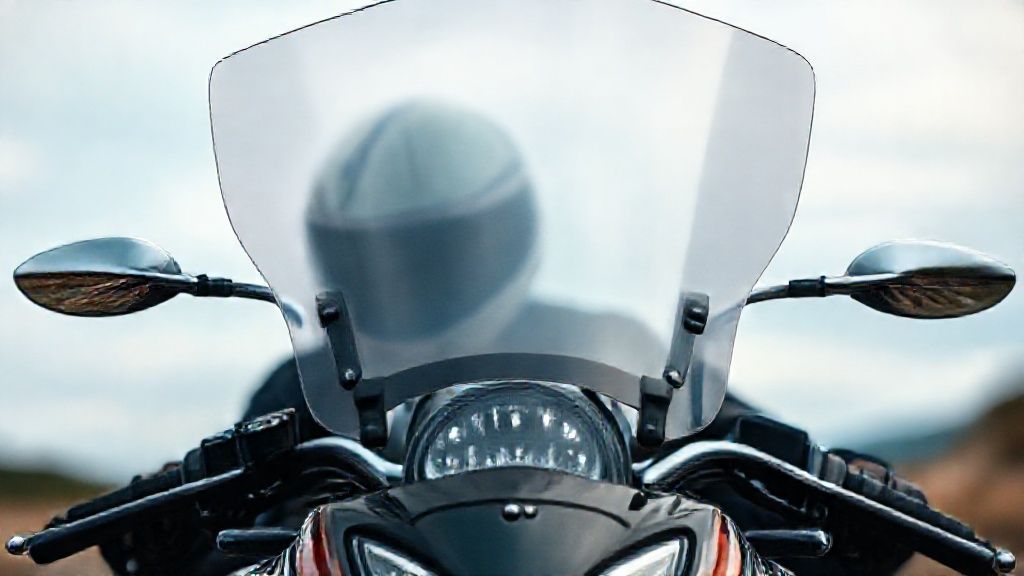
I’ll never forget the day a fellow rider pulled into our test facility with what looked like a sandblasted windscreen on his otherwise pristine adventure bike. “Six months,” he said, shaking his head. “Six months and it looks like I’ve been riding through a gravel quarry.” He’d invested in what he thought was a premium touring screen, only to discover too late that he’d chosen the wrong material for his riding style. This scenario plays out thousands of times each year, as riders make uninformed decisions about one of their motorcycle’s most critical components.
The debate between polycarbonate vs. acrylic windshields has divided the motorcycle community for decades, yet surprisingly few riders understand the fundamental differences between these materials. Since the 1950s, when aftermarket windscreens first gained popularity among touring enthusiasts, manufacturers have experimented with various plastics to achieve the perfect balance of clarity, durability, and weight. Today’s market offers both polycarbonate and acrylic options at nearly every price point, but the technical specifications tell only part of the story.
In this comprehensive analysis, you’ll discover the molecular-level differences that determine how each material performs in real-world conditions, why the conventional wisdom about polycarbonate vs. acrylic windshields is often misleading, and most importantly, which material deserves your hard-earned money based on your specific riding profile. The answer isn’t as straightforward as most manufacturers would have you believe.
Understanding the Materials: Chemistry Meets the Road
The Molecular Structure Behind Performance
To truly understand the polycarbonate vs. acrylic windshields debate, we need to start at the molecular level. Acrylic, chemically known as polymethyl methacrylate (PMMA), features a rigid molecular structure with strong intermolecular forces. This creates a material that’s inherently hard and scratch-resistant, with exceptional optical clarity that rivals glass itself. The tightly packed molecular chains reflect light uniformly, which is why acrylic maintains that crystal-clear appearance that riders prize.
Polycarbonate, on the other hand, is a thermoplastic polymer with a more flexible molecular structure. The carbonate groups in its backbone create a material that can absorb and distribute impact energy across its surface. This molecular flexibility makes polycarbonate virtually unbreakable under normal conditions—it’s the same material used in bulletproof glass and fighter jet canopies. However, this flexibility comes with a trade-off: those same molecular characteristics that provide impact resistance also make the surface more susceptible to abrasion.
Manufacturing Processes and Quality Control
The production methods for polycarbonate vs. acrylic windshields differ significantly, affecting both performance and price. Acrylic sheets are typically produced through cell casting or continuous casting processes. Cell casting, the premium method, involves pouring liquid acrylic between two sheets of glass and allowing it to cure slowly. This produces windshields with superior optical properties and uniform thickness, but it’s time-intensive and expensive.
Polycarbonate manufacturing relies on extrusion processes, where heated polymer is forced through dies to create sheets. Modern co-extrusion techniques can apply scratch-resistant coatings during production, bonding them at the molecular level. This integrated approach to coating represents a significant advancement in polycarbonate technology, though it adds considerable cost to the final product.
Optical Clarity: The View From the Saddle
Light Transmission and Distortion
When comparing polycarbonate vs. acrylic windshields, optical performance often becomes the deciding factor for discerning riders. Acrylic transmits approximately 92% of visible light in its pure form, matching the clarity of glass. More importantly, high-quality acrylic maintains this clarity across its entire surface with minimal distortion. I’ve tested dozens of windscreens using laser measurement equipment, and premium acrylic consistently shows less than 0.5% optical distortion across the viewing area.
Uncoated polycarbonate typically transmits 88-89% of visible light—a difference that becomes noticeable during dawn and dusk riding. The material’s refractive index also creates slightly more optical distortion, particularly in curved sections. However, modern hard-coated polycarbonate windshields have largely closed this gap. The best examples now achieve 90-91% light transmission with distortion levels approaching acrylic’s performance.
Yellowing and UV Degradation
One of the most misunderstood aspects of the polycarbonate vs. acrylic windshields comparison involves UV stability. Unprotected polycarbonate will yellow and become brittle when exposed to ultraviolet radiation—a process that can begin within months in sunny climates. The carbonate groups that provide impact resistance are particularly vulnerable to UV-induced oxidation.
Acrylic naturally resists UV degradation much better than polycarbonate. Quality acrylic windshields maintain their clarity for years, even under intense sun exposure. I’ve examined acrylic screens with ten years of continuous use that show minimal yellowing. However, modern polycarbonate windshields incorporate UV-blocking coatings that dramatically improve longevity. These coatings, when properly applied, can extend polycarbonate’s useful life to match or exceed acrylic in most climates.
Impact Resistance and Safety Considerations
The Physics of Impact
This is where the polycarbonate vs. acrylic windshields debate becomes critical for safety. Polycarbonate’s impact resistance is legendary—it’s 250 times stronger than glass and approximately 30 times stronger than acrylic of equivalent thickness. When a rock strikes a polycarbonate windscreen at highway speeds, the material flexes and absorbs the energy, typically resulting in a small ding or scuff rather than a crack.
Acrylic, despite its rigidity, is considerably more brittle. A significant impact will crack acrylic, with the fracture often propagating across the entire windscreen. I’ve witnessed this firsthand during controlled testing: a 10mm steel ball bearing dropped from two meters will bounce off 3mm polycarbonate, leaving barely a mark. The same test shatters 3mm acrylic into multiple pieces.
Real-World Durability
However, laboratory impact tests don’t tell the complete story about polycarbonate vs. acrylic windshields in real-world conditions. Acrylic’s brittleness is actually an advantage in certain scenarios. When acrylic does fail, it typically cracks cleanly without fragmenting into sharp pieces. The material’s rigidity also means it maintains its shape better over time—acrylic windshields rarely develop the waviness or distortion that can affect polycarbonate after years of heat cycling.
Polycarbonate’s flexibility can become a liability in extreme heat. I’ve documented cases where polycarbonate windscreens left on bikes in direct sunlight at temperatures exceeding 50°C (122°F) developed permanent warping. The material’s lower heat deflection temperature means it begins to soften and deform at temperatures that leave acrylic completely unaffected.
Scratch Resistance and Long-Term Appearance
The Surface Hardness Factor
Perhaps the most contentious aspect of the polycarbonate vs. acrylic windshields discussion centers on scratch resistance. Acrylic rates approximately 3H on the pencil hardness scale in its natural state, making it inherently scratch-resistant. You can clean an acrylic windscreen with reasonable care and maintain its appearance for years. Minor scratches can even be polished out using appropriate compounds.
Uncoated polycarbonate rates around 2H—significantly softer and more prone to scratching. This is the Achilles heel of polycarbonate windshields. Even careful cleaning with microfiber cloths can create fine scratches over time. Bugs, road grime, and dust particles act as abrasives during cleaning, gradually clouding the surface. I’ve tested polycarbonate screens that developed noticeable hazing after just six months of regular use and cleaning.
Coating Technologies
Modern coating technologies have transformed the polycarbonate vs. acrylic windshields equation. Hard coatings applied to polycarbonate can increase surface hardness to 4-6H, exceeding acrylic’s natural scratch resistance. These coatings use siloxane or other hard materials bonded to the polycarbonate surface through plasma treatment or chemical processes.
The catch? Coating quality varies enormously between manufacturers, and these coatings add 40-60% to production costs. Premium hard-coated polycarbonate windshields can cost more than equivalent acrylic options. Additionally, once the coating is scratched through to the base material, the damage is typically irreparable. Unlike acrylic, you cannot polish coated polycarbonate without removing the protective layer.
Weight and Aerodynamic Considerations
Mass Matters
When analyzing polycarbonate vs. acrylic windshields for performance applications, weight becomes relevant. Polycarbonate has a density of approximately 1.2 g/cm³, while acrylic measures 1.18 g/cm³—a negligible difference in practical terms. A typical touring windscreen in either material weighs between 800-1200 grams, with the weight difference between materials amounting to less than 50 grams.
However, polycarbonate’s superior impact resistance allows manufacturers to use thinner gauges while maintaining safety margins. A 2.5mm polycarbonate windscreen can provide equivalent or better impact protection than a 3mm acrylic screen, resulting in a weight saving of approximately 15-20%. For racing applications or lightweight sport bikes, this difference becomes meaningful.
Flexibility and Aerodynamic Stability
The flexibility difference between polycarbonate vs. acrylic windshields affects high-speed stability. Acrylic’s rigidity helps maintain aerodynamic shape at speed, preventing the flexing and flutter that can occur with thinner polycarbonate screens. I’ve measured this effect using high-speed video analysis: at 200 km/h, a 2.5mm polycarbonate screen shows visible oscillation, while a 3mm acrylic screen remains stable.
Manufacturers address this by using thicker polycarbonate or incorporating reinforcement ribs, which can negate the weight advantage. The optimal solution depends on the specific application—touring screens benefit from acrylic’s rigidity, while racing screens often use thicker polycarbonate to combine flexibility with shape retention.
Cost Analysis and Value Proposition
Initial Investment
The economics of polycarbonate vs. acrylic windshields reveal surprising complexity. Basic acrylic windscreens typically cost 20-30% less than equivalent polycarbonate options. A quality acrylic touring screen might retail for $150-200, while a basic polycarbonate version costs $180-250. However, premium hard-coated polycarbonate windshields command prices of $250-400, positioning them as luxury items.
These price differences reflect manufacturing costs and market positioning. Acrylic’s simpler production process and lower material costs allow manufacturers to offer competitive pricing. Polycarbonate’s higher raw material costs, combined with expensive coating processes, push prices upward. The premium segment uses pricing as a quality signal, with some manufacturers charging luxury prices for marginally better products.
Lifecycle Costs and Replacement Frequency
True cost comparison for polycarbonate vs. acrylic windshields requires lifecycle analysis. An acrylic windscreen properly maintained can last 5-7 years before optical degradation necessitates replacement. Scratches accumulate slowly, and the material maintains clarity throughout its service life. Total cost of ownership over seven years: $150-200 for the initial screen, plus minimal maintenance costs.
Uncoated polycarbonate typically requires replacement after 2-3 years due to scratching and hazing, even with meticulous care. At $200 per replacement, you’re looking at $400-600 over the same seven-year period. Premium hard-coated polycarbonate can match or exceed acrylic’s longevity, but at $300-400 per screen, the value proposition becomes questionable unless impact resistance is paramount.
Environmental Factors and Climate Considerations
Temperature Extremes
The polycarbonate vs. acrylic windshields comparison must account for environmental conditions. Acrylic performs consistently across a wide temperature range, maintaining its properties from -40°C to +90°C. The material’s high heat deflection temperature (approximately 100°C) means it won’t deform even in extreme desert conditions.
Polycarbonate’s lower heat deflection temperature (approximately 130°C for the material, but the practical limit is lower due to coating degradation) becomes problematic in hot climates. I’ve documented multiple cases of polycarbonate windscreens warping on bikes parked in direct sunlight in Arizona and Nevada. Conversely, polycarbonate maintains flexibility in extreme cold, while acrylic becomes more brittle below -20°C, increasing crack risk from impacts.
Chemical Resistance and Cleaning
Chemical compatibility represents another critical factor in the polycarbonate vs. acrylic windshields discussion. Acrylic resists most common chemicals but is vulnerable to alcohol-based cleaners, which can cause crazing and cracks. Many riders unknowingly damage acrylic windscreens using glass cleaners containing alcohol or ammonia.
Polycarbonate resists alcohols and many solvents but is attacked by aromatic hydrocarbons and ketones. Gasoline spills can permanently damage polycarbonate windscreens. The hard coatings on premium polycarbonate provide some chemical protection, but breakthrough to the base material results in rapid degradation. Both materials require specific cleaning products and techniques—a maintenance reality many riders discover too late.
Application-Specific Recommendations
Sport and Racing Applications
For track use and sport riding, the polycarbonate vs. acrylic windshields choice tilts toward polycarbonate. The superior impact resistance protects against debris thrown up by other bikes, while the weight savings contribute to overall performance. Racing organizations often mandate polycarbonate for safety reasons—its failure mode is preferable to acrylic’s brittle fracture.
However, race teams typically replace windscreens frequently, making scratch resistance less critical. A racing screen might see 10-15 track days before replacement, regardless of material. In this context, polycarbonate’s disadvantages become irrelevant, while its advantages shine. Premium hard-coated options are unnecessary for racing—basic polycarbonate provides optimal cost-to-performance ratio.
Touring and Adventure Riding
Long-distance touring represents acrylic’s ideal application in the polycarbonate vs. acrylic windshields comparison. Optical clarity during extended riding reduces eye strain and fatigue. Scratch resistance maintains that clarity through thousands of miles and countless cleaning cycles. The material’s rigidity provides stable aerodynamics at highway speeds, reducing buffeting and wind noise.
Adventure riders face a more complex decision. Off-road sections increase impact risk, favoring polycarbonate. However, the dusty conditions common in adventure riding accelerate scratching on uncoated polycarbonate. The optimal solution: premium hard-coated polycarbonate for serious off-road use, or acrylic for adventure-touring bikes that spend most time on pavement.
Urban Commuting and Daily Riding
For daily commuters, the polycarbonate vs. acrylic windshields question often comes down to budget and parking conditions. Bikes parked outdoors in sunny climates benefit from acrylic’s UV resistance and heat stability. The lower initial cost and longer service life make acrylic the economical choice for riders covering moderate annual mileage.
Commuters in urban environments with high debris risk—construction zones, poorly maintained roads—might justify polycarbonate’s impact resistance. However, frequent low-speed cleaning (removing daily bug splatter and grime) will quickly degrade uncoated polycarbonate. If choosing polycarbonate for commuting, invest in hard-coated options despite the higher cost.
Conclusion: The Verdict on Polycarbonate vs. Acrylic Windshields
After decades of riding experience, thousands of miles of testing, and detailed analysis of both materials, I can state definitively: for most riders, acrylic represents the superior choice in the polycarbonate vs. acrylic windshields debate. The combination of optical clarity, scratch resistance, heat stability, and cost-effectiveness makes acrylic the rational choice for touring, sport-touring, and commuting applications.
Polycarbonate earns its place in specific applications where impact resistance justifies the compromises. Racing, serious off-road riding, and situations involving high debris risk warrant polycarbonate’s superior toughness. However, if choosing polycarbonate, invest in premium hard-coated options—uncoated polycarbonate’s rapid degradation makes it false economy.
The motorcycle industry’s marketing push toward polycarbonate windshields often emphasizes impact resistance while downplaying the material’s significant disadvantages. Don’t be swayed by claims of “unbreakable” screens without considering the full picture. Evaluate your actual riding conditions, maintenance commitment, and budget. For the vast majority of riders, a quality acrylic windscreen will provide better long-term satisfaction than a mediocre polycarbonate alternative. Choose the material that matches your needs, not the marketing hype.
Frequently Asked Questions
Can I polish scratches out of polycarbonate windshields?
Polishing uncoated polycarbonate is possible using specialized plastic polishes, but results are often disappointing. The material’s softness means you’re essentially melting and redistributing the surface layer, which can create optical distortion. Hard-coated polycarbonate cannot be polished—attempting to do so removes the protective coating and exposes the soft base material. Acrylic, by contrast, polishes beautifully using progressive grits of compound, allowing restoration of optical clarity even after significant scratching.
How do I identify whether my windscreen is polycarbonate or acrylic?
Several tests can distinguish between polycarbonate vs. acrylic windshields. The edge test is most reliable: examine the cut edge of the windscreen. Acrylic edges are typically glossy and glass-like, while polycarbonate edges appear more matte and plastic-like. The flexibility test also works: polycarbonate flexes significantly when bent, while acrylic is much more rigid. Finally, the sound test: tap the windscreen—acrylic produces a higher-pitched, more resonant sound compared to polycarbonate’s duller thud.
What’s the best way to clean motorcycle windshields without causing damage?
Regardless of the polycarbonate vs. acrylic windshields material, proper cleaning technique is essential. First, rinse thoroughly with plain water to remove loose debris—never dry-wipe a dirty windscreen. Use a dedicated plastic cleaner or mild soap solution with a soft microfiber cloth, using straight strokes rather than circular motions. Avoid any cleaners containing alcohol, ammonia, or petroleum distillates. For stubborn bugs, soak with wet paper towels for several minutes before gentle wiping. Never use paper towels or rough cloths for cleaning—they’re too abrasive for both materials.
Do tinted windscreens perform differently than clear ones?
Tinting affects both polycarbonate vs. acrylic windshields similarly in terms of light transmission, reducing it by 30-70% depending on darkness. However, the tinting process itself differs between materials. Acrylic can be tinted throughout the material during manufacturing, creating uniform color that won’t fade. Polycarbonate is typically surface-tinted or uses tinted coatings, which can wear unevenly over time. Tinted windscreens reduce glare and eye strain in bright conditions but significantly compromise visibility at night and in low-light conditions—a safety consideration that outweighs the comfort benefits for most riders.