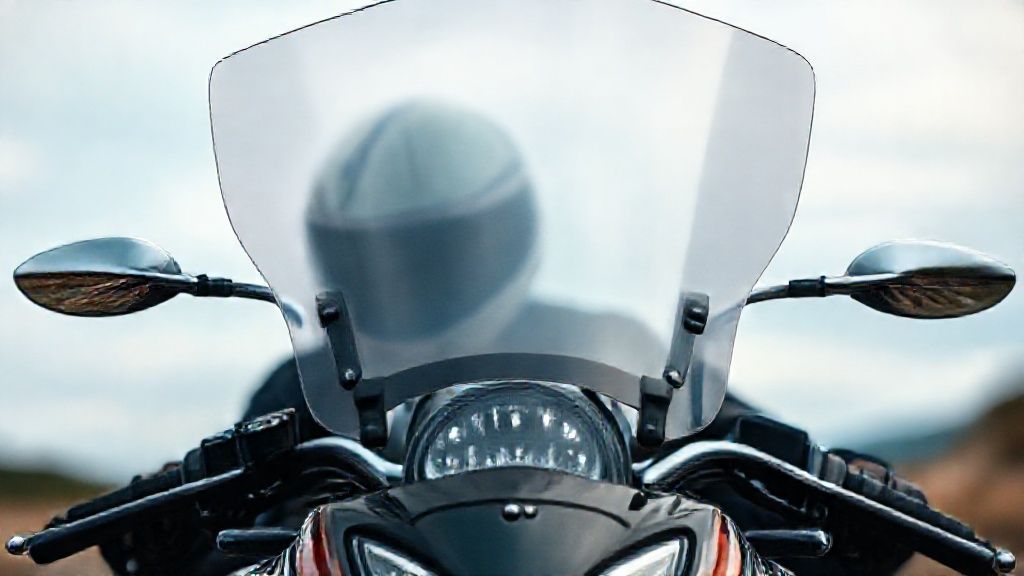
I’ll never forget the day a fellow rider pulled into a rest stop on the Pacific Coast Highway, his expensive touring bike gleaming in the California sun, yet his neck was cranked at an awkward angle and his shoulders hunched forward like a question mark.
When I asked if he was alright, he grimaced and said, “This damn windshield is killing me.” He’d spent $400 on an aftermarket screen that promised “optimal wind protection,” but nobody—not the dealer, not the manufacturer, not the online forums—had taught him how to measure for the correct motorcycle windshield height. He was riding in a turbulent bubble of buffeting air that turned every mile into a wrestling match.
This scenario plays out thousands of times across the country every riding season. The motorcycle windshield market has exploded to a $2.3 billion industry globally, yet the fundamental question of proper sizing remains shrouded in myth, marketing speak, and well-intentioned but often incorrect advice. Some riders swear by the “eye-level rule,” others insist on looking over the top, and manufacturers provide measurements that seem designed more for liability protection than actual comfort.
In this comprehensive guide, you’ll learn the precise methodology for determining your ideal windshield height, understand the aerodynamic principles that make this measurement critical, and discover why this seemingly simple topic has become one of the most misunderstood aspects of motorcycle ergonomics.
More importantly, you’ll learn how to measure for the correct motorcycle windshield height in a way that accounts for your unique riding position, helmet type, and intended use—because there’s no one-size-fits-all solution, despite what the marketing materials claim.
The Aerodynamic Reality: Why Windshield Height Matters More Than You Think
Before we dive into measurement techniques, we need to understand what’s actually happening when air hits your motorcycle at speed. This isn’t just about comfort—it’s about physics, and the forces involved are more complex than most riders realize.
When you’re riding at highway speeds, you’re pushing through air molecules at a rate that creates substantial force. At 70 mph, the wind pressure against your chest amounts to approximately 12 pounds per square foot. A properly sized windshield doesn’t eliminate this force—it redirects it. The key word here is “redirects,” because understanding how to measure for the correct motorcycle windshield height means understanding where you want that air to go.
The aerodynamic principle at work is called the “stagnation zone”—the area directly behind the windshield where air velocity drops dramatically. This zone creates a pocket of relatively calm air, but here’s the critical detail that most riders miss: the top edge of your windshield generates a turbulent boundary layer that extends several inches above the screen itself. This turbulent zone is your enemy. If your helmet sits in this zone, you’ll experience buffeting, noise, and fatigue regardless of how expensive your windshield is.
The Three Zones of Wind Protection
Professional aerodynamicists divide the area behind a motorcycle windshield into three distinct zones. The clean air zone sits fully behind the windshield, protected from direct airflow. The turbulent zone exists at and just above the windshield’s upper edge, where laminar airflow breaks down into chaotic vortices. The free stream zone sits well above the windshield, where air flows unimpeded at full velocity.
Your goal when learning how to measure for the correct motorcycle windshield height is to position your helmet either in the clean air zone or in the free stream zone—never in the turbulent zone. This single principle explains why riders of identical height on identical motorcycles might need dramatically different windshield heights based on their riding position and preferences.
The Essential Tools and Setup for Accurate Measurement
Measuring for the correct motorcycle windshield height isn’t something you can eyeball or estimate. You need specific tools and a systematic approach. Here’s what belongs in your measurement kit:
A tape measure with both metric and imperial markings is non-negotiable—you’ll need at least 36 inches of length. I prefer a metal carpenter’s tape over a fabric tailor’s tape because it holds its shape when extended vertically. You’ll also need a laser level or smartphone with a level app, masking tape, a marker, and most importantly, a helper. Trying to measure yourself while sitting on the bike is an exercise in futility.
The setup is equally important. Your motorcycle must be on level ground with normal suspension sag—meaning you need to be sitting on it in your riding position, wearing your full gear. This is where most riders make their first mistake. They measure the bike unladen in the garage, then wonder why their carefully calculated windshield height doesn’t work in practice. Suspension sag can change your head position by two to three inches, which is the difference between comfort and misery.
The Gear Factor
Wear the helmet you actually ride with, not the fancy quiet one you save for special occasions. Different helmet designs have dramatically different aerodynamic profiles. A modular helmet with a chin bar that protrudes forward will catch wind differently than a streamlined sport helmet. Your jacket matters too—a bulky touring jacket with a tall collar will position your head differently than a sleek leather sport jacket.
When learning how to measure for the correct motorcycle windshield height, you must account for these variables. I’ve seen riders go through three different windshields before realizing that switching from a full-face to a modular helmet changed their optimal screen height by four inches.
The Three-Point Measurement Method: A Professional Approach
Now we get to the actual measurement process. This three-point method is what I’ve refined over twenty years of testing motorcycles and advising riders on how to measure for the correct motorcycle windshield height. It accounts for variability in riding position and provides a range rather than a single number—because riding is dynamic, not static.
Point One: Eye Level in Neutral Riding Position
Sit on your motorcycle in your natural, relaxed riding position. Don’t stretch up or slouch down—sit exactly as you would thirty minutes into a comfortable highway ride. Your helper should stand beside the bike with the tape measure and mark the height from the ground to the center of your eyes (the bridge of your nose where your glasses would sit). Write this number down. This is your baseline reference point.
Next, measure from the ground to the top of your current windshield (if you have one) or to the top of the headlight nacelle (if you’re starting from scratch). Subtract the windshield height from your eye height. This number tells you how far your eyes sit above your current screen.
Here’s where experience and preference diverge from simple math. The conventional wisdom says your windshield should place the top edge at or just below eye level. This advice is wrong for most riders. If the top edge sits at eye level, the turbulent zone I mentioned earlier will encompass your entire helmet, creating buffeting that feels like being slapped by an invisible hand at highway speeds.
Point Two: The Turbulent Zone Calculation
The turbulent zone typically extends three to five inches above the windshield’s top edge, depending on the screen’s angle and your speed. This is where understanding how to measure for the correct motorcycle windshield height becomes more art than science. You need to account for this zone in your calculations.
Take your eye-level measurement and add five inches. This gives you the minimum windshield height needed to place your eyes fully above the turbulent zone, in clean free-stream air. Now subtract five inches from your eye-level measurement. This gives you the maximum windshield height that would place your eyes fully in the protected zone behind the screen.
You now have a range: your eye level minus five inches (maximum for protected riding) to your eye level plus five inches (minimum for over-the-screen riding). Your optimal windshield height will fall somewhere in this range, depending on your riding style and tolerance for wind.
Point Three: The Forward Lean Test
This third measurement is crucial but often overlooked. When you’re riding aggressively or fighting a headwind, you naturally lean forward slightly, changing your head position relative to the windshield. Lean forward into your “aggressive riding” position—about 15 degrees more forward lean than your neutral position. Have your helper measure your eye height again.
This measurement is typically two to four inches lower than your neutral position. If you frequently ride in this position (sport-touring riders, I’m looking at you), you need to factor this into your windshield height calculation. The last thing you want is a windshield that works perfectly in neutral position but puts your helmet directly in the turbulent zone when you lean forward.
Understanding Windshield Angles and Effective Height
Here’s a complication that separates novice measurement from professional understanding: windshield height isn’t just about vertical measurement. The angle of the windshield dramatically affects its aerodynamic performance and effective height.
A windshield raked back at 45 degrees doesn’t provide the same wind protection as a vertical windshield of the same height. The raked screen has less “effective height” because air can flow over it more easily. When manufacturers list windshield heights, they’re usually measuring the physical height along the surface of the screen, not the vertical height from the mounting point.
This is why learning how to measure for the correct motorcycle windshield height requires understanding the difference between nominal height and effective height. A 20-inch windshield raked back at 45 degrees has an effective vertical height of only about 14 inches. If you order based on the nominal measurement without accounting for angle, you’ll end up with a screen that’s too short.
The Angle Correction Formula
To calculate effective height, you need basic trigonometry. Measure the angle of your windshield using your level app. If the windshield is raked back 30 degrees from vertical, multiply the nominal height by 0.866 (the cosine of 30 degrees). For a 45-degree rake, multiply by 0.707. This gives you the effective vertical height.
Most touring bikes have windshields raked between 20 and 40 degrees. Sport bikes with small screens often have rakes of 45 degrees or more. This is why a sport bike might need a nominally taller windshield to provide the same protection as a touring bike—the aggressive rake angle reduces effective height.
Adjustability: The Professional’s Secret Weapon
After years of testing and writing about motorcycles, I’ve reached a definitive conclusion: if you’re serious about optimal wind protection, you need an adjustable windshield or mounting system. The reason is simple—no single height works for all conditions.
On a cool morning ride through twisty backroads, you might want maximum protection, with the windshield raised to direct air completely over your helmet. On a hot afternoon slog through traffic, you might want the screen lowered to allow more cooling airflow. Fighting a 30-mph crosswind requires different protection than cruising in calm conditions.
When considering how to measure for the correct motorcycle windshield height, I recommend measuring for your most common riding scenario, then selecting a windshield with at least four inches of vertical adjustment. This gives you the flexibility to fine-tune for conditions without compromising your baseline comfort.
Manual vs. Electric Adjustment
Manual adjustment systems use a hand-operated lever or knob to raise and lower the screen. They’re reliable, lightweight, and inexpensive. Electric systems offer push-button convenience but add weight, complexity, and potential failure points. For riders who adjust frequently, electric systems are worth the investment. For those who set-and-forget, manual systems are perfectly adequate.
The key is ensuring that whatever system you choose offers adjustment in small increments. A system that only offers two positions—up or down—defeats the purpose. Look for systems with at least four distinct positions spanning a total range of four to six inches.
Special Considerations for Different Riding Styles
The optimal windshield height varies dramatically based on how and where you ride. Understanding these differences is crucial when learning how to measure for the correct motorcycle windshield height for your specific needs.
Long-Distance Touring
Touring riders typically benefit from taller windshields that provide maximum protection. The goal is to eliminate as much wind pressure as possible, reducing fatigue over hundreds of miles. For touring applications, I recommend measuring for a windshield that places the top edge two to three inches above your eye level in neutral riding position. This puts your entire helmet in the calm air zone.
However, touring riders must be vigilant about the turbulent zone. A too-tall windshield can create a negative pressure zone behind the screen that actually pulls you forward, creating a different kind of fatigue. The sweet spot is a screen tall enough to protect your chest and shoulders while directing clean air over the top of your helmet, not around it.
Sport Riding and Canyon Carving
Sport riders often prefer shorter windshields or even riding with no windshield at all. The forward-leaning riding position naturally tucks the rider’s head lower, and the aggressive riding style means you’re constantly moving around on the bike. A tall windshield can actually create problems by blocking your view through corners or creating lift at high speeds.
For sport applications, measure for a windshield that sits three to five inches below your eye level in neutral position. This provides minimal protection—just enough to deflect wind off your chest—while keeping your helmet fully in the free-stream airflow. You’ll feel more wind, but you’ll avoid the buffeting that comes from a helmet dancing in and out of the turbulent zone as you move around.
Commuting and Urban Riding
Commuters face unique challenges because they encounter such varied conditions. Low-speed urban riding benefits from shorter windshields that allow cooling airflow, while highway commuting demands more protection. This is where adjustability becomes essential.
For commuter applications, I recommend measuring for a mid-height windshield that places the top edge right at eye level, paired with an adjustment system. This gives you a baseline that works reasonably well in all conditions, with the ability to optimize for specific situations.
The Wind Tunnel Truth: Testing Your Measurements
Once you’ve calculated your ideal windshield height, the real-world testing begins. No amount of careful measurement can fully predict how a windshield will perform at speed with your specific body position, helmet, and bike. This is why understanding how to measure for the correct motorcycle windshield height includes a testing and validation phase.
Start with conservative measurements. If your calculations suggest a range between 18 and 24 inches, start with 20 inches rather than jumping straight to 24. Many aftermarket manufacturers offer trial periods or return policies—take advantage of these. A reputable dealer should be willing to exchange a windshield if the height isn’t right, especially if you’re a repeat customer.
The Highway Test Protocol
Test your new windshield on a calm day first, ideally with wind speeds below 10 mph. Ride at various speeds from 45 to 75 mph, paying attention to where you feel wind pressure and turbulence. Your helmet should feel stable, without side-to-side buffeting or vertical bouncing. You should be able to turn your head smoothly without feeling the helmet catch wind.
Next, test in crosswinds. This is where improper windshield height reveals itself most dramatically. A too-tall windshield will catch crosswinds and try to push the front end of your bike sideways. A too-short windshield won’t provide enough protection, forcing you to fight to keep your head stable. The right height will allow crosswinds to flow over and around you without creating excessive side loads.
The Noise Test
Wind noise is a critical but often overlooked indicator of proper windshield height. Excessive noise means turbulent air is reaching your helmet, even if you don’t feel strong buffeting. The quietest setup is usually one where your helmet sits either fully protected behind the windshield or fully exposed in clean airflow above it—never in between.
Use a decibel meter app on your smartphone to measure noise levels at highway speed. Readings above 95 decibels indicate problematic turbulence. The best setups produce noise levels in the 85-90 decibel range at 70 mph. If you’re seeing higher numbers, your windshield height likely needs adjustment.
Common Mistakes and How to Avoid Them
In two decades of helping riders understand how to measure for the correct motorcycle windshield height, I’ve seen the same mistakes repeated countless times. Learning from others’ errors can save you hundreds of dollars and hours of frustration.
Mistake One: Measuring Without Gear
The single most common error is measuring while sitting on the bike in street clothes without a helmet. Your full gear adds inches to your height and changes your riding position. Always measure in full gear, period. No exceptions.
Mistake Two: Ignoring Suspension Sag
Suspension sag with rider weight can change head position by two to four inches depending on your bike’s suspension setup. Measure with your weight on the bike, suspension compressed to normal riding sag. If you frequently carry a passenger or luggage, measure in that configuration too—the additional weight will compress the suspension further, lowering your head position relative to the windshield.
Mistake Three: Trusting Manufacturer Recommendations Blindly
Manufacturers provide height recommendations based on average rider statistics, which means they’re wrong for at least half of all riders. Use manufacturer recommendations as a starting point, but always verify with your own measurements. I’ve seen five-foot-six riders need taller windshields than six-foot-two riders because of differences in riding position and preference.
Mistake Four: Forgetting About Helmet Shape
A round, smooth helmet creates less turbulence than an angular, vented sport helmet. If you switch helmet styles, you may need to adjust your windshield height accordingly. This is particularly true when switching between full-face, modular, and half helmets—each has dramatically different aerodynamic characteristics.
Advanced Techniques: Fine-Tuning for Perfection
Once you’ve mastered the basics of how to measure for the correct motorcycle windshield height, these advanced techniques can help you achieve truly optimal performance.
The Tape and Cardboard Method
Before ordering an expensive aftermarket windshield, create a temporary extension using cardboard and tape. Cut cardboard to the width of your current windshield and tape it to the top edge, extending the height by two-inch increments. Test ride with each height, making notes about comfort, buffeting, and noise. This crude but effective method lets you dial in the exact height you need before spending money.
Professional testers use this technique constantly. I’ve used it on dozens of long-term test bikes to find optimal windshield heights before making recommendations. Yes, you’ll look ridiculous with cardboard taped to your windshield, but you’ll save hundreds of dollars in trial-and-error purchases.
The Pressure Mapping Technique
For the truly obsessive (and I mean that as a compliment), pressure mapping can reveal exactly where wind is hitting your body. Wear a white t-shirt over your jacket and have someone spray you lightly with water before a test ride. The dry areas show where you’re protected by the windshield; the wet areas show where wind is reaching you. This visual feedback makes it easy to see if your windshield is the right height or if you need more or less protection in specific areas.
The Video Analysis Method
Mount a camera on a chase vehicle and record video of yourself riding at highway speeds. Review the footage to see how your helmet moves in the airflow. Excessive movement indicates you’re in the turbulent zone. A stable helmet position means you’ve found the sweet spot. This technique is particularly useful for identifying crosswind sensitivity and side-to-side buffeting that you might not fully perceive while riding.
Conclusion: The Path to Perfect Wind Protection
After examining the physics, the measurement techniques, and the real-world variables involved, one conclusion is inescapable: learning how to measure for the correct motorcycle windshield height is not a simple matter of adding a few inches to your eye level and calling it done. It’s a systematic process that requires careful measurement, understanding of aerodynamic principles, and real-world testing.
The three-point measurement method I’ve outlined—measuring eye level in neutral position, accounting for the turbulent zone, and testing in forward-lean position—provides a scientific foundation for selecting windshield height. But science must be tempered with personal preference and riding style. Touring riders need different solutions than sport riders. Commuters need different solutions than weekend canyon carvers.
Here’s my definitive recommendation: Start with measurements, but don’t end there. Invest in an adjustable windshield mounting system or a shield with a “recurve” design if available for your model. The ability to fine-tune your protection by an inch or two can make the difference between a 50-mile pain threshold and a 500-mile joyride.
Remember: A properly sized windshield is invisible—not just because you look over it, but because you stop thinking about it. When the noise fades and the buffeting stops, you’re left with the pure, unfiltered experience of the ride. That is the goal, and with these measurements in hand, it is one you can absolutely achieve. Don’t settle for “good enough.” Your neck, your hearing, and your love for riding deserve the perfect fit.
Frequently Asked Questions (FAQs)
Should I look over or through my motorcycle windshield?
For the vast majority of riders, looking over the windshield is the safer and more comfortable option. A shield that you look through can distort your vision, become opaque in the rain, and blind you with glare from oncoming headlights at night. The ideal height typically places the top edge of the screen about 1 to 2 inches below your eye level, allowing you to see the road clearly while the air is deflected over your helmet.
What if I fall exactly between two windshield sizes?
If you are stuck between a 19-inch and a 21-inch option, choose the taller one. It is relatively easy to cut down a plastic windshield (or have a shop do it) to get the perfect height. You cannot stretch a short windshield. Alternatively, buying the shorter shield and adding an adjustable “spoiler” or deflector to the top is a great way to bridge the gap.
How do I measure if I don’t currently have a windshield on my bike?
The process is the same, but you will need to visualize the mounting point. Sit on the bike in your riding position and have a helper hold a tape measure starting from the headlight housing (or wherever the brackets will mount). Look straight ahead and determine where your “nose level” is on the tape. That measurement is your target vertical height.
Does windshield width matter as much as height?
While height controls head buffeting, width controls the pressure on your shoulders and torso. If you feel like you are doing a pull-up at 70 mph just to hold on, your windshield is likely too narrow. However, be careful going too wide; a massive “barn door” windshield can catch crosswinds and make the bike unstable handling-wise.
Can I use an app to measure the angle?
Yes. Most smartphones have a built-in “Measure” or “Level” app. Simply hold the phone’s edge against the windshield (or the fork tubes, if you don’t have a shield yet) to get the angle in degrees. Use this angle to calculate the “effective height” as described in the guide.
Why does my passenger complain about wind even when I’m comfortable?
The passenger sits in the low-pressure “wake” created by the rider and the windshield. As air collapses back into this vacuum, it creates turbulence right where the passenger sits. Solving this often requires a windshield that is slightly wider (to push the air further out) or adding “lowers” (deflectors on the forks) to stop dirty air from coming up from below.