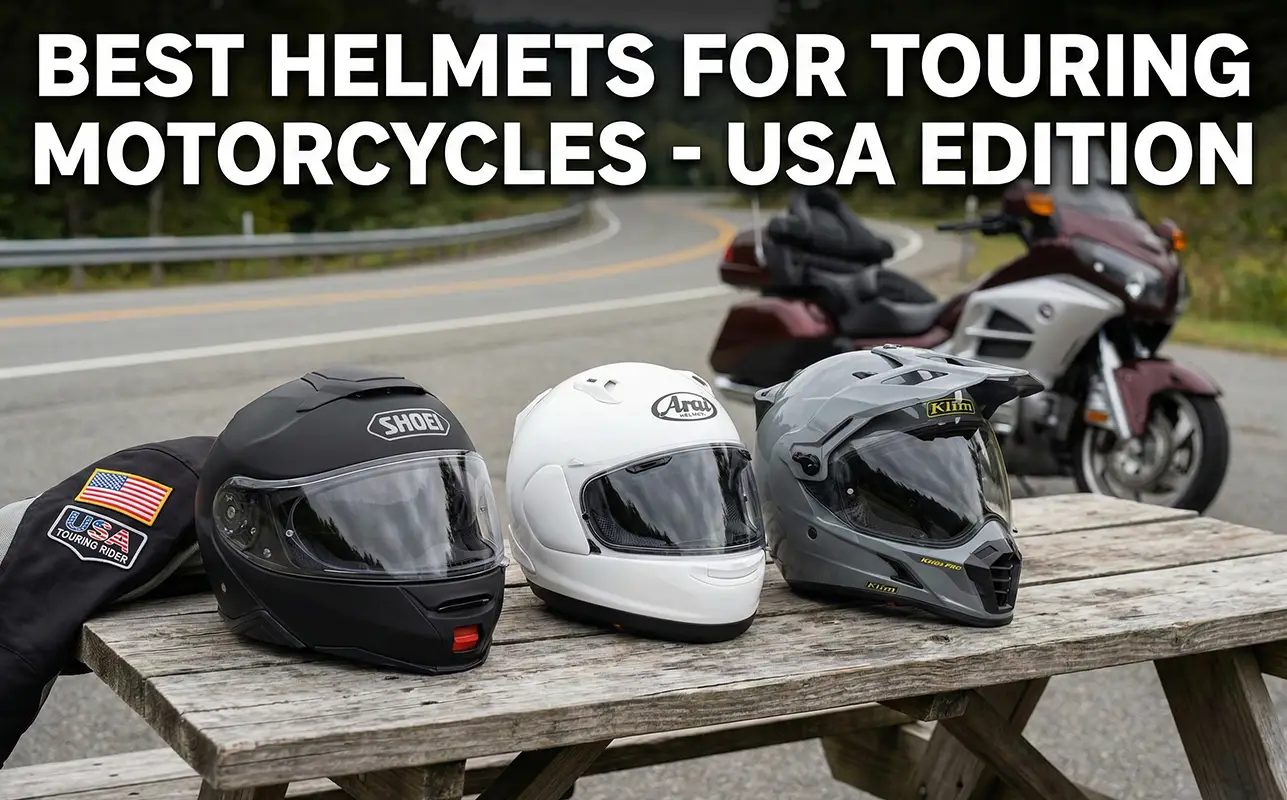
When you’re planning a cross-country adventure or an extended motorcycle tour, your helmet becomes more than just safety equipment—it’s your companion for hundreds or thousands of miles.
The right touring helmet can make the difference between arriving at your destination refreshed or exhausted. For a detailed guide on sizing and fitment, check out our Ultimate Guide to Motorcycle Helmets.
In this comprehensive guide, we’ve evaluated the best helmets specifically designed for touring motorcyclists. Our selection criteria focused on comfort during extended wear, aerodynamic stability, and noise levels.
Each helmet on this list has been chosen based on real-world touring performance and rider feedback.
1. Schuberth C5
The Schuberth C5 represents the pinnacle of German engineering in the touring helmet market. This modular helmet has quickly become the gold standard for serious touring riders who demand the absolute best in comfort and quietness.
Overview
The Schuberth C5 is a premium modular helmet that combines the convenience of a flip-up chin bar with full-face protection. It features an advanced aeroacoustic design that makes it one of the best quietest motorcycle helmets available.
The C5 includes an integrated sun visor, an anti-fog Pinlock insert, and is optimized for the Schuberth SC2 (Sena-based) communication system. The ventilation system features multiple intake and exhaust vents that can be easily adjusted even while wearing gloves.
Key Features
- Direct Fiber Processing: Lightweight glass fiber shell.
- P/J Homologation: Certified safe open or closed.
- Integrated Sun Visor: Easy light management.
- SC2 Ready: Plug-and-play comms.
Pros and Cons
Pros:
- Exceptionally quiet at highway speeds, reducing fatigue.
- Premium comfort with plush, moisture-wicking interior padding.
- Excellent build quality with a robust chin bar mechanism.
- Integrated sun visor works flawlessly.
Cons:
- Premium price point may be prohibitive.
- Slightly heavier than some non-modular competitors.
- Communication system integration requires purchasing Schuberth’s proprietary system.
Pricing: The Schuberth C5 retails between $750 and $900.
Best For: Long-distance touring riders who prioritize silence and integrated tech.
2. Shoei Neotec II
Shoei’s Neotec II has earned its reputation as one of the most reliable and comfortable touring helmets on the market. This Japanese-made modular helmet offers an exceptional balance of features.
Overview
The Shoei Neotec II is a versatile modular helmet that excels in every aspect. Its AIM+ shell construction uses advanced integrated matrix technology. The helmet features Shoei’s QR-E base plate system, making it compatible with the best motorcycle helmets with bluetooth (Sena SRL2) that integrates seamlessly.
The internal sun shield deploys smoothly and provides excellent UV protection. The ventilation system creates effective airflow that prevents fogging and keeps you cool.
Key Features
- AIM+ Shell: Multi-ply matrix for strength.
- Vortex Generator: Reduces wind noise.
- Integrated Sun Shield: QSV-1 visor.
- Micro Ratchet Strap: Secure stainless steel closure.
Pros and Cons
Pros:
- Outstanding fit and finish with Shoei’s legendary quality control.
- Wide range of sizes ensuring proper fit for various head shapes.
- Excellent aerodynamics with minimal buffeting.
- Strong safety ratings including DOT certification.
Cons:
- Higher price point compared to entry-level touring helmets.
- Some riders find the chin bar mechanism requires two hands to operate smoothly.
- Limited color options compared to sport-oriented helmets.
Pricing: The Shoei Neotec II retails between $700 and $850.
Best For: Touring riders who want a proven, reliable modular with integrated comms.
3. AGV Sportmodular
The AGV Sportmodular brings Italian style and racing heritage to the touring helmet segment. This carbon fiber modular helmet offers a unique combination of lightweight construction and aggressive styling.
Overview
AGV’s Sportmodular stands out as the lightest modular helmet in its class, thanks to its 100% carbon fiber shell construction. It is a top contender for the best lightweight carbon fiber helmet in the touring category.
The helmet features AGV’s innovative chin bar release system. The ultra-wide visor provides an expansive field of vision, and the integrated sun visor uses AGV’s exclusive system.
Key Features
- 100% Carbon Fiber: Shell and chin bar.
- Panoramic Visor: 190° horizontal view.
- Reversible Liner: Warm side/Cool side.
- Adjustable Spoiler: Aerodynamic stability.
Pros and Cons
Pros:
- Exceptionally lightweight construction reduces fatigue on long tours.
- Outstanding safety ratings.
- Panoramic visor offers excellent peripheral vision.
- Aggressive, modern styling.
Cons:
- Premium pricing reflects carbon fiber construction.
- Some users report the fit runs smaller than other brands.
- Ventilation could be improved for hot weather.
Pricing: The AGV Sportmodular retails between $750 and $900.
Best For: Sport-touring riders who want the lightness of a race helmet with a flip-up chin.
4. HJC RPHA 90S
The HJC RPHA 90S represents exceptional value in the touring helmet market. This modular helmet delivers premium features and performance at a mid-range price point.
Overview
HJC’s RPHA 90S utilizes a premium integrated matrix shell (PIM+). The helmet features compatibility with the Smart HJC Bluetooth system. It is often cited as the best full-face motorcycle helmet for the money (in the modular touring class).
An internal drop-down sun shield provides convenient eye protection. The ventilation system features ACS Advanced Channeling Ventilation with multiple intake and exhaust ports.
Key Features
- PIM+ Shell: Carbon/Glass hybrid.
- Sun Shield: Wide-view internal visor.
- 3D Engineered Interior: Noise reduction.
- RapidFire Shield: Quick replacement.
Pros and Cons
Pros:
- Excellent value proposition with premium features.
- Pre-installed Bluetooth communication readiness saves hassle.
- Comfortable fit suitable for various head shapes.
- Tool-free visor change system makes roadside replacements easy.
Cons:
- Slightly noisier than premium competitors at sustained highway speeds.
- Interior padding quality doesn’t quite match top-tier brands.
- Limited availability of replacement parts in some regions.
Pricing: The HJC RPHA 90S retails between $450 and $550.
Best For: Touring riders seeking premium materials on a mid-range budget.
5. BMW System 7 Carbon
The BMW System 7 Carbon is purpose-built for adventure touring riders who need a helmet that performs equally well on highways and off-road trails.
Overview
Features a lightweight carbon fiber composite shell. The helmet’s modular design allows the chin bar to flip up completely or even be removed (on some versions, transforming into a Jet helmet).
What sets this helmet apart is its integrated sun visor and excellent ventilation. The interior features moisture-wicking fabric. This helmet pairs perfectly with larger ADV bikes.
Key Features
- Carbon Shell: High strength-to-weight ratio.
- Removable Chin Guard: Converts to Jet helmet.
- Quad-Joint Mechanism: Compact flip-up profile.
- Integrated Sun Visor: Easy deployment.
Pros and Cons
Pros:
- Versatile design works excellently for both street and adventure riding.
- High-quality construction with carbon fiber reinforcement.
- Generous eyeglasses accommodation.
- Excellent ventilation system.
Cons:
- Premium pricing typical of BMW Motorrad accessories.
- Styling is conservative.
- Heavier than some pure street touring helmets.
Pricing: The BMW System 7 Carbon retails around $700 to $900.
Best For: BMW GS owners and serious adventure touring riders.
6. Arai Defiant-X
The Arai Defiant-X represents the Japanese manufacturer’s dedication to touring comfort and safety. This full-face helmet is specifically designed for the upright riding position common on touring bikes.
Overview
Arai’s Defiant-X uses the company’s proprietary Complex Laminate Construction shell. Unlike modular helmets, the Defiant-X is a traditional full-face design.
The helmet features Arai’s Facial Contour System (FCS) cheek pads. The VAS-V visor system creates an effective seal that reduces wind noise. It is a top choice for those with an intermediate oval head.
Key Features
- PB-cLc Shell: Peripherally Belted Complex Laminate.
- VAS Shield Mechanism: Glancing off capabilities.
- FCS Cheek Pads: Custom jaw fit.
- Chin Curtain: Reduces wind noise.
Pros and Cons
Pros:
- Exceptional build quality with hand-assembly.
- Superior comfort during extended wear.
- Excellent safety credentials with Snell certification.
- Highly effective ventilation for upright riding.
Cons:
- Premium price reflects hand-built construction.
- Traditional full-face design lacks flip-up convenience.
- Arai’s rounder shell shape may not fit all heads perfectly.
Pricing: The Arai Defiant-X retails between $680 and $850.
Best For: Riders on naked or touring bikes who prefer full-face safety over modular convenience.
7. LS2 Valiant II
The LS2 Valiant II proves that excellent touring helmet features don’t require a premium price tag. This modular helmet offers remarkable value with its 180-degree flip capability.
Overview
The LS2 Valiant II features a kinetic polymer alloy shell. The modular chin bar flips all the way to the back of the helmet, reducing drag when open. It is one of the most popular best motorcycle modular helmets for urban touring.
An integrated sun visor deploys easily. The interior uses moisture-wicking fabric that’s fully removable.
Key Features
- 180-Degree Flip: Chin bar retracts fully.
- KPA Shell: Kinetic Polymer Alloy.
- Twin Shield System: Built-in sun visor.
- Long Oval Fit: Good for narrower heads.
Pros and Cons
Pros:
- Outstanding value with premium mechanisms.
- Comfortable fit suitable for various head shapes.
- Reliable modular mechanism that operates smoothly.
- Can be ridden legally with chin bar open.
Cons:
- Noticeably noisier than premium touring helmets.
- Build quality and materials don’t match top-tier manufacturers.
- Ventilation effectiveness could be improved.
Pricing: The LS2 Valiant II retails between $300 and $350.
Best For: Riders who frequently switch between city riding (open) and highway touring (closed).
8. Bell Race Star Flex DLX
While primarily marketed as a sport helmet, the Bell Race Star Flex DLX has gained a following among sport-touring riders who prioritize safety technology.
Overview
The Bell Race Star Flex DLX incorporates Bell’s innovative what is MIPS in motorcycle helmets (Flex system, similar concept but more advanced).
The photochromic transition visors (ProTint) automatically adjusts to changing light conditions—a valuable feature for all-day touring.
Key Features
- Flex Impact Liner: Progressive energy management.
- 3K Carbon Shell: Lightweight strength.
- ProTint Shield: Adaptive light tint.
- Virus CoolJade Liner: Cooling fabric.
Pros and Cons
Pros:
- Advanced Flex impact management system.
- Transitions adaptive visor eliminates need for manual sun visor.
- Excellent aerodynamics with minimal buffeting.
- Wide field of view enhances situational awareness.
Cons:
- Sport-oriented design lacks drop-down sun visor.
- Higher price point due to advanced safety.
- Aggressive styling may not appeal to traditionalists.
Pricing: The Bell Race Star Flex DLX retails between $750 and $850.
Best For: Sport-touring riders on Hayabusas, ZX-14s, or similar high-speed machines.
9. Scorpion EXO-AT950
The Scorpion EXO-AT950 is an adventure-touring modular helmet that offers exceptional versatility for riders who mix street touring with fire roads.
Overview
Scorpion’s EXO-AT950 features a polycarbonate shell. The modular chin bar flips up smoothly, and the helmet includes a removable peak visor.
An internal sun visor drops down to provide eye protection. The EverClear no-fog coating helps in varying weather. It is a versatile choice for dual sport vs. dirt bike helmets.
Key Features
- Modular ADV Design: Flip-up with peak.
- SpeedView Sun Visor: Retractable tint.
- KwikWick II: Antimicrobial liner.
- Large Eye Port: Goggle compatible.
Pros and Cons
Pros:
- Exceptional versatility with peak visor.
- Solid value proposition with good features.
- Comfortable fit with adequate padding.
- Effective ventilation system.
Cons:
- Polycarbonate shell is heavier than composites.
- Peak visor creates some wind noise at highway speeds.
- Build quality is adequate but not premium.
Pricing: The Scorpion EXO-AT950 retails between $270 and $290.
Best For: Adventure touring riders who want modular convenience on a budget.
Conclusion
Selecting the best touring helmet ultimately depends on your specific needs. If you prioritize absolute quiet, the Schuberth C5 or Shoei Neotec II represent the pinnacle. For riders seeking lightweight performance, the AGV Sportmodular delivers. Budget-conscious riders will find excellent value in the HJC RPHA 90S.
Remember that the best helmet is one that fits your head shape properly. Invest in quality—your helmet is the most important piece of safety equipment you own.
Frequently Asked Questions
What makes a touring helmet different from a regular motorcycle helmet?
Touring helmets focus on long-distance comfort. They typically feature superior ventilation, enhanced noise reduction, integrated sun visors, and aerodynamics optimized for upright riding positions to reduce neck fatigue.
Are modular helmets as safe as full-face helmets for touring?
Yes, provided they are high-quality and “P/J” certified (approved for use open or closed). When the chin bar is locked, they offer protection comparable to full-face helmets, though they are often slightly heavier.
How much should I expect to spend on a quality touring helmet?
Quality touring helmets range from $250 to $900. Mid-range options ($400-$600) offer a great balance of features and safety. Premium helmets ($700+) offer the best noise reduction and materials.
How often should I replace my touring helmet?
Every 5 years, or immediately after an impact. High-mileage touring exposes the helmet to more UV rays and sweat, which can degrade materials faster than casual use.
Do I need a Pinlock insert for touring, and what does it do?
Yes, it is highly recommended. A Pinlock insert creates a dual-pane effect on your visor, virtually eliminating fogging in cold or rainy conditions, which is essential for touring through changing weather.