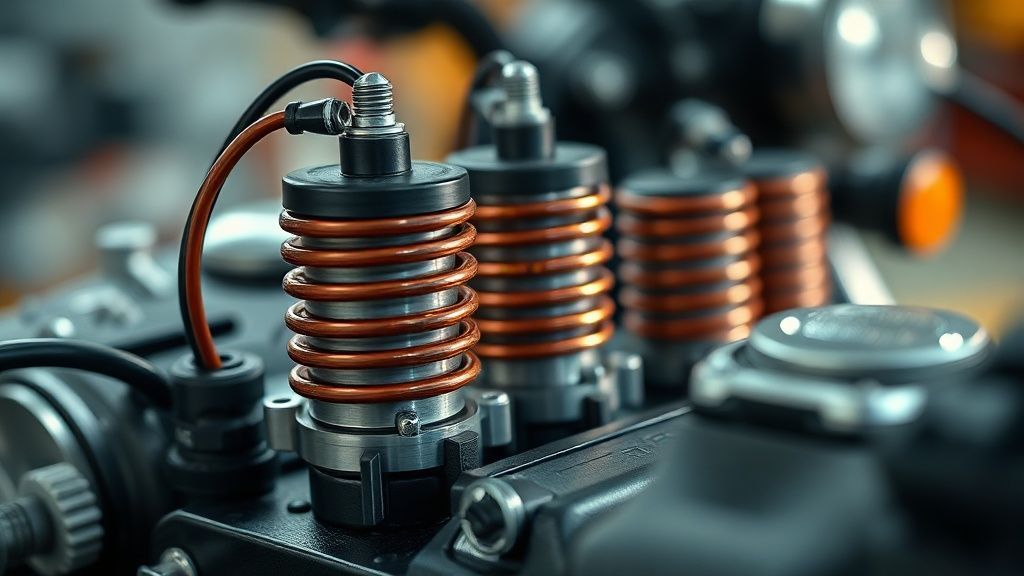
Understanding whether motorcycle ignition coils are interchangeable is crucial knowledge for any rider who wants to maintain their bike effectively and avoid costly mistakes. As a professional motorcycle mechanic with over fifteen years of experience, I’m often asked: “are motorcycle ignition coils interchangeable?” The short answer is: sometimes, but not always. This guide will walk you through everything you need to know about ignition coil compatibility, identification, and replacement.
Ignition coils are the heart of your motorcycle’s electrical system, transforming low battery voltage into the high-voltage spark needed to ignite the air-fuel mixture in your engine’s cylinders. When an ignition coil fails, your bike may misfire, run rough, or refuse to start altogether. Understanding coil compatibility can save you from purchasing the wrong part, damaging your motorcycle’s electrical system, or experiencing dangerous performance issues while riding.
This task is rated as Intermediate Difficulty. While the physical removal and installation of ignition coils is relatively straightforward, properly identifying compatible coils and understanding electrical specifications requires mechanical knowledge and careful attention to detail.
Time Required: Plan for 1-3 hours for your first coil replacement, including research time to verify compatibility. Experienced mechanics can complete the physical swap in 30-45 minutes.
Cost Savings: A professional shop typically charges $150-$300 for ignition coil replacement (parts and labor). By doing this yourself, you’ll only pay for the coil ($40-$150), saving $100-$200 or more. However, purchasing the wrong coil due to compatibility issues could waste money, which is why understanding interchangeability is essential.
Tools & Materials Needed
Tools:
- Socket set (8mm, 10mm, 12mm sockets most common)
- Ratchet with extension bars (3-inch and 6-inch)
- Torque wrench (calibrated, reading in ft-lbs and Nm)
- Screwdriver set (Phillips and flathead)
- Needle-nose pliers
- Wire brush (brass bristle preferred)
- Digital multimeter (capable of reading ohms and voltage)
- Spark plug socket (typically 16mm or 18mm)
- Allen key set (metric)
- Flashlight or headlamp
- Camera or smartphone (for documentation)
Materials & Consumables:
- Replacement ignition coil(s) – verified compatible with your specific make/model/year
- Dielectric grease (silicone-based)
- Contact cleaner spray (electronics-safe)
- Nitrile gloves (chemical-resistant)
- Shop rags or microfiber towels
- Masking tape and permanent marker (for labeling wires)
- Zip ties (various sizes)
- Anti-seize compound (copper-based)
- Service manual for your specific motorcycle
Reference Materials:
- OEM parts diagram for your motorcycle
- Ignition coil specifications sheet
- Wiring diagram for your bike’s electrical system
Preparation & Safety

Before beginning any work on your motorcycle’s ignition system, proper preparation is essential for both safety and success.
Bike Preparation:
Park your motorcycle on level ground with firm footing. If available, use a center stand or quality motorcycle stand to stabilize the bike. If your motorcycle only has a side stand, ensure it’s on solid ground and consider having an assistant nearby to stabilize the bike during the work. Turn the ignition key to the OFF position and remove the key entirely to prevent accidental electrical activation.
Allow the engine to cool completely—at least one hour after riding. Ignition coils and surrounding engine components can retain heat for extended periods, and working on hot components risks burns and can damage electrical connections.
Disconnect the negative (ground) terminal from your battery before beginning any electrical work. This prevents accidental shorts, sparks, and potential damage to your motorcycle’s sensitive electronic components. Some modern motorcycles with complex computer systems may require a memory saver device to prevent losing programmed settings.
Clean the work area around the ignition coils with contact cleaner and a shop rag. Dirt and debris can fall into sensitive areas during disassembly, potentially causing future problems.
SAFETY WARNING BLOCK:
- Electrical Shock Hazard: Ignition coils generate extremely high voltage (up to 45,000 volts). Never touch ignition components while the engine is running or the key is in the ON position. Even with the engine off, coils can store residual charge.
- Fire Risk: Gasoline vapors near electrical sparks create extreme fire hazards. Work in a well-ventilated area away from open flames, sparks, or heat sources. Keep a fire extinguisher rated for electrical and fuel fires nearby.
- Chemical Exposure: Contact cleaners and dielectric greases contain chemicals harmful if inhaled or absorbed through skin. Always wear nitrile gloves and work in ventilated areas. Avoid contact with eyes.
- Incorrect Installation Dangers: Installing incompatible ignition coils can cause engine damage, electrical system failure, or dangerous performance issues while riding. Always verify compatibility before installation.
- Battery Hazards: Batteries contain sulfuric acid and produce explosive hydrogen gas. Wear eye protection when working near batteries.
Understanding Ignition Coil Interchangeability

Before diving into the step-by-step replacement process, you must understand the critical question: are motorcycle ignition coils interchangeable?
The answer depends on several technical factors. Ignition coils vary by primary resistance, secondary resistance, output voltage, physical dimensions, mounting configuration, and connector type. Two coils may look identical but have completely different electrical characteristics that make them incompatible with your motorcycle’s ECU (Engine Control Unit) or CDI (Capacitor Discharge Ignition) system.
Types of Ignition Coils:
- Single-output coils: One coil per cylinder, common on modern sport bikes
- Dual-output coils: One coil fires two spark plugs (wasted spark system)
- Coil-on-plug (COP): Coil mounts directly on spark plug
- Remote coils: Coil mounted separately with spark plug wires
Compatibility factors include the ignition system type (CDI, TCI, or direct ignition), voltage requirements, physical mounting points, connector compatibility, and whether your system uses a wasted spark configuration. Always consult your service manual and verify part numbers before assuming coils are interchangeable.
Step-by-Step Guide to Identifying and Replacing Ignition Coils

Step 1: Identify Your Current Ignition Coil Specifications
Begin by locating your ignition coil(s). On most motorcycles, coils are mounted near the engine, often under the fuel tank or side panels. Consult your service manual for exact locations—some bikes have coils in surprisingly hidden spots.
Once located, photograph the coils from multiple angles with your smartphone. These photos will be invaluable references during reassembly. Look for a label or stamp on the coil body showing the manufacturer name, part number, and potentially electrical specifications.
Write down the complete part number. This typically appears as a series of letters and numbers (example: “30510-MBW-D02”). Also note the manufacturer if visible (common brands include Denso, NGK, Daiichi, Hitachi, and Dynatek).
Using your digital multimeter, measure the coil’s resistance values. Set the multimeter to ohms (Ω) and test the primary resistance by touching the probes to the input terminals (typically marked + and -). Record this reading. Then test secondary resistance by touching one probe to the input terminal and the other to the spark plug wire terminal. Record this reading as well.
Mechanic’s Tip: Take notes in a dedicated notebook or your phone. Include your motorcycle’s year, make, model, and VIN number alongside the coil specifications. This documentation will prove invaluable when researching compatible replacement coils.
Step 2: Research Compatible Replacement Coils
With your coil information documented, begin researching whether other coils are interchangeable with your original. Start with your motorcycle manufacturer’s parts catalog—many manufacturers use the same coil across multiple models and years.
Visit reputable online parts retailers and enter your motorcycle’s information. Look for cross-reference tools that show which other models use the same coil part number. Websites like Partzilla, BikeBandit, and RevZilla often provide fitment information.
Contact the coil manufacturer directly if possible. Companies like NGK and Denso maintain technical support lines where specialists can confirm whether specific coils are interchangeable based on electrical specifications.
Check motorcycle forums specific to your bike’s make and model. Experienced riders often share knowledge about compatible parts, but verify any forum advice against official specifications—internet information isn’t always accurate.
Mechanic’s Tip: The question “are motorcycle ignition coils interchangeable” has no universal answer. Even if physical dimensions match, electrical specifications must align perfectly. Never assume compatibility based solely on appearance.
Step 3: Verify Electrical Compatibility
Once you’ve identified a potentially compatible coil, verify its electrical specifications match your original. The primary resistance should match within 10% of your original coil’s reading. The secondary resistance should also match within 10%.
Check that the output voltage rating is appropriate for your ignition system. Most motorcycle coils output between 20,000 and 45,000 volts. Using a coil with significantly different output can cause weak spark (engine misfires) or excessive spark (potential ECU damage).
Verify the coil’s input voltage requirements match your motorcycle’s electrical system. Most motorcycles run 12-volt systems, but some older bikes use 6-volt systems. Using the wrong voltage coil will result in immediate failure or poor performance.
Confirm the connector type matches. Even if electrical specs align, a different connector means you’ll need to splice wires—a practice that introduces potential failure points and should be avoided when possible.
Mechanic’s Tip: When comparing specifications, “close enough” isn’t good enough with ignition coils. A 10% variance in resistance is the maximum acceptable difference. Beyond that, you risk damaging your motorcycle’s electrical system or experiencing performance problems.
Step 4: Remove Bodywork to Access Ignition Coils
With a compatible replacement coil confirmed and purchased, begin the physical replacement process. First, ensure your battery is disconnected (negative terminal removed).
Remove any bodywork blocking access to your ignition coils. This typically involves removing the seat, side panels, or fuel tank. Consult your service manual for specific removal procedures—improper bodywork removal can break mounting tabs or damage paint.
As you remove each fastener, place bolts and screws in labeled containers or small bags. Use your marker to note which bolts came from which location. Different positions often use different length bolts, and mixing them up during reassembly causes problems.
When removing the fuel tank (if necessary), be extremely cautious with fuel line connections. Have shop rags ready to catch any fuel spillage. Work in a well-ventilated area away from ignition sources.
Mechanic’s Tip: Take photos at each stage of disassembly. These visual references make reassembly much easier, especially if you’re interrupted and return to the project hours or days later. Focus on wire routing and connector orientations.
Step 5: Document Wire Connections
Before disconnecting anything from your ignition coils, thoroughly document all connections. Use masking tape and your permanent marker to label each wire. For example, label the positive input wire “Coil 1 – Positive Input” and the corresponding coil terminal “Coil 1 – Pos Terminal.”
Photograph the wire routing and connections from multiple angles. Pay special attention to how wires are bundled together, where they’re secured with zip ties, and how they route around other components.
If your motorcycle has multiple coils, ensure you can identify which coil corresponds to which cylinder. This is critical because mixing up coil positions can cause incorrect firing order and engine damage.
Note the condition of all wire connections. Look for corrosion (green or white crusty deposits), fraying insulation, or signs of heat damage (melted or discolored insulation). These issues should be addressed during reassembly.
Mechanic’s Tip: The few extra minutes spent documenting connections can save hours of frustrating troubleshooting later. Many ignition system problems traced to “bad coils” are actually caused by incorrect wire connections during reassembly.
Step 6: Disconnect and Remove Old Ignition Coil
Begin disconnecting the electrical connectors from your ignition coil. Most modern motorcycles use weatherproof connectors with locking tabs. Locate the tab (often a small lever or button on the connector) and depress it while gently pulling the connector apart. Never yank on wires—always pull on the connector body itself.
If connectors are stubborn due to corrosion or age, spray a small amount of contact cleaner into the connection and wait 30 seconds before attempting removal again. Forcing corroded connectors can break internal pins.
For coils with spark plug wires attached, grasp the boot (rubber covering) at the spark plug end and twist while pulling. The twisting motion breaks the seal between the boot and spark plug, preventing damage. Never pull on the wire itself—this can separate the conductor from the terminal inside the boot.
Remove the mounting bolts securing the coil to the motorcycle frame or engine. Common sizes are 8mm, 10mm, or 12mm. Use the appropriate socket to avoid rounding bolt heads. If bolts are tight, apply penetrating oil and wait 10 minutes before attempting removal.
Carefully lift the old coil from its mounting position. Be mindful of any brackets, spacers, or washers that may be part of the mounting assembly. Keep all hardware organized for reinstallation.
Mechanic’s Tip: As you remove the old coil, examine its mounting location for corrosion or damage. Clean the mounting surface with a wire brush and wipe with contact cleaner. A clean, corrosion-free mounting point ensures proper electrical grounding.
Step 7: Prepare and Inspect the Replacement Coil
Before installing your replacement coil, inspect it thoroughly. Check for any shipping damage, cracks in the coil body, or damaged terminals. Verify the part number on the new coil matches what you ordered.
Test the new coil with your multimeter to confirm it’s functioning properly. Measure both primary and secondary resistance and compare to the specifications you researched earlier. This pre-installation test can save significant frustration if you’ve received a defective coil.
Clean the terminals on the new coil with contact cleaner and a clean shop rag. Even new coils may have manufacturing oils or storage dust on connections.
Apply a thin layer of dielectric grease to the spark plug wire terminal (the tower where the spark plug wire connects). This grease prevents moisture infiltration and makes future removal easier. Do not apply grease to electrical connector pins—only to spark plug wire connections.
If your replacement coil has threaded mounting holes, apply a small amount of anti-seize compound to the mounting bolts. This prevents corrosion and makes future removal easier.
Mechanic’s Tip: When asking “are motorcycle ignition coils interchangeable,” remember that even confirmed-compatible coils can occasionally be defective from the manufacturer. Always test new electrical components before installation to avoid the frustration of reassembling everything only to discover the “new” part is faulty.
Step 8: Install the New Ignition Coil
Position the new coil in its mounting location, ensuring any spacers or brackets are properly aligned. Start all mounting bolts by hand first—this prevents cross-threading. Once all bolts are hand-started, tighten them gradually in a crisscross pattern (if multiple bolts) to ensure even pressure.
Use your torque wrench to tighten mounting bolts to the specification listed in your service manual. Typical ignition coil mounting bolt torque ranges from 8-12 ft-lbs (10-16 Nm), but always verify for your specific motorcycle. Over-tightening can crack the coil body; under-tightening can cause vibration damage.
Connect the electrical connectors to the coil, referencing your photos and labels. Push connectors together firmly until you hear or feel the locking tab click into place. Give each connector a gentle tug to verify it’s secure.
If your coil uses spark plug wires, connect them to the appropriate spark plugs. Push the boot firmly onto the spark plug until you feel it seat completely. You should hear a slight pop as the boot seals around the plug’s terminal.
Route all wires exactly as they were originally positioned, using new zip ties to secure them in place. Proper wire routing prevents chafing against moving parts or hot surfaces, which can cause wire damage and electrical failures.
Mechanic’s Tip: When reconnecting electrical connectors, listen and feel for the click of the locking tab engaging. A connector that seems connected but hasn’t fully locked will vibrate loose during riding, causing intermittent electrical problems that are frustrating to diagnose.
Step 9: Reinstall Bodywork and Reconnect Battery
With the new ignition coil installed and all connections made, begin reinstalling bodywork in reverse order of removal. Reference your photos to ensure proper placement of all panels and components.
Tighten bodywork fasteners snugly but not excessively. Plastic bodywork can crack if over-tightened. If your motorcycle uses plastic push-pins or clips, inspect them for damage and replace any broken ones.
Before reinstalling the fuel tank (if removed), inspect all fuel lines for cracks or deterioration. This is an excellent opportunity to address any fuel system maintenance while you have access.
Once all bodywork is reinstalled, reconnect your battery. Always connect the positive terminal first, then the negative terminal. This sequence minimizes the risk of accidental shorts.
Double-check that all tools have been removed from the motorcycle and the work area. It’s surprisingly easy to leave a socket or wrench in an engine bay, which can cause serious damage when the engine starts.
Mechanic’s Tip: Before declaring the job complete, take a moment to review your work. Verify all connectors are secure, all bodywork fasteners are tight, and nothing looks out of place. This final inspection catches potential issues before they become problems.
Step 10: Test the New Ignition Coil
With everything reassembled, turn the ignition key to the ON position (but don’t start the engine yet). Check your instrument cluster for any warning lights or error codes. Modern motorcycles with sophisticated electronics may display an error if the coil isn’t communicating properly with the ECU.
If no warning lights appear, start the engine. Listen carefully to how it runs. A properly functioning ignition coil should result in smooth, even running at idle. The engine should respond crisply to throttle inputs without hesitation or misfiring.
Allow the engine to warm to operating temperature while monitoring its performance. Some ignition coil issues only manifest when components heat up, so this warm-up period is an important test.
Using your multimeter, you can check the coil’s operation while the engine runs (if you’re comfortable working around running engines—this requires extreme caution). The primary side should show battery voltage when the key is on. Never touch the secondary (high voltage) side while the engine runs.
Take the motorcycle for a test ride in a safe area. Pay attention to acceleration, throttle response, and overall engine smoothness. The bike should perform normally across all RPM ranges. Any hesitation, stumbling, or misfiring indicates a problem that needs investigation.
Mechanic’s Tip: Keep notes on your coil replacement, including the date, mileage, part number installed, and any observations about performance. This documentation helps with future maintenance and can be valuable if you need to troubleshoot issues later. It also definitively answers whether certain coils are interchangeable for your specific motorcycle.
Troubleshooting Common Mistakes

Swapping ignition coils is often seen as a “plug-and-play” solution, but incorrect interchangeability causes more headaches than it cures. Here are the most frequent mistakes riders make when trying to use non-OEM coils:
- Ignoring Primary Resistance (The #1 Killer):
- The Mistake: Installing a coil with 0.5Ω resistance on a bike designed for 3.0Ω.
- The Result: This draws too much current through the ignition system. The bike might run great for 10 minutes, but you risk frying your CDI box or ECU. Replacing a $50 coil is cheap; replacing a $400 CDI unit is painful. Always measure resistance before installing.
- Overlooking Mounting Grounds:
- The Mistake: Using a coil that grounds through the body on a bike that uses a dedicated ground wire (or vice versa).
- The Result: No spark. Many vintage bikes rely on the metal contact between the coil frame and the bike frame. If you mount a generic coil with zip ties or on a painted surface without a ground strap, the circuit remains open.
- Confusing CDI vs. TCI Ignitions:
- The Mistake: Putting a CDI coil on a TCI bike.
- The Result: Weak spark or overheating. CDI systems dump high voltage quickly, while TCI systems dwell (charge up) the coil. The internal windings are physically different. Just because the bolt holes line up doesn’t mean the electronics match.
- Trusting “Universal” Labels Blindly:
- The Mistake: Buying a cheap “Universal 12V Coil” from an online marketplace without checking specs.
- The Result: “Universal” usually just means “it fits many bikes,” not “it fits your bike.” These often have poor quality control and erratic resistance values.
Conclusion
So, are motorcycle ignition coils interchangeable? The short answer is no, not universally. While many coils look identical on the outside, their internal resistance, inductance, and dwell characteristics vary significantly between ignition systems.
However, you aren’t strictly tied to expensive OEM parts from the dealership. You can successfully swap coils between different bikes or use aftermarket performance parts, provided you follow the golden rule: Match the specs, not just the shape.
If the primary and secondary resistance values match your factory manual, and the physical mounting points are compatible, an interchangeable coil can save you money and even improve performance. But if you guess wrong, you risk damaging expensive electronic components. When in doubt, stick to model-specific replacements or verify every electrical specification with a multimeter before hitting the starter button.
Frequently Asked Questions (FAQ)
1. Can I use a car ignition coil on my motorcycle?
Generally, no. While the physics are the same, car coils are often designed for different dwell times and resistance values (often lower resistance for high-energy electronic ignitions). Using a car coil on a vintage bike can burn out the contact points or the CDI unit. However, some custom builders successfully adapt coils from performance cars (like GM LS coils) to motorcycles, but this requires modifying the ignition mapping and wiring harness.
2. What happens if I put a 12V coil on a 6V motorcycle?
The spark will be incredibly weak or non-existent. A 12V coil is designed to take a 12-volt input to generate the required 15,000+ volts for a spark. Feeding it only 6 volts will result in an output voltage that is too low to jump the gap at the spark plug, causing the bike to kick back or refuse to start.
3. Are “High Performance” aftermarket coils worth it?
If your engine is stock, a high-performance coil usually offers little benefit over a properly functioning OEM coil. However, if you have modified your engine (high compression pistons, big bore kit) or have a vintage bike with a weak, aging ignition system, a modern high-output coil (like those from Dyna or Accel) can provide a hotter spark, ensuring cleaner combustion and easier starting.
4. Can I mix and match coils on a multi-cylinder bike?
It is not recommended. If you have a 4-cylinder bike and one coil fails, you should replace it with one that matches the specs of the remaining good coils exactly. Mixing coils with different resistance values can cause uneven running conditions, where some cylinders fire slightly differently than others, leading to vibration and potential engine stress. If you can’t find an exact match, it is better to replace them all as a set.