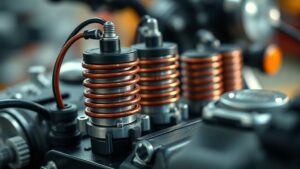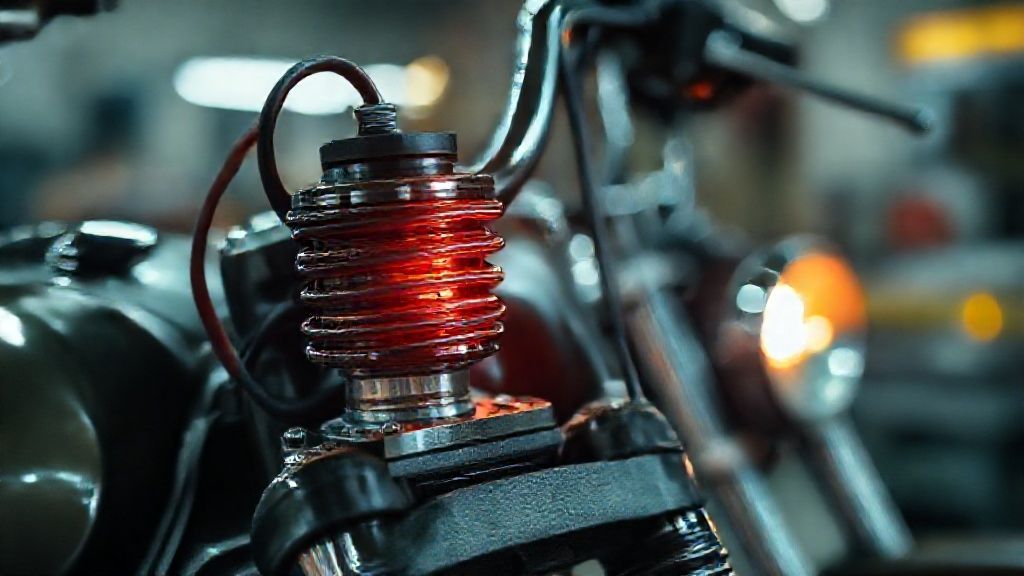
Understanding how long motorcycle ignition coils last is essential knowledge for every rider who wants to maintain their bike’s performance and avoid being stranded on the roadside. Ignition coils are the unsung heroes of your motorcycle’s electrical system, transforming your battery’s low voltage into the thousands of volts needed to create the spark that ignites your fuel-air mixture. When these components fail, your bike simply won’t run properly—or at all.
So, how long do motorcycle ignition coils last? Typically, motorcycle ignition coils last between 50,000 to 100,000 miles under normal operating conditions, though this can vary significantly based on riding habits, environmental conditions, and maintenance practices. Some coils may fail prematurely due to heat stress, vibration, or moisture exposure, while well-maintained coils on bikes ridden in ideal conditions can last the lifetime of the motorcycle.
This guide will teach you how to assess your ignition coil’s condition, recognize signs of failure, and perform replacement when necessary. Understanding this component’s lifespan and maintenance requirements is crucial because ignition coil failure can lead to poor fuel economy, reduced performance, difficulty starting, misfiring, and potentially dangerous situations where your engine cuts out unexpectedly during riding.
Difficulty Level: Intermediate – This task requires basic mechanical knowledge, the ability to use a multimeter, and comfort working with electrical components.
Time Required: 2-3 hours for testing and diagnosis; 1-2 hours for replacement per coil.
Cost Savings: Significant! A shop will typically charge $150-$300 for ignition coil testing and replacement (including labor at $80-$120/hour). Doing it yourself costs only $40-$150 for the replacement coil(s), saving you $100-$200 per coil.
Tools & Materials Needed
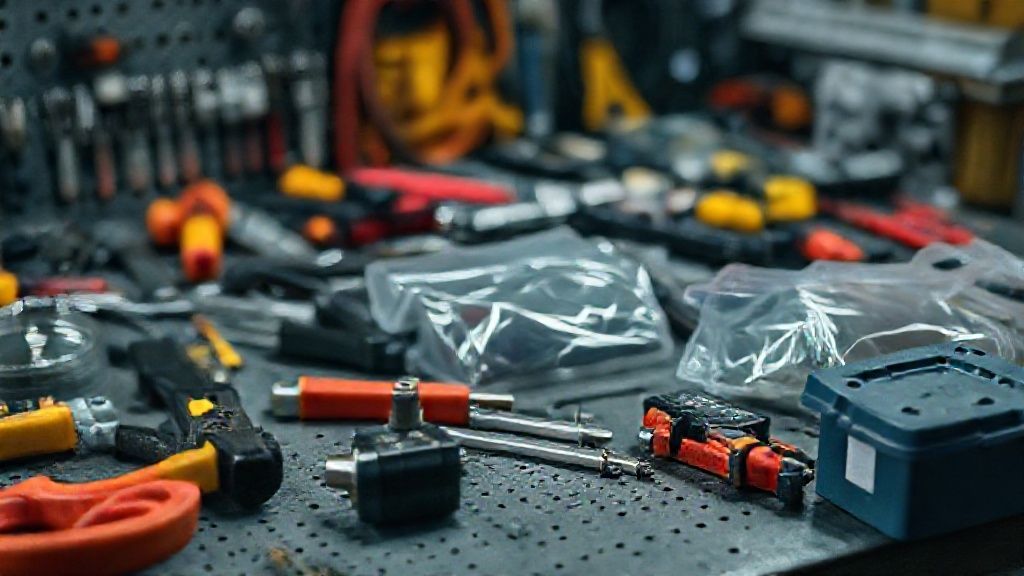
Testing Tools:
- Digital multimeter with ohm-reading capability (minimum 20k ohm range)
- Spark plug tester or inline spark tester
- Feeler gauge set
- Flashlight or work light
- Notebook and pen for recording measurements
Hand Tools:
- Socket set (8mm, 10mm, 12mm most common)
- Combination wrench set (metric)
- Phillips and flat-head screwdriver set
- Needle-nose pliers
- Wire brush (brass bristles preferred)
- Torque wrench (10-50 ft-lbs range)
Materials & Consumables:
- Dielectric grease
- Electrical contact cleaner spray
- Anti-seize compound
- Nitrile gloves (chemical-resistant)
- Shop towels or lint-free rags
- Zip-ties or tape for cable management
- Replacement ignition coil(s) (OEM or quality aftermarket)
- Replacement spark plug wires if deteriorated
Safety Equipment:
- Safety glasses
- Mechanic’s gloves
- Fire extinguisher (Class B/C rated) nearby
Preparation & Safety

Before beginning any work on your motorcycle’s ignition system, proper preparation is absolutely critical. Park your motorcycle on level ground and engage the center stand if available, or use a quality paddock stand. If your bike has been running, allow the engine to cool completely for at least 30-45 minutes—ignition coils and surrounding components can retain significant heat that may cause burns.
Disconnect the negative battery terminal first, then the positive terminal. This is non-negotiable when working with ignition systems. Even with the key off, residual charge in the electrical system can cause painful shocks or damage sensitive electronic components. Use a 10mm wrench typically, and store the cables away from the battery posts to prevent accidental reconnection.
Work in a well-ventilated area with adequate lighting. If you’re in a garage, open the door and consider using a fan for air circulation. Keep your workspace organized—lay out tools systematically and use a magnetic tray for small bolts and fasteners.
Safety Warning: Ignition coils generate extremely high voltage (15,000-45,000 volts) that can cause serious electrical shock, even when the engine is off if the battery is connected. Never touch ignition coil terminals, spark plug wires, or spark plugs while the engine is running or the ignition is on. High voltage shock can cause muscle spasms leading to falls or injury. Additionally, fuel vapors may be present in the engine area—eliminate all ignition sources and do not smoke. Gasoline is extremely flammable and its vapors can ignite explosively. Always have a fire extinguisher within reach. If you have a pacemaker or other electronic medical device, consult your physician before working with high-voltage ignition systems.
Wear safety glasses throughout this procedure to protect against debris, and use nitrile gloves when handling electrical components to prevent skin oils from contaminating connections.
Step-by-Step Guide

Step 1: Identify Signs of Ignition Coil Failure
Before testing how long your motorcycle ignition coils will last, you need to recognize the symptoms of a failing coil. Start your assessment by documenting any performance issues you’ve experienced. Common symptoms include: difficulty starting (especially when cold), rough idling, engine misfiring or hesitation during acceleration, reduced power output, poor fuel economy, backfiring, or the engine cutting out intermittently.
Visually inspect the ignition coil housing for cracks, carbon tracking (black lines on the surface indicating electrical arcing), oil contamination, or physical damage. Check the coil mounting bolts for looseness—excessive vibration can damage internal windings. Examine the spark plug wires for cracks, brittleness, or deterioration in the insulation.
Mechanic’s Tip: Ignition coil problems often worsen in wet weather or high humidity because moisture can create alternate paths for electrical current. If your bike runs poorly in the rain but fine when dry, suspect ignition coil or wire insulation breakdown.
Step 2: Access the Ignition Coils
Consult your motorcycle’s service manual to locate the ignition coils. On most bikes, they’re mounted near the spark plugs, either on the frame, under the fuel tank, or directly on the cylinder head (stick coils). You may need to remove the seat, side panels, or fuel tank to access them.
For tank removal, first turn the fuel petcock to the “OFF” position. Disconnect the fuel line carefully—have a shop towel ready to catch any fuel spillage. Label all electrical connectors with masking tape before disconnecting them; write the location on the tape (e.g., “left coil primary” or “right coil secondary”). Take photos with your phone from multiple angles before disconnecting anything—these will be invaluable during reassembly.
Remove any components blocking access to the coils, keeping track of all fasteners. Use a magnetic parts tray or muffin tin with labeled sections to organize bolts by location.
Mechanic’s Tip: When removing the fuel tank, stuff a clean rag into the fuel line to prevent fuel from draining and to keep debris from entering the fuel system.
Step 3: Perform Visual Inspection
With the coils accessible, perform a thorough visual inspection under good lighting. Look for signs of overheating such as discoloration, melted plastic, or a burnt smell. Check the coil body for cracks or damage—even hairline cracks can allow moisture intrusion that will cause failure.
Inspect all electrical connections for corrosion (green or white crusty deposits), looseness, or damaged terminals. Wiggle the connectors gently; they should be firm. Examine the spark plug wires where they connect to the coils—this is a common failure point. Look for carbon tracking, which appears as thin black lines on the coil surface or boot, indicating high-voltage electricity is finding an alternate path to ground.
Check the coil mounting points for cracks in the brackets or elongated mounting holes, which indicate excessive vibration. Understanding how long do motorcycle ignition coils last requires recognizing that physical stress from vibration is a major lifespan factor.
Step 4: Test Primary Winding Resistance
Set your digital multimeter to the ohms (Ω) setting. Most motorcycle ignition coil primary windings measure between 0.5 to 3.0 ohms, but consult your service manual for your specific model’s specifications—this is crucial for accurate diagnosis.
Locate the primary winding terminals on your ignition coil. These are typically the two smaller terminals where the power supply wires connect (often marked with + and – or numbered). Ensure the battery is disconnected and discharge any residual voltage by briefly grounding the coil terminals with a screwdriver.
Touch the multimeter probes to the primary terminals. The red probe goes to the positive terminal, black to negative. Record the reading. If the reading is infinite (OL on the display) or significantly outside the specified range, the primary winding has failed. An open circuit (infinite resistance) means the winding wire has broken internally. A reading of zero or near-zero indicates a short circuit.
Mechanic’s Tip: Temperature affects resistance readings. For the most accurate results, test coils at room temperature (68-77°F). If you’ve just ridden the bike, wait until components have cooled completely.
Step 5: Test Secondary Winding Resistance
The secondary winding produces the high voltage needed for spark generation. Set your multimeter to the highest ohm range (usually 20k or 200k ohms). Secondary winding resistance typically ranges from 5,000 to 15,000 ohms (5k to 15k), though some modern coils may read as high as 25,000 ohms. Again, check your service manual for exact specifications.
Identify the secondary winding terminals. On traditional coils, this is the high-voltage output tower where the spark plug wire connects. On coil-on-plug (stick coil) designs, you’ll test between the primary positive terminal and the spark plug connector terminal.
Touch one multimeter probe to the secondary output and the other to the primary positive terminal (or to ground, depending on coil design—consult your manual). Record the reading. An infinite reading indicates an open secondary winding. A reading far below specification suggests a short circuit. Either condition means coil replacement is necessary.
This test is critical in determining how long do motorcycle ignition coils last because secondary winding failure is the most common mode of ignition coil death, typically caused by heat degradation of the fine copper wire and insulation.
Step 6: Perform Spark Test
Resistance testing reveals internal coil condition, but a spark test confirms actual performance under load. Reconnect the battery terminals (negative last). Install a spark plug tester or inline spark tester between the ignition coil and spark plug. These inexpensive tools have a grounded body with a visible gap that allows you to observe spark quality.
If using a spare spark plug for testing, insert it into the spark plug wire and ground the plug threads against the engine block or frame (use a jumper wire with alligator clips for a solid connection). Position the plug where you can see the electrode gap clearly but away from fuel lines, the fuel tank, or any flammable materials.
With the kill switch in the “RUN” position and the transmission in neutral, turn the ignition key to “ON” (do not start the engine yet). Press the starter button briefly while observing the spark tester or plug. You should see a bright blue spark jumping the gap consistently. A weak orange or yellow spark indicates insufficient coil output. No spark indicates complete coil failure or an electrical supply problem.
Safety Warning: Never hold the spark plug or wire during this test. The high voltage can cause severe shock. Always use insulated tools and keep hands clear. Ensure excellent ventilation and no fuel vapors are present.
Step 7: Check Coil Power Supply
If your spark test shows no spark but resistance readings were acceptable, verify the coil is receiving proper voltage. With the multimeter set to DC voltage (20V range), backprobe the primary winding power supply connector (do not disconnect it). Turn the ignition to “ON.”
You should read battery voltage (approximately 12-13 volts) at the power supply terminal. If voltage is absent or significantly low, the problem isn’t the coil—it’s in the wiring, ignition switch, fuse, or ECU. Check the relevant fuse first, then trace wiring for damage.
Test the ground connection by measuring voltage between the coil ground terminal and the positive battery terminal with ignition on. You should read full battery voltage. Poor grounding is a common cause of ignition problems and can dramatically reduce how long do motorcycle ignition coils last by forcing them to work harder to generate adequate spark.
Step 8: Inspect and Clean Connections
Even if testing shows coils are within specification, poor connections can cause intermittent problems that mimic coil failure. Disconnect each electrical connector at the coil and inspect the terminals inside. Look for corrosion, bent pins, or signs of overheating (melted plastic).
Clean all electrical terminals with electrical contact cleaner spray and a small wire brush. For corroded terminals, use fine sandpaper (400-grit) to gently remove oxidation from metal contacts. Ensure terminals are completely dry before reconnection.
Apply a thin coat of dielectric grease to the inside of connector boots before reassembly. This grease prevents moisture intrusion and corrosion—a key factor in extending how long motorcycle ignition coils last. Do not apply grease directly to metal contact points; only to the surrounding insulation.
Mechanic’s Tip: If connector terminals are loose and don’t grip firmly, use needle-nose pliers to gently squeeze the female terminals slightly to improve contact pressure. Be careful not to break the terminal.
Step 9: Replace Failed Ignition Coils
If testing confirms coil failure, replacement is necessary. Purchase the correct replacement coil—OEM parts ensure proper fit and performance, though quality aftermarket options from reputable manufacturers (NGK, Dyna, Accel) can offer good value. Verify the part number matches your motorcycle’s year, make, and model.
Before removing the old coil, photograph its position and wire routing. Disconnect the spark plug wires by grasping the boot (not the wire) and twisting gently while pulling. Remove the primary electrical connector. Unbolt the coil mounting bolts using the appropriate socket. Note the bolt length and any washers or spacers.
Clean the mounting surface with a wire brush and wipe with a clean rag. Apply a small amount of anti-seize compound to the mounting bolt threads (avoid getting any on electrical contacts). Position the new coil and hand-thread the mounting bolts. Torque to specification—typically 8-12 ft-lbs for coil mounting bolts, but verify in your service manual. Over-tightening can crack the coil housing.
Connect the primary electrical connector firmly until you hear or feel it click into place. Attach spark plug wires to the correct terminals (refer to your photos). Apply dielectric grease inside the spark plug wire boots before installation.
Step 10: Verify Proper Installation
Before fully reassembling the motorcycle, perform a final verification. Reconnect the battery (positive first, then negative). Turn the ignition to “ON” and listen for the fuel pump priming (if fuel-injected). Check that all electrical connections are secure and no wires are pinched or rubbing against hot or moving parts.
Perform another spark test with the new coil(s) installed. You should observe strong, consistent blue spark. Start the engine and let it idle. Listen for smooth operation without misfiring. Gently rev the engine—acceleration should be crisp without hesitation.
Check for any unusual sounds, smells, or vibrations. Verify all warning lights function normally. If everything checks out, proceed with reassembly.
Step 11: Reassemble and Test Ride
Reinstall all components you removed in reverse order of disassembly. Refer to your photos for correct wire routing and connector locations. Ensure all fasteners are tightened to proper specifications. Reconnect the fuel line securely and turn the petcock to “ON” or “RESERVE.”
Double-check that no tools or parts have been left in the engine bay. Wipe down all surfaces with a clean cloth. Start the engine and allow it to reach operating temperature while monitoring for any issues.
Perform a test ride in a safe area. Start with low-speed operation, then gradually increase speed while monitoring engine performance. The bike should accelerate smoothly without hesitation, misfiring, or power loss. Test under various conditions—steady cruising, acceleration, and deceleration.
Mechanic’s Tip: After the first 50-100 miles following coil replacement, recheck all electrical connections and mounting bolt tightness. Vibration can cause newly installed components to settle, potentially loosening connections.
Step 12: Document and Establish Maintenance Schedule
Record the replacement date, mileage, and part numbers in your motorcycle’s maintenance log. This documentation helps you track how long do motorcycle ignition coils last on your specific bike and riding conditions, allowing you to anticipate future replacement needs.
Establish a regular inspection schedule. Every 5,000 miles or annually, perform a visual inspection of ignition coils for physical damage, check connections for corrosion, and verify secure mounting. Every 10,000 miles, perform resistance testing to catch degradation before complete failure occurs.
Understanding that how long motorcycle ignition coils last depends heavily on maintenance, commit to keeping connections clean and protected from moisture. Consider applying a protective coating to coil housings in harsh environments (coastal areas with salt air, or regions with extreme temperature fluctuations).
Troubleshooting / Common Mistakes

Problem: Resistance readings are within specification, but the bike still misfires.
This often indicates a problem beyond the coil itself. Check spark plug condition and gap—worn or improperly gapped plugs can mimic coil failure. Inspect spark plug wires for internal breakdown; the insulation may look fine externally but have internal deterioration. Test wire resistance; it should be under 10,000 ohms per foot. Also verify the CDI box or ECU is functioning properly, as these components trigger the coil. Finally, check valve clearances and compression—mechanical issues can cause symptoms similar to ignition problems.
Problem: New coil fails shortly after installation.
Premature coil failure usually results from underlying electrical problems. Check for voltage spikes caused by a failing voltage regulator—excessive voltage (over 15 volts) will quickly destroy ignition coils. Verify the charging system is functioning correctly. Ensure proper grounding; poor ground connections force coils to work harder, generating excessive heat. Check that the coil mounting is secure—vibration dramatically shortens coil life. Verify you installed the correct coil for your motorcycle; using a coil with incorrect specifications will cause rapid failure.
Problem: Intermittent spark or spark that comes and goes.
This frustrating issue often relates to thermal breakdown. As coils heat during operation, internal insulation can temporarily fail, then recover when cooled. This indicates a coil nearing the end of its service life. Check for loose connections that create intermittent contact—these often worsen with vibration. Inspect the ignition switch and kill switch for internal wear causing intermittent power supply. Verify the coil mounting is solid; loose mounting allows excessive movement that can fatigue internal connections. Consider that how long do motorcycle ignition coils last can be dramatically shortened by heat—ensure adequate airflow around coils and that cooling fins (if present) are clean.
Problem: Strong spark at idle but weak spark at higher RPMs.
This suggests the coil cannot keep up with demand at higher engine speeds, indicating internal winding degradation. Secondary winding resistance may still test within specification, but the coil has lost efficiency. This is common in high-mileage coils approaching the end of their service life. Verify the CDI or ECU is providing proper trigger signals at all RPM ranges. Check that battery voltage remains stable under load—weak batteries or failing charging systems can cause similar symptoms. Replacement is typically necessary when this condition occurs.
Conclusion
Understanding how long motorcycle ignition coils last—typically 50,000 to 100,000 miles—empowers you to maintain your bike proactively rather than reactively. By learning to test, diagnose, and replace these critical components, you’ve gained skills that will save you hundreds of dollars over your motorcycle ownership and prevent the frustration of unexpected breakdowns.
The lifespan of your ignition coils depends significantly on factors you can control: maintaining clean electrical connections, ensuring proper mounting to minimize vibration, protecting components from moisture and corrosion, and addressing electrical system problems promptly before they damage coils. Bikes ridden in harsh conditions (extreme heat, high humidity, dusty environments, or with frequent water crossings) will experience shorter coil life than those in moderate climates with stable temperatures.
While modern ignition coils are designed to be robust, they are not immortal. By treating them as a wear item rather than a “lifetime” part, you can catch issues before they leave you stranded. If your bike is over 10 years old or has crossed the 50,000-mile mark, a proactive check of your primary and secondary resistance is a smart addition to your next winter service.
Remember, a strong spark is just as important as clean fuel. Keep your coils cool, your connections clean, and your rubber boots sealed, and your engine will reward you with reliable starts for years to come.
Frequently Asked Questions (FAQ)
1. Can I ride my motorcycle with a bad ignition coil?
Technically, you can limp home if the bike is still running, but it is not recommended. Riding with a misfiring coil dumps unburnt fuel into the cylinder and exhaust. This can wash the oil off the cylinder walls (causing piston damage), ruin your spark plugs, and destroy your catalytic converter (if equipped) in a matter of miles.
2. Do ignition coils degrade over time even if not used?
Generally, no. Unlike tires or batteries, ignition coils are solid-state components (copper wire and epoxy). They do not have a “shelf life” if stored in a cool, dry place. However, coils installed on a bike that sits outside can suffer from corrosion on the terminals or dry-rot on the rubber boots, even if the bike isn’t ridden.
3. Should I replace all ignition coils at once?
If you have a multi-cylinder bike (like a generic inline-4) and one coil fails due to age (50k+ miles), it is highly likely the others are close to failure as well. Replacing them as a set ensures balanced engine performance and prevents you from having to do the same repair job four separate times.
4. Why does my new ignition coil get hot?
Ignition coils generate internal heat during operation, and they also soak up heat from the engine. It is normal for them to be warm to the touch after a ride. However, if a coil is too hot to touch, it may indicate a wiring issue (excessive voltage), a wrong spark plug gap (too wide), or a coil that has the wrong resistance for your bike’s ignition system.