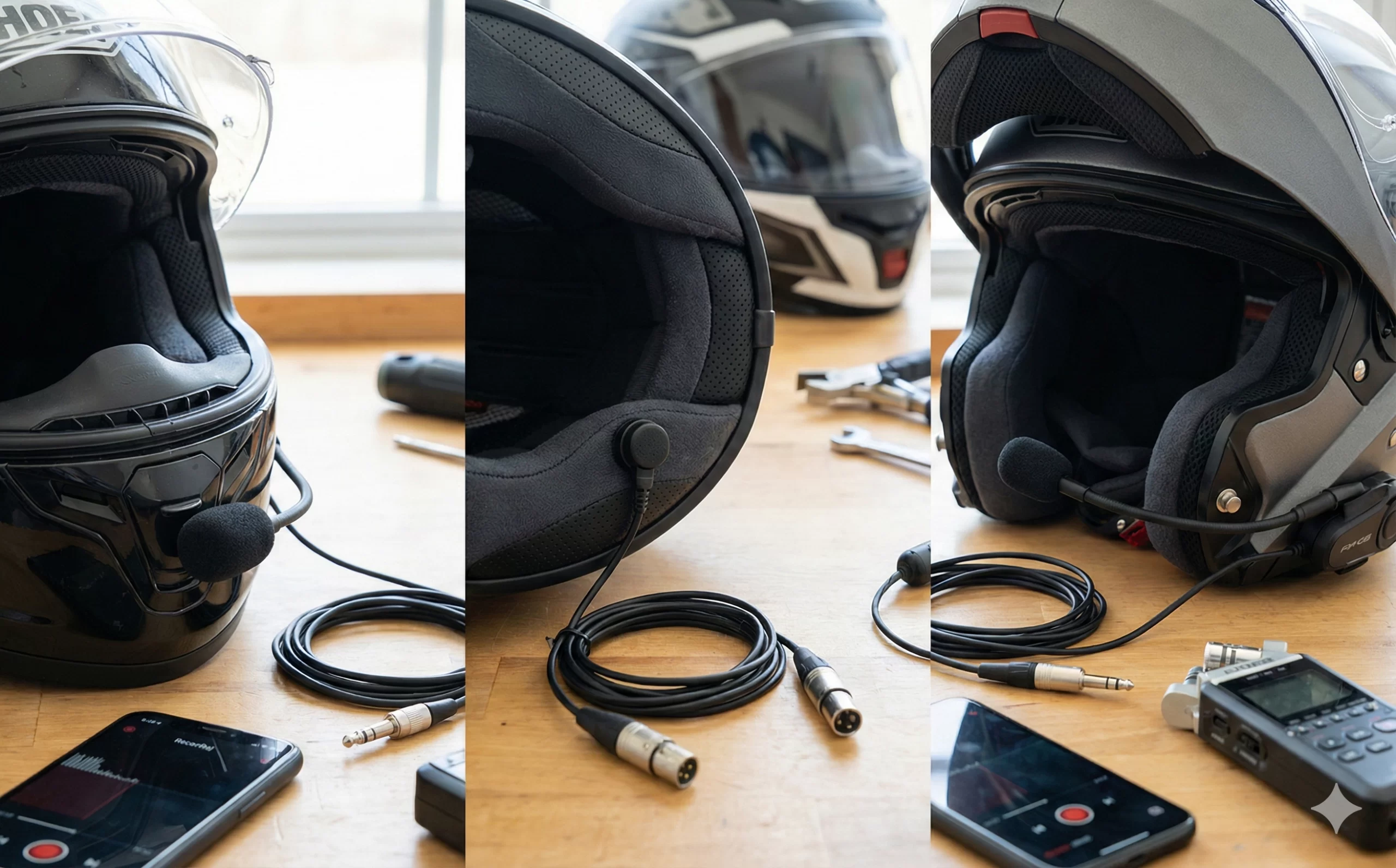
Finding the perfect microphone for your motorcycle helmet can transform your riding experience, whether you’re navigating with GPS directions, chatting with fellow riders, or taking important calls on the go.
With wind noise, engine rumble, and road sounds constantly competing for attention, not just any microphone will do. The right helmet microphone needs exceptional noise cancellation, durability to withstand the elements, and compatibility with your communication system.
In this comprehensive guide, we’ll explore the nine best microphones specifically designed for motorcycle helmets, covering options for every budget and riding style. Our selection criteria focus on sound quality, noise reduction capabilities, ease of installation, durability, compatibility with popular communication systems, and real-world performance feedback from riders.
Whether you’re a daily commuter, weekend warrior, or long-distance tourer, you’ll find the perfect microphone solution to keep you connected while keeping your hands on the handlebars and your focus on the road ahead.
1. Cardo Packtalk Bold JBL Microphone System
The Cardo Packtalk Bold JBL microphone represents the premium end of motorcycle helmet communication, combining advanced audio technology with the renowned sound engineering of JBL. This microphone system has become the gold standard for serious riders who refuse to compromise on audio quality.
Overview
Designed specifically for the Cardo Packtalk communication system, this microphone features JBL’s proprietary audio technology that delivers concert-quality sound even at highway speeds. The system includes both boom and hybrid microphone options, allowing riders to choose based on their helmet type. With advanced Dynamic Mesh Communication (DMC) technology, it supports intercom communication with up to 15 riders simultaneously over a range of up to 5 miles in open terrain. The microphone incorporates three layers of noise cancellation: physical wind suppression foam, digital signal processing, and adaptive algorithms that continuously adjust to changing conditions. The waterproof design meets IP67 standards, ensuring reliable performance in rain, snow, or shine. Installation is straightforward with adhesive mounting pads and cable management clips included in the package.
Pros and Cons
Pros:
- Exceptional sound quality with JBL audio engineering provides clear, rich communication
- Superior noise cancellation effectively eliminates wind and road noise even at speeds exceeding 80 mph
- Versatile mounting options accommodate full-face, modular, and open-face helmets
- Seamless integration with Cardo’s ecosystem including natural voice commands and automatic volume adjustment
Cons:
- Premium pricing makes it one of the most expensive options on the market
- Only compatible with Cardo communication systems, limiting flexibility
- Requires periodic firmware updates for optimal performance
2. Sena SMH10 Bluetooth Microphone Kit
The Sena SMH10 has earned its reputation as one of the most reliable and widely-used motorcycle helmet microphone systems worldwide. Its combination of proven technology and user-friendly features makes it a favorite among both new and experienced riders.
Overview
This complete microphone kit from Sena offers both wired and boom microphone configurations to suit different helmet styles and rider preferences. The system supports Bluetooth 3.0 connectivity for pairing with smartphones, GPS devices, and MP3 players, while also enabling four-way intercom conversations up to 900 meters. The microphone features Advanced Noise Control technology that intelligently filters out ambient noise while preserving voice clarity. Battery life is impressive, offering up to 12 hours of talk time on a single charge. The kit includes universal clamp mounting hardware that attaches securely to most helmet types without permanent modifications. Voice prompts guide users through pairing and setup, while intuitive button controls allow operation even with heavy gloves. The system also supports simultaneous music streaming and intercom use, letting riders enjoy their soundtrack while staying connected.
Pros and Cons
Pros:
- Excellent value proposition with professional-grade features at a mid-range price point
- Universal compatibility works with virtually any helmet style and brand
- Long battery life reduces the need for frequent charging on extended rides
- Intuitive controls and voice prompts make operation simple and safe while riding
Cons:
- Older Bluetooth 3.0 technology lacks some advanced features of newer standards
- Intercom range is shorter compared to premium mesh communication systems
- Bulkier external unit may not appeal to riders seeking minimalist aesthetics
3. FreedConn T-MAX S Helmet Microphone
The FreedConn T-MAX S offers an impressive array of features at a budget-friendly price point, making advanced helmet communication accessible to riders who might otherwise skip this valuable safety and convenience upgrade.
Overview
This affordable yet capable microphone system punches well above its weight class with Bluetooth 4.1 technology, FM radio functionality, and support for six-rider intercom groups over distances up to 1500 meters. The microphone itself features a flexible boom design that positions easily for optimal voice pickup, while foam windscreens help reduce wind interference. The system includes both a main control unit and microphone assembly, with straightforward clamp mounting that fits most helmet types. Audio quality is surprisingly good for the price range, with clear voice transmission and decent music playback through the included speakers. The rechargeable battery provides approximately 8-10 hours of talk time, and the system supports simultaneous GPS navigation and intercom use. Water resistance protects against light rain, though it’s not fully waterproof like premium options. The FreedConn also features automatic reconnection to previously paired devices and voice-activated intercom that engages when you speak.
Pros and Cons
Pros:
- Outstanding affordability makes it an excellent entry point for riders new to helmet communication
- FM radio adds entertainment options beyond smartphone music streaming
- Respectable intercom range of 1500 meters handles most group riding scenarios
- Voice-activated intercom allows hands-free operation without button presses
Cons:
- Build quality feels less robust than premium brands and may not withstand years of heavy use
- Noise cancellation is adequate but noticeably inferior to high-end systems at highway speeds
- Water resistance is limited, requiring extra care during wet weather riding
4. Fodsports M1-S Pro Motorcycle Helmet Microphone
Fodsports has carved out a niche in the motorcycle communication market by offering feature-rich systems at competitive prices, and the M1-S Pro exemplifies this approach with impressive specifications that rival much more expensive alternatives.
Overview
The M1-S Pro microphone system utilizes advanced Bluetooth 5.0 technology for faster pairing, more stable connections, and improved power efficiency compared to older Bluetooth versions. It supports mesh intercom technology that allows up to eight riders to communicate over a maximum range of 2000 meters, with automatic reconnection if riders temporarily move out of range. The microphone features both hard-wired and boom configurations, providing flexibility for different helmet types. Three-layer noise reduction combines physical windscreens, electronic filtering, and DSP algorithms to maintain clear communication even in challenging conditions. The system boasts IP65 waterproof rating, offering solid protection against rain and road spray. Installation hardware includes both clamp and adhesive mounting options, plus high-quality speakers with improved bass response. Battery performance delivers up to 15 hours of talk time, making it suitable for all-day rides without recharging concerns. Additional features include voice assistant activation, automatic volume adjustment based on speed, and the ability to share music with intercom partners.
Pros and Cons
Pros:
- Mesh communication technology provides more reliable connections than traditional Bluetooth pairing
- Bluetooth 5.0 offers improved range, stability, and battery efficiency
- Exceptional battery life supports extended touring without frequent charging stops
- Competitive pricing delivers premium features without the premium price tag
Cons:
- Brand recognition lags behind established names like Sena and Cardo, affecting resale value
- User interface and controls require a learning curve to master all functions
- Customer support and warranty service may be less comprehensive than major brands
5. UClear AMP Go2 Helmet Audio System
UClear has built its reputation on audio clarity, and the AMP Go2 lives up to that legacy with some of the cleanest voice transmission available in motorcycle helmet microphones, particularly excelling in high-wind conditions.
Overview
What sets the UClear AMP Go2 apart is its proprietary AMP technology (Acoustic Motion Perfection), which uses advanced algorithms specifically tuned for the unique acoustic challenges of motorcycle helmets. The microphone system includes both boom and in-helmet microphone options, with the boom variant featuring a noise-canceling design that physically isolates your voice from ambient sounds. The system supports two-way intercom communication up to 800 meters and integrates seamlessly with smartphones for calls, music, and GPS directions. The control unit features a unique two-button design that simplifies operation—riders report being able to manage all functions easily even with thick winter gloves. Audio quality for both voice and music is exceptional, with the included speakers delivering surprisingly full sound given their compact size. The rechargeable battery provides 10-12 hours of operation, and the system charges via standard micro-USB. Installation is tool-free using the included adhesive mounts and cable clips, and the slim profile maintains helmet aesthetics better than bulkier alternatives.
Pros and Cons
Pros:
- Industry-leading voice clarity makes conversations sound nearly as clear as phone calls
- Simplified two-button control system reduces confusion and accidental button presses
- Slim, low-profile design integrates discreetly with helmet aesthetics
- Superior music quality with better bass response than most helmet speaker systems
Cons:
- Limited intercom range of 800 meters may not suffice for large group rides
- Only supports two-way intercom, lacking multi-rider mesh capabilities
- Mid-to-high price point positions it above budget options without mesh technology
6. Lexin B4FM Motorcycle Helmet Microphone
The Lexin B4FM represents an excellent middle ground between budget-friendly options and premium systems, offering solid performance across all key metrics without breaking the bank or compromising on essential features.
Overview
This versatile microphone system from Lexin incorporates Bluetooth 5.0 for reliable connectivity and supports intercom communication with up to four riders over a range of 1600 meters in ideal conditions. The microphone itself features a flexible boom design with a high-quality condenser element that captures voice clearly while the integrated noise suppression technology filters out wind and engine noise effectively. One standout feature is the built-in FM radio with 20 station presets, providing entertainment options when riding solo. The system includes both handlebar-mounted and helmet-mounted control options, giving riders flexibility in how they manage their communication. Battery life is respectable at 10-12 hours of talk time, and the system charges fully in about 2.5 hours. The speakers deliver clear audio with adequate volume even at highway speeds, and the system supports simultaneous music streaming and intercom use. Installation is straightforward with universal clamp mounting and adhesive speaker pads. The waterproof rating of IPX6 ensures reliable operation in wet conditions, and the system automatically reconnects to previously paired devices when powered on.
Pros and Cons
Pros:
- Balanced feature set covers all essential functions without unnecessary complexity
- FM radio with presets offers entertainment without draining smartphone battery
- Dual control options (helmet and handlebar) provide operational flexibility
- Strong waterproof rating ensures reliability in various weather conditions
Cons:
- Four-rider intercom limit may be restrictive for larger group rides
- Noise cancellation performance degrades noticeably at speeds above 75 mph
- Speaker quality is adequate but not exceptional, with limited bass response
7. Ejeas V6 Pro Bluetooth Helmet Microphone
The Ejeas V6 Pro targets riders who prioritize group communication capabilities, offering impressive multi-rider intercom functionality at a price point that undercuts most competitors with similar specifications.
Overview
This communication system supports simultaneous six-rider intercom groups with a maximum range of 1200 meters between units, using a relay system that extends effective range when riders are positioned strategically. The microphone features advanced CVC noise cancellation technology that actively monitors and filters ambient noise in real-time, maintaining clear voice transmission even in challenging acoustic environments. Bluetooth 3.0 connectivity handles smartphone pairing for calls, music, and GPS navigation, while the system also includes voice command functionality for hands-free operation. The control unit features large, glove-friendly buttons that are easy to locate and press while riding. Battery performance delivers approximately 9-10 hours of continuous intercom use, with standby time extending to several days. The package includes both hard-wired and boom microphone options, high-quality 40mm speakers, and comprehensive mounting hardware for various helmet styles. The system features automatic volume adjustment that increases speaker output as speed increases, compensating for increased wind noise. Water resistance meets IP65 standards, providing reliable protection against rain and moisture.
Pros and Cons
Pros:
- Six-rider intercom capacity handles most group riding scenarios effectively
- Relay functionality extends practical communication range beyond direct unit-to-unit limits
- Automatic volume adjustment maintains audio clarity across varying speeds
- Competitive pricing makes group communication accessible without major investment
Cons:
- Bluetooth 3.0 technology is dated compared to newer 5.0 systems
- Intercom range of 1200 meters is modest compared to mesh communication systems
- Build quality feels less premium than higher-priced alternatives
8. Scala Rider Freecom 4+ Microphone System
The Scala Rider Freecom 4+ from Cardo brings many of the premium features found in the company’s flagship models down to a more accessible price point, making it an attractive option for riders seeking quality without the highest-tier cost.
Overview
This microphone system incorporates Cardo’s proven communication technology in a streamlined package that supports four-way intercom communication over distances up to 1.2 kilometers. The microphone features both boom and hybrid mounting options, with the boom version offering superior noise isolation through its directional pickup pattern and physical positioning away from wind turbulence. Sound quality benefits from Cardo’s audio expertise, delivering clear voice transmission and surprisingly good music playback through the included JBL speakers. The system uses Bluetooth 4.1 for device connectivity and includes voice-operated intercom that activates automatically when you speak, eliminating the need to press buttons mid-ride. The control unit features a click-to-link system that simplifies pairing with other Cardo devices—just press a button on each unit and they connect automatically. Battery life provides up to 13 hours of talk time, and the system includes automatic volume adjustment and audio mixing that intelligently balances music, GPS, and intercom audio. Installation is tool-free using the included adhesive mounts, and the slim profile integrates well with most helmet designs.
Pros and Cons
Pros:
- Cardo’s reputation for reliability and audio quality at a mid-tier price point
- JBL speakers deliver superior audio quality for both voice and music
- Voice-activated intercom and automatic volume adjustment enhance safety and convenience
- Click-to-link pairing simplifies connection with other Cardo users
Cons:
- Four-rider intercom limit and 1.2km range lag behind newer mesh systems
- Lacks some advanced features found in Cardo’s premium Packtalk series
- Price point, while lower than flagship models, still exceeds budget alternatives
9. Midland BTX2 Pro S LR Helmet Microphone
Midland, a trusted name in two-way radio communication, brings decades of expertise to the motorcycle helmet microphone market with the BTX2 Pro S LR, emphasizing rugged reliability and extended range capabilities.
Overview
The BTX2 Pro S LR stands out with its exceptional communication range, supporting intercom conversations up to 1600 meters between paired units, making it ideal for group rides where riders may spread out over distance. The microphone system includes both wired and boom options, with the boom featuring a flexible arm that positions precisely for optimal voice pickup. Midland’s proprietary noise cancellation technology combines multiple filtering stages to maintain clear communication even at highway speeds and in windy conditions. The system supports four-way intercom and includes universal intercom connectivity, allowing it to pair with communication systems from other manufacturers—a significant advantage for riders in mixed-brand groups. Bluetooth connectivity handles smartphone pairing for calls, music, GPS, and voice assistants. The control unit features a unique water-resistant design with sealed buttons and charging port, meeting IP67 waterproof standards. Battery performance delivers 10-12 hours of talk time, and the system includes a low-battery voice warning. The package includes high-quality speakers with improved audio range, comprehensive mounting hardware, and multiple microphone configurations to suit different helmet styles.
Pros and Cons
Pros:
- Extended 1600-meter intercom range provides reliable communication over greater distances
- Universal intercom compatibility allows pairing with other brands, increasing versatility
- Superior waterproofing with IP67 rating ensures reliability in severe weather
- Midland’s reputation for durability and long-term reliability backed by solid warranty support
Cons:
- Four-rider intercom limit may be restrictive compared to mesh communication systems
- User interface is functional but less intuitive than some competitors
- Slightly bulkier design may not appeal to riders preferring minimalist aesthetics
Conclusion
Selecting the best microphone for your motorcycle helmet ultimately depends on your specific riding style, budget, and communication needs. For riders who demand the absolute best in audio quality and advanced features, the Cardo Packtalk Bold JBL and UClear AMP Go2 represent premium choices that justify their higher prices through superior performance. Mid-range options like the Sena SMH10, Fodsports M1-S Pro, and Scala Rider Freecom 4+ offer excellent value, balancing features and quality with reasonable pricing. Budget-conscious riders will find the FreedConn T-MAX S and Lexin B4FM provide solid functionality without breaking the bank.
When making your decision, prioritize the features that matter most for your riding—whether that’s extended range for group rides, superior noise cancellation for highway touring, or simply reliable basic communication for daily commuting. Remember that proper installation and microphone positioning significantly impact performance regardless of which system you choose. Invest time in optimizing placement and settings, and don’t hesitate to experiment with different configurations to find what works best with your specific helmet and riding conditions. With any of these quality microphone systems properly installed, you’ll enjoy safer, more connected, and more enjoyable rides.
Frequently Asked Questions
Do I need a boom microphone or can I use a wired microphone inside my helmet?
Both types work effectively, but your helmet style influences which is better. Full-face helmets typically work well with wired microphones positioned near your mouth inside the helmet, as they’re protected from wind. However, boom microphones generally provide superior noise cancellation because they position the microphone element closer to your mouth and away from wind turbulence. For open-face or modular helmets, boom microphones are usually the better choice due to increased wind exposure. If you ride frequently at highway speeds or in windy conditions, a boom microphone will likely deliver clearer audio quality.
How important is noise cancellation technology in a motorcycle helmet microphone?
Noise cancellation is absolutely critical for motorcycle helmet microphones and should be a top priority in your selection. Without effective noise cancellation, wind noise, engine rumble, and road sounds will overwhelm your voice, making communication frustrating or impossible, especially at speeds above 45-50 mph. Quality systems use multiple noise cancellation layers including physical windscreens, digital signal processing, and adaptive algorithms. The difference between basic and advanced noise cancellation becomes dramatically apparent at highway speeds—premium systems maintain clear communication at 70-80 mph while budget options may struggle above 50 mph. If you frequently ride at higher speeds or on highways, investing in superior noise cancellation technology will significantly improve your communication experience.
Can motorcycle helmet microphones work with any Bluetooth communication system?
Compatibility varies significantly between brands and models. Some systems like the Midland BTX2 Pro S LR feature universal intercom functionality that allows pairing with other brands, while others like Cardo systems work best within their own ecosystem. For basic Bluetooth functions like phone calls, music streaming, and GPS navigation, most helmet microphones will work with any smartphone or Bluetooth-enabled device. However, for intercom communication between riders, you’ll generally need compatible systems from the same manufacturer or models specifically designed for universal pairing. Before purchasing, verify compatibility if you plan to communicate with riding partners who already have communication systems installed.
How long do motorcycle helmet microphone batteries typically last, and can they be replaced?
Most modern motorcycle helmet communication systems provide 8-15 hours of continuous talk time on a single charge, with standby time extending to several days or even a week. Battery life varies based on usage patterns—constant intercom communication drains batteries faster than occasional phone calls or music streaming. Higher-end systems often feature better battery optimization and longer life. Regarding replacement, most systems use built-in rechargeable lithium batteries that aren’t user-replaceable. However, these batteries typically maintain good performance for 2-3 years of regular use before capacity degrades noticeably. Some manufacturers offer battery replacement services, though the cost often approaches buying a new system, making this a consideration for long-term ownership planning.
What’s the difference between Bluetooth intercom and mesh communication technology?
Bluetooth intercom uses traditional Bluetooth pairing where each device connects directly to specific other devices, typically supporting 2-4 riders in a chain configuration. If one rider moves out of range, the chain breaks and requires manual reconnection. Mesh communication technology, found in premium systems like Cardo’s Packtalk series, creates a dynamic network where all units communicate with each other simultaneously. If one rider moves out of range, the mesh automatically reconfigures to maintain connections between remaining riders. Mesh systems typically support more riders (8-15) over greater distances, offer more reliable connections, and feature automatic reconnection when riders return to range. While mesh technology costs more, it provides significantly better performance for group rides, making it worthwhile for riders who frequently travel with multiple companions.