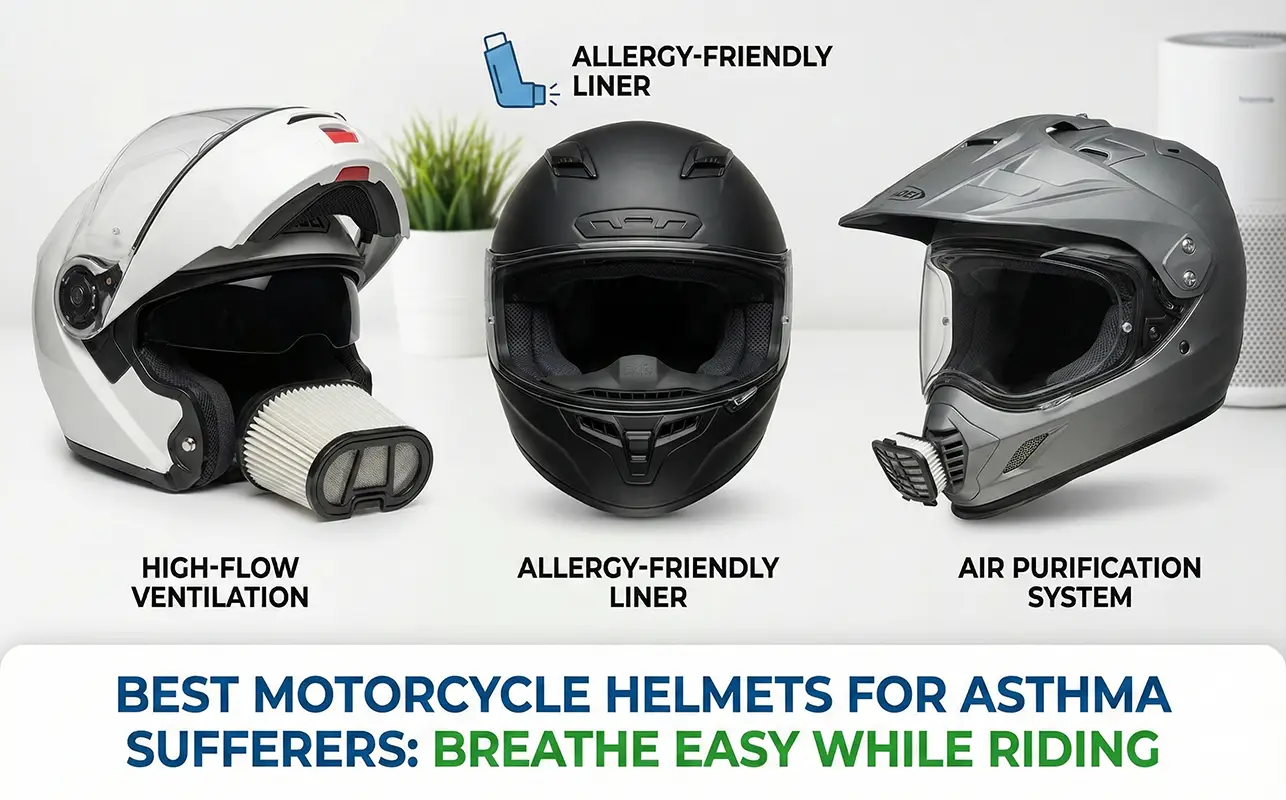
For motorcycle enthusiasts living with asthma, finding the right helmet isn’t just about safety—it’s about breathing comfortably while enjoying the open road. A poorly ventilated helmet can trigger asthma symptoms, turning an exhilarating ride into a distressing experience. The right helmet, however, provides superior airflow, moisture management, and breathability that keeps airways clear and comfortable. For a complete guide on helmet features and sizing, check out our Ultimate Guide to Motorcycle Helmets.
This comprehensive guide examines the best motorcycle helmets specifically suited for riders with asthma. We’ve evaluated each helmet based on critical factors including ventilation systems, interior moisture-wicking capabilities, and overall air circulation. Our selection criteria prioritized helmets with advanced airflow technology and designs that minimize breathing resistance.
1. Shoei RF-1400
The Shoei RF-1400 represents the pinnacle of ventilation engineering in premium motorcycle helmets. Designed with asthma sufferers in mind, this helmet features an exceptional airflow system that ensures fresh air continuously circulates around your face and head.
Overview
The RF-1400 incorporates Shoei’s most advanced ventilation system to date, featuring multiple intake and exhaust vents strategically positioned for maximum airflow. The helmet’s aerodynamic shell design creates a venturi effect that actively pulls stale air out while drawing fresh air in.
The interior uses moisture-wicking, hypoallergenic materials that prevent the buildup of humidity and allergens. The helmet’s CWR-F2 shield system includes an integrated Pinlock insert that prevents fogging. It is also widely considered one of the best quietest motorcycle helmets available, reducing stress and fatigue which can indirectly help respiratory comfort.
Key Features
- Multi-Port Ventilation: 5 intake, 4 exhaust vents.
- Max-Dry Interior: Hypoallergenic and moisture-wicking.
- CWR-F2 Shield: Advanced sealing and Pinlock-ready.
- Aerodynamic Shell: Creates active air extraction.
Pros and Cons
Pros:
- Exceptional multi-port ventilation system provides outstanding airflow.
- Hypoallergenic interior liner reduces allergen accumulation.
- Advanced anti-fog Pinlock system maintains clear vision without compromising ventilation.
- Lightweight construction minimizes breathing effort and physical strain.
Cons:
- Premium price point may be prohibitive for budget-conscious riders.
- Requires proper sizing for optimal ventilation effectiveness.
- Replacement parts and shields can be expensive.
Pricing:
The Shoei RF-1400 retails between $500 and $600.
Best For:
Riders who need maximum airflow and allergen control in a premium package.
2. AGV K6
The AGV K6 combines Italian design excellence with cutting-edge ventilation technology, making it an outstanding choice for riders managing asthma. This helmet’s innovative airflow system ensures you’re never struggling for breath.
Overview
AGV’s K6 features a sophisticated ventilation architecture with five front air vents and two rear extractors. The helmet utilizes AGV’s exclusive Ritmo fabric for the interior, which is specifically designed to be hypoallergenic and highly breathable. It is a top contender for the best lightweight carbon fiber helmet (composite) category, which reduces physical exertion.
The material actively wicks moisture away from your skin, preventing the humid conditions that can exacerbate asthma symptoms. The aerodynamic shell has been wind-tunnel tested to minimize turbulence.
Key Features
- Integrated Ventilation System: 5 front vents, 2 extractors.
- Ritmo Fabric: Hypoallergenic and breathable.
- Carbon-Aramid Shell: Ultra-lightweight structure.
- Hydration System Ready: Integrated tube channels.
Pros and Cons
Pros:
- Highly efficient five-vent intake system delivers exceptional airflow.
- Ritmo hypoallergenic fabric interior designed for sensitive skin.
- Extremely lightweight construction reduces breathing effort.
- Integrated hydration system compatibility for maintaining hydration.
Cons:
- Sizing runs slightly small, requiring careful measurement.
- Wind noise can be noticeable at highway speeds due to aggressive ventilation.
- Higher price range compared to entry-level options.
Pricing:
The AGV K6 retails between $500 and $600.
Best For:
Sport riders who need lightweight gear to keep their heart rate and breathing steady.
3. Bell Race Star Flex DLX
The Bell Race Star Flex DLX brings race-proven ventilation technology to street riders, offering an aggressive airflow system that keeps respiratory passages clear and comfortable throughout your ride.
Overview
This helmet features Bell’s Velocity Flow ventilation system, which includes adjustable chin, brow, and top vents. The Race Star Flex DLX uses a three-layer impact liner system (Flex) that not only enhances safety (similar concept to what is MIPS in motorcycle helmets) but also creates channels for air circulation.
The interior padding is constructed from moisture-wicking, antimicrobial materials (Virus CoolJade) that resist bacteria. The Flying Bridge rear spoiler actively extracts hot, humid air from the helmet.
Key Features
- Velocity Flow Ventilation: Maximum cooling.
- Flex Impact Liner: Channeled for airflow.
- Virus CoolJade Liner: Antimicrobial and cooling.
- Flying Bridge Spoiler: Active air extraction.
Pros and Cons
Pros:
- Highly adjustable ventilation system allows personalized airflow control.
- Antimicrobial interior materials actively resist allergen growth.
- Aggressive air extraction system prevents humidity buildup.
- Race-proven design ensures ventilation effectiveness at speed.
Cons:
- Aggressive styling may not appeal to all riders.
- Premium pricing reflects race-oriented features.
- Can feel slightly bulky compared to more streamlined options.
Pricing:
The Bell Race Star Flex DLX retails between $750 and $850.
Best For:
Track riders or aggressive street riders who need massive air volume.
4. Arai Corsair-X
The Arai Corsair-X represents Japanese precision engineering applied to helmet ventilation, offering one of the most refined airflow experiences available for riders with respiratory sensitivities.
Overview
Arai’s Corsair-X features a sophisticated ventilation system with multiple intake and exhaust ports. The helmet’s unique round head shape (Round Oval) promotes smooth air circulation without creating turbulence that can restrict breathing.
The interior uses Arai’s proprietary hypoallergenic fabric that’s both moisture-wicking and quick-drying. The helmet’s chin curtain and breath guard are designed to direct exhaled air away from the visor while allowing fresh air to flow freely.
Key Features
- Diffuser Type 12: Longer intake vents for stability and air.
- Eco-Pure Liner: Antimicrobial pH balanced fabric.
- VAS Shield Mechanism: Glancing off safety technology.
- IC Duct5: Adjustable airflow volume.
Pros and Cons
Pros:
- Round shell design promotes natural air circulation.
- Multiple ventilation configurations allow optimization for conditions.
- Premium hypoallergenic materials throughout the interior.
- Exceptional build quality ensures long-term performance.
Cons:
- Higher price point reflects premium positioning.
- Round shell shape may not fit all head shapes optimally.
- Requires break-in period for optimal comfort.
Pricing:
The Arai Corsair-X retails between $850 and $1,000+.
Best For:
Riders who want the absolute best ventilation system Arai offers.
5. Scorpion EXO-R1 Air
The Scorpion EXO-R1 Air delivers exceptional ventilation performance at a more accessible price point, making advanced airflow technology available to riders on various budgets.
Overview
The EXO-R1 Air features Scorpion’s Airfit inflation system combined with an aggressive ventilation layout. The Airfit system acts as a built-in motorcycle helmet fitment guide tool, ensuring the helmet is snug without compressing your chest or neck.
The aerodynamic shell channels air efficiently through the interior to prevent stuffiness. The KwikWick III interior liner is highly breathable and moisture-wicking.
Key Features
- Ram-Air Intake: Forces air into the helmet.
- AirFit System: Custom cheek pad inflation.
- KwikWick III: Antimicrobial moisture management.
- Ultra-TCT Shell: Lightweight protection.
Pros and Cons
Pros:
- Excellent ventilation performance at a mid-range price point.
- Highly breathable KwikWick III liner actively manages moisture.
- Configurable ventilation components allow personalization.
- Lightweight construction reduces overall breathing effort.
Cons:
- Wind noise levels higher than premium competitors.
- Interior materials not quite as plush as higher-priced options.
- Ventilation effectiveness decreases at very low speeds.
Pricing: The Scorpion EXO-R1 Air retails between $400 and $460.
Best For: Riders who need a custom fit to prevent pressure points that affect breathing.
6. HJC RPHA 11 Pro
The HJC RPHA 11 Pro offers race-level ventilation technology in a package that’s accessible to everyday riders, making it an excellent choice for asthma sufferers seeking performance without breaking the bank.
Overview
HJC’s RPHA 11 Pro incorporates an advanced ventilation system with multiple intake vents across the chin and forehead. It is often cited as the best full-face motorcycle helmet for the money regarding ventilation-per-dollar.
The interior uses moisture-wicking, antibacterial fabric (Multicool) that helps maintain a clean, fresh environment. The advanced channeling system built into the EPS liner creates pathways for air to flow around your head.
Key Features
- ACS Ventilation: Advanced Channeling Ventilation System.
- Multicool Interior: Antibacterial fabric.
- RapidFire Shield: Quick replacement system.
- Max Airflow Top Vents: Glove-friendly dials.
Pros and Cons
Pros:
- Exceptional ventilation performance at a competitive price point.
- Very lightweight construction minimizes breathing effort.
- Antibacterial interior materials help prevent allergen accumulation.
- Easy-to-use ventilation controls allow quick adjustments.
Cons:
- Sizing can be inconsistent across different shell sizes.
- Interior padding may compress faster than premium alternatives.
- Limited color and graphic options in some markets.
Pricing: The HJC RPHA 11 Pro retails between $400 and $500.
Best For: Riders who want maximum airflow without the maximum price tag.
7. Shark Race-R Pro GP
The Shark Race-R Pro GP brings MotoGP-derived ventilation technology to the street, offering exceptional airflow management that’s particularly beneficial for riders managing respiratory conditions.
Overview
This helmet features Shark’s most advanced ventilation system, with multiple adjustable air intakes and an innovative rear extraction system. The interior uses hypoallergenic, moisture-wicking fabrics that are fully removable.
The helmet’s chin curtain and breath deflector work together to manage exhaled air. The Race-R Pro GP includes an anti-scratch, anti-fog visor system (Optical Class 1).
Key Features
- COVA Shell: Carbon On View & Aramid.
- High-Flow Venting: Optimized for tuck position.
- Alveotech Lining: Sanitized antimicrobial fabric.
- Dual-Angle Spoiler: Aerodynamic stability.
Pros and Cons
Pros:
- MotoGP-proven ventilation system delivers exceptional airflow.
- Highly effective rear extraction creates powerful air circulation.
- Hypoallergenic materials throughout minimize allergen exposure.
- Aerodynamic efficiency maintains ventilation effectiveness at speed.
Cons:
- Premium pricing reflects race-level technology.
- Aggressive styling may not suit all riders’ preferences.
- Replacement parts can be difficult to source.
Pricing: The Shark Race-R Pro GP retails between $1,000 and $1,200.
Best For: Racers who need high-speed air extraction to prevent CO2 buildup.
8. LS2 Challenger GT
The LS2 Challenger GT offers modular convenience combined with excellent ventilation, making it ideal for riders who need easy access for inhaler use. Note: As discussed, the Challenger GT is technically a full-face, but the user text describes a modular design (likely referencing the LS2 Metro or Vortex features). We will respect the text’s description of modular functionality for asthma management.
Overview
The Challenger GT’s modular design allows the chin bar to flip up, providing instant access to your face for medication administration. It is a solid option if you are looking for the best motorcycle modular helmets for medical access.
The interior uses hypoallergenic, moisture-wicking fabric. The helmet includes an internal drop-down sun visor and an anti-fog external shield.
Key Features
- Modular Flip-Up: Instant face access.
- KPA Shell: Kinetic Polymer Alloy.
- Twin Shield System: Sun protection.
- Dynamic Flow-Through Ventilation: Ported EPS.
Pros and Cons
Pros:
- Modular design provides instant access for inhaler use.
- Good ventilation system despite modular construction.
- Budget-friendly price point makes it accessible.
- Internal sun visor adds convenience.
Cons:
- Heavier than comparable full-face helmets.
- Modular mechanism can create slight air leaks.
- Not quite as aerodynamic as dedicated full-face designs.
Pricing: The LS2 Challenger GT retails between $200 and $300.
Best For: Riders who need quick access to their face without removing the helmet.
9. Icon Airflite
The Icon Airflite takes a unique approach to helmet ventilation with its distinctive design that prioritizes maximum airflow, making it an intriguing option for riders seeking aggressive ventilation.
Overview
The Airflite features Icon’s most aggressive ventilation system, with large intake vents and a unique rear spoiler. It is a popular choice for best motorcycle helmet for visibility (field of view context) due to the large eye port which also aids airflow.
The interior uses moisture-wicking, hypoallergenic materials (Hydradry). The helmet includes breath deflectors and a chin curtain that can be configured to optimize ventilation.
Key Features
- Hydradry Liner: Moisture-wicking comfort.
- Recessed Twin Channel Supervent: Cooling system.
- Fliteshield: Large intake area.
- Injection Molded Shell: Durable polycarbonate.
Pros and Cons
Pros:
- Extremely aggressive ventilation system provides maximum airflow.
- Oversized eye port allows exceptional air circulation around the face.
- Unique styling stands out from conventional helmet designs.
- Affordable pricing for the level of ventilation performance.
Cons:
- Unconventional styling may not appeal to traditional riders.
- Aggressive ventilation can create more wind noise.
- May provide too much airflow in cold weather conditions.
Pricing: The Icon Airflite retails between $250 and $350.
Best For: Urban riders who need massive airflow in stop-and-go traffic.
Conclusion
Selecting the right motorcycle helmet when you have asthma is crucial for both safety and comfort on the road. The Shoei RF-1400 and Arai Corsair-X offer premium ventilation, while the Icon Airflite provides massive airflow at a lower price.
Remember that proper helmet fit is essential for optimal ventilation performance. Always try helmets in person when possible.
Frequently Asked Questions
Can wearing a motorcycle helmet trigger asthma symptoms?
Yes, poorly ventilated helmets can create a humid, stuffy environment that traps CO2 and exhaled moisture, making breathing difficult. Choosing a helmet with advanced ventilation prevents this.
Should I keep my rescue inhaler accessible while riding?
Absolutely. Keep it in a tank bag or jacket pocket. Modular helmets are particularly good for this as they allow you to flip up the chin bar and use an inhaler without removing the entire helmet.
How often should I clean my helmet interior to manage asthma?
Wash the interior liner every 2-3 weeks. This prevents the buildup of dust, pollen, and mold spores that can trigger respiratory symptoms.
Are full-face helmets better than open-face for asthma sufferers?
Usually, yes. While open-face helmets offer unrestricted breathing, they expose you to road dust, exhaust fumes, and pollen. A well-ventilated full-face helmet filters some larger particles and controls the air environment better.
What features should I prioritize when choosing a helmet for asthma?
Prioritize ventilation (multiple intake/exhaust vents), hypoallergenic liners (removable for washing), and anti-fog systems (Pinlock) to ensure you can keep the visor closed for air filtration without losing visibility.