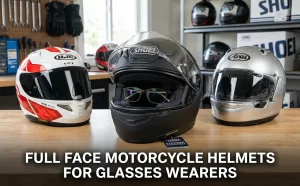
Finding the perfect motorcycle helmet when you wear glasses can feel like searching for a needle in a haystack. The struggle is real – pinched temples, foggy lenses, frames that get knocked askew every time you put on or remove your helmet, and pressure points that turn a pleasant ride into a headache-inducing ordeal.
If you’ve ever experienced the frustration of choosing between clear vision and comfortable head protection, you’re not alone. For a deep dive into fitment for all riders, check out our Ultimate Guide to Motorcycle Helmets.
This comprehensive guide cuts through the confusion to present the best motorcycle helmet for glasses wearers specifically designed with glasses wearers in mind.
We’ve evaluated dozens of helmets based on critical factors including eyewear channel design, interior padding configuration, face shield compatibility, ventilation systems, and overall comfort during extended rides.
Our selection criteria prioritized helmets with dedicated glasses grooves, easy-access face shields, anti-fog technology, and sufficient interior space.
1. Shoei RF-1400
The Shoei RF-1400 represents the pinnacle of premium helmet engineering for glasses wearers, combining Japanese craftsmanship with thoughtful design elements that address every concern spectacle-wearing riders face. This flagship model has earned its reputation through meticulous attention to detail and innovative features.
Overview
The RF-1400 features Shoei’s proprietary eyewear groove system integrated into the cheek pads, creating dedicated channels that allow your glasses’ temples to slide through without resistance or pressure. The helmet’s multi-piece shell construction uses Advanced Integrated Matrix (AIM) technology, combining multiple types of fiberglass for optimal strength.
The face shield mechanism operates smoothly with one hand, and the Pinlock-ready visor prevents fogging. The interior padding uses moisture-wicking 3D Max-Dry material that remains comfortable during long rides. The emergency quick-release cheek pads ensure medical personnel can remove the helmet safely if needed.
The ventilation system includes four intake vents and six exhaust ports, creating positive airflow that helps prevent both visor and eyewear fogging.
Key Features
- Dedicated Eyewear Grooves: Channels in the EPS liner.
- CWR-F2 Shield System: Pinlock Max Vision ready.
- AIM+ Shell: Multi-ply matrix for impact absorption.
- 3D Max-Dry Interior: Removable and washable.
Pros and Cons
Pros:
- Exceptionally well-designed eyewear grooves accommodate even thick-framed glasses.
- Superior ventilation system significantly reduces fogging issues for both visor and glasses.
- Premium build quality with a five-year warranty ensures long-term value.
- Whisper-quiet at highway speeds, reducing fatigue during extended rides.
Cons:
- Premium pricing that may exceed budget constraints for many riders.
- Slightly heavier than some competitors due to robust construction materials.
- Break-in period required before the padding fully conforms to your head shape.
Pricing
The Shoei RF-1400 retails between $499 and $599.
Best For
Riders who want the absolute best seal against noise and elements while wearing glasses.
2. AGV K6
AGV brings its MotoGP racing heritage to the street with the K6, a helmet that balances track-inspired performance with practical features for everyday riders who wear glasses. This Italian-designed helmet has quickly become a favorite among spectacle-wearing enthusiasts.
Overview
The K6 features a carbon-aramid-fiberglass shell that keeps weight remarkably low without sacrificing protection. It is a top contender for the best lightweight carbon fiber helmet (composite category).
What sets the K6 apart is its innovative cheek pad design with generous cutouts specifically engineered for glasses temples, allowing you to don and doff the helmet without removing your eyewear. The face shield uses AGV’s patented Ultra-Wide Visor system, providing an expansive field of vision.
The Ritmo fabric interior wicks moisture effectively and can be completely removed for washing. The helmet includes a Class 1 optics Pinlock Max Vision insert, which provides 100% fog-free riding even in challenging weather conditions.
Key Features
- Carbon-Aramid-Fiberglass Shell: Ultra-lightweight construction.
- Ultravision Visor: 190-degree horizontal field of view.
- Eyewear Ready: Optimized cheek pad geometry.
- Ritmo Fabric: Premium interior comfort.
Pros and Cons
Pros:
- Lightweight construction reduces neck fatigue, especially important during all-day rides.
- Exceptionally wide visor opening makes putting on and removing glasses effortless.
- Advanced anti-fog system works synergistically with ventilation to keep optics clear.
- Sleek aerodynamic profile reduces wind noise and buffeting at speed.
Cons:
- Premium price point similar to other high-end options.
- Sizing runs slightly small, requiring careful measurement.
- Replacement parts and accessories can be expensive.
Pricing
The AGV K6 retails between $499 and $599.
Best For
Sport riders who need a lightweight helmet with a massive field of view.
3. HJC RPHA 11 Pro
HJC’s RPHA 11 Pro delivers flagship-level features at a more accessible price point, making it an excellent choice for glasses wearers who want premium performance without breaking the bank. This helmet punches well above its weight class in terms of features and comfort.
Overview
The RPHA 11 Pro utilizes HJC’s Premium Integrated Matrix Plus (PIM+) shell construction, combining carbon fiber, aramid, and fiberglass for exceptional strength with minimal weight. The helmet’s speaker pockets double as convenient channels for glasses temples, and the cheek pads feature strategic relief areas.
HJC’s RapidFire II shield replacement system allows tool-free visor changes in seconds. The helmet comes standard with a Pinlock vs. Anti-Fog Sprays ready HJ-31 shield and includes the anti-fog insert in the box.
The multicool interior liner provides moisture management and antimicrobial properties. Advanced channeling in the EPS liner creates air passages that enhance ventilation. It is widely considered the best full-face motorcycle helmet for the money.
Key Features
- PIM+ Shell: Strong and light composite.
- RapidFire II Shield: Quick-change mechanism.
- Glasses Groove: Built-in relief in cheek pads.
- ACS Ventilation: Advanced Channeling System.
Pros and Cons
Pros:
- Outstanding value proposition with premium features at a mid-range price.
- Excellent ventilation system prevents heat buildup and reduces fogging.
- Wide variety of graphics and colorways available to match your style.
- Comfortable fit right out of the box with minimal break-in period required.
Cons:
- Build quality, while good, doesn’t quite match the premium feel of more expensive options.
- Some riders report increased wind noise compared to quieter competitors.
- Cheek pad glasses channels work well but aren’t as refined as dedicated systems.
Pricing
The HJC RPHA 11 Pro retails between $349 and $449.
Best For
Riders looking for high-performance features and excellent ventilation on a budget.
4. Schuberth C4 Pro
The Schuberth C4 Pro modular helmet offers unparalleled convenience for glasses wearers who want the flexibility of a flip-up design without compromising safety or comfort. This German-engineered helmet sets the standard for modular helmet performance.
Overview
As a modular helmet, the C4 Pro addresses one of the biggest frustrations for glasses wearers – getting the helmet on and off without dislodging your frames. The flip-up chin bar provides wide-open access, allowing you to don the helmet while wearing your glasses comfortably.
The helmet features a fiberglass-reinforced plastic shell with an integrated sun visor that drops down at the touch of a button. The cheek pads incorporate soft, flexible areas specifically designed to accommodate glasses temples.
The helmet’s aeroacoustic design makes it one of the best quietest motorcycle helmets available. The C4 Pro is also designed with excellent integration for communication systems.
Key Features
- Direct Fiber Processing: Strong and light shell.
- Integrated Sun Visor: Easy light adaptation.
- Eyewear Accommodating Pads: Soft zones for temples.
- Plug-and-Play Comms: Pre-installed speakers and mic.
Pros and Cons
Pros:
- Flip-up design makes putting on and removing the helmet with glasses incredibly easy.
- Integrated drop-down sun visor eliminates the need for prescription sunglasses.
- Exceptionally quiet operation reduces rider fatigue on long journeys.
- Superior build quality with German engineering precision evident in every detail.
Cons:
- Premium pricing reflects the advanced modular mechanism and features.
- Heavier than full-face equivalents due to the modular mechanism.
- Slightly bulkier profile compared to traditional full-face helmets.
Pricing
The Schuberth C4 Pro retails between $600 and $800.
Best For
Touring riders who want the ultimate in silence and modular convenience.
5. Bell Qualifier DLX MIPS
The Bell Qualifier DLX MIPS brings advanced safety technology and glasses-friendly features to the budget-conscious rider, proving you don’t need to spend a fortune to ride comfortably and safely with prescription eyewear. This helmet represents exceptional value.
Overview
Bell’s Qualifier DLX MIPS incorporates the what is MIPS in motorcycle helmets (Multi-Directional Impact Protection System), which adds a low-friction layer inside the helmet designed to reduce rotational forces. The polycarbonate shell keeps costs down while meeting DOT safety standards.
What makes this helmet particularly suitable for glasses wearers is the generous eyeport opening and strategically padded cheek areas that create natural channels for glasses temples. It typically includes a Transitions photochromic face shield right in the box.
The velocity flow ventilation system includes chin and forehead vents that can be adjusted to control airflow. The integrated speaker pockets accommodate communication systems while providing additional space for glasses temples.
Key Features
- MIPS Technology: Rotational impact management.
- Transitions Shield: Adaptive photochromic visor.
- Contoured Cheek Pads: Optimized fit.
- NutraFog II: Anti-fog coating.
Pros and Cons
Pros:
- Affordable pricing makes it accessible for new riders or those on tight budgets.
- MIPS technology provides enhanced protection beyond basic DOT certification.
- Comfortable fit with adequate space for glasses without excessive pressure.
- Wide range of sizes and graphics available to suit different preferences.
Cons:
- Heavier than premium helmets due to polycarbonate shell construction.
- More wind noise at highway speeds compared to higher-priced competitors.
- Interior materials feel less premium and may wear faster with heavy use.
Pricing
The Bell Qualifier DLX MIPS retails around $280.
Best For
Budget riders who want advanced safety tech and a transition lens included.
6. Arai Regent-X
Arai’s Regent-X continues the company’s legendary reputation for handcrafted quality and exceptional comfort, with specific design elements that make it outstanding for riders who wear glasses. This helmet represents Arai’s philosophy of incremental perfection.
Overview
The Regent-X features Arai’s signature round shell shape, which the company maintains provides superior protection by allowing impacts to glance off rather than absorbing them directly. The helmet’s facial contour system (FCS) includes cheek pads with built-in eyewear grooves that gently cradle glasses temples.
The shell uses Arai’s proprietary Super Fiber laminate, hand-laid in the company’s Japanese facility. The VAS-V visor system creates a larger eyeport than previous Arai models, making it easier to wear glasses comfortably.
The fully removable interior system uses moisture-wicking fabric that can be washed to maintain freshness. It is a top choice for riders with a round head shape.
Key Features
- FCS Cheek Pads: Built-in eyewear grooves.
- Round Shell Shape: Glancing off impact deflection.
- VAS Shield System: Variable Axis System for safety.
- Handcrafted Shell: Meticulous quality control.
Pros and Cons
Pros:
- Exceptional build quality with hand-crafted attention to detail.
- Specifically engineered eyewear grooves provide superior comfort.
- Round shell shape offers excellent impact protection and deflection.
- Long-lasting durability maintains protective properties for years.
Cons:
- Premium pricing reflects handcrafted construction.
- The round shell shape may not fit all head shapes well.
- Conservative styling may not appeal to all riders.
Pricing
The Arai Regent-X retails between $600 and $800.
Best For
Riders who appreciate hand-made quality and need a specifically round internal shape.
7. LS2 Challenger GT
The LS2 Challenger GT modular helmet delivers impressive features and glasses-friendly design at a price point that makes premium modular functionality accessible to more riders. This helmet proves that budget-friendly doesn’t have to mean compromising.
Overview
LS2’s Challenger GT combines the convenience of a modular design with thoughtful touches for glasses wearers. The kinetic polymer alloy shell provides good impact protection while keeping weight reasonable. The flip-up chin bar mechanism operates smoothly and locks securely.
The helmet features an integrated drop-down sun shield operated by a slider on the helmet’s exterior, solving the tinted visor vs. drop-down sun shield debate by giving you an internal option. The cheek pads use soft, compressible foam with adequate space for glasses temples.
The helmet comes with a Pinlock-ready face shield. The quick-release visor mechanism allows tool-free shield changes, and the fully removable liner maintains hygiene.
Key Features
- Modular Design: Flip-up chin bar convenience.
- Twin Shield System: Integrated sun visor.
- KPA Shell: Lightweight alloy composite.
- Eyewear Ready: Compressible foam zones.
Pros and Cons
Pros:
- Excellent value with modular convenience and integrated sun visor.
- Flip-up design makes wearing glasses significantly more convenient.
- Comfortable fit with adequate interior space for various frame styles.
- Integrated sun shield provides versatility without carrying multiple visors.
Cons:
- Heavier than comparable full-face helmets due to the modular mechanism.
- Build quality and materials don’t match premium options.
- More wind noise than higher-priced competitors.
Pricing
The LS2 Challenger GT retails between $200 and $300.
Best For
Commuters who need modular flexibility and an internal sun visor on a budget.
8. Shark Evo-One 2
The Shark Evo-One 2 offers innovative design with its unique ability to convert from full-face to jet-style configuration, providing maximum versatility for glasses wearers who want options. This French-designed helmet brings creative engineering to the modular category.
Overview
What sets the Evo-One 2 apart is its ability to flip not just the chin bar but also the face shield, converting the helmet from full-face to open-face configuration. For glasses wearers, this means unparalleled ease when putting on or removing the helmet – simply flip everything up and you have unobstructed access.
The injected thermoplastic resin shell keeps weight reasonable while meeting ECE 22.05 safety standards in both configurations (dual homologation). Shark’s easy-fit system specifically considers glasses wearers, with flexible cheek pad areas that compress around frames.
An integrated drop-down sun visor provides quick light adaptation. The auto-seal system creates a tight seal around the face shield in the closed position, improving aerodynamics.
Key Features
- Dual Homologation: Certified as full and open face.
- Auto-Up/Auto-Down: Automatic visor lifting.
- Easy Fit System: Dedicated glasses slots.
- Integrated Sun Shield: UV protection.
Pros and Cons
Pros:
- Unique convertible design provides maximum convenience for glasses wearers.
- Integrated sun visor eliminates the need for prescription sunglasses.
- Comfortable fit with well-designed spaces for glasses temples.
- Versatility of switching between full-face and jet configurations.
Cons:
- Complex mechanism adds weight and bulk.
- More expensive than basic modular helmets.
- Some riders report the mechanism requires regular maintenance.
Pricing
The Shark Evo-One 2 retails between $400 and $500.
Best For
Urban riders who want the freedom of an open-face helmet with the option for full protection.
9. Icon Airflite
The Icon Airflite brings retro-inspired styling with modern safety features and excellent accommodation for glasses wearers, appealing to riders who want distinctive looks without sacrificing comfort. This helmet proves that fashion and function can coexist.
Overview
The Airflite features a unique design inspired by vintage racing helmets but incorporates thoroughly modern safety technology. The injection-molded polycarbonate shell meets DOT standards. What makes this helmet particularly suitable for glasses wearers is the oversized eyeport and flat, wide face shield.
The cheek pads use dual-density foam with softer areas where glasses temples naturally rest. The Fliteshield face shield system provides a wide field of view. The helmet features an integrated Dropshield that deploys a tinted visor for sun protection.
The ventilation system includes multiple intake and exhaust vents positioned to maximize airflow. The removable Hydradry moisture-wicking liner keeps you comfortable.
Key Features
- Fliteshield: Massive peripheral vision.
- Internal DropShield: Sun protection.
- Polycarbonate Shell: Tough and durable.
- Hydradry Liner: Moisture-wicking comfort.
Pros and Cons
Pros:
- Distinctive retro styling sets you apart from typical sport-bike designs.
- Oversized eyeport and flat shield provide excellent visibility for glasses wearers.
- Comfortable cheek pad design accommodates glasses temples without pressure.
- Reasonable pricing makes it accessible while including important features.
Cons:
- Retro styling may not appeal to riders preferring modern aesthetics.
- Slightly heavier than some competitors due to polycarbonate construction.
- Wind noise is more noticeable at highway speeds.
Pricing
The Icon Airflite retails between $250 and $350.
Best For
Riders who want to make a bold visual statement.
Conclusion
Choosing the right motorcycle helmet when you wear glasses doesn’t have to be a compromise between comfort and safety. The helmets featured in this guide represent the best options currently available, each offering unique advantages for spectacle-wearing riders. Whether you prioritize the premium comfort of the Shoei RF-1400, the convenient flip-up design of the Schuberth C4 Pro, or the excellent value of the Bell Qualifier DLX MIPS, there’s a perfect helmet for your needs.
Remember that the best helmet for you depends on your specific head shape and glasses frame style. We strongly recommend trying on helmets with your glasses before purchasing.
Frequently Asked Questions
Can I wear glasses with any motorcycle helmet?
While technically possible, not all helmets are designed to accommodate eyewear comfortably. Standard helmets can create painful pressure points. Helmets specifically designed for glasses wearers feature cutouts in the cheek pads and generous eyeport openings.
What features should I look for in a motorcycle helmet if I wear glasses?
Look for dedicated eyewear grooves or channels in the cheek pads. Generous eyeport openings make it easier to put on and remove the helmet. Modular or flip-up helmets offer the easiest experience.
How do I prevent my glasses from fogging up inside my motorcycle helmet?
Ensure your helmet has a proper Pinlock anti-fog system. Use anti-fog treatments on your glasses lenses. Adjust your helmet’s ventilation to create airflow, and ensure the breath deflector is installed.
Are modular helmets better for glasses wearers than full-face helmets?
Modular helmets offer significant convenience advantages. You can put the helmet on with the chin bar up without removing your glasses. However, full-face helmets typically offer better quietness and lighter weight.