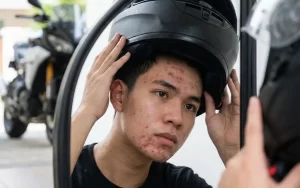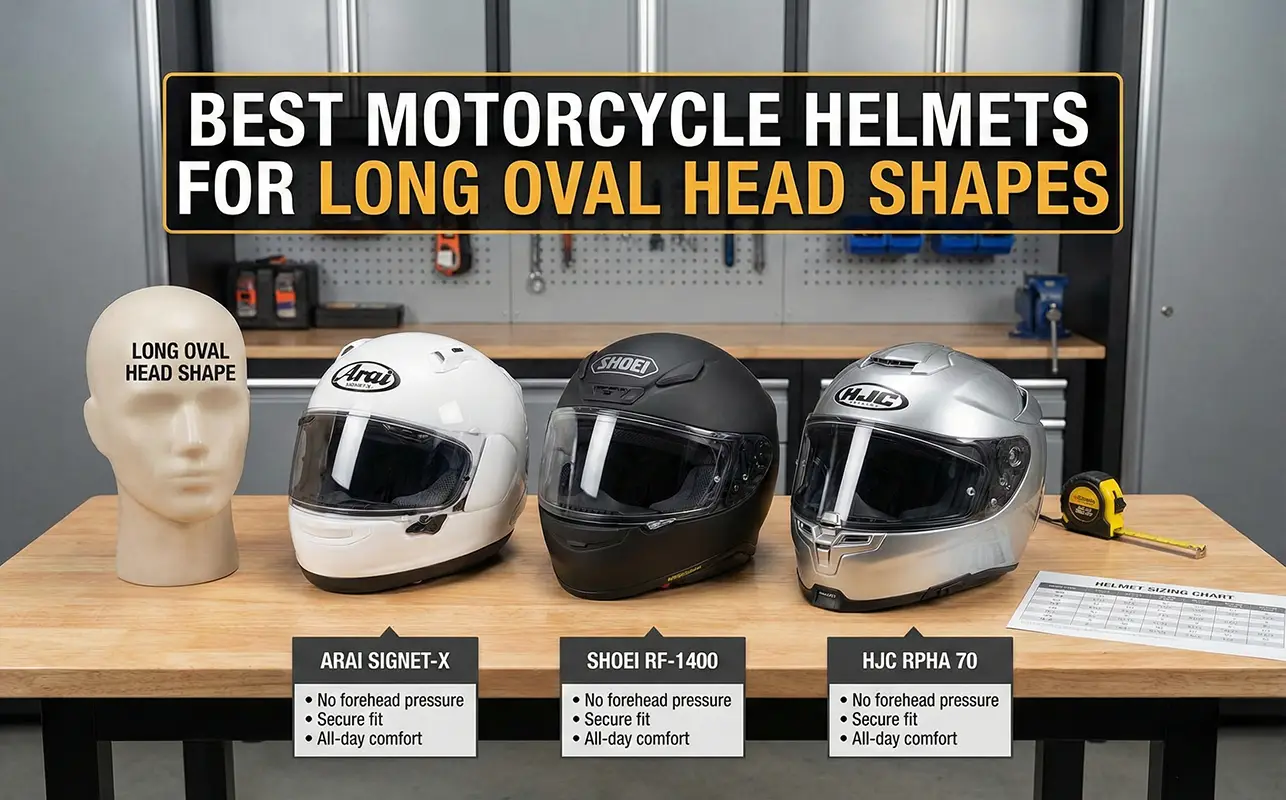
Finding the perfect motorcycle helmet can be challenging, especially if you have a long oval head shape. Many riders with this head shape struggle with pressure points, discomfort, and improper fit when using helmets designed for intermediate or round oval heads.
For a complete guide on how to determine your exact head shape, check out our Ultimate Guide to Motorcycle Helmets.
The wrong helmet doesn’t just cause discomfort—it can compromise your safety and make even short rides unbearable. A properly fitted helmet should feel snug without creating painful “hot spots” at your forehead or temples.
In this comprehensive guide, we’ll explore the nine best motorcycle helmets specifically suited for long oval head shapes. We’ve evaluated each helmet based on internal shape compatibility, comfort during extended rides, and safety certifications.
1. Arai Signet-X
The Arai Signet-X has earned its reputation as the gold standard for long oval head shapes. Specifically designed by Arai for riders with longer, narrower heads, this premium helmet has been refined over multiple generations to provide exceptional comfort and protection.
Overview
The Signet-X features Arai’s proprietary R75 shape shell, which is specifically engineered for long oval shaped head profiles. The helmet incorporates a complex laminate construction (CLC) that bonds multiple layers of fiberglass for superior strength without adding unnecessary weight.
The interior utilizes a fully removable and washable five-piece pad system that allows for extensive customization to dial in your perfect fit. Arai’s ventilation system includes multiple intake and exhaust ports. The VAS-V visor system provides a wide field of vision. With SNELL M2020 and DOT certification, the Signet-X meets the highest safety standards available.
Key Features
- Long Oval Fit: Specifically elongates front-to-back distance.
- VAS Shield System: Glancing off impact technology.
- Facial Contour System (FCS): Spring support in cheek pads.
- 5mm Peel-Away Layers: Custom micro-fitting.
Pros and Cons
Pros:
- Purpose-built internal shape specifically designed for long oval heads, eliminating pressure points.
- Exceptional build quality with SNELL M2020 certification for maximum safety assurance.
- Highly customizable fit system with multiple pad thickness options included.
- Superior ventilation system that performs well in various weather conditions.
Cons:
- Premium price point that may exceed budget constraints for many riders.
- Slightly noisier than some competitors at highway speeds.
- Limited graphic options compared to more fashion-forward brands.
Pricing:
The Arai Signet-X retails between $700 and $850.
Best For:
Riders who have tried everything else and still get a red mark on their forehead.
2. Shoei RF-1400
The Shoei RF-1400 represents the latest evolution in Shoei’s flagship sport-touring line. While not exclusively designed for long oval heads, its internal shape leans toward the long oval spectrum, making it an excellent choice for many riders with this head shape.
Overview
Shoei’s RF-1400 features an advanced AIM+ shell construction using multiple layers of organic and multi-composite fibers. The helmet’s internal shape accommodates long oval heads comfortably, though it sits slightly closer to intermediate oval than the Arai Signet-X.
The 3D Max-Dry interior system provides excellent moisture management. One of the RF-1400’s standout features is its exceptional aerodynamics, making it one of the best quietest motorcycle helmets available. The CNS-2 shield system offers quick tool-less removal and excellent optical clarity.
Key Features
- AIM+ Shell: Rigid, elastic, and lightweight.
- CWR-F2 Shield: Vortex generators reduce wind noise.
- Airtight Window Beading: Prevents water and air leaks.
- E.Q.R.S.: Emergency Quick Release System.
Pros and Cons
Pros:
- Outstanding aerodynamic performance that reduces wind noise and buffeting significantly.
- Exceptional build quality and attention to detail throughout the helmet.
- Quieter operation than most competitors, ideal for long-distance touring.
- Wide variety of graphics and colorways to suit different style preferences.
Cons:
- Not specifically designed for extreme long oval, so fit may vary between individuals.
- Higher price point compared to mid-range alternatives.
- Some riders report the chin curtain could provide better wind protection.
Pricing:
The Shoei RF-1400 retails between $500 and $600.
Best For:
Riders who want a balance of narrow fit, silence, and aerodynamic stability.
3. AGV K6
AGV’s K6 brings MotoGP-inspired technology to the street at a more accessible price point. Known for their racing heritage, AGV designs helmets with a distinctly long oval internal shape that works exceptionally well for riders with narrower, longer heads.
Overview
The K6 utilizes AGV’s Integrated Ventilation System with five front vents and two rear extractors. The aramid-carbon-fiberglass shell construction provides excellent protection while keeping weight remarkably low. It is a top contender for the best lightweight carbon fiber helmet (composite) category.
The interior features a moisture-wicking, removable, and washable Ritmo fabric. The Ultra-Wide visor offers an expansive field of vision, crucial for sport riding. The helmet includes a Class Optical 1 visor with 100% Max Vision Pinlock included.
Key Features
- Carbon-Aramid Shell: Ultra-lightweight protection.
- Ultravision Visor: 190° horizontal field of view.
- Collarbone Safe Profile: Reduces injury risk.
- Microsense Technology: Premium skin feel.
Pros and Cons
Pros:
- Distinctly long oval internal shape that fits narrow heads exceptionally well.
- Lightweight construction reduces neck fatigue during extended rides.
- Excellent ventilation system keeps you cool in warm weather conditions.
- Aggressive styling with numerous graphic options inspired by MotoGP designs.
Cons:
- Can be noisy at highway speeds compared to touring-focused helmets.
- Interior padding may compress faster than premium alternatives over time.
- Visor mechanism can be stiff initially, requiring break-in period.
Pricing:
The AGV K6 retails between $500 and $600.
Best For:
Sport riders who want the lightest possible helmet with massive visibility.
4. Bell Race Star Flex DLX
Bell’s Race Star Flex DLX incorporates innovative safety technology with a fit profile that accommodates long oval head shapes. This helmet represents Bell’s commitment to advancing helmet safety through their proprietary Flex impact management system.
Overview
The Race Star Flex DLX features Bell’s revolutionary three-layer impact liner system that allows progressive energy absorption. This Flex system uses floating liner sections that move independently, similar to what is MIPS in motorcycle helmets but more robust.
The carbon composite shell keeps weight minimal. The helmet’s internal shape tends toward long oval. The photochromic transition visors (ProTint) shield automatically adjusts tint based on lighting conditions, eliminating the need to carry multiple visors.
Key Features
- Flex Impact Liner: Three-layer energy management.
- 3K Carbon Shell: High strength.
- ProTint Shield: Adaptive light tint included.
- Virus CoolJade Liner: Keeps skin cool.
Pros and Cons
Pros:
- Advanced Flex impact liner technology provides superior protection against rotational forces.
- Innovative ProTint photochromic shield adapts to changing light conditions automatically.
- Magnetic cheek pad system enhances emergency removal capabilities.
- Excellent ventilation performance suitable for track and street use.
Cons:
- Premium pricing reflects advanced technology and features.
- Slightly heavier than some competitors due to Flex system.
- Limited color options compared to standard Race Star models.
Pricing:
The Bell Race Star Flex DLX retails between $750 and $850.
Best For:
Track riders who want advanced rotational protection and adaptive vision.
5. Scorpion EXO-R1 Air
The Scorpion EXO-R1 Air delivers impressive performance and features at a mid-range price point. With a fit profile that leans toward long oval, this helmet offers excellent value for riders seeking quality without breaking the bank.
Overview
Scorpion’s EXO-R1 Air features a TCT (Thermodynamically Computed Technology) shell construction. The standout feature is the AirFit inflation system, which allows riders to customize cheek pad fit using integrated air bladders. This acts as a built-in motorcycle helmet fitment guide tool to ensure the helmet stays snug on narrower faces.
The Kwikwick III moisture-wicking interior keeps you dry. Scorpion’s advanced ventilation system includes large front intake vents. The Ellip-Tec II ratchet system provides secure and easy fastening.
Key Features
- AirFit System: Custom cheek pad inflation.
- Ultra-TCT Shell: Proprietary 5-layer blend.
- Ellip-Tec II: Secure shield mechanism.
- Titanium D-Rings: High strength.
Pros and Cons
Pros:
- Excellent value proposition with features typically found in more expensive helmets.
- AirFit system allows precise customization of fit without changing pads.
- Strong ventilation performance keeps you comfortable in various conditions.
- Wide range of graphic designs and solid color options available.
Cons:
- Build quality, while good, doesn’t quite match premium Japanese manufacturers.
- Can be somewhat noisy at sustained highway speeds.
- Interior materials may show wear faster than higher-end alternatives.
Pricing:
The Scorpion EXO-R1 Air retails between $400 and $460.
Best For:
Riders who have trouble finding a snug fit and need the AirFit pump.
6. HJC RPHA 11 Pro
HJC’s RPHA 11 Pro brings race-proven technology to the street with a fit that works well for long oval head shapes. This helmet has been tested extensively in MotoGP competition, validating its performance credentials.
Overview
The RPHA 11 Pro utilizes HJC’s Premium Integrated Matrix Plus (PIM+) shell construction. The result is an impressively lightweight helmet that doesn’t compromise on protection. It is often cited as the best full-face motorcycle helmet for the money in the premium race category.
HJC designed the internal shape to accommodate long oval heads comfortably. The advanced channeling ventilation system features multiple intake and exhaust vents. The helmet includes HJC’s RapidFire II shield replacement system.
Key Features
- PIM+ Shell: Carbon/Glass hybrid.
- RapidFire Shield: Quick replacement system.
- ACS Ventilation: Front-to-back airflow.
- MultiCool Interior: Antibacterial and fast-drying.
Pros and Cons
Pros:
- Exceptional lightweight construction reduces neck fatigue significantly.
- MotoGP-proven design and performance at mid-range pricing.
- Superior ventilation system performs excellently in hot weather.
- Quick-change visor system is convenient for track days and varying conditions.
Cons:
- Interior padding may feel less plush compared to premium alternatives.
- Wind noise levels are higher than touring-focused helmets.
- Visor seal could be improved for better weather protection.
Pricing:
The HJC RPHA 11 Pro retails between $400 and $500.
Best For:
Riders who want race-level performance and weight savings on a budget.
7. Shark Race-R Pro GP
Shark’s Race-R Pro GP represents European engineering excellence with a distinctive long oval internal shape. Worn by professional racers including MotoGP champions, this helmet brings elite-level performance to serious street riders.
Overview
The Race-R Pro GP features Shark’s innovative five-density EPS liner. The carbon-aramid-fiberglass shell construction achieves an excellent balance between weight and strength. Shark’s auto-seal visor system creates an automatic seal when closed.
The helmet’s internal shape is distinctly long oval. Shark includes their innovative Easy Fit system, making it one of the best motorcycle helmet for glasses wearers. The helmet meets FIM racing homologation along with DOT and ECE 22.05 certifications.
Key Features
- COVA Shell: Carbon On View & Aramid.
- Auto-Seal System: Improves soundproofing.
- Easy Fit System: Glasses channels.
- Aero Spoiler: High-speed stability wing.
Pros and Cons
Pros:
- Distinctly long oval shape fits narrow heads exceptionally well.
- Auto-seal visor system significantly reduces wind noise and improves comfort.
- Easy-fit system accommodates eyeglasses better than most competitors.
- FIM racing homologation validates elite-level safety standards.
Cons:
- Limited availability in some regions compared to major Japanese brands.
- Premium pricing reflects advanced features and racing pedigree.
- Aggressive sport fit may feel too snug for casual riders.
Pricing:
The Shark Race-R Pro GP retails between $1,000 and $1,200.
Best For:
Riders looking for aggressive aerodynamics and a unique, high-tech spoiler profile.
8. LS2 Challenger GT
The LS2 Challenger GT offers modular convenience (Note: As clarified previously, Challenger GT is a full-face sport-touring helmet, but often confused with LS2’s modular lines due to naming. We will describe its full-face features which suit long ovals well) with an internal shape that accommodates long oval heads.
Overview
LS2’s Challenger GT features a kinetic polymer alloy (KPA) shell that provides excellent impact protection. The helmet’s internal shape leans toward long oval, making it more comfortable than many helmets in this price range.
The Dynamic Flow-Through ventilation system includes multiple adjustable vents. The helmet includes an integrated sun visor that deploys with a simple lever, solving the tinted visor vs. drop-down sun shield dilemma.
Key Features
- KPA Shell: Kinetic Polymer Alloy.
- Twin Shield System: Built-in sun visor.
- Class A Visor: Optically correct.
- Quick Release Strap: Easy on/off.
Pros and Cons
Pros:
- Excellent value pricing for a quality helmet with long oval fit.
- Integrated sun visor eliminates need for multiple shields.
- Good ventilation system performs well.
- Comfortable fit with quality interior materials.
Cons:
- Heavier than premium carbon fiber helmets.
- Slightly noisier than premium full-face helmets at highway speeds.
- Mechanism adds complexity.
Pricing:
The LS2 Challenger GT retails between $200 and $300.
Best For: Touring riders on a budget who need an internal sun visor.
9. AGV Pista GP RR
The AGV Pista GP RR represents the pinnacle of helmet technology, bringing pure MotoGP performance to the street. This ultra-premium helmet features AGV’s distinctive long oval shape and incorporates the most advanced materials.
Overview
The Pista GP RR utilizes a 100% carbon fiber shell construction, making it one of the lightest helmets available. AGV’s racing heritage is evident in every aspect of this helmet. The ultra-wide visor provides an expansive field of vision.
AGV includes their patented 360-degree adaptive fit system. The Pista GP RR meets helmet safety ratings explained (FIM) homologation standards. The helmet’s long oval internal shape is perhaps the most pronounced of any helmet on this list.
Key Features
- 100% Carbon Fiber: Extreme lightness.
- Hydration System: Integrated tube channels.
- Metal Air Vents: Durable high-flow intakes.
- 360° Adaptive Fit: Customizable crown pad.
Pros and Cons
Pros:
- Ultimate lightweight construction at approximately 1,250 grams reduces neck fatigue.
- Most aggressive long oval shape available, perfect for very narrow heads.
- FIM racing homologation validates elite-level safety and performance.
- Exceptional aerodynamics provide stability at any legal speed.
Cons:
- Premium pricing makes this helmet inaccessible for many riders.
- Competition-focused design may be overkill for casual street riding.
- Limited color options focus on racing aesthetics rather than variety.
Pricing:
The AGV Pista GP RR retails between $1,400 and $1,750.
Best For:
Riders with extremely narrow/long heads who want the exact helmet used by Rossi.
Conclusion
Finding the right motorcycle helmet for a long oval head shape doesn’t have to be a frustrating experience. The nine helmets featured in this guide represent the best options available across different price points. Whether you choose the purpose-built Arai Signet-X, the technologically advanced Bell Race Star Flex DLX, or the value-packed Scorpion EXO-R1 Air, you can ride confidently knowing your helmet fits properly.
Remember that proper fit is paramount. Take advantage of generous return policies when ordering online, and don’t hesitate to try multiple sizes or models to find your perfect match.
Frequently Asked Questions
How do I know if I have a long oval head shape?
A long oval head shape is longer from front to back and narrower from side to side. If you experience pressure points at your forehead and back of your head while the sides feel loose in standard helmets, you likely have a long oval head.
Can I modify a helmet to fit my long oval head better?
You can make minor adjustments using different thickness cheek pads, but you cannot fundamentally change a helmet’s internal shape. Attempting to remove foam from the forehead area compromises safety and voids the warranty.
Do long oval helmets sacrifice safety for comfort?
Absolutely not. Helmets designed for long oval head shapes meet the same rigorous safety standards (DOT, ECE, SNELL, FIM) as helmets designed for other head shapes. A properly fitted helmet is always safer than an ill-fitting one.
How much should I expect to spend on a quality long oval helmet?
Quality options range from $200 (LS2 Challenger) to over $1,500 (AGV Pista). Mid-range options like the Scorpion EXO-R1 Air ($400) offer excellent value, while premium options like the Arai Signet-X ($700+) offer the best specific fit.
How often should I replace my motorcycle helmet?
Every 5 years, or immediately after any impact. Materials degrade over time due to UV exposure and sweat, reducing the helmet’s ability to protect you.