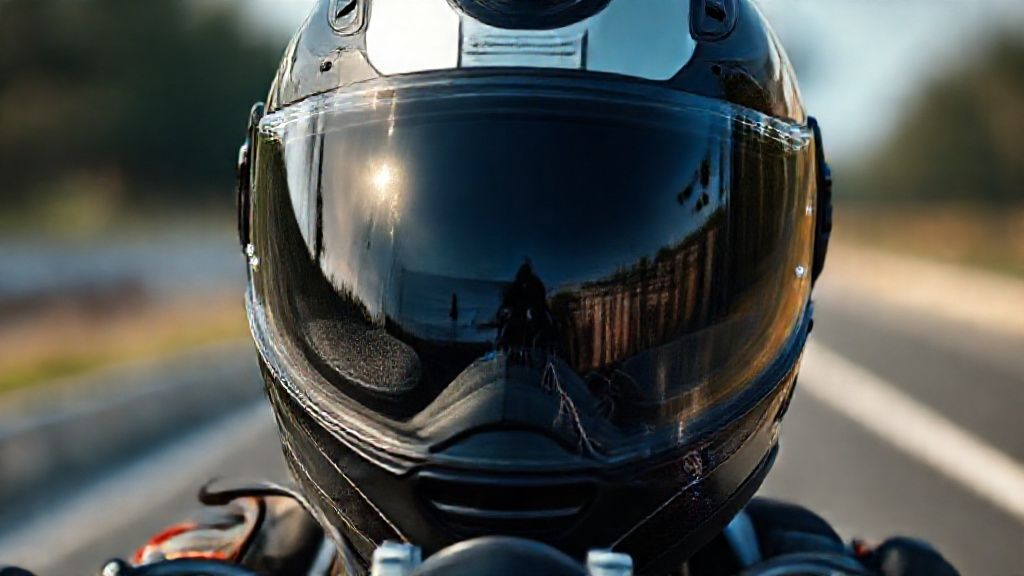
When you’re riding a motorcycle, your field of vision can mean the difference between a safe ride and a dangerous situation. While most riders focus on helmet safety ratings and comfort, peripheral vision is often overlooked—yet it’s one of the most critical factors for situational awareness on the road.
A helmet with poor peripheral vision creates dangerous blind spots, making it harder to spot vehicles merging from the side, pedestrians stepping into the street, or obstacles appearing in your path.
For a complete guide on how helmet features impact safety, check out our Ultimate Guide to Motorcycle Helmets.
In this comprehensive guide, we’ll explore the best motorcycle helmets specifically chosen for their exceptional peripheral vision capabilities. We’ve evaluated dozens of helmets based on their eye port width, face shield design, internal padding configuration, and real-world visibility performance.
Our selection criteria include the horizontal field of view (measured in degrees), vertical visibility range, optical clarity of the visor, anti-fog properties, and overall comfort during extended rides.
Whether you’re a daily commuter, weekend warrior, or long-distance tourer, you’ll find a helmet here that maximizes your awareness while keeping you protected.
1. Shoei RF-1400
The Shoei RF-1400 represents the pinnacle of Japanese helmet engineering, combining premium safety features with an exceptionally wide field of view. This best full-face helmet for motorcycle has become a favorite among sport riders and track enthusiasts who demand maximum visibility without compromising protection.
Overview
The RF-1400 features Shoei’s largest eye port to date, providing riders with an expansive view of their surroundings. The helmet’s aerodynamic shell design incorporates a multi-layer EPS liner and an advanced ventilation system with seven intake and exhaust vents.
The face shield uses Shoei’s proprietary CWR-F2 design, which extends further down and wider than previous models, significantly enhancing peripheral vision. The shield also features a Pinlock-ready insert system to prevent fogging. The interior is fully removable and washable, with 3D Max-Dry System II lining that wicks moisture away efficiently.
The helmet’s construction uses an Organic Fiber layer combined with fiberglass for optimal strength-to-weight ratio, keeping the weight at approximately 3.7 pounds for medium sizes.
Key Features
- CWR-F2 Shield System: Extended width and height for visibility.
- Pinlock-Ready: Advanced fog prevention.
- Acoustic Design: Reduced wind noise.
- AIM+ Shell: Lightweight and rigid.
Pros and Cons
Pros:
- Exceptionally wide eye port offering approximately 220 degrees of horizontal vision.
- Premium build quality with excellent noise reduction for highway riding.
- Superior ventilation system keeps you cool during aggressive riding.
- Multiple shell sizes ensure proper fit across different head sizes.
Cons:
- Premium price point starting around $500 may be prohibitive for budget-conscious riders.
- Replacement shields are expensive compared to other brands.
- Break-in period required as the interior padding is initially quite snug.
Pricing
The Shoei RF-1400 retails between $499 and $599.
Best For
Riders who want the absolute gold standard in visibility and build quality.
2. AGV K6
Italian manufacturer AGV brings decades of MotoGP racing experience to the consumer market with the K6. This helmet is engineered for riders who refuse to compromise on visibility, offering one of the widest fields of view available in its price category.
Overview
The AGV K6 utilizes a racing-inspired design philosophy that prioritizes visibility and aerodynamics. Its ultra-wide visor provides an impressive 190-degree horizontal field of view, achieved through strategic placement of the eye port and minimal internal obstructions.
The helmet features a carbon-aramid-fiberglass shell construction available in four sizes to optimize fit. AGV’s patented “Integrated Ventilation System” includes five front vents and two rear extractors that create efficient airflow without creating turbulence.
The Class Optical 1 visor offers distortion-free vision and comes with a Max Vision Pinlock insert included. The interior features a moisture-wicking, antimicrobial fabric that remains comfortable during long rides. At approximately 3.3 pounds, the K6 is notably lightweight.
Key Features
- 190° Horizontal View: Massive peripheral range.
- Carbon-Aramid Shell: Ultra-lightweight protection.
- Class Optical 1 Visor: Zero distortion.
- Max Vision Pinlock: Fog-free performance.
Pros and Cons
Pros:
- Ultra-wide visor design maximizes peripheral vision without distortion.
- Lightweight construction reduces rider fatigue on long journeys.
- Excellent aerodynamics with minimal buffeting at highway speeds.
- Includes premium Pinlock anti-fog insert in the box.
Cons:
- Some riders report the helmet runs small; sizing up may be necessary.
- Visor mechanism can be stiff initially and requires break-in period.
- Limited color options compared to competitors.
Pricing
The AGV K6 retails between $499 and $599.
Best For
Sport riders who need lightweight performance and track-level visibility on the street.
3. Bell Race Star Flex DLX
Bell’s Race Star Flex DLX brings professional racing technology to the street with its innovative safety features and expansive visibility. This helmet is designed for performance-oriented riders who demand the best in both protection and awareness.
Overview
The Race Star Flex DLX incorporates Bell’s revolutionary Flex impact liner system, which allows independent movement between the helmet’s inner and outer liners during certain impacts. The eye port is specifically engineered to provide maximum peripheral vision, measuring wider than most competitors in its class.
The helmet features a lightweight tri-composite fiberglass shell with an aerodynamic profile tested in Bell’s wind tunnel. The ProVision shield is optically correct Class 1 rated. It often comes with photochromic transition visors (Panovision) that adapt to light conditions automatically.
Bell’s Velocity Flow ventilation system includes adjustable chin and brow vents plus rear exhausts. The Magnefusion magnetic cheek pad system allows for easy removal by emergency personnel.
Key Features
- Panovision Shield: Class 1 optics with huge viewport.
- Flex Impact Liner: Three-layer energy management.
- 3K Carbon Shell: Strong and light.
- Virus CoolJade Liner: Advanced cooling fabric.
Pros and Cons
Pros:
- Advanced Flex technology provides enhanced impact protection beyond standard certifications.
- Integrated drop-down sun visor eliminates need for swapping shields.
- Magnetic cheek pad system improves emergency response accessibility.
- Excellent ventilation keeps rider cool in hot conditions.
Cons:
- Higher price point reflects the advanced technology included.
- Slightly heavier than some competitors at approximately 3.9 pounds.
- The internal sun visor can create slight distortion at extreme peripheral angles.
Pricing
The Bell Race Star Flex DLX retails between $699 and $849.
Best For
Riders who want advanced safety tech and adaptive vision out of the box.
4. Arai Corsair-X
Arai’s Corsair-X represents the brand’s commitment to handcrafted quality and rider safety. Known for their round shell shape and meticulous construction, Arai helmets offer excellent peripheral vision through thoughtful design rather than simply enlarging the eye port.
Overview
The Corsair-X features Arai’s proprietary PB-SNC2 shell construction, a complex laminate of fiberglass that’s stronger and lighter than previous generations. What sets this helmet apart for peripheral vision is the careful contouring of the eye port edges and the strategic placement of the face shield mounting system.
The VAS-V visor system allows for maximum shield size while maintaining structural integrity. The helmet includes a Pinlock-ready shield with tear-off posts for track use. Arai’s Facial Contour System (FCS) provides customizable cheek pad options.
The ventilation system features front-to-back airflow with adjustable intake and exhaust vents. Multiple interior configurations accommodate different head shapes while maintaining the peripheral vision advantage.
Key Features
- VAS Shield System: Low profile pivot for better glancing.
- Peripherally Belted Shell: Super fiber laminate.
- Adjustable Air Wing: Stability at speed.
- Pinlock Ready: Fog-free capability.
Pros and Cons
Pros:
- Exceptional build quality with each helmet hand-assembled and inspected.
- Unique round shell shape provides better glancing impact performance.
- Extensive customization options for achieving perfect fit.
- Superior peripheral vision achieved through optimal eye port positioning.
Cons:
- Premium pricing starting around $800-900 for base models.
- Round shell shape doesn’t fit all head shapes comfortably.
- Heavier than some competitors at approximately 3.8 pounds.
Pricing
The Arai Corsair-X retails between $849 and $1,000+.
Best For
Riders who demand hand-made quality and the Arai glancing-off safety philosophy.
5. HJC RPHA 11 Pro
HJC delivers exceptional value with the RPHA 11 Pro, offering premium features and excellent peripheral vision at a mid-range price point. This helmet proves that you don’t need to spend a fortune to get great visibility and protection.
Overview
The RPHA 11 Pro utilizes HJC’s Premium Integrated Matrix Plus (PIM+) shell, combining carbon fiber, aramid, and fiberglass for optimal strength and light weight. The helmet’s eye port is generously sized, providing approximately 210 degrees of horizontal vision.
HJC’s RapidFire II shield replacement system allows tool-free visor changes in seconds, and the shield itself is HJ-31 optically superior Class 1 rated. The helmet comes standard with a Pinlock vs. Anti-Fog Sprays ready insert (included in box).
The ACS Advanced Channeling Ventilation System features large front intakes and efficient rear exhausts that create excellent airflow. The interior uses moisture-wicking, antibacterial fabric with a removable and washable design.
Key Features
- Enlarged Eye Port: 210-degree view.
- PIM+ Shell: Strong composite blend.
- RapidFire II: Quick shield changes.
- ACS Ventilation: Advanced cooling channels.
Pros and Cons
Pros:
- Excellent value proposition with premium features at mid-range pricing.
- Lightweight construction reduces fatigue during long rides.
- Tool-free shield change system is incredibly convenient.
- Wide eye port provides exceptional peripheral vision for the price.
Cons:
- Ventilation system, while good, doesn’t match premium competitors.
- Some riders report wind noise at higher speeds.
- Limited intermediate shell sizes compared to premium brands.
Pricing
The HJC RPHA 11 Pro retails between $349 and $449.
Best For
Track day enthusiasts and sport riders looking for high value.
6. Scorpion EXO-R1 Air
Scorpion’s EXO-R1 Air brings race-proven technology to the street at an accessible price. This helmet is designed for riders who want maximum visibility and ventilation without breaking the bank.
Overview
The EXO-R1 Air features a lightweight TCT (Thermodynamically Composite Technology) shell that combines fiberglass and organic fibers. The helmet’s defining feature is its expansive eye port, which Scorpion engineered specifically to maximize peripheral vision.
The Ellip-Tec II face shield ratchet system provides a secure seal and easy operation, and the shield features Scorpion’s MaxVision design for distortion-free viewing. The AirFit inflation system allows riders to customize the fit using an integrated pump, acting as a built-in motorcycle helmet fitment guide.
The Kwikwick III interior is antimicrobial, moisture-wicking, and fully removable. The ventilation system includes large front intakes with closable vents and efficient rear exhausts.
Key Features
- MaxVision Shield: Wide and clear view.
- AirFit System: Custom cheek pad inflation.
- TCT Shell: Lightweight composite.
- Ellip-Tec II: Secure closure mechanism.
Pros and Cons
Pros:
- AirFit system allows precise customization for optimal fit and vision.
- Excellent ventilation system rivals more expensive competitors.
- MaxVision shield provides exceptional clarity and peripheral range.
- Competitive pricing makes it accessible to more riders.
Cons:
- AirFit pump mechanism adds slight bulk to the helmet.
- Some users report the shield scratches more easily than premium options.
- Graphics options can be limited depending on the season.
Pricing
The Scorpion EXO-R1 Air retails between $399 and $459.
Best For
Riders who need a custom fit to ensure the helmet sits perfectly for optimal vision.
7. Shark Race-R Pro GP
French manufacturer Shark brings European styling and engineering to the Race-R Pro GP, a helmet designed for riders who demand race-level performance with exceptional visibility for street riding.
Overview
The Race-R Pro GP utilizes a carbon fiber shell construction that keeps weight minimal while maximizing protection. What makes this helmet exceptional for peripheral vision is Shark’s innovative approach to the eye port design, which curves smoothly to follow the natural line of sight.
The helmet features an optically correct Class 1 visor with an integrated Pinlock Max Vision insert. Shark’s Auto-Seal system automatically adjusts the shield seal based on riding speed, optimizing both aerodynamics and noise reduction.
The ventilation system includes front chin and forehead vents plus rear extractors that efficiently channel air through the helmet. The interior uses Shark’s Dry Comfort+ fabric, which is hypoallergenic and highly breathable.
Key Features
- Optical Class 1 Visor: No visual distortion.
- Carbon Shell: Race-grade protection.
- Auto-Seal System: Improves soundproofing.
- Aerodynamic Spoiler: High-speed stability.
Pros and Cons
Pros:
- Carbon fiber construction provides excellent strength-to-weight ratio.
- Auto-Seal system optimizes comfort and noise reduction automatically.
- Max Vision Pinlock provides fog-free viewing across entire shield.
- Aerodynamic design reduces buffeting and neck strain at speed.
Cons:
- Premium pricing reflects the advanced materials and technology.
- Replacement parts can be difficult to source in some regions.
- The fit tends to run narrow, which may not suit all head shapes.
Pricing
The Shark Race-R Pro GP retails between $549 and $749.
Best For
Sport riders looking for European aerodynamics and optics.
8. LS2 Challenger GT
LS2’s Challenger GT offers remarkable value for budget-conscious riders who refuse to compromise on visibility. This modular helmet provides the peripheral vision benefits of a full-face design with the convenience of a flip-up chin bar.
Overview
The Challenger GT features a high-pressure thermoplastic alloy shell (HPTT) that provides excellent impact protection. The modular design includes a chin bar that flips up completely, but when closed, it provides a wide, unobstructed field of view comparable to dedicated full-face helmets.
The eye port is generously sized, and the optical Class 1 face shield extends well into the peripheral zones. LS2 includes a drop-down internal sun visor that deploys with a simple slider mechanism, solving the tinted visor vs. drop-down sun shield question by giving you a retractable option.
The interior uses laser-contoured, moisture-wicking fabric that’s removable and washable. The Challenger GT weighs approximately 3.9 pounds due to the modular mechanism.
Key Features
- Modular Design: Flip-up convenience.
- Class A Visor: Optically correct polycarbonate.
- Twin Shield System: Built-in sun visor.
- HPTT Shell: Durable and affordable.
Pros and Cons
Pros:
- Modular design offers convenience without sacrificing peripheral vision.
- Exceptional value with features typically found in more expensive helmets.
- Integrated sun visor eliminates need for multiple shields.
- Easy to use at gas stations or for quick conversations without removing helmet.
Cons:
- Heavier than comparable full-face helmets due to modular mechanism.
- Slightly more wind noise than dedicated full-face designs.
- Modular mechanism requires periodic maintenance and inspection.
Pricing
The LS2 Challenger GT retails between $199 and $299.
Best For
Budget-conscious touring riders who need modular flexibility.
9. Icon Airflite
Icon’s Airflite takes a unique approach to helmet design with its distinctive bubble shield that provides an absolutely massive field of view. This helmet is perfect for riders who prioritize visibility above all else and appreciate distinctive styling.
Overview
The Airflite features a polycarbonate shell with a dramatically curved, bubble-style face shield that extends the field of view to nearly 240 degrees horizontally and provides exceptional vertical vision as well. This shield design minimizes the frame intrusion that typically limits peripheral vision.
The helmet includes both clear and tinted shields, and the shield replacement system is tool-free. Icon’s Fog-Free shield coating helps prevent condensation. The interior uses Hydradry moisture-wicking fabric that remains comfortable in various conditions.
The ventilation system features large chin and forehead intakes plus rear exhausts. At approximately 3.6 pounds, the helmet is reasonably lightweight.
Key Features
- Bubble Shield: Massive 240-degree horizontal view.
- Polycarbonate Shell: Tough and durable.
- Internal DropShield: Instant sun protection.
- Hydradry Liner: Keeps rider dry.
Pros and Cons
Pros:
- Bubble shield design provides the widest field of view available.
- Distinctive styling sets you apart from conventional helmet designs.
- Excellent vertical vision for checking traffic lights and signs.
- Includes both clear and tinted shields in the box.
Cons:
- Bubble shield design may not appeal to all aesthetic preferences.
- No Pinlock system available; must rely on anti-fog coating.
- Shield curvature can create slight optical distortion at extreme angles.
- More wind noise than conventional designs due to shield shape.
Pricing
The Icon Airflite retails between $250 and $350.
Best For
Urban riders who want style and the widest possible view of traffic.
Conclusion
Selecting a motorcycle helmet with excellent peripheral vision is one of the most important decisions you can make for your riding safety and enjoyment. The helmets featured in this guide represent the best options across various price points and riding styles, each offering exceptional visibility that enhances your awareness on the road. Whether you choose the premium craftsmanship of the Arai Corsair-X, the value-packed HJC RPHA 11 Pro, or the innovative design of the Icon Airflite, you’re investing in a helmet that prioritizes your ability to see.
Remember that peripheral vision is just one factor in helmet selection. The perfect helmet must also fit your head shape properly, meet helmet safety ratings explained, and provide adequate ventilation. We strongly recommend trying on any helmet before purchasing.
Frequently Asked Questions
What degree of peripheral vision should a good motorcycle helmet provide?
A quality motorcycle helmet should provide at least 180-210 degrees of horizontal peripheral vision, which approximates natural human vision. Premium helmets designed specifically for maximum visibility can offer 220-240 degrees.
Does a wider eye port compromise helmet safety?
Not necessarily. Modern helmet engineering allows for expansive eye ports without compromising structural integrity or safety ratings. Premium helmets use advanced composite materials and strategic reinforcement around the eye port area.
How does helmet fit affect peripheral vision?
Helmet fit dramatically impacts peripheral vision. If a helmet sits too high, the eye port won’t align with your natural line of sight. If it’s too low, the chin bar may intrude.
Are modular helmets as good as full-face helmets for peripheral vision?
Modern modular helmets, when properly designed, can match full-face helmets for peripheral vision when the chin bar is closed. The LS2 Challenger GT is a great example of this capability.
How can I maximize peripheral vision with my current helmet?
Ensure your helmet is positioned correctly (level on your head). Clean your face shield regularly. Consider adding a Pinlock insert to prevent fog, which drastically reduces awareness.