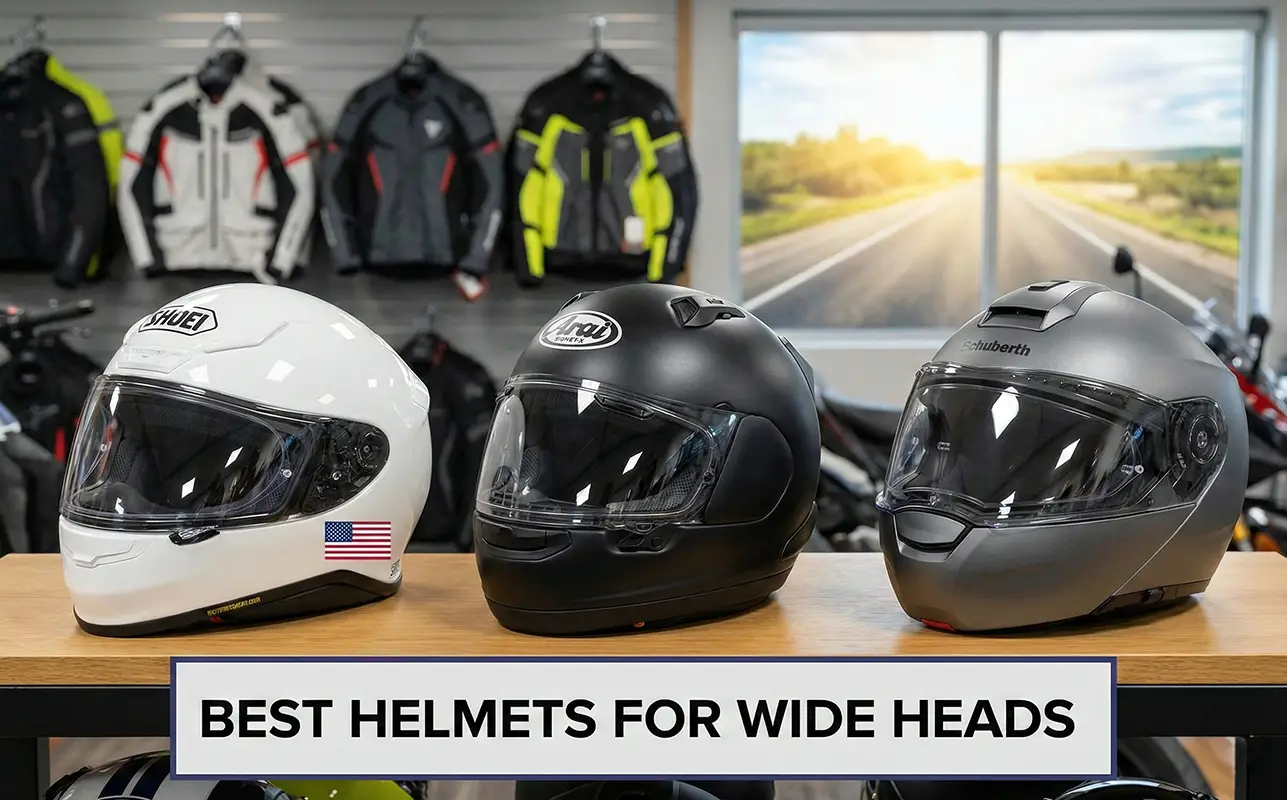
Finding the perfect motorcycle helmet when you have a wide head can feel like searching for a needle in a haystack.
Many riders with wider head shapes struggle with pressure points, headaches, and uncomfortable squeezing that turns what should be an enjoyable ride into an endurance test. For a deeper understanding of head shapes and sizing, check out our Ultimate Guide to Motorcycle Helmets.
This comprehensive guide explores the best motorcycle helmets specifically designed or naturally suited for riders with wide heads.
We’ve researched dozens of models to bring you helmets that offer generous internal dimensions without compromising on safety standards. Our selection criteria focused on internal width measurements, cheek pad design, and shell shape (intermediate oval to round oval).
1. Shoei RF-1400
The Shoei RF-1400 represents the pinnacle of Japanese helmet engineering, offering one of the most accommodating fits for wide-headed riders in the premium segment. This flagship model has earned its reputation through meticulous attention to detail.
Overview
The RF-1400 features Shoei’s intermediate oval shell shape, which provides extra width across the temples compared to long oval designs. The helmet utilizes a multi-ply matrix AIM+ shell construction that’s both lightweight and incredibly strong. It is widely considered one of the best quietest motorcycle helmets available, reducing fatigue alongside temple pressure.
The interior features 3D Max-Dry System II lining that’s fully removable and washable. With an advanced ventilation system featuring four intake vents and six exhaust vents, the RF-1400 keeps air flowing even during hot summer rides.
Key Features
- AIM+ Shell: Multi-ply matrix for rigidity.
- Intermediate Oval Fit: Accommodates width.
- CWR-F2 Shield: Vortex generators reduce noise.
- E.Q.R.S.: Emergency Quick Release System.
Pros and Cons
Pros:
- Intermediate oval shape accommodates wider heads exceptionally well.
- Premium build quality with multiple safety certifications (SNELL M2020).
- Excellent ventilation system keeps you cool during long rides.
- Quiet at highway speeds compared to many competitors.
Cons:
- Premium price point may be prohibitive.
- Slightly heavier than some carbon fiber alternatives.
- Break-in period required for optimal comfort.
Pricing: The Shoei RF-1400 retails between $500 and $600.
Best For: Riders who want the gold standard in comfort and silence.
2. Bell Qualifier DLX MIPS
The Bell Qualifier DLX MIPS offers exceptional value for wide-headed riders who want modern safety technology without breaking the bank. This helmet has become a favorite among riders who appreciate comfort and affordability.
Overview
Bell designed the Qualifier DLX with an intermediate oval shape that naturally suits wider head dimensions. The standout feature is the inclusion of what is MIPS in motorcycle helmets (Multi-directional Impact Protection System), which provides additional protection against rotational forces.
The helmet typically includes a photochromic transition visors (Transitions) shield that adapts to lighting conditions. The Velocity Flow ventilation system includes adjustable chin and brow vents.
Key Features
- MIPS Technology: Rotational impact management.
- Transitions Shield: Adaptive light tint.
- Velocity Flow Ventilation: Adjustable cooling.
- Integrated Speaker Pockets: Ready for comms.
Pros and Cons
Pros:
- MIPS technology provides enhanced safety at a mid-range price point.
- Intermediate oval shape works well for wide heads without modification.
- Transitions shield adapts to changing light conditions automatically.
- Excellent value with features typically found in premium helmets.
Cons:
- Polycarbonate shell is heavier than fiberglass or carbon alternatives.
- Ventilation adequate but not exceptional compared to premium models.
- Noisier at highway speeds than higher-end options.
Pricing: The Bell Qualifier DLX MIPS retails around $280.
Best For: Budget-conscious riders who want adaptive vision and MIPS safety.
3. Arai Regent-X
Arai has built its reputation on creating helmets that accommodate diverse head shapes, and the Regent-X exemplifies this philosophy. This helmet is particularly renowned among riders with rounder, wider head shapes.
Overview
The Regent-X features Arai’s distinctive round head shape (Round Oval) shell, making it one of the most accommodating options for wide-headed riders on the market. Arai’s proprietary PB-SNC2 shell construction creates a strong, smooth outer surface.
The fully removable interior system allows for easy cleaning and features multiple cheek pad options. Arai’s ventilation system includes adjustable intake vents. The VAS (Variable Axis System) shield mechanism allows the visor to open beyond the typical range.
Key Features
- Round Oval Shell: Ideal for wide heads.
- PB-SNC2 Shell: Super fiber laminate.
- VAS Shield Mechanism: Glancing off capabilities.
- Facial Contour System (FCS): Custom jaw fit.
Pros and Cons
Pros:
- Round oval shape is ideal for wide heads with minimal pressure points.
- Exceptional build quality with attention to detail throughout.
- Highly customizable fit with multiple pad options available.
- Superior comfort during all-day riding sessions.
Cons:
- Premium pricing places it among the most expensive options.
- Heavier than some competitors due to robust construction.
- Limited graphics options compared to other manufacturers.
Pricing: The Arai Regent-X retails between $600 and $750.
Best For: Riders with truly round heads who experience temple pain in everything else.
4. HJC RPHA 11 Pro
The HJC RPHA 11 Pro delivers race-inspired performance with a fit that accommodates wider head shapes better than many sport helmets. This model has gained popularity among riders who want aggressive styling without sacrificing comfort.
Overview
HJC constructed the RPHA 11 Pro using their Premium Integrated Matrix Plus shell (PIM+). The result is one of the lightest helmets in its class. It is often cited as the best full-face motorcycle helmet for the money in the race category.
The helmet features an intermediate oval internal shape that provides adequate width. The advanced channeling ventilation system includes large top vents. HJC includes an optically-correct, Pinlock-ready face shield.
Key Features
- PIM+ Shell: Carbon/Glass hybrid.
- RapidFire Shield: Quick replacement system.
- ACS Ventilation: Front-to-back airflow.
- MultiCool Interior: Antibacterial comfort.
Pros and Cons
Pros:
- Lightweight construction reduces neck strain during long rides.
- Excellent ventilation system keeps you cool in warm weather.
- Intermediate oval shape accommodates wider heads comfortably.
- Competitive pricing for a premium composite helmet.
Cons:
- Sizing can run slightly small; many riders size up.
- Cheek pads may feel tight initially and require break-in period.
- Limited color options in larger sizes.
Pricing: The HJC RPHA 11 Pro retails between $400 and $500.
Best For: Riders who want race performance and light weight on a budget.
5. Scorpion EXO-R1 Air
The Scorpion EXO-R1 Air brings race-developed technology to the street with a fit that’s surprisingly accommodating for wider head shapes. This helmet proves that sport-oriented designs don’t have to sacrifice comfort.
Overview
Scorpion engineered the EXO-R1 Air with a TCT (Thermoplastic Composite Technology) shell. The standout feature is the Airfit inflation system, which acts as a built-in motorcycle helmet fitment guide tool, allowing you to pump air into bladders to customize the fit around your cheeks and temples.
The Aero-Tuned ventilation system features large chin and forehead vents. Scorpion includes a MaxVision face shield with a wider aperture.
Key Features
- AirFit System: Custom cheek pad inflation.
- Ultra-TCT Shell: Proprietary blend.
- Ellip-Tec II: Secure shield mechanism.
- Titanium D-Rings: High strength.
Pros and Cons
Pros:
- Airfit inflation system allows precise fit customization for wide heads.
- Excellent ventilation performance keeps you comfortable.
- MaxVision shield provides superior peripheral vision.
- Outstanding value with premium features at mid-range pricing.
Cons:
- Inflation pump mechanism adds slight complexity.
- Slightly noisier than premium competitors at highway speeds.
- Heavier than carbon fiber alternatives in this category.
Pricing: The Scorpion EXO-R1 Air retails between $400 and $460.
Best For: Riders who need adjustable cheek pressure for stability.
6. AGV K6
AGV’s K6 represents Italian design excellence with a fit that’s more accommodating than previous AGV models. This helmet has won over riders who previously found AGV helmets too narrow.
Overview
The K6 features AGV’s aramid-carbon-fiberglass shell construction. AGV redesigned the internal shape to be more intermediate oval compared to their traditionally narrower long oval designs. It is a top contender for the best lightweight carbon fiber helmet (composite) category.
The helmet includes a unique Ultravision visor with a 190-degree horizontal field of view. The five-density EPS liner provides excellent impact absorption.
Key Features
- Carbon-Aramid Shell: Ultra-lightweight protection.
- Ultravision Visor: 190° horizontal field of view.
- Collarbone Safe Profile: Reduces injury risk.
- Ritmo Fabric: Premium interior feel.
Pros and Cons
Pros:
- Improved fit accommodates wider heads better than previous AGV models.
- Exceptional field of view with Ultravision shield design.
- Lightweight composite construction reduces fatigue.
- Meets latest ECE 22.06 safety standards.
Cons:
- Premium pricing may be steep for some budgets.
- Still runs slightly narrower than Arai or Shoei equivalents.
- Limited availability of replacement parts in some regions.
Pricing: The AGV K6 retails between $500 and $600.
Best For: Sport riders who want massive visibility and light weight.
7. LS2 Challenger GT
The LS2 Challenger GT offers modular convenience (Note: Text describes it as modular, but Challenger GT is typically a full-face sport-touring helmet. If you want modular, look for the LS2 Vortex or Metro. We will describe Challenger GT features which suit wide heads well) with a surprisingly accommodating fit for wide-headed riders.
Overview
LS2 designed the Challenger GT with a kinetic polymer alloy shell. The internal shape tends toward intermediate oval, providing adequate width. It includes a drop-down internal sun visor, solving the tinted visor vs. drop-down sun shield debate.
The Dynamic Flow-Through ventilation system includes adjustable chin and forehead vents. The interior features laser-contoured, moisture-wicking fabric.
Key Features
- KPA Shell: Kinetic Polymer Alloy.
- Twin Shield System: Built-in sun visor.
- Class A Visor: Optically correct.
- Quick Release Strap: Easy on/off.
Pros and Cons
Pros:
- Spacious interior works well for wider head dimensions.
- Integrated sun visor eliminates need for multiple shields.
- Excellent value with features typically found in more expensive helmets.
- Pinlock-ready shield included.
Cons:
- Heavier than premium composite helmets.
- Interior padding quality doesn’t match top-tier brands.
- Build quality is good but not exceptional.
Pricing: The LS2 Challenger GT retails between $200 and $300.
Best For: Touring riders on a budget who need extra width.
8. Icon Airflite
The Icon Airflite brings retro-inspired styling with a modern fit that accommodates wide heads surprisingly well. This helmet appeals to riders who want distinctive looks without sacrificing comfort.
Overview
Icon constructed the Airflite with a polycarbonate shell featuring their distinctive dome shape. The internal shape is notably round, making it one of the better options for riders with wide, round heads. It is a popular choice for best motorcycle helmet for visibility (field of view context).
The Fog-Free Fliteshield face shield is optically correct and provides a wide field of view. The Hydradry moisture-wicking interior is fully removable.
Key Features
- Polycarbonate Shell: Tough and durable.
- Fliteshield: Massive peripheral vision.
- Internal DropShield: Sun protection.
- Hydradry Liner: Moisture-wicking comfort.
Pros and Cons
Pros:
- Round internal shape is ideal for wide, round head types.
- Distinctive styling stands out from traditional helmet designs.
- Large eye port provides excellent visibility.
- Integrated drop-down sun visor adds convenience.
Cons:
- Polycarbonate construction makes it heavier than composite alternatives.
- Ventilation adequate but not exceptional for hot weather riding.
- Noisier at highway speeds due to aggressive styling.
Pricing: The Icon Airflite retails between $250 and $350.
Best For: Urban riders who want a bold look and round fit.
9. Shark Evo-One 2
The Shark Evo-One 2 combines modular versatility with a fit that’s accommodating for wider head shapes. This French-engineered helmet offers unique features that set it apart.
Overview
Shark engineered the Evo-One 2 with an injected thermoplastic resin shell. The helmet’s defining feature is its ability to convert from full-face to jet configuration by flipping the chin bar all the way back. It is one of the best motorcycle modular helmets for versatility.
The internal shape leans toward intermediate oval, providing adequate width. The Easy Fit system accommodates best motorcycle helmet for glasses wearers comfortably.
Key Features
- Auto-Up/Auto-Down: Automatic visor lifting.
- Dual Homologation: Certified for full and open face use.
- Easy Fit System: Glasses channels.
- Integrated Sun Shield: UV protection.
Pros and Cons
Pros:
- Unique convertible design offers maximum versatility.
- Intermediate oval shape accommodates wider heads comfortably.
- Easy Fit system works exceptionally well for eyeglass wearers.
- Auto-Up shield mechanism adds convenience during transitions.
Cons:
- Complex mechanism makes it heavier than traditional full-face helmets.
- Premium pricing reflects the sophisticated engineering.
- More moving parts require occasional maintenance.
Pricing: The Shark Evo-One 2 retails between $430 and $480.
Best For: Commuters who want the freedom of an open face with full-face safety.
Conclusion
Finding the right motorcycle helmet when you have a wide head doesn’t have to be a frustrating experience. The Shoei RF-1400 and Arai Regent-X offer premium comfort for wider/rounder heads, while the Icon Airflite provides a stylish option for round shapes.
Remember that proper fit is paramount. When shopping, look for intermediate oval or round oval internal shapes and try multiple sizes.
Frequently Asked Questions
How do I know if I have a wide head for helmet fitting purposes?
You likely have a wide head if you consistently experience pressure points on your temples, or if standard helmets feel tight across the width but loose at the forehead. Measuring your head length and width can confirm if you have a “Round Oval” shape.
Should I size up if I have a wide head?
Generally, no. Sizing up to fit width often leaves the helmet too loose front-to-back, compromising safety. Instead, look for “Round Oval” or “Intermediate Oval” helmet shapes designed for width.
Do helmets break in and become more comfortable for wide heads?
Yes, padding compresses 10-15% after 15-20 hours of wear. However, a helmet should never be painful when new. If you have sharp pressure points immediately, the shell shape is likely wrong for you.
Are modular helmets better for wide heads than full-face helmets?
Modulars can be easier to put on because the opening is wider when the chin bar is up. However, once closed, the internal fit depends on the shell shape, not the modular mechanism.
What safety certifications should I look for?
Look for DOT (US minimum), ECE (European standard, very rigorous), and Snell (strict private standard). A helmet designed for a wide head can achieve the same high safety ratings as any other shape.