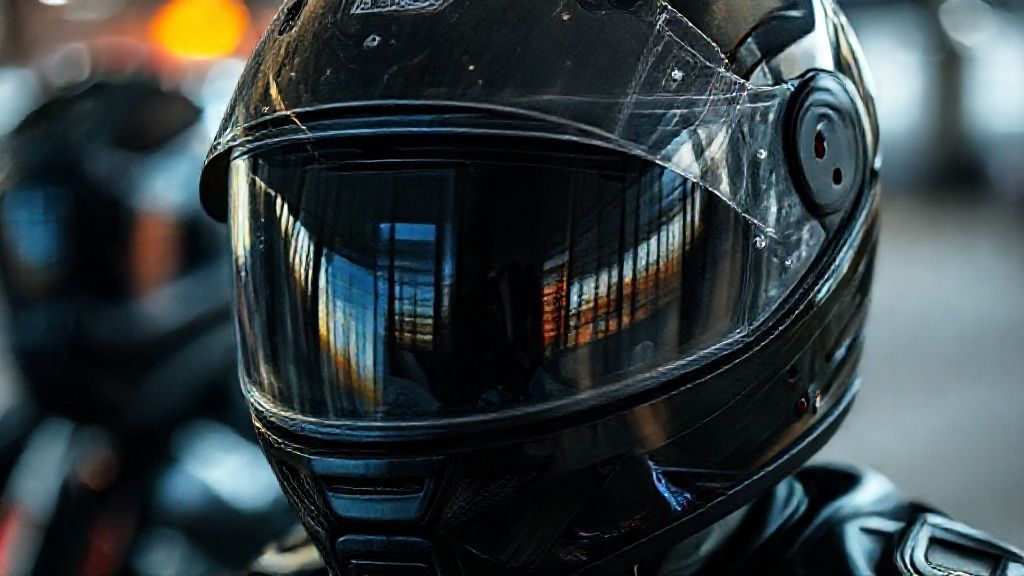
When you’re riding a motorcycle, your helmet is the single most critical piece of safety equipment you’ll ever wear. In the event of a crash, especially a high-impact collision, the difference between a quality helmet and a subpar one can literally mean the difference between life and death.
Heavy impact protection goes beyond basic safety standards—it requires advanced materials, superior engineering, and rigorous testing that exceeds minimum requirements.
For a deep dive into safety standards, check out our Ultimate Guide to Motorcycle Helmets.
In this comprehensive guide, we’ve researched and compiled the best motorcycle helmets specifically designed to withstand heavy impacts.
We’ve focused on helmets that not only meet but exceed DOT, ECE, and SNELL safety certifications, incorporating cutting-edge technology like multi-density EPS foam, advanced shell materials, and innovative impact-absorption systems.
Our selection criteria included safety ratings, real-world crash test data, material quality, construction methods, and verified user experiences from riders who demand maximum protection.
Whether you’re a sport bike enthusiast, adventure rider, or daily commuter, these helmets represent the pinnacle of impact protection available today.
1. Shoei RF-1400
The Shoei RF-1400 represents the latest evolution in Shoei’s flagship sport helmet line, combining decades of Japanese engineering expertise with modern safety innovations. This helmet has earned its reputation as one of the most protective full-face helmets available, particularly excelling in heavy impact scenarios.
Overview
The RF-1400 features an advanced Aim+ shell construction using a proprietary blend of fiberglass and organic fibers, creating an exceptionally strong yet lightweight outer shell. The multi-density EPS liner is strategically engineered with varying foam densities to manage both high and low-speed impacts effectively.
Shoei’s Emergency Quick Release System allows medical personnel to safely remove cheek pads in crash situations. The helmet incorporates an enlarged eye port for improved visibility and features an advanced ventilation system with multiple intake and exhaust vents.
It meets DOT, SNELL M2020, and ECE 22.06 certifications, placing it among the most rigorously tested helmets available. The interior uses moisture-wicking, antimicrobial fabric that remains comfortable during extended rides while maintaining its protective properties.
Pros and Cons
Pros:
- Triple-certified (DOT, SNELL M2020, ECE 22.06) providing exceptional verified impact protection.
- Advanced Aim+ shell construction offers superior strength-to-weight ratio for optimal energy dispersion.
- Emergency Quick Release System facilitates safe helmet removal after crashes.
- Excellent ventilation system prevents heat buildup without compromising structural integrity.
Cons:
- Premium price point makes it less accessible for budget-conscious riders.
- Intermediate oval head shape may not fit all riders comfortably.
- Slightly heavier than some carbon fiber alternatives.
Pricing
The Shoei RF-1400 retails between $499 and $599 depending on the graphic design.
Best For
This helmet is ideal for sport riders who want a proven, multi-certified helmet that balances safety with everyday usability.
2. Arai Corsair-X
Arai has built its reputation on uncompromising safety standards, and the Corsair-X exemplifies this philosophy. Hand-crafted in Japan with meticulous attention to detail, this helmet prioritizes impact protection above all other considerations, making it a favorite among professional racers and safety-conscious riders.
Overview
The Corsair-X utilizes Arai’s proprietary Super Complex Laminate Construction (SCLC), combining multiple layers of fiberglass with special strengthening ridges to create an incredibly strong, smooth, round shell that deflects impact energy rather than absorbing it directly. This distinctive round shape isn’t just aesthetic—it’s specifically engineered to glance off obstacles and reduce rotational forces during crashes.
The helmet features a multi-density EPS liner with five different foam densities strategically placed throughout the interior. Arai’s Variable Axis System (VAS) allows specific sections to break away during extreme impacts, reducing forces transmitted to the neck and spine.
The helmet exceeds SNELL M2020, DOT, and ECE standards, with Arai’s own internal testing procedures that are even more stringent than these certifications require.
Pros and Cons
Pros:
- Legendary build quality with hand-crafted construction ensuring consistent protection.
- Smooth, round shell design effectively deflects impact forces and reduces rotational injuries.
- Variable Axis System provides additional protection during severe impacts.
- Exceeds all major safety certifications with Arai’s own rigorous internal testing.
Cons:
- Very expensive, representing a significant investment for most riders.
- Ventilation system is less advanced than some competitors.
- The focus on safety over aerodynamics creates slightly more wind noise at highway speeds.
Pricing
The Arai Corsair-X ranges from $849 to over $1,000.
Best For
Riders who want the absolute pinnacle of hand-made safety technology and glancing-off capability.
3. AGV Pista GP RR
Developed with input from MotoGP champion Valentino Rossi, the AGV Pista GP RR represents racing technology adapted for street use. This Italian-made helmet combines cutting-edge materials with track-proven protection, making it one of the most advanced impact-resistant helmets available to civilian riders.
Overview
The Pista GP RR features a 100% carbon fiber shell construction in four different sizes to ensure optimal fit and protection across all head sizes. AGV’s proprietary carbon fiber layering process creates an incredibly strong yet lightweight shell that excels at dispersing impact energy.
The helmet incorporates a multi-density EPS liner with varying foam compounds strategically placed to manage different impact scenarios. It includes an innovative microsystem that allows controlled deformation in specific areas during crashes, reducing peak forces transmitted to the head.
The helmet meets FIM racing standards along with ECE 22.05 and DOT certifications. Advanced aerodynamics developed in wind tunnels and on MotoGP tracks provide exceptional stability at high speeds, which also contributes to safety by reducing head movement during impacts.
Pros and Cons
Pros:
- 100% carbon fiber construction provides maximum strength with minimal weight.
- Four shell sizes ensure proper fit, which is crucial for optimal impact protection.
- FIM racing certification proves its ability to withstand extreme impacts.
- Advanced aerodynamics reduce head movement and fatigue, contributing to crash prevention.
Cons:
- Premium racing helmet pricing makes it one of the most expensive options.
- Designed primarily for sport riding positions; less comfortable for upright riding.
- Limited ventilation when riding at lower speeds.
Pricing
The AGV Pista GP RR typically costs between $1,400 and $1,900.
Best For
Track enthusiasts and sport bike riders who demand FIM-certified protection.
4. Schuberth C4 Pro
The Schuberth C4 Pro is a modular helmet that doesn’t compromise on safety despite its flip-up design. German engineering and rigorous testing ensure this helmet provides protection comparable to full-face designs, making it ideal for riders who want versatility without sacrificing impact resistance.
Overview
Schuberth constructs the C4 Pro using a Direct Fiber Processing technique that creates a fiberglass-reinforced shell with exceptional strength characteristics. The modular chin bar mechanism is engineered to remain locked during impacts, maintaining full-face protection levels.
The helmet features an advanced multi-layer EPS liner system with varying densities optimized for different impact speeds and angles. It includes an innovative anti-roll-off system that prevents the helmet from being pulled off during crashes or tumbling.
The C4 Pro is ECE 22.05 certified in both closed and open positions, though maximum protection is achieved with the chin bar closed. The helmet’s aeroacoustic design makes it one of the best quietest motorcycle helmets available, reducing rider fatigue which indirectly contributes to safety.
Pros and Cons
Pros:
- Modular design provides convenience without compromising impact protection when closed.
- Direct Fiber Processing creates an exceptionally strong fiberglass shell.
- Anti-roll-off system provides additional security during crashes.
- Extremely quiet design reduces fatigue and maintains rider alertness.
Cons:
- Heavier than comparable full-face helmets due to modular mechanism.
- Higher price point than many full-face alternatives.
- Moving parts in the chin bar mechanism require regular maintenance and inspection.
Pricing
The Schuberth C4 Pro retails between $649 and $799.
Best For
Touring riders who need modular motorcycle helmets convenience with uncompromising safety.
5. Bell Race Star Flex DLX
Bell’s Race Star Flex DLX incorporates innovative flex technology that represents a paradigm shift in impact management. This helmet uses a segmented construction that allows controlled movement during impacts, reducing rotational forces that can cause traumatic brain injuries.
Overview
The Race Star Flex DLX features Bell’s proprietary three-layer impact liner system called Flex. This system uses an independent layer that can move slightly relative to the outer shell and inner comfort liner, absorbing and redirecting rotational forces during angled impacts.
The outer shell is constructed from a carbon composite material that provides excellent strength while keeping weight minimal. The helmet includes Progressive Layering, using five different EPS foam densities strategically positioned throughout the liner to manage various impact scenarios.
It’s equipped with Bell’s Magnefusion magnetic cheek pad system for emergency removal. The helmet meets SNELL M2015, DOT, and ECE 22.05 certifications. Bell’s Flying Bridge visor mechanism provides a wide eye port while maintaining structural integrity.
Pros and Cons
Pros:
- Innovative Flex technology specifically addresses rotational impact forces.
- Progressive Layering with five foam densities optimizes protection across impact scenarios.
- Magnefusion emergency cheek pad removal system aids first responders.
- Carbon composite construction provides excellent strength-to-weight ratio.
Cons:
- Premium pricing reflects advanced technology.
- The Flex system adds slight bulk compared to traditional designs.
- Round oval fit may not accommodate all head shapes comfortably.
Pricing
The Bell Race Star Flex DLX retails between $699 and $849.
Best For
Riders who want cutting-edge technology specifically designed to mitigate rotational brain injury.
6. HJC RPHA 11 Pro
The HJC RPHA 11 Pro delivers exceptional impact protection at a more accessible price point than many premium competitors. This helmet proves that advanced safety features don’t always require a premium price tag, making serious protection available to a broader range of riders.
Overview
HJC constructs the RPHA 11 Pro using Premium Integrated Matrix Plus (PIM+) technology, which combines carbon fiber, fiberglass, and aramid fibers to create a lightweight yet incredibly strong shell. The helmet features an advanced multi-density EPS liner engineered to manage impacts across a wide range of speeds and angles.
It includes an emergency quick-release system for cheek pads, facilitating safe helmet removal by medical personnel. The RPHA 11 Pro meets SNELL M2015, DOT, and ECE 22.05 certifications, demonstrating its ability to withstand severe impacts.
The helmet’s aerodynamic design was developed through extensive wind tunnel testing, reducing lift and buffeting at high speeds. An advanced ventilation system with multiple intake and exhaust ports keeps riders comfortable without compromising structural integrity.
Pros and Cons
Pros:
- Excellent value proposition with premium safety features at mid-range pricing.
- PIM+ shell construction provides strength comparable to more expensive helmets.
- SNELL certification confirms its heavy impact protection capabilities.
- Wide range of sizes and shell sizes ensures proper fit for various head shapes.
Cons:
- Interior padding quality is slightly lower than premium competitors.
- Visor mechanism feels less refined than top-tier helmets.
- Some users report wind noise at higher speeds.
Pricing
The HJC RPHA 11 Pro ranges from $349 to $449 depending on graphics.
Best For
Riders seeking a SNELL-certified helmet that offers high value and low weight.
7. Shark Race-R Pro GP
The Shark Race-R Pro GP brings French engineering and innovation to the heavy impact protection category. This helmet incorporates unique technologies focused specifically on reducing forces transmitted to the brain during crashes, making it a standout choice for safety-conscious riders.
Overview
The Race-R Pro GP features a multi-composite fiber shell combining carbon, aramid, and fiberglass for optimal strength and impact absorption. Shark’s proprietary Multi Density EPS system uses five different foam densities positioned strategically throughout the liner to manage various impact scenarios.
The helmet incorporates an innovative Emergency Release System that allows medical personnel to remove cheek pads quickly without moving the rider’s head. What sets this helmet apart is Shark’s Auto-Seal visor system, which creates an airtight seal automatically when closed, improving aerodynamics.
The helmet meets ECE 22.05 and DOT standards and features an advanced ventilation system with multiple adjustable vents. The interior uses Shark’s proprietary antimicrobial fabric that maintains comfort while resisting odor.
Pros and Cons
Pros:
- Multi-composite shell provides excellent balance of strength and weight.
- Five-density EPS system optimizes protection across impact types.
- Auto-Seal visor system prevents accidental opening during crashes.
- Competitive pricing for the level of technology and protection offered.
Cons:
- Lacks SNELL certification, though meets other major standards.
- Intermediate oval shape may not fit all riders comfortably.
- Replacement parts and accessories can be harder to find than major brands.
Pricing
The Shark Race-R Pro GP typically retails between $549 and $749.
Best For
Sport riders who want advanced features like the Auto-Seal visor and multi-density EPS.
8. Scorpion EXO-R1 Air
The Scorpion EXO-R1 Air represents exceptional value in the heavy impact protection category, offering features and safety performance typically found in helmets costing significantly more. This helmet demonstrates that budget-conscious riders don’t have to compromise on critical safety features.
Overview
Scorpion constructs the EXO-R1 Air using a TCT (Thermodynamically Controlled Technology) shell made from a blend of fiberglass, aramid, and carbon fiber. This process creates a shell that’s both lightweight and exceptionally strong, with consistent thickness throughout for uniform impact protection.
The helmet features a multi-density EPS liner with varying foam densities strategically placed to manage different impact scenarios. It includes Scorpion’s KwikWick III moisture-wicking liner with antimicrobial fabric that remains comfortable during long rides.
The EXO-R1 Air meets DOT and ECE 22.05 certifications and features an emergency release system for cheek pads. An advanced AirFit inflation system allows riders to customize the fit, which acts as a great motorcycle helmet fitment guide tool built directly into the gear.
Pros and Cons
Pros:
- Outstanding value with premium materials and features at accessible pricing.
- TCT shell construction provides excellent strength-to-weight ratio.
- AirFit inflation system ensures optimal fit for maximum protection.
- Comprehensive ventilation system with multiple adjustable vents.
Cons:
- Does not carry SNELL certification, limiting use in some racing organizations.
- Interior padding durability is lower than premium competitors.
- Visor changing mechanism is less intuitive than some alternatives.
Pricing
The Scorpion EXO-R1 Air retails between $399 and $459.
Best For
Riders who want a custom fit feel via the AirFit system at a mid-range price.
9. LS2 Challenger GT
The LS2 Challenger GT proves that advanced impact protection can be accessible to riders on any budget. While it’s the most affordable helmet on this list, it still incorporates serious safety technology and meets rigorous certification standards.
Overview
LS2 constructs the Challenger GT using a High Performance Fiberglass Composite (HPFC) shell that provides solid impact protection at a budget-friendly price point. The helmet features a dual-density EPS liner engineered to manage both high and low-speed impacts effectively.
It includes an emergency quick-release system for cheek pads, facilitating safe removal by medical personnel after crashes. The Challenger GT meets DOT and ECE 22.05 certifications, confirming its ability to withstand significant impacts.
The helmet’s design includes an integrated sun visor for convenience and safety, reducing the need to fumble with sunglasses during rides. An efficient ventilation system with multiple intake and exhaust vents keeps riders comfortable without compromising structural integrity.
Pros and Cons
Pros:
- Exceptional affordability makes quality impact protection accessible to all riders.
- Meets DOT and ECE certifications confirming legitimate safety performance.
- Integrated sun visor adds convenience and eliminates distraction from changing light conditions.
- Emergency release system included despite budget pricing.
Cons:
- Heavier than premium helmets due to fiberglass construction.
- Lacks SNELL certification and advanced features like rotational impact protection.
- Interior materials and overall finish quality are noticeably lower than premium options.
Pricing
The LS2 Challenger GT is priced between $199 and $279.
Best For
Budget-conscious riders who still demand fiberglass construction and ECE safety standards.
Conclusion
Selecting the right motorcycle helmet for heavy impact protection is one of the most important decisions you’ll make as a rider. The helmets featured in this guide represent the best options available across various price points, each offering serious protection backed by rigorous testing and certification.
Whether you choose the premium engineering of the Shoei RF-1400 or Arai Corsair-X, the innovative technology of the Bell Race Star Flex DLX, or the exceptional value of the Scorpion EXO-R1 Air or LS2 Challenger GT, you’re investing in proven protection that could save your life.
Frequently Asked Questions
What safety certifications should I look for in a heavy impact motorcycle helmet?
Look for helmets that meet DOT (Department of Transportation), ECE 22.05 or 22.06 (Economic Commission for Europe), and ideally SNELL M2020 or M2015 certifications. SNELL certification represents the highest testing standard, subjecting helmets to more severe impact tests. Some racing helmets also carry FIM certification.
How often should I replace my motorcycle helmet even if it hasn’t been in a crash?
Manufacturers recommend replacing your helmet every five years. Over time, materials like the EPS foam liner degrade due to UV light and general wear. For more details on replacement timelines, see our guide on when to replace your motorcycle helmet.
Does a more expensive helmet always provide better impact protection?
Not necessarily. All certified helmets meet minimum DOT standards. However, expensive helmets typically use superior materials like carbon fiber and innovative technologies addressing rotational impacts. They also often carry SNELL certification.
What is rotational impact protection and why does it matter?
Rotational impact protection addresses the twisting forces applied to your brain during angled impacts. Technologies like Bell’s Flex system and what is MIPS in motorcycle helmets allow slight movement between the helmet’s layers, absorbing these forces.
How can I tell if my helmet fits properly for maximum impact protection?
A properly fitted helmet should feel snug but not painfully tight. When you move your head side to side, the skin on your forehead should move with the helmet. You should not be able to roll the helmet off your head with the chin strap fastened.