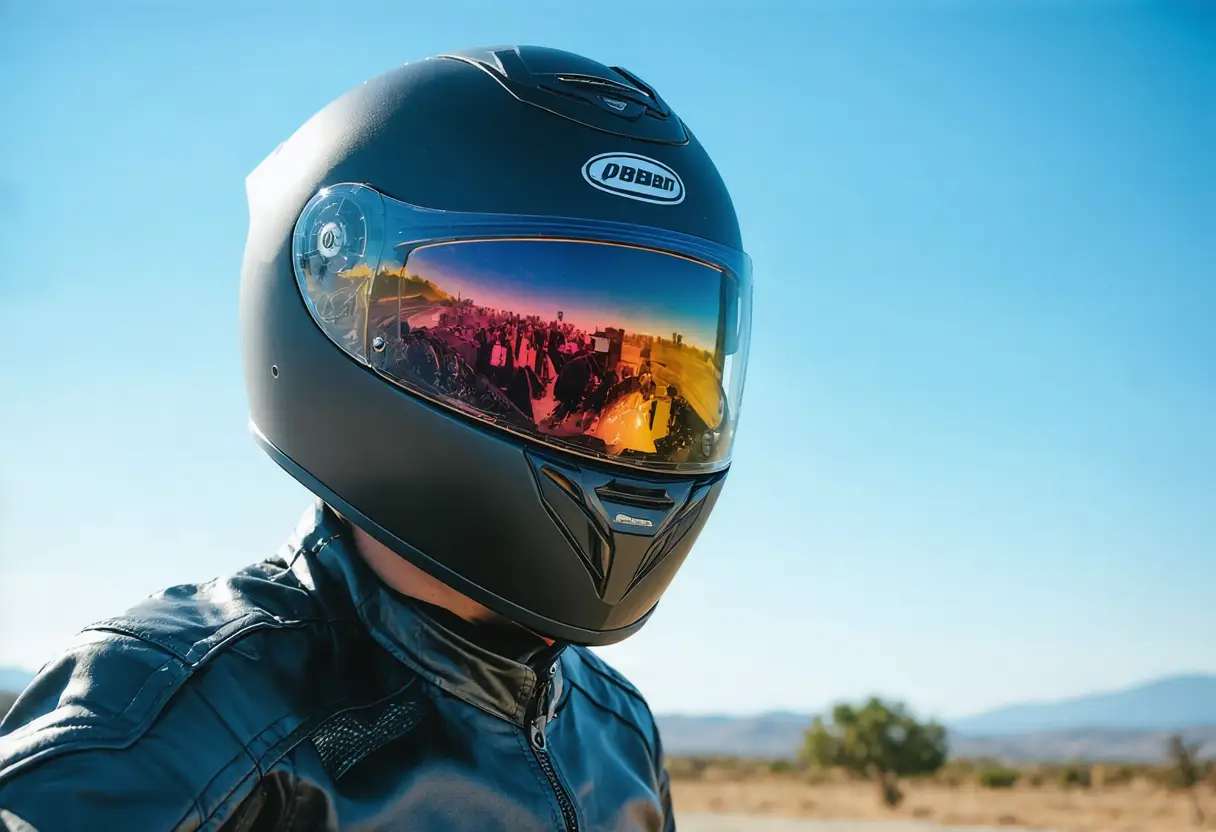
Riding a motorcycle in scorching heat can quickly turn from exhilarating to exhausting when you’re trapped inside a poorly ventilated helmet. The right helmet can make the difference between an enjoyable summer ride and a sweaty, uncomfortable experience that leaves you desperate for air conditioning.
Whether you’re commuting through city traffic or embarking on a cross-country adventure, finding a helmet that balances safety, ventilation, and comfort in hot weather is crucial for any rider.
For a comprehensive overview of safety and gear types, check out our Ultimate Guide to Motorcycle Helmets.
In this comprehensive guide, we’ve compiled the best motorcycle helmets specifically designed to keep you cool when temperatures soar.
We’ve evaluated each helmet based on critical factors including ventilation systems, airflow efficiency, moisture-wicking liner materials, weight, aerodynamics, and overall comfort during extended rides in hot conditions.
Our selection includes options across various price points and styles, ensuring there’s a perfect hot-weather helmet for every rider’s needs and budget. Each helmet on this list meets or exceeds DOT safety standards while providing superior cooling capabilities to help you stay comfortable and focused on the road ahead.
1. Shoei RF-1400
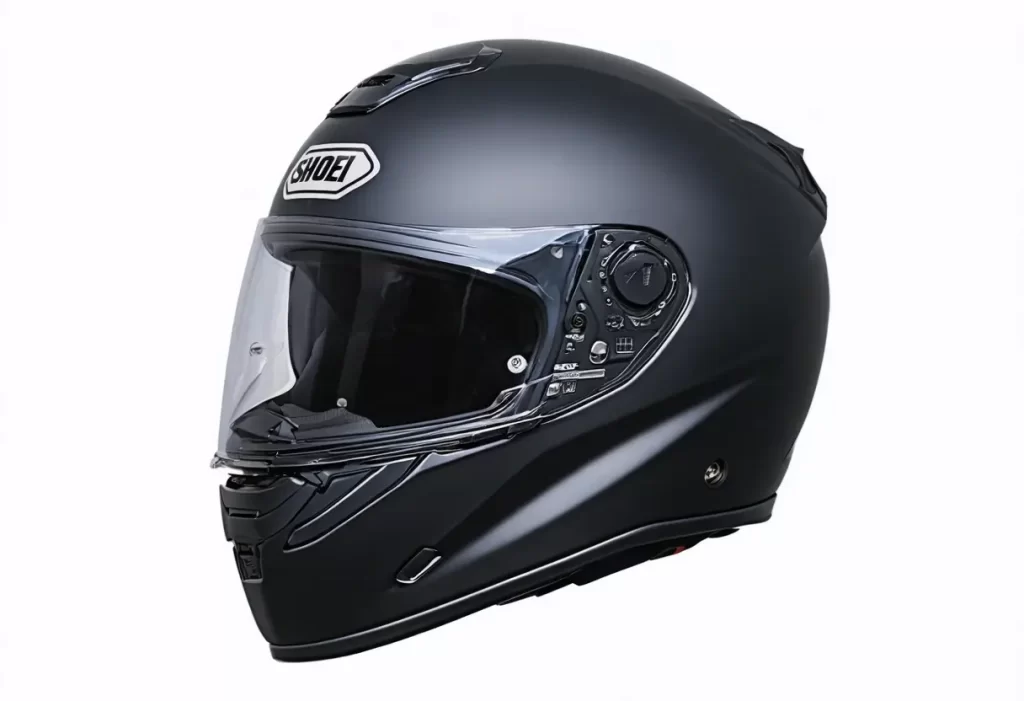
The Shoei RF-1400 represents the pinnacle of Japanese engineering excellence, combining world-class safety with exceptional ventilation designed for hot weather riding. This premium full-face helmet has earned its reputation among serious riders who refuse to compromise on protection or comfort.
Overview
The RF-1400 features an advanced ventilation system with multiple intake and exhaust vents strategically positioned to create a continuous airflow channel throughout the helmet. The upper air intake, chin vent, and rear exhaust vents work in harmony to pull hot air away from your head while drawing cool air in.
Its lightweight AIM shell construction reduces neck fatigue during long rides, while the 3D Max-Dry System II interior liner actively wicks moisture away from your skin. The helmet’s aerodynamic profile minimizes wind resistance and buffeting, allowing air to flow smoothly over the shell. The emergency quick-release cheek pads and CWR-1 shield with Pinlock-ready design ensure clear vision even in humid conditions.
Pros and Cons
Pros:
- Exceptional ventilation system with multiple adjustable vents that provide powerful airflow even at low speeds.
- Lightweight construction reduces neck strain and heat buildup during extended rides in hot weather.
- Premium moisture-wicking liner that keeps sweat away from your face and dries quickly.
- Whisper-quiet operation that doesn’t sacrifice airflow for noise reduction.
Cons:
- Premium price point that may be prohibitive for budget-conscious riders.
- The aggressive aerodynamic shape may not fit all head shapes comfortably.
- Replacement parts and shields can be expensive compared to other brands.
Pricing
The Shoei RF-1400 retails between $499 and $599.
Best For
This helmet is ideal for sport-touring riders who need a quiet, high-airflow helmet for long summer days.
2. AGV K6
AGV’s K6 brings MotoGP-inspired technology to the street, offering racing-level ventilation in a package that’s perfect for hot weather commuting and touring. This Italian-designed helmet punches well above its mid-range price point with features typically found in more expensive models.
Overview
The K6 incorporates five front air vents and two rear extractors that create an impressive ventilation system capable of moving significant air volume through the helmet interior. Its Ultralite shell construction keeps weight to a minimum while maintaining structural integrity and safety standards.
The Ritmo fabric interior is designed specifically for moisture management, featuring anti-bacterial properties and superior breathability. The helmet’s aerodynamic testing in AGV’s wind tunnel ensures optimal airflow at various speeds, reducing turbulence and maximizing cooling efficiency.
The integrated sun visor provides relief from glare without requiring sunglasses, and the Class Optical 1 main visor offers distortion-free vision with anti-scratch and Pinlock vs. Anti-Fog Sprays compatibility.
Pros and Cons
Pros:
- Extensive ventilation system with five intake vents provides excellent cooling in extreme heat.
- Integrated drop-down sun visor eliminates the need for sunglasses on bright, hot days.
- Excellent value for money with premium features at a mid-range price.
- Removable and washable interior makes maintenance easy after sweaty rides.
Cons:
- Intermediate oval shape may not accommodate all head shapes comfortably.
- Some riders report the chin vent could be more effective at very low speeds.
- The visor mechanism can be stiff initially and requires break-in period.
Pricing
The AGV K6 retails between $499 and $599.
Best For
The K6 is the best helmet for summer motorcycle riding if you want lightweight performance and massive air intake.
3. HJC RPHA 11 Pro
HJC’s RPHA 11 Pro delivers professional-grade performance at an accessible price point, making it a favorite among riders seeking maximum ventilation without breaking the bank. This helmet has proven itself in both racing and street applications where heat management is critical.
Overview
The RPHA 11 Pro features HJC’s Advanced Channeling Ventilation System with multiple intake and exhaust ports that create a powerful through-flow of air. The Premium Integrated Matrix (PIM) shell construction combines carbon fiber, aramid, and fiberglass for an incredibly lightweight yet strong structure that won’t trap heat.
The moisture-wicking Crown and cheek pad liner system actively pulls sweat away from your skin, while the silver-treated fabric provides antibacterial protection during hot weather rides. The aerodynamic shell design was developed through extensive wind tunnel testing to minimize drag.
The helmet includes a RapidFire shield replacement system that allows for tool-free visor changes, and the shield itself is prepared for Pinlock inserts to prevent fogging in varying temperature conditions.
Pros and Cons
Pros:
- Outstanding ventilation-to-price ratio makes premium cooling accessible to more riders.
- Extremely lightweight construction reduces heat buildup and rider fatigue.
- Tool-free shield replacement system is convenient for switching between clear and tinted visors.
- Wide range of graphic options allows personalization without sacrificing performance.
Cons:
- Interior padding may compress more quickly than premium alternatives with extended use.
- Wind noise levels are slightly higher than more expensive competitors.
- The chin curtain could be more effective at sealing out hot air from below.
Pricing
The HJC RPHA 11 Pro typically retails between $349 and $449.
Best For
This helmet is perfect for sport bike riders who need race-grade ventilation on the street.
4. Bell Qualifier DLX MIPS
The Bell Qualifier DLX MIPS offers an impressive combination of safety technology, ventilation, and affordability that makes it an excellent choice for riders in hot climates. This helmet proves that effective hot-weather protection doesn’t require a premium investment.
Overview
Bell’s Velocity Flow Ventilation system incorporates adjustable chin and forehead vents along with exhaust ports to maintain consistent airflow through the helmet. The inclusion of what is MIPS in motorcycle helmets technology adds an extra layer of safety against rotational forces during impacts.
The contoured cheek pads and Crown Pad feature moisture-wicking fabric that helps keep you dry and comfortable during hot rides. The polycarbonate shell construction balances protection with reasonable weight, though it’s slightly heavier than premium carbon fiber alternatives.
The Transitions-compatible face shield can adapt to changing light conditions, reducing eye strain on bright, sunny days. The NutraFog II anti-fog coating ensures clear vision regardless of temperature and humidity fluctuations.
Pros and Cons
Pros:
- MIPS technology provides enhanced safety protection at an affordable price point.
- Effective ventilation system keeps air moving even during slow-speed urban riding.
- Compatible with photochromic transition visors for automatic light adaptation.
- Excellent entry-level option for new riders who need hot-weather protection on a budget.
Cons:
- Heavier than premium helmets, which can contribute to additional heat and fatigue.
- Interior materials are functional but not as luxurious as higher-priced alternatives.
- Aerodynamics could be improved for better high-speed stability and airflow.
Pricing
The Bell Qualifier DLX MIPS retails around $280.
Best For
New riders and commuters looking for high-value features and adaptive vision.
5. Arai Corsair-X
The Arai Corsair-X represents decades of refinement in helmet design, offering uncompromising quality and ventilation for riders who demand the absolute best. This helmet’s legendary build quality and cooling performance justify its position in the premium segment.
Overview
Arai’s proprietary ventilation system features multiple intake and exhaust ports that work together to create exceptional airflow throughout the helmet interior. The hand-crafted shell uses Arai’s Complex Laminate Construction (CLC) with a stronger, smoother, rounder shell design that naturally channels air around and through the helmet.
The fully removable and washable interior features moisture-wicking fabric and strategically placed air channels that direct cooling air where it’s needed most. You can easily learn how to wash your motorcycle helmet liner to keep it fresh all summer.
The helmet’s unique round shape, while requiring proper fitting, provides superior ventilation compared to more oval designs by allowing air to flow evenly around your head. The VAS-V shield system enables slight shield opening for additional airflow without compromising safety.
Pros and Cons
Pros:
- Legendary Arai quality and craftsmanship ensures long-term durability and performance.
- Superior ventilation system provides cooling airflow that rivals any helmet on the market.
- Round shell shape promotes even air distribution and reduces hot spots.
- Five-year warranty demonstrates manufacturer confidence in product longevity.
Cons:
- Premium pricing places it out of reach for many riders.
- Rounder head shape may not fit riders with oval head shapes comfortably.
- Requires careful sizing and fitting to achieve optimal ventilation and comfort.
Pricing
The Arai Corsair-X retails between $849 and $1,000+.
Best For
Track riders and those who want the absolute highest build quality and ventilation, regardless of cost.
6. Scorpion EXO-R1 Air
The Scorpion EXO-R1 Air brings track-tested ventilation technology to street riders at a competitive price point. This helmet’s aggressive styling matches its aggressive cooling capabilities, making it ideal for sport riders in hot climates.
Overview
The EXO-R1 Air features an extensive ventilation system with multiple adjustable intake vents on the chin and forehead, along with rear exhaust ports that create a powerful through-flow of cooling air. The TCT (Twin Shell Technology) construction provides an optimal balance of strength and light weight while facilitating better airflow through the helmet structure.
The KwikWick III antimicrobial fabric liner actively manages moisture and dries quickly after sweaty rides. The aerodynamic shell design was refined through racing applications, ensuring stable airflow at high speeds while maximizing cooling efficiency.
The helmet includes an AirFit inflation system for customizable cheek pad fit, and the Ellip-Tec II ratchet system allows for quick and secure shield changes. The SpeedView drop-down sun visor provides instant relief from glare without disrupting airflow.
Pros and Cons
Pros:
- Exceptional ventilation performance derived from racing applications.
- AirFit pump system allows precise fit adjustment for optimal comfort and airflow.
- Integrated sun visor is particularly useful for hot, bright riding conditions.
- Competitive pricing makes premium ventilation accessible to more riders.
Cons:
- Aggressive styling may not appeal to touring or cruiser riders.
- The extensive vent system can allow more wind noise than sealed alternatives.
- Some riders find the AirFit system unnecessary and prefer traditional padding.
Pricing
The Scorpion EXO-R1 Air retails between $399 and $459.
Best For
Riders looking for a best motorcycle helmet for trackdays capable helmet that also works great on the street.
7. LS2 Challenger GT
The LS2 Challenger GT offers modular convenience with impressive ventilation capabilities, perfect for riders who want the flexibility to open their helmet during stops without sacrificing cooling performance while riding. This helmet proves that modular designs can compete with full-face helmets in hot weather performance.
Overview
The Challenger GT incorporates a sophisticated ventilation system with multiple intake and exhaust vents that maintain airflow whether the chin bar is up or down. The kinetic polymer alloy shell construction provides excellent impact protection while keeping weight manageable for a modular design.
The laser-contoured, moisture-wicking interior features removable and washable components that make post-ride maintenance simple. The modular design allows you to flip up the chin bar at stops for instant cooling relief without removing the entire helmet.
The helmet includes an integrated drop-down sun shield for glare protection, and the main shield features a fog-resistant coating with Pinlock compatibility. The secure locking mechanism ensures the chin bar stays firmly in place during riding.
Pros and Cons
Pros:
- Modular design provides unmatched versatility for hot weather riding with flip-up convenience.
- Effective ventilation system works well in both full-face and open configurations.
- Integrated sun shield eliminates the need to carry extra visors or sunglasses.
- Excellent value proposition for riders wanting modular functionality with good cooling.
Cons:
- Heavier than comparable full-face helmets due to modular mechanism.
- Additional weight can contribute to more heat retention and neck fatigue.
- Chin bar mechanism requires regular maintenance to ensure reliable operation.
Pricing
The LS2 Challenger GT retails between $299 and $399.
Best For
Touring riders who want modular motorcycle helmets convenience for hydration and communication stops.
8. Icon Airflite
The Icon Airflite takes a unique approach to hot weather helmet design with its distinctive styling and innovative ventilation philosophy. This helmet appeals to riders who want something different while maintaining excellent cooling performance for summer riding.
Overview
The Airflite features Icon’s Fog-Free Fliteshield with an oversized viewport that provides excellent visibility and facilitates superior airflow around your face. The injection-molded polycarbonate shell incorporates multiple intake vents and a prominent rear spoiler with exhaust channels that actively pull hot air out of the helmet.
The Hydradry moisture-wicking interior liner keeps sweat at bay during hot rides, and all interior components are removable and washable. The helmet’s unique aesthetic includes a large face shield opening that improves peripheral vision and promotes better air circulation.
The Fliteshield features a built-in Fog City anti-fog insert, eliminating the need for separate Pinlock purchases. The helmet’s distinctive design includes a rear spoiler that not only looks aggressive but actually functions to enhance exhaust airflow and reduce buffeting.
Pros and Cons
Pros:
- Unique styling stands out from conventional helmet designs while providing excellent function.
- Large face shield opening promotes superior airflow and visibility.
- Included anti-fog insert provides value and ensures clear vision in varying conditions.
- Functional rear spoiler enhances ventilation performance and aerodynamic stability.
Cons:
- Unconventional styling may not appeal to traditional riders or all riding styles.
- Slightly heavier than some competitors in its price range.
- The large shield opening can allow more wind and noise at highway speeds.
Pricing
The Icon Airflite retails between $250 and $350.
Best For
Urban riders and commuters who face the tinted visor vs. drop-down sun shield dilemma often, as this offers versatile shield options.
9. Shark Spartan GT
The Shark Spartan GT combines European design sensibility with practical hot-weather functionality, offering riders a well-rounded helmet that excels in warm conditions. This helmet represents an excellent middle ground between premium features and accessible pricing.
Overview
The Spartan GT features Shark’s advanced ventilation system with adjustable chin and forehead vents that work in conjunction with rear extractors to maintain consistent airflow. The injected thermoplastic resin shell provides reliable protection while keeping weight reasonable for all-day comfort.
The interior uses Shark’s Bamboo and Coolmax fabric combination, which naturally wicks moisture and offers hypoallergenic properties, ensuring a fresh feel even on the hottest days. The helmet also features the innovative “Shark Skin” peak side fastenings, which actively optimize aerodynamics and reduce whistling noise.
For touring riders, the integrated drop-down internal sun visor provides instant relief from blinding glare without the need to stop and swap shields. Safety is reinforced by the multi-density EPS liner and the emergency removal system.
Pros and Cons
Pros:
- Bamboo-Fiber Interior: The hypoallergenic liner is exceptionally soft and efficient at wicking sweat.
- Integrated Sun Visor: Easy-to-operate internal drop-down visor eliminates the need for sunglasses.
- Aero-Acoustics: “Shark Skin” side plates reduce wind buffeting and noise reduction.
- Pinlock Included: Comes with a Max Vision Pinlock insert in the box.
Cons:
- Vent Operation: The top ventilation slider can be difficult to locate and operate while wearing thick gloves.
- Weight: Slightly heavier than premium carbon-fiber alternatives like the AGV K6.
- Fitment: The internal shape leans towards round-oval.
Pricing
The Shark Spartan GT retails between $449 and $549.
Best For
Sport-touring riders who need a quiet, comfortable helmet that can still flow plenty of air.
Conclusion
Choosing the right helmet for hot weather riding is about finding the balance between massive airflow and acoustic comfort. While open vents keep you cool, they often invite wind noise; the best helmets on this list manage to mitigate that trade-off through superior aerodynamic engineering.
For the absolute best all-rounder, the Shoei RF-1400 remains our top recommendation due to its wind-tunnel-tested efficiency and premium build quality. However, if you are looking for maximum airflow on a tighter budget, the Scorpion EXO-R1 Air offers incredible value with race-bred ventilation specs.
Remember, overheating isn’t just uncomfortable—it’s dangerous. Fatigue and dehydration set in faster when your head is cooking. Investing in a properly ventilated helmet is an investment in your endurance and focus on the road.
Frequently Asked Questions (FAQ)
Does the color of my helmet actually make a difference in heat?
Yes, absolutely. Dark colors, especially matte black, absorb significantly more solar radiation than white or silver helmets. In direct sunlight and stop-and-go traffic, a best color motorcycle helmet for safety like white can keep the interior temperature 5-10°F cooler than a black equivalent.
Should I just use an open-face or half-helmet for summer riding?
While open-face and half-helmets offer the most airflow, they sacrifice significant facial protection. A high-quality full-face helmet with a well-designed ventilation system (like the AGV K6) can actually keep you cooler than an open-face helmet by forcing air over the scalp and shielding your face from the dehydrating blast of hot wind and sunburn.
How do I keep my helmet liner from smelling bad in the summer?
Sweat is inevitable in hot weather. To prevent odors and bacteria buildup, wash the liner regularly. Most modern helmets have removable, washable liners. Using a moisture-wicking skull cap or balaclava also acts as a barrier, absorbing sweat before it soaks into the helmet foam.
Do more vents mean more noise?
Generally, yes. Every hole cut into the shell allows sound waves to enter. However, premium manufacturers use “active” aerodynamics and closable vents to mitigate this. Helmets like the Shoei RF-1400 are designed to remain relatively quiet even with vents open.