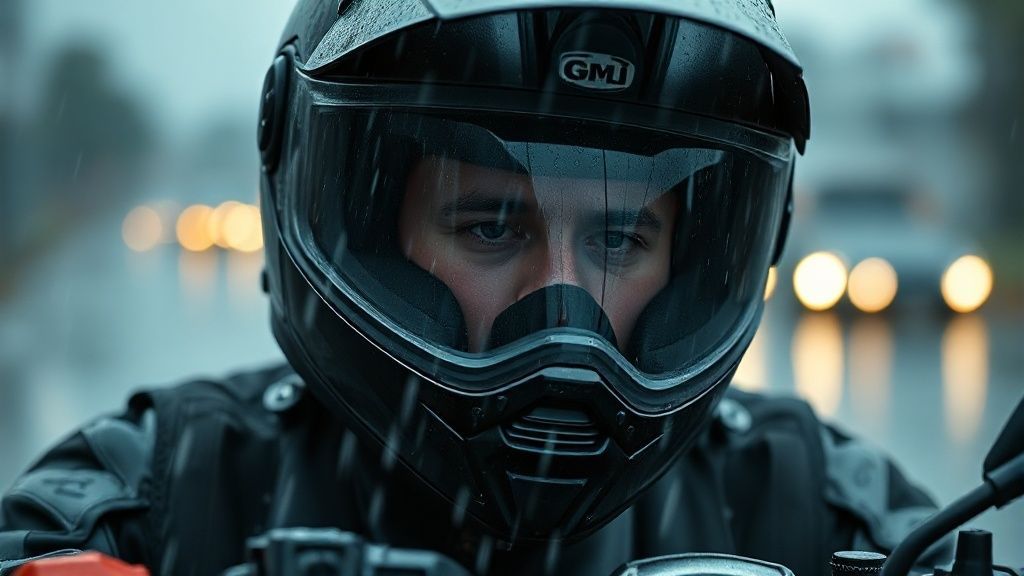
Riding a motorcycle in the rain presents unique challenges that demand specialized gear, and your helmet is arguably the most critical piece of equipment.
A quality rain-ready helmet can mean the difference between a safe, comfortable ride and a hazardous journey with compromised visibility and protection.
For a complete overview of safety standards and gear types, check out our Ultimate Guide to Motorcycle Helmets.
When water droplets obscure your vision, fog builds up inside your visor, and wind-driven rain pelts your face, you need a helmet engineered to handle these conditions.
The best motorcycle helmets for wet weather riding combine advanced anti-fog technology, superior ventilation systems, effective water-repellent visors, and reliable sealing mechanisms.
Whether you’re a daily commuter who can’t avoid occasional downpours or an adventure rider who embraces all weather conditions, investing in a helmet designed for rain riding isn’t just about comfort—it’s about safety.
This comprehensive guide examines nine exceptional helmets that excel in rainy conditions, helping you make an informed decision for your next purchase.
1. Shoei RF-1400
The Shoei RF-1400 represents the pinnacle of Japanese helmet engineering, designed specifically with adverse weather conditions in mind. This premium full-face helmet has earned its reputation among serious riders who refuse to compromise on safety or comfort, regardless of weather conditions.
Overview
The Shoei RF-1400 features an advanced multi-ply matrix AIM+ shell construction that provides exceptional strength while maintaining a lightweight profile. Its most impressive rain-riding feature is the Pinlock Max Vision insert system, which virtually eliminates fogging even in the most challenging conditions.
The helmet’s QR-E base plate system allows for tool-free visor changes, enabling riders to quickly swap to a clear visor when rain clouds roll in. The sophisticated ventilation system includes four intake vents and six exhaust ports that work harmoniously to maintain airflow without allowing water intrusion.
The visor seal has been redesigned with a rubber gasket that creates an effective barrier against rain penetration while maintaining easy operation. Emergency quick-release cheek pads and a fully removable, washable interior complete this premium package.
Pros and Cons
Pros:
- Exceptional anti-fog performance with Pinlock Max Vision system prevents visibility issues in rain.
- Superior ventilation that effectively manages moisture without letting rain enter the helmet.
- Quick-release visor mechanism allows rapid changes when weather conditions shift.
- Excellent wind noise reduction even at highway speeds in wet conditions.
Cons:
- Premium pricing puts it out of reach for budget-conscious riders.
- Slightly heavier than some competitors in its class.
- Pinlock insert sold separately on some models.
Pricing
The Shoei RF-1400 retails between $499 and $599.
Best For
This helmet is ideal for serious riders who need absolute reliability in all weather conditions.
2. AGV K6
AGV’s K6 brings racing-inspired technology to street riders, with particular attention paid to visibility and comfort in challenging weather. This Italian-designed helmet merges aerodynamic efficiency with practical rain-riding features that serious motorcyclists appreciate.
Overview
The AGV K6 showcases a carbon-aramid-fiberglass shell that achieves an impressive strength-to-weight ratio, making it one of the lighter full-face helmets available. For rain riding, the helmet’s standout feature is its ultra-wide visor that provides an expansive field of vision—crucial when visibility is already compromised by rain.
The Class Optical 1 visor comes with a Max Vision Pinlock insert included, ensuring fog-free riding from day one. The integrated ventilation system features five front vents and two rear extractors strategically positioned to create negative pressure that pulls moisture away from the interior.
The visor mechanism includes multiple locking positions and a secure seal that prevents water from seeping in at the edges. The helmet’s aerodynamic shell design has been wind-tunnel tested to minimize buffeting in crosswinds, which are common during rainstorms.
Pros and Cons
Pros:
- Ultra-wide visor provides exceptional peripheral vision in low-light rainy conditions.
- Lightweight construction reduces neck fatigue during long rides in poor weather.
- Pinlock anti-fog insert included in the package provides immediate fog protection.
- Excellent aerodynamics minimize head movement in gusty rain conditions.
Cons:
- Interior padding may feel snug for riders with rounder head shapes.
- Visor change mechanism requires more steps than some competitors.
- Premium price point similar to other high-end options.
Pricing
The AGV K6 ranges from $449 to $599 depending on graphics.
Best For
Riders who prioritize visibility and lightweight performance in wet conditions.
3. Arai Regent-X
Arai’s Regent-X continues the company’s legacy of handcrafted quality with modern features tailored for all-weather riding. This helmet prioritizes safety and functionality, making it an excellent choice for riders who frequently encounter rain on their journeys.
Overview
The Regent-X utilizes Arai’s proprietary PB-SNC2 shell construction, which involves a complex laminate of fiberglass that’s stronger and more penetration-resistant than standard shells. The helmet’s Variable Axis System (VAS) visor mechanism provides multiple shield positions and incorporates a sophisticated seal that’s highly effective at keeping rain out while allowing smooth operation.
The Pro Shade System is an integrated drop-down sun visor that proves invaluable when transitioning between dark rain clouds and sudden bright patches. Arai includes a Pinlock Max Vision insert as standard equipment, addressing the fogging issue that plagues rain riders.
The ventilation system features front intake vents with adjustable closures, allowing riders to seal them completely during heavy rain or open them for maximum airflow when conditions improve. The helmet’s round shape and smooth exterior contribute to excellent aerodynamics and reduced wind noise.
Pros and Cons
Pros:
- Exceptional build quality with meticulous attention to seal integrity.
- Integrated sun visor eliminates need for swapping tinted shields in changing conditions.
- Multiple visor positions allow fine-tuning of ventilation while maintaining rain protection.
- Removable chin curtain provides additional protection from rain and wind.
Cons:
- Higher price reflects the premium handcrafted construction.
- Rounder shell shape may not fit all head shapes comfortably.
- Slightly limited color and graphic options compared to competitors.
Pricing
The Arai Regent-X is priced between $629 and $829.
Best For
Riders who value handcrafted quality and want a helmet designed by one of the best helmet brands for motorcycle safety.
4. HJC RPHA 11 Pro
The HJC RPHA 11 Pro delivers premium features at a more accessible price point, making advanced rain-riding technology available to a broader range of motorcyclists. This Korean manufacturer has earned respect for creating helmets that punch above their weight class.
Overview
HJC constructs the RPHA 11 Pro using Premium Integrated Matrix Plus (PIM+) technology, which combines carbon fiber, aramid, and fiberglass for optimal strength and light weight. The helmet features HJC’s proprietary HJ-31 shield with superior optical clarity and comes prepared for Pinlock installation with pins already mounted.
The Advanced Channeling Ventilation System includes large front intake vents and multiple exhaust ports that create efficient airflow management—essential for preventing interior moisture buildup during rain rides. The shield sealing system uses a rubber gasket that compresses evenly around the entire perimeter, effectively blocking water intrusion.
An integrated eyewear groove accommodates glasses without compromising the seal, making it a contender for the best motorcycle helmet for glasses wearers. The RapidFire shield replacement system lives up to its name, allowing quick visor changes without tools.
Pros and Cons
Pros:
- Excellent value proposition with features typically found in more expensive helmets.
- Lightweight construction reduces fatigue during extended rainy rides.
- Tool-free visor removal system makes switching shields quick and convenient.
- Wide range of sizes and intermediate oval fit accommodates many head shapes.
Cons:
- Pinlock insert sold separately, adding to initial investment.
- Ventilation vents can be difficult to operate with gloved hands.
- Some users report wind noise at higher speeds.
Pricing
The HJC RPHA 11 Pro retails between $349 and $449.
Best For
Riders looking for high performance without the highest price tag.
5. Schuberth C4 Pro
The Schuberth C4 Pro is a modular helmet that doesn’t compromise on weather protection despite its flip-up design. This German-engineered helmet proves that convenience and rain-riding capability can coexist in a single premium package.
Overview
Schuberth employs a direct fiber processing technique to create the C4 Pro’s fiberglass shell, resulting in exceptional strength and a remarkably quiet interior—important when rain noise can be distracting. It is widely considered the best motorcycle helmet for noise reduction.
The helmet’s modular design features a robust chin bar mechanism with multiple seals that maintain weather protection even when closed. An anti-fog insert comes standard, and the shield itself receives an anti-scratch coating that maintains clarity through countless rain rides.
The ventilation system is sophisticated, with adjustable intake vents at the chin and forehead that can be completely sealed during downpours. The helmet includes an integrated sun visor operated by a smooth slider mechanism. The communication-ready design includes speaker pockets and channels for Bluetooth systems.
Pros and Cons
Pros:
- Modular design offers convenience for quick stops without removing helmet.
- Exceptionally quiet interior reduces fatigue during long rainy rides.
- Integrated sun visor provides instant adaptation to variable weather lighting.
- Superior seal integrity despite flip-up mechanism maintains rain protection.
Cons:
- Premium pricing reflects the complex engineering.
- Heavier than comparable full-face helmets due to modular mechanism.
- Chin bar must remain closed for optimal rain protection.
Pricing
The Schuberth C4 Pro ranges from $649 to $799.
Best For
Touring riders who need the quietest ride possible.
6. Bell Race Star Flex DLX
Bell’s Race Star Flex DLX brings racing technology to the street with features that excel in wet conditions. This American brand combines cutting-edge safety innovation with practical rain-riding functionality that appeals to performance-oriented motorcyclists.
Overview
The Race Star Flex DLX features Bell’s innovative Flex impact liner system, which uses three separate pieces that move independently to manage both linear and rotational impact forces. The carbon composite shell achieves a lightweight profile while maintaining structural integrity.
For rain riding, the helmet includes a Panovision shield that extends peripheral vision—critical when water reduces visibility. The shield comes with Bell’s proprietary ClickRelease system for tool-free removal and includes a Pinlock Max Vision insert.
The Velocity Flow ventilation system incorporates fifteen intake and exhaust vents with internal channeling that maintains airflow while preventing water intrusion. The Flying Bridge visor mechanism creates an effective seal against the helmet shell, and the gasket design prevents water from seeping in at speed.
Pros and Cons
Pros:
- Advanced Flex liner technology provides superior impact protection in all conditions.
- Extensive ventilation system effectively manages moisture without compromising weather protection.
- Wide field of vision helps compensate for reduced visibility in rain.
- Quick-release visor mechanism facilitates rapid shield changes.
Cons:
- Aggressive racing fit may not suit all riders seeking comfort.
- Higher price point reflects advanced safety technology.
- Limited color options compared to other Bell models.
Pricing
The Bell Race Star Flex DLX is priced between $599 and $849.
Best For
Sport riders who want top-tier protection and visibility.
7. Shark Spartan GT Carbon
The Shark Spartan GT Carbon represents French engineering focused on sport-touring riders who demand versatility across all weather conditions. This helmet balances aggressive styling with practical features that shine during rainy rides.
Overview
Shark constructs the Spartan GT Carbon using a hybrid carbon-aramid-fiberglass shell that achieves an optimal balance of strength, weight, and affordability. The helmet’s defining rain-riding feature is its integrated shark tooth-shaped spoiler that enhances aerodynamic stability in crosswinds common during storms.
The auto-seal visor system creates positive pressure against the gasket as speed increases, effectively preventing water intrusion. An included Pinlock Max Vision insert addresses fogging, while the optical class 1 visor maintains distortion-free clarity. The Easy Fit system accommodates eyeglass wearers without compromising the weather seal.
Shark’s ventilation design includes adjustable chin and forehead vents with internal channeling that can be closed completely during heavy rain. The helmet features an integrated sun visor with a robust mechanism that won’t accidentally deploy during bumpy wet roads.
Pros and Cons
Pros:
- Carbon construction provides premium features at mid-range pricing.
- Aerodynamic design with integrated spoiler enhances stability in gusty conditions.
- Auto-seal visor system provides increasingly effective weather protection at higher speeds.
- Integrated sun visor eliminates need for multiple shields in variable conditions.
Cons:
- Aggressive styling may not appeal to all riders.
- Some users report the intermediate oval fit runs slightly small.
- Visor mechanism requires more maintenance than simpler designs.
Pricing
The Shark Spartan GT Carbon retails between $449 and $599.
Best For
Sport-touring riders who want carbon fiber benefits without the highest price tag.
8. LS2 Challenger GT
The LS2 Challenger GT is a modular helmet that delivers impressive rain-riding capability at an entry-level price point. This Spanish brand has built its reputation on making advanced features accessible to riders on any budget.
Overview
LS2 uses Kinetic Polymer Alloy (KPA) to construct the Challenger GT’s shell, a high-tech thermoplastic that provides excellent impact protection while keeping costs reasonable. Despite its modular design, the helmet maintains effective weather sealing through multiple gaskets around the chin bar and visor.
The helmet comes prepared for Pinlock installation, though the insert is sold separately. The shield features LS2’s tool-free quick-release system, allowing riders to swap visors in seconds when conditions change. An integrated drop-down sun shield operates via a slider mechanism, providing instant adaptation to variable lighting.
The Dynamic Flow-Through ventilation system includes closable vents that can be sealed during rain while maintaining enough airflow to prevent fogging. The chin bar mechanism is robust and includes safety certifications for both open and closed positions.
Pros and Cons
Pros:
- Exceptional value with modular convenience and rain-riding features at budget-friendly pricing.
- Quick-release visor system facilitates easy shield changes without tools.
- Integrated sun visor provides versatility for changing weather conditions.
- Comfortable fit accommodates a wide range of head shapes.
Cons:
- Pinlock insert not included, requiring additional purchase for optimal fog protection.
- Thermoplastic shell is heavier than premium composite materials.
- Wind noise levels higher than premium helmets at highway speeds.
Pricing
The LS2 Challenger GT is priced between $199 and $279.
Best For
Commuters and budget-conscious riders who need modular convenience.
9. Nolan N87
The Nolan N87 rounds out our list as an affordable full-face helmet that doesn’t skimp on essential rain-riding features. This Italian manufacturer proves that effective weather protection doesn’t require a premium investment.
Overview
Nolan constructs the N87 from Lexan polycarbonate, creating a durable shell that meets all safety standards while maintaining an accessible price point. The helmet’s VPS (Vision Protection System) is an integrated sun visor that drops down internally, eliminating the need to carry multiple shields for different conditions.
The visor features Nolan’s microlock retention system with multiple positions and an effective seal against water intrusion. The helmet comes Pinlock-prepared with pins installed, requiring only the purchase of the insert itself.
The AirBooster Technology ventilation system includes a large chin vent and multiple exhaust ports that create efficient airflow management. While not as sophisticated as premium systems, the vents can be closed during heavy rain to prevent water entry.
Pros and Cons
Pros:
- Budget-friendly pricing makes quality rain-riding features accessible to all riders.
- Integrated sun visor provides convenience for variable weather conditions.
- Wide availability and extensive size range accommodate most riders.
- Comfortable fit suitable for long-distance riding in various weather.
Cons:
- Polycarbonate shell is heavier than composite alternatives.
- Pinlock insert requires separate purchase despite prepared visor.
- Ventilation system less sophisticated than premium competitors.
Pricing
The Nolan N87 retails between $249 and $349.
Best For
Daily riders looking for Italian design and functionality on a budget.
Conclusion
Selecting the best motorcycle helmet for rain riding involves balancing multiple factors including anti-fog technology, ventilation management, visor sealing, visibility, and overall comfort. While premium options like the Shoei RF-1400 and AGV K6 offer cutting-edge features and superior materials, excellent rain-riding capability is also available at more accessible price points with helmets like the LS2 Challenger GT and Nolan N87.
Regardless of your choice, investing in a quality Pinlock insert, maintaining your helmet’s seals and gaskets, and applying water-repellent treatments to your visor will significantly enhance your rain-riding experience. Remember that the best helmet is one that fits properly, meets safety standards, and gives you confidence to ride safely in any weather condition.
Frequently Asked Questions
How do I prevent my motorcycle helmet visor from fogging up in the rain?
The most effective solution is installing a Pinlock anti-fog insert, which creates a double-pane system similar to thermal windows that prevents condensation. Additionally, ensure your helmet’s ventilation system is functioning properly to maintain airflow. For more details on solutions, check out our guide on pinlock vs anti-fog sprays.
Should I use a tinted visor when riding in the rain?
No, you should always use a clear visor when riding in rainy conditions. Rain clouds significantly reduce ambient light levels, and a tinted visor further diminishes visibility, creating dangerous riding conditions. Instead, opt for a helmet with an integrated drop-down sun visor or photochromic transition visors.
How often should I replace the seals and gaskets on my motorcycle helmet?
Helmet seals and gaskets should be inspected before each riding season and replaced when you notice signs of deterioration such as cracking, hardening, or compression. Most manufacturers recommend inspection as part of regular maintenance.
Can I apply water-repellent coating to my motorcycle helmet visor?
Yes, applying a water-repellent coating can significantly improve visibility in rain by causing water to bead up and blow off at speed. However, only apply these products to the exterior surface of your visor, never the interior. To learn more about coatings, read how to hydrophobic coat your visor.
What’s the difference between a Pinlock insert and anti-fog spray for rain riding?
A Pinlock insert is a physical dual-pane system that prevents fogging through insulation. Anti-fog sprays and wipes create a temporary chemical coating that reduces surface tension. For serious rain riding, a Pinlock insert is the superior investment.