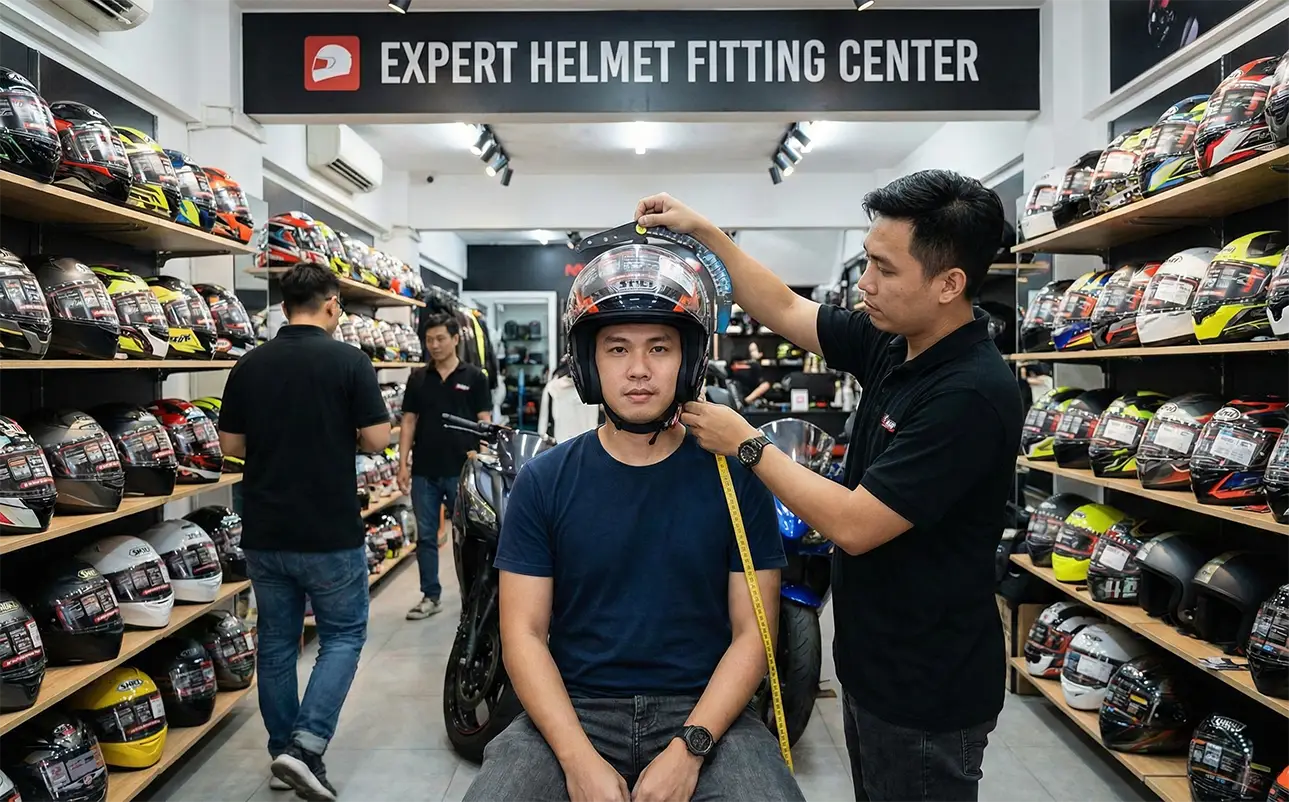
Finding the right motorcycle helmet isn’t just about style or brand preference—it’s about safety, comfort, and ensuring proper protection on every ride.
A poorly fitted helmet can be dangerous, uncomfortable, and may not provide adequate protection in an accident.
For a detailed breakdown on why fit matters so much, check out our Ultimate Guide to Motorcycle Helmets.
In this comprehensive guide, we’ll explore the nine best places to get fitted for a motorcycle helmet, examining each option’s unique advantages and potential drawbacks.
Whether you’re a seasoned rider looking to upgrade or a beginner purchasing your first helmet, understanding where to shop and what to expect from each venue will help you make an informed decision.
1. Dedicated Motorcycle Dealerships
Motorcycle dealerships that sell bikes often have extensive gear departments staffed by riders who understand the importance of proper helmet fit. These establishments combine product knowledge with hands-on experience, making them a top choice for many riders.
Overview
Dedicated motorcycle dealerships offer a comprehensive experience where you can not only purchase a bike but also get outfitted with all necessary gear.
The staff at these locations are typically riders themselves, bringing real-world experience to the fitting process. They often have relationships with manufacturers that allow them to order specific sizes or models.
The fitting process typically includes measuring your head, trying on multiple helmets, and ensuring proper positioning. Many dealerships also offer trade-in programs for old helmets.
For advice on when to do this, see our guide on when to replace your motorcycle helmet.
Pros and Cons
Pros:
- Staff members are usually experienced riders with firsthand knowledge.
- Wide selection of helmets across various price points and styles.
- Opportunity to try helmets alongside other riding gear for coordination.
- Access to manufacturer warranties and dealership support.
Cons:
- Prices may be higher than online retailers due to overhead.
- Selection might be limited to brands the dealership partners with.
- Can be intimidating for new riders unfamiliar with motorcycle culture.
Pricing: MSRP (Manufacturer Suggested Retail Price); occasional sales on older stock.
Best For: New riders buying their first bike and gear package.
2. Specialty Motorcycle Gear Shops
Independent motorcycle gear shops focus exclusively on riding equipment and apparel, making them experts in helmet fitting. These stores prioritize safety equipment and often provide the most thorough fitting experience available.
Overview
Specialty motorcycle gear shops are retail establishments dedicated entirely to motorcycle equipment. Unlike dealerships that sell bikes, these shops concentrate solely on gear, allowing them to develop deep expertise in fit and safety standards. Staff members often receive specialized training from helmet manufacturers.
These shops typically carry a broader range of helmet brands, including premium European brands. They are excellent places to find specialized items like the best lightweight carbon fiber helmet. The fitting process is often detailed, including head shape analysis.
Pros and Cons
Pros:
- Highest level of expertise specifically focused on helmet fitting.
- Extensive inventory with multiple brands, styles, and sizes.
- Detailed fitting process that includes head shape analysis.
- Additional services like visor installation and maintenance.
Cons:
- May have limited locations depending on your geographic area.
- Premium pricing reflects the specialized service.
- Can be overwhelming for beginners due to the extensive selection.
Pricing: MSRP generally; loyalty programs often available.
Best For: Experienced riders looking for specific, high-performance gear.
3. Motorcycle Track Days and Racing Schools
Track days and racing schools offer unique opportunities to get fitted for helmets by professionals who understand high-performance riding requirements. These venues combine expert fitting with the ability to test helmets in real riding conditions.
Overview
Motorcycle track days frequently have on-site vendors or partnerships with gear retailers. These professionals understand the specific demands of performance riding, including aerodynamics and ventilation at high speeds.
The unique advantage here is the opportunity to try a helmet during actual riding sessions. Staff at these events are often racers themselves, providing insights into which helmets perform best. This is the ideal place to find the best full-face motorcycle helmet for the money that meets rigorous track safety standards (like Snell or FIM).
Pros and Cons
Pros:
- Ability to test helmets during actual riding sessions.
- Expert fitting from professionals who understand high-performance needs.
- Access to premium brands and event-specific discounts.
- Opportunity to get feedback from other experienced riders.
Cons:
- Limited to specific event dates and locations.
- Selection may be focused purely on performance helmets.
- Requires participation in track events (additional cost).
Pricing: Varied; often event-special pricing or discounts.
Best For: Sportbike riders needing high-speed stability and safety.
4. Large Sporting Goods Chains
Major sporting goods retailers have expanded their motorcycle sections in recent years, offering helmet fitting services alongside other outdoor equipment. These stores provide accessibility and convenience for many shoppers.
Overview
Large chains like Cycle Gear or RevZilla’s retail locations have substantial motorcycle departments. These retailers benefit from buying power that allows them to stock multiple brands and sizes.
The fitting process typically involves basic head measurements and trying on various models. These chains often have computerized inventory systems to check stock at other locations. They are great places to physically test features like Bluetooth communication systems displays.
Pros and Cons
Pros:
- Convenient locations with extended hours.
- Competitive pricing and frequent sales.
- Generous return policies allowing home trials.
- Ability to check inventory across multiple locations.
Cons:
- Staff expertise can be inconsistent.
- May focus on popular mass-market brands.
- Less personalized service compared to boutique shops.
Pricing: Competitive; frequent sales and price matching.
Best For: Casual riders and those who want to browse a massive inventory.
5. Motorcycle Safety Foundation (MSF) Courses
MSF courses and certified training centers prioritize safety education and often provide helmet fitting guidance as part of their programs. These locations offer a unique educational approach to helmet selection.
Overview
MSF courses focus primarily on rider education, but instructors are certified professionals who emphasize the critical role of proper helmet fit. During courses, instructors demonstrate proper techniques and explain safety certifications.
Some training centers have relationships with local retailers and can direct students to reputable fitting services. The educational approach means you’ll learn not just what fits, but why it fits. Instructors can also help you understand helmet safety ratings explained (DOT vs. Snell).
Pros and Cons
Pros:
- Educational approach helps you understand safety standards.
- Instructors are focused on safety rather than sales.
- Opportunity to ask questions in a supportive environment.
- Some locations offer vendor partnership discounts.
Cons:
- Not retail locations, so direct purchasing is limited.
- Fitting services are supplementary to training.
- Requires enrollment in courses.
Pricing: Included in course tuition (no gear sales usually).
Best For: Beginners learning the fundamentals of safety gear.
6. Online Retailers with Virtual Fitting Tools
Advanced online retailers have developed sophisticated virtual fitting systems that guide customers through the helmet selection process from home. These platforms combine technology with detailed sizing information.
Overview
Companies like RevZilla and FortNine offer comprehensive sizing guides and video tutorials. These platforms provide detailed measurements for each helmet model and customer reviews that often discuss fit characteristics (e.g., “runs small”).
Many online retailers offer free shipping and returns, allowing you to order multiple helmets to try at home. This is essential for determining if you have a long oval shaped head or a round one without leaving your house.
Pros and Cons
Pros:
- Convenience of shopping from home with extensive info.
- Competitive pricing and frequent sales.
- Comprehensive reviews providing real-world fit feedback.
- Free shipping and returns minimize risk.
Cons:
- Cannot physically try helmets immediately.
- Delayed gratification with shipping times.
- Lack of in-person expertise for real-time adjustments.
Pricing: Highly competitive; generally the lowest prices found.
Best For: Riders who know their head shape but need specific sizing advice.
7. Motorcycle Shows and Expos
Large motorcycle shows and expos bring together numerous vendors and manufacturers under one roof, creating excellent opportunities for helmet fitting with access to brands that might not be available locally.
Overview
Events like IMS (International Motorcycle Shows) feature booths from major manufacturers like Shoei, Arai, and Bell. You can try on helmets from multiple brands in a single visit, often with factory representatives who have deep product knowledge.
Fitting at these events allows you to compare models directly. It is a great opportunity to see and feel new mechanisms, such as those on the best motorcycle modular helmets.
Pros and Cons
Pros:
- Access to multiple brands in one location.
- Direct interaction with manufacturer representatives.
- Show-specific pricing and promotions.
- Opportunity to see unreleased models.
Cons:
- Limited to specific dates and locations.
- Crowded environments can make fitting rushed.
- Impulse buying pressure.
Pricing: Show specials often offer significant discounts.
Best For: Riders who want to see everything the market has to offer in one day.
8. Harley-Davidson and Brand-Specific Dealerships
Brand-specific dealerships like Harley-Davidson, BMW, and Ducati offer curated helmet selections matched to their motorcycle styles, with staff trained in their brand’s recommended safety equipment.
Overview
Brand dealerships provide a focused experience. Harley dealerships emphasize cruiser-style helmets, while BMW focuses on touring and adventure helmets. Staff members are trained specifically on the products they sell and compatibility with their bikes.
The fitting process includes consideration of your specific motorcycle model. For example, BMW dealers are experts at fitting best motorcycle helmets with bluetooth that integrate with the bike’s dashboard.
Pros and Cons
Pros:
- Curated selection matched to specific riding styles.
- Staff expertise on brand-specific integration.
- Potential bundle discounts with bike purchase.
- Strong community atmosphere.
Cons:
- Limited selection focused on brand aesthetics.
- Potentially higher prices due to branding.
- May not offer the breadth of multi-brand retailers.
Pricing: MSRP + Brand Premium.
Best For: Loyalists who want gear that perfectly matches their bike.
9. Custom Helmet Shops and Boutique Retailers
Specialty boutique shops and custom helmet retailers offer personalized service and unique products, often catering to riders seeking distinctive style or premium quality beyond mainstream options.
Overview
Custom shops represent the high end of the fitting experience. They may specialize in vintage helmets, custom paint, or ultra-premium brands. The fitting process is highly individualized, often involving detailed consultations.
These retailers emphasize quality over quantity. They are the best place to go if you need customization for comfort, such as fitting for best motorcycle helmet for glasses wearers.
Pros and Cons
Pros:
- Highly personalized service with detailed attention.
- Access to unique and boutique brands.
- Custom options including bespoke fitting.
- Passionate staff with deep knowledge.
Cons:
- Premium pricing reflecting specialized service.
- Limited locations (major cities).
- Smaller inventory for immediate purchase.
Pricing: Premium / High-end.
Best For: Riders who want a unique, perfectly tailored helmet experience.
Conclusion
Choosing where to get fitted for a motorcycle helmet is as important as selecting the helmet itself. For beginners, dedicated dealerships or specialty gear shops provide the necessary educational support. Experienced riders might appreciate the convenience of online retailers or the variety at motorcycle shows.
Remember that proper helmet fit is non-negotiable. Don’t rush the process. Whether you choose a specialty shop or a large retailer, investing time in proper fitting ensures your helmet will provide the protection you need.
Frequently Asked Questions
How do I know if a motorcycle helmet fits properly?
A properly fitted helmet should feel snug all around your head without pressure points. It should not move independently when you shake your head. You should not be able to fit more than a finger between your forehead and the pad.
Should I buy a helmet online or in a physical store?
If you are new, go to a physical store to learn your size and head shape. Once you know your specs, online buying offers better selection and prices.
How much should I expect to spend on a quality motorcycle helmet?
Quality helmets range from $150 to $800+. Excellent mid-range options exist between $250-$400. Price often reflects comfort, weight, and features rather than just safety.
What safety certifications should I look for in a motorcycle helmet?
Look for DOT (legal minimum in US) and ECE (rigorous European standard). Snell is a high-standard voluntary certification often found on racing helmets.
How often should I replace my motorcycle helmet?
Every 5 years, or immediately after any impact. UV rays and sweat degrade the materials over time, reducing safety.