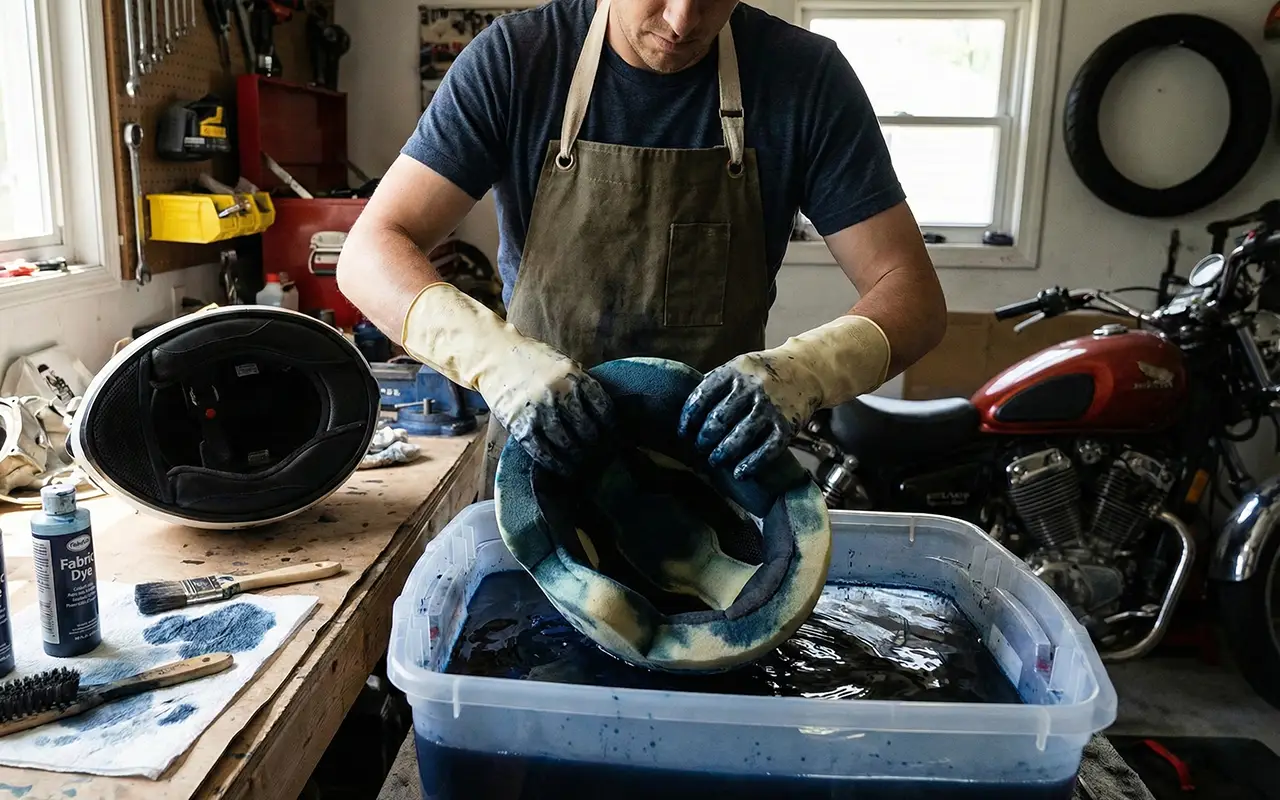
I’ll never forget the day a rider walked into our tech department at Cycle World with a helmet that looked like it had been through a tie-dye experiment gone horribly wrong. The white liner had turned a sickly yellow-brown from years of sweat, and he’d attempted to restore it with what appeared to be fabric dye meant for cotton t-shirts. The result?
A stiff, uncomfortable mess that smelled like a chemical plant and had completely compromised the liner’s moisture-wicking properties. “Can you dye a helmet liner?” he asked sheepishly. It’s a question I’ve heard dozens of times over my two decades covering motorcycle gear, and the answer is far more nuanced than most riders realize.
Helmet liners have come a long way since the foam-and-fabric days of the 1970s. Modern liners incorporate advanced materials like moisture-wicking polyester, antimicrobial treatments, and carefully engineered comfort padding that work together as a system.
As detailed in our Ultimate Guide to Motorcycle Helmets, the liner isn’t just about comfort—it’s an integral part of the helmet’s safety system, affecting fit, impact absorption, and long-term wearability.
When you start introducing dyes and chemicals into this carefully balanced equation, you’re potentially disrupting more than just the color.
The question isn’t simply whether you can dye a helmet liner, but whether you should, and if so, how to do it without compromising safety or comfort.
Understanding Helmet Liner Materials and Construction
Before we dive into the dyeing process, you need to understand what you’re working with. Modern helmet liners are sophisticated pieces of engineering, not simple fabric cushions.
The typical liner consists of multiple layers: a comfort layer that contacts your skin, a moisture-management layer, and padding that interfaces with the helmet’s EPS (expanded polystyrene) foam shell.
The comfort layer is usually made from synthetic materials like polyester, nylon, or specialized moisture-wicking fabrics. Some premium helmets use natural fibers like bamboo or merino wool blends, but these are less common.
The padding beneath typically consists of varying densities of foam—sometimes memory foam, sometimes open-cell foam designed for breathability. These materials are chosen not just for comfort but for their ability to maintain consistent thickness and support over thousands of miles.
Here’s where it gets tricky: these materials respond differently to dyes. Polyester, which makes up the majority of helmet liners, is notoriously difficult to dye because it’s a synthetic fiber that doesn’t absorb water-based dyes well. It requires disperse dyes and high heat—often near boiling temperatures—to achieve color penetration.
Natural fibers like cotton or wool (rarely used in modern helmets) accept fiber-reactive dyes more readily, but they also tend to retain more moisture and dry more slowly, which is why they’ve fallen out of favor in helmet construction.
The Safety Considerations You Can’t Ignore
Let’s address the elephant in the room: safety. Can you dye a helmet liner without compromising the helmet’s protective capabilities? The answer depends entirely on your method and materials. The liner itself isn’t part of the primary impact-absorbing structure—that’s the job of the EPS foam shell. However, the liner plays a crucial role in maintaining proper fit, and fit is absolutely critical to helmet safety.
When you introduce dyes, especially those requiring heat or harsh chemicals, you risk several problems. First, you might shrink the liner material, changing the fit characteristics. A helmet that was once snug and secure might become too tight in some areas and too loose in others. Second, certain dyes and their fixatives can break down the foam padding or the adhesives that hold the liner components together. Third, you might compromise the antimicrobial treatments that prevent bacterial growth—a less obvious safety issue, but one that affects long-term hygiene and comfort.
As we discuss in our article on Helmet Safety Ratings Explained, helmet certification testing assumes the helmet is in its original, unmodified condition. While dyeing a liner probably won’t void your DOT or ECE certification in a legal sense, it could theoretically affect performance in ways that aren’t immediately apparent. Insurance companies and legal experts might take a dim view of modifications if you’re ever in an accident.
The Practical Reality: Why Most Riders Want to Dye Their Liners
Let’s be honest about why you’re reading this article. Your helmet liner has probably turned a disgusting shade of yellow-brown, or maybe you’ve got stubborn stains that won’t come out despite multiple washings. Perhaps you bought a helmet with a white or light-colored liner and you’re already regretting it because it shows every bit of dirt and sweat. Or maybe you’re one of those riders who wants to customize everything, and a black liner would match your murdered-out aesthetic better than the stock gray.
These are all valid concerns, but here’s the uncomfortable truth: in most cases, if your liner is discolored enough that you’re considering dyeing it, you’re probably better off replacing it entirely. Most helmet manufacturers sell replacement liners for $30-80, and that’s a small price to pay for fresh, clean padding that maintains its original properties. Before you invest time and money in a dyeing project, check whether replacement liners are available for your specific helmet model.
That said, I understand the appeal. Replacement liners aren’t always available, especially for older or discontinued models. And there’s something satisfying about restoring gear yourself rather than constantly buying new. So if you’re determined to proceed, let’s talk about how to do it right.
Methods for Dyeing a Helmet Liner: What Actually Works
After testing various methods over the years—both in controlled conditions and through interviews with riders who’ve attempted this—I can tell you that there are really only two approaches worth considering: cold-water fiber reactive dyes and specialized synthetic dyes. Everything else is either ineffective or too risky.
Method 1: Cold-Water Fiber Reactive Dyes (Best for Natural Fiber Blends)
If your helmet liner contains any natural fibers—and you can check this by looking at the care tag or contacting the manufacturer—cold-water fiber reactive dyes are your safest bet. Products like Rit DyeMore or Procion MX dyes are designed to work at room temperature or with minimal heat, reducing the risk of shrinkage or foam degradation.
The process is straightforward but requires patience. First, you’ll need to remove the liner completely from the helmet. Most modern liners are held in place with snaps or Velcro, making removal easy. If your liner is glued in, stop right here—you’re not going to be able to dye it without destroying the helmet. Once removed, hand-wash the liner thoroughly using mild detergent, following the guidelines in our article on How to Wash Your Motorcycle Helmet Liner. This removes oils, dirt, and antimicrobial treatments that might interfere with dye absorption.
Mix your dye according to package directions in a plastic bucket or tub—never use anything you plan to use for food again. Submerge the liner completely and agitate it regularly for 30-60 minutes. The longer you leave it, the deeper the color, but don’t exceed the manufacturer’s recommended time. Rinse thoroughly in cold water until the water runs clear, then rinse again. Any residual dye will transfer to your skin and clothing during rides.
The biggest limitation of this method? It rarely works well on pure synthetic materials. Polyester and nylon are hydrophobic—they repel water—so water-based dyes just don’t penetrate effectively. You might get a light tint, but don’t expect rich, vibrant colors. This is why most successful liner dyeing projects involve older helmets with higher natural fiber content.
Method 2: Synthetic Dyes with Heat (Higher Risk, Better Results)
For modern synthetic liners, you need synthetic dyes—specifically disperse dyes designed for polyester. These require heat to work, typically simmering in water at 180-200°F for 30-60 minutes. This is where things get risky. Heat can shrink fabrics, melt foam padding, and break down adhesives. But if you’re careful, it can work.
The key is controlling temperature precisely. Use a large pot with a cooking thermometer, and never let the water reach a full boil. Keep the liner moving constantly to ensure even color distribution and prevent hot spots that might melt foam. Some riders have had success using a slow cooker set on low, which maintains a more consistent temperature than stovetop methods.
Here’s the critical part: you’re only dyeing the fabric portion of the liner. Any foam padding needs to be removed if possible, or you need to be extremely careful to keep foam out of the hot dye bath. Some liners have removable foam pieces; others have foam permanently attached to fabric. If it’s the latter, you’re taking a significant risk. I’ve seen foam padding turn brittle and crumbly after exposure to hot dye baths, completely ruining the liner’s comfort and fit characteristics.
After dyeing, rinse exhaustively in progressively cooler water, then lay flat to dry completely. Never put a dyed liner in the dryer—air drying only. Even then, expect some shrinkage. The liner might fit tighter than before, which could affect the overall helmet fit. This is particularly important to consider if you already have a snug fit, as discussed in our Motorcycle Helmet Fitment Guide.
Alternative Solutions That Might Be Better
Before you commit to dyeing, consider these alternatives that might achieve your goals with less risk:
Professional Cleaning and Restoration
Many discolored liners aren’t actually stained—they’re just dirty. A professional helmet cleaning service can work miracles with specialized cleaners and techniques. Some motorcycle gear shops offer this service, or you can mail your helmet to specialists who focus on helmet restoration. For $40-60, you might get results that make dyeing unnecessary.
Antimicrobial Treatments and Deodorizers
Sometimes the issue isn’t color but smell. Products like ReviveX or Gear Aid offer antimicrobial sprays that can eliminate odors without affecting color. If your liner is functionally fine but just smells rank, this is a better solution than dyeing. Combine this with regular washing and proper drying between rides, and you can extend liner life significantly.
Liner Replacement Services
Even if the manufacturer doesn’t sell replacement liners for your specific model, aftermarket companies sometimes offer universal or custom-fit liners. Companies like Skully Foam and Helmet House specialize in creating custom liner sets for older or discontinued helmets. Yes, it costs more than a bottle of dye, but you get fresh materials with proper moisture-wicking and antimicrobial properties.
Strategic Liner Covers
Some riders use moisture-wicking skull caps or balaclava-style liners worn under their helmets. These create a barrier between your skin and the helmet liner, reducing sweat transfer and staining. They’re washable, replaceable, and come in various colors. While they don’t change your liner’s color, they hide discoloration and extend the liner’s life. This approach is particularly popular with riders who wear their helmets daily or in hot climates, as detailed in our guide to best motorcycle helmet for hot weather.
The Legal and Warranty Implications
Here’s something most articles won’t tell you: modifying your helmet in any way, including dyeing the liner, could theoretically affect warranty coverage and legal liability. I’ve spoken with several helmet manufacturers off the record, and while none would go on record about dyeing specifically, the consensus is clear: any modification that involves chemicals or heat is discouraged.
Helmet warranties typically cover manufacturing defects, not wear and tear or user modifications. If you dye your liner and subsequently have a problem with the helmet—say, the liner starts separating from the shell or the padding breaks down—don’t expect warranty coverage. The manufacturer will almost certainly cite the modification as the cause, whether or not it actually is.
From a legal liability standpoint, the situation is murkier. If you’re in an accident and there’s any question about helmet performance, opposing counsel could potentially argue that your modifications contributed to injuries. Is this likely? Probably not, especially if the modification was limited to the liner. But it’s a risk worth considering, particularly if you’re dyeing a liner that’s already old enough to be considering replacement anyway, as discussed in our article on When to Replace Your Motorcycle Helmet.
Step-by-Step: If You’re Going to Do It Anyway
Against my better judgment, here’s a detailed process for dyeing a helmet liner with minimal risk. This assumes you’ve exhausted other options and are working with a helmet that’s old enough that replacement is the alternative.
Preparation Phase
Remove the liner completely from the helmet. Document the original position and attachment method with photos—you’ll thank yourself later. Inspect all snaps, Velcro, and attachment points. If any are damaged or worn, order replacements before proceeding. Check whether any foam padding can be removed from the fabric portions. If so, remove it and set it aside—you’re only dyeing fabric.
Wash the liner thoroughly by hand using mild detergent and cool water. Rinse until water runs completely clear. This is crucial—any oils or residues will create uneven dyeing. While the liner is wet, check for weak seams or areas where fabric is separating. If you find any, the dyeing process will likely make them worse. Consider whether repair is needed first.
Choose your dye carefully. For synthetic liners (most modern helmets), use Rit DyeMore or another disperse dye specifically formulated for polyester. Avoid regular Rit dye—it won’t work on synthetics. Choose dark colors like black, navy, or dark gray. These hide imperfections better than light colors and require less dye concentration, reducing chemical exposure.
The Dyeing Process
Fill a large pot or bucket with enough water to completely submerge the liner with room to move it around. For cold-water dyes, use cool tap water. For synthetic dyes requiring heat, heat water to 180°F—use a thermometer, don’t guess. Add dye according to package directions, typically one bottle per pound of fabric. Helmet liners rarely weigh more than a few ounces, so you’ll use a fraction of the bottle.
Submerge the liner completely. Use tongs or wear rubber gloves—dye will stain your hands. Keep the liner moving constantly, gently agitating to ensure even color distribution. For cold-water dyes, maintain agitation for 30-60 minutes. For heat-based dyes, maintain temperature between 180-200°F for 30-45 minutes, never allowing a full boil.
Watch carefully for any signs of foam degradation if you couldn’t remove all padding. If foam starts feeling mushy or breaking apart, remove the liner immediately and rinse. Better to have uneven color than destroyed padding.
Rinsing and Drying
This is where most people cut corners and regret it. Rinse the liner in cool water, agitating constantly, until water runs completely clear. This typically takes 10-15 minutes of continuous rinsing. Any residual dye will transfer to your skin, hair, and the helmet interior during rides. Once water runs clear, rinse again for good measure.
Gently squeeze out excess water—don’t wring or twist, which can deform the liner. Lay flat on clean towels in a well-ventilated area away from direct sunlight. Change towels as they absorb water. Expect 24-48 hours for complete drying. Do not use heat, do not put in a dryer, do not try to speed the process. Patience here prevents shrinkage.
Reassembly and Testing
Once completely dry, reattach the liner to the helmet using your documentation photos. Make sure all snaps and Velcro engage properly. Put the helmet on and assess fit carefully. If it feels tighter than before, the liner has shrunk. You might need to wear it around the house for a few hours to let it stretch back out, or you might need to accept that the modification has changed the fit permanently.
Test moisture transfer by wearing the helmet for a short ride in warm weather. Does it still wick sweat effectively, or does it feel clammy? Check for any chemical smell—if present, wash the liner again by hand with mild detergent. Any persistent chemical odor indicates incomplete rinsing or chemical residue that could irritate skin.
When Dyeing Is Absolutely Not Recommended
Some situations make dyeing a helmet liner not just inadvisable but potentially dangerous. If any of these apply to you, don’t proceed:
Your helmet is less than two years old and still under warranty. Just don’t. If there’s a problem, you want warranty coverage. If the liner is already discolored after two years, you’re either not cleaning it properly or you’re riding in extreme conditions that warrant more frequent helmet replacement anyway.
The liner is glued or permanently attached to the helmet shell. Attempting to dye it in place will almost certainly damage the helmet. Dye will seep into areas it shouldn’t, potentially affecting the EPS foam or shell materials. This is particularly true for budget helmets where cost-cutting measures include permanent liner attachment.
You’re working with a premium helmet that cost $500+. At this price point, replacement liners are almost always available, and the helmet likely incorporates advanced materials that won’t respond well to dyeing. Companies like Shoei, Arai, and Schuberth offer replacement liner sets for most models. The cost might sting, but it’s a fraction of the helmet’s original price and maintains the performance characteristics you paid for. This is especially important for high-end options like those covered in our article on Best Lightweight Carbon Fiber Helmets.
The helmet has been in an accident, even a minor one. If you’re considering dyeing to hide damage or extend the life of a compromised helmet, stop. Helmets are designed for single-impact protection. After any significant impact, the helmet should be replaced, period. Dyeing a damaged liner to make an old helmet look better is false economy that could cost you far more than money.
You have sensitive skin or allergies. Even thoroughly rinsed dyes can leave trace chemicals that cause irritation during long rides. If you have a history of skin sensitivity, the risk isn’t worth it. Consider that you’ll be wearing this helmet for hours at a time, with the liner pressed against your face and scalp. Any irritation will be amplified by sweat, heat, and friction.
The Environmental and Health Considerations
Let’s talk about something rarely discussed in DIY helmet modification articles: the environmental and health impacts of dyeing. Synthetic dyes, especially those designed for polyester, contain chemicals that aren’t great for you or the environment. Disperse dyes often contain compounds that can cause skin sensitization with repeated exposure. The dyeing process generates wastewater containing these chemicals, which shouldn’t be dumped down residential drains without consideration.
If you proceed with dyeing, use proper disposal methods for dye baths. Many municipalities have hazardous waste collection programs that accept chemical solutions. At minimum, dilute the dye bath significantly before disposal. Wear gloves throughout the process, work in a well-ventilated area, and avoid breathing steam from hot dye baths.
Consider also the cumulative environmental impact. Is dyeing a liner really more environmentally friendly than replacing it? The dye production, packaging, shipping, and chemical disposal all have environmental costs. A replacement liner made in a factory with proper waste treatment might actually have a smaller environmental footprint than a home dyeing project, especially if you’re only doing one liner and wasting most of a dye bottle.
Real-World Results: What Riders Actually Experience
I’ve collected accounts from dozens of riders who’ve attempted to dye helmet liners over the years. The results are mixed at best. About 40% report satisfactory results—the liner changed color as intended, fit remained acceptable, and the helmet continues to serve them well. Another 40% report partial success—the color changed, but unevenly, or the fit changed in ways they didn’t anticipate, or the liner lost some of its comfort properties. The remaining 20% report outright failure—shrinkage that made the helmet unwearable, foam degradation, or color results so poor they ended up buying a replacement liner anyway.
The success rate correlates strongly with liner material and dye choice. Riders working with older helmets containing natural fiber blends and using cold-water dyes report the highest success rates. Those attempting to dye modern synthetic liners with heat-based methods report the most problems. This makes sense from a materials science perspective—synthetic fibers are engineered to resist moisture and staining, which is great for performance but terrible for dyeing.
Interestingly, riders who’ve customized multiple helmets report that the process gets easier with experience, but they also report that they rarely dye liners anymore. Once they understand the risks and limitations, most conclude that replacement or professional cleaning is more cost-effective. The learning curve exists, but by the time you’ve climbed it, you’ve often decided the destination isn’t worth the journey.
The Professional Alternative: Custom Liner Services
A small but growing number of shops offer custom helmet liner services that go beyond simple replacement. These specialists can create liners in custom colors, add extra padding in specific areas, or even incorporate different materials based on your preferences. While expensive—typically $150-300—these services deliver results that DIY dyeing simply can’t match.
Companies like NewOldStock and Helmet Custom Shop work with riders to create truly custom interiors. They’ll match colors to your bike, add personalized embroidery, or incorporate premium materials like Alcantara or merino wool. If you’re serious enough about customization to consider dyeing, you might find that professional custom work delivers the aesthetic you want without the risks of DIY modification.
This approach makes particular sense for riders with unusual head shapes or specific comfort needs. If you struggle with fit issues, as many riders do regardless of head shape (see our guides on Best Motorcycle Helmet for an Oval Head and best motorcycle helmet for round head shape), a custom liner service can address fit and aesthetics simultaneously. You’ll pay more upfront, but you’ll get a helmet that fits properly and looks exactly how you want it.
Conclusion: The Verdict on Dyeing Helmet Liners
After two decades of covering motorcycle gear and countless conversations with riders, manufacturers, and safety experts, my position on dyeing helmet liners is clear: it’s possible, but rarely advisable. The risks—shrinkage, fit changes, foam degradation, chemical residues—outweigh the benefits in most situations. The success rate is mediocre at best, and even successful projects often result in liners that don’t perform as well as the originals.
If you’re considering dyeing because your liner is discolored, try professional cleaning first. If that fails, check for replacement liners from the manufacturer or aftermarket suppliers. If neither option works and you’re dealing with an older helmet that’s approaching replacement age anyway, then dyeing becomes a reasonable experiment—but go in with realistic expectations and accept that you might end up replacing the helmet entirely if things go wrong.
The one scenario where I’d consider dyeing genuinely worthwhile is when you have a discontinued helmet that fits you perfectly, replacement liners are unavailable, and the existing liner is functionally sound but aesthetically displeasing. In that narrow case, careful dyeing with appropriate materials and methods might extend the helmet’s usable life. But even then, I’d exhaust every other option first.
Ultimately, your helmet is the most important piece of safety equipment you own. Any modification that might compromise its protective capabilities or fit characteristics deserves serious consideration. A $50 replacement liner or even a $300 new helmet is a small price to pay for the confidence that your gear will perform as designed when you need it most. Don’t let the desire to save a few dollars or achieve a specific aesthetic compromise the gear that could save your life.
Frequently Asked Questions
Will dyeing my helmet liner void the warranty?
Almost certainly yes. Helmet manufacturers consider any chemical or heat-based modification to void warranty coverage. Even if the dyeing process doesn’t directly cause a problem, manufacturers will likely cite the modification as the reason for denying any warranty claims. If your helmet is still under warranty, dyeing the liner is not worth the risk of losing that coverage.
Can I dye a helmet liner without removing it from the helmet?
Absolutely not. Attempting to dye a liner while it’s installed in the helmet will result in dye contaminating the EPS foam shell, potentially affecting its impact-absorbing properties. Dye will also seep into areas where it can’t be rinsed properly, leaving chemical residues. The liner must be completely removed for any dyeing attempt. If your liner can’t be removed, it can’t be safely dyed.
How long will a dyed helmet liner last compared to an original liner?
This depends entirely on the dyeing method and materials used, but in general, dyed liners show accelerated wear compared to originals. The dyeing process can break down antimicrobial treatments, affect moisture-wicking properties, and potentially weaken fabric fibers. Expect a properly dyed liner to last 60-80% as long as an undyed liner would have lasted. If the liner was already heavily used before dyeing, lifespan will be correspondingly shorter.
What’s the best color to dye a helmet liner to hide sweat stains?
Dark colors like black, navy blue, or dark gray are most effective at hiding sweat stains and discoloration. Black is the most forgiving choice because it hides virtually all staining and doesn’t show fading as obviously as other dark colors. Avoid light colors entirely—they’ll show stains just as badly as white liners. Medium colors like red or green might seem like good compromises, but they often show staining in different ways, creating a mottled appearance that’s arguably worse than the original discoloration.