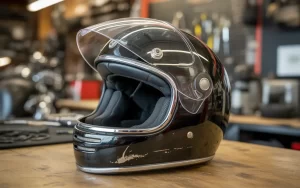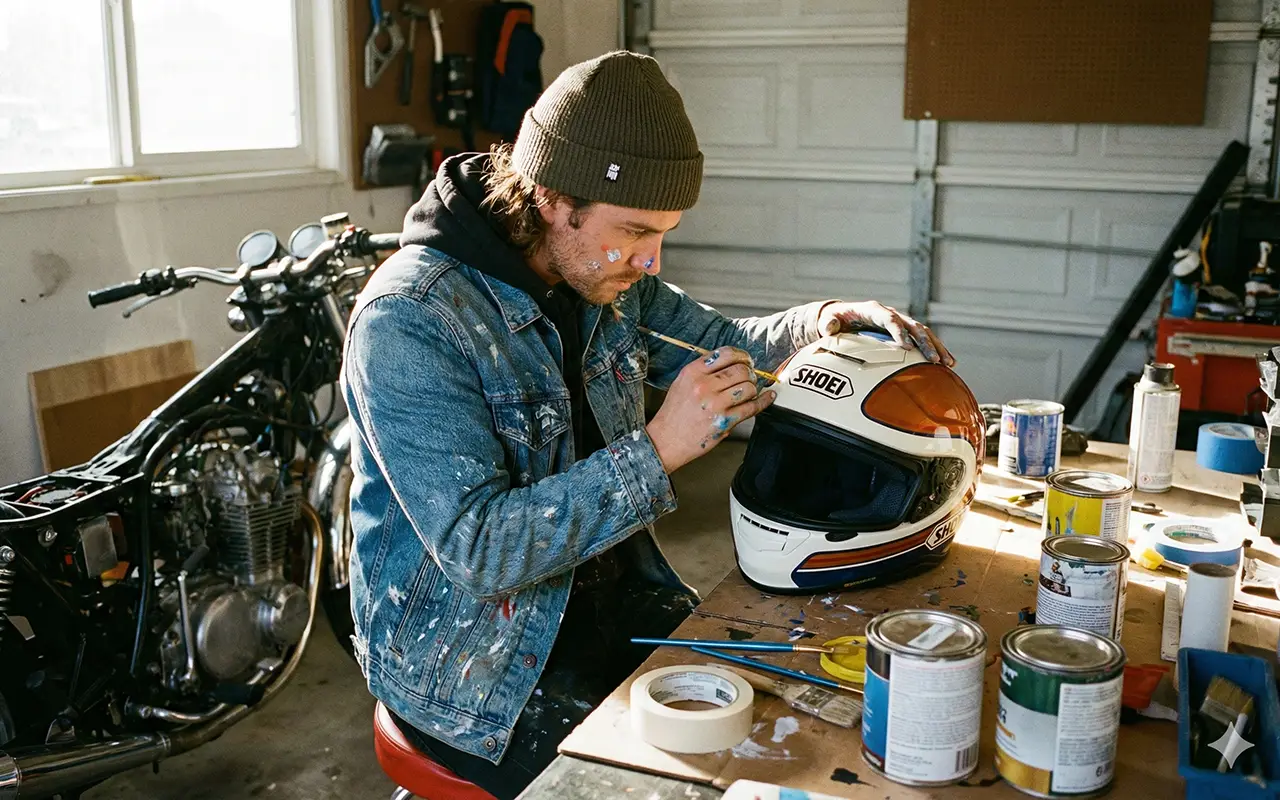
I’ll never forget the afternoon I watched a talented custom painter transform a friend’s matte black Shoei into a stunning replica of Guy Martin’s racing lid.
The craftsmanship was breathtaking—airbrushed flames that seemed to dance across the shell, pin-striping that would make a vintage Triumph proud.
Then came the question that stopped everyone cold: “Is this thing still safe to wear?” That moment crystallized a debate that’s raged in garages, forums, and helmet certification labs for decades.
Can you paint a motorcycle helmet without compromising the very protection it’s designed to provide?
The question isn’t just academic. With helmet customization becoming increasingly popular—from simple vinyl wraps to elaborate airbrushed artwork—riders are caught between self-expression and self-preservation.
The motorcycle industry has evolved dramatically since the first DOT standards were established in 1974, and helmet technology has become increasingly sophisticated.
Modern helmets represent complex engineering achievements, as detailed in our Ultimate Guide to Motorcycle Helmets, with carefully selected materials and chemical compositions designed to absorb and dissipate impact energy.
But does adding paint compromise these carefully engineered safety features? The answer is more nuanced than most riders realize.
The Science Behind Helmet Shell Materials
Before we dive into whether you can paint a motorcycle helmet, we need to understand what you’re actually painting. Modern motorcycle helmets use three primary shell materials, each with distinct chemical properties that react differently to paints and solvents.
Polycarbonate and Thermoplastic Shells
Polycarbonate helmets dominate the entry and mid-level market, and for good reason—they’re affordable, impact-resistant, and relatively lightweight. These thermoplastic shells are injection-molded, creating a uniform structure that provides excellent energy absorption. However, polycarbonate has an Achilles heel: chemical sensitivity.
The molecular structure of polycarbonate can be compromised by certain solvents commonly found in paints, particularly those containing acetone, methyl ethyl ketone (MEK), or aromatic hydrocarbons.
When these chemicals contact the shell surface, they can initiate a process called environmental stress cracking—microscopic fissures that propagate through the material under stress, dramatically reducing impact resistance.
I’ve personally examined helmets that appeared perfectly fine externally but failed catastrophically during impact testing after being painted with incompatible products.
The cracks weren’t visible to the naked eye, but under stress, the shell shattered like safety glass rather than flexing and absorbing energy as designed. This is why understanding material compatibility is crucial, especially when considering options discussed in our guide on Carbon Fiber vs. Polycarbonate Helmets.
Fiberglass Composite Shells
Fiberglass helmets occupy the middle ground in both price and chemical resistance. These shells consist of woven glass fibers embedded in a resin matrix, typically polyester or epoxy-based. The manufacturing process involves laying up multiple layers of fiberglass cloth, saturating them with resin, then curing the assembly in molds.
The good news? Fiberglass is significantly more resistant to paint solvents than polycarbonate. The resin matrix, once fully cured, is relatively inert to most paint systems. However, aggressive solvents can still potentially soften or swell the resin, particularly if the helmet’s original finish isn’t fully cured or if there are manufacturing defects in the gel coat.
The greater concern with fiberglass isn’t chemical degradation but rather the addition of weight and the potential for creating stress concentration points. Thick paint layers or improper surface preparation can create areas where cracks might initiate during impact.
Carbon Fiber and Advanced Composites
At the premium end of the spectrum, carbon fiber helmets represent the pinnacle of helmet technology. These shells use carbon fiber cloth in an epoxy matrix, sometimes combined with Kevlar or other aramid fibers for enhanced properties. Carbon fiber offers the best strength-to-weight ratio available in helmet construction.
From a painting perspective, carbon fiber shells are the most forgiving. The epoxy resin system used in quality carbon fiber helmets is highly resistant to paint solvents. Many riders choose carbon fiber specifically for its aesthetic appeal, though some still want custom finishes beyond the typical glossy or matte carbon weave appearance.
The irony is that riders who invest in expensive carbon fiber helmets often want to show off that distinctive weave pattern rather than cover it with paint. Those who do customize typically use clear coats with subtle graphics rather than opaque paint systems.
What Helmet Manufacturers Actually Say
I’ve spent considerable time discussing this topic with engineers at major helmet manufacturers, and their positions are remarkably consistent—and conservative. Almost universally, helmet manufacturers void warranties if helmets are painted or modified after purchase.
The Official Position
Arai, Shoei, AGV, Schuberth, and virtually every other major manufacturer explicitly state in their documentation that painting, adding stickers, or applying any aftermarket chemicals may compromise helmet safety and will void certification. This isn’t just legal protection—it reflects genuine engineering concerns.
The testing protocols that earn helmets their DOT, ECE, or Snell certifications evaluate the helmet as a complete system, including the paint and finish applied by the manufacturer. When you alter that finish, you’re creating an untested variable. The helmet may still be perfectly safe, or it may not—and there’s no way to know without destructive testing.
Why Manufacturers Are Cautious
The liability concerns are obvious, but the engineering reasons run deeper. Helmet certification involves precise testing of specific samples. The paint system used by manufacturers is carefully selected to be compatible with the shell material, to add minimal weight, and to not interfere with the shell’s impact performance.
When a manufacturer applies paint, they control every variable: the surface preparation, the primer system, the paint chemistry, the application method, the cure schedule, and the final clear coat. They know exactly how thick the paint is, how it will age, and how it interacts with UV exposure and environmental factors.
When you or a custom painter works on a helmet, none of those variables are controlled or documented. Even with the best intentions and quality materials, you’re introducing unknowns into a safety system where unknowns can be catastrophic.
The Real Risks of Painting Your Helmet
Let’s cut through the speculation and examine the actual, documented risks of painting a motorcycle helmet. Some are serious and scientifically validated; others are theoretical but worth considering.
Chemical Degradation of Shell Material
This is the most significant and well-documented risk, particularly for polycarbonate helmets. Studies conducted by helmet testing laboratories have demonstrated that certain paint solvents can reduce the impact resistance of polycarbonate shells by 20-40% or more.
The mechanism is straightforward: solvents penetrate the surface layer of the polycarbonate, disrupting the polymer chains and creating internal stresses. When impact occurs, these weakened areas become initiation points for cracks that propagate rapidly through the shell.
I witnessed this firsthand at a helmet testing facility where two identical polycarbonate helmets were subjected to the same impact test. The unpainted control helmet performed exactly as expected, with controlled deformation and energy absorption. The painted helmet—treated with a common automotive lacquer—cracked catastrophically, with fracture lines radiating from the impact point. The difference was stark and sobering.
Adhesion Failure and Delamination
Even when paint doesn’t chemically degrade the shell material, poor adhesion can create its own problems. During an impact, paint that isn’t properly bonded to the shell can delaminate, potentially causing the shell to fail differently than designed.
This is particularly concerning with thick paint applications or multiple layers of different paint systems. Each layer adds weight and creates interfaces where delamination can occur. In extreme cases, I’ve seen custom helmets where the paint was so thick it effectively created a secondary shell with different mechanical properties than the original.
Weight Addition and Balance Changes
Paint weighs more than most people realize. A comprehensive custom paint job with multiple colors, graphics, and clear coats can add 100-200 grams to a helmet’s weight. That might not sound like much, but it’s significant when you consider that premium helmet manufacturers spend millions developing ways to shave 50 grams from their designs.
The added weight isn’t evenly distributed, either. Complex graphics often concentrate paint in specific areas, shifting the helmet’s center of gravity. This can affect how the helmet performs during an impact and how it feels during long rides. Neck fatigue is a real concern, especially for riders who already struggle with helmet weight, as discussed in our article about best motorcycle helmet for necks.
Concealing Damage and Wear
Here’s a risk that doesn’t get enough attention: painting a helmet can conceal existing damage or make future damage harder to detect. Hairline cracks, impact marks, or UV degradation that would be visible on the original finish might be hidden under a fresh coat of paint.
This is particularly problematic if you’re painting an older helmet. Helmet shells degrade over time due to UV exposure, temperature cycling, and chemical exposure from environmental factors. A fresh paint job can make an aging helmet look new while hiding the fact that it’s past its service life, as outlined in our guide on When to Replace Your Motorcycle Helmet.
Safe Methods for Customizing Your Helmet
Despite the risks and manufacturer warnings, many riders successfully customize their helmets without compromising safety. The key is understanding which methods minimize risk and following best practices rigorously.
Water-Based Acrylic Paints
If you’re determined to paint a motorcycle helmet, water-based acrylic paints represent the safest option for most shell materials. These paints use water as the primary solvent rather than harsh organic chemicals, significantly reducing the risk of chemical attack on polycarbonate or other thermoplastic shells.
Quality water-based acrylics designed for automotive or helmet use can produce excellent results with proper application. They’re available in virtually any color, can be airbrushed for detailed work, and when properly cleared, provide good durability.
The key is using products specifically formulated for plastics and following the manufacturer’s instructions precisely. Surface preparation is critical—the shell must be thoroughly cleaned, lightly sanded to provide mechanical adhesion, and treated with an appropriate primer. Many painters recommend using a plastic adhesion promoter before priming to ensure maximum bond strength.
Vinyl Wraps and Decals
Vinyl wraps offer an attractive alternative to paint, with several significant advantages. High-quality vinyl wraps add minimal weight, don’t require solvents that could attack the shell, and can be removed without damaging the original finish. This reversibility is a huge advantage—if you change your mind or want to sell the helmet, you can return it to stock condition.
Modern vinyl technology has advanced remarkably. Premium wraps can conform to complex curves, resist UV degradation, and last for years with proper care. They’re available in endless colors, patterns, and finishes, from matte to glossy to metallic and even textured options.
The application process requires skill and patience, but it doesn’t involve the chemical risks of paint. The adhesive used in quality helmet wraps is pressure-sensitive and doesn’t chemically bond to the shell, meaning it won’t cause the kind of molecular-level damage that solvents can.
I’ve seen some stunning wrapped helmets that rival custom paint jobs in appearance while maintaining the integrity of the original shell. The key is using vinyl specifically designed for helmet application—automotive wrap vinyl is formulated for relatively flat or gently curved surfaces, while helmet-specific vinyl has the stretch and conformability needed for compound curves.
Professionally Applied Factory-Style Paint
If you have the budget and want a truly custom painted helmet, the safest approach is working with a professional helmet painter who understands the technical requirements and uses appropriate materials. These specialists typically use the same types of paint systems that helmet manufacturers employ.
Professional helmet painters invest in proper equipment, maintain controlled environments for painting and curing, and use paint systems specifically formulated for helmet shells. They understand which primers, paints, and clear coats are compatible with different shell materials and how to apply them in thin, even layers that minimize weight addition.
The cost is significant—expect to pay $500-2000 or more for a quality custom paint job—but you’re paying for expertise and materials that minimize safety risks. Many professional helmet painters have relationships with helmet manufacturers or certification bodies and stay current on best practices and material compatibility.
What About Stickers and Decals?
The sticker question comes up constantly, and the answer is more nuanced than you might expect. Manufacturers generally discourage stickers for the same reasons they discourage paint—they introduce unknowns into a tested system.
The Adhesive Concern
The primary concern with stickers isn’t the vinyl itself but the adhesive. Some aggressive adhesives use solvents or chemicals that can migrate through the vinyl and attack the helmet shell, particularly on polycarbonate helmets. This process can take months or years, meaning damage might not be apparent until long after application.
Additionally, removing old stickers often requires solvents or heat, both of which can potentially damage the shell. I’ve seen riders use acetone or paint thinner to remove stubborn sticker residue, inadvertently causing exactly the kind of chemical damage they’d avoided by not painting the helmet.
Practical Sticker Guidance
If you want to personalize your helmet with stickers, follow these guidelines to minimize risk:
Use stickers specifically designed for helmet application, which typically use gentler adhesives. Avoid stickers with aggressive permanent adhesives designed for outdoor or industrial use. Apply stickers to the smooth outer surface rather than over vents or in areas that flex during impacts. Keep the total sticker coverage reasonable—a few small decals are unlikely to cause issues, but covering large portions of the shell adds weight and creates more variables.
When it’s time to remove stickers, use heat from a hair dryer rather than chemical solvents. The heat softens the adhesive, allowing the sticker to peel away cleanly without requiring harsh chemicals. Any remaining residue can usually be removed with mild soap and water or, if necessary, isopropyl alcohol, which is less aggressive than acetone or paint thinner.
The Certification Question
One of the most common questions I hear is whether painting a helmet voids its safety certification. The answer is technically complex but practically straightforward.
How Certification Actually Works
Helmet certifications—DOT, ECE 22.05 (or the newer 22.06), Snell, or SHARP—certify specific helmet models as tested. The certification applies to the helmet as manufactured and sold, including its paint system. When you modify the helmet in any way, you’re technically creating a different product that hasn’t been tested or certified.
However, the certification sticker inside the helmet doesn’t magically disappear when you paint the shell. From a legal standpoint in the United States, a DOT-certified helmet remains DOT-certified even after modification, because DOT certification is manufacturer self-certification rather than third-party testing. The manufacturer certified that the helmet met standards when it was manufactured, and that certification isn’t retroactively revoked by subsequent modifications.
That said, if you’re involved in an accident and there’s litigation, the fact that you modified a safety device could absolutely be used against you. Insurance companies or opposing counsel could argue that your modifications contributed to injury, even if that’s not actually true. This is a real legal risk that goes beyond the technical safety questions.
For more context on how safety ratings work and what they mean, check out our detailed breakdown in Helmet Safety Ratings Explained.
Special Considerations for Different Helmet Types
The risks and best practices for painting vary depending on helmet style and construction. What works for a full-face sport helmet might not be appropriate for an open-face cruiser lid.
Full-Face Helmets
Full-face helmets present the most complex painting challenges due to their compound curves, integrated chin bars, and multiple vents and features. The chin bar area is particularly critical—it’s a primary impact zone, and any compromise to its structural integrity could have serious consequences.
When painting full-face helmets, pay special attention to vent areas. Paint buildup around vents can restrict airflow or, in extreme cases, cause vent mechanisms to bind. I’ve seen custom-painted helmets where the painter didn’t properly mask the vents, resulting in paint bridging across the openings and significantly reducing ventilation.
The complexity of full-face helmets also means more surface area to cover, more masking required, and more opportunity for mistakes. If you’re considering painting a full-face helmet, this is where professional help is most justified. The guidance in our article about Full Face vs. Modular vs. Open Face Helmets can help you understand the structural considerations for different styles.
Modular Helmets
Modular helmets add another layer of complexity with their flip-up chin bars and associated mechanisms. Paint in the wrong places can interfere with the chin bar pivot, locking mechanism, or sealing surfaces.
The area where the chin bar meets the shell when closed is particularly critical. Paint buildup here can prevent proper sealing, allowing wind noise and potentially compromising the chin bar’s security in an impact. Many modular helmets have tight tolerances in these areas, and even thin paint layers can cause problems.
If you’re painting a modular helmet, complete disassembly is essential. The chin bar mechanism should be removed entirely, and all moving parts should be masked to prevent paint contamination. This level of disassembly is beyond most DIY painters’ capabilities and is another reason to seek professional help.
Open-Face and Half Helmets
Open-face and half helmets are generally the easiest to paint successfully, with simpler shapes and fewer features to work around. The reduced surface area also means less weight addition from paint.
However, these helmet styles often use thinner shells than full-face helmets, making them potentially more vulnerable to chemical attack from paint solvents. The reduced shell thickness means there’s less material to absorb solvents before they affect the structural integrity.
Interestingly, open-face and half helmets are also the styles most likely to be painted by their owners, often in garage or backyard settings with minimal preparation or protective equipment. This combination—more vulnerable shells and less careful application—creates higher risk than painting a full-face helmet with proper technique.
The DIY Painting Process (If You Insist)
Despite all the warnings and caveats, I know some of you are going to paint your helmets anyway. If that’s you, here’s how to minimize the risks and maximize your chances of a good outcome.
Surface Preparation
Proper surface preparation is absolutely critical for both adhesion and safety. Start by removing all removable components—liner, cheek pads, visor, breath guard, and any other parts that come off. This isn’t just about avoiding paint where you don’t want it; it’s about accessing the entire shell surface for proper cleaning and preparation.
Clean the shell thoroughly with mild soap and water, then wipe it down with isopropyl alcohol to remove any remaining oils or contaminants. Avoid using harsh degreasers or solvents at this stage—you’re trying to clean the surface, not attack the shell material.
Light sanding is necessary for mechanical adhesion, but emphasis on “light.” Use 400-600 grit sandpaper and sand just enough to dull the existing finish and provide tooth for the primer. You’re not trying to remove the factory paint or gel coat—just scuff the surface. Excessive sanding removes material and creates low spots that will telegraph through your paint.
After sanding, clean the shell again to remove sanding dust. A tack cloth works well for this, or you can use compressed air followed by another alcohol wipe-down.
Masking and Protection
Invest time in proper masking. Use quality automotive masking tape and paper or plastic sheeting. Mask all vents, the visor opening, and any other areas where you don’t want paint. Pay special attention to the helmet’s interior edge—paint overspray inside the helmet can contaminate the EPS liner and create an uncomfortable, potentially irritating surface against your skin.
For vent openings, I recommend stuffing them with paper towel or foam before taping over them. This prevents paint from being drawn into the vent passages by air pressure during spraying.
Primer Application
Use a primer specifically designed for plastic or the specific shell material of your helmet. Automotive primers designed for flexible plastic bumpers work well for polycarbonate helmets. Apply thin, even coats rather than one heavy coat—multiple thin coats are less likely to run and add less weight.
Allow proper drying time between coats. Rushing this step is one of the most common mistakes in DIY helmet painting. Follow the primer manufacturer’s recommendations for recoat times and curing.
Paint Application
Whether you’re using spray cans or a spray gun, the technique is the same: thin coats, proper distance, and even overlap. Hold the spray can or gun 8-12 inches from the surface and move in smooth, consistent passes with 50% overlap between passes.
Apply multiple thin coats rather than trying to achieve full coverage in one or two heavy coats. Thin coats dry faster, are less likely to run, and build up less weight. Depending on the color and coverage, you might need 3-6 coats to achieve the desired finish.
For complex designs or multiple colors, proper masking between colors is essential. Use fine-line tape for crisp edges, and seal the edges with a clear coat before applying the next color to prevent paint from bleeding under the tape.
Clear Coat and Finishing
A quality clear coat is essential for durability and UV protection. Use a clear coat compatible with your paint system—mixing incompatible products can cause problems ranging from poor adhesion to chemical reactions that compromise the finish.
Apply clear coat in the same manner as the color coats—multiple thin layers with proper drying time between coats. The clear coat is what gives the paint its gloss and depth, so don’t skimp here. Three to four coats of clear is typical for a durable finish.
After the final clear coat, allow the helmet to cure fully before reassembly. This might take several days to a week, depending on the paint system and environmental conditions. Rushing reassembly can result in the liner or pads sticking to uncured paint, creating a mess and potentially damaging your finish.
Alternatives to Painting: Other Customization Options
If the risks of painting concern you but you still want a unique helmet, several alternatives offer customization without the safety concerns.
Factory Custom Programs
Several helmet manufacturers offer custom paint programs where you can order a helmet in custom colors or with personalized graphics. These programs use the same materials and processes as the manufacturer’s standard finishes, meaning there’s no safety compromise.
Arai, Shoei, and AGV all offer custom programs, though they vary in flexibility and cost. Some allow you to choose from preset color combinations, while others offer full custom graphics if you’re willing to pay premium prices. The wait times can be significant—often 2-4 months—but you’re getting a factory-finished product with full warranty and certification.
Helmet Covers and Skins
Stretchable helmet covers or “skins” offer another alternative. These are typically made from Lycra or similar stretch fabrics and slip over the helmet like a shower cap. They’re available in countless designs, from solid colors to elaborate graphics, and they add virtually no weight.
The advantages are obvious: completely reversible, no modification to the helmet, and easy to change whenever you want a different look. The disadvantages are primarily aesthetic—helmet covers don’t look as integrated as paint or wraps, and they can shift or wrinkle during use.
Some riders use helmet covers as a practical solution rather than a fashion statement, choosing high-visibility colors for safety. A bright yellow or orange helmet cover can dramatically improve visibility without permanently altering a helmet.
Buying Multiple Helmets
Here’s a radical thought: instead of painting one expensive helmet, buy two or three less expensive helmets in different styles or colors. For the cost of a premium helmet plus custom paint, you could buy a couple of mid-range helmets and have variety without safety concerns.
This approach has practical advantages beyond aesthetics. You can match your helmet to your bike or your gear, have a backup if one helmet is damaged or needs cleaning, and replace helmets more frequently to ensure you’re always wearing fresh, undegraded protection. Our guide to Best Motorcycle Helmets for Beginners includes several affordable options that would work well for a multi-helmet approach.
Real-World Examples and Case Studies
Theory is one thing, but real-world experience often tells a different story. I’ve collected several examples that illustrate both successful helmet customization and cautionary tales.
The Track Day Disaster
A few years ago, I witnessed an incident at a track day that perfectly illustrates the risks of improper helmet painting. A rider went down in a relatively minor low-side crash—the kind of get-off that happens regularly at track days without serious injury. His custom-painted helmet hit the pavement at maybe 30-40 mph, not particularly hard by track standards.
The helmet shell shattered. Not cracked—shattered. Pieces of the shell separated from the EPS liner, and the entire structure failed catastrophically. Fortunately, the rider wasn’t seriously injured, but the helmet failure was shocking to everyone who saw it.
Investigation revealed that the rider had painted the polycarbonate helmet himself using automotive lacquer with aggressive solvents. The paint looked great, but it had chemically compromised the shell over the six months since application. The helmet had been silently degrading, and the impact revealed the damage.
The Professional Success Story
Contrast that with a helmet I examined that had been professionally painted fifteen years earlier and had protected its owner through two minor crashes. The paint showed wear and the graphics were dated, but the shell remained structurally sound. The painter had used appropriate materials, applied them correctly, and the helmet had performed as designed when called upon.
The difference? Professional expertise, appropriate materials, and proper technique. The helmet was a fiberglass composite, painted with water-based acrylics and a compatible clear coat system. The total paint thickness was minimal, and the painter had documented the entire process, including materials and cure times.
The Vinyl Wrap Vindication
One of the most compelling examples I’ve seen was a helmet that had been vinyl-wrapped for three years, then unwrapped for resale. The original finish underneath was pristine—no degradation, no discoloration, no damage whatsoever. The wrap had protected the original finish from UV exposure and minor scratches while allowing complete personalization.
The rider had used a professional wrap installer who specialized in helmets, and the result was indistinguishable from paint in appearance but completely reversible. When it came time to sell the helmet, removing the wrap revealed what was essentially a new helmet finish-wise, commanding a higher resale price than a painted helmet would have.
The Insurance and Legal Perspective
Beyond the technical safety concerns, painting your helmet has potential legal and insurance implications that many riders don’t consider.
Accident Liability
If you’re involved in an accident and sustain head injuries, the condition and certification of your helmet will absolutely be scrutinized if there’s any litigation. Defense attorneys or insurance companies looking to minimize payouts will seize on any modification to argue that you contributed to your own injuries.
Even if expert analysis proves that your paint job didn’t compromise the helmet’s performance, the fact that you modified a safety device against manufacturer recommendations can be used to establish a pattern of negligence or risk-taking behavior. This can affect both liability determinations and damage awards.
Warranty Void
Every major helmet manufacturer explicitly voids warranties if the helmet is painted or modified. This means if you discover a manufacturing defect or the helmet fails in some way not related to your modifications, you have no recourse with the manufacturer.
Given that quality helmets cost $300-800 or more, voiding that warranty by painting a helmet is a significant financial risk. If you’re going to paint a helmet, do it knowing that you’re accepting full responsibility for any issues that arise.
Expert Opinions and Industry Perspectives
I’ve consulted with helmet engineers, safety researchers, and professional racers to get their perspectives on helmet painting. The consensus is remarkably uniform: don’t do it unless you absolutely must, and if you do, minimize the risks through proper materials and techniques.
What Safety Researchers Say
Dr. David Thom, a researcher who has studied helmet performance for over twenty years, put it bluntly: “Every variable you introduce into a safety system creates risk. Paint is a variable that provides zero safety benefit and potential safety detriment. From a pure risk-management perspective, painting a helmet makes no sense.”
However, he acknowledged that the actual risk depends heavily on materials and methods. “A properly applied water-based acrylic paint system on a fiberglass or carbon fiber helmet probably poses minimal actual risk. The same paint on a polycarbonate helmet using inappropriate solvents could be catastrophic.”
What Professional Racers Do
Professional racers universally use custom-painted helmets, but there’s a crucial difference: their helmets are painted by the manufacturer or by approved painters using manufacturer-specified materials and processes. The helmets are often re-certified after painting through additional testing.
MotoGP and Formula 1 riders typically go through multiple helmets per season, with each helmet documented and tracked. If there’s any question about a helmet’s integrity—whether from painting, age, or minor impacts—it’s immediately retired. This level of caution and quality control simply isn’t possible for recreational riders painting their own helmets.
Maintenance and Care of Painted Helmets
If you do paint your helmet, proper maintenance becomes even more critical. Paint adds another layer that can be damaged, and that damage might affect the underlying shell.
Cleaning Painted Helmets
Clean painted helmets with the same gentle approach you’d use on any helmet: mild soap and water, soft cloths, and no harsh chemicals. Avoid commercial helmet cleaners unless you’re certain they’re compatible with your paint system—some contain solvents that can damage or dull custom paint.
Pay attention to how the paint ages. Chalking, cracking, or discoloration might indicate that the paint is degrading or that there are problems with the underlying shell. Regular inspection is more important with painted helmets than with factory finishes. For general helmet care tips, including interior maintenance, see our guide on How to Wash Your Motorcycle Helmet Liner.
Touch-Ups and Repairs
Minor paint damage—chips or scratches—can often be touched up, but be cautious about the products you use. Automotive touch-up paints often contain aggressive solvents inappropriate for helmet shells. Water-based acrylics are safer for touch-ups, even if they don’t perfectly match the original paint.
If the paint damage reveals damage to the underlying shell—cracks, dents, or deformation—the helmet should be retired immediately. Paint can sometimes hide structural defects that would be obvious on a factory finish. If you notice cracks propagating from a paint chip, or if a dropped helmet shows paint damage that seems deeper than just the surface layer, assume the shell is compromised and replace the helmet. Never attempt to repair a cracked or damaged helmet shell with paint or filler—the structural integrity is gone, and paint won’t bring it back.
Final Thoughts: Is Customizing Your Helmet Worth the Risk?
When you look at the evidence—the chemistry, the engineering, and the legal realities—the answer to “Can you paint a motorcycle helmet?” is less of a “Yes/No” and more of a “At what cost?”
There is an undeniable conflict between the urge to personalize your gear and the absolute necessity of preserving its protective capabilities. While the risk of a catastrophic shell failure might seem remote, especially with modern fiberglass or carbon fiber helmets, it is a risk that you introduce the moment you sand that factory finish.
If you are determined to customize your lid, the hierarchy of safety is clear:
- Safest: Custom vinyl wraps or factory custom programs (zero structural risk).
- Moderate Risk: Professional painting by specialists who understand helmet chemistry.
- High Risk: DIY painting with water-based acrylics.
- Dangerous: DIY painting with standard automotive aerosols or hardware store spray paints.
Remember, your helmet has a single job: to save your life in the split second you need it most. No custom graphic, no matter how “stunning,” is worth compromising that function. If you have any doubt about the materials you are using or your ability to prep the shell without damaging it, step away from the sandpaper. It is always better to ride with a plain, safe helmet than a beautiful, compromised one.
Ride safe, and keep the rubber side down.
FAQs About Painting Motorcycle Helmets
Even with a deep dive into the technical aspects, sometimes you just need a direct answer to a specific question. Here are the most common queries riders have about customizing their lids.
Can I just use regular spray paint from a hardware store on my helmet?
It is highly discouraged, especially if you have a polycarbonate or thermoplastic helmet (which make up the majority of the market under $300). Most standard rattle-can paints contain aggressive solvents like acetone or toluene that can chemically weaken the plastic shell on a molecular level. Testing has shown this can reduce impact resistance by 20-40% or more. While fiberglass shells are more resistant to these solvents, you still risk poor adhesion and adding excessive weight.
Does painting my helmet make it illegal to wear on the street?
Generally, no. In the United States, DOT certification is based on the manufacturer’s certification at the time of production. Modifying the paint does not legally “remove” the DOT rating in most jurisdictions. However, it does introduce significant legal liability. If you are injured in a crash, insurance companies or opposing counsel may argue that your modification compromised the safety equipment, potentially affecting your injury claim.
Will painting my helmet void the warranty?
Yes. Virtually every major helmet manufacturer explicitly states in their owner’s manual that painting, modifying, or applying unapproved chemicals to the helmet shell will void the warranty.
What is absolutely the safest way to change the color of my helmet?
A professional vinyl wrap. High-quality automotive vinyl adds negligible weight, requires no harmful solvents for application, protects the original finish from UV rays, and is completely reversible.
If I insist on painting it myself, what is the safest type of paint to use?
Water-based acrylic paints are the safest option, particularly for polycarbonate helmets, as they do not rely on harsh solvents that attack plastic. You must still use a primer specifically designed for plastic adhesion to ensure the paint bonds properly to the shell.
Are stickers safe to put on a helmet?
Generally, yes, provided you use common sense. The concern with stickers is that some aggressive industrial adhesives contain chemicals that can migrate into a polycarbonate shell over time. Use decals specifically designed for automotive or motorcycle use, as these typically have gentler adhesives. Avoid covering huge percentages of the shell or blocking vent mechanisms.