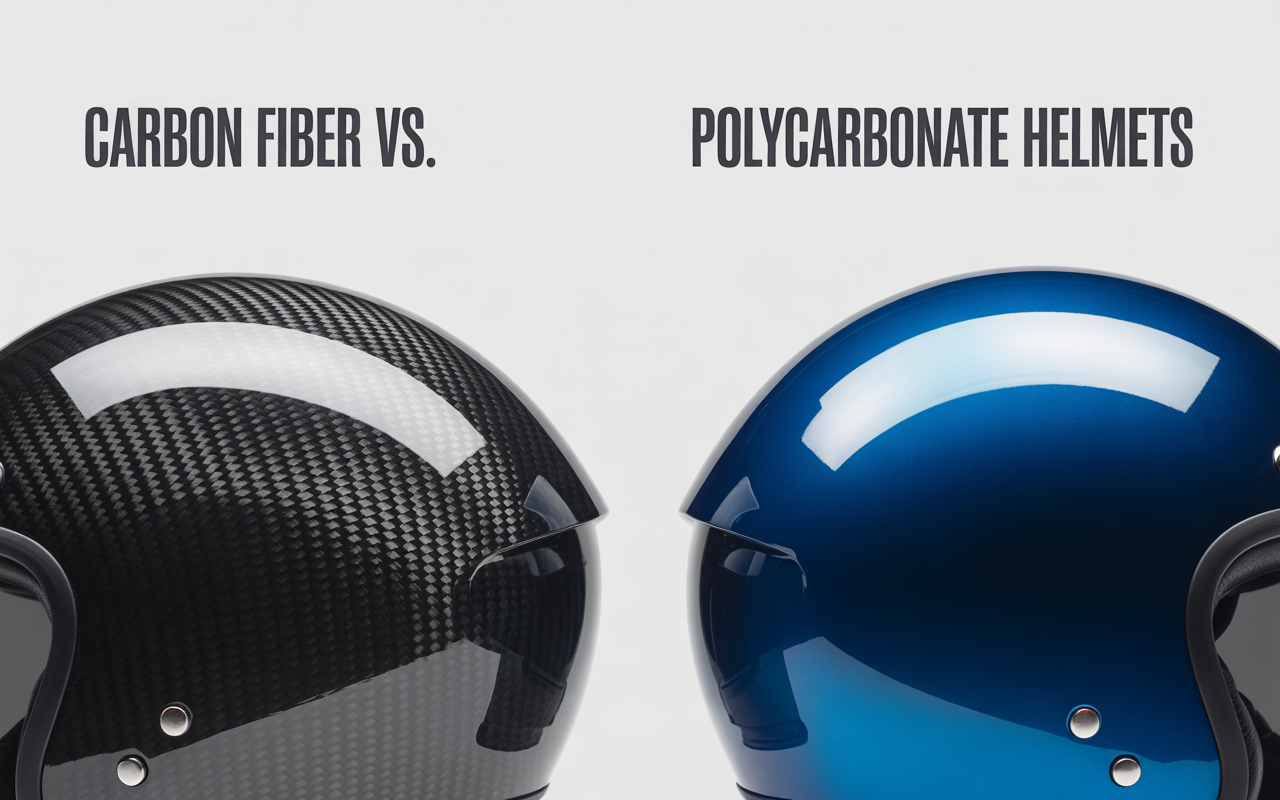
Does your neck hurt after an hour on the highway? It might not be the wind; it might be the brick on your head.
When it comes to motorcycle helmets, the material they’re made from can make a significant difference in your riding experience. Standard helmets are typically constructed from tough plastic (Polycarbonate) – they’re affordable and provide adequate safety, but they’re notoriously heavy. On the other end of the spectrum is Carbon Fiber, the “Lamborghini” of helmet materials – incredibly lightweight, but with a price tag to match.
For a comprehensive walkthrough on choosing the perfect lid for your riding style, check out our Ultimate Guide to Motorcycle Helmets.
The question that plagues many riders is straightforward: Is shaving a few ounces off your helmet really worth an extra $300 or more? That’s exactly what we’re going to explore in this comprehensive guide. We’ll break down the differences between carbon fiber and polycarbonate helmets, examining everything from weight and safety to noise levels and durability, to help you make an informed decision.
New to helmet types? Check out our breakdown of The 6 Types of Motorcycle Helmets first.
The Contenders: Understanding Helmet Materials
When shopping for a motorcycle helmet, you’ll encounter three primary shell materials that dominate the market: polycarbonate, fiberglass/composite, and carbon fiber. Each material offers distinct advantages and disadvantages that directly impact performance, comfort, and price.
Polycarbonate (Thermoplastic)
Polycarbonate helmets represent the entry-level option in the motorcycle helmet market. This thermoplastic material is essentially a high-performance plastic that’s molded into shape using injection molding techniques. Manufacturers heat polycarbonate pellets until they melt, then inject the liquid plastic into helmet molds under high pressure. Once cooled, the result is a tough, flexible shell.
The beauty of polycarbonate lies in its ability to absorb impact through flexing. When struck, these helmets momentarily deform to distribute force before returning to shape. This characteristic makes them surprisingly effective at protecting your head despite their budget-friendly nature. However, to achieve adequate protection, polycarbonate shells must be thicker and heavier than premium materials.
Fiberglass/Composite
Stepping up to the middle tier, fiberglass and composite helmets offer an appealing balance between performance and price. These shells consist of glass fibers woven into a fabric and then saturated with resin. Manufacturers layer this material into helmet molds before curing it under heat and pressure.
The result is a shell that’s lighter than polycarbonate while offering superior impact resistance. Fiberglass shells are designed to progressively crush upon impact, absorbing energy through controlled failure of the material itself. Many composites combine fiberglass with other materials like Kevlar or Dyneema to enhance specific performance characteristics.
Carbon Fiber
At the premium end of the spectrum sits carbon fiber—the gold standard for motorcycle helmet construction. Carbon fiber consists of incredibly thin strands of carbon (thinner than human hair) woven into a fabric pattern. This fabric is layered in specific orientations within a mold, then infused with epoxy resin and cured under heat and pressure.
What makes carbon fiber special is its exceptional strength-to-weight ratio. It’s five times stronger than steel while weighing significantly less. The material is incredibly rigid, distributing impact forces across the entire helmet rather than allowing them to concentrate at the point of impact. However, this manufacturing process is labor-intensive and requires specialized skills, explaining the substantial price premium.
Carbon fiber helmets aren’t just lighter—they’re engineered differently. The material’s inherent properties allow manufacturers to create shells with varying thicknesses in strategic locations, optimizing protection where needed while reducing weight elsewhere. This precision engineering is impossible with more basic materials.
Understanding these material differences forms the foundation for determining whether the carbon fiber upgrade is worth the investment for your specific riding style and needs.
Round 1: Weight (The Main Selling Point)
When riders consider upgrading to a carbon fiber helmet, weight reduction is typically the primary motivation—and for good reason. The difference might seem negligible on paper, but it’s transformative in real-world riding.
The Stats That Matter
Let’s break down the numbers:
- Average Polycarbonate Helmet: ~1600g – 1800g (3.5 – 4 lbs)
- Average Fiberglass/Composite Helmet: ~1450g – 1650g (3.2 – 3.6 lbs)
- Average Carbon Fiber Helmet: ~1250g – 1400g (2.8 – 3 lbs)
This means carbon fiber helmets are typically 20-25% lighter than their polycarbonate counterparts. While 400 grams (less than a pound) might not sound significant, the difference becomes apparent during actual riding.
Understanding “Swing Weight”
The concept of “swing weight” is crucial to appreciating why helmet weight matters so much. When you’re riding at highway speeds and need to check your blind spot, a heavy helmet creates significant rotational inertia—it resists the turning motion and then pulls your neck as you return to facing forward.
This effect is amplified at higher speeds when wind resistance is also fighting against your head movements. A lighter helmet dramatically reduces this strain, making head checks and general riding posture much more natural and less fatiguing.
The Long-Ride Difference
The weight advantage of carbon fiber becomes most apparent during extended rides:
- First Hour: Most riders won’t notice significant differences
- 2-3 Hour Mark: Polycarbonate helmet users often begin experiencing neck fatigue
- 4+ Hours: Carbon fiber helmet users report substantially less neck and shoulder strain
Many long-distance touring riders describe the sensation of wearing a carbon fiber helmet as “like wearing a baseball cap” compared to the “brick on your head” feeling of heavier helmets after several hours on the highway.
Impact on Riding Performance
Beyond comfort, weight reduction can actually improve riding performance:
- Quicker Reaction Times: Less inertia means faster head movements in emergency situations
- Reduced Fatigue: Less neck strain means sharper focus throughout your ride
- Less Bobblehead Effect: Lighter helmets resist bouncing and movement on rough roads
For sport riders and track enthusiasts, these performance advantages can be just as important as the comfort benefits.
Verdict
Carbon fiber wins this round decisively. While the weight difference might seem small on the scale, it translates to a significant real-world advantage, especially for riders who spend long days in the saddle. If neck fatigue is currently limiting your riding enjoyment, a carbon fiber helmet could be a game-changer.
Round 2: Safety (Is Carbon Actually Safer?)
When shopping for premium helmets, you’ll often hear claims that carbon fiber helmets are “safer” than their polycarbonate counterparts. This is where marketing meets reality, and we need to separate fact from fiction.
The Myth vs. The Reality
The myth persists that because carbon fiber is harder and more expensive, it must provide superior protection. However, this oversimplifies how helmet safety actually works. The truth is that both carbon fiber and polycarbonate helmets must pass the exact same safety standards—whether that’s DOT in the United States, ECE in Europe, or the more rigorous Snell certification.
How Each Material Handles Impact
The materials protect you in fundamentally different ways:
Polycarbonate absorbs energy through deformation. When you crash, the plastic shell flexes and crushes, dispersing the energy of impact before it reaches your skull. Think of it like a crumple zone in a car—it sacrifices itself to save you.
Carbon fiber, on the other hand, is significantly stiffer and stronger for its weight. Rather than primarily deforming, it spreads the impact energy across a wider area of the helmet. The carbon weave works like a web, distributing forces throughout the shell instead of concentrating them at the point of impact.
The Whiplash Factor
Here’s where carbon fiber might have an edge that’s rarely discussed: Because carbon helmets are lighter (often by 20-30%), they carry less momentum in a crash situation. This reduced mass means less force yanking on your neck during impact, potentially reducing the severity of whiplash injuries.
A 3-pound carbon helmet simply has less inertia than a 4-pound polycarbonate one when your head suddenly changes direction. Over time, this weight difference can also reduce chronic neck strain during normal riding.
The Bottom Line on Safety
When it comes to direct impact protection in a single crash, a properly certified $150 polycarbonate helmet will protect your brain just as effectively as a $900 carbon fiber model. The safety difference isn’t in the material itself, but potentially in:
- Reduced neck strain during impacts due to lighter weight
- Higher-end features that often come with premium helmets (better visibility, improved ventilation, superior fit systems)
- Comfort factors that might make you more likely to wear the helmet consistently
Regardless of what material you choose, make sure the helmet has the right safety certification sticker. Read our Helmet Safety Ratings Guide to understand what those symbols really mean for your protection.
Round 3: Noise Levels
When riders first transition from a standard polycarbonate helmet to a carbon fiber model, many expect the premium material to deliver improvements across all performance metrics. However, when it comes to noise reduction, riders often encounter a surprising reality: lighter doesn’t necessarily mean quieter.
The Physics of Helmet Noise
Carbon fiber helmets, despite their advanced construction, can actually transmit more road and wind noise than their polycarbonate counterparts. This counterintuitive outcome stems from the fundamental properties of carbon fiber itself. The material’s exceptional stiffness and rigidity—qualities that make it so strong and lightweight—also make it highly efficient at conducting sound waves.
Polycarbonate helmets, with their more flexible structure, naturally absorb and dampen certain sound frequencies before they reach your ears. The softer thermoplastic material acts as a buffer, reducing the transmission of high-frequency vibrations that contribute to road noise.
Carbon fiber, by contrast, creates a rigid shell that can resonate like a drum, effectively amplifying certain sound frequencies rather than dampening them. The tightly woven carbon strands encased in hard resin create an excellent pathway for vibrations to travel through the helmet shell directly to your ears.
Manufacturers’ Sound-Dampening Solutions
Helmet manufacturers are well aware of this acoustic challenge. To address the noise issue in premium carbon fiber helmets, they implement several countermeasures:
- Enhanced Interior Padding: Carbon helmets often feature thicker, denser comfort liners specifically designed to absorb sound.
- Strategic Dampening Layers: Some manufacturers add special vibration-dampening materials between the carbon shell and the EPS impact liner.
- Neck Rolls and Wind Skirts: More comprehensive neck rolls and wind skirts help prevent turbulent air from entering the bottom of the helmet.
- Acoustic Engineering: Advanced models incorporate specially designed air channels and venting systems that minimize wind noise while maintaining ventilation.
The irony is that these noise-reduction measures often add weight back to the helmet, partially negating the weight advantage that carbon fiber provides in the first place. A truly quiet carbon fiber helmet might only be marginally lighter than a well-designed polycarbonate model due to the additional sound-dampening materials required.
The Real-World Experience
Many experienced riders report that mid-range composite or fiberglass helmets often provide the best balance of weight and noise characteristics. These “middle-ground” materials don’t transmit as much noise as pure carbon fiber but are still lighter than basic polycarbonate.
For riders who prioritize a quiet ride, it’s worth noting that helmet shape, visor sealing, and proper fit contribute more to noise reduction than shell material alone. A well-fitted polycarbonate helmet may provide a quieter riding experience than a poorly fitted carbon fiber model, regardless of price difference.
Round 4: Durability & Lifespan
When investing in a motorcycle helmet, you’re not just buying protection—you’re making a commitment to a piece of gear that should last several years. However, carbon fiber and polycarbonate helmets age quite differently.
Polycarbonate helmets are the workhorses of the helmet world. Made from thermoplastic, these helmets have an impressive ability to take a beating. Drop your polycarbonate helmet from your seat or handlebar? It will likely bounce rather than break. The material flexes upon impact and returns to its original shape—a characteristic that makes it not only good at absorbing crash energy but also resilient to everyday accidents.
Carbon fiber helmets, while exceptional in strength-to-weight ratio, have a significant Achilles’ heel: brittleness. The very properties that make carbon fiber so strong and lightweight—its rigid, non-flexible structure—also make it vulnerable to cracks and fractures when dropped on hard surfaces.
“I paid $700 for my carbon helmet and dropped it from my kitchen counter onto tile. The small crack that formed nearly brought me to tears,” confessed one rider in an online forum.
This brittleness stems from how carbon fiber is constructed: layers of woven carbon strands encased in resin. When subjected to impact, especially at angles, this resin matrix can crack, compromising the helmet’s structural integrity even if the damage isn’t immediately visible.
Care Requirements: A Tale of Two Materials
Polycarbonate Helmet Care:
- Can handle casual storage (on mirrors, seats, etc.)
- Cleans easily with mild soap and water
- UV-resistant coatings prevent yellowing
- Typically requires replacement every 5 years due to EPS liner degradation
Carbon Fiber Helmet Care:
- Requires careful handling and dedicated storage
- Should be placed on soft surfaces or proper helmet stands
- Needs protection from extreme temperatures
- Same 5-year replacement timeline, but more vulnerable to incidental damage
The extra care required for carbon fiber helmets adds another hidden “cost” beyond the price tag—the mental overhead of constantly protecting your investment.
Did you accidentally drop your expensive lid or notice a small crack in the shell? Knowing When to Replace Your Helmet is crucial for maintaining proper protection, regardless of how much you spent on it.
For many riders, the durability advantage of polycarbonate is significant enough to outweigh the weight benefits of carbon fiber, especially for daily commuters or those who tend to be less gentle with their gear.
Round 5: Price (The Wallet Hitter)
When it comes to motorcycle helmets, the price gap between polycarbonate and carbon fiber options is substantial enough to make any rider pause before pulling out their credit card.
Polycarbonate Helmets: $100 – $250
Polycarbonate helmets represent the affordable end of the safety spectrum. These helmets use injection-molded plastic shells that can be mass-produced efficiently. The manufacturing process is largely automated, which significantly reduces labor costs. Even premium polycarbonate helmets from respected brands rarely exceed the $300 mark, making them accessible to most riders.
Carbon Fiber Helmets: $450 – $1,000+
Carbon fiber helmets occupy the premium tier, with entry-level options starting around $450 and high-end models easily surpassing $1,000. Premium brands like AGV, Shoei, and Arai often price their carbon fiber flagships between $700-$900, while boutique manufacturers like AGV Pista GP RR can command prices well over $1,500.
Why the Steep Price Difference?
The dramatic price gap comes down to several factors:
- Labor-Intensive Manufacturing: Carbon fiber helmets require skilled technicians to hand-lay carbon fiber sheets in precise patterns. Each layer must be positioned correctly to ensure structural integrity, a process that can take hours per helmet.
- Material Costs: Raw carbon fiber is significantly more expensive than polycarbonate. The high-quality carbon fiber weave used in premium helmets costs manufacturers 5-10 times more than polycarbonate materials.
- Complex Curing Process: After layering, carbon fiber helmets undergo a time-consuming curing process in specialized equipment, adding to production costs.
- Lower Production Volumes: Carbon fiber helmets are produced in much smaller quantities, eliminating economies of scale that benefit polycarbonate manufacturing.
- Research and Development: Companies invest heavily in optimizing their carbon fiber designs for the perfect balance of strength and weight.
The Value Proposition: Is It Worth It?
Whether a carbon fiber helmet justifies its premium depends on your riding habits:
- For weekend warriors who ride occasionally, the extra $300-500 might be better spent on other gear or motorcycle upgrades.
- For those who regularly embark on long-distance tours or track days, the reduced neck fatigue and enhanced comfort can make the investment worthwhile over time.
Remember that you’re not just paying for weight reduction—you’re investing in craftsmanship, premium materials, and often additional features that manufacturers include to justify the higher price point.
Round 6: Ventilation (The Cooling Factor)
When you’re stuck in traffic on a scorching summer day, ventilation becomes more than a luxury—it’s a necessity. The material of your helmet significantly impacts how well air flows through your lid and keeps your head cool.
Carbon fiber helmets typically offer superior ventilation compared to their polycarbonate counterparts. This advantage stems from the material’s inherent properties:
Carbon Fiber Ventilation Benefits:
- Structural Rigidity: Carbon fiber’s exceptional strength-to-weight ratio allows manufacturers to create larger vent openings without compromising the helmet’s structural integrity. These wider air channels promote better airflow throughout the helmet.
- Precision Engineering: The manufacturing process for carbon fiber enables more complex and aerodynamically efficient vent designs. Air can be channeled precisely where needed.
- Thinner Shell Construction: Carbon fiber shells can be thinner while maintaining safety standards, allowing for deeper internal air channels that pull hot air away from the rider’s head.
Polycarbonate Ventilation Limitations:
- Thicker Construction: Polycarbonate helmets generally require thicker shells to achieve the same protective properties, which limits the size and depth of ventilation channels.
- Design Constraints: The molding process for polycarbonate sometimes restricts the complexity of ventilation systems that can be incorporated.
- Weight Considerations: Adding more vents to polycarbonate helmets often requires additional reinforcement, which adds weight—creating a difficult balance between cooling and comfort.
The real-world impact is noticeable on long rides. Carbon fiber helmet owners frequently report feeling cooler during extended summer rides, with less of that claustrophobic “hot head” feeling that can lead to fatigue and reduced concentration.
However, the ventilation advantage comes with a trade-off: more airflow typically means more noise. Many riders find themselves choosing between optimal cooling and a quieter ride, especially at highway speeds.
For those who ride in hot climates or participate in physically demanding off-road adventures, the superior ventilation of carbon fiber might be worth the premium price tag alone.
The Style Factor: Aesthetics & Customization
When it comes to motorcycle helmets, safety and comfort are paramount—but let’s be honest, looks matter too. The visual appeal of your lid is often what draws you to it first, and both carbon fiber and polycarbonate helmets offer distinct aesthetic qualities that appeal to different riders.
Carbon Fiber: The Premium Look
Carbon fiber helmets exude a high-end, technical appearance that’s unmistakable. The distinctive woven pattern visible through clear-coat finishes has become synonymous with performance and luxury across many industries, from supercars to high-end electronics.
Finish Options:
- Exposed weave with glossy clear coat (the classic carbon look)
- Matte clear coat for a more subdued technical appearance
- Tinted clear coats that add color while still showing the carbon weave beneath
- Partial paint schemes that strategically reveal carbon sections
Customization Potential:
Carbon fiber helmets are often limited-edition pieces with unique graphics and color schemes. However, due to their expensive nature, owners are typically hesitant to modify them. Custom painting a carbon fiber helmet is possible but requires specialized knowledge—the wrong paint or process can potentially compromise the carbon fiber’s integrity or add unnecessary weight, defeating its primary advantage.
Polycarbonate: The Canvas
Polycarbonate helmets may lack the inherent visual appeal of carbon fiber’s weave, but they make up for it with unlimited design possibilities.
Finish Options:
- Solid colors from matte to high gloss
- Metallic and pearl finishes
- Wild graphics, patterns, and artwork
- Replica racing designs
Customization Potential:
The affordability of polycarbonate helmets makes them ideal candidates for customization. Many riders feel more comfortable sending a $200 helmet to a custom painter than a $700 carbon lid. Polycarbonate takes paint extremely well, and the relatively low initial investment encourages more personalization.
The Aging Factor
How these materials look after years of use also differs significantly:
Carbon Fiber: Tends to maintain its appearance longer. The clear-coated weave is remarkably resistant to UV damage and generally doesn’t yellow or fade as quickly as painted surfaces.
Polycarbonate: Painted finishes can fade over time, especially with regular exposure to sunlight. Solid-colored polycarbonate helmets may show scratches more prominently than the textured appearance of carbon fiber.
For many riders, the exotic look of carbon fiber alone justifies the price premium. There’s an undeniable cool factor to flipping up your visor and revealing that your helmet is made from the same material as Formula 1 cars and fighter jets. However, if expressing your personal style through bold graphics or custom artwork is important to you, polycarbonate offers more creative freedom at a fraction of the cost.
Who Should Buy Carbon Fiber?
If you’re on the fence about investing in a carbon fiber helmet, certain riding styles and situations make the premium price tag more justifiable. The lightweight properties of carbon fiber create tangible benefits for specific rider groups:
Track Riders
When you’re pushing triple-digit speeds on the track, every gram matters. Track riders benefit from carbon fiber helmets in several ways:
- Reduced fatigue during intense sessions: Less weight means your neck muscles stay fresher through multiple track sessions
- Improved focus: When your neck isn’t straining, you can concentrate better on hitting apex points and managing your bike
- Less inertia during high-speed head checks: Quick head movements at high speeds create less momentum with a lighter helmet
- Minimized distraction: Track riding demands complete concentration, and a comfortable helmet becomes essentially “invisible” to the rider
Many serious track enthusiasts own a dedicated carbon fiber helmet just for track days, even if they use something more practical for street riding.
Long-Distance Tourers
If your idea of a good weekend is covering 500+ miles, carbon fiber might be your neck’s best friend:
- Dramatically reduced fatigue on multi-hour rides: The weight difference becomes exponentially more noticeable after 3+ hours in the saddle
- Less neck strain when fighting crosswinds: Touring often means battling varying wind conditions, and a lighter helmet creates less leverage against your neck muscles
- More enjoyable sightseeing: Touring is about the experience, and comfortable gear helps you focus on the scenery rather than discomfort
- Better end-of-day condition: Arriving at your destination with less fatigue means more energy to explore or continue your journey
Many touring veterans will tell you their carbon fiber helmet was the best comfort upgrade they made for long-distance riding.
Riders with Neck Issues
For riders with existing neck problems, carbon fiber isn’t just a luxury—it’s practically medicinal:
- Reduced aggravation of existing conditions: Whether it’s herniated discs, arthritis, or old injuries, less weight means less strain
- Extended riding careers: Many riders with neck issues find they can continue riding longer with lightweight helmets
- Quicker recovery between rides: Less strain during rides means less recovery time needed afterward
- More comfortable position options: With less weight, riders can maintain a more upright position without neck strain
Many riders who thought their motorcycling days were numbered due to neck pain have found that switching to carbon fiber extended their riding careers by years.
The weight difference between carbon fiber and polycarbonate might seem minimal on paper, but these rider groups consistently report that the real-world comfort improvement is substantial and worth the investment. If you fall into one of these categories, carbon fiber might transform your riding experience rather than just lighten your wallet.
Who Should Stick to Polycarbonate?
Not everyone needs to invest in carbon fiber technology. For many riders, polycarbonate helmets represent the smarter choice both practically and financially.
Beginners Finding Their Riding Style
If you’re new to motorcycling, dropping $600+ on your first helmet isn’t the wisest move. As a beginner, you’re still discovering your riding preferences, comfort needs, and what features matter most to you. A quality polycarbonate helmet provides all the safety you need while you learn the ropes.
Many new riders also tend to upgrade or change gear more frequently as they refine their riding style. Starting with a more affordable polycarbonate option gives you flexibility to explore different helmet styles before committing to a premium investment.
City Commuters and Short-Distance Riders
For those primarily zipping through urban environments or making quick trips, the weight advantage of carbon fiber becomes almost negligible. On a 15-20 minute commute, you simply won’t experience the neck fatigue that long-distance riders contend with.
The stop-and-go nature of city riding also means you’re frequently taking your helmet on and off – increasing the risk of accidental drops and bumps that could damage a more brittle carbon fiber shell.
The Budget-Conscious Rider
Let’s be honest – motorcycle gear expenses add up quickly. For many riders, allocating $200-250 for a high-quality polycarbonate helmet means being able to invest in other essential safety gear like proper riding jackets, gloves, and boots.
Remember that premium polycarbonate helmets from respected manufacturers offer excellent protection, comfort, and features at a fraction of carbon fiber prices. That $300-400 savings could be put toward:
- A quality motorcycle jacket with armor
- Riding boots with ankle protection
- Heated grips for winter riding
- Professional motorcycle maintenance
Occasional Weekend Warriors
If motorcycling is a casual weekend hobby rather than a lifestyle, the benefits of carbon fiber may not justify the cost. Polycarbonate helmets provide all the protection and comfort needed for occasional recreational rides.
Practical Considerations
Beyond rider profiles, there are practical reasons to choose polycarbonate:
- Replacement Cycle: All helmets should be replaced every 5-7 years (or after any impact). The financial sting of replacing a $200 helmet is much less than a $700 one.
- Theft Concerns: Unfortunately, expensive helmets are theft targets. If you frequently need to leave your helmet with your bike, a less expensive option reduces this risk.
- Multiple Helmet Users: Riders who share helmets with passengers will find maintaining multiple polycarbonate helmets more economical.
The bottom line? Polycarbonate helmets deliver excellent protection and value. While carbon fiber offers tangible benefits for certain riders, many motorcyclists will be perfectly happy—and perfectly safe—with a quality polycarbonate lid.
The Hybrid Solution: Composite Helmets Blending Materials
Not all helmet choices are strictly binary between pure polycarbonate and pure carbon fiber. Many manufacturers have recognized the gap between budget and premium options, creating composite helmets that offer a compelling middle ground.
Composite helmets typically combine multiple materials in their shell construction. Common combinations include:
- Fiberglass-reinforced polycarbonate: These shells add fiberglass strands to the polycarbonate matrix, increasing strength while maintaining reasonable cost.
- Carbon/fiberglass blends: By incorporating some carbon fiber with more affordable fiberglass, manufacturers create a helmet that’s lighter than pure polycarbonate but without the extreme price tag of full carbon.
- Tri-composite shells: Some premium manufacturers use a three-layer approach with carbon fiber, aramid fibers (like Kevlar), and fiberglass to optimize the balance between impact resistance, weight, and cost.
These hybrid solutions typically weigh between 1400-1600g (3.1-3.5 lbs), positioning them nicely between polycarbonate and pure carbon options. Price-wise, expect to pay $250-450 for a quality composite helmet—significantly more affordable than full carbon while delivering many of its benefits.
For riders seeking the weight advantage of carbon fiber without the premium price, composite helmets represent an excellent compromise. Brands like Scorpion, Bell, and HJC have particularly strong offerings in this category, delivering impressive performance-to-price ratios that make them popular choices for enthusiasts who ride frequently but can’t justify spending $600+ on a helmet.
How to Care for Carbon Fiber vs. Polycarbonate Helmets
Your helmet is an investment in safety, and proper care extends its lifespan regardless of material. However, carbon fiber and polycarbonate helmets require slightly different maintenance approaches to preserve their protective qualities.
Carbon Fiber Care Requirements
Carbon fiber helmets demand a gentler touch due to their specialized construction:
- Cleaning the shell: Use only mild soap and water with a microfiber cloth. Avoid petroleum-based cleaners, harsh chemicals, or abrasive materials that can damage the resin holding the carbon fibers together.
- Storage: Keep in a helmet bag away from direct sunlight. UV exposure can degrade the resin matrix over time, weakening the carbon fiber structure.
- Handling: Always place your carbon helmet on soft surfaces. The brittle nature of carbon fiber means even small drops on hard surfaces can cause microscopic cracks that compromise integrity.
- Inspection: Regularly check for hairline cracks in the shell, particularly after any impact. What looks like a small scratch might actually be structural damage.
Polycarbonate Maintenance
Polycarbonate helmets are more forgiving but still benefit from proper care:
- Cleaning: Can withstand stronger cleaners, but still avoid solvents. Many riders use dedicated helmet cleaners or even gentle household products.
- Storage: Less sensitive to UV damage than carbon fiber, but still best stored away from direct sunlight and extreme temperatures.
- Impact resistance: More resistant to minor drops and bumps during everyday handling. The plastic can flex slightly without permanent damage.
- Lifespan expectations: Generally 5-7 years regardless of use, as the EPS foam and plastic naturally degrade over time.
Interior Care (Both Types)
Regardless of shell material, interior maintenance remains similar:
- Remove and hand-wash removable liners every few months using mild detergent
- Spray non-removable liners with helmet freshener or diluted fabric cleaner
- Allow to fully air-dry before reassembly or use
- Consider antimicrobial helmet liners for hot-weather riding
The extra care requirements for carbon fiber helmets represent another “hidden cost” beyond the purchase price. While polycarbonate helmets can handle some rough treatment, treating your carbon lid like the precision equipment it is will help protect your significant investment.
What Riders Say: Real-World Experience with Carbon Fiber vs. Polycarbonate
Ask any rider who’s made the switch from polycarbonate to carbon fiber, and you’ll hear a common refrain: “I wish I’d done it sooner.”
John, a touring rider who covers about 15,000 miles annually, describes the difference vividly: “The first day I wore my carbon Shoei on a 300-mile trip, I realized I’d been living with unnecessary neck pain for years. It’s like going from carrying a bowling ball to a baseball on your shoulders.”
The weight difference becomes most apparent in specific riding scenarios:
- Long highway stretches: “After four hours on the interstate, I used to have this burning sensation between my shoulder blades with my old poly helmet. That’s completely gone now,” says Maria, who rides a Ducati Multistrada.
- Windy conditions: Several riders report that head buffeting in crosswinds is noticeably reduced with lighter helmets. The reduced mass means less momentum when your head gets pushed by gusts.
- Track days: “When you’re tucked in at speed and constantly moving your head to check apexes and track positions, carbon makes a huge difference in reducing fatigue,” notes Trevor, a weekend track rider.
However, not everyone finds the upgrade essential:
- “I switched back to my heavier HJC after trying carbon for a month,” admits Carlos, an urban commuter. “For my 20-minute rides, I couldn’t justify the price difference, and I found my composite helmet was actually quieter.”
- “I baby my carbon helmet so much I’m almost afraid to use it sometimes,” jokes Alex, who admits to being paranoid about damaging his $700 investment.
The most insightful observations come from riders with physical limitations. Veterans and riders with previous neck injuries consistently report that carbon fiber helmets have extended their riding careers by reducing pain and fatigue.
“After my C5-C6 fusion surgery, I thought my riding days might be over,” shares Diane, who rides a BMW R1250RT. “My physical therapist actually recommended trying a carbon helmet before giving up riding. The 300-gram difference was enough to let me keep doing what I love.”
Conclusion: Is Carbon Fiber Worth the Premium?
After weighing all factors in our carbon fiber versus polycarbonate helmet showdown, the answer to “is it worth it?” depends entirely on your riding style and priorities.
Carbon fiber helmets offer undeniable advantages in the weight department, reducing neck fatigue and making those long rides significantly more comfortable. They’re also typically more premium products overall, often coming with better ventilation systems, superior padding, and more refined aerodynamics. For the serious rider who spends hours in the saddle or hits the track regularly, these benefits can absolutely justify the substantial price difference.
However, polycarbonate helmets remain the sensible choice for many riders. They offer the same fundamental safety protection at a fraction of the cost, are often more durable in day-to-day handling, and don’t require the same level of babying that carbon fiber shells demand. For the weekend warrior or daily commuter, the practical benefits of carbon fiber may not outweigh the financial investment.
Remember that regardless of material, fit is paramount. A perfectly fitting polycarbonate helmet will always be safer and more comfortable than a poorly fitting carbon fiber one.
The bottom line? If you’re spending significant time on your motorcycle and have the budget for it, carbon fiber represents a worthwhile upgrade that your neck will thank you for. If you’re more budget-conscious or only ride occasionally, stick with quality polycarbonate and put the savings toward other riding gear.
Ready to experience the lightweight difference for yourself? Check out our comprehensive guide to the Best Lighweight Carbon Fiber Helmets and find the perfect premium lid for your riding style.
FAQ: Carbon Fiber vs. Polycarbonate Helmets
How much lighter is a carbon fiber helmet compared to polycarbonate?
Carbon fiber helmets are typically 20-25% lighter than polycarbonate helmets, weighing around 1250-1400 grams compared to 1600-1800 grams for polycarbonate. This translates to a difference of about 400 grams or roughly one pound, which becomes significantly noticeable during rides lasting over 2-3 hours.
Are carbon fiber helmets actually safer than polycarbonate helmets?
No, carbon fiber helmets are not inherently safer than polycarbonate helmets. Both materials must pass the same DOT, ECE, or Snell safety certifications. The main difference is how they absorb impact: polycarbonate flexes and crushes while carbon fiber spreads force across a wider area. The lighter weight of carbon fiber may reduce whiplash risk due to less mass, but for direct impact protection, a properly certified polycarbonate helmet is equally safe.
Why are carbon fiber helmets so much more expensive?
Carbon fiber helmets cost $450-$1,000+ compared to $100-$250 for polycarbonate because they require labor-intensive hand-laying of carbon fiber sheets by skilled technicians, use more expensive raw materials, undergo complex curing processes, and are produced in smaller quantities. The manufacturing process can take hours per helmet compared to the automated injection molding used for polycarbonate.
Do carbon fiber helmets last longer than polycarbonate helmets?
No, carbon fiber helmets actually require more careful handling than polycarbonate. While polycarbonate helmets are durable and can bounce back from drops, carbon fiber helmets are more brittle and can crack if dropped on hard surfaces. Both types should be replaced every 5-7 years regardless of use, but carbon fiber helmets are more vulnerable to damage from everyday accidents.
Will a carbon fiber helmet reduce my neck pain while riding?
Yes, many riders with neck issues report significant relief when switching to carbon fiber helmets. The 20-25% weight reduction means less strain on neck muscles, especially during long rides, head checks, and when fighting crosswinds. Riders consistently report that the difference becomes most noticeable after 2-3 hours of riding, with substantially less neck and shoulder fatigue compared to heavier helmets.
Are carbon fiber helmets quieter than polycarbonate helmets?
No, carbon fiber helmets are often louder than polycarbonate helmets. The rigid, stiff structure of carbon fiber efficiently transmits sound vibrations, while the more flexible polycarbonate naturally dampens certain frequencies. Manufacturers add soundproofing materials to carbon helmets to address this issue, which can partially negate the weight advantage.
Can I customize or repaint a carbon fiber helmet?
While you can paint a carbon fiber helmet, most owners are hesitant to do so because of the high cost and risk of compromising the material’s integrity. Polycarbonate helmets are better suited for customization since they’re more affordable and take paint easily. Many riders feel more comfortable sending a $200 polycarbonate helmet to a custom painter than risking a $700 carbon fiber investment.
Is a carbon fiber helmet worth it for daily commuting?
For most daily commuters making short 15-20 minute rides, a carbon fiber helmet is probably not worth the investment. The weight advantage becomes negligible on short trips, and the stop-and-go nature of city riding increases the risk of accidental drops that could damage the more brittle carbon fiber shell. A quality polycarbonate helmet provides excellent protection and value for urban commuting.
What’s the difference between composite and carbon fiber helmets?
Composite helmets blend multiple materials like fiberglass, carbon fiber, and aramid fibers to create a middle-ground option. They typically weigh 1400-1600 grams and cost $250-$450, positioning them between polycarbonate and pure carbon fiber in both weight and price. Composite helmets offer many benefits of carbon fiber without the extreme price tag, making them an excellent compromise for frequent riders.
How do I know if my carbon fiber helmet is damaged?
Carbon fiber helmets should be carefully inspected for hairline cracks, especially after any drop or impact. What appears to be a small scratch might actually be structural damage. Check the shell under good lighting and run your fingers over the surface to feel for irregularities. Because carbon fiber is brittle, even drops from counter height onto hard surfaces can cause microscopic cracks that compromise the helmet’s protective integrity.