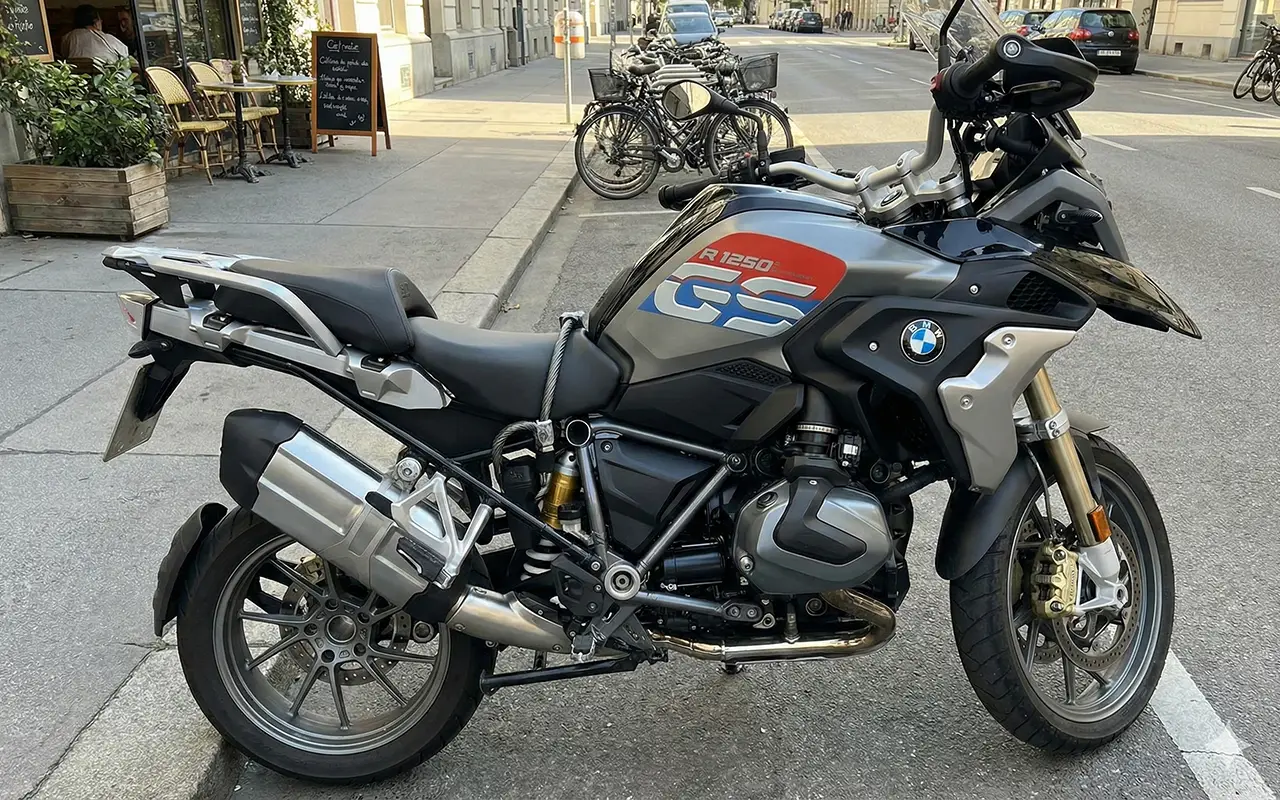
I’ll never forget the sinking feeling I had standing in a Seattle coffee shop, watching through the rain-streaked window as a kid casually walked up to my Ducati, picked up my $700 Arai helmet from the mirror, and disappeared into the crowd.
That three-hundred-dollar latte suddenly tasted like ash. I’d only been inside for five minutes—just long enough to grab caffeine before a morning meeting. That expensive lesson taught me what every rider eventually learns: your helmet is simultaneously one of your most valuable pieces of gear and one of the easiest things to steal from a motorcycle.
The helmet security dilemma isn’t new. Since the first rider swung a leg over a motorized bicycle, we’ve grappled with the question of what to do with our protective headgear when we park. In the 1960s and 70s, manufacturers began integrating basic helmet locks into motorcycle frames—simple affairs that hooked through the D-ring.
Today, the options have expanded dramatically, from sophisticated electronic tethers to old-school cable locks, each with distinct advantages and vulnerabilities.
As detailed in our Ultimate Guide to Motorcycle Helmets, modern helmets represent a significant investment in both safety and comfort, making proper storage solutions more critical than ever.
Understanding the Built-In Helmet Lock System
Most motorcycles manufactured after 1970 came equipped with some form of integrated helmet lock—a simple but often overlooked feature that lives somewhere on the bike’s frame, seat cowl, or under the passenger seat. These factory-installed systems typically consist of a keyed lock cylinder connected to a metal hook or loop designed to secure your helmet’s chin strap D-ring.
The location varies wildly by manufacturer. Japanese bikes often place them under the passenger seat or integrated into the grab rail. European manufacturers like Ducati and BMW favor mounting them on the frame near the rear shock or tucked beneath the tail section. Harley-Davidson traditionally positioned them on the left side of the bike, often integrated into the saddlebag mounting hardware.
The operational theory is straightforward: thread the lock’s hook through your helmet’s D-ring, close the mechanism, and turn the key. Your helmet now dangles from your motorcycle, theoretically secure against opportunistic theft. The reality, however, proves more nuanced.
The Fundamental Flaw in Factory Helmet Locks
Here’s the uncomfortable truth that manufacturers don’t advertise: factory helmet locks are designed primarily to prevent your helmet from blowing away in the wind or being casually picked up by someone walking past. They’re not designed to stop a determined thief with bolt cutters, and they certainly don’t protect your helmet from the elements or accidental damage.
I’ve tested dozens of these systems over twenty years of riding, and the problems are consistent across brands. First, the locks themselves are often low-security affairs—wafer tumbler mechanisms that can be picked with a paperclip or bypassed with a sharp tug. Second, the hooks are typically made from thin steel that yields to basic hand tools. Third, and perhaps most problematically, they leave your helmet dangling exposed to weather, UV radiation, and potential impact damage from other vehicles or careless pedestrians.
During a 2019 tour through the Southwest, I watched a gust of wind slam my helmet—secured via factory lock—repeatedly against my bike’s exhaust pipe. The resulting scuff marks on the shell were cosmetic, but the incident highlighted a critical vulnerability: helmets hanging from factory locks are subject to forces and impacts you’d never intentionally expose them to. As we discuss in When to Replace Your Motorcycle Helmet, any impact can compromise a helmet’s protective integrity, even if the damage isn’t immediately visible.
When Factory Locks Make Sense
Despite these limitations, factory helmet locks aren’t entirely useless. They serve specific purposes in particular contexts. For quick stops in low-crime areas—gas stations, roadside overlooks, or rural diners where you maintain line-of-sight to your bike—they’re perfectly adequate. They’re also useful for securing a second helmet when riding two-up, allowing your passenger to store their gear without carrying it inside.
The key is understanding what you’re actually securing against. Factory locks deter crimes of opportunity, not premeditated theft. They work best when combined with other security measures: parking in well-lit, high-traffic areas; positioning your bike where you can see it; and limiting the duration of stops.
Aftermarket Cable Locks: The Portable Solution
The limitations of factory systems spawned an entire category of aftermarket security products, with cable locks emerging as the most popular portable solution. These devices typically consist of a vinyl-coated steel cable with an integrated combination or keyed lock, designed to thread through your helmet’s ventilation ports or D-rings and secure to your bike’s frame, wheel, or another fixed point.
The appeal is obvious: portability, versatility, and independence from factory mounting points. A quality cable lock travels with you, works on any motorcycle, and can secure multiple items simultaneously—helmet, jacket, tank bag—making it ideal for touring riders who frequent hotels or campsites.
Evaluating Cable Lock Security
Not all cable locks are created equal, and the market is flooded with security theater—products that look protective but offer minimal actual resistance to theft. The critical specifications are cable diameter and core construction. Anything under 10mm diameter is essentially a deterrent only; 12-15mm represents the minimum for meaningful security; and 18mm or thicker approaches the threshold where casual thieves will move to easier targets.
The cable core matters as much as thickness. Braided steel cables resist cutting far better than twisted wire cores. The best designs incorporate hardened steel strands with alternating twist patterns that bind and jam cutting tools. Some premium models include internal alarm systems that trigger when the cable is cut or subjected to excessive force.
I’ve conducted informal field tests with various cable locks, subjecting them to the tools a typical opportunistic thief might carry: bolt cutters, wire snips, and hacksaws. The results were illuminating. Budget cable locks under $20 failed within 30 seconds against 18-inch bolt cutters. Mid-range options ($40-60) held for 2-3 minutes—enough time to attract attention in most scenarios. Premium locks ($80+) required power tools or specialized cutting equipment, placing them beyond the capability of most casual thieves.
For riders considering this option, our guide to the best cable lock for motorcycle helmet provides detailed comparisons of specific models and their real-world performance characteristics.
The Damage Risk Factor
Cable locks solve the security problem but introduce a different concern: potential damage to expensive helmets. Threading steel cables through ventilation ports risks scratching or cracking the shell, particularly on premium models with carbon fiber construction. The vinyl coating on cables degrades over time, exposing bare metal that can mar painted or matte finishes.
The solution requires technique and preparation. First, never force a cable through tight spaces—if it doesn’t thread smoothly, find a different routing. Second, use additional padding at contact points; a simple microfiber cloth wrapped around the cable prevents finish damage. Third, avoid securing helmets in positions where they can swing or rotate against the bike; tension the cable to hold the helmet stable.
Under-Seat Storage: The Premium Solution
For riders willing to invest in their next motorcycle purchase, integrated under-seat helmet storage represents the gold standard. Sport-touring bikes like the BMW R1250RT, Honda Gold Wing, and various adventure touring models incorporate lockable compartments specifically designed to accommodate full-face helmets.
The advantages are comprehensive: complete weather protection, security equivalent to the bike’s other locks, protection from UV degradation and impact damage, and the convenience of simply dropping your helmet in a compartment rather than threading locks or carrying gear inside. For riders who frequently park in urban environments or leave their bikes overnight, this feature alone can justify a particular model choice.
The Size and Compatibility Challenge
The primary limitation of under-seat storage is dimensional compatibility. Not all helmets fit all compartments, and the variation is significant. Manufacturers typically design storage around “standard” full-face helmets, but what’s standard? A medium-sized modular helmet with its flip-up mechanism may not fit in a space that easily accommodates a traditional full-face design of the same size.
Adventure helmets with peaks present particular challenges. The extended visor and often bulkier construction mean they frequently won’t fit in compartments that accommodate street helmets. Riders who switch between different helmet styles—perhaps using a full-face for highway riding and an open-face for around town—may find that only one fits the available storage.
Before purchasing a motorcycle specifically for its helmet storage capability, physically test-fit your actual helmet. Don’t rely on manufacturer specifications or dealer assurances. Bring your helmet to the dealership, open the compartment, and verify not just that it fits, but that you can easily insert and remove it without excessive force or awkward angles. Consider whether you’ll be storing other items—gloves, a phone, a wallet—alongside the helmet, as this further reduces available space.
The Two-Up Dilemma
Under-seat storage works brilliantly for solo riders but presents complications when riding with a passenger. Most designs accommodate a single helmet, leaving the passenger’s gear unsecured. Some touring bikes address this with dual compartments or additional storage in side cases, but this isn’t universal. Riders who frequently carry passengers need to plan for secondary security solutions—either a cable lock for the second helmet or accepting that one person carries their gear inside.
Top Case and Saddlebag Solutions
Hard luggage systems—top cases and saddlebags—offer another approach to helmet security, particularly popular among touring and adventure riders. A properly sized top case can accommodate one or even two helmets, providing lockable, weather-resistant storage that doesn’t require any special mounting hardware beyond the luggage system itself.
The advantages extend beyond simple storage. Top cases typically offer more volume than under-seat compartments, meaning you can store helmets alongside other gear—rain suits, tools, spare visors, or lunch. The elevated position makes access easier than under-seat storage, particularly on bikes with high seats or for riders with mobility limitations. And because the luggage is removable, you can take your helmet with you in the case if you’re parking in a particularly sketchy area.
Sizing and Configuration
Top case volume is measured in liters, and the magic number for helmet storage is approximately 45-50 liters for a single full-face helmet, 60+ liters for two helmets or one helmet plus substantial additional gear. These numbers vary based on helmet design—a lightweight carbon fiber helmet with a streamlined shell takes less space than a bulky adventure helmet with a sun peak.
The case’s internal shape matters as much as raw volume. Some designs feature tall, narrow profiles that accommodate helmets vertically but leave wasted space around the sides. Others use wide, shallow configurations that require helmets to lay on their sides—perfectly functional but potentially concerning for riders worried about pressure on ventilation systems or communication equipment.
Saddlebags present different considerations. Individual bags rarely hold full-face helmets unless they’re specifically designed for that purpose—typically bags with 25+ liter capacity per side. Soft saddlebags generally lack the structure to properly protect helmets from impact, making them suitable only for short stops in low-risk environments. Hard cases provide better protection but add significant weight and cost to your motorcycle.
Carrying Your Helmet Inside: When It’s Worth the Hassle
Sometimes the best security solution is the simplest: take your helmet with you. This approach eliminates theft risk entirely, prevents weather exposure, and ensures your expensive protective gear remains under your direct control. For high-value helmets—particularly those with integrated Bluetooth communication systems or custom paint—it’s often the only truly secure option.
The practical challenges are obvious. Helmets are bulky, awkward to carry, and socially conspicuous. You’ll receive stares, questions, and occasional requests to leave your helmet at the door (which you should politely but firmly refuse). Restaurants may offer to store it, but this simply transfers the security concern to their staff. Movie theaters, museums, and other venues with coat checks present similar dilemmas.
Making Carrying Practical
Several products attempt to make helmet carrying more convenient. Helmet bags with shoulder straps transform your gear into something resembling a conventional bag, reducing the visual oddity and providing padding against accidental impacts. Some designs incorporate rigid internal frames that prevent crushing, while others fold flat when not in use, storing easily in a jacket pocket or under your seat.
Carabiner clips attached to the helmet’s D-rings allow you to clip it to a belt loop or bag strap, freeing your hands while keeping the helmet secure. This works particularly well for lighter helmets, though the weight of premium full-face models can make this uncomfortable for extended periods.
The most elegant solution I’ve encountered is the helmet backpack hybrid—bags specifically designed with an external helmet carry system. The helmet attaches to the outside of the pack via straps or a mesh net, keeping it secure while leaving the bag’s interior available for other items. This works brilliantly for commuters who need to carry laptops, lunch, and other daily essentials alongside their riding gear.
Insurance and Documentation: The Often-Overlooked Aspect
Regardless of which security method you employ, proper documentation and insurance coverage provide essential backup protection. Most riders don’t realize that homeowner’s or renter’s insurance often covers motorcycle gear theft, even when it occurs away from home. However, coverage typically requires documentation: receipts, photos, and serial numbers where applicable.
I maintain a digital file with photos of all my riding gear, including close-ups of any distinguishing marks, scratches, or custom modifications. For helmets, I photograph the safety certification stickers inside the shell, which include unique serial numbers. This documentation has proven invaluable during insurance claims and police reports.
Some riders use engraving tools to mark helmets with identifying information—driver’s license numbers, phone numbers, or unique codes. This serves dual purposes: it deters theft (stolen goods with identifying marks are harder to resell) and aids recovery if your gear is stolen and later recovered. The engraving should be placed inside the helmet where it won’t affect the shell’s structural integrity or void safety certifications.
Weather Protection Considerations
Security discussions often focus exclusively on theft prevention, overlooking an equally important concern: weather damage. UV radiation, rain, extreme temperatures, and humidity all degrade helmet materials over time, potentially compromising both comfort and safety.
Extended UV exposure is particularly insidious. The sun’s ultraviolet rays break down the chemical bonds in helmet shells, particularly polycarbonate and composite materials. This degradation isn’t always visible—you won’t necessarily see cracking or discoloration—but it reduces the shell’s impact resistance. Manufacturers typically recommend replacing helmets exposed to extreme UV conditions even if they haven’t been impacted, though specific timelines vary.
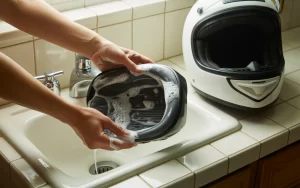
Rain and moisture present different challenges. While modern helmets are designed to withstand wet conditions during riding, prolonged exposure to standing water can damage internal padding, communication systems, and ventilation mechanisms. Water infiltrating the EPS liner can promote mold growth, creating both odor and potential health concerns. For detailed maintenance guidance, see our article on how to wash your motorcycle helmet liner.
Temperature extremes cause expansion and contraction in helmet materials, potentially loosening retention systems or creating stress points in the shell. This is particularly concerning for premium helmets with complex multi-density liner systems, where different materials expand at different rates.
Protective Covers and Bags
For riders who must leave helmets on their bikes, protective covers offer a middle-ground solution. These fabric or vinyl bags slip over the helmet, providing basic weather protection while still allowing you to use factory or cable locks. Quality covers are waterproof, UV-resistant, and include ventilation to prevent moisture accumulation.
The limitation is obvious: covers don’t prevent theft, and they can actually make theft easier by concealing the helmet model and condition from casual observation. A thief can’t tell if that covered helmet is a $700 premium model or a $100 budget option, potentially making it a more attractive target. For this reason, covers work best in combination with robust lock systems or in low-crime environments where theft risk is minimal.
The Commuter’s Dilemma: Daily Parking Solutions
Commuters face unique challenges. Daily riders can’t carry their helmets inside every time—it’s simply not practical when you’re parking at work for eight hours or stopping at the gym before heading home. This demographic needs solutions that balance security, convenience, and weather protection for extended parking periods.
The most practical approach I’ve found involves layered security. Start with a high-quality cable lock as your primary deterrent—something substantial enough to require tools and time to defeat. Add a helmet cover for weather protection. Park in designated motorcycle areas or well-trafficked sections of parking lots where thieves are less likely to work unobserved. Finally, establish a routine inspection schedule; check your helmet daily for signs of tampering, damage, or weather infiltration.
Some workplaces offer indoor motorcycle parking or allow riders to store helmets at their desks. This is worth requesting even if it’s not standard policy—many employers are willing to accommodate once they understand the security and cost concerns. Frame it as a safety issue: you need to ensure your protective equipment remains in optimal condition to ride safely.
Gym and Fitness Center Challenges
Gyms present particular headaches. Most facilities prohibit helmets in locker rooms (they don’t fit in standard lockers), but front desk storage means trusting your expensive gear to minimum-wage employees with no personal accountability. I’ve had helmets “misplaced,” stored in damp areas, and once returned with someone else’s sweaty towel inside.
The best solution I’ve found is a combination lock and helmet bag system. Secure the helmet to your bike with a substantial cable lock, then place a weatherproof bag over it. This provides reasonable security for the 60-90 minutes of a typical workout. For longer sessions or overnight gym visits, carrying the helmet inside in a dedicated bag remains the safest option, even if it means storing it in a corner during your workout.
Travel and Hotel Considerations
Motorcycle touring introduces another dimension to helmet security. Hotels vary wildly in their accommodation of riders’ gear. Some properties offer secure storage or allow you to bring helmets to your room. Others explicitly prohibit “dirty motorcycle equipment” in guest rooms, forcing you to leave gear on the bike or in your vehicle.
When booking accommodations, I always call ahead to confirm their helmet policy. Properties accustomed to motorcycle tourism typically have established procedures—designated storage areas, garage parking, or explicit permission to bring gear to rooms. Hotels unfamiliar with riders often have no policy at all, meaning you’re at the mercy of whoever’s working the front desk.
For multi-day stays, I prefer bringing my helmet to the room regardless of hotel policy. It’s expensive equipment that represents my primary safety system—I’m not leaving it exposed to theft, weather, or damage for days at a time. If challenged, I explain that the helmet is safety equipment worth more than most of the electronics in the room, and I need to ensure it remains in optimal condition. I’ve never had a hotel refuse once I frame it this way.
Camping and Outdoor Storage
Motorcycle camping presents unique storage challenges. You can’t bring your helmet into a tent without risking moisture damage from condensation, but leaving it exposed invites both theft and weather damage. Campgrounds, particularly in popular areas, see surprising amounts of theft—opportunistic crimes by people who assume campers are deep sleepers or away hiking.
The solution requires a combination of approaches. First, use a cable lock to secure the helmet to your bike’s frame, not just the wheel or a removable component. Second, employ a weatherproof cover to protect against morning dew and unexpected rain. Third, position your tent and bike so the helmet is visible from where you’re sleeping—thieves are less likely to target gear they can’t access without being seen. Finally, consider bringing a motion-sensing alarm that attaches to the helmet; these devices emit loud sounds if disturbed, deterring most thieves and alerting you to potential theft.
Conclusion: Building Your Personal Security Strategy
There’s no universal solution to helmet security—the right approach depends on your riding patterns, parking environments, and risk tolerance. Factory helmet locks work for quick stops in safe areas but offer minimal protection against determined theft or weather damage. Cable locks provide portable security that travels with you, though quality varies dramatically and cheap options are security theater. Under-seat storage and top cases offer the best combination of security and weather protection but require specific motorcycle configurations and come with size limitations. Carrying your helmet inside remains the gold standard for security but sacrifices convenience.
My personal approach has evolved over two decades of riding: I use factory locks for gas station stops, a premium cable lock for restaurants and short errands, and I carry my helmet inside for any stop exceeding an hour or in high-crime areas. For touring, I invested in a top case specifically sized for helmet storage. It’s not perfect—no system is—but it reflects a realistic assessment of risk versus convenience.
The critical insight is this: your helmet is irreplaceable safety equipment. Unlike a stolen jacket or gloves, a compromised helmet can’t protect you in a crash. Whether that compromise comes from theft, weather damage, or impact while dangling from a lock, the result is the same—you’re riding with gear that may not perform when you need it most. Build your security strategy around that reality, and you’ll never stand in a coffee shop watching someone walk away with your most important piece of riding gear.
Frequently Asked Questions
Are factory-installed helmet locks secure enough for urban parking?
No. Factory helmet locks are designed primarily as convenience features to prevent helmets from blowing away, not as serious anti-theft devices. They typically use low-security lock cylinders and thin metal hooks that can be defeated with basic hand tools in under a minute. In urban environments with higher theft rates, you should supplement factory locks with cable locks, choose parking locations with high visibility and foot traffic, or carry your helmet inside. Factory locks work adequately for quick stops in rural or low-crime areas where you maintain visual contact with your bike.
Will using a cable lock through my helmet’s vents damage the shell?
It can, particularly on premium helmets with carbon fiber or composite shells. The risk comes from forcing oversized cables through tight spaces or allowing metal-on-shell contact. To minimize damage, choose cables with intact vinyl coating, never force cables through openings, use additional padding (like microfiber cloths) at contact points, and route cables through larger vents or the D-ring rather than small ventilation ports. For expensive helmets, consider whether the minor convenience of cable lock mounting justifies the risk of finish damage or structural compromise. Helmet bags combined with cable locks that secure the bag rather than threading through the helmet itself offer an alternative.
How do I secure two helmets when riding with a passenger?
The most practical solution depends on your motorcycle’s configuration. If you have under-seat storage, some models accommodate two helmets, though this is uncommon. Top cases with 60+ liter capacity can hold two helmets but add significant weight and cost. Cable locks offer the most versatile solution—choose a lock with sufficient cable length (typically 6-8 feet) to thread through both helmets’ D-rings and secure to your bike’s frame. Position the helmets on opposite sides of the bike to prevent them from swinging into each other. Alternatively, one rider can carry their helmet inside while the other uses whatever security system is available. For frequent two-up riding, investing in hard luggage systems specifically designed for dual helmet storage provides the best long-term solution.
Should I bring my helmet inside restaurants and stores, or is that considered rude?
Bring it inside without hesitation—your helmet is expensive safety equipment, not a fashion accessory. While some establishments may initially seem confused by the presence of motorcycle gear, most accommodate helmets once you explain they’re valuable items you can’t secure outside. Place the helmet under your chair or table rather than on adjacent seats or tables. If staff request you leave it at the door or coat check, politely decline and explain that it’s safety equipment worth several hundred dollars that you need to maintain control over. In over twenty years of riding, I’ve never been refused service for bringing a helmet inside, though I have been asked to store it in specific locations within the establishment. For extended stays, a helmet bag makes carrying more socially comfortable and provides impact protection.