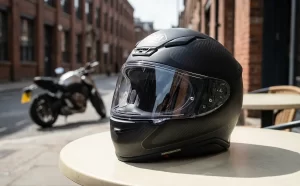
I’ll never forget the moment Sarah pulled off her full-face helmet at our coffee stop near Angeles Crest Highway. A seasoned rider with three years under her belt, she’d spent forty-five minutes perfecting her makeup that morning before our group ride.
What emerged from beneath that AGV K6 was something resembling a Picasso painting—foundation smeared across her forehead, mascara creating raccoon circles around her eyes, and lipstick somehow migrating to her chin. “This,” she announced with exasperation, “is why I’m switching to a half-helmet.” I stopped her right there.
The intersection of cosmetics and motorcycle safety represents one of the most underreported challenges facing female riders today. According to the Motorcycle Industry Council’s 2023 Owner Survey, women now comprise 19% of motorcycle ownership in the United States—a figure that’s nearly doubled since 2003.
Yet despite this demographic shift, the riding gear industry has been remarkably slow to address the practical realities women face when donning protective equipment.
The makeup dilemma isn’t merely cosmetic vanity; it’s a legitimate concern that affects helmet selection, safety compliance, and ultimately, whether women choose to ride at all.
Understanding proper helmet selection and maintenance is crucial for every rider, which is why consulting our Ultimate Guide to Motorcycle Helmets provides essential foundational knowledge.
These helmet tips for ladies go beyond surface-level advice—they’re about reconciling personal presentation with uncompromising safety standards, a balance that shouldn’t require choosing one over the other.
The Foundation Problem: Understanding How Helmets Interact with Makeup
The physics of helmet donning creates an inherent conflict with makeup application. When you slide a helmet over your head, the interior liner—typically made from expanded polystyrene (EPS) foam covered with moisture-wicking fabric—creates friction against your facial skin. This friction, combined with the compression necessary for proper helmet fit, acts like a spatula spreading your carefully applied foundation across your forehead, temples, and upper cheekbones.
The problem intensifies with full-face helmets, which offer superior protection but create the most contact with your face. The chin bar and cheek pads, essential components for impact protection and proper Motorcycle Helmet Fitment, press directly against your jawline and cheeks—precisely where you’ve likely applied foundation, blush, and contour. Understanding Full Face vs. Modular vs. Open Face Helmets becomes critical when addressing makeup preservation, though I’ll state unequivocally that safety must never be compromised for cosmetic concerns.
The helmet liner material itself plays a significant role. Most manufacturers use moisture-wicking fabrics designed to absorb sweat and oils—which means they’re equally efficient at absorbing the oils and silicones in your makeup. Premium helmets often feature antimicrobial treatments on their liners, which can interact chemically with certain makeup formulations, potentially causing unexpected reactions or accelerated breakdown of either the makeup or the liner treatment.
Pre-Ride Makeup Strategies: The Minimalist Approach
After interviewing dozens of female riders and consulting with professional makeup artists who ride, I’ve concluded that the most effective helmet tips for ladies begin with rethinking your pre-ride makeup routine entirely. The traditional “full face” makeup application simply doesn’t translate well to motorcycle riding, regardless of helmet choice.
The Strategic Timing Method
The most practical approach involves applying makeup at your destination rather than before departure. This requires planning and carries certain logistical challenges, but it’s the only method that guarantees both pristine makeup and proper helmet safety. Keep a small makeup bag in your tank bag or tail pack containing your essentials: foundation, concealer, powder, mascara, and lip color. This destination-application method works particularly well for commuters or riders heading to social events.
For morning commuters, this means arriving at work ten minutes early to complete your makeup in the restroom. I recognize this isn’t ideal—you’re paying for time you could spend sleeping—but it’s infinitely superior to arriving with helmet hair and smeared foundation, then spending the same ten minutes attempting damage control.
The Minimal Coverage Philosophy
If pre-ride application is non-negotiable, adopt a minimalist approach focused on products that can withstand friction and compression. Skip foundation entirely on your forehead and upper face where the helmet makes primary contact. Instead, use a high-quality tinted moisturizer with SPF on your lower face and neck—areas less affected by helmet contact. Spot-conceal only where absolutely necessary, using long-wear, waterproof formulations.
Focus your makeup efforts on features that remain relatively protected: your eyes and lips. Waterproof mascara becomes non-negotiable, and I recommend tube mascaras over traditional formulations as they’re less prone to smudging. For lips, matte liquid lipsticks that dry down completely outperform traditional lipsticks, which will transfer to your helmet’s chin bar and subsequently to your chin.
Product Selection: What Works Under a Helmet
Not all makeup products are created equal when subjected to the unique stresses of helmet wear. Through extensive testing—both my own and feedback from the female riding community—certain product categories consistently outperform others.
Foundation and Base Products
Powder foundations prove superior to liquid formulations for helmet wear. They’re less likely to transfer, don’t require setting time, and can be touched up easily post-ride. Mineral powder foundations, in particular, offer buildable coverage without the oils that cause transfer issues. If you absolutely must use liquid foundation, choose oil-free, long-wear formulations specifically marketed as “transfer-resistant” or “mask-proof”—the latter having gained popularity during the COVID-19 pandemic.
Setting sprays have become indispensable tools for riders who wear makeup. Apply your makeup as normal, then use a setting spray formulated for “extreme wear” or “athletic performance.” These products create a barrier between your makeup and your helmet liner, significantly reducing transfer. Allow the setting spray to dry completely—at least three minutes—before donning your helmet.
Eye Makeup Considerations
Waterproof formulations are non-negotiable for all eye products. Standard mascara will inevitably smudge when your eyes water from wind exposure (even with a face shield), and non-waterproof eyeliner will migrate with any moisture or oil production. Tubing mascaras offer the best performance, as they encapsulate each lash in a water-resistant polymer that only removes with warm water and gentle pressure.
For eyeshadow, powder formulations applied over an eyeshadow primer provide the best longevity. Cream eyeshadows, while trendy, tend to crease and smudge under the pressure and warmth created by helmet wear. If you experience fogging issues with your visor, addressing them properly is essential—our guide on How to Stop Your Glasses from Fogging Up Inside a Helmet offers solutions that also prevent the moisture issues that ruin eye makeup.
Helmet Selection for Makeup Wearers: Finding the Right Balance
While I’ll never recommend compromising safety for cosmetic concerns, certain helmet designs do minimize makeup disruption while maintaining full protection standards. Understanding these options represents crucial helmet tips for ladies who refuse to choose between safety and presentation.
Modular Helmets: The Practical Compromise
Modular (flip-up) helmets offer significant advantages for makeup wearers. The ability to flip up the chin bar means you can don the helmet without dragging the entire assembly over your face. Instead, you flip up the front, slide the helmet onto your head from behind, then flip down and secure the chin bar. This dramatically reduces facial contact during the donning process. Our comprehensive review of Best Motorcycle Modular Helmets highlights models particularly suited for this purpose.
However, modular helmets carry weight penalties compared to traditional full-face designs. The hinge mechanism adds approximately 200-400 grams, which becomes noticeable during long rides. Additionally, while modern modulars meet the same safety standards as full-face helmets when closed, they’re inherently more complex mechanically, introducing potential failure points. I’ve tested extensively with Schuberth C4 Pro and Shoei Neotec II models, both of which offer excellent makeup preservation while maintaining top-tier safety ratings.
Full-Face Helmets with Strategic Design
Not all full-face helmets impact makeup equally. Models with larger eye ports and more generous face openings allow easier donning with less facial contact. The AGV K6, Shoei RF-1400, and Arai Corsair-X all feature relatively large face openings that facilitate makeup-friendly helmet application. When shopping, pay attention to the helmet’s internal shape—those designed for intermediate oval head shapes typically offer more generous cheek pad spacing.
Weight becomes a critical factor for comfort during extended wear. Lighter helmets reduce neck strain and the tendency to adjust your helmet frequently—adjustments that inevitably disturb makeup. Best Lightweight Carbon Fiber Helmets offer compelling options, though they command premium prices. The weight difference between a 1700-gram polycarbonate helmet and a 1300-gram carbon fiber model becomes remarkably apparent after two hours of riding.
The Open-Face Debate
Open-face helmets obviously minimize makeup disruption—there’s no chin bar or cheek pads to contend with. However, I cannot in good conscience recommend open-face helmets as a primary solution to makeup concerns. The statistics are unambiguous: according to the Hurt Report and subsequent studies, approximately 35% of impacts to helmeted riders occur in the chin bar area. Choosing an open-face helmet to preserve makeup means accepting significantly elevated risk of facial injury.
If you do opt for an open-face design for short, low-speed urban riding, invest in a high-quality model that at least protects your skull properly. And please, combine it with a full-face shield or goggles—eye protection isn’t negotiable regardless of makeup concerns.
The Helmet Liner Solution: Removable and Washable Systems
One of the most practical helmet tips for ladies involves managing your helmet’s interior components. Makeup transfer to helmet liners is inevitable, but it doesn’t have to be permanent or problematic.
Choosing Helmets with Removable Liners
Prioritize helmets featuring fully removable and washable liner systems. Most quality helmets now offer this feature, but implementation varies dramatically. The best systems use snap or Velcro attachments that allow complete removal of cheek pads and crown liner in under sixty seconds. This facilitates regular cleaning—essential when makeup residue accumulates on the liner fabric.
Regular maintenance of your helmet liner serves dual purposes: it removes makeup buildup that can degrade the fabric and antimicrobial treatments, and it ensures your helmet maintains proper fit. Makeup residue combined with natural oils and sweat can compress liner foam over time, affecting the helmet’s safety performance. Our detailed guide on How to Wash Your Motorcycle Helmet Liner provides step-by-step instructions for proper maintenance.
Liner Replacement Strategies
Consider purchasing additional liner sets for your helmet. Multiple manufacturers sell replacement liners separately, allowing you to rotate between sets. This proves particularly valuable for daily commuters—you can wash one set while using another, ensuring fresh, clean liners for each ride. Replacement liners typically cost $50-$100 depending on the helmet model, a worthwhile investment for riders who wear makeup regularly.
Some riders have adopted the practice of using thin, disposable liner covers—similar to the paper strips used in retail stores during helmet trials. While this sounds practical, I’ve found these covers affect helmet fit enough to compromise safety. A helmet must fit precisely to perform correctly during an impact; introducing additional layers, even thin ones, can alter fit dynamics critically.
The Donning Technique: Minimizing Makeup Disruption
How you put on your helmet matters as much as which helmet you choose. Proper technique can significantly reduce makeup disruption while ensuring correct helmet positioning for safety.
The Proper Sequence
First, ensure your hair is properly secured. Loose hair creates friction that drags your helmet against your face during donning. Use a low ponytail, braid, or bun positioned to accommodate your helmet’s shape. For riders with substantial hair volume, our article on best motorcycle helmet for big hair addresses specific accommodation strategies.
Hold the helmet with both hands, gripping the chin bar or lower edges. Tilt your head slightly forward—looking down at about a 30-degree angle. This position allows the helmet to slide over the back of your head first, minimizing facial contact. Spread the helmet’s sides gently as you pull it over your head, then allow it to settle into position. This spreading motion, possible with most modern helmets due to their flexible liner systems, reduces the dragging force against your makeup.
Never rush helmet donning. The temptation to quickly pull your helmet on—particularly when you’re running late—invariably results in maximum makeup disruption. Take the extra fifteen seconds to don your helmet properly. Your makeup and your safety both benefit from this patience.
The Barrier Method
Some riders successfully use thin silk or microfiber cloths as temporary barriers during helmet donning. Place the cloth over your face, don the helmet, then carefully remove the cloth through the helmet opening. This technique requires practice and works better with modular helmets or those with larger face openings. I’ve had mixed results with this method—it can work beautifully or can smear makeup worse than no barrier at all, depending on the cloth material and your donning technique.
Post-Ride Repair: Quick Fixes for Makeup Damage
Despite your best preventive efforts, some makeup disruption is inevitable. Having a strategic repair kit and knowing quick-fix techniques separates riders who arrive looking disheveled from those who step off their bikes looking composed.
The Essential Touch-Up Kit
Assemble a compact touch-up kit that lives in your motorcycle luggage. This should include: oil-absorbing sheets or blotting papers, a pressed powder compact that matches your skin tone, a travel-size setting spray, cotton swabs, a small concealer, and your lip color. Keep this kit in a hard case to prevent damage from vibration and impact during riding.
The most common post-helmet issues are forehead foundation disruption and mascara smudging. Address the forehead first: use an oil-absorbing sheet to remove any excess oils, then lightly dust pressed powder over the affected area, blending outward toward your hairline. For mascara smudges, a cotton swab lightly dampened with setting spray can remove errant marks without disturbing surrounding makeup.
The Five-Minute Face Reset
For more extensive damage, adopt a systematic approach. Start by assessing what’s salvageable versus what needs complete redo. Often, your eye makeup remains intact while your base requires attention. Use blotting papers across your entire face to remove oils and prepare for powder application. Apply pressed powder with a compact sponge or puff, focusing on areas where foundation has disappeared or been disrupted.
If your foundation is beyond repair, use a tinted moisturizer or BB cream to even out your skin tone—these lighter products apply quickly and blend easily without requiring the precision of foundation. Finish with a light mist of setting spray to blend everything together and provide a natural finish.
Long-Term Considerations: Helmet Maintenance and Replacement
Regular makeup contact affects helmet longevity and performance in ways most riders don’t consider. Understanding these impacts ensures your helmet continues protecting you effectively while accommodating your makeup routine.
Accelerated Liner Degradation
Makeup products contain oils, silicones, and various chemicals that can degrade helmet liner materials over time. The moisture-wicking fabrics used in quality helmets are designed to handle sweat and natural oils, but the concentrated chemical compounds in makeup can accelerate fabric breakdown. This manifests as fabric pilling, loss of moisture-wicking properties, and compression of the comfort foam layers.
Riders who wear makeup daily should inspect their helmet liners monthly for signs of degradation. Look for areas where the fabric appears shiny or feels slick—this indicates silicone buildup from makeup products. Check for fabric thinning or pilling, particularly on the forehead and cheek pad areas where makeup contact is most frequent. If you notice significant degradation, replace the liner even if the helmet itself is relatively new.
Helmet Replacement Timing
Standard guidance suggests replacing helmets every five years regardless of impact history, primarily due to degradation of the EPS foam and adhesives used in helmet construction. However, riders who wear makeup regularly and ride frequently might consider shortening this interval to three to four years. The additional chemical exposure from makeup products can accelerate the degradation of materials, potentially compromising the helmet’s protective capabilities.
This isn’t fear-mongering—it’s practical risk management. Helmets aren’t prohibitively expensive compared to the protection they provide, and the peace of mind from knowing your helmet is in optimal condition is invaluable. For comprehensive guidance on this topic, consult our article on When to Replace Your Motorcycle Helmet.
The Broader Perspective: Industry Responsibility and Innovation
The makeup-and-helmet challenge highlights a broader issue within the motorcycle industry: the slow adaptation to demographic changes in the riding population. Women comprise nearly one-fifth of riders, yet helmet design and marketing remain overwhelmingly male-focused.
Current Industry Gaps
Few manufacturers explicitly address makeup concerns in their helmet designs or marketing materials. This oversight isn’t necessarily malicious—it reflects the industry’s historical demographics and the engineering-focused culture that prioritizes measurable safety metrics over lifestyle considerations. However, as the female riding population grows, manufacturers who ignore these practical concerns risk losing market share to competitors who adapt.
Some promising developments are emerging. Several manufacturers now offer helmet liners with advanced moisture-wicking treatments specifically designed to resist oil and chemical absorption. These treatments, borrowed from athletic wear technology, show promise for reducing makeup transfer and extending liner life. Additionally, some companies are experimenting with helmet liner materials that naturally resist staining and chemical degradation.
What Riders Can Demand
As consumers, female riders have considerable power to drive industry change. When shopping for helmets, explicitly ask about makeup-friendly features. Request information about liner materials and their resistance to cosmetic products. Provide feedback to manufacturers about your experiences—both positive and negative—regarding makeup and helmet interaction.
Support companies that acknowledge and address these concerns. When a manufacturer releases a helmet with features specifically designed to accommodate makeup wearers, vote with your wallet. Market forces ultimately drive product development, and demonstrated demand for makeup-friendly helmets will accelerate innovation in this area.
Real-World Testimonials: What Works for Experienced Riders
I’ve collected insights from dozens of female riders who’ve developed effective strategies for managing makeup and helmet wear. Their collective wisdom offers practical helmet tips for ladies that theory alone cannot provide.
The Commuter’s Approach
Jennifer, a Los Angeles-based paralegal who commutes 45 minutes each way on her Yamaha MT-07, has refined her routine over four years: “I wear absolutely zero makeup during my ride. I keep a complete makeup kit in my desk drawer and do my face when I get to the office. It adds maybe ten minutes to my morning, but I arrive looking professional instead of like I fought my helmet and lost. For the ride home, I don’t care what I look like—I remove my makeup before leaving work, which is actually better for my skin anyway.”
This approach, while requiring discipline and advance planning, eliminates the makeup-helmet conflict entirely. It’s particularly practical for riders with private offices or reliable access to restroom facilities with good lighting and counter space.
The Weekend Warrior’s Solution
Melissa rides a Harley-Davidson Softail primarily on weekends for social rides and rallies. Her approach differs: “I use all waterproof, long-wear makeup products and apply them at least 30 minutes before I plan to ride. I let everything set completely, then use a setting spray. I’ve found that Shoei’s modular helmets work best for me—I can flip up the front and slide the helmet on without dragging it across my face. Sure, I need to touch up when I arrive, but the damage is minimal compared to what I experienced with my old full-face helmet.”
This strategy acknowledges that some makeup disruption is inevitable but minimizes it through product selection, timing, and helmet choice. It’s practical for riders who want to wear makeup but can accept that it won’t be perfect upon arrival.
The Minimalist Philosophy
Rachel, who rides a Ducati Supersport for both commuting and sport riding, has adopted a different approach entirely: “I gave up trying to make traditional makeup work with riding. Instead, I focus on skincare and use tinted sunscreen, waterproof mascara, and tinted lip balm. That’s it. I look natural and put-together without dealing with foundation transfer or powder touch-ups. It took me a while to feel comfortable with this minimal look, but now I wouldn’t go back. It’s liberating, honestly.”
This philosophy represents a fundamental mindset shift—redefining what “looking good” means in the context of riding. It won’t appeal to everyone, but for riders willing to embrace a more natural aesthetic, it eliminates the makeup-helmet struggle entirely.
Safety Cannot Be Compromised: The Non-Negotiable Foundation
Throughout this discussion of helmet tips for ladies, one principle must remain absolute: safety cannot be compromised for cosmetic concerns. No makeup application is worth increased risk of serious injury or death in a crash.
The temptation to choose a less protective helmet style because it’s easier on makeup is understandable but unacceptable. The statistics on motorcycle accidents are sobering: according to NHTSA data, helmets are approximately 37% effective in preventing motorcycle deaths and about 67% effective in preventing brain injuries. These percentages vary based on helmet type—full-face helmets provide significantly more protection than open-face or half-helmets.
If makeup preservation requires compromising helmet choice, the answer is simple: adjust your makeup routine, not your helmet selection. Your face can be repaired with makeup after a ride. Your skull cannot be repaired after an impact that a proper helmet would have protected against.
This isn’t about being dramatic—it’s about maintaining perspective. I’ve visited too many riders in hospitals, seen too many preventable injuries, to ever suggest that cosmetic concerns should influence safety equipment choices. Wear the most protective helmet that fits properly, regardless of how it affects your makeup. Then develop strategies to manage makeup within that non-negotiable framework.
Advanced Techniques: Professional Makeup Artist Insights
I consulted with two professional makeup artists who are also motorcycle riders to gain insights into professional-grade solutions for the makeup-helmet challenge.
The Airbrushing Option
Airbrush makeup, traditionally used in film and television, offers superior durability compared to traditional application methods. The ultra-fine mist of product creates an even, lightweight layer that adheres to skin more effectively than brush or sponge-applied makeup. Once set, airbrush makeup resists transfer remarkably well.
However, airbrushing requires specialized equipment—a compressor and airbrush system—and significant practice to master. Portable airbrush systems designed for personal use cost $100-$300, and the learning curve is substantial. For riders who wear makeup daily and have the budget and interest, it’s worth exploring. For occasional riders, the investment probably isn’t justified.
Professional Setting Techniques
Professional makeup artists use layering techniques that dramatically improve makeup longevity. The process involves: primer, thin foundation layer, powder, second foundation layer (if needed), powder again, then setting spray. This “sandwich” method locks makeup in place through multiple barriers.
The key is using thin layers—thick applications inevitably transfer regardless of setting techniques. Each layer must dry completely before applying the next, which means this full process requires 15-20 minutes. For riders willing to invest this time, the results are impressive. Makeup applied this way can withstand helmet wear with minimal disruption.
The Male Perspective: Why This Matters to All Riders
While this article focuses on helmet tips for ladies, the underlying issues affect the entire riding community. When female riders feel they must choose between personal presentation and riding, or when they experience unnecessary frustration with gear that doesn’t accommodate their needs, the entire community loses potential members and advocates.
Male riders can support their female counterparts by acknowledging these challenges as legitimate rather than trivial. When a woman mentions makeup-helmet struggles, responding with “just don’t wear makeup” or “who cares how you look” dismisses a valid concern and reinforces the perception that motorcycling is unwelcoming to women.
Additionally, many of the solutions discussed here—proper helmet donning technique, regular liner maintenance, understanding helmet materials—benefit all riders regardless of whether they wear makeup. The broader conversation about making helmets more user-friendly while maintaining safety standards advances the entire industry.
Future Innovations: What’s Coming
Several manufacturers are developing technologies that may eventually address makeup-helmet conflicts more effectively. While none are widely available yet, they represent promising directions for future development.
Advanced Liner Materials
Research into liner materials that actively repel oils and cosmetics is ongoing. Some experimental liners use nanotechnology treatments that create a barrier at the molecular level, preventing absorption of makeup components while maintaining moisture-wicking properties. These treatments, if they prove durable and safe, could dramatically reduce makeup transfer issues.
Modular Design Improvements
Several companies are working on improved modular helmet designs that reduce weight while maintaining safety. The goal is to eliminate the weight penalty that currently makes modular helmets less appealing for long rides. If successful, these designs would offer makeup-friendly donning without the compromise of additional weight.
Custom-Fit Technology
3D scanning and custom helmet manufacturing, while currently prohibitively expensive for most riders, may become more accessible in coming years. Custom-fit helmets could be designed with specific considerations for makeup wearers, optimizing liner contact points to minimize facial friction while maintaining safety standards. Understanding proper fit is crucial for any helmet, as detailed in our Motorcycle Helmet Fitment Guide.
Conclusion: Practical Solutions Exist, But Require Commitment
The struggle of riding with makeup is real, legitimate, and solvable—but not without effort and compromise. After extensive research and testing, I’ve concluded that the most effective approach combines strategic makeup product selection, proper helmet choice prioritizing modular designs, refined donning technique, and realistic expectations about touch-up requirements.
The ideal scenario involves applying makeup at your destination rather than before riding. When that’s not practical, use long-wear, waterproof products applied in thin layers and fully set with professional-grade setting spray. Choose a quality modular helmet that allows flip-up donning, minimizing facial contact. Maintain your helmet liner religiously, washing it frequently to remove makeup buildup. And always, without exception, prioritize safety over cosmetics—no makeup application is worth compromising your protection.
The motorcycle industry must do better in acknowledging and addressing these concerns. Women riders deserve gear that accommodates their needs without requiring them to choose between safety and personal presentation. Until manufacturers step up, individual riders must develop personal solutions within the constraints of current equipment. These helmet tips for ladies provide a framework for doing exactly that—riding safely while maintaining the personal presentation that makes you feel confident and comfortable.
Frequently Asked Questions
Will wearing makeup damage my helmet liner?
Makeup can accelerate helmet liner degradation over time due to the oils, silicones, and chemicals in cosmetic products. These substances can break down moisture-wicking fabrics and compress comfort foam layers. Regular cleaning of removable liners significantly reduces this risk. Inspect your liner monthly for signs of fabric degradation, shininess from silicone buildup, or compression. If you wear makeup daily while riding, consider replacing your helmet liner every 12-18 months, even if the helmet shell remains in good condition. This maintenance ensures both optimal comfort and continued safety performance.
What type of helmet is best for makeup wearers?
Modular (flip-up) helmets offer the best compromise between safety and makeup preservation. The flip-up chin bar allows you to don the helmet without dragging it across your entire face, significantly reducing makeup disruption. Quality modular helmets from manufacturers like Schuberth, Shoei, and AGV meet the same safety standards as traditional full-face helmets when properly closed. However, they do carry a weight penalty of 200-400 grams compared to standard full-face designs. Never compromise safety by choosing an open-face or half-helmet solely for makeup concerns—the protection difference is too significant to justify for cosmetic reasons.
Can I use makeup setting spray to prevent transfer to my helmet?
Yes, professional-grade makeup setting sprays significantly reduce transfer to helmet liners. Look for products marketed as “extreme wear,” “athletic performance,” or “mask-proof”—these formulations create a barrier between your makeup and your helmet. The key is allowing the setting spray to dry completely before donning your helmet; this typically requires at least three minutes. Apply your makeup as normal, mist evenly with setting spray from about 8-10 inches away, then wait for it to dry fully. Urban Decay All Nighter and Ben Nye Final Seal are two products that riders consistently report good results with.
How often should I wash my helmet liner if I wear makeup regularly?
Riders who wear makeup daily should wash their helmet liners weekly, or at minimum every two weeks. This frequency prevents buildup of cosmetic residues, oils, and sweat that can degrade liner materials and affect helmet fit. Use gentle, non-detergent soap and cool water, following manufacturer instructions carefully. Having two sets of liners allows you to rotate between them, ensuring you always have a clean, dry set available. Air dry liners completely before reinstalling—never use heat, which can damage the foam and fabric. Regular washing extends liner life and maintains the helmet’s proper fit, which is critical for safety performance.