I’ll never forget the day a riding buddy removed his helmet after a summer track day at Laguna Seca, and the collective groan from our group could have been heard over the rumble of a Ducati Panigale at full chat. The smell was so overwhelming that we seriously debated whether his helmet liner had achieved sentience and was actively trying to escape.
That moment crystallized something I’d been noticing throughout my two decades of motorcycle journalism: riders who meticulously maintain their machines often completely neglect one of the most critical pieces of safety equipment they own. While we cover the broad spectrum of gear in our Ultimate Guide to Motorcycle Helmets, today we are zooming in on the one component riders neglect most: the liner inside their helmet.
The motorcycle helmet liner represents one of the most misunderstood and poorly maintained components in motorcycling. Despite being in direct contact with our skin for hours at a time, absorbing sweat, oils, dead skin cells, and environmental pollutants, most riders never clean their helmet liners until the smell becomes unbearable or the padding literally begins to deteriorate.
Industry surveys suggest that over 60% of riders have never removed their helmet liner for cleaning, and many don’t even realize it’s possible. This comprehensive guide on how to wash your motorcycle helmet liner will challenge manufacturer recommendations, expose common myths, and provide you with the definitive techniques for maintaining this crucial safety component.
Why Helmet Liner Maintenance Matters More Than You Think
Before we dive into the specifics of how to wash your motorcycle helmet liner, we need to understand why this seemingly mundane task carries implications far beyond simple hygiene. The liner in your helmet serves multiple critical functions that directly impact both safety and comfort.
First, it provides the interface between your head and the helmet’s impact-absorbing EPS (expanded polystyrene) foam. This interface is crucial, as we discuss in our Motorcycle Helmet Fitment Guide, because any degradation in the liner material can compromise how the helmet sits on your head during both normal riding and, more importantly, during an impact.
The comfort padding also manages moisture and temperature regulation. A clean liner wicks sweat away from your skin more effectively, preventing the buildup of moisture that can cause discomfort, fogging, and even fungal infections. From a medical perspective, dermatologists who specialize in sports-related skin conditions report that “helmet acne” and folliculitis are increasingly common among motorcyclists, particularly those who ride in warm climates.
Perhaps most compelling is the hygiene factor. Research published in the Journal of Applied Microbiology found that unwashed sports equipment can harbor bacteria including Staphylococcus aureus. Understanding how to wash your liner isn’t just about comfort—it’s about health and safety. In fact, maintaining the integrity of the internal foam is a key factor in how helmets perform, a topic detailed in Helmet Safety Ratings Explained.
Understanding Your Helmet Liner: Materials and Construction
Not all helmet liners are created equal, and understanding your specific liner’s construction is fundamental to washing it correctly. Modern motorcycle helmet liners typically fall into several categories based on material composition and attachment methods.
Removable Versus Non-Removable Liners
The first distinction you need to make is whether your helmet features a removable liner system. Regardless of the style you ride—whether you are comparing Full Face vs. Modular vs. Open Face Helmets—most mid-range to premium helmets manufactured in the past decade include removable cheek pads and crown liners.
To determine if your liner is removable, consult your helmet’s manual or look for small snap buttons or Velcro tabs around the interior perimeter.
Material Composition
Understanding the materials in your liner is crucial for determining how to wash your motorcycle helmet liner without causing damage. Common materials include:
Moisture-wicking synthetic fabrics: Materials like CoolMax, Dri-Lex, or proprietary moisture management fabrics are designed to pull sweat away from your skin. These generally tolerate washing well but can lose their wicking properties if exposed to fabric softeners or high heat.
Natural fiber blends: Some premium helmets use bamboo-derived fabrics or merino wool blends for their antimicrobial properties. These materials require gentler treatment, similar to washing delicate clothing.
Foam padding: The actual cushioning typically consists of open-cell or closed-cell foam. Open-cell foam absorbs more moisture but also takes longer to dry, while closed-cell foam is more water-resistant but may provide less comfort.
Antimicrobial treatments: Many modern liners feature antimicrobial treatments like silver ions or other bacteriostatic compounds. Harsh detergents or bleach can strip these treatments, reducing the liner’s odor-fighting capabilities.
The Definitive Method: How to Wash Your Motorcycle Helmet Liner
After testing dozens of cleaning methods, consulting with helmet manufacturers, and interviewing professional racers who depend on clean gear for both performance and sponsorship appearances, I’ve developed what I consider the gold standard for helmet liner maintenance. This method balances thorough cleaning with material preservation.
Step 1: Removal and Initial Assessment
Begin by removing all removable components from your helmet. This typically includes cheek pads, crown liner, chin curtain (if equipped), and breath deflector. Take photos with your smartphone before removal if you’re concerned about reassembly—though most systems are intuitive, having a reference can prevent frustration later.
Inspect each component for damage. Look for compressed foam that no longer rebounds, torn fabric, or separated seams. If you notice significant wear, this may be an opportunity to order replacement liners rather than washing degraded components. Most manufacturers sell replacement liner sets for $40-80, and fresh liners can dramatically improve helmet comfort and fit.
Step 2: Dry Debris Removal
Before introducing water, remove dry debris. Use a soft-bristled brush or lint roller to remove hair, dead skin cells, and dust. Pay particular attention to the areas where the liner meets the EPS foam, as debris tends to accumulate in these crevices. This step is often overlooked but significantly improves cleaning efficacy by preventing debris from becoming muddy paste during washing.
Step 3: Pre-Treatment for Stubborn Stains and Odors
For heavily soiled liners or persistent odors, pre-treatment is essential. Mix a solution of one part white vinegar to four parts water in a spray bottle. Lightly mist the interior surfaces of the liner components—avoid soaking, as excess moisture can be difficult to remove from foam padding. The vinegar’s acidity neutralizes odor-causing bacteria and helps break down oils without the harshness of chemical cleaners.
Allow the pre-treatment to sit for 10-15 minutes. During this time, you can clean the helmet shell interior using the same solution on a microfiber cloth, wiping down the EPS foam and interior shell surfaces that cannot be removed.
Step 4: The Washing Process
Here’s where methodology becomes critical, and where I diverge from many manufacturer recommendations. Most helmet makers suggest hand washing only, but my experience has shown that machine washing, when done correctly, produces superior results without damage. However, the hand washing method remains safer for those uncomfortable with machine methods.
Hand Washing Method
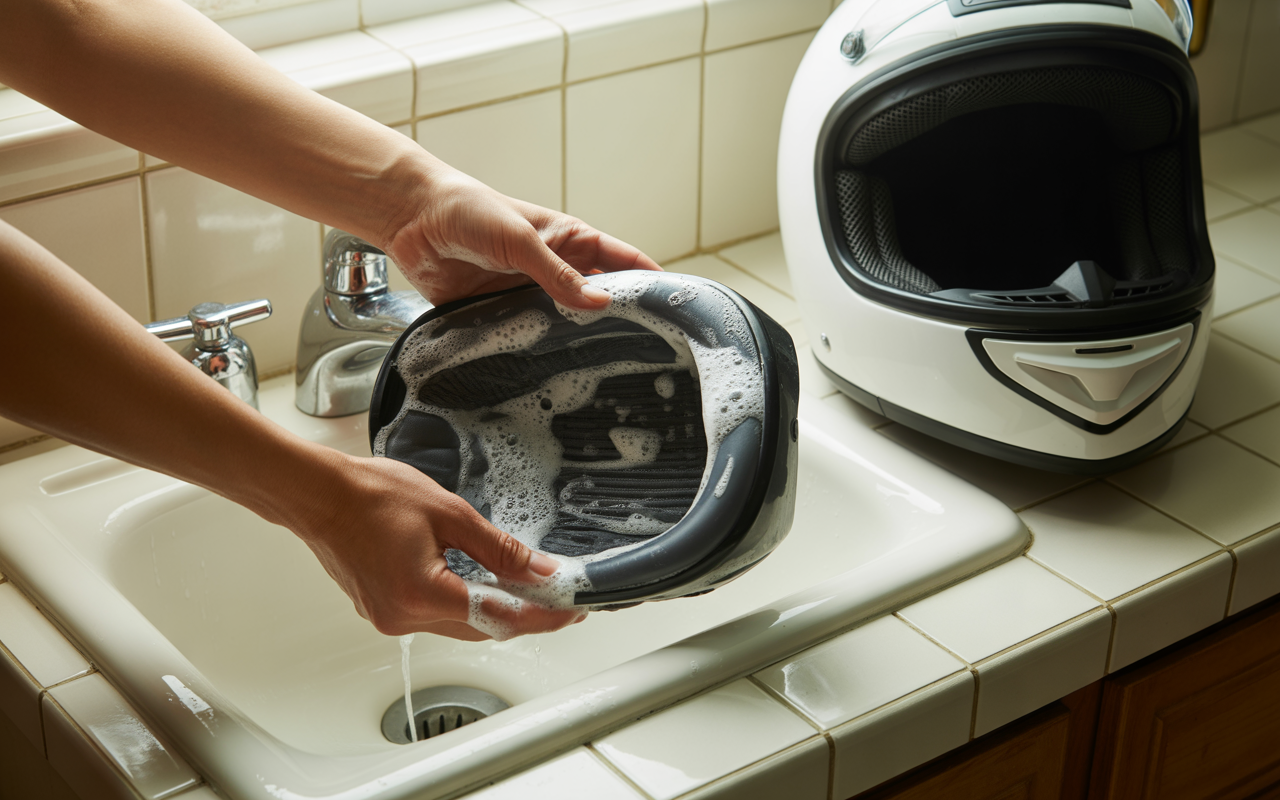
Fill a clean sink or basin with cool to lukewarm water—never hot, as heat can break down adhesives and degrade foam structure. Add a small amount (approximately one tablespoon) of mild, fragrance-free detergent. I recommend products designed for technical fabrics, such as Nikwax BaseWash, Woolite for delicates, or even baby shampoo. Avoid regular laundry detergents, which often contain optical brighteners, fragrances, and other additives that can irritate skin or degrade technical fabrics.
Submerge the liner components and gently agitate them by hand, working the soapy water through the material. Focus on areas that contact your forehead, cheeks, and chin—these accumulate the most oils and bacteria. Allow the components to soak for 15-20 minutes, then drain the dirty water.
Rinse thoroughly under cool running water, gently squeezing the liners to flush out soap residue. This step is critical—soap residue can cause skin irritation and actually attracts dirt during subsequent use. Continue rinsing until water runs completely clear and you can no longer feel any slickness from soap.
Machine Washing Method (Advanced)
Despite manufacturer warnings, I’ve successfully machine washed helmet liners for years without damage, and many professional racers do the same out of necessity—when you’re riding multiple sessions per day, hand washing isn’t practical. The key is using the right settings and protection.
Place liner components in a mesh lingerie bag or pillowcase tied shut to prevent them from tumbling freely and potentially damaging attachment snaps. Add several clean towels to the load to provide cushioning and improve agitation. Use the delicate cycle with cold water and the same mild detergent recommended for hand washing. Crucially, disable the spin cycle or use the lowest spin setting—excessive centrifugal force can distort foam padding.
This method is particularly effective for heavily soiled liners or when washing liners from multiple helmets simultaneously. However, I only recommend it for liners in good condition with secure attachment hardware, and never for helmets with integrated communication systems or other electronics.
Step 5: Drying—The Most Critical Phase
Improper drying causes more liner damage than any other aspect of the cleaning process. Heat is the enemy here—it degrades foam, shrinks fabrics, and can compromise the antimicrobial treatments that keep your liner fresh between washings.
After washing, gently squeeze excess water from the liners. Never wring or twist them, as this can distort the foam structure. Roll each component in a clean, dry towel and press firmly to absorb additional moisture.
Air drying is the only safe method. Place the liner components on a clean, dry towel in a well-ventilated area away from direct sunlight and heat sources. A room with good air circulation is ideal—I often place liners near a fan to accelerate drying without introducing heat. Flip the components every few hours to ensure even drying.
Drying time varies based on foam density and ambient conditions but typically requires 24-48 hours for complete drying. This is why serious riders often purchase spare liner sets—you can wash one set while using the other, ensuring you’re never waiting on drying time before your next ride.
Never use a clothes dryer, hair dryer, or place liners on radiators or in direct sunlight. The heat will cause foam to become brittle and fabrics to shrink, potentially making your helmet unwearable. I’ve seen riders ruin $500 helmets by trying to rush the drying process with heat.
Step 6: Reassembly and Fit Check
Once completely dry—and I cannot stress enough that “completely” means absolutely no remaining moisture—reinstall the liner components. Start with the crown liner, ensuring all snap buttons or Velcro attachments are fully secured, then install cheek pads, chin curtain, and any other components.
Before your next ride, do a fit check. Put the helmet on and ensure it still fits correctly. Clean liners may feel slightly different initially as the fabric regains its shape, but the helmet should still be snug without pressure points. If the fit seems off, double-check that all components are correctly installed and fully attached.
Cleaning Non-Removable Liners: Working Within Limitations
If your helmet features a non-removable liner, work with moisture-minimal methods. Mix a solution of mild detergent and water, then use a clean cloth dampened with this solution to wipe down the liner surfaces. Follow with a cloth dampened with plain water to remove soap residue.
Common Mistakes When Learning How to Wash Your Motorcycle Helmet Liner
Using Harsh Chemicals Bleach, ammonia-based cleaners, and petroleum-based solvents will damage helmet liners. These chemicals can also be dangerous if they come into contact with the shell itself—a risk that applies regardless of the debate between Carbon Fiber vs. Polycarbonate Helmets.
Excessive Water Temperature Hot water causes foam compression and fabric shrinkage. Always use cool to lukewarm water.
Incomplete Drying Installing damp liners creates the perfect environment for mold and mildew growth. Always ensure complete drying.
Using Fabric Softener Fabric softeners coat fibers with chemicals that reduce the moisture-wicking properties of technical fabrics. Never use them on helmet liners.
Maintenance Schedule: How Often Should You Wash Your Helmet Liner?
The frequency of liner washing depends on usage patterns, climate, and individual physiology. Some riders sweat more than others, and hot weather or vigorous riding obviously increases soil accumulation.
For regular street riders in moderate climates, washing liner components every 4-6 weeks maintains good hygiene. Sport riders, track day enthusiasts, or those in hot climates should clean liners every 2-3 weeks. Professional racers often wash after every event or even between sessions during multi-day events.
Between washings, air your helmet after every ride. Remove it from any enclosed storage and allow it to dry in open air. This simple practice dramatically reduces bacterial growth and odor development. Some riders keep helmet dryers—devices that circulate air through the helmet—for this purpose, though simply placing the helmet in a well-ventilated area works nearly as well.
Consider using a helmet liner or balaclava under your helmet. These thin barriers absorb sweat and oils before they reach the helmet liner, significantly extending time between required washings. They’re inexpensive, easily washed, and many riders find they improve comfort by preventing hair from tangling in helmet hardware.
Common Mistakes When Learning How to Wash Your Motorcycle Helmet Liner
Through years of consulting with riders who’ve damaged their helmet liners, I’ve identified several recurring mistakes that you should avoid.
Using Harsh Chemicals
Bleach, ammonia-based cleaners, and petroleum-based solvents will damage helmet liners. These chemicals degrade foam, strip antimicrobial treatments, and can cause skin irritation. They’re also potentially dangerous—some chemicals can compromise the helmet shell itself, though this is rare with liner-only contact.
Excessive Water Temperature
Hot water seems like it would clean better, but it causes foam compression, fabric shrinkage, and adhesive failure. Always use cool to lukewarm water when learning how to wash your motorcycle helmet liner.
Incomplete Drying
Installing damp liners creates the perfect environment for mold and mildew growth. The musty smell that results is nearly impossible to eliminate and can trigger allergic reactions. Always ensure complete drying, even if it means waiting an extra day.
Using Fabric Softener
Fabric softeners coat fibers with chemicals that reduce the moisture-wicking properties of technical fabrics. They also tend to cause skin irritation when in prolonged contact with skin, particularly during sweating. Never use fabric softeners on helmet liners.
Ignoring Manufacturer Guidance
While I advocate for methods that sometimes exceed manufacturer recommendations, you should always check your specific helmet’s care instructions. Some helmets have unique construction that requires special consideration. When in doubt, err on the side of caution.
Advanced Tips: Maximizing Liner Longevity
Beyond basic washing, several practices can extend liner life and maintain optimal comfort and hygiene.
Rotation Strategy
If budget allows, purchase a second set of liners. Rotating between sets reduces wear on each, extends overall lifespan, and ensures you always have clean liners available. This approach is particularly valuable for riders who use their helmets daily.
Spot Cleaning
Address spills or unusual soiling immediately. A small amount of makeup, sunscreen, or food can be spot-cleaned with a damp cloth, preventing it from setting into the fabric and requiring full washing.
Antimicrobial Maintenance
Some riders refresh antimicrobial properties by using sprays containing silver ions or other bacteriostatic compounds between washings. While not a replacement for washing, this can extend freshness during heavy-use periods.
Storage Practices
Never store a helmet in a sealed bag or container immediately after use. The trapped moisture creates ideal conditions for bacterial growth. Always allow the helmet to air dry before storage, and store in a cool, dry location away from direct sunlight.
When to Replace Rather Than Wash
Knowing When to Replace Your Motorcycle Helmet or its components is just as important as knowing how to clean them. Liners don’t last forever.
Replace liners when you notice:
- Compressed foam that no longer rebounds.
- Torn or separated fabric.
- Persistent odors that don’t respond to washing.
- Changes in helmet fit.
Most manufacturers recommend replacing liners every 2-3 years regardless of condition, as the materials naturally degrade over time. Given that replacement liner sets cost $40-80 while a quality helmet costs $300-800, this represents a small investment in maintaining your safety equipment.
Remember that helmet replacement recommendations—typically every 5 years or after any significant impact—apply regardless of liner condition. A clean liner in an expired helmet still represents compromised safety.
The Environmental Consideration
As we become more conscious of environmental impact, it’s worth considering the sustainability aspects of helmet liner maintenance. Regular washing extends liner life, reducing waste from premature replacement. Using mild, biodegradable detergents minimizes water pollution. Air drying eliminates energy consumption from mechanical dryers.
Some manufacturers now offer liners made from recycled materials or sustainable fabrics like bamboo-derived rayon. While not yet universal, this trend suggests the industry is recognizing riders’ environmental concerns. When replacing liners, consider these eco-friendly options if available for your helmet model.
Conclusion: The Clean Helmet Imperative
After examining every aspect of how to wash your motorcycle helmet liner, from material science to practical techniques, the conclusion is unambiguous: regular liner maintenance is not optional—it’s essential for health, comfort, and safety. The evidence is overwhelming that clean liners reduce skin infections, improve comfort through better moisture management, and maintain proper helmet fit that could prove critical in an accident.
The method I’ve outlined—careful removal, thorough washing with mild detergent, and complete air drying—represents the optimal balance between cleaning efficacy and material preservation. While it requires patience, particularly during the drying phase, the investment of a few hours every month pays dividends in helmet longevity and riding comfort. For those willing to take calculated risks, the machine washing method offers convenience without significant danger to liners in good condition.
My definitive stance: every rider should establish a regular liner cleaning schedule based on their usage patterns, with a minimum frequency of every six weeks for casual riders and every two weeks for frequent or sport riders. Purchase spare liner sets if possible to eliminate downtime. Never compromise by using a helmet with damp liners, and replace liners showing any signs of degradation. Your helmet is literally life-saving equipment—treat every component, including the humble liner, with the respect and maintenance it deserves.
Frequently Asked Questions
Can I use a washing machine to wash my motorcycle helmet liner?
Yes, but with important precautions. Place liners in a mesh bag, use cold water on the delicate cycle with minimal or no spin, and use only mild detergent. This method works well for liners in good condition but carries slightly more risk than hand washing. Never machine wash liners with integrated electronics or communication systems. Many professional riders use this method successfully, but manufacturer warranties may not cover damage from machine washing, so proceed at your own discretion.
How long does it take for a motorcycle helmet liner to dry completely?
Complete drying typically requires 24-48 hours depending on foam density, ambient humidity, and air circulation. Thicker liners and high-humidity environments extend drying time. Never rush the process with heat sources, as this damages foam and fabric. A fan can accelerate drying without introducing harmful heat. The liner should feel completely dry to the touch with no cool or damp spots before reinstallation. When in doubt, allow an extra 12 hours—installing damp liners risks mold growth and odor problems.
What’s the best detergent for washing motorcycle helmet liners?
Mild, fragrance-free detergents designed for delicate or technical fabrics work best. Specific recommendations include Nikwax BaseWash, Woolite for delicates, or fragrance-free baby shampoo. Avoid regular laundry detergents with optical brighteners, fragrances, or fabric softeners, as these can irritate skin, damage moisture-wicking properties, and strip antimicrobial treatments. Use approximately one tablespoon for hand washing or follow package directions for machine washing, erring on the side of less rather than more detergent.
How often should I replace my motorcycle helmet liner instead of washing it?
Replace liners every 2-3 years regardless of washing frequency, as materials naturally degrade over time. Replace immediately if you notice compressed foam that doesn’t rebound, torn fabric, persistent odors after washing, or significant discoloration. Changes in helmet fit also indicate liner replacement is needed. Keep in mind that helmet replacement recommendations (every 5 years or after significant impact) supersede liner replacement—don’t invest in new liners for a helmet that’s due for complete replacement. Quality replacement liner sets typically cost $40-80 and dramatically improve comfort in aging helmets.