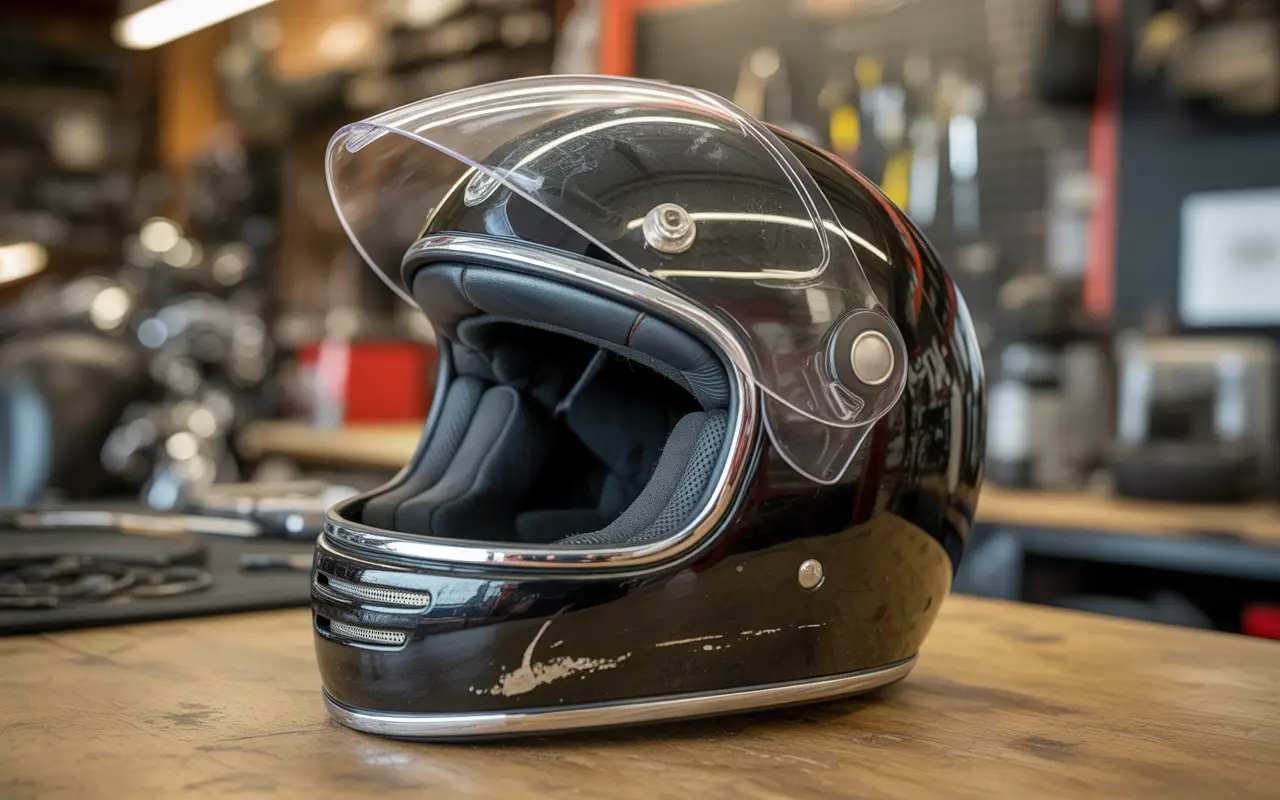
I’ll never forget the day a younger rider walked into the shop, beaming with pride over the “steal” he’d just scored—a premium Arai helmet for $80 at a garage sale. The thing looked flawless: no visible scratches, pristine paint, liner seemingly intact. He asked me to help adjust the fit, and that’s when I noticed it: a hairline crack running along the interior EPS foam, invisible from the outside. That helmet had been in an impact. It was a ticking time bomb strapped to his head, and he had no idea.
The question “is it safe to buy a used motorcycle helmet?” comes up constantly in riding communities, Facebook marketplace listings, and garage sales across the country. With premium helmets costing anywhere from $300 to over $1,500, the temptation to save money on used gear is understandable. The motorcycle helmet market has evolved dramatically over the past two decades, with advanced materials, sophisticated safety technologies, and rigorous testing standards becoming the norm.
Yet this same sophistication makes evaluating a used helmet’s true condition nearly impossible for the average buyer. As we detail in our Ultimate Guide to Motorcycle Helmets, modern helmets are engineered as single-use protective devices—designed to sacrifice themselves in a crash to save your life. The problem? Once they’ve done their job, they often look perfectly fine from the outside.
The Engineering Reality: Why Helmets Are Single-Use Safety Devices
To understand why buying a used motorcycle helmet is problematic, you need to grasp the fundamental engineering behind helmet protection. Unlike a leather jacket or a pair of boots that can withstand multiple impacts and years of use, a motorcycle helmet is specifically designed as a sacrificial component—a one-time-use crumple zone for your skull.
The EPS Foam Layer: Your Brain’s Last Line of Defense
The critical protective element in every modern helmet is the Expanded Polystyrene (EPS) foam liner—that thick, Styrofoam-like layer between the outer shell and the comfort liner. This foam is engineered to compress and fracture during an impact, converting the kinetic energy of a crash into heat and permanent deformation. This energy absorption is what prevents that force from reaching your brain.
Here’s the problem: EPS foam can only do this job once. After compression, the cellular structure is permanently damaged, even if the foam appears to spring back to its original shape. Microscopic fractures compromise the material’s ability to absorb energy in a subsequent impact. You might get 30-40% of the original protection, or you might get almost nothing—there’s no way to test it without sophisticated laboratory equipment.
When evaluating helmet construction, understanding the differences between materials is crucial. Our guide on Carbon Fiber vs. Polycarbonate Helmets explains how various shell materials respond to impacts, but regardless of the outer shell material, the EPS foam remains the critical component that can’t be visually inspected for damage.
The Invisible Damage Problem
Impact damage to a helmet’s protective structure is often completely invisible. A helmet can be dropped from waist height onto concrete—an impact that compromises its protective capability—without showing any external signs of damage. The outer shell might have a tiny scuff that you’d dismiss as cosmetic wear. The EPS foam might have internal compression fractures that are impossible to see without cutting the helmet open.
I’ve personally cut open dozens of used helmets over the years for educational demonstrations, and the results are consistently sobering. Helmets that looked perfect externally often revealed significant internal damage: compressed foam, separated bonding between the shell and liner, and stress fractures in the EPS structure. In one memorable case, a “lightly used” premium helmet had a 3-inch section of completely detached EPS foam that rattled around inside when you shook it—something the previous owner either didn’t notice or chose not to disclose.
The Hidden History: What You Can’t Know About a Used Helmet
When you’re considering whether it’s safe to buy a used motorcycle helmet, you’re essentially asking a stranger to be completely honest about something that directly impacts your life. That’s a significant leap of faith, and here’s why it’s problematic.
The “Minor Drop” That Wasn’t
Helmet manufacturers universally recommend replacing a helmet after any impact, even if it seems minor. The Snell Memorial Foundation, one of the most rigorous helmet testing organizations, states explicitly: “If you crash in your Snell-certified helmet, return it to the manufacturer for inspection or replace it.” DOT and ECE standards echo this guidance.
Yet in the used market, sellers routinely describe helmets as “never dropped” or “only fell off the seat once.” Even if they’re being honest about their recollection, people dramatically underestimate what constitutes a damaging impact. A helmet rolling off a bike seat and hitting pavement at the wrong angle can compromise the EPS foam. A helmet stored in a garage that had something fall on it. A helmet that was in a bike’s saddlebag during a parking lot tipover.
The seller might genuinely believe the helmet is fine, but unless they understand helmet engineering and safety standards—which most don’t—their assessment is worthless. And that’s assuming they’re being honest, which brings us to the next problem.
The Dishonest Seller
Let’s be blunt: some people will lie to make a sale. I’ve seen crashed helmets listed as “like new” on marketplace platforms, with the seller carefully photographing only the undamaged side. I’ve encountered helmets from documented crashes being sold months later with no mention of the incident. The financial incentive is clear—a crashed $600 helmet is worth $0 for protection but might fetch $200 from an unsuspecting buyer.
Even well-meaning sellers might omit information they consider irrelevant. They might not mention that the helmet was stored in a hot garage for five years, exposed to temperature extremes that degrade the EPS foam and shell materials. They might forget about the time they used harsh chemical cleaners that compromised the shell integrity. As detailed in our article on When to Replace Your Motorcycle Helmet, numerous factors beyond crashes can compromise helmet safety—factors a seller might not even realize are relevant.
The Age and Degradation Factor
Motorcycle helmets have a finite lifespan, even without any impacts. Manufacturers typically recommend replacement every five years, while safety organizations like the Snell Foundation suggest five to seven years from the manufacturing date. This isn’t planned obsolescence—it’s chemistry and physics.
The materials in a helmet degrade over time through multiple mechanisms:
- UV radiation: Breaks down the molecular bonds in both the shell and EPS foam, reducing impact resistance
- Temperature cycling: Repeated heating and cooling causes expansion and contraction, creating micro-fractures in the EPS structure
- Humidity and moisture: Degrades the bonding agents between layers and can promote foam deterioration
- Body oils and sweat: The acidic compounds in perspiration chemically attack both the comfort liner and the EPS foam over time
- Oxidation: Environmental exposure causes material breakdown at the molecular level
When buying used, you often can’t determine the helmet’s true age. The manufacturing date is typically on a label inside the helmet, but these labels can be removed, damaged, or become illegible over time. A seller might genuinely not know when the helmet was made, or they might claim it’s newer than it actually is. Without documentation, you’re gambling on whether you’re buying a three-year-old helmet with reasonable remaining lifespan or a seven-year-old helmet that’s past its safe service life.
The Fit Compromise: Why Someone Else’s Helmet Won’t Fit Right
Even if you could somehow guarantee a used helmet’s safety—which you can’t—there’s another critical problem: fit. This issue is so important that we’ve dedicated an entire resource to it in our Motorcycle Helmet Fitment Guide, but it bears repeating in the context of used helmet purchases.
Head Shape Variations and Helmet Geometry
Human heads come in three basic shapes: round oval, intermediate oval, and long oval. Each helmet manufacturer designs their products around specific head shape profiles. An Arai is generally designed for intermediate to long oval heads. A Shoei typically fits intermediate oval shapes. AGV tends toward rounder profiles. HJC offers various models for different head shapes.
A helmet designed for a round head shape will never fit a long oval head correctly, regardless of size adjustments. You’ll experience pressure points, gaps in coverage, excessive movement, or painful hot spots. These fit issues aren’t just uncomfortable—they’re dangerous. A poorly fitting helmet can:
- Rotate during an impact, exposing unprotected areas of your skull
- Come off entirely during a crash
- Create pressure points that cause distraction while riding
- Restrict peripheral vision or hearing
- Cause headaches that reduce focus and reaction time
When you buy a used helmet, you’re getting a helmet that was broken in to someone else’s head shape. The comfort liner foam has compressed and conformed to their specific head geometry. Even if you happen to have a similar head shape, the wear patterns won’t match your pressure points. This is particularly problematic with premium helmets that use advanced comfort liner systems designed to mold to the wearer over time.
The Comfort Liner Contamination Issue
Let’s address the aspect nobody wants to talk about: used helmets are inherently unhygienic. The comfort liner has absorbed years of someone else’s sweat, skin oils, hair products, and dead skin cells. While our guide on How to Wash Your Motorcycle Helmet Liner provides excellent cleaning techniques, there’s a limit to how thoroughly you can sanitize a used liner.
Some used helmet buyers attempt to address this by purchasing replacement comfort liners. This seems like a reasonable solution until you realize that replacement liners for many helmet models cost $80-$150. Add that to your “bargain” used helmet purchase, and you’re often approaching the cost of a new entry-level helmet anyway.
Moreover, installing a fresh liner in a used helmet doesn’t address the EPS foam, which has also absorbed moisture and contaminants over time. The EPS layer isn’t designed to be cleaned and can’t be replaced separately from the shell in most helmets.
The Certification Question: Has the Helmet Been Recalled?
Helmet safety certifications—DOT, ECE, SNELL, SHARP—are crucial indicators of protection, as explained in our comprehensive article on Helmet Safety Ratings Explained. But certifications are only valid for helmets in their original, undamaged condition. More concerning, helmet recalls happen more often than most riders realize.
The Recall Problem
Manufacturers occasionally discover defects that require helmet recalls. These might involve:
- Defective retention systems (chin straps) that can fail in a crash
- Improperly manufactured EPS foam that doesn’t meet safety standards
- Face shield mechanisms that can detach during impact
- Structural defects in the shell material
When buying new from a reputable dealer, you’re protected by recall notification systems. When buying used from a stranger, you have no way to verify whether the helmet model has been recalled. The seller might not know, might not care, or might actively conceal this information. Checking recall databases requires knowing the exact model and manufacturing date—information that might not be readily available or accurate in a used transaction.
I’ve personally encountered three recalled helmets being sold used in just the past two years. In one case, the recall involved a chin strap retention system that could fail during an impact—a catastrophic defect that would render the helmet’s protection worthless. The seller was completely unaware of the recall and was genuinely shocked when I showed them the manufacturer’s recall notice.
The Economics: Used Helmets Aren’t Actually Cheaper
The primary motivation for considering a used helmet is cost savings, but let’s examine whether you’re actually saving money—and more importantly, what you’re sacrificing for those savings.
The True Cost Calculation
A used premium helmet might sell for $150-$250, compared to $600-$800 new. That looks like substantial savings until you factor in the hidden costs and risks:
Replacement comfort liner: $80-$150
Replacement face shield (often scratched on used helmets): $40-$80
Cleaning and sanitization supplies: $20-$30
Uncertainty about remaining lifespan: Potentially replacing it sooner than expected
Risk of compromised protection: Priceless, or rather, potentially catastrophic
Suddenly your $200 “bargain” has cost you $340-$460, and you still have a helmet of unknown history and remaining protective capability. Meanwhile, excellent new helmets are available in the $200-$300 range that offer full warranty protection, known history, and proper fit. Our recommendations for Best Motorcycle Helmets for Beginners include several outstanding options in this price range that deliver genuine protection without compromise.
The Opportunity Cost of Your Safety
Beyond the direct financial calculation, there’s a more fundamental question: what is the integrity of your brain protection worth? Traumatic brain injuries from motorcycle accidents can result in:
- Permanent cognitive impairment
- Lifetime medical costs exceeding $1-3 million
- Lost earning capacity
- Reduced quality of life
- Burden on family and caregivers
The difference between a compromised used helmet and a proper new helmet might be $200-$300. The difference in outcomes if that helmet fails during an accident is incalculable. This isn’t fear-mongering—it’s risk assessment. You’re gambling your brain’s integrity to save the cost of a couple of tank fills of premium fuel.
When Used Might Be Acceptable (The Rare Exceptions)
In the interest of complete transparency, there are extremely limited scenarios where purchasing a used helmet might be defensible—though I still wouldn’t recommend it.
The Brand-New, Never-Worn Helmet
Occasionally, you’ll find a genuinely new helmet being sold used because someone bought the wrong size and missed the return window. If you can verify:
- The helmet has never been worn (tags still attached, protective films intact)
- The manufacturing date is within the past year
- The helmet has been stored properly (indoors, temperature-controlled)
- You can verify the model hasn’t been recalled
- The fit is absolutely perfect for your head shape
- You’re getting a significant discount (40%+ off retail)
…then you might have found an acceptable used helmet purchase. But this scenario is vanishingly rare, and you’re still taking on risk that you wouldn’t have with a new helmet purchase from a dealer.
The Known-History Helmet from a Trusted Source
If you’re buying a helmet from a close friend or family member whose riding history you know intimately, who you trust absolutely, and who can document the helmet’s complete history including storage conditions and any incidents—this is marginally less risky than buying from a stranger. But it’s still not ideal, and you’re still dealing with a used comfort liner and unknown remaining lifespan.
Even in this scenario, I’d argue you’re better off buying new and maintaining your relationship without the potential awkwardness if the helmet has issues or doesn’t fit properly.
The Alternatives: How to Get Quality Protection on a Budget
If budget is your primary concern—and it’s a legitimate concern—there are far better approaches than buying used.
Quality Budget Helmets
The helmet market has evolved dramatically, with several manufacturers offering excellent protection at accessible price points. Brands like HJC, Scorpion, and Icon produce DOT and ECE certified helmets in the $150-$250 range that provide genuine protection. These aren’t premium helmets with carbon fiber shells and aerospace-grade materials, but they meet the same safety standards and offer known history and proper fit.
For riders seeking specific features on a budget, resources like our guide to the Best Quietest Motorcycle Helmets include options across various price points. You don’t need to spend $700 to get adequate protection—you just need to spend wisely on a new helmet.
Sales, Closeouts, and Previous-Year Models
Motorcycle gear retailers regularly discount previous-year models when new versions arrive. These helmets are brand new, with full warranty protection and known history—they’re just last year’s graphics or color schemes. You can often find $400-$500 helmets discounted to $250-$300 simply because they’re last season’s model.
End-of-season sales, Black Friday deals, and retailer clearance events offer opportunities to get quality new helmets at substantial discounts. Sign up for email lists from major retailers like RevZilla, Cycle Gear, and manufacturer direct sites. Set price alerts on models you’re interested in. With patience, you can often get a quality new helmet at used-helmet prices.
Payment Plans and Financing
Many retailers now offer payment plans that let you spread the cost over several months. While I’m generally not an advocate for financing gear, if the choice is between a questionable used helmet now and a quality new helmet on a three-month payment plan, the latter is significantly safer and more responsible.
Special Considerations for Different Helmet Types
The question of whether it’s safe to buy a used motorcycle helmet becomes even more complex when considering specialized helmet types. Different styles present unique challenges in the used market.
Modular Helmets: Additional Mechanical Complexity
Modular helmets, as discussed in our guide to Best Motorcycle Modular Helmets, incorporate complex mechanical systems for the chin bar operation. These mechanisms wear over time, and failure during an accident can be catastrophic. When buying used, you have no way to assess the wear on these mechanical components, the integrity of the locking mechanism, or whether the helmet has been in an impact that compromised the chin bar attachment points.
The additional complexity of modular helmets makes them particularly unsuitable for used purchase. A chin bar that feels secure during normal use might fail during an impact due to worn internal components or stress fractures from a previous incident.
Full-Face vs. Open-Face Considerations
While our comparison of Full Face vs. Modular vs. Open Face Helmets details the protection differences between styles, the used-helmet concerns apply across all types. However, open-face and half helmets present an additional consideration: they offer less protection to begin with, making any compromise in their structural integrity even more consequential.
If you’re considering an open-face helmet for cruising or low-speed riding, the temptation to buy used might be stronger since these helmets are often less expensive new. Resist this temptation—the reduced protection of an open-face design makes structural integrity even more critical, not less.
What About Vintage Helmets?
Vintage and retro-styled helmets deserve special mention because they’re often sold used in the custom and classic bike communities. Let me be absolutely clear: vintage helmets from the 1970s, 80s, or even 90s are not safe for actual riding, regardless of their condition or aesthetic appeal.
Helmet safety technology has advanced dramatically. A pristine, never-worn helmet from 1985 doesn’t meet modern safety standards and won’t provide adequate protection by today’s understanding of crash dynamics and brain injury. The EPS foam technology, shell materials, and retention systems from earlier eras are simply inferior to modern designs.
If you love the aesthetic of vintage helmets, numerous manufacturers now produce retro-styled helmets with modern safety technology. These give you the classic look with contemporary protection. Don’t sacrifice your brain for style—get a new retro-styled helmet instead.
The Legal and Insurance Implications
Beyond the safety concerns, used helmets can create legal and insurance complications that many riders don’t consider.
Helmet Laws and Compliance
Most jurisdictions require helmets to meet specific safety standards (DOT in the United States, ECE in Europe, etc.). A used helmet might have had its certification stickers removed or damaged, making it technically non-compliant even if it originally met standards. In an accident, if your helmet isn’t properly certified, you could face legal complications.
More concerning, if your helmet has been in a previous impact—even if you’re unaware of this—it no longer meets the safety standards it was originally certified for. You’re riding with non-compliant equipment, which could have legal ramifications in an accident.
Insurance Considerations
In the event of an accident resulting in head injury, insurance companies will scrutinize your helmet. If investigation reveals you were wearing a compromised used helmet, this could affect claims. While I’m not aware of cases where insurance has been denied solely due to a used helmet, it’s a potential complication you don’t want to introduce into an already difficult situation.
Some insurance policies specifically require proper safety equipment. A used helmet of unknown history might not meet the policy’s definition of “proper” equipment, particularly if it’s beyond the manufacturer’s recommended service life or shows signs of previous damage.
The Environmental Argument Doesn’t Hold Up
Some riders justify used helmet purchases with environmental concerns—reducing waste by giving a helmet a second life. I appreciate the environmental consciousness, but this argument doesn’t withstand scrutiny when applied to safety equipment.
A helmet that’s been in an impact or is past its service life isn’t being “reused”—it’s being misused. It’s not providing the protection it’s supposed to, which means it’s not actually serving its function. This is like “reusing” a worn-out fire extinguisher or expired medication. The environmental benefit is negated if the equipment fails when needed.
If environmental impact concerns you, focus on:
- Buying a quality helmet that will last its full service life
- Properly maintaining your helmet to maximize its lifespan
- Participating in helmet recycling programs when replacement is necessary
- Supporting manufacturers with sustainable production practices
Several helmet manufacturers now offer recycling programs for expired helmets, breaking them down into recyclable components. This is the responsible environmental approach—not extending the life of safety equipment beyond its safe service period.
What to Do If You’ve Already Bought a Used Helmet
If you’ve already purchased a used helmet—perhaps before reading this article—here’s what you should do:
Immediate Assessment
First, conduct a thorough inspection:
- Check the manufacturing date (usually on a label inside the helmet)
- If it’s more than five years old, replace it immediately
- Examine the EPS foam carefully for any compression, cracks, or separation from the shell
- Check the retention system thoroughly—any fraying, damage, or weakness means immediate replacement
- Look up the model to verify it hasn’t been recalled
- Assess the fit honestly—if there are any pressure points or excessive movement, it’s not safe to use
Consider It Temporary
Even if the helmet passes your inspection, treat it as temporary equipment while you save for a proper new helmet. Don’t think of it as a long-term solution. Set a timeline—perhaps three to six months—to replace it with a new helmet that you’ve properly fitted and selected.
Don’t Pass It On
When you do replace your used helmet, don’t sell it or give it to another rider. You’d be perpetuating the same risk you took. Instead, properly dispose of it or render it unusable (cut the straps) before discarding it. Some areas have helmet recycling programs that can break down the materials responsibly.
Conclusion: The Answer Is Clear
After examining the engineering reality, the hidden risks, the fit compromises, and the economic analysis, the answer to “is it safe to buy a used motorcycle helmet?” is unequivocal: No, it is not safe.
The risks are simply too significant and the potential savings too marginal to justify gambling with your brain’s protection. You cannot verify a used helmet’s impact history, its true age, its storage conditions, or its structural integrity without laboratory equipment. The fit will be compromised by someone else’s head shape breaking in the comfort liner. The hygiene concerns are legitimate and unpleasant. And when you factor in the cost of replacement parts and the reduced lifespan, you’re often not saving much money anyway.
Modern helmets are sophisticated safety devices engineered with single-use protection in mind. They’re designed to sacrifice themselves to save your life—once. After that, they’ve done their job, and their protective capability is compromised. Buying used means you might be getting a helmet that’s already performed its protective function for someone else, leaving nothing for you when you need it.
The motorcycle community needs to shift its perspective on used helmets. We don’t buy used parachutes, used climbing ropes, or used airbags. Safety equipment that protects against catastrophic injury or death should not be purchased used, period. The small financial savings aren’t worth the massive risk.
If budget is your concern, buy a quality new helmet at an accessible price point. If you want premium features, save longer and watch for sales rather than buying used premium helmets. If you’re tempted by a used helmet deal, remember that your brain’s integrity is worth more than the money you’ll save.
Your helmet is the single most important piece of safety equipment you own as a motorcyclist. It’s the last line of defense between your skull and the pavement. Don’t compromise on it. Buy new, buy properly fitted, and replace it according to manufacturer recommendations. Your future self—the one who might need that helmet to do its job—will thank you for making the right decision.
Frequently Asked Questions
Can a helmet be safe if it’s only been dropped once on carpet or grass?
Even drops that seem minor can compromise a helmet’s protective structure. While a drop onto soft carpet from a low height is less likely to cause damage than a drop onto concrete, you simply cannot know for certain without laboratory testing. The EPS foam can suffer compression damage that’s invisible to visual inspection. Helmet manufacturers recommend replacement after any significant impact, and when buying used, you have no way to verify what actually happened. The risk isn’t worth taking—if a seller mentions any drops at all, walk away from the purchase.
What if I buy a used helmet from a reputable seller with lots of positive reviews?
Seller reputation doesn’t change the fundamental problems with used helmets. Even honest sellers with excellent feedback can’t know about invisible internal damage, can’t guarantee proper storage conditions throughout the helmet’s life, and can’t verify that the helmet wasn’t in an incident they’re unaware of. A helmet might have been dropped by a previous owner before the current seller acquired it. Storage degradation happens regardless of seller honesty. Positive reviews tell you the seller ships promptly and describes cosmetic condition accurately—they tell you nothing about the helmet’s structural integrity or safety capability.
Are there any certifications or tests I can do myself to verify a used helmet’s safety?
Unfortunately, no. The only way to truly test a helmet’s protective capability is destructive testing in a laboratory—which obviously ruins the helmet. Visual inspection can catch obvious damage like cracks in the shell or severely compressed foam, but it cannot detect the micro-fractures, internal delamination, or material degradation that compromise protection. Safety certifications like DOT, ECE, and SNELL only apply to new helmets in undamaged condition. Once a helmet has been used, dropped, or aged, those certifications no longer guarantee its protective capability. There’s no home test, no inspection service, and no certification that can verify a used helmet’s safety—which is precisely why you shouldn’t buy one.
What about buying a used helmet just for short trips or low-speed riding around town?
This is a dangerous rationalization. Serious head injuries occur at all speeds, including parking lot speeds and residential street crashes. In fact, many serious motorcycle injuries happen at speeds below 30 mph during commuting or around-town riding. Your brain doesn’t need less protection at low speeds—it needs the same protection regardless of your riding environment. Additionally, you can’t predict when you’ll need your helmet’s protection. That “quick trip to the store” might be when someone runs a stop sign and T-bones you. Don’t create a two-tier safety system where some rides get proper protection and others don’t. Every ride deserves a proper helmet, which means a new helmet with verified safety capability.