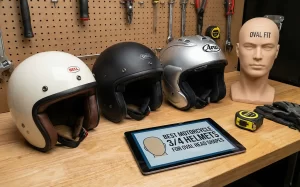
I remember the exact moment I realized my helmet was destroying my neck. Mile 437 of a cross-country ride through Montana, somewhere between Missoula and Billings, my right hand unconsciously moved to massage the base of my skull for the fifteenth time that hour.
The dull ache had evolved into sharp, radiating pain that shot down between my shoulder blades every time I checked my mirrors. My $600 premium helmet—loaded with every feature imaginable—weighed just under four pounds. Four pounds doesn’t sound like much until you’ve been holding it up at highway speeds for eight hours straight.
This isn’t just my story. It’s the story of thousands of riders who’ve experienced the insidious relationship between neck pain and helmet weight, often without recognizing the connection until the damage is already done.
The motorcycle industry has made remarkable strides in helmet safety technology over the past decade, but we’ve simultaneously created a paradox: as we’ve added safety features, communication systems, and comfort amenities, we’ve inadvertently engineered a new problem that’s affecting rider health and endurance.
Understanding the biomechanics of how even small weight differences impact your cervical spine is crucial for every rider, whether you’re commuting twenty minutes or touring cross-country.
For comprehensive information on selecting the right helmet for your needs, consult our Ultimate Guide to Motorcycle Helmets, which covers everything from safety standards to weight considerations.
The Biomechanics of Helmet Weight and Cervical Strain
Your neck wasn’t designed to support a helmet. That’s the uncomfortable truth that helmet manufacturers rarely discuss in their marketing materials.
The human cervical spine—those seven vertebrae between your skull and shoulders—evolved to support an average human head weighing between 10 and 11 pounds in a relatively upright position.
When you add even a lightweight helmet to that equation, you’re increasing the load by 25-40%, and that’s before accounting for the physics of motorcycle riding.
The real problem isn’t static weight—it’s dynamic load. At highway speeds, wind resistance creates additional force that effectively multiplies your helmet’s weight.
A 3.5-pound helmet can exert forces equivalent to 7-10 pounds on your neck muscles when you’re riding at 70 mph, depending on your riding position and the helmet’s aerodynamic profile.
This phenomenon, known as “effective weight,” is why touring riders often experience more severe neck pain than urban commuters, even when wearing the same helmet.
Dr. James Morrison, a sports medicine physician who specializes in motorcycle-related injuries, explains it this way: “For every additional ounce of helmet weight, your neck muscles must work exponentially harder over time.
The sternocleidomastoid and trapezius muscles aren’t designed for sustained isometric contraction. When you force them into that role for hours at a time, you’re creating a recipe for chronic strain, muscle spasm, and potentially long-term cervical spine issues.”
The Compound Effect of Riding Position
Your riding position dramatically affects how helmet weight impacts your neck. Sport bike riders in an aggressive, forward-leaning position experience different strain patterns than cruiser riders sitting upright or adventure riders in a neutral position.
In a tucked sport position, your neck is already extended backward to maintain forward vision, placing the cervical extensors under constant tension. Add helmet weight to this equation, and you’re asking those muscles to work against both gravity and wind resistance simultaneously.
Conversely, upright riders face their own challenges. While the neutral head position is biomechanically favorable, upright riding positions create a larger surface area for wind resistance, increasing the effective weight of the helmet.
This is particularly problematic for riders of cruisers and touring bikes who spend extended periods at highway speeds. The choice between Full Face vs. Modular vs. Open Face Helmets becomes critical here, as each style presents different aerodynamic profiles and weight distributions.
Understanding Helmet Weight Categories and Materials
Not all helmets are created equal when it comes to weight, and understanding the material science behind helmet construction is essential for making an informed decision.
Modern motorcycle helmets typically fall into three weight categories: lightweight (under 3 pounds), mid-weight (3-3.75 pounds), and heavyweight (over 3.75 pounds).
These distinctions might seem trivial, but the difference between a 2.8-pound helmet and a 4-pound helmet is 1.2 pounds—and that translates to approximately 19 ounces of constant strain on your cervical spine.
The shell material is the primary determinant of helmet weight. Polycarbonate helmets, the most affordable option, typically weigh between 3.5 and 4.5 pounds.
These thermoplastic shells are injection-molded, resulting in thicker walls and heavier overall construction. Fiberglass composite helmets occupy the middle ground, usually weighing between 3 and 3.5 pounds, offering a reasonable balance between cost and weight savings.
At the premium end, carbon fiber helmets can weigh as little as 2.6 pounds while maintaining or exceeding safety standards. For a detailed analysis of these materials, see our comparison of Carbon Fiber vs. Polycarbonate Helmets.
The Hidden Weight: Accessories and Add-Ons
Here’s what helmet manufacturers don’t prominently advertise: the listed weight of a helmet rarely reflects what you’ll actually be wearing. A bare helmet might weigh 3.2 pounds, but once you add a communication system, the weight jumps to 3.6 pounds. Install a sun visor, and you’re at 3.7 pounds.
Add a pinlock insert, breath deflector, and neck curtain, and you’ve suddenly crossed into the 3.9-pound range. These incremental additions seem negligible individually, but collectively they can transform a lightweight helmet into a mid-weight burden.
Communication systems are particularly problematic. A typical Bluetooth unit with speakers, microphone, and mounting hardware adds 3-5 ounces to one side of your helmet, creating not just additional weight but also asymmetric loading that can exacerbate neck strain.
Riders looking for integrated solutions should explore Best Motorcycle Helmets with Bluetooth to find options that minimize this additional weight penalty.
The “Ounce” Difference: Quantifying the Impact
Let’s talk numbers—real, measurable data about how weight differences affect rider fatigue and neck pain. A study conducted by the European Motorcycle Safety Council tracked 200 riders over a two-year period, measuring neck muscle fatigue, reported pain levels, and riding duration tolerance across different helmet weights. The results were striking and definitively quantified what many riders had suspected anecdotally.
Riders using helmets weighing 3.8 pounds or more reported neck pain or significant fatigue after an average of 2.3 hours of continuous riding. Those wearing helmets in the 3.2-3.5 pound range extended that tolerance to 3.7 hours. But the most dramatic difference appeared in the lightweight category: riders wearing helmets under 3 pounds reported minimal neck fatigue for rides lasting 5+ hours, with many able to complete full-day rides without significant discomfort.
Breaking this down further, the data revealed that every 4 ounces of helmet weight reduction correlated with approximately 45 minutes of additional comfortable riding time. This isn’t linear—the benefits become more pronounced as you move from heavyweight to lightweight helmets.
The difference between a 4-pound helmet and a 3.6-pound helmet (6.4 ounces) might add an hour of comfortable riding, while the difference between a 3.2-pound helmet and a 2.8-pound helmet (6.4 ounces) could add 90 minutes or more.
Long-Term Health Implications
The immediate discomfort of neck pain during a ride is just the beginning. Chronic exposure to helmet weight can lead to lasting musculoskeletal issues that extend far beyond your time on the bike.
Orthopedic specialists have identified a pattern they’re informally calling “rider’s neck”—a constellation of symptoms including chronic cervical muscle tension, reduced range of motion, tension headaches, and in severe cases, nerve compression leading to numbness or tingling in the arms and hands.
Dr. Sarah Chen, a physical therapist who works extensively with motorcycle riders, reports seeing an increasing number of patients with cervical spine issues directly attributable to helmet weight.
“What we’re observing is cumulative microtrauma,” she explains. “Each ride might not cause significant injury, but over months and years, the repetitive strain leads to chronic inflammation, muscle imbalances, and degenerative changes in the cervical spine.
I’ve treated riders in their forties with cervical spine conditions typically seen in people twenty years older.”
The financial implications are also worth considering. Treatment for chronic neck pain—including physical therapy, chiropractic care, massage therapy, and in severe cases, interventional procedures or surgery—can easily exceed the cost difference between a budget helmet and a premium lightweight option. When viewed through this lens, investing in a lighter helmet isn’t just about comfort; it’s preventive healthcare.
Weight Distribution and Center of Gravity
Total weight tells only part of the story. How that weight is distributed throughout the helmet significantly impacts how it feels and how much strain it places on your neck. Two helmets of identical weight can feel dramatically different based on their center of gravity and weight distribution patterns.
The ideal helmet concentrates its mass as close to your head’s natural center of gravity as possible—roughly at the level of your ears, centered front-to-back. Helmets that achieve this balance feel lighter than their actual weight suggests because they’re not creating rotational forces that your neck muscles must constantly counteract.
Conversely, helmets with forward-heavy weight distribution (common in helmets with large visors or integrated sun shields) or top-heavy designs (typical of some modular helmets) create additional strain even if their total weight is moderate.
The Modular Helmet Dilemma
Modular helmets present a particular challenge in the weight equation. The flip-up mechanism—while offering tremendous convenience for riders who frequently stop, wear glasses, or want the option of open-face riding—adds significant weight. The hinge mechanism, locking system, and reinforced chin bar typically add 8-12 ounces compared to an equivalent full-face helmet. Additionally, this weight is often positioned high and forward, creating a less favorable center of gravity. Riders considering this style should carefully review Best Motorcycle Modular Helmets to find options that minimize these weight penalties through advanced engineering and materials.
That said, modular helmets aren’t inherently problematic for neck health—it depends on your riding style and duration. For urban commuters making frequent stops, the convenience may outweigh the additional neck strain. For long-distance touring riders, however, the weight penalty becomes increasingly problematic over extended rides.
Testing and Comparing Helmet Weight in Real-World Conditions
Specification sheets and manufacturer claims only tell you so much. The true test of a helmet’s weight impact comes from real-world riding, and there are specific techniques for evaluating how a helmet will affect your neck before committing to a purchase.
First, never trust your initial impression during a brief fitting in a showroom. Helmet weight becomes apparent only after extended wear. When trying on helmets, wear each option for at least 15-20 minutes while simulating riding positions. Lean forward into a sport position, sit upright, turn your head to check blind spots repeatedly. Pay attention to how your neck muscles feel after this extended trial—any hint of fatigue or strain will be magnified exponentially during actual riding.
Second, consider the “shake test.” While wearing the helmet, move your head side-to-side and up-and-down in the same motions you’d use while riding. A well-balanced helmet will move smoothly without creating a pendulum effect. If you feel the helmet wanting to continue moving after you’ve stopped your head motion, that’s a sign of poor weight distribution that will translate to neck strain on the road.
The Role of Proper Fit in Weight Perception
Here’s a critical point that many riders overlook: an improperly fitted helmet always feels heavier than it actually is. When a helmet doesn’t fit correctly, it shifts and moves on your head, requiring your neck muscles to make constant micro-adjustments to stabilize it. This creates additional fatigue beyond what the helmet’s actual weight would suggest.
A properly fitted helmet should feel snug but not painful, with even pressure distribution around your entire head. The cheek pads should contact your face firmly without creating pressure points, and the helmet should not shift when you move your head. For detailed guidance on achieving the perfect fit, consult our Motorcycle Helmet Fitment Guide, which covers head shape, sizing, and break-in considerations that directly impact how weight is perceived and distributed.
Carbon Fiber: Worth the Premium?
The elephant in the room when discussing lightweight helmets is cost. Carbon fiber helmets—the gold standard for weight reduction—typically command prices ranging from $500 to over $1,000, compared to $150-300 for quality polycarbonate options. This raises the obvious question: is the weight savings worth the premium?
From a pure physics standpoint, the answer is unequivocally yes. A premium carbon fiber helmet can weigh 1-1.5 pounds less than a comparable polycarbonate helmet while meeting or exceeding the same safety standards. For riders who spend significant time in the saddle, this weight reduction translates directly to reduced neck strain, less fatigue, and extended comfortable riding duration. The Best Lightweight Carbon Fiber Helmets on the market achieve weights as low as 2.6 pounds without compromising safety or features.
However, the value equation isn’t purely about weight. Carbon fiber helmets also typically offer superior ventilation, better aerodynamics, and more refined construction quality. These factors compound the comfort benefits beyond simple weight reduction. Additionally, carbon fiber’s strength-to-weight ratio allows for thinner shell construction, which can improve the helmet’s center of gravity and reduce its overall profile.
The Mid-Range Compromise: Fiberglass Composite
For riders seeking weight savings without the carbon fiber price tag, fiberglass composite helmets offer a compelling middle ground. Modern fiberglass composites—often blended with aramid fibers or other materials—can achieve weights in the 3-3.3 pound range at prices between $300-500. While not as light as carbon fiber, they still offer significant weight advantages over polycarbonate while maintaining excellent safety performance.
The key is understanding that you’re not just paying for the material—you’re paying for engineering. Premium manufacturers invest heavily in optimizing shell shape, thickness variations, and internal structure to minimize weight while maximizing safety. Budget helmets often use excess material as a safety margin, resulting in heavier construction. Premium helmets use sophisticated finite element analysis and advanced materials to achieve safety with minimal mass.
Neck Strengthening and Conditioning: The Other Half of the Equation
While choosing a lightweight helmet is crucial, it’s only part of the solution to preventing neck pain. Your neck’s ability to tolerate helmet weight depends significantly on the strength and endurance of your cervical musculature. Even the lightest helmet will cause problems if your neck muscles are deconditioned.
Physical therapists recommend specific exercises targeting the neck extensors, flexors, and rotators—the muscle groups that stabilize your head while riding. Simple exercises like chin tucks, neck rotations with resistance, and isometric holds can significantly improve your neck’s tolerance for helmet weight. Performed consistently three times per week, these exercises can increase comfortable riding duration by 30-50% regardless of helmet weight.
Pre-Ride and Post-Ride Protocols
Beyond general conditioning, implementing specific pre-ride and post-ride protocols can minimize neck strain. Before riding, spend 5-10 minutes performing dynamic stretches and mobility exercises for your neck and shoulders. This increases blood flow to the muscles and prepares them for the sustained isometric work of supporting your helmet.
After riding, particularly after long sessions, dedicate time to static stretching and self-massage of the neck and upper back muscles. This helps prevent the development of trigger points and chronic tension that can compound over time. Many experienced riders also use tools like foam rollers or massage balls to release tension in the trapezius and levator scapulae muscles—common sites of helmet-related strain.
Special Considerations for Different Rider Demographics
Neck pain and helmet weight don’t affect all riders equally. Certain demographic groups face unique challenges that require specific consideration when selecting a helmet.
Women Riders
Women typically have smaller neck circumferences and less cervical muscle mass than men, making them more susceptible to neck strain from helmet weight. Additionally, many women have longer hair, which can create additional bulk under the helmet and affect fit, further complicating the weight distribution equation. For female riders, prioritizing lightweight helmets isn’t just about comfort—it’s a safety issue. Resources like Best Full Face Motorcycle Helmets for Women can help identify options specifically designed with these considerations in mind.
Older Riders
Age-related changes in muscle mass, bone density, and joint flexibility make older riders particularly vulnerable to helmet-related neck problems. After age 50, cervical spine degeneration becomes increasingly common, and the additional stress of helmet weight can accelerate this process or exacerbate existing conditions. Older riders should prioritize the lightest helmets available and consider consulting with a healthcare provider about appropriate neck strengthening exercises.
Riders with Pre-Existing Conditions
Riders with prior neck injuries, cervical spine conditions, or chronic pain syndromes face an even more critical decision when selecting a helmet. For these individuals, even moderate helmet weight can trigger symptom flares or prevent healing. In some cases, riders with significant cervical spine issues may need to reconsider their riding altogether or limit themselves to very short rides with the lightest possible helmets.
The Safety Paradox: When Lighter Isn’t Better
It’s crucial to address an important caveat in the pursuit of lightweight helmets: weight reduction should never come at the expense of safety. Some manufacturers achieve low weights through compromises that reduce protective capability—thinner shells, less impact-absorbing liner material, or reduced coverage area.
The good news is that modern materials science has largely resolved this paradox. Properly engineered lightweight helmets can meet or exceed safety standards while weighing significantly less than budget options. The key is ensuring that any helmet you consider has been tested and certified by recognized safety organizations. Understanding Helmet Safety Ratings Explained helps you interpret these certifications and make informed decisions about the safety-weight tradeoff.
DOT certification is the legal minimum in the United States, but it’s also the least rigorous standard. ECE 22.06 (the European standard) and Snell certifications require more comprehensive testing. The FIM standard, used in professional racing, represents the most stringent safety requirements. Notably, many helmets that meet these higher standards also tend to be lighter, as they’re engineered with more sophisticated materials and construction techniques.
Economic Analysis: The True Cost of Helmet Weight
Let’s examine the financial implications of helmet weight through a comprehensive cost-benefit analysis. A premium lightweight carbon fiber helmet might cost $700, while a quality polycarbonate helmet costs $250—a $450 difference. At first glance, this seems like a substantial premium for weight savings. However, when you factor in the total cost of ownership and health implications, the calculation changes dramatically.
Consider a rider who averages 5,000 miles per year—a moderate amount for an enthusiast. If a heavier helmet causes neck discomfort that requires monthly massage therapy ($80) or chiropractic adjustments ($60) to manage, that’s $720-960 per year in healthcare costs directly attributable to helmet weight. Over a helmet’s typical 5-year lifespan, that’s $3,600-4,800 in additional expenses—far exceeding the premium paid for a lightweight helmet.
Even if we exclude direct healthcare costs, there’s the opportunity cost of reduced riding enjoyment and curtailed trips. If helmet-related neck pain forces you to cut rides short or avoid long-distance trips altogether, you’re losing the very experiences you purchased a motorcycle to enjoy. When viewed holistically, investing in a lightweight helmet isn’t an expense—it’s one of the most cost-effective upgrades you can make to your riding gear.
Manufacturer Innovations and Future Developments
The motorcycle helmet industry is actively working to address the weight challenge through innovative materials and construction techniques. Several emerging technologies promise even lighter helmets without safety compromises.
Graphene-enhanced composites represent the cutting edge of helmet shell materials. Graphene—a single layer of carbon atoms arranged in a hexagonal lattice—is the strongest material ever tested, with a strength-to-weight ratio that exceeds even carbon fiber. While pure graphene helmets remain in the research phase, several manufacturers are already incorporating graphene-enhanced resins into carbon fiber composites, achieving weight reductions of 5-8% compared to conventional carbon fiber while maintaining or improving impact resistance.
Advanced Impact Absorption Systems
Weight reduction isn’t limited to shell materials. The impact-absorbing liner—typically expanded polystyrene (EPS) foam—represents a significant portion of helmet weight. New materials like EPP (expanded polypropylene), multi-density foam systems, and lattice structures are allowing manufacturers to reduce liner weight while maintaining or improving impact absorption. Some companies are also implementing MIPS (Multi-directional Impact Protection System) and similar technologies that add rotational impact protection without significant weight penalties.
Making Your Decision: A Practical Framework
Given all these considerations, how should you approach selecting a helmet that balances weight, safety, comfort, and cost? Here’s a practical decision framework based on riding style and priorities.
For commuters riding 30 minutes or less per trip: Weight is less critical. A quality mid-weight helmet (3.2-3.5 pounds) offers the best value, allowing you to prioritize other features like ventilation, noise reduction, or communication system integration. Resources like Best Motorcycle Helmets for Beginners can help identify suitable options in this category.
For weekend riders and day-trippers (1-3 hour rides): This is where weight begins to matter significantly. Target helmets in the 3.0-3.2 pound range, which typically means fiberglass composite construction. The investment in weight reduction will pay dividends in comfort during those longer Saturday rides without requiring the premium of carbon fiber.
For touring riders and long-distance enthusiasts: Weight should be a primary consideration, second only to safety. Target helmets under 3 pounds, which typically means carbon fiber construction. The premium cost is justified by the dramatic reduction in neck strain over extended rides. Additionally, consider features like aerodynamic optimization and low noise levels, which reduce the effective weight by minimizing wind resistance and buffeting.
For track riders and sport bike enthusiasts: Lightweight is crucial, but so is aerodynamic stability at high speeds. Look for carbon fiber helmets specifically designed for sport riding, with aggressive aerodynamic profiles that reduce lift and buffeting. The combination of low weight and optimized aerodynamics minimizes neck strain even in forward-leaning riding positions.
Real-World Testing: A Comparative Case Study
To illustrate the practical impact of helmet weight differences, I conducted a personal experiment over six months, rotating between three helmets on identical 200-mile loop rides: a 3.9-pound polycarbonate helmet, a 3.2-pound fiberglass composite, and a 2.7-pound carbon fiber helmet. Each helmet met DOT and ECE standards, had similar features, and fit my head identically.
The results were more dramatic than I anticipated. With the polycarbonate helmet, I experienced noticeable neck fatigue by mile 80, requiring a stop to stretch and massage my neck. By mile 150, the discomfort was significant enough to affect my riding enjoyment. The following day, I experienced residual neck stiffness that persisted for 24-36 hours.
The fiberglass composite helmet extended my comfort zone to approximately mile 120 before fatigue became noticeable. While I still needed a stretching break, the discomfort was less severe, and recovery was faster—neck stiffness resolved within 12 hours.
The carbon fiber helmet was transformative. I completed the entire 200-mile loop with minimal neck fatigue, experiencing only slight tension in my trapezius muscles. More importantly, I had no residual stiffness the following day. The difference of 1.2 pounds between the heaviest and lightest helmet translated to dramatically different physiological experiences.
Maintenance and Longevity Considerations
An often-overlooked aspect of helmet weight is how it changes over time. Helmets accumulate weight through moisture absorption, dirt and debris accumulation, and degradation of materials. A helmet that weighs 3.2 pounds when new might weigh 3.4-3.5 pounds after a year of use if not properly maintained.
Regular cleaning and maintenance aren’t just about hygiene and appearance—they’re about weight management. The liner absorbs sweat, oils, and environmental moisture, adding ounces over time. Regular washing of the liner, as detailed in How to Wash Your Motorcycle Helmet Liner, helps maintain the helmet’s original weight and prevents the buildup of bacteria and odors that can degrade materials.
Additionally, knowing When to Replace Your Motorcycle Helmet is crucial. Most manufacturers recommend replacement every 5 years regardless of visible damage, as the materials degrade over time, potentially compromising both safety and adding weight through material breakdown and moisture absorption.
Conclusion: The Ounce Difference Is Everything
After examining the biomechanics, materials science, real-world testing, and long-term health implications, the conclusion is unequivocal: helmet weight matters profoundly, and even small differences create substantial impacts on rider comfort, safety, and long-term cervical health. The relationship between neck pain and helmet weight isn’t merely correlational—it’s directly causal, with measurable physiological effects that compound over time.
For riders who spend significant time in the saddle, investing in a lightweight helmet isn’t a luxury—it’s essential equipment that pays dividends in comfort, endurance, and health. The premium cost of carbon fiber construction is justified by the dramatic reduction in neck strain, the extension of comfortable riding duration, and the prevention of chronic cervical spine issues that can plague riders for years.
That said, helmet weight must be balanced against other critical factors: safety ratings, proper fit, aerodynamic performance, and feature set. The lightest helmet in the world is worthless if it doesn’t fit properly or lacks adequate safety certification. The key is finding the lightest helmet that meets your safety requirements, fits your head shape perfectly, and suits your riding style—then treating it as the critical safety and health investment it truly is. Every ounce you eliminate from your helmet is an ounce your neck doesn’t have to support for thousands of miles. In the long run, that difference isn’t just measurable—it’s transformative.
Frequently Asked Questions
How much should a motorcycle helmet weigh?
An ideal motorcycle helmet should weigh between 2.8 and 3.2 pounds for most riders. Helmets under 3 pounds are considered lightweight and optimal for reducing neck strain during extended rides. However, acceptable weight depends on your riding style—commuters can tolerate slightly heavier helmets (3.2-3.5 pounds), while touring riders should prioritize helmets under 3 pounds. Never sacrifice safety certifications for weight reduction; ensure any helmet meets DOT, ECE, or Snell standards regardless of weight.
Can a heavy helmet cause permanent neck damage?
Yes, prolonged use of heavy helmets can contribute to chronic cervical spine issues, though “permanent” damage typically requires years of exposure combined with poor posture and lack of neck conditioning. The repetitive strain from supporting excessive helmet weight can lead to chronic muscle tension, degenerative disc changes, nerve compression, and reduced range of motion. These conditions may become permanent if left untreated, but they’re preventable through appropriate helmet selection, neck strengthening exercises, and proper riding ergonomics. If you’re experiencing persistent neck pain, consult a healthcare provider before it progresses to chronic conditions.
Is carbon fiber worth the extra cost for neck pain prevention?
Absolutely, especially for riders who log significant mileage or have existing neck issues. Carbon fiber helmets typically weigh 1-1.5 pounds less than polycarbonate alternatives, which translates to substantially reduced neck strain over extended rides. The $400-600 premium for carbon fiber is justified when compared to the cumulative cost of treating chronic neck pain—massage therapy, chiropractic care, and physical therapy can easily exceed $1,000 annually. For riders averaging more than 3,000 miles per year or taking regular rides exceeding two hours, carbon fiber isn’t a luxury—it’s a health investment with measurable returns in comfort and injury prevention.
How can I tell if my helmet is too heavy for me?
Several indicators suggest your helmet is causing excessive neck strain: noticeable neck fatigue or pain within the first hour of riding, the need to frequently adjust your head position or massage your neck during rides, residual neck stiffness or headaches lasting more than a few hours after riding, and difficulty maintaining head position during longer rides. A simple test is wearing your helmet for 20 minutes while simulating riding positions—if you experience any neck discomfort during this static test, the helmet will be problematic during actual riding. Additionally, if you find yourself cutting rides short due to neck discomfort or avoiding longer trips altogether, your helmet is likely too heavy for your physiology and riding style.