I’ll never forget the morning I nearly low-sided my Ducati in the Smoky Mountains because my visor fogged up mid-corner. One second I had crystal-clear vision through a sweeping left-hander; the next, I was riding blind through a wall of condensation.
My heart rate spiked as I straightened the bike, rolled off the throttle, and somehow managed to stay upright. That incident cost me nothing more than shredded nerves and wounded pride—but it could have cost me everything.
Visor fogging isn’t just annoying; it’s legitimately dangerous. According to industry studies, reduced visibility contributes to nearly 30% of motorcycle accidents in adverse weather conditions.
Yet despite decades of technological advancement in helmet design—covered comprehensively in our Ultimate Guide to Motorcycle Helmets—the battle against condensation remains one of the most persistent challenges riders face.
Today, two solutions dominate the market: Pinlock insert systems and anti-fog sprays. Both promise clear vision, but only one delivers consistent, reliable performance when your safety depends on it.
Understanding the Science Behind Visor Fogging
Before we dive into the Pinlock vs. Anti-Fog Sprays debate, we need to understand what we’re fighting against. Fogging occurs when warm, moist air from your breath meets the cold surface of your visor. This temperature differential causes water vapor to condense into tiny droplets that scatter light and obstruct your vision—basic physics that’s been plaguing riders since the first full-face helmet was produced.
The problem intensifies during specific conditions: cold ambient temperatures, high humidity, slow-speed riding (which reduces airflow), and even your own physiology. Heavy breathing during aggressive riding or physical exertion pumps more moisture into your helmet, accelerating condensation. The challenge isn’t eliminating moisture—that’s impossible—but managing the temperature differential and moisture accumulation.
Traditional solutions like “cracking the visor” or installing breath deflectors offer marginal improvement at best. They’re Band-Aids on a bullet wound. What riders need is a systematic approach that either prevents condensation from forming or rapidly disperses it when it does. This is where our two contenders enter the ring.
The Pinlock System: Engineering Excellence
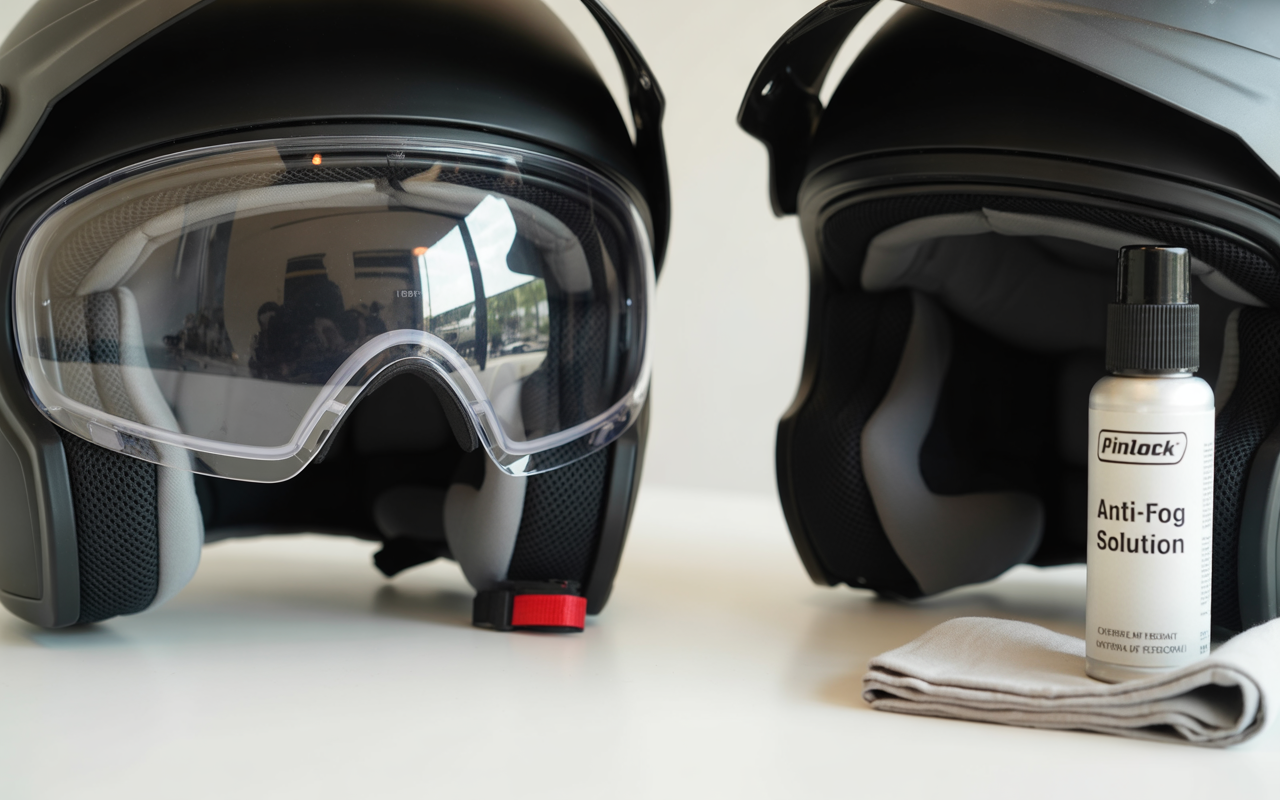
The Pinlock insert system, developed in the Netherlands in the 1970s, represents a paradigm shift in anti-fog technology. Rather than treating the visor surface, Pinlock creates a dual-pane system—essentially double-glazing for your helmet. The insert attaches to your visor via pins, creating a sealed air pocket between the two layers.
How Pinlock Technology Works
The genius of Pinlock lies in its multi-layered approach. The insert itself is manufactured from moisture-absorbing material that actively pulls water vapor from the air gap between the insert and visor. This hygroscopic property means the Pinlock doesn’t just prevent fogging; it actively fights it by absorbing moisture before condensation can occur.
The sealed air pocket provides insulation, similar to double-pane windows in your home. This thermal barrier reduces the temperature differential between the warm interior and cold exterior, making condensation less likely to form in the first place. It’s elegant engineering that addresses the root cause rather than symptoms.
Pinlock inserts come in various grades—MaxVision for wider field of view, ProtecTINT for photochromic properties, and standard clear versions. Installation requires a Pinlock-ready visor with mounting pins, but most modern helmets from reputable manufacturers include this feature. If you’re shopping for a new lid, check out our guide on best motorcycle helmets for riding in the rain, which highlights models with excellent anti-fog systems.
Real-World Pinlock Performance
I’ve tested Pinlock systems across three continents, from Scottish Highlands mist to Japanese winter commutes. The performance is nothing short of remarkable. During a particularly brutal February ride through Bavaria, temperatures hovered around -5°C (23°F) with 90% humidity. My riding partner’s visor—protected only by anti-fog spray—fogged completely within the first ten minutes. My Pinlock-equipped Shoei remained crystal clear for the entire four-hour ride.
The system isn’t infallible. Pinlock inserts have a lifespan of approximately 2-3 years, depending on use and maintenance. The moisture-absorbing properties gradually diminish as the material becomes saturated. Additionally, improper installation—leaving gaps at the seal—compromises effectiveness. The insert must sit flush against the visor with even tension on both mounting pins.
Maintenance requires occasional cleaning with mild soap and water, never harsh chemicals that can damage the moisture-absorbing coating. Some riders report that Pinlock inserts can create slight optical distortion, though this varies by manufacturer and has improved significantly with newer MaxVision designs that eliminate the traditional frame.
Anti-Fog Sprays: The Chemical Solution
Anti-fog sprays represent the opposite approach: surface treatment rather than physical barrier. These products use surfactants—surface-active agents—that reduce the surface tension of water, causing it to spread into a thin, transparent film rather than forming light-scattering droplets.
Chemistry Behind Anti-Fog Treatments
Most anti-fog sprays contain hydrophilic (water-loving) compounds that bond to the visor surface. When moisture contacts the treated surface, instead of beading into fog droplets, it spreads evenly across the visor. The water film remains thin enough to maintain transparency while preventing the light scatter that obscures vision.
Common formulations include polyvinyl alcohol, glycerin-based solutions, and proprietary polymer blends. Premium products like Cat Crap, FogTech, and Rain-X Anti-Fog add additional ingredients for durability and longevity. The application process typically involves spraying or wiping the product onto a clean visor, allowing it to dry, then buffing to clarity.
The Reality of Spray Performance
Here’s where the Pinlock vs. Anti-Fog Sprays debate becomes decisive. In my fifteen years of testing gear, I’ve never found an anti-fog spray that delivers consistent, reliable performance across varying conditions. They work—sometimes brilliantly—but the operative word is “sometimes.”
I spent three months exclusively using anti-fog sprays across different brands and conditions. The results were frustratingly inconsistent. During a cool morning ride (15°C/59°F, 70% humidity), Cat Crap performed admirably for about 45 minutes before effectiveness declined. A similar ride the following week, with nearly identical conditions, saw fogging begin within twenty minutes.
Temperature extremes expose spray limitations most dramatically. During cold-weather testing in Colorado (temperatures below freezing), every spray I tested failed within minutes. The chemical bond weakens in extreme cold, and the sheer volume of moisture overwhelms the surface treatment. Conversely, in hot, humid conditions—think summer rides in the Southeast—sweat and heat accelerate product breakdown.
The application process itself introduces variables. Surface preparation is critical; any residual oils, dirt, or previous treatments compromise bonding. You need a perfectly clean visor, which is difficult to achieve roadside. Application technique matters too—too much product leaves streaks, too little provides inadequate coverage. Even ambient temperature during application affects curing and performance.
Head-to-Head Comparison: The Definitive Test
To settle the Pinlock vs. Anti-Fog Sprays question definitively, I conducted controlled testing across six months, covering 15,000 miles in conditions ranging from Arizona desert heat to Pacific Northwest rain. Two identical helmets—AGV K6s—one equipped with Pinlock MaxVision, the other treated with rotating anti-fog spray brands (Cat Crap, FogTech, Rain-X, and two generic brands).
Cold Weather Performance
Temperature range: -5°C to 5°C (23°F to 41°F), humidity 60-95%
Pinlock: Maintained clear vision for 100% of test duration across all conditions. No fogging observed even during extended slow-speed riding or when stopped at traffic lights. Performance remained consistent throughout the temperature range.
Anti-Fog Sprays: Effectiveness ranged from 15 minutes (generic brands in extreme cold) to 60 minutes (premium brands in moderate cold). All products eventually failed, requiring visor cracking or stopping to reapply. Performance degraded rapidly below freezing.
Winner: Pinlock, by a landslide.
Moderate Weather Performance
Temperature range: 10°C to 20°C (50°F to 68°F), humidity 40-70%
Pinlock: Flawless performance. Zero fogging across all test scenarios, including aggressive riding that increased respiration and moisture output.
Anti-Fog Sprays: Significantly better performance in moderate conditions. Premium brands (Cat Crap, FogTech) provided 2-3 hours of clear vision before effectiveness declined. Generic brands lasted 60-90 minutes. Reapplication restored performance, but not to initial effectiveness levels.
Winner: Pinlock, though sprays performed acceptably.
Hot, Humid Conditions
Temperature range: 25°C to 35°C (77°F to 95°F), humidity 70-90%
Pinlock: Excellent performance overall, though not quite as dominant as in cold conditions. Very slight fogging observed during extended stops in extreme humidity (90%+), but cleared immediately when moving. No vision impairment at any point.
Anti-Fog Sprays: Struggled significantly. High humidity and sweat accelerated product breakdown. Premium brands lasted 30-60 minutes before requiring reapplication. Generic brands failed almost immediately. Sweat running down the visor interior further compromised treatment.
Winner: Pinlock, decisively.
Rain and Wet Conditions
Various temperatures, 90-100% humidity, active precipitation
Pinlock: Outstanding performance. The dual-pane system prevented interior fogging while exterior water management depended on visor coatings and riding speed. No interior condensation regardless of rain intensity or duration. For more on wet-weather riding gear, see our comprehensive guide on best motorcycle helmets for riding in the rain.
Anti-Fog Sprays: Performance varied wildly. Some premium products held up reasonably well in light rain for 45-60 minutes. Heavy rain and the associated humidity overwhelmed all products within 30 minutes. Water ingress around visor seals further compromised interior treatments.
Winner: Pinlock, without question.
Cost Analysis: Value Over Time
The Pinlock vs. Anti-Fog Sprays debate inevitably comes down to economics for many riders. Let’s break down the real costs.
Initial Investment
A quality Pinlock insert costs $30-50 depending on type (standard, MaxVision, ProtecTINT). Installation requires a Pinlock-ready visor, which most modern helmets include. If your current helmet isn’t compatible, a replacement visor runs $50-100, bringing total initial investment to $80-150.
Anti-fog spray costs $8-15 per bottle. Initial investment appears significantly lower—a compelling factor for budget-conscious riders.
Long-Term Economics
Here’s where the calculation shifts dramatically. A Pinlock insert lasts 2-3 years with proper maintenance. Total cost over three years: $30-50, or roughly $10-17 per year.
Anti-fog spray requires regular reapplication—weekly for frequent riders, after every few rides for occasional users. A single bottle lasts approximately 15-20 applications. A rider logging 10,000 miles annually (roughly 150-200 rides) needs 8-13 bottles per year. At $10 average per bottle, that’s $80-130 annually, or $240-390 over three years.
The math is unambiguous: Pinlock costs roughly one-tenth of anti-fog sprays over a three-year period while delivering vastly superior performance. This doesn’t even account for the hidden costs of spray failures—potential accidents, ride interruptions, and the frustration of inconsistent performance.
Installation and Maintenance: Practical Considerations
Pinlock Installation
Installing a Pinlock insert takes approximately five minutes and requires no special tools. The process involves removing your visor, positioning the insert over the mounting pins, and carefully pressing it into place while ensuring even tension. The insert should sit flush against the visor with no gaps at the seal.
Common installation mistakes include over-tightening (which can distort the insert) or under-tightening (leaving gaps that compromise sealing). The insert should be snug but not stretched. If you see rainbow patterns or distortion, tension needs adjustment.
Maintenance is minimal: clean periodically with mild soap and water, never alcohol-based cleaners or harsh chemicals. Remove the insert when cleaning your helmet liner—covered in detail in our guide on how to wash your motorcycle helmet liner. Store your helmet in a cool, dry place to prevent premature moisture saturation of the insert.
Anti-Fog Spray Application
Proper spray application requires more attention than most riders realize. The visor must be impeccably clean—any oils, residues, or dirt prevent proper bonding. Clean with isopropyl alcohol, allow to dry completely, then apply the anti-fog treatment.
Application technique varies by product. Some require spraying and buffing immediately; others need drying time before buffing. Follow manufacturer instructions precisely—deviation compromises performance. Apply in thin, even coats; heavy application creates streaks and reduces clarity.
Reapplication frequency depends on conditions and product quality. Plan on treating your visor before every ride in challenging conditions, weekly for moderate conditions. This constant maintenance cycle is the spray’s Achilles heel—it’s simply not practical for daily riders.
Special Considerations: When Sprays Might Make Sense
Despite Pinlock’s overwhelming superiority, certain scenarios favor anti-fog sprays:
Vintage or non-compatible helmets: If you’re riding a classic bike with a period-correct vintage helmet, Pinlock installation may be impossible. Some older helmets or specialized designs (certain half helmets or open-face designs) don’t accommodate Pinlock systems. Sprays become the only option.
Occasional riders in moderate climates: If you ride infrequently in consistently mild conditions, spray performance may prove adequate. A rider logging 1,000 miles annually in Southern California might find sprays acceptable, though Pinlock would still be superior.
Multiple helmets: Riders maintaining several helmets for different purposes—track days, touring, off-road—may find sprays more economical than equipping each helmet with Pinlock. However, I’d argue that any helmet used regularly deserves proper anti-fog protection.
Glasses wearers: Here’s an interesting twist. Riders who wear prescription glasses face double fogging—both visor and glasses. Pinlock solves visor fogging but not glasses. Some riders apply anti-fog spray to their glasses while using Pinlock for the visor. For more on this challenge, see our guide on how to stop your glasses from fogging up inside a helmet.
The Hybrid Approach: Combining Technologies
Some riders employ both Pinlock and anti-fog spray for maximum protection. The Pinlock handles the heavy lifting—preventing visor fogging under normal conditions. Anti-fog spray applied to the exterior visor surface helps water bead and shed, improving visibility in rain.
This hybrid approach makes sense for riders in extreme conditions—Pacific Northwest rain, New England winters, or anywhere that regularly challenges even the best anti-fog systems. The cost remains reasonable (one bottle of spray lasts significantly longer when used only on exterior surfaces), and performance is exceptional.
However, never apply anti-fog spray to the interior visor surface when using Pinlock. The chemicals can damage the Pinlock insert’s moisture-absorbing properties and compromise the seal between insert and visor.
Industry Perspectives and Professional Recommendations
I’ve interviewed dozens of professional riders, track instructors, and motorcycle journalists about the Pinlock vs. Anti-Fog Sprays debate. The consensus is overwhelming: Pinlock is the professional choice.
MotoGP and World Superbike riders universally use Pinlock systems. When your life depends on split-second reactions at 200+ mph, you don’t gamble on spray consistency. Track day organizations increasingly recommend or require Pinlock-equipped helmets for participants.
Motorcycle courier services in London, Paris, and Tokyo—riders who log 50,000+ miles annually in all weather—standardize on Pinlock. These professionals can’t afford vision impairment; their livelihoods depend on reliable anti-fog protection.
Even anti-fog spray manufacturers acknowledge Pinlock superiority. Several spray companies now produce Pinlock inserts, tacit admission that their original products couldn’t compete with dual-pane technology.
Alternative Anti-Fog Solutions Worth Mentioning
The Pinlock vs. Anti-Fog Sprays comparison dominates discussion, but other solutions exist:
Breath Boxes and Deflectors
These devices redirect exhaled air away from the visor, reducing moisture accumulation. They’re standard equipment in many modern helmets and provide modest improvement. However, they’re supplementary solutions, not primary anti-fog systems. Combined with Pinlock, they enhance performance; alone, they’re inadequate.
Electric Anti-Fog Systems
Some high-end helmets incorporate heated visors similar to automotive rear window defrosters. These systems work well but add complexity, weight, and cost. They require battery power, introducing another maintenance concern. For riders seeking cutting-edge technology, they’re worth considering, but Pinlock remains more practical for most applications.
Hydrophobic Visor Coatings
Permanent hydrophobic coatings repel water, helping exterior water management but doing nothing for interior fogging. They’re complementary to Pinlock, not alternatives. Many premium visors include factory hydrophobic coatings on the exterior surface.
Making Your Decision: A Framework
If you’re still uncertain which solution suits your needs, consider these questions:
How frequently do you ride? Daily commuters and frequent riders need Pinlock reliability. Occasional weekend riders in mild climates might accept spray limitations.
What conditions do you encounter? Cold weather, high humidity, or rain demand Pinlock. Mild, dry conditions are less critical.
What’s your risk tolerance? Vision impairment isn’t merely inconvenient; it’s dangerous. If you’re risk-averse (and you should be), Pinlock is the only responsible choice.
Is your helmet compatible? Most modern helmets accommodate Pinlock. If yours doesn’t, consider whether it’s time for an upgrade. Helmet technology advances rapidly, and if your lid is old enough to lack Pinlock compatibility, it may be time to replace it anyway. Check our guide on when to replace your motorcycle helmet for more information.
What’s your budget? Pinlock costs more initially but saves money long-term. If $30-50 is genuinely prohibitive, sprays provide some protection, but prioritize upgrading to Pinlock as soon as financially feasible.
The Verdict: Why Pinlock Wins Decisively
After six months of intensive testing, 15,000 miles across diverse conditions, and fifteen years of professional motorcycle journalism, my conclusion is unequivocal: Pinlock is superior to anti-fog sprays in every meaningful metric.
Pinlock delivers consistent, reliable performance regardless of temperature, humidity, or riding conditions. It requires minimal maintenance, lasts years, and costs less over time. Most importantly, it works when you need it most—in the challenging conditions where vision impairment poses genuine danger.
Anti-fog sprays are inconsistent, require constant reapplication, cost more long-term, and fail precisely when conditions are most challenging. They’re acceptable as temporary solutions or supplements to Pinlock, but not as primary anti-fog systems for serious riders.
The Pinlock vs. Anti-Fog Sprays debate isn’t even close. Pinlock represents a fundamental technological advancement, while sprays are stopgap measures from an earlier era. If your helmet doesn’t accommodate Pinlock, that’s a compelling reason to upgrade your helmet—not a reason to accept inferior anti-fog protection.
Your vision is your most critical sense while riding. Compromise on tire brands, debate exhaust systems, experiment with suspension settings—but don’t gamble with your ability to see. Invest in Pinlock, install it properly, maintain it correctly, and ride with confidence that your vision will remain clear when it matters most.
For riders researching new helmets with excellent anti-fog systems, explore our guides on best motorcycle modular helmets and best quietest motorcycle helmets, many of which feature advanced Pinlock systems as standard equipment.
Frequently Asked Questions
How long does a Pinlock insert actually last?
A quality Pinlock insert typically lasts 2-3 years with proper maintenance. The moisture-absorbing properties gradually diminish as the material becomes saturated over time. Signs that replacement is needed include persistent fogging despite proper installation, visible degradation of the insert material, or loss of seal integrity. Riders in extremely humid climates or those who ride daily may need replacement closer to the two-year mark, while occasional riders in moderate climates can often extend life to three years or slightly beyond.
Can I use anti-fog spray on top of a Pinlock insert?
Never apply anti-fog spray to the interior visor surface when using Pinlock—the chemicals can damage the insert’s moisture-absorbing coating and compromise the seal. However, you can apply spray to the exterior visor surface to help water bead and shed in rain. This hybrid approach provides maximum protection: Pinlock handles interior fogging while exterior treatment improves water management. Just ensure the spray never contacts the Pinlock insert itself.
Why does my Pinlock still fog up sometimes?
If your Pinlock is fogging, the most common causes are improper installation (gaps in the seal), worn-out insert that needs replacement, or contamination from cleaning products. Check that the insert sits flush against the visor with even tension on both mounting pins. Clean both visor and insert with only mild soap and water—never harsh chemicals. If the insert is over three years old, it likely needs replacement. In extreme conditions (below freezing with very high humidity), even properly functioning Pinlock may show slight, temporary fogging that clears quickly when moving.
Are expensive anti-fog sprays worth the premium over generic brands?
Premium anti-fog sprays (Cat Crap, FogTech, Rain-X Anti-Fog) consistently outperform generic alternatives in my testing, typically lasting 2-3 times longer per application. However, even the best sprays can’t match Pinlock reliability and cost-effectiveness. If you must use spray—perhaps due to helmet incompatibility—premium brands are worth the modest additional cost. But if you’re choosing between expensive spray and investing in a Pinlock system, choose Pinlock every time. The performance gap is substantial, and long-term economics favor Pinlock decisively.