“Dress for the slide, not the ride.” This timeless motorcycling adage exists for one simple reason—pavement is essentially a high-speed cheese grater at 60mph.
The physics are unforgiving: a standard cotton T-shirt disintegrates in just 0.03 seconds upon contact with asphalt, while proper motorcycle gear can withstand the abrasion for seconds or even minutes—often the difference between walking away from a crash and spending weeks in a hospital burn unit.
The reality of motorcycle riding combines exhilaration with risk. Even the most skilled riders can’t control every variable on the road, from distracted drivers to unexpected road hazards. What you can control is how protected your body is when the unexpected happens.
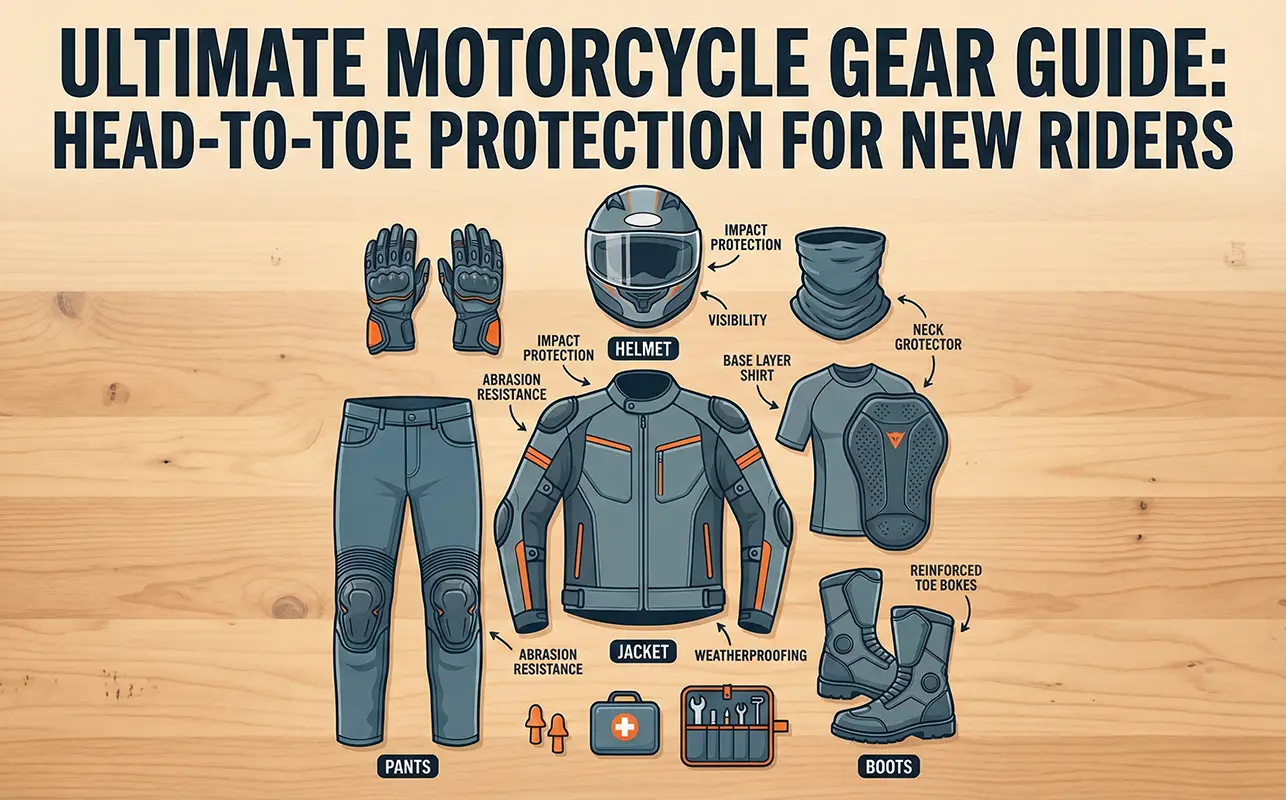
In this comprehensive guide, we’ll walk you through the essential “Holy Trinity” of motorcycle gear—helmet, jacket, and gloves—plus the crucial extras like proper boots and riding pants that complete your protective ensemble. Whether you’re a complete newcomer to motorcycling or looking to upgrade your current gear setup, this guide will help you make informed decisions to ride with both confidence and safety.
For those particularly interested in head protection (arguably your most critical piece of gear), we’ve created an Ultimate Guide to Motorcycle Helmets that dives deeper into this specific topic.
Let’s get started on building your protective arsenal—because the right gear doesn’t just save skin, it saves lives.
The Philosophy: What is “ATGATT”?
ATGATT stands for “All The Gear, All The Time” – a mantra that experienced riders live by. It’s not just a catchy acronym but a life-saving philosophy that emphasizes wearing complete protective gear every time you throw your leg over a motorcycle, regardless of distance, weather, or convenience.
The principle is simple: dress as if you’re going to crash today. Not because you’re planning to, but because you understand that motorcycle accidents rarely send advance notifications.
Why does ATGATT matter so much? Statistics reveal a sobering truth – approximately 75% of motorcycle accidents happen within just 5 miles of home. That quick trip to the corner store? Just as dangerous as a cross-country journey. When you crash, the pavement doesn’t care if you’re on mile 1 or mile 100 of your ride – it’s equally unforgiving.
Many new riders fall victim to the “it won’t happen to me” mindset, or believe they can predict when they might crash. The reality is that crashes often occur in the most mundane circumstances: a car pulling out unexpectedly, gravel in a corner, or a moment’s inattention. You don’t get to choose when accidents happen, which means you must always be prepared.
One of the most persistent myths in motorcycling is the comfort argument: “Gear is too hot” or “I can’t move properly in all that stuff.” Modern motorcycle gear has evolved dramatically. Today’s mesh jackets actually keep you cooler than riding in a T-shirt by preventing direct sun exposure while allowing airflow. Technical fabrics wick away sweat, armor is pre-curved for riding positions, and ventilation systems rival those in high-end automobiles.
As the saying goes, “Nothing is more uncomfortable than a skin graft.” Hospital recovery from road rash involves painful scrubbing of embedded debris from wounds, weeks of bandage changes, and potential surgeries. Compared to that, a slightly warm jacket seems like a minor inconvenience.
ATGATT isn’t about living in fear – it’s about freedom. Proper gear gives you the confidence to enjoy riding to its fullest, knowing you’ve taken responsible steps to protect yourself. It’s about acknowledging the risks of our passion and addressing them head-on, so we can focus on the joy of the ride rather than the “what ifs.”
#1: The Helmet (The Non-Negotiable)
Your helmet is the single most important piece of motorcycle gear you’ll ever own. It’s not just another accessory—it’s the difference between walking away from a crash and not walking away at all.
The Purpose
The primary function of a helmet is straightforward: to protect your brain from trauma during an impact. But modern helmets do much more than that. They shield your face from debris, wind, insects, and weather while reducing wind noise and fatigue during long rides.
A good helmet absorbs impact energy through its EPS (expanded polystyrene) liner, distributing forces that would otherwise be transferred directly to your skull and brain. The outer shell prevents penetration and provides abrasion resistance during slides across pavement.
Never Buy Used
This bears repeating: never purchase a second-hand helmet. Here’s why:
- You can’t see internal damage that compromises safety
- Previous impacts may have already compressed the protective foam
- Sweat, oils, and hair products from the previous owner degrade materials
- You don’t know if it’s been dropped or mishandled
- The comfort liner has conformed to someone else’s head shape
A helmet is a one-crash device. Even if it looks perfect on the outside, internal damage makes it ineffective for a second impact.
Safety Ratings Matter
When shopping for a helmet, always look for proper safety certifications:
- DOT (Department of Transportation): The minimum legal standard in the US
- ECE (Economic Commission for Europe): More rigorous testing than DOT
- Snell: Private foundation with the strictest standards
- FIM: The newest standard, used in professional racing
The more certifications a helmet has, the more testing it has undergone. At minimum, ensure your helmet meets DOT standards for street legality, but ECE or Snell certification provides additional peace of mind.
The Perfect Fit
A helmet that doesn’t fit properly won’t protect you properly. Period. When trying on helmets:
- It should be snug without causing pain
- No gaps should exist between the foam and your head
- Cheek pads should press firmly against your face
- The helmet shouldn’t rotate freely on your head
- You should feel even pressure all around
Remember that new helmets will break in slightly. If it’s comfortable in the store, it may be too loose after a few rides.
For a comprehensive exploration of helmet types, technologies, and detailed fitting instructions, check out our Ultimate Guide to Motorcycle Helmets. Your head deserves the best protection possible, and our detailed guide will help you make an informed decision.
#2: The Jacket (Your Second Skin)
When it comes to motorcycle protection, your jacket serves as your second skin—a critical barrier between you and the asphalt. A quality motorcycle jacket isn’t just about looking the part; it’s engineered to protect your torso, arms, and spine during a crash.
Leather vs. Textile: The Great Debate
Leather Jackets:
Leather has been the gold standard for motorcycle protection for decades, and for good reason. A high-quality leather jacket offers unmatched abrasion resistance, capable of withstanding slides across pavement that would shred lesser materials instantly.
- Pros: Superior abrasion resistance, molds to your body over time, classic look, typically lasts for many years
- Cons: Hot in summer, heavy, limited water resistance, higher initial investment
Leather jackets shine for sport riding, cruising, and anywhere high-speed crashes are a possibility. They age beautifully and often become more comfortable with each ride.
Textile/Mesh Jackets:
Modern textile jackets have revolutionized riding gear with technical fabrics that offer excellent protection while addressing leather’s shortcomings.
- Pros: Versatile in changing weather, often waterproof or water-resistant, better ventilation, typically lighter, easier to clean
- Cons: Generally less abrasion resistance than leather, may need replacement after a significant crash
Mesh variants provide exceptional airflow for hot weather riding while maintaining protective qualities. Many textile jackets feature removable thermal liners, making them true all-season options.
Armor (The Hidden Protection System)
A jacket’s outer material is only half the protection story. What truly elevates a riding jacket from casual wear is its armor system.
CE-Rated Armor: Always look for jackets with CE-rated armor in three critical impact zones:
- Shoulders: Protects during side impacts and slides
- Elbows: Safeguards one of your most vulnerable joints
- Back: Shields your spine (surprisingly, many jackets come with just a foam placeholder—invest in a proper CE-rated back protector)
The CE rating ensures the armor has been tested to European safety standards. Look for Level 1 (good) or Level 2 (better) ratings. Modern armor materials like D3O remain flexible until impact, when they instantly harden to absorb energy.
Fitment: Snug Is Safe
A properly fitting motorcycle jacket should feel snug without restricting movement. When trying on jackets:
- In riding position (arms forward), there should be no binding or pulling
- Armor should stay positioned over your impact points even when moving
- Sleeves should reach your wrists when arms are extended
- The back should fully cover your lower back even when leaning forward
Remember that leather will stretch slightly with wear, while textiles generally maintain their original fit. A jacket that’s too loose allows armor to shift during a crash, rendering it ineffective precisely when you need it most.
Choosing for Your Riding Style
Different riding disciplines benefit from specific jacket features:
- Commuting: Look for high visibility colors/reflective elements and weatherproofing
- Sport riding: More aggressive pre-curved fit, aerodynamic profile, and extra armor
- Touring: Multiple pockets, weatherproofing, and comfort for long days
- Adventure: Modular design with removable layers for changing conditions
- Cruising: More relaxed fit with style considerations that match your bike’s aesthetic
Whatever your riding style, never compromise on the essentials: abrasion resistance, impact protection, and proper fit. Your jacket isn’t just an accessory—it’s a crucial piece of safety equipment that could save your skin, literally.
For beginners, a quality textile jacket with good armor offers the best balance of protection, versatility, and value as you discover what type of riding you enjoy most.
Leather or Mesh? Read our comparison of Best Motorcycle Jackets for Beginners.
#3: Gloves (Save Your Hands)
When you crash on a motorcycle, your body instinctively reacts in one specific way—you put your hands out to break your fall. It’s pure human reflex, and it happens before you can even think about it. This instinct, while natural, makes your hands incredibly vulnerable during a motorcycle accident.
Without proper gloves, the results can be devastating. Asphalt acts like industrial-grade sandpaper at speed, capable of grinding away skin, tissue, and even bone in seconds. Hands that contact the road unprotected often require extensive reconstructive surgery, and some injuries can permanently affect your grip strength and dexterity.
Quality motorcycle gloves are designed specifically to address this vulnerability. The best ones feature palm sliders—hard plastic or composite materials positioned on your palm that allow your hand to slide rather than catch and twist during a fall. This seemingly small feature can prevent wrist fractures and severe soft tissue damage.
Knuckle protection is another critical element. Hard armor over your knuckles shields the delicate bones in your hands from direct impacts with the road, handlebars, or other vehicles. Look for CE-rated armor in this area for maximum protection.
When shopping for gloves, you’ll encounter two main styles:
Short Cuff Gloves: These end at or just above your wrist, offering excellent mobility and comfort, particularly in hot weather. They’re popular for urban riding and summer use. While convenient, they leave your wrists exposed and provide less protection in serious crashes.
Gauntlet Gloves: Extending several inches up your forearm, gauntlet gloves offer comprehensive protection by covering your wrists and the gap between your glove and jacket sleeve. They’re essential for track riding and advisable for highway speeds. In cold or wet conditions, the extra coverage also provides better weather protection.
Seasonality matters when selecting gloves. Summer gloves typically feature perforation or mesh panels for airflow, while winter gloves incorporate insulation and waterproofing. Many riders own multiple pairs to handle different weather conditions.
Remember that glove fit is crucial—too tight and they’ll restrict blood flow and cause discomfort; too loose and the protective elements won’t stay in place during a crash. Your fingers should reach the end of the finger stalls without being cramped, and you should be able to make a fist without excessive restriction.
For the best protection-to-investment ratio, quality motorcycle gloves are one of the most important pieces of gear you can buy. Your hands are not only vulnerable in crashes—they’re also essential tools for daily life that deserve proper protection every time you ride.
Find the right pair for your ride in our Motorcycle Gloves Buying Guide.
#4: Boots (Protect Your Ankles)
When it comes to motorcycle safety gear, boots are often overlooked in favor of helmets and jackets. Yet, your feet and ankles are incredibly vulnerable in a crash. Many new riders make the dangerous mistake of hopping on their bike wearing everyday sneakers, not realizing they’re putting themselves at serious risk.
Why Sneakers Fail in Crashes
Your average athletic shoes or casual footwear simply aren’t designed for motorcycle accidents. Here’s why they fail when you need protection most:
- They come off instantly: In a crash, the violent forces can literally tear sneakers right off your feet, leaving you completely unprotected.
- Zero crush protection: Motorcycles are heavy (400-800+ pounds), and if your bike falls on your foot, sneakers provide virtually no resistance against crushing injuries.
- No ankle support: Sneakers typically end below the ankle, leaving this complex joint completely exposed during impacts.
- Poor abrasion resistance: Canvas and mesh materials disintegrate almost instantly upon contact with pavement, offering less than a second of protection before your skin meets the road.
- No torsional rigidity: In a crash, your foot can twist unnaturally, causing severe ligament damage that proper motorcycle boots prevent.
Essential Features to Look For
When shopping for proper motorcycle boots, prioritize these critical safety features:
- Over-ankle coverage: This is non-negotiable. Your boots must extend above your ankles to provide crucial support and protection to this vulnerable joint.
- Stiff, reinforced sole: Look for boots with solid, inflexible soles that resist crushing and prevent foot injuries if your bike falls on you.
- Oil-resistant grip: Gas stations and roads often have oil slicks that become extremely slippery. Oil-resistant soles provide traction when you put your foot down.
- Shift pad reinforcement: Good motorcycle boots have extra material on the left toe area to prevent premature wear from shifting gears.
- Impact protectors: Quality boots include reinforced toe boxes, heel cups, and ankle protectors to absorb impact energy.
- Water resistance: Being stuck with soaked feet can be miserable and distracting – a safety hazard in itself.
Different Types for Different Riding Styles
Your riding style should influence your boot selection:
- Touring/Adventure Boots: Waterproof, comfortable for all-day wear, with moderate protection. Perfect for long-distance riders who might also do some walking.
- Sport/Racing Boots: Maximum protection with rigid construction, reinforced panels, and slider pucks. These prioritize safety over walking comfort.
- Cruiser/Custom Boots: Often styled like traditional work or western boots but with added motorcycle-specific protection features.
- Urban/Commuter Boots: Look like casual footwear but incorporate hidden protection. Great for riders who need to walk around at their destination.
- Dual-Sport/Off-Road Boots: Tall, highly armored boots designed for dirt riding with extreme ankle protection and impact resistance.
Remember, your feet control crucial motorcycle functions—shifting, rear braking, and balancing at stops. Protecting them isn’t just about crash safety; it’s about maintaining proper control of your motorcycle at all times.
Don’t ride in Jordans. Check out our list of Best Motorcycle Riding Shoes & Boots.
#5: Pants (Jeans Don’t Count)
When it comes to motorcycle gear, regular jeans are perhaps the most dangerous myth in rider protection. Many riders believe their trusty Levi’s or other denim brands provide adequate protection on the road. Let’s be crystal clear: standard jeans offer virtually no protection in a motorcycle accident.
The Denim Deception
Regular denim typically fails within 0.5 seconds of contact with asphalt at road speeds. That’s barely enough time to realize you’re sliding before your skin meets the pavement. Laboratory tests have shown that standard jeans burst instantly upon impact and abrasion, leaving nothing between your skin and the road.
Even “heavy-duty” work jeans aren’t much better. The difference between 12oz denim and 14oz denim is negligible when you’re sliding across pavement at 40mph. Both will disintegrate almost immediately.
Real Protection Options
Fortunately, the motorcycle apparel industry has developed several practical solutions that offer genuine protection while maintaining comfort and style:
1. Riding Jeans with Protective Lining
Modern riding jeans look identical to regular denim but feature protective materials like Kevlar, Aramid, or Dyneema in critical impact zones. These specialized fabrics can withstand abrasion for several seconds or even minutes—crucial time that protects your skin during a slide.
Look for jeans with:
- Aramid or Kevlar lining in the seat, hips, and knees
- Pockets for optional knee and hip armor
- Stretch panels for riding comfort
- Reinforced stitching that won’t burst on impact
2. Overpants: The Commuter’s Solution
For those who ride to work or other destinations where regular clothes are needed, overpants are the perfect solution. These protective pants:
- Slip easily over your regular clothes
- Often feature full-length side zippers for quick on/off
- Include waterproofing for all-weather riding
- Provide comprehensive protection with built-in armor
- Can be removed and stored once you reach your destination
3. Textile or Leather Riding Pants
For maximum protection, dedicated riding pants made from abrasion-resistant textiles or leather offer the highest level of safety:
- Multiple layers of protective material
- Integrated armor at the knees and hips
- Reinforced stitching and impact zones
- Connection zippers to attach to riding jackets
The Cost of Not Wearing Proper Pants
Road rash on the legs is not only excruciatingly painful but often requires skin grafts and extensive recovery time. Even at relatively low speeds, unprotected legs can suffer severe damage that takes months to heal and leaves permanent scarring.
Consider this: would you rather spend $150-$200 on protective riding pants, or thousands on medical bills and weeks of painful recovery? When viewed through this lens, proper riding pants aren’t an expense—they’re an investment in your future mobility and well-being.
Your legs deserve the same level of protection as the rest of your body. Don’t leave them vulnerable with inadequate coverage that gives only the illusion of protection.
Ride to work? Check out our review of the Best Kevlar Riding Jeans.
Budgeting: In What Order Should You Buy?
Let’s face it—motorcycle gear isn’t cheap, and dropping $1,500+ all at once isn’t realistic for many new riders. The good news? You don’t need to buy everything simultaneously. Here’s a strategic approach to building your gear collection without breaking the bank.
The Priority List (Buy in This Order)
- Helmet ($150-$300) — This is non-negotiable and should be your first purchase. Your brain is irreplaceable, and a quality helmet prevents catastrophic injury. Even at the lower end of this range, you can find DOT and ECE certified helmets that provide solid protection. Brands like HJC and Bell offer excellent entry-level options.
- Gloves ($50-$100) — These come second because hands are usually the first body part to hit the ground in a fall. They’re also relatively affordable. Look for gloves with palm sliders and knuckle protection. Summer gloves typically run $50-75, while winter/waterproof options might reach $100.
- Jacket ($150-$300) — After protecting your head and hands, your torso needs attention. A good entry-level textile jacket with CE-rated armor in the shoulders and elbows will run about $150-200. If you can stretch to $250-300, you’ll get better ventilation, waterproofing, and possibly a back protector included.
- Boots ($100-$200) — Once you’ve covered the essentials above, proper motorcycle boots should be next. Entry-level riding shoes that cover the ankle start around $100, while more substantial boots with additional protection features cost $150-200.
- Pants ($100-$200) — Complete your gear set with proper riding pants. Basic textile riding pants or Kevlar-lined jeans typically start around $100, with more feature-rich options reaching $200.
Tips for Building Your Kit Gradually
- Start with the essentials: Helmet and gloves provide critical protection for a relatively modest investment.
- Shop end-of-season sales: Winter is great for buying summer gear at a discount, and vice versa.
- Consider last year’s models: Manufacturers often discount previous year models when new ones arrive.
- Don’t compromise on the helmet: If you need to save somewhere, do it on items lower down the priority list.
- Upgrade incrementally: Start with basic protection in all categories, then gradually replace items with better versions as your budget allows.
- Multi-season versatility: When possible, choose gear that works across multiple seasons with liners or vents.
- Buy once, cry once: It’s better to save a bit longer for quality gear than to buy cheap gear that needs replacing soon.
Remember that even basic, properly designed motorcycle gear offers dramatically more protection than regular clothing. Building your kit gradually using this priority system ensures you’re allocating your budget to protect the most vulnerable areas first.
Gear for All Seasons: Adapting Your Kit to Weather Conditions
Motorcycling isn’t just a fair-weather activity. With the right gear adaptations, you can comfortably and safely ride through scorching summers, frigid winters, and everything in between. The key is understanding how to modify your gear setup for different conditions while maintaining protection.
Hot Weather Riding
When temperatures soar, the temptation to shed gear becomes strong—resist it. Modern hot-weather gear offers both protection and cooling:
- Mesh jackets and pants: These feature large ventilation panels that allow significant airflow while maintaining protective armor placement. Look for gear with removable waterproof liners for versatility.
- Perforated leather: High-quality perforated leather gear provides excellent protection with improved breathability. It’s ideal for sport riding in hot conditions.
- Cooling vests and neck wraps: These specialized garments use evaporative cooling technology to help regulate your core temperature on extremely hot days.
- Ventilated helmets: Helmets with multiple intake and exhaust vents create airflow that keeps your head cool. Some premium models feature adjustable vents you can open or close as needed.
Remember that dehydration is a serious risk in hot weather. A hydration pack that fits under or over your jacket can be a lifesaver on long summer rides.
Cold Weather Solutions
Cold weather riding requires thoughtful layering and specialized gear:
- Base layers: Start with moisture-wicking thermal base layers that trap heat while moving sweat away from your skin.
- Mid layers: Insulating mid layers like fleece or down vests provide crucial warmth without excessive bulk.
- Heated gear: Electric heated jackets, gloves, pants, and even socks can transform winter riding. They connect to your motorcycle’s battery and provide adjustable warmth.
- Wind protection: Ensure your outer layer is windproof. Wind chill at highway speeds can drop the effective temperature by 20-30 degrees.
- Neck and face protection: A balaclava, neck gaiter, or thermal mask prevents cold air from entering your helmet and jacket collar.
- Hand guards: For extreme cold, consider installing handlebar-mounted wind deflectors that shield your gloved hands from the freezing airflow.
Conquering Rain and Wet Conditions
Riding in the rain is unavoidable for most motorcyclists. Here’s how to stay dry:
- Waterproof outer layers: Invest in quality rain gear designed specifically for motorcycling. Look for sealed seams, storm flaps over zippers, and adjustable closures at wrists and ankles.
- One-piece rain suits: These provide superior water protection compared to separate jackets and pants, as there’s no gap at the waist for water to enter.
- Water-resistant vs. waterproof: Understand the difference. Water-resistant gear will eventually soak through in sustained rain, while truly waterproof gear (often Gore-Tex or similar) will keep you dry for hours.
- Glove covers and boot gaiters: These supplemental items help keep your extremities dry when your regular gloves and boots aren’t fully waterproof.
- Anti-fog solutions: Apply anti-fog treatment to your visor or install a Pinlock insert to maintain visibility in wet, humid conditions.
Layering Techniques for Changing Conditions
The secret to all-season riding is mastering the art of layering:
- The 3-layer system: Base layer (moisture management), mid layer (insulation), outer layer (protection and weather resistance).
- Modular approach: Choose gear with removable thermal and waterproof liners that can be added or removed as conditions change during your ride.
- Packable layers: Carry compact emergency layers like a lightweight rain jacket or thermal liner that can be easily stowed in saddlebags or tank bags.
- Venting strategy: Learn how to use your gear’s ventilation systems effectively. Strategic opening and closing of vents can help regulate temperature without stopping to change layers.
Seasonal Buying Strategies
Building an all-weather gear collection requires smart purchasing decisions:
- Invest in versatile pieces first: Multi-season jackets with removable liners offer the best value for beginners.
- End-of-season sales: Buy winter gear in spring and summer gear in fall when retailers offer deep discounts to clear inventory.
- Prioritize extremes: If you ride year-round, invest most heavily in gear for your region’s most extreme conditions, whether that’s intense heat, bitter cold, or heavy rain.
- Gradual expansion: Start with a high-quality all-season jacket and pants, then add specialized pieces for extreme conditions as your budget allows.
With the right gear adaptations and layering strategies, there’s virtually no weather condition that should keep you off your motorcycle. The old saying holds true: “There’s no such thing as bad weather, only inappropriate clothing.”
Motorcycle Gear Maintenance: How to Make Your Gear Last
Proper maintenance not only extends the life of your motorcycle gear but also ensures it performs optimally when you need it most. Let’s explore how to care for each piece of your protective equipment.
Helmet Maintenance
Your helmet is your most important piece of safety equipment and requires special care:
- Regular cleaning: Wipe the exterior with mild soap and water. Never use harsh chemicals, gasoline, or glass cleaners as they can damage the shell.
- Visor care: Clean with warm water and mild soap. Apply anti-fog treatment as needed.
- Interior cleaning: Remove the liner (if possible) and hand wash with mild detergent. For detailed instructions, check out our guide on How to Wash Your Motorcycle Helmet Liner.
- Replacement timeline: Even without crashes, helmets should be replaced every 5-7 years as materials degrade. For more information about when it’s time for a new helmet, read our article on When to Replace Your Motorcycle Helmet.
Leather Gear Care
Leather jackets, pants, and gloves require specific maintenance:
- Regular wiping: After rides, wipe down with a damp cloth to remove bugs and road grime.
- Conditioning: Apply leather conditioner 2-4 times per year to prevent cracking and maintain water resistance.
- Damage repair: Small tears should be repaired immediately before they spread.
- Storage: Hang jackets on wide, padded hangers. Never store leather in plastic bags—use breathable covers instead.
Textile Gear Maintenance
For mesh and textile jackets, pants, and gloves:
- Washing: Follow manufacturer instructions—typically machine washable on gentle cycle with armor removed.
- Waterproofing: Reapply water-repellent treatments annually or when you notice water no longer beading on the surface.
- Zipper care: Keep zippers clean and occasionally apply zipper lubricant to ensure smooth operation.
- Repairs: Address any tears or seam separations immediately to prevent further damage.
Boot Care
Motorcycle boots last longer with proper maintenance:
- Cleaning: Remove dirt with a brush and damp cloth. For leather boots, use appropriate leather cleaners.
- Conditioning: Apply leather conditioner to prevent cracking.
- Sole inspection: Check regularly for wear. Many boots have replaceable soles.
- Drying: If boots get wet, stuff with newspaper and dry naturally away from direct heat sources.
Storage Recommendations
Proper storage during the off-season is crucial:
- Clean before storing: Always clean all gear thoroughly before long-term storage.
- Climate control: Store in a cool, dry place away from direct sunlight and extreme temperatures.
- Helmet storage: Place on a shelf or helmet stand, not on the ground or hanging by straps.
- Avoid compression: Don’t stack heavy items on top of gear, which can damage armor and protective elements.
- Air circulation: Ensure gear has proper ventilation to prevent mold and mildew.
Remember that well-maintained gear not only lasts longer but provides better protection. A small investment of time in maintenance can save you hundreds of dollars in premature replacements and, more importantly, could save your skin in a crash.
Advanced Safety Features: Beyond Basic Protection
Today’s motorcycle gear has evolved far beyond simple padding and abrasion resistance. Modern technology has introduced revolutionary safety features that can significantly enhance rider protection. For newer riders especially, understanding these advanced options can be the difference between a close call and a serious injury.
Airbag Systems: Personal Crash Protection
Motorcycle airbag technology has made remarkable strides in recent years. Unlike car airbags that deploy from the dashboard, motorcycle airbags are integrated into vests or jackets worn by the rider. These systems detect crash scenarios in milliseconds and inflate to protect critical areas like the spine, chest, and collarbones.
Most airbag systems fall into two categories:
- Tethered systems: Connected physically to your motorcycle and deploy when you’re separated from the bike
- Autonomous systems: Use sophisticated sensors and algorithms to detect crash dynamics without physical connections
Brands like Dainese, Alpinestars, and Helite offer various options ranging from $400 to $2,500. While expensive, these systems provide protection that conventional armor simply cannot match, especially for vital organs and the spine.
Impact-Activated Protection: Smart Armor
Beyond airbags, impact-activated materials represent the cutting edge of motorcycle protection. These materials remain flexible during normal riding but instantly harden upon impact:
- D3O: A soft, flexible material that instantly stiffens when struck
- SAS-TEC: Viscoelastic foam that progressively hardens as impact force increases
- PORON XRD: Ultra-thin material that absorbs up to 90% of impact energy
These smart materials allow for more comfortable, less bulky gear without sacrificing protection. Many premium jackets and pants now incorporate these technologies in critical impact zones.
Visibility Enhancements: Be Seen, Stay Safe
Being visible to other road users is crucial for accident prevention. Modern gear offers several high-tech visibility solutions:
- Photochromatic visors: Automatically adjust tint based on light conditions
- Retroreflective materials: Normal-looking during day, brilliantly reflective at night
- LED integration: Jackets with built-in lighting systems for enhanced visibility
- Hi-viz color options: Scientifically proven to increase driver awareness
For new riders especially, investing in gear with enhanced visibility features is one of the most cost-effective safety upgrades you can make.
Connected Gear: The Smart Riding Revolution
The latest generation of motorcycle gear incorporates connectivity features that enhance both safety and convenience:
- Bluetooth-integrated helmets: Allow hands-free communication and navigation
- Crash detection and notification: Some smart helmets can detect accidents and alert emergency contacts
- Performance tracking: Systems that monitor riding dynamics and provide feedback
- Heads-up displays (HUDs): Project critical information directly onto your visor
While these features add cost, they can significantly enhance the riding experience while providing additional safety benefits.
Cost vs. Benefit: Making Smart Investments
For new riders, the array of advanced safety options can be overwhelming—and expensive. Here’s a practical approach to prioritizing your investments:
- Start with the essentials: A quality helmet, abrasion-resistant jacket with basic armor, gloves, boots, and riding pants
- Upgrade strategically: Identify your most common riding scenarios and invest accordingly
- Consider used options: Some gear (except helmets) can be purchased used to save money
- Look for integrated solutions: A jacket with built-in advanced armor may cost less than buying pieces separately
Remember that even basic gear with proper certification offers substantial protection. Advanced features provide incremental benefits that may be worth the investment as your riding progresses.
The bottom line? Advanced safety features represent a significant leap forward in motorcycle protection technology. While they add cost, they also add capabilities that were unimaginable just a decade ago. As a new rider, understanding these options helps you make informed decisions about how to allocate your gear budget for maximum safety benefit.
Common Rookie Mistakes When Buying Motorcycle Gear
Every new rider makes mistakes when building their first gear collection. Unfortunately, some of these errors can have serious consequences when the rubber meets the road—or worse, when you meet the road unexpectedly.
Prioritizing Style Over Safety
It’s tempting to choose gear based on aesthetics alone. That vintage-style leather jacket might look fantastic, but if it lacks proper armor inserts and abrasion resistance, it’s essentially an expensive fashion statement that offers minimal protection.
Many beginners are drawn to “cool-looking” helmets with flashy graphics or minimalist designs without considering the safety ratings or protection level. Remember: the most stylish gear in the world won’t look good in a hospital gown.
Wrong Sizing: Too Loose or Too Tight
Properly fitted gear is crucial for both comfort and protection. Many new riders make these common sizing mistakes:
- Too loose: Oversized helmets can rotate during impact, negating their protective qualities. Loose jackets allow armor to shift away from impact zones.
- Too tight: Overly tight helmets cause headaches and pressure points. Restrictive jackets limit mobility and can be dangerous when you need to maneuver quickly.
Gear should feel snug without being uncomfortable. If you can easily pull your helmet off without unbuckling the strap, it’s too large. If your jacket armor doesn’t stay positioned over your joints, it’s not the right fit.
Skipping Certain Gear Pieces
“I’ll just wear regular jeans” or “Tennis shoes are fine for short rides” are phrases that precede many preventable injuries. The “partial ATGATT” approach is a dangerous compromise.
Lower body protection is often the first to be sacrificed. Regular jeans disintegrate in seconds during a slide, and ankles are incredibly vulnerable in crashes. Don’t fall into the trap of thinking certain gear pieces are optional based on ride length or perceived risk.
Buying Used Protective Items
While purchasing used motorcycles is common practice, buying used safety gear—especially helmets—is a serious mistake. You simply cannot know:
- If the helmet has been in a previous crash (which compromises its integrity)
- How it’s been stored (heat and sunlight degrade materials)
- If the interior padding has broken down
- The actual age of the helmet (they should be replaced every 5 years)
Save money elsewhere. Your brain protection deserves to be new, certified, and with a known history.
Ignoring Proper Certifications
Those $40 helmets on Amazon might seem like a bargain, but without proper safety certifications, they’re essentially plastic hats. Look for these important standards:
- DOT (Department of Transportation) – minimum legal standard in the US
- ECE (Economic Commission for Europe) – comprehensive testing standard
- SNELL – rigorous independent testing standard
The same applies to armor in jackets and pants—look for CE-rated protection. These certifications exist for a reason: they ensure your gear will perform when you need it most.
Remember, purchasing motorcycle gear is investing in your safety. Taking shortcuts or making these common mistakes can literally be the difference between walking away from a crash or not walking again at all.
Conclusion: Gearing Up for the Road Ahead
Motorcycle gear isn’t just an accessory—it’s an essential part of the riding lifestyle that serves dual purposes. First and foremost, quality gear stands as your personal shield against road hazards, creating a crucial barrier between your skin and the unforgiving pavement. But beyond safety, well-chosen gear enhances your overall riding experience through improved comfort during long rides, protection from the elements, and yes—that undeniable cool factor that comes with looking like a proper rider.
Remember that building your gear collection is a journey. Start with the fundamentals—a quality helmet that meets safety standards, protective gloves, and a proper riding jacket—then expand your collection as your budget allows. The investment you make in quality gear pays dividends in both safety and riding enjoyment.
Whether you’re commuting daily or planning weekend adventures, embracing the ATGATT philosophy (All The Gear, All The Time) will ensure you’re always prepared for whatever the road may bring. Your motorcycle journey begins with the right equipment, and there’s no better place to start than with proper head protection. Ready to find the perfect helmet for your riding style? Head over to our Ultimate Guide to Motorcycle Helmets to discover everything you need to know about protecting your most valuable asset.
Ride safe, ride prepared, and enjoy the journey!
FAQs About Motorcycle Gear
What does ATGATT mean and do I really need to follow it?
ATGATT stands for “All The Gear, All The Time” and yes, you should follow it religiously. Statistics show that approximately 75% of motorcycle accidents happen within just 5 miles of home, proving that even short trips carry significant risk. You can’t predict when an accident will happen, so wearing full protective gear every single ride—regardless of distance or weather—is the only way to ensure you’re protected when the unexpected occurs.
Can I wear regular jeans instead of motorcycle pants?
No, regular jeans provide virtually no protection in a motorcycle accident. Standard denim disintegrates in approximately 0.5 seconds upon contact with asphalt at road speeds, leaving your skin completely exposed. You need either riding jeans with Kevlar or Aramid lining, textile riding pants with armor, or overpants that slip over your regular clothes. The cost difference between regular jeans and protective riding pants is minimal compared to the medical bills and recovery time from severe road rash.
Why can’t I buy a used motorcycle helmet?
Used helmets are dangerous because you cannot see internal damage that compromises their protective capabilities. The helmet may have been dropped or involved in a previous crash, which compresses the protective foam and renders it ineffective for future impacts. Additionally, sweat, oils, and hair products from the previous owner degrade the materials over time. Since helmets are designed as one-crash devices, buying used means you’re gambling with your most important piece of safety equipment.
How much should I budget for a complete set of motorcycle gear?
A quality starter set of motorcycle gear typically costs between $600-$1,200 total. This breaks down to approximately $150-$300 for a helmet, $50-$100 for gloves, $150-$300 for a jacket, $100-$200 for boots, and $100-$200 for pants. You don’t need to buy everything at once—prioritize in this order: helmet first (non-negotiable), then gloves, jacket, boots, and finally pants. This allows you to build your protective kit gradually while ensuring the most critical areas are protected from day one.
What’s the difference between leather and textile motorcycle jackets?
Leather jackets offer superior abrasion resistance and durability, making them ideal for high-speed riding, but they’re heavy, hot in summer, and have limited water resistance. Textile jackets provide good protection with better versatility—they’re often waterproof, lighter, more breathable, and easier to clean. Many textile jackets feature removable liners for all-season use. For beginners, a quality textile jacket with CE-rated armor offers the best balance of protection, versatility, and value while you discover your preferred riding style.
Do motorcycle boots really make a difference compared to regular shoes?
Absolutely. Regular sneakers or shoes can literally be torn off your feet during a crash, leaving you completely unprotected. They provide zero crush protection if your motorcycle falls on your foot and offer no ankle support during impacts. Proper motorcycle boots extend above the ankle, feature reinforced soles to resist crushing, include oil-resistant grip for traction, and have impact protectors at vulnerable points. Your feet control shifting, braking, and balance—protecting them isn’t optional.
What safety certifications should I look for in a motorcycle helmet?
Always look for DOT (Department of Transportation) certification as the minimum legal standard in the United States. For better protection, seek helmets with ECE (Economic Commission for Europe) or Snell certification, which involve more rigorous testing protocols. FIM certification is the newest standard used in professional racing. The more certifications a helmet carries, the more comprehensive testing it has undergone. Never purchase a helmet without at least DOT certification, as it won’t be legal for street use and may not provide adequate protection.
Can I wear the same gear year-round or do I need different gear for different seasons?
While some versatile gear works across multiple seasons, most riders benefit from having weather-specific options. Modern mesh jackets with removable liners can handle spring through fall, but extreme summer heat or winter cold typically requires specialized gear. For hot weather, look for mesh jackets with ventilation panels and perforated materials. For cold weather, invest in thermal base layers, heated gear, and windproof outer layers. Many experienced riders own at least two jacket setups—one for warm weather and one for cold—plus rain gear for wet conditions.
What is CE-rated armor and why does it matter in motorcycle gear?
CE-rated armor refers to protective padding that has been tested and certified to European safety standards for impact absorption. This armor is strategically placed in jackets and pants at high-impact zones like shoulders, elbows, knees, hips, and the back. CE Level 1 provides good protection, while CE Level 2 offers superior impact absorption. Without CE-rated armor, your gear is essentially just clothing with minimal protective value. Always verify that your jacket and pants include CE-rated armor rather than basic foam padding, especially for the back protector which many manufacturers skimp on.
How do I know if my motorcycle gear fits properly?
Proper fit is crucial for gear to function correctly during a crash. Your helmet should be snug without causing pain, with no gaps between foam and your head, and it shouldn’t rotate freely when you turn your head. Jackets should feel tight enough that armor stays positioned over your joints even when moving, with sleeves reaching your wrists when arms are extended forward in riding position. Gloves should allow you to make a fist without excessive restriction, with fingers reaching the end of finger stalls. Boots must extend above your ankles with no heel lift when walking. Gear that’s too loose allows armor to shift away from impact zones, while gear that’s too tight restricts movement and blood flow.