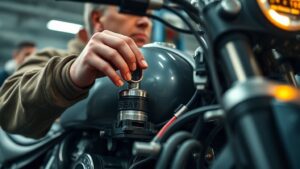
Understanding how to repair ignition coil motorcycle systems is an essential skill that every motorcycle owner should consider developing. The ignition coil serves as the heart of your motorcycle’s electrical system, transforming low voltage from the battery into the high voltage needed to create a spark at the spark plug. When this component fails, your bike won’t start, will misfire, or will run poorly, leaving you stranded and frustrated.
Learning how to repair ignition coil motorcycle issues yourself offers significant benefits beyond just getting back on the road. First and foremost, it’s about safety and reliability. A faulty ignition coil can cause unpredictable engine behavior, potentially creating dangerous situations while riding. By mastering this repair, you ensure your motorcycle operates at peak performance, providing consistent power delivery and reliable starting.
The financial aspect is equally compelling. A professional shop will typically charge between $150 to $400 for ignition coil diagnosis and replacement, including labor costs of $75-$150 per hour. By performing this repair yourself, you’ll only pay for the replacement coil (if needed), which ranges from $30 to $150 depending on your motorcycle model. That’s a potential savings of $120 to $250 or more.
Difficulty Level: Intermediate. This task requires basic mechanical knowledge, the ability to use a multimeter, and comfort working with electrical components.
Time Required: 2-4 hours for a complete diagnosis and repair, depending on your motorcycle’s configuration and accessibility of components.
Cost Savings: $120-$250 compared to professional shop rates.
Tools & Materials Needed

Before beginning your ignition coil repair, gather all necessary tools and materials. Having everything prepared prevents frustration mid-project and ensures safety.
Essential Tools:
- Digital multimeter with ohm-reading capability
- Socket set (8mm, 10mm, 12mm, and 14mm most common)
- Combination wrench set (metric)
- Screwdriver set (Phillips and flathead)
- Needle-nose pliers
- Wire brush (brass bristle preferred)
- Torque wrench (foot-pound and inch-pound)
- Spark plug socket with rubber insert
- Flashlight or headlamp
- Camera or smartphone (for documentation)
Materials & Consumables:
- Replacement ignition coil (OEM or quality aftermarket)
- Dielectric grease
- Electrical contact cleaner spray
- Fine-grit sandpaper (400-600 grit)
- Nitrile gloves (chemical-resistant)
- Shop towels or lint-free rags
- Zip-ties or wire organizers
- Electrical tape (high-quality vinyl)
- Anti-seize compound
- Service manual for your specific motorcycle model
Optional but Recommended:
- Magnetic parts tray
- Work mat or cardboard
- Battery tender or trickle charger
- Compressed air canister
Preparation & Safety

Proper preparation is critical when learning how to repair ignition coil motorcycle systems. Begin by positioning your motorcycle on a level surface with adequate lighting. If available, use a center stand or quality motorcycle jack to stabilize the bike. Side stands work but provide less stability for extended work sessions.
Ensure the engine is completely cool before starting. Ignition coils can retain heat for 30-45 minutes after riding, and surrounding components may be even hotter. Touch-test metal components cautiously before working.
Disconnect the negative battery terminal first, then the positive terminal. This prevents accidental shorts and protects sensitive electronic components. Wrap the disconnected terminals with electrical tape or cloth to prevent accidental contact with the battery posts.
Consult your motorcycle’s service manual for specific torque specifications, wire color codes, and coil location. Take photographs of all wire connections and component positions before disassembly. These photos are invaluable during reassembly.
Safety Warning Block:
- Electrical Shock Hazard: Ignition coils produce extremely high voltage (15,000-45,000 volts). Never touch coil terminals or spark plug wires with the ignition on. Even with the key off, coils can store residual charge.
- Battery Acid: Wear nitrile gloves and eye protection. Battery acid causes severe chemical burns. Have baking soda and water nearby for neutralization.
- Fire Hazard: Work in a well-ventilated area away from open flames. Gasoline vapors can ignite from electrical sparks.
- Pinch Points: Keep fingers clear when lowering fuel tanks or side panels that could trap hands.
- Chemical Exposure: Contact cleaners and solvents can cause skin irritation and respiratory issues. Use in ventilated areas with appropriate PPE.
- Hot Surfaces: Even after cooling, exhaust components and engine cases can cause burns. Always verify temperature before touching.
Step-by-Step Guide: How to Repair Ignition Coil Motorcycle

Step 1: Initial Diagnosis and Symptom Verification
Before physically working on the ignition coil, confirm that it’s actually the problem. Common symptoms of ignition coil failure include hard starting, engine misfiring, loss of power at high RPM, rough idling, or complete failure to start. However, these symptoms can also indicate spark plug issues, bad connections, or CDI/ECU problems.
Start by checking the battery voltage with your multimeter. Set the meter to DC voltage and touch the red probe to the positive terminal and black probe to the negative terminal. A healthy battery should read 12.6-12.8 volts when fully charged. If below 12.4 volts, charge the battery before proceeding, as low voltage can mimic ignition coil problems.
Next, perform a visual inspection of the ignition coil. Look for obvious damage such as cracks in the housing, burn marks, corrosion on terminals, or oil contamination. Check all wire connections leading to and from the coil for looseness, corrosion, or damage. Wiggle connectors gently while watching for intermittent connection issues.
Mechanic’s Tip: Take a short video while wiggling wires and connectors. Sometimes intermittent problems only occur under specific conditions, and video documentation helps identify patterns.
Step 2: Access the Ignition Coil
Ignition coil location varies by motorcycle model. Most commonly, coils are mounted near the engine’s cylinder head, under the fuel tank, or beneath side covers. Consult your service manual for exact location.
For motorcycles requiring fuel tank removal, first ensure the tank is no more than half full to reduce weight. Turn the fuel petcock to the “OFF” position. Disconnect the fuel line by squeezing the spring clamps with pliers and sliding them back along the hose, then gently twisting and pulling the fuel line off the petcock. Have a shop towel ready to catch any fuel spillage. Place the fuel line end in a sealed container.
Remove any bolts securing the tank using the appropriate socket size. Most tanks use 10mm or 12mm bolts. Support the tank’s weight as you remove the final bolt. Lift the tank carefully, tilting it forward and upward. Disconnect any remaining electrical connections such as fuel pump wiring or fuel level sender units.
If your coils are accessible without tank removal, simply remove the necessary side panels or seat. Use a plastic trim tool rather than screwdrivers to prevent breaking mounting tabs on plastic fairings.
Mechanic’s Tip: Place removed bolts in a labeled container or magnetic tray. Organize them by location and order of removal. This simple habit prevents lost hardware and confusion during reassembly.
Step 3: Document and Disconnect Electrical Connections
Before disconnecting anything, photograph all wire connections from multiple angles. Capture close-ups showing wire colors and connector orientations. Modern smartphones are perfect for this task.
Ignition coils typically have two types of connections: primary wiring (low voltage from the CDI or ECU) and secondary wiring (high voltage to spark plugs). Primary connections are usually multi-pin connectors with small gauge wires. Secondary connections are thick, insulated spark plug wires.
To disconnect primary wiring, locate the locking tab on the connector. Press or lift the tab (design varies by manufacturer) while gently pulling the connector straight away from the coil. Never pull on the wires themselves, as this can damage internal connections. If the connector is stubborn due to corrosion or age, spray electrical contact cleaner around the connection and wait 30 seconds before trying again.
For spark plug wire removal, grasp the boot (rubber end) firmly and twist it back and forth while pulling straight away from the spark plug or coil tower. The twisting motion breaks the seal created by dielectric grease and age. If the boot is stuck, use needle-nose pliers to grip it, but be careful not to damage the rubber.
Mechanic’s Tip: Number each spark plug wire with small pieces of masking tape if your motorcycle has multiple cylinders. This prevents mixing up firing order during reinstallation.
Step 4: Remove the Ignition Coil
With electrical connections disconnected, remove the physical mounting hardware securing the ignition coil. Most coils are held by one or two bolts or screws. Common sizes are 8mm, 10mm, or Phillips head screws.
Using the appropriate socket or screwdriver, loosen the mounting bolts by turning counter-clockwise. If bolts are tight or corroded, apply penetrating oil and wait 10-15 minutes. Use a properly sized tool to prevent rounding off bolt heads. For particularly stubborn bolts, tap the end of your wrench or socket handle gently with a rubber mallet to help break corrosion bonds.
As you remove the final mounting bolt, support the coil’s weight to prevent it from falling and damaging connectors or surrounding components. Some coils are mounted with rubber grommets that provide vibration isolation. Note the orientation and condition of these grommets for reinstallation.
Carefully lift the coil from its mounting location, maneuvering it around any surrounding components. Some coils, particularly on sport bikes with tight engine bays, require specific angles for removal. Be patient and avoid forcing anything.
Mechanic’s Tip: If your coil has been in place for years, the rubber mounting grommets may have deteriorated and become stuck. Gently twist the coil while pulling to free it from old rubber. Replace deteriorated grommets during reassembly.
Step 5: Visual Inspection and Cleaning
With the coil removed, perform a thorough visual inspection in good lighting. Examine the coil body for cracks, particularly around the high-voltage towers where spark plug wires connect. Look for signs of electrical arcing, which appears as black carbon tracks or small burn marks. Check for oil or fuel contamination, which can cause insulation breakdown.
Inspect the primary wire terminals inside the connector. Look for corrosion (green or white deposits), bent pins, or burn marks indicating poor connections. Examine the secondary towers for carbon tracking or cracks in the insulation.
Clean the coil’s exterior with electrical contact cleaner sprayed on a shop towel. Wipe away dirt, oil, and grime. Do not spray contact cleaner directly into the primary connector, as this can leave residue. Instead, use a cotton swab lightly dampened with contact cleaner to clean individual pins.
For corroded terminals, use fine-grit sandpaper (400-600 grit) to gently remove oxidation. Fold the sandpaper and carefully sand each terminal until you see bright metal. Be gentle to avoid removing metal plating. After sanding, wipe with electrical contact cleaner on a lint-free cloth.
Mechanic’s Tip: A small brass wire brush is excellent for cleaning coil mounting brackets and grounding points. Clean grounds are critical for proper coil operation, as poor grounds cause weak spark and misfiring.
Step 6: Test the Ignition Coil with a Multimeter
Testing the ignition coil is the definitive way to determine if replacement is necessary when learning how to repair ignition coil motorcycle systems. You’ll perform two tests: primary resistance and secondary resistance. Consult your service manual for the specific resistance values for your motorcycle model, as these vary significantly.
Set your digital multimeter to the ohms (Ω) setting. For primary resistance testing, select the 200-ohm range. Touch the multimeter probes to the primary terminals on the coil (the small pins where the wire harness connects). The meter should display a reading typically between 0.5 and 3.0 ohms, depending on your coil type. A reading of “OL” (overload) or infinite resistance indicates an open circuit and coil failure. A reading of zero or near-zero indicates a short circuit and also means coil failure.
For secondary resistance testing, switch the multimeter to a higher range (20K ohms or 200K ohms). Touch one probe to the primary positive terminal and the other probe to the spark plug wire terminal (the tower). You should see a reading typically between 5,000 and 15,000 ohms (5K to 15K), though some coils may read as high as 30,000 ohms. Again, “OL” indicates an open circuit (coil failure), and very low readings indicate a short.
Record your readings and compare them to the service manual specifications. If your readings are within 10% of the specified values, the coil is likely good. Readings outside this range indicate coil failure requiring replacement.
Mechanic’s Tip: Test coils at room temperature. Temperature affects resistance readings. If you’ve just removed a hot coil, let it cool for 30 minutes before testing for accurate results.
Step 7: Test Spark Plug Wires and Boots
If your coil tests within specifications but you’re still experiencing ignition problems, the spark plug wires or boots may be faulty. Inspect the wires for cracks, cuts, or damage to the insulation. Flex the wires gently while looking for cracks in the insulation that might allow spark to escape.
Test spark plug wire resistance by setting your multimeter to the 20K ohm range. Touch one probe to each end of the wire (you may need to pierce the wire ends slightly or remove the metal terminals). Most spark plug wires should read between 4,000 and 8,000 ohms per foot of length. Wires reading significantly higher indicate internal wire degradation and require replacement.
Examine the spark plug boots (the rubber ends) for cracks, carbon tracking, or damage. These boots provide critical insulation and must be in perfect condition. Replace any questionable boots even if wires test good.
Mechanic’s Tip: When replacing spark plug wires, use OEM or high-quality aftermarket wires. Cheap wires often have inadequate insulation and high resistance, causing misfiring and poor performance.
Step 8: Install New or Repaired Ignition Coil
If testing confirmed coil failure, install your new replacement coil. If the original coil tested good but had dirty connections, you can reinstall it after cleaning.
Before installation, apply a thin coat of dielectric grease to the inside of spark plug wire boots. This prevents moisture intrusion and makes future removal easier. Also apply dielectric grease to the primary connector terminals to protect against corrosion.
Apply a small amount of anti-seize compound to the coil mounting bolt threads. This prevents corrosion and makes future removal easier. Do not over-apply, as excess can attract dirt.
Position the coil in its mounting location, ensuring any rubber grommets are properly seated. Thread in the mounting bolts by hand first to prevent cross-threading. Once hand-tight, use your socket wrench to snug the bolts. If your service manual specifies torque values for coil mounting bolts (typically 8-12 foot-pounds), use a torque wrench for final tightening. If no specification is given, tighten firmly but do not over-torque, as this can crack coil mounting ears.
Reconnect the primary electrical connector, pushing firmly until you hear or feel the locking tab click into place. Give the connector a gentle tug to verify it’s secure. Route the connector and wiring to match your reference photos, ensuring wires don’t contact hot surfaces or moving parts.
Mechanic’s Tip: If installing an aftermarket coil, verify the mounting bolt pattern and connector type match your original. Some aftermarket coils require adapter harnesses. Always buy from reputable manufacturers to ensure quality and proper specifications.
Step 9: Reinstall Spark Plug Wires
Push the spark plug wire boots firmly onto the coil towers, twisting slightly as you push to ensure proper seating. You should feel the boot snap into place over the retaining ridge on the tower. The boot should sit flush against the coil body with no gaps.
Route the spark plug wires to their respective cylinders, following the original path shown in your reference photos. Ensure wires don’t contact hot exhaust components or sharp edges that could damage insulation. Use new zip-ties or wire organizers to secure wires if original ones were damaged during removal.
Before connecting wires to spark plugs, inspect the spark plugs themselves. Remove each plug using your spark plug socket and check the gap, electrode condition, and for fouling. This is an excellent opportunity to replace spark plugs if they’re due for service (typically every 8,000-15,000 miles depending on plug type).
When reinstalling or connecting to spark plugs, push the boot onto the plug terminal firmly until you feel it seat completely. The metal terminal inside the boot must make complete contact with the spark plug terminal. A loose connection here causes misfiring and poor performance.
Mechanic’s Tip: Label your spark plug wires permanently with small cable labels or heat shrink tubing marked with cylinder numbers. This makes future maintenance much easier and prevents mixing up firing order.
Step 10: Reassemble Components and Reconnect Battery
Reinstall any components removed for access, working in reverse order of disassembly. If you removed the fuel tank, ensure all electrical connectors (fuel pump, level sender) are reconnected before lowering the tank into position. Reconnect the fuel line to the petcock, ensuring the hose is pushed fully onto the fitting. Position the spring clamp over the connection point and squeeze it closed with pliers.
Align the tank mounting points and install mounting bolts hand-tight first. Once all bolts are started, tighten them in a cross-pattern to ensure even seating. Torque to specification if provided in your service manual (typically 15-20 foot-pounds for tank mounting bolts).
Reinstall side panels, fairings, or the seat, ensuring all mounting tabs engage properly. Don’t force plastic components, as tabs break easily. If a panel doesn’t fit easily, check for trapped wires or misaligned mounting points.
Reconnect the battery, starting with the positive terminal first, then the negative terminal. Tighten terminal clamps firmly but do not over-tighten, as this can damage battery posts. Apply a thin coat of dielectric grease to the terminals to prevent corrosion.
Mechanic’s Tip: After reassembly, wiggle all connectors and components to verify everything is secure. Check that no tools or parts were left in the engine bay. A final walk-around inspection prevents problems and ensures nothing was overlooked.
Step 11: Initial Testing and Verification
Before you reassemble the fuel tank and bodywork, it is crucial to verify that your repair has actually restored the coil’s function. Testing now prevents the frustration of having to take the bike apart again if the issue persists.
1. The Post-Repair Resistance Check: Grab your multimeter one last time. Set it to Ohms (Ω) and measure the resistance across the primary and secondary terminals again.
- Why? If you soldered a wire or crimped a new connector, you want to ensure you didn’t accidentally create a short or high resistance. The numbers should match the factory specifications you checked earlier (e.g., 0.5–3.0Ω for primary).
2. The Visual Spark Test:
- Remove a spark plug from the cylinder head (or use a spare plug) and connect it to your newly repaired coil boot.
- Hold the spark plug by the rubber boot with insulated pliers (do not use your bare hands).
- Touch the threaded metal body of the spark plug against a metal part of the engine (like a cylinder fin) to ground it.
- Turn the key ON and briefly hit the starter button.
- What to look for: You should see a thick, blue-white spark jumping across the electrode gap.
- Red Flag: If the spark is thin, orange, or invisible, your repair may not have solved the issue, or the internal windings are too far gone to be saved.
Step 12: Final Reassembly and Test Ride
Once you have confirmed a strong spark, you can finish the job.
- Secure the Wiring: Use zip ties to secure any loose wires. Ensure the coil wires are routed away from hot engine parts (like the exhaust header) and moving parts (like the steering stem). A pinched wire now will cause a short circuit later.
- Reinstall Components: Carefully place the fuel tank back onto the frame. Ensure the fuel lines and vacuum hoses are not kinked or pinched under the weight of the tank. Reconnect the fuel pump connector and secure the tank bolts. Reinstall the seat and any fairings you removed.
- The Test Ride: Gear up and take the bike for a short ride. Start with low speeds near your home. Once the engine is up to operating temperature, test the bike under load (accelerating up a hill or rolling on the throttle quickly). If the misfire, hesitation, or rough idle is gone, your repair is a success.
Troubleshooting Common Mistakes
Attempting to repair an ignition coil is often a delicate operation. If the bike still misfires after your repair, check for these common errors:
- Using Standard Electrical Tape:
- The Mistake: Wrapping a cracked spark plug wire or coil housing with black vinyl electrical tape.
- The Result: Standard tape is rated for 600 volts. Your coil puts out 20,000+ volts. The spark will punch right through the tape (arcing) to the nearest metal part, causing a misfire and a “ticking” sound. Correction: Always use self-fusing silicone tape or high-voltage heat shrink.
- The “Loose Screw” Connection:
- The Mistake: When replacing a spark plug boot (cap), simply pushing the wire into the cap without twisting.
- The Result: Most caps have a threaded “wood screw” inside. If you don’t twist the cap onto the wire firmly, the screw won’t bite into the copper core, leading to an open circuit or intermittent spark.
- Repairing a “Dead” Core:
- The Mistake: Trying to fix a coil that has failed an internal resistance test (primary or secondary windings are out of spec).
- The Result: No amount of external cleaning, wiring fixes, or epoxy will fix broken internal windings. If the multimeter says “OL” (Open Loop) on the coil body pins, the unit is trash. Stop trying to fix it.
- Ignoring the Source of the Damage:
- The Mistake: Fixing a chafed wire but not moving it away from the sharp frame edge that cut it.
- The Result: The vibration of the engine will cause the wire to rub through your repair in a matter of days. Always re-route wires or add protective looming.
Conclusion
It is important to be realistic about ignition coil repairs. While fixing a corroded terminal, replacing a cracked spark plug boot, or swapping out a high-tension lead are perfectly safe and permanent solutions, repairing the coil body itself is often just a temporary measure.
If you have patched a cracked housing with epoxy or taped up a leaking wire to get home, you should plan to replace the unit as soon as possible. A “repaired” high-voltage component is never quite as reliable as a factory-sealed one, especially in wet weather. Treat these repairs as a way to extend the life of your parts or save a ride, but always prioritize the reliability of your machine.
Frequently Asked Questions (FAQ)
1. Can I use JB Weld or epoxy to fix a cracked ignition coil?
Yes, but treat it as a temporary fix. If the plastic housing of the coil has a hairline crack, high voltage can “leak” out, causing arcing. Cleaning the area thoroughly and applying a layer of high-dielectric epoxy (like marine-grade epoxy) can seal the leak. However, heat cycles will eventually cause the patch to lift or crack again.
2. Is it safe to splice a spark plug wire?
No. You should never cut and splice a high-tension spark plug wire using standard crimp connectors or solder. The high resistance and voltage will burn out the splice point. If the wire is damaged, it must be replaced entirely from the coil to the cap. If the coil is a sealed unit where the wire cannot be removed, you must replace the entire coil assembly.
3. How do I know if my repair worked?
The best test is the “Mist Test.” Start the bike at night or in a dark garage. Use a spray bottle to mist a fine layer of water over the repaired coil and wires. If you see blue sparks jumping (arcing) or hear a snapping sound, the insulation is still failing, and the repair has not held.
4. Can I replace just the spark plug cap (boot)?
Yes, and this is a very common repair! The resistor inside the spark plug cap often fails before the coil itself. Most caps simply unscrew from the wire. You can buy a replacement cap (like an NGK XD05F) for a few dollars, screw it onto your existing wire, and often restore full spark power without buying a new coil.