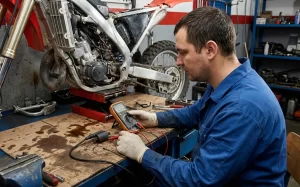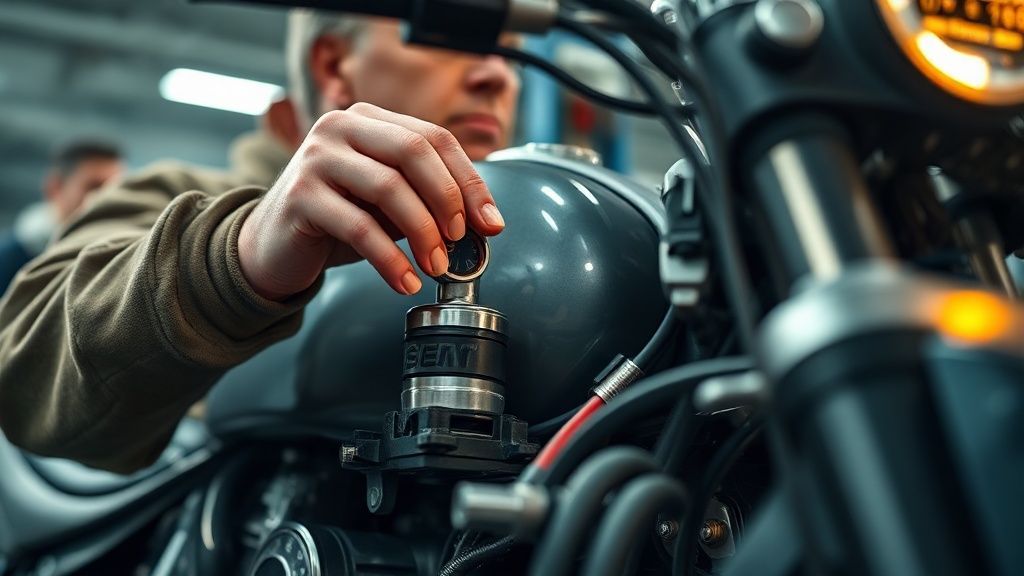
Learning how to test ignition coil on motorcycle is one of the most valuable diagnostic skills you can develop as a rider. The ignition coil is the heart of your motorcycle’s electrical system, transforming the battery’s low voltage into the thousands of volts needed to create a spark at the spark plug. When this component fails, your bike won’t start, will run poorly, or may cut out unexpectedly while riding—creating potentially dangerous situations on the road.
Understanding how to test ignition coil on motorcycle empowers you to diagnose starting problems quickly and accurately, saving you from unnecessary parts replacement and expensive diagnostic fees at the shop. Many riders replace spark plugs, batteries, and other components when the real culprit is a failing ignition coil. By mastering this testing procedure, you’ll save time, money, and frustration while gaining deeper knowledge of your motorcycle’s electrical system.
Difficulty Level: Beginner to Intermediate. This task requires basic mechanical aptitude and the ability to use a multimeter, but no advanced technical skills are necessary.
Time Required: 30-60 minutes for most motorcycles, depending on coil accessibility and your familiarity with the process.
Cost Savings: Professional diagnostic fees typically range from $80-$150 at most motorcycle shops. By learning how to test ignition coil on motorcycle yourself, you’ll save this diagnostic fee every time you troubleshoot electrical issues. Additionally, you’ll avoid purchasing unnecessary replacement parts, which can save another $50-$200 in misdiagnosed components.
Tools & Materials Needed

Before beginning this procedure, gather all necessary tools and materials. Having everything at hand will make the process smoother and safer.
Essential Tools:
- Digital multimeter (capable of measuring ohms and voltage)
- Socket set (typically 8mm, 10mm, and 12mm sockets)
- Screwdriver set (Phillips and flat-head)
- Needle-nose pliers
- Wire brush or electrical contact cleaner
- Flashlight or headlamp
- Nitrile gloves (chemical-resistant)
- Safety glasses
- Notebook and pen for recording readings
Materials:
- Shop towels or clean rags
- Electrical contact cleaner spray
- Dielectric grease
- Masking tape and marker (for labeling wires)
- Your motorcycle’s service manual (with ignition coil specifications)
Optional but Helpful:
- Magnetic parts tray
- Spark plug tester tool
- Camera or smartphone (for documenting wire connections)
- Work mat or cardboard to protect your work surface
Preparation & Safety

Proper preparation is essential when working with your motorcycle’s electrical system. Follow these steps before beginning the testing procedure:
Bike Preparation:
- Park the motorcycle on level ground with the center stand deployed (or use a paddock stand if your bike doesn’t have a center stand)
- Ensure the engine is completely cool to the touch—wait at least 30 minutes after riding
- Turn the ignition key to the OFF position
- Remove the key from the ignition to prevent accidental starting
- Disconnect the negative (-) battery terminal first, then the positive (+) terminal
- Work in a well-ventilated area with adequate lighting
- Place cardboard or a work mat beneath the motorcycle to catch any dropped parts
Safety Warning Block:
⚠️ CRITICAL SAFETY WARNINGS:
- Electrical Shock Hazard: Ignition coils produce extremely high voltage (15,000-45,000 volts). Never touch the coil or spark plug wires while the engine is running or the ignition is on. This can cause serious injury or death.
- Fire Hazard: Gasoline vapors may be present near the fuel tank. Never smoke or create sparks while working. Keep a fire extinguisher nearby.
- Chemical Exposure: Always wear nitrile gloves when handling electrical components that may have oil or fuel residue.
- Battery Safety: Batteries contain sulfuric acid and produce explosive hydrogen gas. Always disconnect the negative terminal first and reconnect it last.
- Pinch Points: Be aware of sharp edges on bodywork and the potential for tools to slip, causing hand injuries.
Step-by-Step Guide: How to Test Ignition Coil on Motorcycle
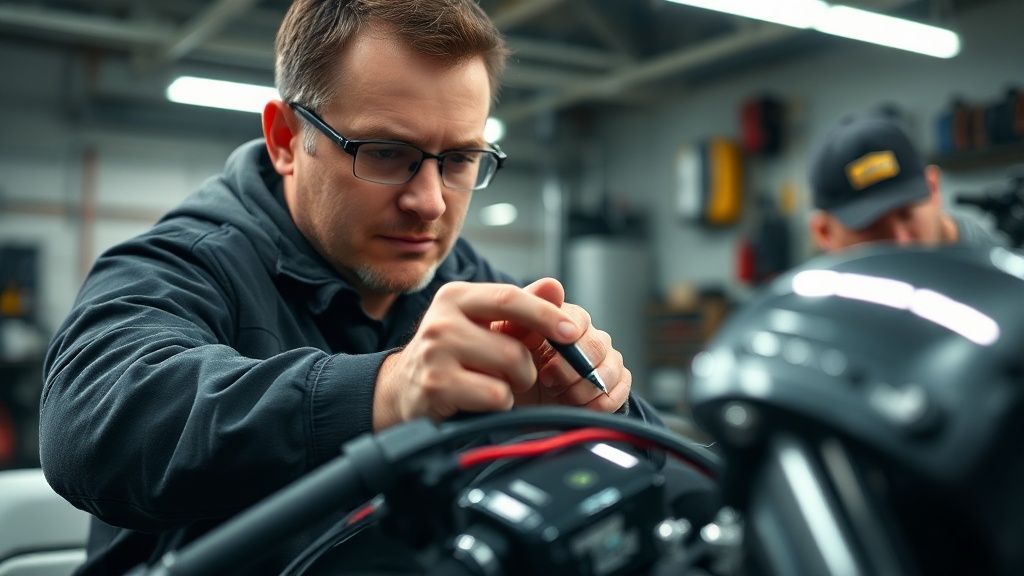
Step 1: Locate the Ignition Coil
The first step in learning how to test ignition coil on motorcycle is finding where it’s located on your specific bike. On most motorcycles, ignition coils are positioned near the spark plugs for efficient energy transfer. Common locations include:
- Mounted directly on top of the spark plugs (coil-on-plug design)
- Attached to the frame near the engine
- Under the fuel tank
- Behind side panels or fairings
Consult your service manual for the exact location. You may need to remove body panels, the seat, or the fuel tank to access the coils. Use your socket set and screwdrivers to carefully remove any necessary components, keeping track of all fasteners in your magnetic parts tray.
Mechanic’s Tip: Take photos with your smartphone before disconnecting anything. These reference photos will be invaluable during reassembly and ensure you reconnect wires to the correct terminals.
Step 2: Document and Disconnect Electrical Connections
Before testing, you must disconnect the ignition coil from the motorcycle’s wiring harness. Using masking tape and a marker, label each wire connection before disconnecting. Most ignition coils have two to four wire connections:
- Primary positive wire (usually from the CDI or ignition module)
- Primary negative wire (ground connection)
- Secondary wire (high-voltage output to spark plug)
Gently squeeze the connector tabs and pull straight away from the coil—never pull on the wires themselves. If connectors are stubborn, spray a small amount of electrical contact cleaner around the connection and wait 30 seconds before attempting removal again.
Mechanic’s Tip: Inspect all connector pins for corrosion, bent terminals, or discoloration while disconnected. Clean any corrosion with electrical contact cleaner and a wire brush. Many “bad coils” are actually just dirty connections.
Step 3: Visual Inspection of the Ignition Coil
Before using your multimeter, perform a thorough visual inspection. Look for these common failure indicators:
- Cracks in the coil body or housing
- Burn marks or discoloration on the coil surface
- Oil or fuel contamination on the coil
- Corrosion on terminals or mounting points
- Damaged or frayed wires
- Signs of overheating (melted plastic or burned smell)
Any of these visual defects indicate coil failure or imminent failure. Even if the coil tests within specifications electrically, visible damage means replacement is necessary. Use your flashlight to inspect hard-to-see areas thoroughly.
Mechanic’s Tip: If you detect a strong fuel smell near the ignition coil, you may have a flooded cylinder or fuel leak. Address this issue before continuing, as it can damage the coil and create a fire hazard.
Step 4: Set Up Your Multimeter for Resistance Testing
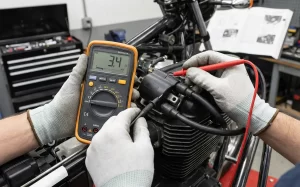
Understanding how to test ignition coil on motorcycle requires proper multimeter setup. Turn your digital multimeter to the ohms (Ω) setting. Most ignition coil tests use the following ranges:
- Primary coil resistance: 200-ohm range (typically 0.5-5 ohms)
- Secondary coil resistance: 20K-ohm range (typically 5,000-15,000 ohms)
Before testing the coil, verify your multimeter is working correctly by touching the two probes together. The display should read zero or very close to zero (0.1-0.3 ohms is normal for probe resistance). If your meter doesn’t zero out, check the battery and probe connections.
Mechanic’s Tip: Always consult your motorcycle’s service manual for the exact resistance specifications for your ignition coil. Generic ranges work for preliminary testing, but manufacturer specifications are essential for accurate diagnosis.
Step 5: Test Primary Coil Resistance
The primary coil is the low-voltage winding inside the ignition coil. To test it:
- Identify the two primary terminals on your ignition coil (usually marked with + and – symbols, or designated in your service manual)
- Ensure your multimeter is set to the 200-ohm range
- Touch the red (positive) probe to the positive primary terminal
- Touch the black (negative) probe to the negative primary terminal
- Read and record the resistance value displayed
Compare your reading to the service manual specifications. Typical primary resistance ranges from 0.5 to 5 ohms, but this varies significantly by motorcycle model. A reading of zero indicates a short circuit in the primary winding. An infinite reading (OL or overload on the display) indicates an open circuit or broken wire inside the coil. Either condition means coil failure.
Mechanic’s Tip: Temperature affects resistance readings. For most accurate results, test the coil at room temperature (68-72°F). If the coil is cold or hot, readings may be slightly outside specifications without indicating actual failure.
Step 6: Test Secondary Coil Resistance
The secondary coil produces the high voltage needed for spark generation. Testing it requires a different multimeter setting:
- Switch your multimeter to the 20K-ohm range (20,000 ohms)
- Locate the secondary terminal (the high-voltage output, usually the spark plug wire connection)
- Touch one probe to the secondary terminal
- Touch the other probe to the primary positive or negative terminal (check your service manual for which one)
- Read and record the resistance value
Secondary resistance typically ranges from 5,000 to 15,000 ohms (5K to 15K ohms), though some coils may be as high as 25,000 ohms. Again, consult your specific service manual. A reading of zero indicates a short circuit. An infinite reading indicates an open circuit. Both conditions require coil replacement.
Mechanic’s Tip: If your motorcycle has coil-on-plug ignition, the secondary resistance is measured from the coil terminal to the spark plug cap. Some spark plug caps have built-in resistors (typically 5,000 ohms), which adds to your total reading. You may need to subtract this resistance to get the true coil reading.
Step 7: Test for Coil-to-Ground Short
A critical but often overlooked test when learning how to test ignition coil on motorcycle is checking for shorts to ground. This test determines if the coil’s internal windings are making unintended contact with the metal housing:
- Keep your multimeter set to the highest ohm range (usually 2M or 20M ohms)
- Touch one probe to either primary terminal
- Touch the other probe to the metal body of the coil or a mounting bolt
- The reading should be infinite (OL or overload)
- Repeat this test for the secondary terminal to the coil body
Any measurable resistance (anything other than infinite/OL) indicates the coil is internally shorting to ground and must be replaced. This condition causes weak spark, misfires, and can damage your CDI or ignition module.
Mechanic’s Tip: Ensure the coil body is clean and dry before performing this test. Oil, moisture, or dirt on the outside of the coil can create a false reading, making a good coil appear to be shorted to ground.
Step 8: Perform a Spark Test (Optional but Recommended)
While resistance testing tells you if the coil’s windings are intact, a spark test shows whether the coil actually produces adequate high voltage:
- Reconnect the ignition coil’s primary wires
- Remove the spark plug from the engine
- Connect the spark plug to the coil’s secondary wire (spark plug wire)
- Ground the spark plug threads against the engine block using needle-nose pliers with insulated handles
- Reconnect the battery (positive first, then negative)
- Turn the ignition key to ON
- Press the starter button briefly (2-3 seconds maximum)
- Observe the spark plug gap for a strong blue spark
A healthy ignition coil produces a bright blue spark that jumps the gap consistently. A weak orange or yellow spark, or no spark at all, indicates coil failure even if resistance readings were within specifications.
⚠️ SAFETY WARNING: Never hold the spark plug or wire with your bare hands during this test. Use insulated tools only. Keep your body away from the spark plug gap. The high voltage can cause serious shock.
Mechanic’s Tip: If you have multiple cylinders, test each coil individually. On multi-cylinder bikes, one failed coil can cause the engine to run rough, making it seem like a carburetion or fuel injection problem.
Step 9: Inspect the Spark Plug Cap and Wire
When learning how to test ignition coil on motorcycle, don’t forget that the spark plug wire and cap are part of the ignition coil circuit. Test the spark plug cap resistance separately:
- Remove the spark plug cap from the wire (it usually unscrews or pulls off)
- Set your multimeter to the 20K-ohm range
- Insert one probe into the cap where it connects to the spark plug
- Touch the other probe to the wire terminal
- A good resistor cap reads 3,000-7,000 ohms
If the cap is out of specification or shows signs of cracking or carbon tracking (black lines on the inside), replace it. A bad cap can mimic ignition coil failure symptoms.
Mechanic’s Tip: Inspect the spark plug wire for cracks, brittleness, or damage. Even tiny cracks can allow high voltage to leak to ground instead of reaching the spark plug, causing misfires and starting problems.
Step 10: Check Supply Voltage to the Coil
If your ignition coil passes all resistance tests but you still have no spark, the problem may be lack of power supply to the coil:
- Reconnect the ignition coil’s primary wires
- Set your multimeter to DC voltage (20V range)
- Turn the ignition key to ON (but don’t start the engine)
- Back-probe the primary positive wire connector with the red probe
- Touch the black probe to a good ground (frame or engine)
- You should read battery voltage (approximately 12-13 volts)
If you have no voltage or significantly low voltage, the problem is in the CDI unit, ignition switch, or wiring harness—not the coil itself. This test prevents unnecessary coil replacement when the real issue is elsewhere in the electrical system.
Mechanic’s Tip: Some motorcycles only send voltage to the coil when the engine is cranking. If you don’t see voltage with the key on, have a helper press the starter button while you measure. Always refer to your service manual for the correct testing procedure for your specific ignition system.
Step 11: Clean and Reassemble
If your ignition coil tested good, proper reassembly is crucial for continued reliable operation:
- Clean all electrical connectors with electrical contact cleaner
- Apply a thin coat of dielectric grease to connector terminals
- Reconnect all wires according to your photos and labels
- Ensure all connections click firmly into place
- Reinstall the spark plug cap firmly onto the spark plug
- Secure the ignition coil mounting bolts to the torque specification in your service manual
- Reinstall any body panels, fuel tank, or seat that was removed
- Reconnect the battery (positive terminal first, then negative)
Mechanic’s Tip: After reassembly, start the engine and let it idle for several minutes. Listen for smooth operation and check that all cylinders are firing. A smooth idle confirms your ignition system is working correctly.
Step 12: Document Your Findings
Maintaining records is an important part of knowing how to test ignition coil on motorcycle:
- Write down all resistance readings in your maintenance log
- Note the date and mileage when testing was performed
- Record any abnormal findings or symptoms
- Keep these records with your service manual for future reference
This documentation helps you track the health of your ignition system over time and can reveal developing problems before they leave you stranded.
Troubleshooting & Common Mistakes

Problem 1: Inconsistent Resistance Readings
Symptom: Your multimeter shows different resistance values each time you test the same coil terminals.
Cause: This usually indicates poor probe contact with the coil terminals, corroded terminals, or a failing multimeter battery.
Solution: Clean the coil terminals thoroughly with electrical contact cleaner and a wire brush. Ensure your multimeter probes make firm contact with bare metal. Replace your multimeter battery if readings continue to fluctuate. If readings are still inconsistent after cleaning, the coil has an intermittent internal failure and should be replaced.
Problem 2: Coil Tests Good But Still No Spark
Symptom: All resistance readings are within specification, but the engine won’t start and you observe no spark during testing.
Cause: The problem is likely not the ignition coil itself, but rather the CDI unit, ignition switch, kill switch, or wiring harness supplying power to the coil.
Solution: First, check the kill switch—it is the most common cause of “no spark” on a perfectly good system. Next, inspect the side stand switch and clutch safety switch, as these can cut power to the ignition system. If those check out, test the pickup coil (stator pulse generator) resistance according to your manual. If the pickup coil and ignition coil are both good, the CDI unit (Capacitor Discharge Ignition) is likely the culprit.
Problem 3: The “Heat Soak” Failure (Bike Dies When Hot)
Symptom: The motorcycle starts and runs perfectly when cold, but after 15-20 minutes of riding, it misfires and dies. After cooling down for 30 minutes, it starts right back up.
Cause: This is a classic symptom of internal insulation failure. As the coil heats up from engine heat and electrical resistance, the internal windings expand. If there is a hairline crack in the insulation, the expansion opens the gap, causing an open circuit. When it cools and contracts, the connection is restored.
Solution: A standard resistance test at room temperature will often show this coil as “Good.” To diagnose this, you must test the coil immediately after the bike dies (while it is still hot). If the resistance reading is infinite (Open Loop) when hot but normal when cold, the coil is defective and must be replaced.
Conclusion
Mastering how to test ignition coil on motorcycle is a gateway skill to becoming a more self-sufficient rider. While the electrical system often feels like “black magic” to many mechanics, breaking it down into simple resistance checks reveals that it is just a series of logical connections.
By following this guide, you have not only verified the health of your ignition system but likely cleaned up several connections along the way—maintenance that will prevent future issues. Remember, an engine needs three things to run: fuel, compression, and spark. By confirming the spark component is solid, you can troubleshoot starting issues with confidence and precision.
Don’t let a $40 part leave you stranded. Add an ignition coil test to your annual winter maintenance checklist, and ride with the peace of mind that your spark is strong.
Frequently Asked Questions (FAQs)
Can I test an ignition coil without a multimeter?
You can perform a spark test (Step 8) without a multimeter to see if it is firing, but this won’t tell you how well it is working. A coil can be weak enough to cause poor performance but still produce a visible spark. To truly diagnose a failing coil before it leaves you stranded, a multimeter resistance test is required.
Are ignition coils universal?
No. While many look similar, ignition coils have specific internal resistance values matched to your bike’s CDI or ECU. Using a coil with the wrong resistance (e.g., using a 3-ohm coil on a system designed for 0.5 ohms) can burn out your expensive ignition module or result in a weak spark. Always buy a coil listed specifically for your make and model.
How often should I replace my ignition coil?
Ignition coils are not standard “consumable” items like oil or spark plugs. They are designed to last for the life of the motorcycle. However, heat, vibration, and moisture take their toll. On vintage bikes (20+ years old), it is proactive to test them annually. On modern bikes, replace them only if they fail testing or show physical damage.
My bike has two cylinders but only one coil. How do I test that?
You likely have a “wasted spark” system, where one coil fires two spark plugs simultaneously. Testing is very similar to a single coil: check the primary resistance at the input terminals, and check the secondary resistance between the two spark plug caps (instead of one cap to ground). The electricity flows out one plug wire and back through the other.
What is the difference between a “12-volt” coil and a “6-volt” coil test?
The testing procedure is identical (measure primary and secondary resistance), but the specifications will differ. 6-volt coils generally have different winding ratios. Always check your specific service manual for the correct ohm range for your voltage system.