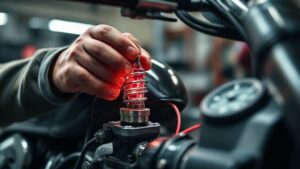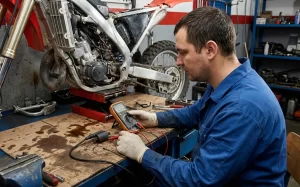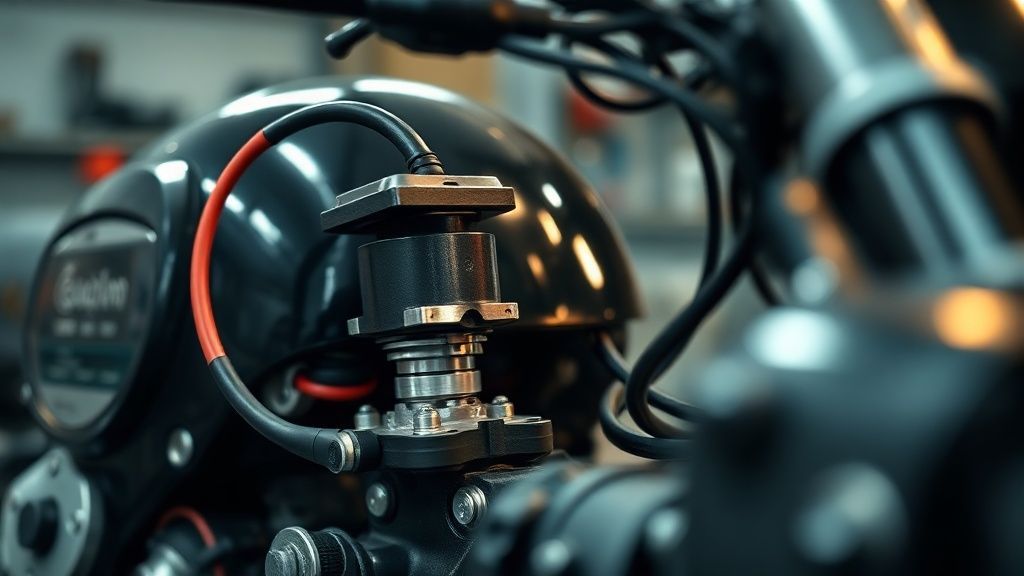
Understanding how to wire ignition coil on motorcycle systems is one of the most valuable skills you can develop as a motorcycle owner. The ignition coil is the heart of your bike’s electrical system, transforming your battery’s low voltage into the thousands of volts needed to create a spark at the spark plug. When this component fails or becomes improperly wired, your motorcycle simply won’t start, leaving you stranded.
Learning how to wire ignition coil on motorcycle properly is important for several reasons. First, it directly affects your safety—a poorly wired coil can cause intermittent spark loss, leading to unexpected engine cutouts while riding. Second, it extends the life of your motorcycle by ensuring optimal combustion and preventing damage to other electrical components. Third, proper wiring prevents potential fire hazards from short circuits or overheating connections.
Difficulty Level: Intermediate. While the actual wiring process isn’t overly complex, it requires careful attention to detail, basic understanding of electrical systems, and the ability to read wiring diagrams.
Time Required: Plan for 1.5 to 3 hours for your first attempt. This includes preparation, testing connections, and troubleshooting. Experienced mechanics can complete this task in 30-45 minutes.
Cost Savings: A professional motorcycle shop typically charges between $80 and $150 for ignition coil replacement and wiring, with labor costs ranging from $60 to $100 per hour. By performing this task yourself, you’ll save approximately $60-$100, paying only for the replacement coil (if needed) which costs between $20 and $80 depending on your motorcycle model. Over your motorcycle ownership lifetime, this knowledge could save you hundreds of dollars.
Tools & Materials Needed

Essential Tools:
- Digital multimeter with continuity testing function
- Wire stripper/crimper tool (14-22 gauge capacity)
- Screwdriver set (Phillips and flathead, various sizes)
- Socket wrench set with 8mm, 10mm, and 12mm sockets
- Needle-nose pliers
- Wire cutters/diagonal cutters
- Torque wrench (if reinstalling coil mounting bolts)
- Flashlight or headlamp for visibility
- Wire brush or sandpaper (fine grit)
- Spark plug socket (typically 16mm or 18mm)
Materials & Consumables:
- Replacement ignition coil (if necessary, OEM or quality aftermarket)
- Dielectric grease for electrical connections
- Heat-shrink tubing assortment (various sizes)
- Electrical tape (high-quality vinyl)
- Wire connectors (butt connectors and spade terminals as needed)
- Contact cleaner spray (electronics-safe)
- Nitrile gloves (chemical resistant)
- Shop rags or microfiber towels
- Zip ties for cable management
- Anti-seize compound for bolt threads
- Notebook and pen for documenting wire positions
Reference Materials:
- Your motorcycle’s service manual or wiring diagram
- Camera or smartphone for taking reference photos
Preparation & Safety

Workspace Preparation:
Before beginning any work on how to wire ignition coil on motorcycle systems, prepare your workspace properly. Choose a well-ventilated area with adequate lighting—garages with overhead lights and open doors are ideal. Position your motorcycle on its center stand if equipped, or use a quality motorcycle stand to ensure stability. The bike must be completely level and secure, as you’ll be working around it and potentially leaning against it.
Allow your engine to cool completely if you’ve recently ridden the bike. Touch the engine cases to verify they’re at ambient temperature—this typically takes 30-60 minutes after riding. Lay down cardboard or an old blanket beneath the work area to catch any dropped parts and protect your floor.
Disconnect the negative (black) battery terminal first, then the positive (red) terminal. This is absolutely critical when working with electrical components. Use a 10mm wrench typically, and tuck the cables away from the battery posts to prevent accidental reconnection. Even with the battery disconnected, capacitors in the electrical system may hold a charge, so treat all wires as potentially live.
Safety Warning Block:
- Electrical Shock Hazard: Ignition coils produce extremely high voltage (15,000-45,000 volts). Never touch ignition components while the engine is running or the ignition is on. Even brief contact can cause serious injury or death.
- Fire Risk: Gasoline vapors combined with electrical sparks create extreme fire hazard. Ensure proper ventilation and keep a fire extinguisher (Class B or ABC rated) within reach.
- Battery Hazards: Always disconnect the battery before working on electrical systems. Battery acid is corrosive—wear nitrile gloves and eye protection.
- Fuel System: On fuel-injected bikes, residual fuel system pressure can spray gasoline. Have shop rags ready and work in ventilated areas.
- Proper Wiring: Incorrect wiring can damage the ECU, CDI unit, or other expensive components. Double-check all connections before reconnecting the battery.
- Moving Parts: Keep hands, tools, and loose clothing away from the chain, sprockets, and other moving parts when testing.
Step-by-Step Guide: How to Wire Ignition Coil on Motorcycle
Step 1: Locate and Document Existing Wiring
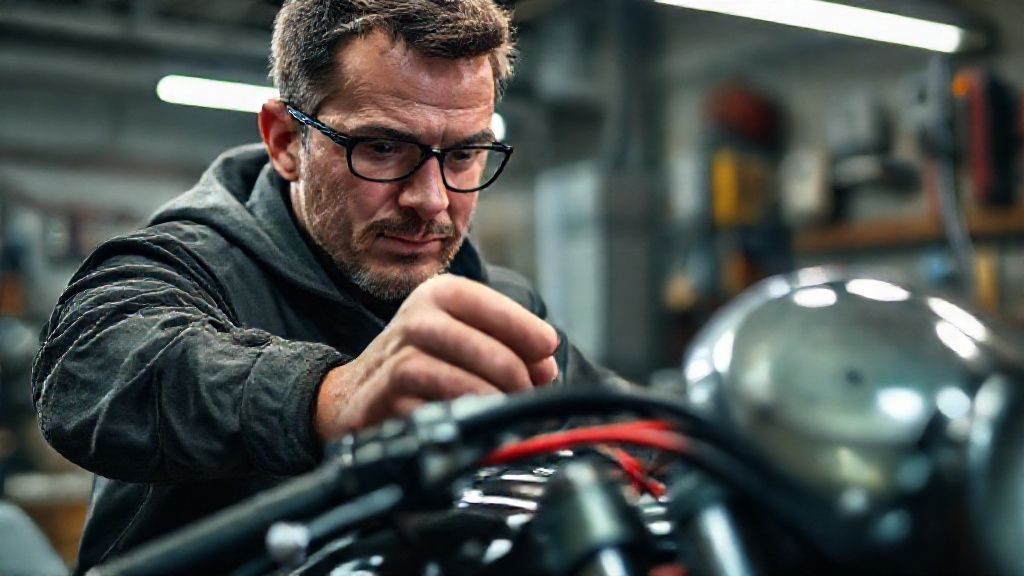
Begin by locating your ignition coil. On most motorcycles, the coil is mounted near the engine, often under the fuel tank or side covers. Consult your service manual for the exact location—some bikes have one coil, while multi-cylinder bikes may have multiple coils (one per cylinder or one per two cylinders).
Before disconnecting anything, take multiple clear photographs from different angles showing how wires connect to the coil. Pay special attention to wire colors and their corresponding terminals. Use your notebook to sketch a simple diagram, noting wire colors and terminal positions. Label them as: primary positive (+), primary negative (-), and secondary output (to spark plug). This documentation is your insurance policy against confusion during reassembly.
Mechanic’s Tip: Use small pieces of masking tape to label each wire before disconnection. Write the terminal position on the tape (e.g., “Coil +,” “Coil -,” “To Spark Plug”). This simple step prevents 90% of wiring mistakes.
Step 2: Access the Ignition Coil
Remove any components blocking access to the ignition coil. This typically includes the seat (usually 10mm bolts or quick-release), side panels (plastic clips or screws), and possibly the fuel tank. When removing the fuel tank, turn the fuel petcock to the “OFF” position first, then disconnect the fuel line carefully, having shop rags ready to catch spillage.
As you remove fasteners, organize them in a small container or magnetic tray. Take photos at each disassembly stage. Some motorcycles require removing additional components like the airbox or radiator shrouds—refer to your service manual for model-specific procedures.
Mechanic’s Tip: Place removed body panels on a soft blanket away from the work area to prevent scratches. Arrange them in reverse order of removal for easier reassembly.
Step 3: Test the Existing Coil (Diagnostic Step)
Before removing wires, verify whether the coil is actually faulty. Set your multimeter to resistance (ohms) mode. Test the primary winding by touching the meter probes to the two primary terminals (where small wires connect, typically marked + and -). You should read between 0.5 and 3.0 ohms for most motorcycles—consult your service manual for exact specifications.
Next, test the secondary winding by connecting one probe to the primary positive terminal and the other to the spark plug wire terminal (or the metal connector where the spark plug wire attaches). You should read between 5,000 and 15,000 ohms, depending on your motorcycle model. Readings outside these ranges indicate a faulty coil requiring replacement.
Mechanic’s Tip: If your readings are infinite (no continuity), check for corrosion on terminals first. Clean them with contact cleaner and a wire brush, then retest. Sometimes the coil is fine—it’s just dirty connections causing problems.
Step 4: Disconnect the Primary Wiring
Now that the battery is disconnected and you’ve documented everything, begin removing wires from the ignition coil. Start with the primary wiring (the smaller gauge wires). These typically connect via spade terminals, bullet connectors, or a plug connector.
For spade terminals, grip the connector body (not the wire) with needle-nose pliers and pull straight off. Never pull on the wire itself, as this can damage the connection inside the insulation. For bullet connectors, grip both sides and pull apart with a slight twisting motion. If a plug connector is used, locate the locking tab, press it down, and pull the connector apart.
Inspect each wire and connector for damage, corrosion, or melting. Corroded connectors appear green or white and crusty. Melted connectors indicate a short circuit or overheating—these must be replaced. Use contact cleaner spray and a wire brush to clean terminals that will be reused.
Mechanic’s Tip: Spray contact cleaner into female spade connectors and work a male terminal in and out several times to clean the internal contacts. This ensures a solid electrical connection when reassembled.
Step 5: Disconnect the Secondary Wire (Spark Plug Wire)
The secondary wire is the thick, heavily insulated wire running from the coil to the spark plug. This wire carries the high-voltage spark. On some motorcycles, this wire is permanently attached to the coil (integrated). On others, it connects via a threaded terminal or push-on connector.
For threaded connections, unscrew the spark plug wire terminal counter-clockwise by hand. For push-on connections, grip the boot (rubber end piece) firmly and pull straight off with a twisting motion. Never pull on the wire itself—always grip the boot or connector body.
At the spark plug end, remove the spark plug wire by gripping the rubber boot and pulling while twisting. If the boot is stuck, use spark plug boot pliers or carefully work a small flathead screwdriver between the boot and the spark plug to break the seal.
Mechanic’s Tip: Spark plug boots often stick due to heat cycling. If extremely stuck, apply a small amount of penetrating oil around the boot base and wait 10 minutes before attempting removal. Never force it, as you can damage the ceramic insulator on the spark plug.
Step 6: Remove the Ignition Coil (If Replacing)
If you’re replacing the coil, remove the mounting bolts holding it to the frame or engine. These are typically 8mm or 10mm bolts. Use the appropriate socket and ratchet, turning counter-clockwise. Keep track of any washers, spacers, or rubber grommets—these must be reinstalled in the same positions.
Some coils mount with a bracket system, while others bolt directly to the frame. Note the orientation of the coil before removal—the primary terminals should face a specific direction for proper wire routing. Take a photo showing the coil’s mounting position.
Inspect the mounting area for cracks, corrosion, or damage. Clean the mounting surface with contact cleaner and a shop rag. This ensures good electrical grounding if the coil mounts directly to the frame.
Step 7: Prepare and Mount the New or Existing Coil
If installing a new coil, compare it side-by-side with the old one to verify it’s the correct part. Check that terminal positions, mounting holes, and overall dimensions match. Apply a thin layer of anti-seize compound to the mounting bolt threads to prevent seizing and ensure proper torque readings.
Position the coil in its mounting location, ensuring correct orientation based on your photos. Thread the mounting bolts by hand first to prevent cross-threading. Once hand-tight, use your socket wrench to snug them down. If your service manual specifies a torque value (typically 8-12 Nm for coil mounting bolts), use a torque wrench. Otherwise, tighten firmly but don’t overtighten—you’re threading into aluminum or steel, and over-torquing can strip threads.
Mechanic’s Tip: Many ignition coils require proper grounding to the frame. If your coil has a dedicated ground wire or grounds through its mounting bracket, ensure the mounting surface is clean, bare metal. Use sandpaper to remove paint or corrosion if necessary.
Step 8: Wire the Primary Connections
This is the critical step where you’ll learn exactly how to wire ignition coil on motorcycle correctly. Refer to your photos, notes, and wiring diagram. Ignition coils typically have two primary terminals:
Positive Terminal (+): This connects to the power source, usually through the ignition switch and possibly through a CDI (Capacitor Discharge Ignition) or ECU (Engine Control Unit). The wire is often red, orange, or black with a colored stripe.
Negative Terminal (-): This connects to the ground circuit, often through the CDI/ECU which controls when the coil fires. The wire is typically black, green, or blue.
Match wire colors from your documentation to the correct terminals. If your coil has labeled terminals (+ and -, or sometimes marked “B” for battery and “G” for ground), connect accordingly. If using the original wiring harness, simply reconnect the plugs or terminals to their original positions.
For damaged connectors requiring replacement, strip 1/4 inch of insulation from the wire end using wire strippers. Insert the bare wire into a new spade terminal or butt connector, and crimp firmly using the crimper tool. Slide heat-shrink tubing over the connection, and use a heat gun or lighter (carefully) to shrink it, creating a weatherproof seal.
Mechanic’s Tip: Apply a small dab of dielectric grease inside each connector before joining. This prevents corrosion and ensures optimal electrical conductivity. Don’t use too much—just enough to coat the metal surfaces.
Step 9: Connect the Secondary Wire (Spark Plug Wire)
If your coil has an integrated spark plug wire, route it to the spark plug, ensuring it doesn’t contact hot engine parts, sharp edges, or moving components. Use zip ties to secure the wire to existing wire looms or frame members, but don’t overtighten—allow some slack for vibration absorption.
If the spark plug wire is separate, thread it into the coil’s secondary terminal. For threaded connections, screw it in clockwise by hand until snug, then give it an additional 1/4 turn with pliers. Don’t overtighten, as you can damage the terminal threads.
Apply dielectric grease inside the spark plug boot before connecting it to the spark plug. This prevents moisture intrusion and makes future removal easier. Push the boot firmly onto the spark plug until you feel and hear it click into place. Give it a gentle tug to verify it’s seated properly.
Mechanic’s Tip: Route the spark plug wire away from the exhaust pipes and cylinder head. High heat degrades the insulation over time, causing the wire to fail. Maintain at least 1 inch of clearance from hot components.
Step 10: Double-Check All Connections
Before reconnecting the battery, perform a thorough inspection of your work. Verify that:
- Primary positive (+) and negative (-) wires connect to the correct terminals
- All connectors are fully seated and secure
- The spark plug wire is properly connected at both ends
- No wires contact moving parts, sharp edges, or hot surfaces
- All mounting bolts are tight
- Wire routing matches your original photos
Gently tug on each wire connection to verify security. Loose connections cause intermittent problems that are difficult to diagnose later.
Mechanic’s Tip: Use your multimeter in continuity mode to verify connections. Touch one probe to the coil’s positive terminal and the other to the power source wire (disconnected from the coil). You should hear a beep indicating continuity through the wire. Repeat for the negative terminal and ground wire.
Step 11: Reconnect the Battery and Test
Reconnect the battery, starting with the positive (red) terminal first, then the negative (black) terminal. Tighten the terminal clamps securely with a 10mm wrench. Turn the ignition key to the “ON” position (but don’t start the engine yet). Check for any unusual sounds, smells, or smoke. If you notice any of these, immediately turn off the ignition and disconnect the battery.
If everything appears normal, remove the spark plug and reconnect the spark plug wire to it. Ground the spark plug threads against the engine (bare metal) and have a helper press the starter button while you observe the spark plug gap. You should see a strong, blue spark jumping the gap. A weak, yellow spark or no spark indicates a wiring problem.
Safety Warning: Hold the spark plug by its rubber boot only, never by the metal body, as the voltage can shock you. Keep your body clear of the spark plug gap.
Once you’ve verified spark, reinstall the spark plug (torque to specification, typically 12-18 Nm), and attempt to start the engine. It should start normally and run smoothly.
Step 12: Reassemble and Final Testing
With the engine running properly, turn it off and reinstall all components you removed for access (fuel tank, side panels, seat). Ensure all fasteners are properly tightened and all connectors are secure.
Start the engine again and let it warm up to operating temperature. Listen for any misfiring, rough idling, or unusual sounds. Rev the engine smoothly through the RPM range, verifying consistent performance. Take the motorcycle for a short test ride in a safe area, paying attention to throttle response and overall engine performance.
After the test ride, perform a final inspection of all electrical connections, checking for any signs of overheating (discoloration, melting, burning smell) or loose connections.
Troubleshooting Common Mistakes

Troubleshooting Common Mistakes
Wiring an ignition coil is precise work. One small slip-up can lead to a bike that runs poorly or leaves you stranded. Here are the most frequent wiring errors riders make:
- Crimping Over the Insulation:
- The Mistake: When crimping a new spade connector, the plastic insulation of the wire gets pushed too far into the metal crimp barrel.
- The Result: The connector grips the plastic instead of the copper wire. You might feel a mechanical connection, but electricity cannot pass through. Always strip enough wire to ensure metal-on-metal contact.
- Bad Grounding (The “Ghost” Problem):
- The Mistake: Bolting the ground wire or the coil body onto a freshly painted frame rail.
- The Result: Paint is an insulator. If your coil relies on its mounting bolts for a ground (common on older bikes), it won’t fire. You must scrape the paint away to bare metal at the mounting point or run a dedicated ground wire.
- Reversed Polarity:
- The Mistake: Swapping the positive (+) and negative (-) wires.
- The Result: The bike will usually still run, but the spark will be weaker. This causes the spark to jump from the ground strap to the center electrode (reverse direction), which requires more voltage and wears out the spark plug significantly faster.
- Routing Wires Too Tight:
- The Mistake: Zip-tying wires so tightly that they have no slack for handlebar movement or engine vibration.
- The Result: The internal copper strands eventually snap inside the insulation, causing an intermittent misfire that is incredibly hard to diagnose.
Conclusion
Wiring an ignition coil is less about brute force and more about precision. A hasty twisted-wire-and-tape job might get you home in an emergency, but it will fail you on the next rainy ride. By using proper crimps, heat shrink, and correct routing, you ensure your engine gets the strong, consistent spark it needs to perform.
Take the extra ten minutes to verify your polarity with a multimeter and secure your wires away from heat sources. It’s the difference between a reliable machine and a roadside headache. When you press that starter button, you want to know—not hope—that the current is flowing exactly where it should.
Frequently Asked Questions (FAQ)
1. Does it matter which wire goes where on a 2-wire coil?
Technically, a coil is a transformer and will often generate a spark even if wired backward. However, wiring it correctly (matching polarity) is crucial for efficiency. Correct polarity ensures the spark jumps from the center electrode to the ground strap of the plug. Reversing it causes a “wasted” spark that is up to 40% weaker and can overheat the coil over time.
2. Can I use wire nuts (like in a house) for my motorcycle coil?
Absolutely not. Wire nuts are designed for stationary home wiring, not for vehicles that vibrate and hit bumps. Vibrations will shake them loose within miles, killing your engine instantly. Always use automotive-grade crimp connectors, solder, or proper molded plugs.
3. How do I know which wire is Positive (+) if they are both black?
You need a multimeter. Set it to DC Volts (20V scale). Turn the key to the “ON” position. Connect the black probe to the battery negative or the bike frame. Touch the red probe to the wires coming from the harness.
- The wire that shows ~12 Volts is your Positive (Power) wire.
- The wire that shows 0 Volts is your Trigger (Ground) wire.
4. My new coil has 1 wire, but my old one had 2. What do I do?
You likely have a “grounded core” coil. The metal body of the coil acts as the ground (-). Connect your bike’s Power/Trigger wire to the single terminal, and ensure the coil is bolted tightly to a clean, unpainted metal part of the frame to complete the circuit.