
Three-Wheeler Licence Rules: What I’d Check Before Riding
 Jake Miller
9 min read
Jake Miller
9 min read
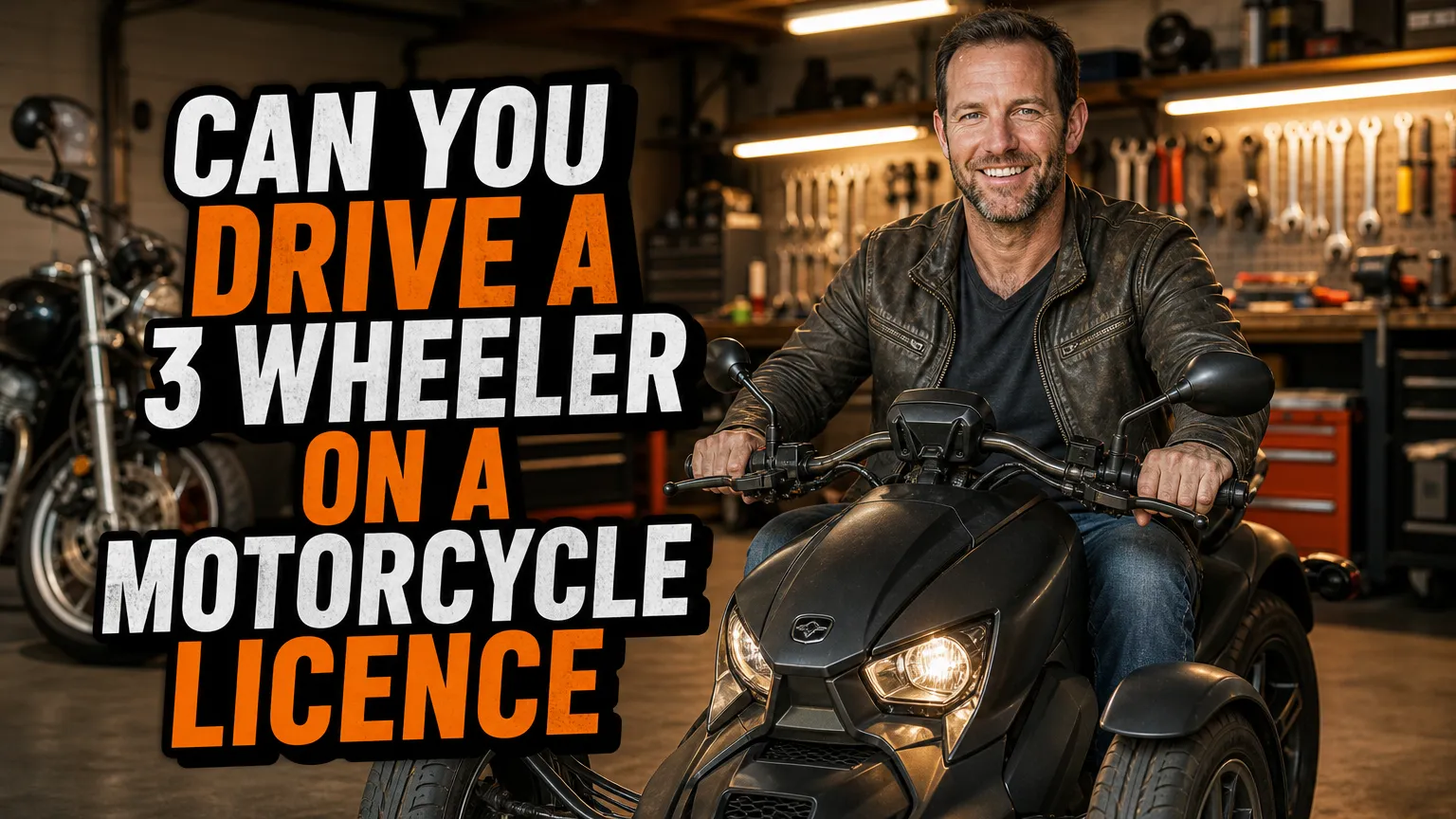
When I first looked into three-wheelers, I assumed that having a motorcycle licence would make the answer straightforward. I soon found out that the number of wheels alone doesn’t settle the question: the vehicle’s classification, power and the entitlements on my licence can all matter.
So, can you drive a 3 wheeler on a motorcycle licence? Often, yes, if your licence covers the specific type of three-wheeler you want to ride. I always check the rules for my country and the details on the vehicle before setting off, rather than relying on a general rule of thumb.
- I check the vehicle’s legal category, not just the number of wheels.
- In the UK, my motorcycle entitlement, licence history and the vehicle’s power can affect what I may ride.
- Some UK car licence holders may have tricycle entitlement, depending on when they passed their test.
- I confirm the rules with the relevant licensing authority before riding.
My short answer: it depends on the vehicle and your licence
I treat “three-wheeler” as a description, not a licence category. A traditional trike, a scooter with two front wheels, and a small three-wheeled vehicle that resembles a car may each be treated differently under local rules.
That distinction is why I wouldn’t assume that any motorcycle licence automatically covers every three-wheeler. I first find out how the vehicle is registered and classified, then compare that with the categories and restrictions on my licence.
If I’m asking about the UK, a motorcycle licence can cover a motor tricycle when it includes the appropriate entitlement. The category I need may depend on factors such as the tricycle’s power, my age and the licence tests I’ve passed.
What I check on a UK motorcycle licence
In the UK, licence categories matter more than whether a vehicle looks like a motorbike. I check the photocard or my driving record to see which categories I hold, and whether any restrictions apply.
For motor tricycles, the power of the vehicle can be especially important. UK motorcycle categories include entitlements for certain tricycles, with the distinction between vehicles up to 15kW and those over 15kW potentially affecting which category I need.
Lower-powered tricycles
Some lower-powered motor tricycles may fall within an A1 entitlement. But I don’t assume that a familiar engine size, a scooter-style design or a seller’s description proves that a particular vehicle qualifies.
I look for the vehicle’s official specifications and classification, then check those details against current DVLA and licensing guidance. If the paperwork doesn’t make the category clear, I’d ask the seller or the relevant authority to clarify it before I ride.
More powerful tricycles
For a motor tricycle with more than 15kW of power, a full category A entitlement may be needed in the UK. Age and test requirements can also affect eligibility, so I make sure I meet the rules that apply to me rather than relying on what another rider can do.
When I’m buying or borrowing a powerful trike, I confirm its power output and check that my own licence covers it. I’d rather spend a few minutes verifying the paperwork than discover a problem at the roadside or after an incident.
Can I ride a three-wheeler on a UK car licence?
This is where licence history can make a difference. In general, some people who obtained a full UK car licence before 19 January 2013 may have entitlement to ride motor tricycles. I would check my own record to confirm whether that entitlement is present and what it covers.
If I passed my car test on or after that date, I wouldn’t assume my car licence lets me ride a motor tricycle. I’d check the relevant motorcycle entitlement and any exceptions that might apply to my circumstances.
There can be special rules for riders with certain disabilities, and vehicle details still matter. For that reason, I wouldn’t use a friend’s licence history, a forum post or an informal sales description as proof that I’m entitled to ride.
Why I check the date rather than guessing
Older licence entitlements can be carried forward in ways that don’t apply to someone who passed the same test later. That can make two riders with full car licences subject to different rules, even if they’re looking at the same three-wheeler.
I check the categories shown on my licence and confirm what they mean using official guidance. If I’m still unsure, I contact DVLA or the appropriate licensing body before I take the vehicle onto a public road.
Why a “three-wheeler” may not mean a motor tricycle
Three wheels don’t always mean the same legal classification. A leaning three-wheeled scooter, a conventional trike and a small car-like vehicle may have different construction, registration or licensing categories.
I pay particular attention to vehicles with two wheels at the front. Their appearance can make them seem like a special case, but I don’t decide what licence they need by looking at the wheel layout. I check the vehicle’s registration documents and the manufacturer’s specifications.
What I look for in the documents
Before riding, I check the make and model, the vehicle category shown on the paperwork, and the power output where it’s relevant. I also look for any conditions attached to my own licence that could limit what I can ride.
If I’m viewing a used three-wheeler, I ask the seller for the registration details and documents early. If the description says “car licence friendly” or “no motorcycle licence needed,” I treat that as a claim to verify, not as a substitute for official confirmation.
What if I’m riding outside the UK?
I never assume that a UK entitlement travels neatly across borders. Countries can define three-wheelers differently and set their own licence categories, minimum ages and testing requirements.
If I’m taking my own vehicle abroad, I check the destination country’s rules as well as any requirements for my licence and insurance. If I’m hiring a three-wheeler overseas, I confirm with the rental company and local authorities that my licence is accepted for that exact vehicle.
Rules in the United States and elsewhere
In the United States, licensing rules can vary from state to state. A motorcycle endorsement may cover some three-wheelers in one state, while another state may require a particular class of licence or a separate test.
I take the same approach wherever I ride: I look up the official rules for the place where the vehicle will be used. A general online answer can be a useful starting point, but it may not cover local exceptions or a specific vehicle type.
How I confirm I’m legally allowed to ride
When the rules aren’t obvious, I use a simple check-before-you-ride routine. It helps me avoid turning a small paperwork question into a much bigger problem.
- I identify the vehicle. I find the make, model, registration category and power output.
- I check my licence. I confirm which categories I hold, when I passed the relevant test and whether restrictions apply.
- I compare the two. I use official licensing guidance to check that my entitlement covers that vehicle in that location.
- I confirm insurance. I make sure the policy covers me to ride that specific type of vehicle.
- I ask if I’m unsure. I contact the licensing authority, insurer or a qualified dealer rather than guessing.
For UK guidance, I’d start with the official GOV.UK information on riding a motorcycle, moped or motor tricycle and check my own licence details. I’d also contact DVLA if the entitlement shown on my record doesn’t answer my question.
Legal entitlement is only one part of the decision
Even when my licence covers a three-wheeler, I think about whether I’m comfortable controlling that particular model. Three-wheelers can handle differently from two-wheeled motorcycles, and designs vary in how they steer, lean and brake.
I take time to get familiar with the controls and handling in a safe place before riding in traffic. If the vehicle feels unfamiliar, I’d consider training or advice from someone qualified to teach on that type of machine.
I check insurance, registration and equipment
Before a road ride, I make sure the vehicle is properly registered and insured for its use. I also check that my policy names or covers me as a rider and doesn’t exclude the vehicle’s particular design or category.
I wear suitable protective gear and check the tyres, brakes, lights and other basic safety items. The exact requirements can depend on local law and the vehicle, so I confirm those too instead of assuming that three wheels remove motorcycle-related obligations.
Common assumptions I avoid
- “It has three wheels, so my car licence covers it.” I check my licence history and the vehicle category first.
- “I have a motorcycle licence, so I can ride any trike.” I confirm the licence category, power and any age requirements.
- “The dealer said it’s legal for me.” I verify the claim using official guidance and my own licence record.
- “The rules are the same everywhere.” I check the requirements wherever I plan to ride.
These checks may sound cautious, but they’re simple compared with dealing with an invalid licence or insurance problem. In my experience, a quick confirmation before buying, borrowing or hiring a three-wheeler gives me much greater peace of mind.
My bottom line before I ride
Can you drive a 3 wheeler on a motorcycle licence? In many cases, yes, but I wouldn’t treat that as a blanket rule. The answer depends on the vehicle’s legal classification, its power, the licence category I hold and the rules in the place where I’m riding.
In the UK, I’d check whether my licence includes the right motorcycle or tricycle entitlement, whether its power affects the category I need, and whether a past car test gives me any relevant rights. If I can’t confirm all three, I’d pause and get an answer from DVLA or another official source before setting off.
That’s the approach I trust most: identify the vehicle, check my licence and verify the local rules. Once I know I’m legally covered and properly insured, I can focus on enjoying the ride.
Frequently Asked Questions
Can I ride a three-wheeler on a motorcycle licence in the UK?
Usually, if your motorcycle licence includes the right category for the vehicle. I’d check its power and the entitlement shown on your licence before riding.
Can I ride a trike on a UK car licence?
Some riders with a full car licence obtained before 19 January 2013 may have entitlement to ride a motor tricycle. Rules can differ by vehicle, so I’d confirm with DVLA guidance.
Do I need a motorcycle test to ride a three-wheeler?
You may need a motorcycle licence or test, depending on the vehicle and your existing entitlements. I’d verify the vehicle category and current rules where I live.
Do three-wheeler licence rules vary by country?
Yes. I’d check the rules with the licensing authority in the country where I plan to ride, because a licence that covers a three-wheeler in one place may not cover it elsewhere.

Related Articles

Striped Parking Lines and Motorcycles: Where I Park—and Where I Don’t
Before I pull into a striped parking area, I check what the markings protect, nearby signs, and local rules. Here’s…
Jake Miller
10 min read

Buying a Motorcycle Without a Licence: What I’d Check Before Making a Deal
You can usually buy a motorcycle without a licence, but riding it legally is different. I explain permits, paperwork, insurance,…
Jake Miller
11 min read

Riding on a Learner Licence: What I Check Before Taking a Motorcycle on the Road
Learn when you can ride a motorcycle on a learner licence, the common restrictions to check, safety essentials, and how…
Jake Miller
9 min read