A clean motorcycle is more than just a visual statement; it’s a testament to a rider’s dedication and a critical component of proactive maintenance. The gleam of polished chrome, the deep luster of pristine paint, and the hum of a well-cared-for engine are all rewards of a meticulous washing routine.
This isn’t about a quick spray-down with a garden hose. This is about the art and science of detailing—a process that protects your investment, enhances performance, and deepens the connection between you and your machine.
Beyond Clean: Why a Pristine Motorcycle Matters
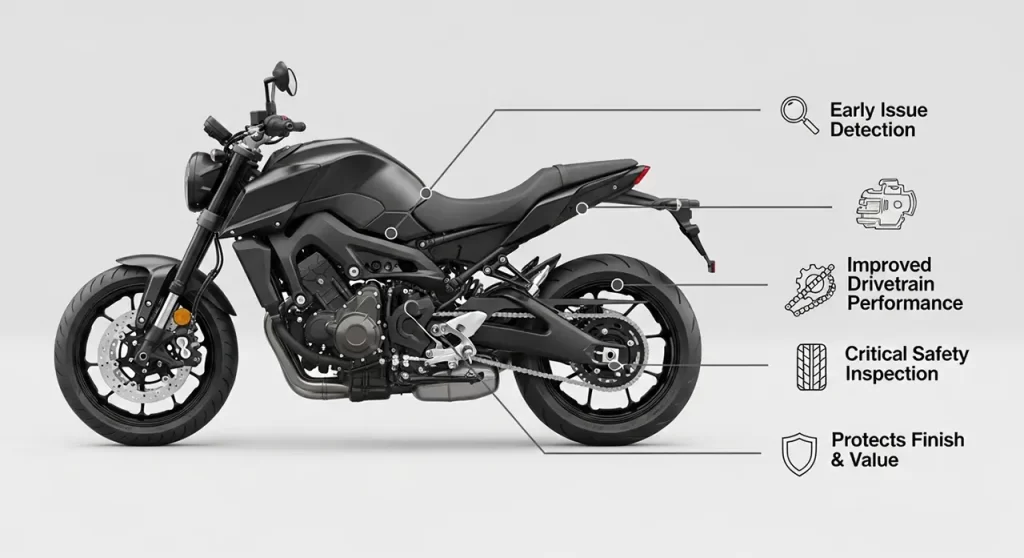
Washing your motorcycle is proactive maintenance, offering a chance to inspect critical components and protect your investment.
Washing your motorcycle is one of the most fundamental acts of maintenance you can perform. Beyond the obvious aesthetic benefits, a thorough clean provides a unique opportunity to inspect your bike up close.
As you work your way around the machine, you’ll spot potential issues like fluid leaks, loose fasteners, tire wear, or early signs of corrosion long before they become serious problems.
Furthermore, a clean bike is a more efficient bike. Grime on the chain and sprockets accelerates wear and robs power, while a clean finish reduces aerodynamic drag, however slightly.
It’s a holistic approach to care that safeguards your motorcycle’s longevity, resale value, and on-road performance.
What You’ll Learn: Mastering the Art of Motorcycle Detailing
This guide will elevate your washing process from a chore to a craft. We will move beyond basic techniques to provide a comprehensive, step-by-step masterclass in motorcycle detailing.
You will learn how to assemble the perfect arsenal of tools and chemicals, prepare your bike correctly, and execute a flawless wash that protects every surface.
From deep cleaning the engine and drivetrain to achieving a streak-free, spotless finish, we will cover every detail. By the end, you’ll have the knowledge to not only clean your motorcycle but to preserve its condition and beauty for every ride to come.
The Essential Arsenal: Tools and Supplies for Professional Results
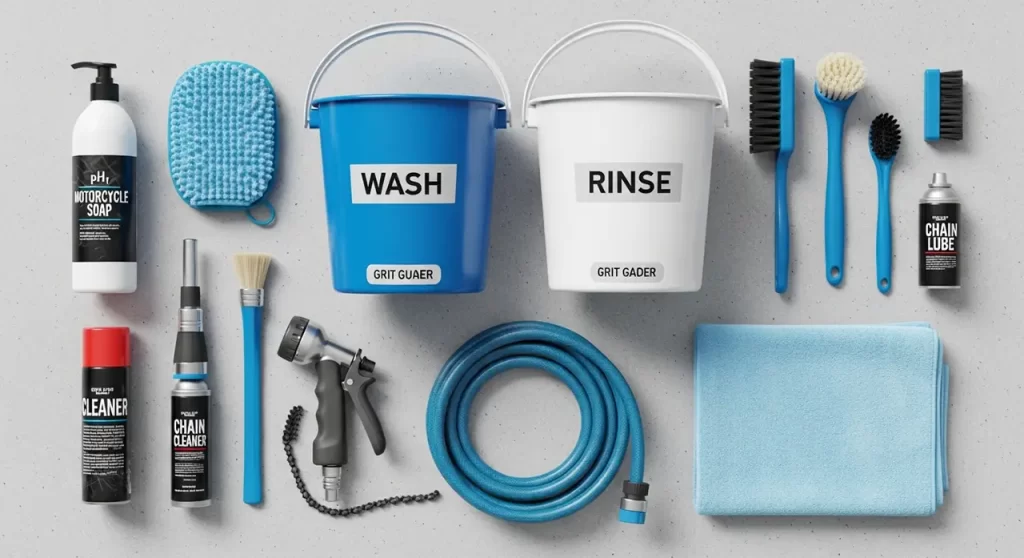
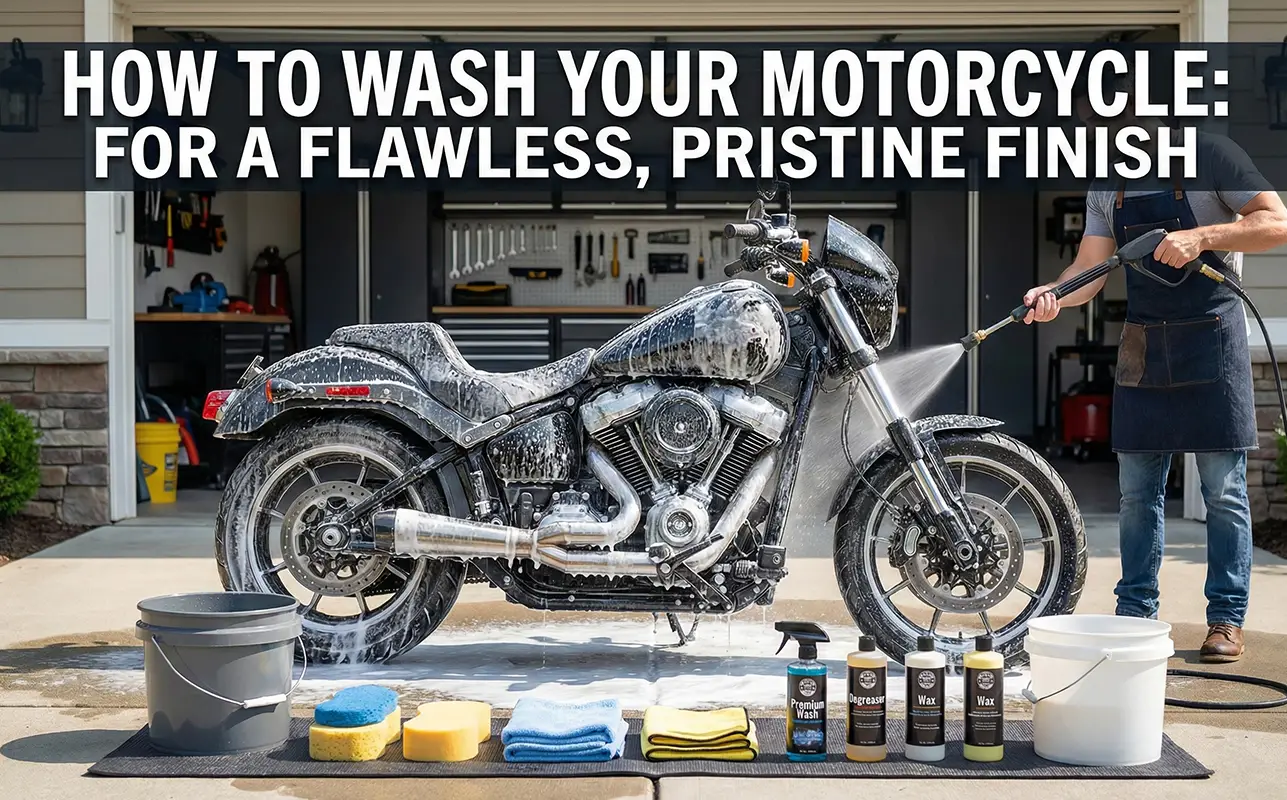
Your essential toolkit: Assembling the right supplies is the first step to a safe and flawless wash.
Achieving a flawless finish begins with having the right tools for the job. Using household detergents or old rags can cause irreversible damage to your bike’s sensitive surfaces.
Investing in a dedicated kit of high-quality detailing supplies is the first and most crucial step toward professional results, ensuring every part of your motorcycle is treated with the care it deserves.
Water Delivery & Quality: From Hose to Spotless Finish
The foundation of any wash is water. A standard garden hose with an adjustable spray nozzle is perfectly sufficient. The key is control; you need a gentle “shower” or “mist” setting for rinsing soap without driving water into sensitive electronics or bearings. While a pressure washer can be used, it requires extreme caution.
Keep it on a low-pressure setting (below 1500 PSI) and maintain a significant distance from the bike to avoid damaging seals, paint, or delicate components. The quality of your water also matters.
Hard water, rich in minerals like calcium and magnesium, is the primary cause of stubborn water spots. If your local water is hard, consider investing in an inline water filter to de-ionize the water for the final rinse, making a spotless finish much easier to achieve.
The Cleaning Cavalry: Shampoos, Degreasers, and Specialty Removers
Your choice of cleaners is critical. Avoid dish soap at all costs; its harsh detergents strip away essential waxes and protective sealants, leaving your paint vulnerable.
- pH-Neutral Motorcycle Shampoo: This is your primary weapon. A quality, pH-neutral soap is formulated to gently lift dirt and grime without harming your bike’s finish, be it paint, chrome, or plastic. It creates a lubricating layer that allows your wash mitt to glide over the surface, minimizing the risk of scratches.
- Degreaser: Essential for tackling the grimiest parts of your motorcycle, like the chain, sprockets, and engine underbelly. A citrus-based or purpose-made degreaser will break down stubborn oil and road grime effectively. Always check that it’s safe for rubber and painted surfaces near the application area.
- Specialty Removers: For targeted problems, specialized products are invaluable. A bug and tar remover will dissolve splattered insects and asphalt without harsh scrubbing. An iron fallout remover can be used to decontaminate paint from tiny metallic particles that can cause rust spots.
The Right Touch: Brushes, Sponges, and Microfiber Cloths
The tools that physically touch your bike’s surfaces are where most damage occurs. Choosing the right materials is non-negotiable.
- Wash Mitts: A high-pile microfiber wash mitt is superior to a traditional sponge. Its long, soft fibers trap dirt particles, pulling them away from the paint surface to prevent swirl marks and scratches. A basic sponge, by contrast, tends to push grit across the paint.
- Detailing Brushes: A set of soft-bristled detailing brushes is essential for cleaning intricate areas. Use them for wheel spokes, engine fins, exhaust ports, and around emblems where a mitt can’t reach. Ensure the bristles are soft enough not to scratch delicate finishes. A separate, stiffer set of brushes should be reserved for the tires and chain.
- The Two-Bucket System: This isn’t a single tool, but a critical methodology. You’ll need two five-gallon buckets, ideally with Grit Guards at the bottom. One bucket holds your soapy wash solution, and the other holds plain rinse water. This system is your best defense against scratches.
Drying Perfection: Preventing Water Spots and Achieving Shine
How you dry your motorcycle is just as important as how you wash it. Air drying is a recipe for water spots, which are mineral deposits left behind as water evaporates. These can etch into your paint and chrome over time.
- High-Quality Microfiber Drying Towels: The most important tool in this category. A large, plush, waffle-weave microfiber towel is designed for maximum absorption. These cloths can hold many times their weight in water, allowing you to dry large sections of the bike with a single, gentle pass.
- Forced Air Dryer: A dedicated motorcycle dryer or even a standard leaf blower (used on a low setting) is a game-changer. It allows you to blast water out of crevices, engine fins, lug nuts, and electrical connectors where a towel can’t reach, eliminating drips and preventing hidden corrosion.
The Finishing Touch: Polishes, Waxes, and Protective Coatings
Cleaning removes dirt; detailing adds protection and shine. These products form the final barrier between your motorcycle and the elements.
- Polish: A polish contains mild abrasives designed to remove light swirl marks, oxidation, and fine scratches from your paint or chrome, restoring clarity and depth. It should be used sparingly and only when needed to correct imperfections.
- Wax/Sealant: After polishing (or washing, if no correction is needed), you must apply a protective layer. Carnauba wax offers a deep, warm glow but has a shorter lifespan. A synthetic paint sealant provides longer-lasting, more durable protection against UV rays, acid rain, and contaminants.
- Detailing Spray: A quick detailer is perfect for light touch-ups between full washes or as a drying aid. It adds lubrication, enhances gloss, and can help remove fresh dust or fingerprints without a full wash.
Safety & Support: Protecting Yourself and Your Bike
Finally, consider the tools that keep you and your motorcycle safe during the process. A stable paddock stand or center stand will hold the bike upright, providing better access to all areas, especially the wheels and chain, and preventing the risk of it tipping over. Wear gloves to protect your hands from degreasers and chemicals, and consider safety glasses, especially when using forced air for drying.
Preparation is Paramount: Setting the Stage for Perfection
A successful wash is built on a foundation of proper preparation. Rushing into the cleaning process with a hot engine or in direct sunlight can lead to disappointing results and even damage your bike’s finish. Taking a few extra minutes to set the stage correctly ensures that your efforts translate into a flawless, pristine result.
Choose Your Workspace Wisely: Avoiding Direct Sunlight and Heat
The ideal location for washing your motorcycle is in a shaded, well-ventilated area. Direct sunlight is your enemy. The heat from the sun will cause water and cleaning products to evaporate almost instantly, leaving behind stubborn water spots and chemical stains that can be incredibly difficult to remove.
A cool, shady spot, like a garage, carport, or the north side of a building, will keep the bike’s surfaces cool, giving you ample time to wash and rinse each section thoroughly before it has a chance to dry prematurely.
Cool Down Your Engine: Preventing Product Evaporation and Stains
Never, ever apply cold water to a hot engine or exhaust pipes. The extreme temperature change can cause thermal shock, potentially leading to cracked metal or damaged finishes.
Furthermore, just like hot body panels, a hot engine will vaporize cleaning products on contact, rendering them useless and creating baked-on stains.
After a ride, let your motorcycle sit for at least 30-45 minutes, or until the engine casings and exhaust headers are cool to the touch. This simple act of patience is crucial for both the safety of your bike’s components and the effectiveness of your wash.
Protect Vulnerable Areas: Exhaust Pipes, Electrical Components, and Openings
While modern motorcycles are designed to withstand rain, a direct, high-pressure blast of water during a wash is a different story.
Take a moment to protect sensitive areas. Use an exhaust plug or stuff a plastic bag wrapped with a rubber band into the exhaust outlet to prevent water from entering the system, where it can promote internal corrosion.
Be mindful of exposed electrical connectors, the ignition switch, and the air intake opening. Avoid spraying these areas directly. A light mist is generally fine, but targeted, high-pressure streams can force water where it doesn’t belong.
Remove Accessories: Saddlebags, Windshields, and Loose Items
To ensure a truly thorough clean, remove any accessories that can be easily detached. This includes saddlebags (both hard and soft), tank bags, removable seats, and quick-release windshields.
This step serves two purposes. First, it allows you to clean the accessories themselves properly. Second, and more importantly, it grants you unimpeded access to the parts of the bike they normally cover, areas where dirt and grime love to accumulate.
Washing with these items removed ensures you’re not just cleaning around them but cleaning the entire motorcycle.
The Washing Masterclass: A Step-by-Step Guide to Deep Cleaning
With your supplies gathered and your bike prepped, it’s time for the main event. This methodical, step-by-step process is designed to maximize cleaning effectiveness while minimizing the risk of scratching or damaging any surface. Follow these steps in order to achieve a truly deep clean and a professional-level finish.
Initial Rinse: Gently Removing Loose Dirt and Debris
Begin with a gentle but thorough rinse of the entire motorcycle, starting from the top and working your way down. Use the “shower” or “mist” setting on your hose nozzle. The goal here is not to blast away grime, but to soften and remove the top layer of loose dirt, dust, and debris.
This crucial first step prevents you from grinding these larger abrasive particles into the paint when you begin the contact wash, significantly reducing the chance of creating swirl marks. Pay extra attention to heavily soiled areas like the lower fairings, wheels, and under the tail.
The Two-Bucket Method: Your Essential Defense Against Swirls and Scratches
This is the cornerstone of safe washing. Fill one bucket with your pH-neutral motorcycle shampoo and water, creating a rich, soapy solution. Fill the second bucket with plain, clean water. This is your rinse bucket.
After washing a small section of the bike, submerge your dirty microfiber mitt into the rinse bucket first. Agitate it against the Grit Guard (if you have one) to release the trapped dirt and grit.
Once the mitt is clean, you can then reload it with fresh soap from the wash bucket and move to the next section. This process ensures you are never dragging contaminated soap back onto your bike’s delicate paint, effectively isolating the dirt you remove.
Deep Cleaning the Wheels, Rims, and Tires: A Focal Point of Filth
Always wash the wheels and tires first, using a separate set of brushes and mitts from those you’ll use on the paint. Wheels accumulate the worst grime on your motorcycle—a combination of corrosive brake dust, road tar, and dirt.
Spray them with a dedicated, pH-balanced wheel cleaner that is safe for your specific wheel finish (e.g., painted, powder-coated, chrome, or anodized).
Let the cleaner dwell for the recommended time to break down the grime, then agitate with your various detailing brushes to clean the wheel faces, spokes, inner barrels, and brake calipers. Use a stiff-bristled brush for the tire sidewalls to scrub away old dressing and browning. Rinse thoroughly before moving on.
Conquering Stubborn Contaminants: Bugs, Tar, and Grime
After cleaning the wheels, address any stubborn contaminants on the paint before starting the main wash. For baked-on bugs on the front fairing and mirrors, pre-soak the area with a dedicated bug and tar remover.
Let the product work its magic, dissolving the organic material so it can be wiped away gently rather than scrubbed off.
Similarly, apply the remover to any tar spots on the lower parts of the bike. This targeted pre-treatment minimizes the amount of pressure and friction needed during the contact wash, further protecting your paint.
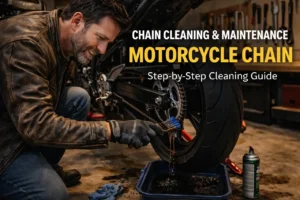
The Drivetrain Deep Clean: Chain, Sprockets, and Engine Components
A clean drivetrain is essential for optimal performance and longevity. With the motorcycle on a rear stand to allow the wheel to spin freely, generously apply a dedicated chain cleaner or degreaser to the chain.
Use a specialized chain brush with three-sided bristles to scrub all sides of the links, breaking loose old lubricant and embedded grit.
Rotate the wheel to clean the entire length of the chain. Use other soft brushes and degreaser to clean the sprockets and surrounding engine areas where grime has been flung.
Once scrubbed, rinse the entire area thoroughly. This part of the maintenance is messy but vital; a clean chain runs smoother, quieter, and lasts significantly longer.
Detailing Painted Surfaces & Fairings: Gentle Care for a Pristine Finish
Now, begin the contact wash on the main body of the bike, always working from the top down. This ensures that dirt from upper sections flows down over unwashed areas, not clean ones.
Submerge your clean microfiber wash mitt into the soap bucket and gently glide it over the surface in straight, overlapping lines. Avoid aggressive circular motions, which can create swirl marks.
Work in small, manageable sections: the top of the tank, then the sides, the front fairing, the side covers, and finally the tail section. Remember to rinse your mitt in the clean water bucket after each panel before reloading it with soap.
Restoring Plastics, Chrome, and Exhaust Pipes: Bringing Back the Shine
After the painted surfaces are washed and rinsed, focus on the other materials. Use your wash mitt to gently clean plastic components, instrument clusters, and the windshield.
For chrome parts, ensure all grit is removed. The chrome exhaust system often requires extra attention. After the initial wash, you may need to use a dedicated metal or chrome polish to remove stubborn carbon deposits and blueing near the headers.
Apply the polish with a microfiber applicator pad and buff to a brilliant shine with a clean microfiber cloth, restoring that mirror finish that makes a bike pop.
Special Care for Specific Materials: Leather and Vinyl
While paint and chrome often get the most attention, the materials you interact with on every ride—the seat and other trim pieces—require specialized care to keep them looking and feeling their best.
Using the wrong products can dry out leather, cause vinyl to fade and crack, and ultimately detract from the overall appearance and comfort of your motorcycle.
Cleaning Leather Seats: L2 Foaming Leather Cleaner for a Soft Finish
Leather seats and accessories add a touch of classic style, but they need proper maintenance to stay soft and supple. Harsh all-purpose cleaners or degreasers will strip leather of its natural oils, leading to dryness, cracking, and premature aging. A dedicated, pH-balanced foaming leather cleaner is the ideal solution. These cleaners are formulated to gently lift dirt and body oils from the pores of the leather without over-saturating it. Apply the foam to a soft-bristled leather brush or a microfiber applicator pad, and gently agitate the surface to work the cleaner in. Wipe away the residue with a clean, damp microfiber cloth. Follow up with a high-quality leather conditioner to replenish essential oils, restore a soft feel, and provide a layer of protection.
Protecting Vinyl Surfaces: Preventing UV Damage and Cracking
Vinyl is a durable and common material for motorcycle seats, dashes, and saddlebags, but it is highly susceptible to damage from the sun’s ultraviolet (UV) rays.
Over time, UV exposure can cause vinyl to fade, become brittle, and eventually crack. After cleaning vinyl surfaces with a gentle all-purpose cleaner or a dedicated vinyl cleaner, it is crucial to apply a protectant.
Look for a water-based vinyl dressing that offers robust UV protection. Avoid greasy, solvent-based products (often found in automotive tire shines) as they can make the seat slippery and attract more dust.
A quality protectant will leave a clean, satin finish that repels dust and contains UV blockers to prevent sun-induced UV damage, keeping your vinyl looking new for years.
The Art of Drying: Achieving a Spotless, Streak-Free Perfection
You can perform a perfect wash, but if you fail at the drying stage, your efforts will be marred by unsightly water spots and streaks.
Proper drying is not just about removing water; it’s about doing so quickly and safely to prevent mineral deposits from etching into your bike’s finish and to avoid introducing new scratches. This final step is what separates a good wash from a flawless detailing job.
The Microfiber Method: Gentle Absorption for a Flawless Surface
The safest way to dry your motorcycle’s large, flat surfaces is with a high-quality, dedicated drying towel. A plush, waffle-weave microfiber towel is the industry standard for a reason. Its vast surface area and absorbent fibers are designed to drink up water with minimal effort.
Instead of rubbing or wiping the surface, use the blotting method. Lay the large microfiber cloth flat on a section like the gas tank or fender and gently pat it.
The towel will absorb the water on contact. Lift it, wring it out if necessary, and move to the next section. This technique virtually eliminates the risk of dragging any missed grit across the paint and is the most gentle method for a pristine finish. Use separate, smaller microfiber cloths for dirtier areas like the lower engine and wheels.
The Power of Air: Using a Leaf Blower to Eliminate Water Spots
While a microfiber towel is excellent for body panels, it can’t reach everywhere. Water loves to hide in engine fins, around fasteners, inside electrical switches, behind emblems, and in brake calipers.
This trapped water will inevitably drip out later, leaving frustrating water spots and streaks on your otherwise perfect finish. This is where forced air becomes an invaluable tool. A dedicated motorcycle air dryer provides filtered, heated air, but an electric leaf blower is an equally effective and accessible option.
Working from the top down, use the airstream to blast water out of all these nooks and crannies. This ensures the entire bike is completely dry, preventing drips and mitigating the risk of corrosion in hidden areas. It is the professional detailer’s secret to a truly spotless result.
Conclusion
Mastering the art of washing your motorcycle is an investment in its beauty, performance, and longevity. By moving beyond a simple hose-down and embracing a methodical detailing process, you transform a routine task into a rewarding ritual.
This guide has equipped you with the professional techniques and knowledge needed to achieve that coveted flawless, pristine finish.
From assembling the right arsenal of pH-neutral soaps and soft microfiber cloths to executing the crucial two-bucket method and perfecting your drying technique, each step is a defense against damage and a move toward perfection.
The true value of this process extends far beyond a gleaming machine. It’s an intimate form of maintenance, an opportunity to inspect every nut, bolt, and surface of your bike, fostering a deeper connection and understanding of its mechanics.
A meticulously cleaned chain runs smoother, protected paint resists the elements longer, and a spotless finish reflects the pride you have in your ride.
Your next step is to put this knowledge into practice. Gather your supplies, wait for a cool, shady afternoon, and dedicate the time to treat your motorcycle to the deep clean it deserves.
Embrace the process, pay attention to the details, and take satisfaction in the stunning, protected, and perfectly maintained machine you’ll have ready for your next journey. The open road is always more rewarding on a bike that looks as good as it performs.