Understanding how to test motorcycle ignition coil without multimeter is an essential skill for every motorcycle owner and rider. The ignition coil is the heart of your motorcycle’s electrical system, transforming battery voltage into the high-voltage spark needed to ignite the fuel-air mixture in your engine’s combustion chamber. When this component fails, your bike won’t start, will run poorly, or may cut out unexpectedly during a ride—potentially leaving you stranded miles from home.
While professional mechanics typically use multimeters to diagnose ignition coil problems, not every rider has access to this specialized equipment. Learning how to test motorcycle ignition coil without multimeter empowers you to diagnose problems in your garage, on the roadside, or anywhere you encounter ignition issues. This knowledge is particularly valuable during long-distance touring or when riding in remote areas where professional help isn’t readily available.
This diagnostic procedure is crucial for several reasons. First, it extends the life of your motorcycle by helping you identify failing components before they cause secondary damage to other electrical systems. Second, it’s a critical safety skill—ignition problems can cause sudden power loss in traffic, creating dangerous situations. Third, it saves you money by allowing you to pinpoint the exact problem before purchasing replacement parts or paying for professional diagnostics.
Difficulty Level: Beginner to Intermediate
Time Required: 30-45 minutes for a complete diagnostic test
Cost Savings: Professional ignition system diagnostics at a motorcycle shop typically cost $75-150 per hour. By performing this test yourself, you’ll save the diagnostic fee and only pay for parts if replacement is necessary. A new ignition coil costs $40-200 depending on your motorcycle model, but you’ll avoid unnecessary purchases by confirming the coil is actually faulty before buying a replacement.
Signs Your Ignition Coil might be Bad
Before you start tearing your bike apart, look for these common symptoms. If your bike has these issues, an ignition coil test is the right next step:
- Hard Starting: The engine cranks but struggles to catch, especially on damp mornings.
- Misfiring/Rough Idle: The engine sounds like it is “skipping” a beat or sputtering at stoplights.
- Backfiring: Loud popping sounds from the exhaust, indicating unburnt fuel is igniting in the pipe because the coil failed to fire the plug.
- Power Loss under Load: The bike runs fine in the driveway but feels sluggish or jerks when you accelerate on the highway.
- Poor Fuel Economy: You are getting fewer miles per gallon because the fuel isn’t burning completely.
Tools & Materials Needed

Essential Tools:
- Socket set with metric sizes (8mm, 10mm, 12mm most common)
- Phillips and flathead screwdrivers (various sizes)
- Spark plug socket (typically 16mm or 18mm)
- Spark plug wire puller tool (or substitute with careful hand removal)
- Flashlight or headlamp for visibility
- Wire brush or fine sandpaper (320-grit)
- Electrical contact cleaner spray
- Shop towels or clean rags
- Nitrile gloves (powder-free, medium or large)
- Safety glasses or face shield
Testing Materials:
- Known good spark plug (new or recently tested)
- Spare spark plug wire (if available)
- Insulated pliers with rubber grips
- Grounding wire or jumper cable
- Masking tape and permanent marker (for labeling)
Documentation:
- Motorcycle service manual (paper or digital)
- Camera or smartphone for taking reference photos
- Notebook and pen for recording observations
Optional but Helpful:
- Magnetic parts tray for organizing small fasteners
- Work mat or cardboard to protect bike finish
- Battery tender or trickle charger
Preparation & Safety

Before beginning any diagnostic work on your motorcycle’s ignition system, proper preparation is absolutely essential. Start by parking your motorcycle on level ground in a well-ventilated area, preferably with good lighting. If your bike has a center stand, use it; otherwise, ensure the side stand is on firm ground and the bike is stable. Never work on a motorcycle that could tip over during the procedure.
Allow the engine to cool completely if you’ve been riding—wait at least 30-60 minutes after shutting off the engine. Hot engine components can cause serious burns, and working on a hot engine increases the risk of damaging plastic connectors and rubber seals.
Remove the key from the ignition and pocket it to prevent accidental starting. Disconnect the negative (black) battery terminal first, then the positive (red) terminal. This prevents electrical shorts and protects both you and the motorcycle’s sensitive electronics. However, note that for some testing procedures, you’ll need to reconnect the battery—we’ll specify when.
Clean the work area around the ignition coil location. Dirt and debris can fall into sensitive areas when you remove components, potentially causing additional problems. Use compressed air or a clean brush to remove loose dirt before disassembly.
SAFETY WARNING BLOCK:
Electrical Shock Hazard: Ignition coils generate extremely high voltage (15,000-45,000 volts). While the amperage is low, the shock can cause involuntary muscle contractions leading to injury. Never touch the coil terminal, spark plug wire, or spark plug while the engine is cranking or running. Always use insulated tools and wear rubber-soled shoes.
Fire and Explosion Risk: Testing ignition systems creates sparks near fuel system components. Ensure there are no fuel leaks, no gasoline odors, and no fuel on external surfaces. Keep a fire extinguisher rated for electrical and fuel fires (Class B/C) within reach. Never smoke or allow open flames in the work area.
Battery Hazards: Motorcycle batteries contain sulfuric acid and produce explosive hydrogen gas. Wear safety glasses and nitrile gloves when handling battery connections. Work in a ventilated area and avoid creating sparks near the battery.
Moving Parts: During some tests, the engine will be cranked. Ensure all loose clothing, jewelry, and long hair are secured. Keep hands, tools, and test equipment clear of the cooling fan, drive belt, and other moving components.
Chemical Exposure: Electrical contact cleaners contain solvents that can irritate skin and eyes. Use in ventilated areas and wear appropriate protective equipment.
Lay out all your tools systematically and review your motorcycle’s service manual to identify the ignition coil location and any model-specific procedures. Take photos of wire connections and component positions before disassembly—these reference images will be invaluable during reassembly.
Step-by-Step Guide: How to Test Motorcycle Ignition Coil Without Multimeter
Step 1: Locate and Access the Ignition Coil
The ignition coil location varies by motorcycle model, but it’s typically mounted near the engine, under the fuel tank, or beneath side panels. Consult your service manual for the exact location. On most motorcycles, you’ll need to remove plastic body panels or the seat to access the coil.
Using appropriate screwdrivers or socket wrenches, carefully remove any panels blocking access to the ignition coil. As you remove fasteners, place them in a magnetic parts tray or container, organizing them by location. Take photos of how panels fit together—this makes reassembly much easier.
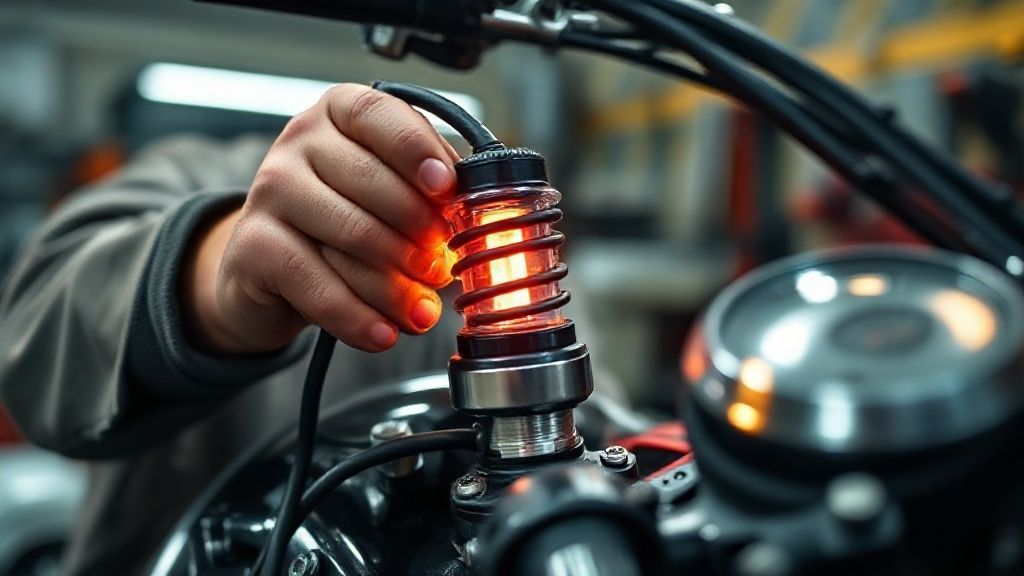
Once exposed, visually inspect the ignition coil. It’s typically a cylindrical or rectangular component with thick wires (spark plug wires) exiting from one end and thinner wires (primary wiring) connected via a plug or terminals on the other end. Note its mounting position and how wires are routed.
Mechanic’s Tip: Before touching any electrical components, touch a grounded metal part of the frame to discharge any static electricity from your body. Static discharge can damage sensitive electronic components.
Step 2: Perform a Visual Inspection
Visual inspection is the first method for how to test motorcycle ignition coil without multimeter. Examine the coil housing for cracks, burn marks, corrosion, or oil contamination. Cracks in the coil body allow moisture to enter, causing internal short circuits. Burn marks or melted plastic indicate overheating from internal failure or external electrical problems.
Inspect the spark plug wires (also called high-tension leads) connected to the coil. Look for cracks, cuts, or deterioration in the rubber insulation. Squeeze the wire along its length—if it feels hard and brittle rather than flexible, the insulation has degraded and may be allowing voltage to leak before reaching the spark plug.
Check all electrical connectors for corrosion (white, green, or blue crusty deposits), looseness, or damage. Wiggle connectors gently—they should be firmly seated with no movement. Examine the connector pins inside for corrosion or bent terminals.
Look for evidence of oil or fuel contamination on the coil. While the coil itself is sealed, external contamination can track along the surface and create electrical leakage paths, causing misfires or starting problems.
Mechanic’s Tip: Use your smartphone’s flashlight and camera together—shine the light at an angle across surfaces to highlight cracks and imperfections that are invisible under direct lighting, then photograph anything suspicious for later reference.
Step 3: Check and Clean All Connections
Disconnect the primary wiring connector from the ignition coil by pressing the release tab and pulling gently. Never pull on wires—always grasp the connector body. Inspect the terminals inside both the connector and the coil for corrosion or damage.
Spray electrical contact cleaner into the connector and on the coil terminals. Use a wire brush or fine sandpaper to gently clean any corrosion from metal terminals. Be careful not to bend or damage the terminals. Wipe away residue with a clean shop towel and allow to air dry completely.
Remove the spark plug wires from the coil terminals. Most twist and pull off, but some have small bolts securing them. Label each wire with masking tape indicating which cylinder it serves (e.g., “Cylinder 1,” “Front,” “Rear”). This prevents mixing up wires during reassembly.
Inspect the metal terminals inside the spark plug wire boots. These should be clean and shiny. Corrosion here creates high resistance that can mimic a bad coil. Clean with electrical contact cleaner and a small wire brush if needed.
Mechanic’s Tip: When removing spark plug wires, twist the boot back and forth while pulling. This breaks the seal without damaging the wire. Never pull on the wire itself—always grasp the rubber boot.
Step 4: The Spark Test (Primary Method)
This is the core procedure for how to test motorcycle ignition coil without multimeter. Reconnect the battery (positive first, then negative) and ensure the kill switch is in the “run” position. Leave the ignition key out for now.
Remove one spark plug from the engine using your spark plug socket. If you’re testing a multi-cylinder bike, start with cylinder one. Inspect the spark plug—if it’s oil-fouled, carbon-covered, or damaged, replace it with a known good spark plug for testing purposes. A bad spark plug can make a good coil appear faulty.
Reconnect the spark plug wire to the spark plug you just removed. Using insulated pliers, hold the spark plug so the threaded portion (ground electrode) touches a clean, unpainted metal part of the engine—this grounds the spark plug. Position the spark plug so you can see the gap between the electrodes.
IMPORTANT SAFETY NOTE: Do not hold the spark plug with your bare hands. Use insulated pliers and keep your body clear of the spark plug, wire, and coil. Have an assistant help if possible—one person to hold the plug safely, another to crank the engine.
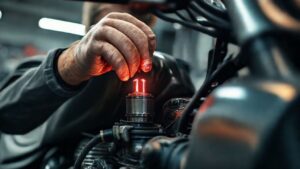
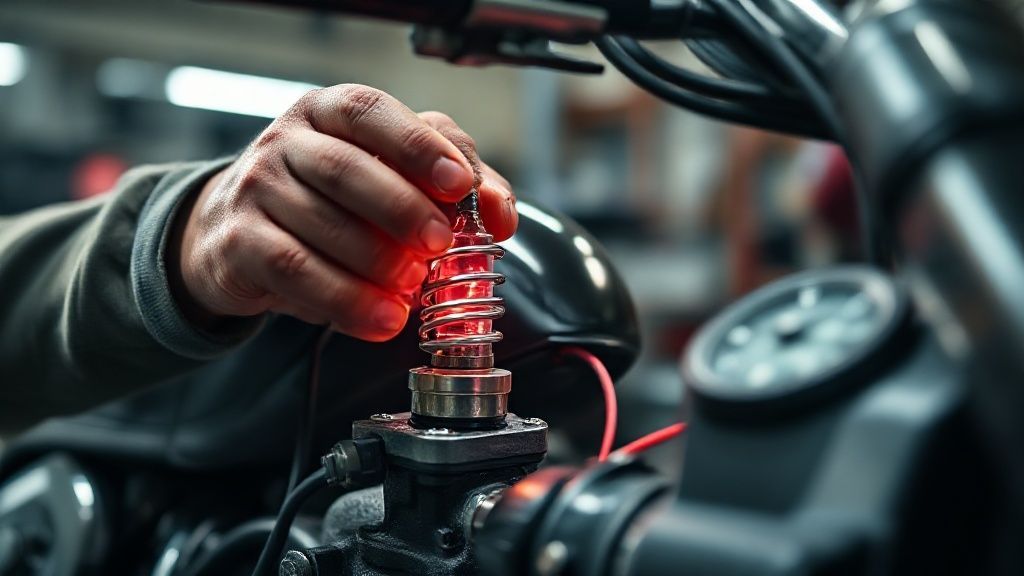
Insert the ignition key and turn it to the “on” position. Press the starter button briefly (1-2 seconds maximum) while watching the spark plug gap. You should see a bright blue spark jump across the gap. A strong, consistent blue spark indicates the coil is functioning properly. A weak orange or yellow spark, or no spark at all, indicates a problem.
Repeat this test 3-4 times to ensure consistency. An intermittent spark suggests a failing coil or loose connection.
Mechanic’s Tip: Perform this test in a shaded area or dim lighting—sparks are much easier to see without bright sunlight washing them out. If testing outdoors in daylight, create shade by draping a dark cloth over the test area.
Step 5: The Comparative Test (For Multi-Cylinder Bikes)
If your motorcycle has multiple cylinders with separate ignition coils, you can perform a comparative test. This method of how to test motorcycle ignition coil without multimeter uses one coil as a reference for the other.
After completing the spark test on cylinder one, repeat the exact procedure on cylinder two (or all remaining cylinders). Compare the spark quality between cylinders. All sparks should be similar in brightness, color, and consistency.
If one cylinder shows a noticeably weaker spark or no spark while others are strong, the weak cylinder’s coil is likely failing. However, also consider that the problem could be in the spark plug wire, spark plug, or primary wiring to that specific coil.
To further isolate the problem, swap the spark plug wires between a good cylinder and the suspect cylinder. If the weak spark moves to the other cylinder, the problem is in the wire, not the coil. If the weak spark stays with the same coil despite using a different wire, the coil itself is faulty.
Mechanic’s Tip: Create a simple chart in your notebook: list each cylinder and rate the spark quality on a scale of 1-10. This objective comparison helps identify subtle differences that might be missed by memory alone.
Step 6: The Resistance Feel Test
While not as precise as using a multimeter, you can perform a basic resistance test by feel. Disconnect the spark plug wire from the coil. Look at the coil terminal—it’s a metal post or socket where the wire connects.
Reconnect the battery if disconnected. Turn the ignition key to the “on” position (but don’t start the engine). Using insulated pliers, bring the spark plug wire terminal close to the coil terminal—about 1/4 inch away—without touching.
Have an assistant briefly press the starter button (1 second maximum). You should see a spark jump the gap between the wire and the coil terminal. This demonstrates that the coil is generating high voltage output.
If sparks jump easily across a 1/4 inch gap at the coil but you had no spark at the spark plug in the previous test, the problem is in the spark plug wire, not the coil. The wire has excessive resistance or an internal break.
Mechanic’s Tip: This test exposes high voltage terminals. Use extra caution. Keep your hands on the insulated portions of tools only, and ensure no part of your body forms a path to ground. Stand on a rubber mat or dry wood for additional insulation.
Step 7: The Swap Test (Definitive Diagnosis)
If you have access to a known good ignition coil from another motorcycle (same model or compatible type), or if you’re willing to purchase a new coil for testing, the swap test provides definitive diagnosis of how to test motorcycle ignition coil without multimeter.
Disconnect the battery. Remove the suspect ignition coil by disconnecting all wires and removing mounting bolts. Take photos before removal to document correct wire routing and connections.
Install the known good coil in place of the suspect coil. Connect all wires exactly as they were on the original coil. Double-check that primary wiring and spark plug wires are connected to the correct terminals.
Reconnect the battery and perform the spark test described in Step 4. If the known good coil produces a strong spark where the original coil produced weak or no spark, you’ve confirmed the original coil is faulty and needs replacement.
If the problem persists even with a known good coil, the issue lies elsewhere in the ignition system—possibly the CDI unit, pickup coil, stator, or wiring harness. Further diagnosis will be needed.
Mechanic’s Tip: Before buying a new coil for testing, check with local motorcycle shops or riding clubs. Many mechanics keep old but functional parts for diagnostic purposes and may loan you a coil for testing. Some auto parts stores also offer tool and parts lending programs.
Step 8: The Load Test
A coil may produce a spark in open air but fail under the compression load of the engine. This load test helps identify coils that are marginally functional.
Reinstall the spark plug into the engine, but leave the spark plug wire disconnected. Turn the ignition on and crank the engine briefly—the engine won’t start without the spark plug wire connected. This verifies that the engine cranks normally and there are no mechanical seizures.
Now reconnect the spark plug wire to the spark plug (which is installed in the engine). Attempt to start the engine normally. If the engine starts and runs smoothly, the coil is functioning properly under load. If the engine won’t start, or starts but runs roughly on that cylinder, the coil may be failing under the compression pressure load.
For a more detailed load test, once the engine is running, observe the exhaust note and engine smoothness. A failing coil will cause one cylinder to misfire, creating an irregular exhaust note and rough idle. Rev the engine gently—misfiring often worsens at higher RPMs as the failing coil cannot keep up with increased demand.
Mechanic’s Tip: Use your hand to feel the exhaust pipes (after the engine has run for 30 seconds but before they get too hot). All pipes should be equally warm. A cold pipe indicates that cylinder isn’t firing, pointing to a coil, spark plug, or fuel delivery problem for that cylinder.
Step 9: The Thermal Test
Some ignition coils fail when hot but work fine when cold, or vice versa. This thermal test for how to test motorcycle ignition coil without multimeter helps identify temperature-sensitive failures.
Start with a cold engine. Perform the spark test from Step 4—document the spark quality. Now run the engine until it reaches normal operating temperature (usually 5-10 minutes of idling or a short ride). Immediately shut off the engine and repeat the spark test.
Compare the cold and hot spark quality. If the spark is strong when cold but weak or absent when hot, the coil has internal insulation breakdown that worsens with heat—a clear sign of failure. If the spark is weak when cold but improves when warm, the coil may have internal corrosion or poor connections that improve with thermal expansion.
For intermittent problems, you can also test a cold coil by gently heating it with a heat gun (never use an open flame) while performing the spark test. If the spark fails as the coil heats, you’ve identified a temperature-sensitive failure.
Mechanic’s Tip: Keep a spray bottle of water handy during testing. If the engine becomes too hot to safely work around, mist (don’t soak) the external engine cases to cool them slightly. Never spray water directly on electrical components or the hot exhaust system.
Step 10: The Vibration Test
Motorcycle vibration can cause intermittent failures in coils with internal breaks or loose windings. This test helps identify vibration-sensitive problems.
With the spark plug removed and grounded for testing (as in Step 4), have an assistant crank the engine while you gently tap the ignition coil body with a rubber mallet or the plastic handle of a screwdriver. Watch the spark at the plug gap.
If the spark interrupts, weakens, or changes character when you tap the coil, internal components are loose or broken. This indicates coil failure. A good coil will produce consistent spark regardless of vibration or tapping.
Similarly, wiggle the wire connections at the coil while cranking. If the spark interrupts with wire movement, the problem is in the connections or wires, not the coil itself. Clean and secure all connections.
Mechanic’s Tip: Don’t strike the coil hard—gentle taps are sufficient to simulate vibration. Excessive force can damage a good coil or other nearby components. Think of tapping a nail with a hammer, not driving it through wood.
Step 11: Document Your Findings
Before reassembly, document all test results in your notebook. Record which tests you performed, what the results were, and any observations about spark quality, temperature sensitivity, or vibration effects.
Take photos of any damaged components, corrosion, or wear patterns. These images are valuable if you need to consult with a mechanic, order parts online, or refer back to this diagnostic session in the future.
If you’ve determined the coil is faulty, note the coil’s part number (usually printed or stamped on the coil body) and your motorcycle’s year, make, and model. This information ensures you order the correct replacement part.
Mechanic’s Tip: Create a maintenance log for your motorcycle. Each time you perform diagnostics or repairs, add an entry with the date, mileage, problem description, tests performed, and solution. This history becomes invaluable for identifying patterns and preventing future problems.
Step 12: The Test Light Check (Verifying Input Power)
If you have no spark at all, you need to confirm the coil is actually receiving power. Since you don’t have a multimeter, a simple automotive 12V test light (available at any auto parts store for a few dollars) is the perfect alternative.
Clip the ground clamp of the test light to a metal part of the engine or frame. Disconnect the primary connector from the coil. Turn the ignition key to the “ON” position. Probe the terminals in the wire harness connector (the side coming from the bike, not the coil).
One of the wires (usually red or orange) should make the test light glow brightly. This confirms the coil is getting power.
- If the light glows: Power is reaching the coil, so the coil itself (or the pickup signal) is likely the problem.
- If the light does not glow: The coil is fine, but it has no power. You likely have a blown fuse, a bad kill switch, or a broken wire. Replacing the coil won’t fix this!
Mechanic’s Tip: If you don’t have a test light, you can swap the horn relay with the ignition relay (if they are identical) to rule out a bad relay cutting power to the coil.
Step 13: The Mist Test (Finding Invisible Leaks)
Sometimes a coil has microscopic cracks in the housing that are invisible to the naked eye but allow high voltage to “leak” out to the frame instead of going to the spark plug.
- Wait until it is dark (or turn off the lights in your garage).
- Start the motorcycle (if it runs rough) or crank the engine.
- Using a spray bottle, mist a very fine spray of water over the ignition coil and the spark plug wire.
- The Result: If you see blue electrical arcs jumping from the coil body to the frame, or hear a rhythmic “snap-snap-snap” sound, the coil’s insulation has failed. The water creates a conductive path for the electricity to escape. A healthy coil should not arc even when misted.
Step 14: Reassembly and Final Verification
If your coil tested good, reassemble all components in reverse order of removal. Ensure all electrical connections are clean, tight, and coated with a thin layer of dielectric grease to prevent future corrosion.
Route the spark plug wires carefully, using the original clips or guides to keep them away from hot exhaust pipes and sharp frame edges. Improper routing can melt the wire insulation, causing a new short circuit. Reinstall any body panels, fuel tank, and the seat, referring to the photos you took during disassembly to ensure proper fitment.
If you replaced a faulty coil, perform a final functional check. Start the engine and listen to the idle—it should be smooth and consistent. Take the motorcycle for a short, low-speed test ride in a safe area. Accelerate gently at first, then more firmly. The engine should pull cleanly through the RPM range without hesitation, stumbling, or backfiring. A successful test ride confirms your diagnosis and repair were correct.
Mechanic’s Tip: After reassembly, double-check that no wires are pinched under the seat or fuel tank before tightening the final bolts. A pinched wire can wear through its insulation weeks later, causing a short circuit that leaves you stranded and undoes all your hard work.
Troubleshooting Common Mistakes
Testing ignition systems without digital tools relies heavily on observation, which can lead to errors. Avoid these common pitfalls:
- Testing in Bright Sunlight:
- The Mistake: Trying to see a spark in direct daylight.
- The Result: You might mistakenly condemn a good coil because you couldn’t see the blue spark against the bright background. Correction: Always test in the shade or cup your hands around the spark plug (safely!) to create a dark viewing area.
- Using a Fouled Spark Plug:
- The Mistake: Using the old, carbon-fouled spark plug for the test.
- The Result: Carbon deposits conduct electricity, “shorting” the plug so the spark occurs deep inside the shell where you can’t see it, rather than at the gap. Correction: Always use a clean or brand-new spark plug for your spark test.
- Poor Grounding:
- The Mistake: Holding the spark plug against a painted or dirty part of the frame.
- The Result: Paint acts as an insulator. The spark has nowhere to go, making the coil appear dead. Correction: Always touch the threads to a bare metal bolt head or cylinder fin.
- Flooding the Engine:
- The Mistake: Cranking the engine repeatedly with the spark plug removed.
- The Result: This pumps raw fuel vapor out of the spark plug hole. If the coil does fire, it can ignite this vapor, causing a fire. Correction: Crank briefly, and ensure the spark plug is grounded away from the open spark plug hole.
Conclusion
Learning how to test a motorcycle ignition coil without a multimeter is a valuable skill that can save a ride when you’re far from your garage. By using logical elimination—visual inspection, spark testing, and the “swap method”—you can effectively diagnose a failing coil with just a few basic hand tools.
While a multimeter is the definitive tool for measuring internal resistance, these “old school” mechanic tricks allow you to assess the functional health of your ignition system. Remember, a coil’s job is simple: to create a spark. If you can prove it’s not doing that job (and your battery and plugs are good), you can confidently order a replacement and get back on the road.
Frequently Asked Questions (FAQ)
1. Can a coil work when cold but fail when hot?
Yes, absolutely. This is known as “thermal breakdown.” The copper windings inside the coil expand as they heat up. If there is a hairline fracture in the wire, the expansion pulls the broken ends apart, killing the spark. As soon as the bike cools down, the wire contracts, touches again, and the bike restarts. This is a classic sign of a failing coil.
2. Is it safe to hold the spark plug while cranking?
No. The voltage generated by a coil is between 15,000 and 40,000 volts. While it likely won’t kill you, the shock is extremely painful and can cause you to jerk your hand back, potentially cutting it on sharp metal parts. Always use insulated pliers or a specific spark tester tool.
3. What color should the spark be?
A healthy spark should be blue or blue-white and clearly visible. This indicates high voltage and strong current. A spark that is orange, red, or very thin indicates weak voltage. This weak spark might be enough to fire in open air, but it will often blow out under the high pressure of the combustion chamber, causing a misfire.
4. Can a bad battery mimic a bad coil?
Yes. The ignition coil acts as a transformer—it multiplies the input voltage. If your battery is only supplying 10 volts instead of 12.6 volts, the coil’s output will be significantly weaker. Always ensure your battery is fully charged before condemning the coil.