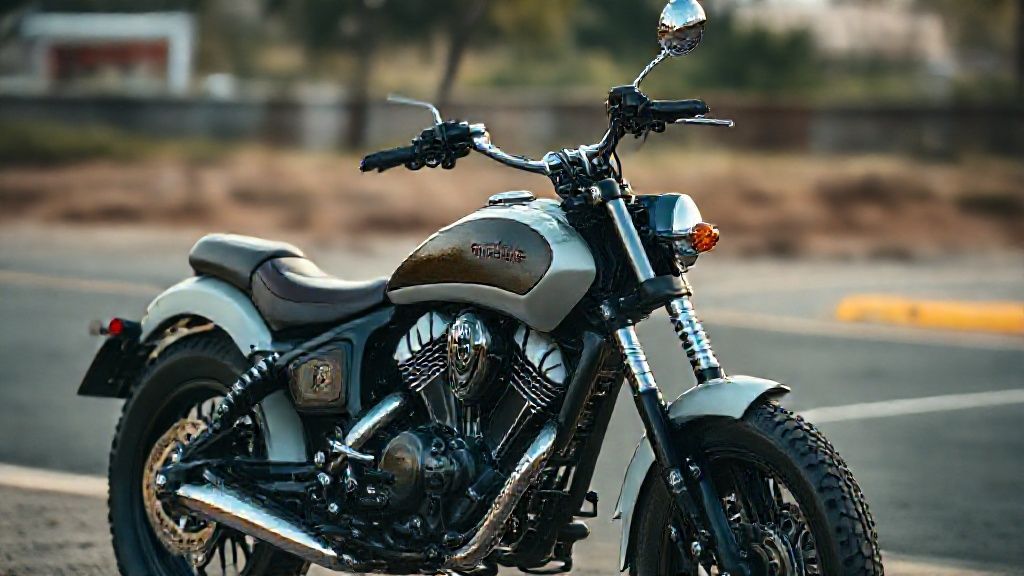
I’ll never forget the conversation I overheard at a vintage motorcycle show in Sturgis three years ago. Two riders were locked in heated debate, voices rising above the rumble of passing bikes. “The Scout Sixty is Indian’s smallest!” one insisted. The other shook his head firmly: “No way—it’s the FTR Sport!” A third rider chimed in, mentioning something about displacement versus physical dimensions. That ten-minute argument perfectly encapsulates the confusion surrounding what is the smallest Indian motorcycle—a question that seems simple but reveals surprising complexity once you dig beneath the surface.
Indian Motorcycle, America’s first motorcycle company founded in 1901, has experienced a remarkable renaissance since its acquisition by Polaris Industries in 2011. The brand that once competed directly with Harley-Davidson has returned to prominence with a carefully curated lineup that balances heritage with modern performance. Yet despite this streamlined approach, determining what is the smallest Indian motorcycle requires us to define our terms carefully. Are we discussing engine displacement? Physical dimensions? Seat height? Weight? Each metric tells a different story, and for riders considering their entry point into the Indian family—or experienced motorcyclists seeking a more manageable machine—understanding these distinctions matters tremendously. This article will dissect Indian’s current lineup, examine historical context, and definitively answer which Indian motorcycle deserves the title of “smallest,” while explaining why the answer depends entirely on what you’re actually asking.
Understanding “Smallest” in Motorcycle Terms
Before we can definitively answer what is the smallest Indian motorcycle, we need to establish our framework. In motorcycle journalism and among riders, “smallest” can refer to several distinct measurements, each relevant to different riding concerns and buyer priorities.
Engine Displacement: The Traditional Metric
Historically, motorcycle size has been synonymous with engine displacement, measured in cubic centimeters (cc) or cubic inches. This metric directly correlates with power output, fuel consumption, and often insurance costs. In Indian’s current lineup, engine sizes range from 1133cc to 1890cc, a relatively narrow band that reflects the company’s focus on midsize-to-large motorcycles. The Scout platform, utilizing the smallest engine in Indian’s stable at 1133cc (69 cubic inches), represents the entry point by displacement standards. This V-twin engine produces approximately 100 horsepower and 72 lb-ft of torque—modest by modern sportbike standards but substantial for a cruiser-style motorcycle. When riders ask what is the smallest Indian motorcycle in terms of raw engine size, the Scout Sixty and its platform siblings provide the clear answer.
Physical Dimensions and Wheelbase
Physical size—overall length, width, and wheelbase—dramatically affects handling characteristics, parking convenience, and the motorcycle’s maneuverability in tight spaces. Indian’s FTR models, despite using larger 1203cc engines than the Scout Sixty, feature more compact dimensions overall. The FTR Sport measures 85.6 inches in length with a 59.8-inch wheelbase, making it notably shorter than the Scout’s 90.2-inch length and 64.7-inch wheelbase. This compactness translates to flickable handling and urban agility that belies the FTR’s substantial engine. For riders navigating city streets or tight canyon roads, physical dimensions matter more than displacement, shifting the answer to what is the smallest Indian motorcycle toward the FTR platform rather than the Scout.
Seat Height and Rider Accessibility
Seat height represents a critical consideration for shorter riders or those with inseam limitations. The ability to plant both feet firmly on the ground at stops provides confidence and safety, making this measurement paramount for many buyers. Indian’s Scout lineup offers the lowest seat heights in the current range, with the Scout Bobber Twenty and Scout Bobber sitting at just 25.3 inches—exceptionally low even by cruiser standards. The standard Scout measures 25.6 inches, while the FTR models range from 32.5 to 33.5 inches depending on variant. This five-to-eight-inch difference is substantial; it can mean the difference between comfortable flat-footing and tiptoeing nervously at traffic lights. When accessibility defines what is the smallest Indian motorcycle, the Scout Bobber variants win decisively.
Weight and Mass Considerations
Curb weight affects everything from low-speed maneuverability to parking lot mishaps to the physical effort required for maintenance. Lighter motorcycles inspire confidence in novice riders and reduce fatigue during long days in the saddle. Indian’s lightest current production model is the FTR Sport at approximately 485 pounds wet, followed closely by the FTR at 491 pounds. The Scout models range from 534 to 558 pounds depending on configuration and accessories. This 50-70 pound difference is immediately noticeable when wrestling a bike into a garage or executing U-turns on an incline. For riders prioritizing ease of handling and reduced mass, what is the smallest Indian motorcycle points clearly toward the FTR Sport, despite its larger engine displacement than the Scout platform.
The Current Indian Motorcycle Lineup: A Detailed Breakdown
To properly answer what is the smallest Indian motorcycle, we must examine Indian’s current production models systematically, understanding how each measures against our various “smallest” criteria.
The Scout Family: Indian’s Entry-Level Platform
The Scout represents Indian’s most accessible platform, introduced in 2015 as a direct competitor to Harley-Davidson’s Sportster line. Built around a 1133cc liquid-cooled V-twin engine (the smallest displacement in Indian’s range), the Scout family includes several variants: the standard Scout, Scout Bobber, Scout Bobber Twenty, and Scout Rogue. All share the same fundamental architecture but differ in styling, ergonomics, and features.
The standard Scout, with its 25.6-inch seat height, 64.7-inch wheelbase, and 534-pound curb weight, offers the most neutral riding position and greatest versatility. It’s the least aggressive Scout variant, making it ideal for newer riders or those seeking all-day comfort. The Scout Bobber drops the seat to 25.3 inches and adopts a more raked-out chopper aesthetic with mid-mounted foot controls and a solo seat configuration. At 544 pounds, it’s slightly heavier than the standard Scout due to different wheel and tire specifications.
When discussing what is the smallest Indian motorcycle by displacement and seat height, the Scout family dominates the conversation. The 1133cc engine, while still substantial by global standards, represents the minimum buy-in for Indian ownership. This engine’s 100-horsepower output provides spirited performance without overwhelming novice riders, while the low seat height accommodates riders from approximately 5’4″ upward comfortably. The Scout’s 64.7-inch wheelbase splits the difference between stability and maneuverability, offering predictable handling without the nervous quickness of shorter sportbikes or the ponderous feel of full-size cruisers.
The FTR Platform: Compact Performance
Introduced in 2019 and inspired by Indian’s flat-track racing heritage, the FTR lineup represents a radical departure from the company’s cruiser-centric history. Available in FTR Sport, FTR, FTR R Carbon, and FTR Rally variants, these motorcycles utilize a 1203cc V-twin engine producing approximately 120 horsepower—significantly more than the Scout’s powerplant.
Despite the larger engine, the FTR models measure physically smaller than the Scouts in key dimensions. The 59.8-inch wheelbase creates nimble, almost sportbike-like handling characteristics. The overall length of 85.6 inches makes the FTR the most compact Indian in terms of parking footprint and storage requirements. At 485 pounds for the FTR Sport variant, these models represent the lightest motorcycles in Indian’s current range.
However, the FTR’s 32.5-33.5-inch seat height creates challenges for shorter riders. The upright, street-fighter ergonomics position riders higher than traditional cruisers, requiring longer inseams for confident flat-footing. This elevated riding position, combined with aggressive geometry and substantial power, makes the FTR less suitable for absolute beginners despite its compact dimensions. When considering what is the smallest Indian motorcycle by weight and physical footprint, the FTR Sport claims the title convincingly, but its higher seat height and performance-oriented character make it less accessible than the Scout family.
The Chief and Challenger Families: Indian’s Full-Size Platforms
For context, Indian’s larger platforms—the Chief family (Chief, Super Chief, Springfield) and the Challenger family (Challenger, Pursuit)—utilize significantly larger engines and dimensions. The Chief models employ a 1890cc Thunderstroke 116 engine, while Challenger models use the same powerplant in a completely different chassis designed for bagger performance. These motorcycles range from 750 to over 850 pounds, with seat heights from 26 to 28 inches and wheelbases extending beyond 66 inches.
While these machines offer commanding road presence and long-distance capability, they definitively do not factor into discussions about what is the smallest Indian motorcycle. Their size, weight, and power place them in a completely different category, designed for experienced riders seeking maximum comfort, storage, and highway stability rather than urban maneuverability or entry-level accessibility.
Historical Context: Indian’s Smallest Motorcycles Through Time
Understanding what is the smallest Indian motorcycle in current production tells only part of the story. Indian’s 120-year history includes numerous smaller-displacement models that would dwarf the modern Scout in terms of accessibility and compactness.
The Original Indian Singles and Twins
Indian’s first production motorcycle in 1901 featured a 1.75-horsepower single-cylinder engine displacing approximately 213cc. This bicycle-with-engine represented the absolute smallest Indian motorcycle ever produced, though comparing it to modern machines proves meaningless given the century-plus technological evolution. Throughout the 1900s-1920s, Indian produced various small-displacement singles and twins ranging from 250cc to 600cc, designed for economy, utility, and novice riders.
The Indian Scout, introduced in 1920 with a 606cc (37 cubic inch) engine, became legendary for its performance and reliability. This original Scout—namesake of today’s model—represented a “small” Indian for its era, positioned below the larger Chief models. Interestingly, this historical Scout displaced roughly half the volume of the modern Scout, illustrating how motorcycle sizing has evolved toward larger, more powerful machines across the industry.
Post-War Small-Displacement Models
Following World War II, Indian struggled financially and experimented with smaller, more affordable models to compete with British imports. The Indian Arrow and Warrior models of the late 1940s featured 220cc and 500cc engines respectively, representing Indian’s smallest post-war offerings. These models failed to save the company from its 1953 bankruptcy, partly because Indian’s brand identity was so firmly associated with large V-twins that smaller bikes felt incongruous to loyal customers.
During the 1950s-1960s, various entities attempted to revive the Indian name, often attaching it to rebadged small-displacement motorcycles from European and Japanese manufacturers. These “Indians” included 50cc mopeds and 250cc lightweights that technically qualify as the smallest motorcycles ever sold under the Indian badge, though they’re generally dismissed by historians as inauthentic products of a desperate brand licensing strategy.
The Modern Era: Polaris’s Strategic Positioning
When Polaris Industries acquired Indian in 2011 and relaunched the brand in 2013, the company made a strategic decision to focus exclusively on midsize-to-large motorcycles. This positioning avoided direct competition with Japanese manufacturers’ small-displacement models while leveraging Indian’s heritage as an American V-twin brand. The choice to make the 1133cc Scout the smallest Indian motorcycle in the modern lineup reflects careful market analysis: large enough to deliver authentic American cruiser character, small enough to serve as an accessible entry point, and differentiated from competitors through distinctive styling and engineering.
This strategic positioning means that what is the smallest Indian motorcycle today—whether the Scout by displacement or the FTR by dimensions—remains substantially larger than the global motorcycle market’s true entry-level machines. Indian has consciously chosen not to compete in the 300-500cc beginner segment dominated by Honda, Kawasaki, Yamaha, and KTM, instead establishing 1133cc as its minimum displacement threshold.
Practical Implications: Which “Smallest” Indian Is Right for You?
Understanding what is the smallest Indian motorcycle across various metrics matters less than determining which interpretation of “smallest” aligns with your riding needs, physical characteristics, and experience level.
For New Riders and Shorter Inseams
If you’re new to motorcycling or have an inseam below 30 inches, the Scout Bobber or Scout Bobber Twenty represents the most accessible entry point into Indian ownership. The 25.3-inch seat height allows most riders 5’4″ and above to achieve flat-footing, providing crucial confidence during the learning process. The 1133cc engine, while not small by absolute standards, delivers power smoothly and predictably without the explosive hit that intimidates beginners.
The Scout’s 534-pound weight, though not lightweight, remains manageable for most adult riders during parking lot maneuvers and low-speed handling. The cruiser ergonomics—feet forward, hands up, neutral torso position—feel natural and comfortable for riders without sportbike experience. For this demographic, what is the smallest Indian motorcycle is definitively the Scout Bobber, combining the lowest seat height with the smallest displacement in a package that doesn’t compromise Indian’s authentic cruiser character.
For Urban Riders and Canyon Carvers
If your riding primarily involves city commuting, tight canyon roads, or spirited backroad exploration, the FTR Sport deserves serious consideration despite its larger engine and higher seat height. The 485-pound curb weight makes it the easiest Indian to maneuver through traffic, while the 59.8-inch wheelbase creates agile, confidence-inspiring handling that rewards active riding.
The FTR’s upright ergonomics provide excellent visibility and control in urban environments, and the 1203cc engine’s 120 horsepower offers thrilling acceleration for highway merging and overtaking. However, the 32.5-inch seat height requires a minimum inseam of approximately 31-32 inches for comfortable flat-footing, limiting accessibility for shorter riders. For taller, more experienced riders seeking the most compact and dynamic Indian, what is the smallest Indian motorcycle becomes the FTR Sport, prioritizing physical dimensions and weight over displacement and seat height.
For Versatility and All-Around Performance
The standard Scout—not Bobber, not Rogue, but the original Scout configuration—offers the best compromise across all “smallest” metrics. Its 25.6-inch seat height remains accessible to most riders, while its slightly less aggressive ergonomics than the Bobber variants provide greater comfort for varied riding situations. The 534-pound weight matches the Bobber, and the 1133cc engine delivers adequate performance for everything from urban commuting to highway touring.
The standard Scout’s neutral positioning makes it the most versatile answer to what is the smallest Indian motorcycle for riders who want one bike to handle multiple roles. It’s small enough to feel manageable for newer riders, accessible enough for shorter inseams, light enough for confident handling, and powerful enough to grow with your skills without feeling limiting.
The Competition: How Indian’s Smallest Compares
Examining what is the smallest Indian motorcycle gains additional context when compared to competitors’ entry-level offerings, revealing Indian’s strategic positioning and market philosophy.
Harley-Davidson’s Sportster S and Nightster
Harley-Davidson, Indian’s primary American competitor, recently revolutionized its entry-level lineup with the Sportster S and Nightster models. The Nightster, most directly comparable to the Scout, features a 975cc Revolution Max engine producing 90 horsepower. At 487 pounds with a 25.8-inch seat height, the Nightster nearly matches the Scout’s accessibility while offering 47 pounds less mass. This makes Harley’s smallest current model lighter than Indian’s smallest, though the Scout’s larger 1133cc engine provides more low-end torque preferred by many cruiser enthusiasts.
The comparison illustrates Indian’s conservative approach: rather than chase minimum weight or displacement, Indian prioritized delivering authentic V-twin character and visual presence, even in its smallest model. The Scout’s larger engine and slightly heavier weight create a more planted, confidence-inspiring feel for novice riders, even if the Nightster offers marginally better performance metrics.
Japanese Cruiser Alternatives
Japanese manufacturers offer numerous cruisers smaller than any Indian motorcycle. Honda’s Rebel 500 (471cc, 408 pounds, 27.2-inch seat height) and Kawasaki’s Vulcan S (649cc, 498 pounds, 27.8-inch seat height) represent true entry-level machines with smaller displacements, lighter weights, and lower price points than the Scout. These bikes excel as learning platforms and budget-friendly options but lack the distinctive American V-twin character, heritage, and road presence that define Indian motorcycles.
This comparison highlights why asking what is the smallest Indian motorcycle differs fundamentally from asking about the smallest cruiser available. Indian has chosen not to compete in the sub-700cc segment, instead establishing its smallest offering at a displacement and price point that maintains brand positioning as a premium American manufacturer. The Scout’s 1133cc displacement represents the minimum engine size that can deliver authentic Indian character—anything smaller would feel like a compromise of the brand’s identity.
Technical Deep Dive: Engineering the Scout’s Accessibility
Since the Scout family represents the smallest Indian motorcycle by displacement and seat height—the two most commonly referenced metrics—understanding the engineering decisions that make it accessible reveals Indian’s design philosophy.
The 1133cc Engine Architecture
Indian’s Scout engine represents a purpose-built design rather than a detuned version of a larger powerplant. The 60-degree V-twin configuration, liquid cooling, and closed-loop fuel injection create a modern, reliable engine that produces 100 horsepower at 8,100 rpm and 72 lb-ft of torque at 5,800 rpm. These figures provide spirited performance without overwhelming novice riders—the power delivery is smooth and progressive rather than explosive.
The liquid cooling system, unusual for American cruisers, allows tighter cylinder spacing and more compact engine dimensions than traditional air-cooled designs. This contributes to the Scout’s relatively narrow profile and lower seat height. The engine’s compact packaging also centralizes mass, improving handling and reducing the perceived weight during low-speed maneuvers. When engineering what is the smallest Indian motorcycle, these design decisions prioritized real-world usability over traditional cruiser aesthetics.
Chassis and Suspension Design
The Scout’s steel frame positions the engine as a stressed member, reducing overall frame weight while maintaining rigidity. The 64.7-inch wheelbase provides stability without excessive length, and the 25-degree rake angle creates neutral, predictable steering characteristics. The suspension—43mm telescopic forks with 4.7 inches of travel and dual rear shocks with 3 inches of travel—offers adequate compliance for varied road surfaces without the complexity or weight of adjustable systems.
The low seat height results from careful packaging: the frame’s geometry positions the seat pan as close to the ground as possible while maintaining adequate ground clearance (5.3 inches) for real-world riding. The fuel tank’s shape and position, the airbox location, and the exhaust routing all contribute to minimizing the seat height without compromising functionality. This holistic approach to creating what is the smallest Indian motorcycle by seat height demonstrates engineering sophistication that’s easy to overlook when simply sitting on the bike.
Conclusion: The Definitive Answer
After examining displacement, dimensions, weight, seat height, and historical context, what is the smallest Indian motorcycle? The answer depends entirely on your definition of “smallest,” but for most riders asking this question, the Scout Bobber represents the most meaningful answer. With the lowest seat height (25.3 inches), smallest displacement (1133cc), and accessible weight (544 pounds) in a package that delivers authentic Indian character, the Scout Bobber serves as the brand’s true entry point.
However, I’ll take a firm stance: if you’re physically capable of managing the 32.5-inch seat height and possess intermediate riding skills, the FTR Sport is objectively the better “smallest” Indian. At 485 pounds with compact dimensions and thrilling performance, it represents the most modern, capable, and versatile machine in the lineup. The FTR Sport proves that “smallest” shouldn’t mean “compromised”—it’s simply the most focused, athletic Indian motorcycle available, and its compact size enhances rather than limits its capabilities.
For the majority of riders, the Scout Bobber’s accessibility makes it the practical answer to what is the smallest Indian motorcycle available today. Ultimately, while the FTR Sport takes the crown for weight and agility, the Scout Bobber remains the champion of approachability. It captures the spirit of the original 1920 Scout in a package that fits virtually any rider, proving that you don’t need a massive touring frame to experience the legend of Indian Motorcycle.
Frequently Asked Questions (FAQs)
What is the smallest street-legal Indian Motorcycle available today?
The Indian Scout Bobber Sixty is currently the smallest street-legal model. It features a 999cc V-twin engine and has the lowest seat height in the entire lineup at just 25.6 inches (649 mm), making it accessible for shorter riders and beginners.
Does Indian Motorcycle make a 300cc or 500cc beginner bike?
No. Unlike some competitors, Indian does not currently manufacture small-displacement motorcycles in the 300cc-500cc range. Their entry-level engine is the 999cc V-Twin found in the Scout Sixty models. However, because the bike has a low center of gravity and smooth power delivery, it is still considered beginner-friendly despite the larger engine size.
What is the absolute smallest bike Indian sells?
The absolute smallest vehicle is the eFTR Mini. It is an electric youth bike designed for kids ages 8 and up. It weighs only 45 lbs and has a top speed of roughly 14 mph, making it a toy/trainer rather than a street motorcycle.
Is the Indian Scout Bobber Sixty too heavy for a beginner?
The Scout Bobber Sixty weighs approximately 536 lbs (243 kg) with a full tank of gas. While this sounds heavy on paper compared to a sportbike, the weight is carried very low to the ground. This low center of gravity makes it feel much lighter when you lift it off the kickstand, and most beginners find it very manageable.
What is the difference between the Scout Sixty and the regular Scout?
The main difference is the engine size. The Scout Sixty uses a 999cc engine (60 cubic inches) and a 5-speed transmission, while the standard Scout (and Scout Bobber) uses a larger 1250cc engine and a 6-speed transmission. The Sixty is designed to be more affordable and accessible, while the standard Scout offers more raw performance.
How fast is the smallest Indian Motorcycle?
The Indian Scout Bobber Sixty is capable of highway speeds and can reach top speeds of over 100 mph, plenty for any legal riding situation. The youth-oriented eFTR Mini is limited to about 14 mph in “High” mode.