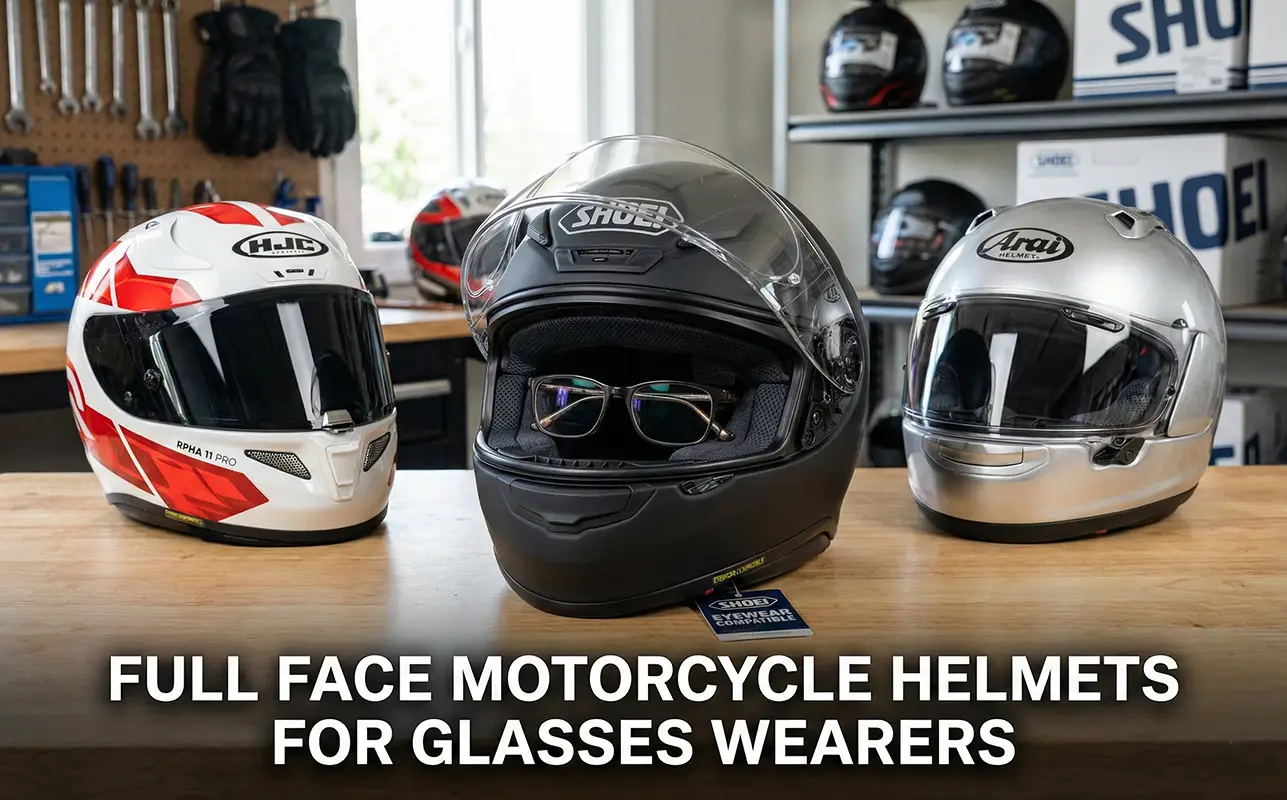
Finding the perfect full face motorcycle helmet when you wear glasses can feel like searching for a needle in a haystack. The struggle is real: painful temple pressure, frames getting knocked askew during helmet removal, and lenses fogging up at the worst possible moments.
If you’ve ever had to choose between clear vision and comfortable riding, you know how frustrating this dilemma can be. For a comprehensive overview of fitment and types, check out our Ultimate Guide to Motorcycle Helmets.
This comprehensive guide showcases the best full face motorcycle helmets specifically designed with glasses wearers in mind. We’ve evaluated dozens of helmets based on critical factors including eyewear channels, interior padding design, face shield anti-fog technology, and overall comfort during extended rides.
Our selection criteria prioritized helmets with dedicated eyewear grooves, wide eye ports for easy glasses insertion, superior ventilation systems to prevent fogging, and safety certifications from DOT, ECE, or SNELL.
Whether you’re a daily commuter or weekend warrior, these helmets will transform your riding experience from tolerably uncomfortable to genuinely enjoyable.
1. Shoei RF-1400
The Shoei RF-1400 represents the gold standard for glasses-wearing motorcyclists who refuse to compromise on either comfort or protection. This premium Japanese helmet has earned its reputation through meticulous engineering and attention to detail that makes eyewear accommodation feel effortless.
Overview
Shoei’s flagship RF-1400 features a sophisticated multi-piece shell construction using Advanced Integrated Matrix (AIM) technology, combining multiple layers of fiberglass for optimal strength and lightweight performance. The helmet’s interior includes specially designed eyewear channels carved into the EPS liner and cheek pads, creating a pressure-free pathway for your glasses’ temples.
The 3D Max-Dry interior lining wicks moisture effectively while maintaining its shape around eyewear. The helmet’s emergency quick-release system allows medical personnel to remove cheek pads without disturbing your glasses. With a wide eye port opening and the innovative CWR-F2 shield featuring Pinlock Max Vision preparation, fog becomes virtually non-existent.
The advanced ventilation system includes four intake vents and six exhaust ports, ensuring constant airflow across your lenses. It is also widely considered the best motorcycle helmet for noise reduction, making it a peaceful ride.
Key Features
- Eyewear Channels: Dedicated grooves in the EPS liner.
- CWR-F2 Shield: Pinlock Max Vision ready.
- AIM Shell: Multi-ply matrix for strength.
- Emergency Quick Release: Safe cheek pad removal.
Pros and Cons
Pros:
- Dedicated eyewear grooves eliminate temple pressure completely during long rides.
- Exceptional Pinlock anti-fog system keeps lenses crystal clear in all weather conditions.
- Premium build quality with SNELL M2020 and DOT certification ensures maximum protection.
- Whisper-quiet at highway speeds, reducing fatigue on extended journeys.
Cons:
- Premium pricing places it beyond many riders’ budgets at around $500-600.
- Intermediate oval head shape may not fit all head geometries comfortably.
- Heavier than some carbon fiber alternatives at approximately 3.7 pounds.
Pricing
The Shoei RF-1400 retails between $499 and $599.
Best For
Riders who want the absolute best all-around helmet with dedicated engineering for eyewear.
2. AGV K6
AGV brings MotoGP-derived technology to the street with the K6, a helmet that seamlessly blends Italian style with practical features for eyeglass wearers. This helmet proves that race-inspired design can accommodate everyday riding realities.
Overview
The AGV K6 utilizes a carbon-aramid-fiberglass shell construction across four shell sizes, ensuring proper fit proportions for various head sizes. It is a top contender for the best lightweight carbon fiber helmet (composite category), weighing just over 3 lbs.
The helmet’s standout feature for glasses wearers is the innovative Ultravision visor with a class-leading 190-degree horizontal field of view, making peripheral vision exceptional even with frames. Integrated eyewear channels run through the cheek pads and EPS liner, designed through 3D scanning of common eyeglass frame profiles.
The Ritmo fabric interior provides moisture management while maintaining flexibility around eyewear arms. AGV’s Microsense premium liner adapts to your face shape over time without creating pressure points. The helmet includes a Max Pinlock 120 insert that covers more visor area than standard systems.
Key Features
- Ultravision Visor: 190-degree horizontal field of view.
- Lightweight Shell: Carbon-Aramid-Fiberglass blend.
- Eyewear Ready: Pre-carved channels in the padding.
- Collarbone Safe Profile: Reduces injury risk.
Pros and Cons
Pros:
- Exceptional field of view accommodates wider frame styles without visual obstruction.
- Multiple shell sizes ensure proper fit rather than one-size-fits-all approach.
- Excellent ventilation system prevents fogging on both glasses and visor.
- Sleek aerodynamic profile reduces wind noise and buffeting.
Cons:
- Narrower intermediate oval fit may feel tight for round head shapes.
- Visor mechanism can be stiff initially, requiring break-in period.
- Higher price point around $450-500 for premium features.
Pricing
The AGV K6 retails between $499 and $599.
Best For
Sport riders who need a lightweight helmet with a massive field of view for glasses.
3. HJC RPHA 11 Pro
HJC’s RPHA 11 Pro delivers remarkable value by incorporating features typically found in helmets costing twice as much. For budget-conscious riders who wear glasses, this helmet represents the sweet spot between affordability and genuine comfort.
Overview
Built with HJC’s Premium Integrated Matrix Plus shell, the RPHA 11 Pro combines carbon fiber, aramid, and fiberglass for a lightweight yet protective structure. The helmet weighs just 3.3 pounds in medium size, reducing neck strain during all-day rides.
Eyeglass wearers benefit from carefully sculpted channels in the cheek pad area that accommodate various temple thicknesses without modification. The Advanced Channeling Ventilation System features large top vents that create positive pressure inside the helmet, actively pushing air across your glasses.
The RapidFire II shield replacement system allows tool-free visor changes in seconds, and the included Pinlock insert provides fog-free vision. It is often cited as the best full-face motorcycle helmet for the money due to its rich feature set.
Key Features
- PIM Plus Shell: Strong and light composite.
- Glasses Groove: Built into the cheek pads.
- ACS Ventilation: Flushes heat and humidity out.
- RapidFire Shield: Quick replacement system.
Pros and Cons
Pros:
- Outstanding value proposition with premium features at mid-range pricing.
- Lightweight construction reduces fatigue during extended riding sessions.
- Excellent ventilation actively prevents fogging on glasses and visor.
- Wide variety of graphics and colorways for personal expression.
Cons:
- Interior padding quality feels less luxurious than premium competitors.
- Wind noise slightly higher than top-tier helmets at speeds above 70 mph.
- Cheek pad eyewear channels work better with thinner frame temples.
Pricing
The HJC RPHA 11 Pro retails between $349 and $449.
Best For
Track day enthusiasts and sport riders looking for high value and good venting.
4. Arai Regent-X
Arai’s Regent-X represents decades of refinement in helmet design, with particular attention paid to the needs of riders who depend on prescription eyewear. This helmet embodies the Japanese philosophy of continuous improvement through rider feedback.
Overview
The Regent-X features Arai’s signature hand-assembled construction using their proprietary Super Complex Laminate Composite (SCLC) shell technology. What sets this helmet apart for glasses wearers is Arai’s FFS (Facial Contour System) cheek pads, which include pre-formed eyewear grooves positioned precisely where most glasses temples naturally sit.
The helmet’s rounder shell shape distributes pressure more evenly across your entire head, making it a top choice for the best motorcycle helmet for round head shape. Arai’s VAS (Variable Axis System) shield mechanism allows micro-adjustments to shield position.
The five-piece interior pad system can be mixed and matched in different thicknesses to achieve perfect fit around your eyewear. The included Pinlock Max Vision insert provides 95% coverage of the shield surface.
Key Features
- Facial Contour System (FFS): Spring-loaded cheek pads with eyewear slots.
- Round Oval Shape: Comfortable for wider heads.
- VAS Shield System: Glancing off capabilities.
- SCLC Shell: Super fiber laminate strength.
Pros and Cons
Pros:
- Exceptional build quality with legendary Arai durability and crashworthiness.
- Pre-formed eyewear channels accommodate various frame styles without pressure.
- Highly customizable fit system allows precise adjustment around glasses.
- Rounder shell shape works exceptionally well for round oval head shapes.
Cons:
- Premium pricing around $500-550 represents significant investment.
- Rounder fit doesn’t accommodate long oval head shapes as effectively.
- Heavier than carbon fiber alternatives at approximately 3.8 pounds.
Pricing
The Arai Regent-X retails between $629 and $829.
Best For
Riders with rounder heads who want hand-crafted quality and a customizable fit.
5. Bell Race Star Flex DLX
Bell’s Race Star Flex DLX brings cutting-edge safety technology to riders who wear glasses, featuring an innovative impact management system that doesn’t compromise on eyewear accommodation. This helmet represents the intersection of advanced protection and practical comfort.
Overview
The Race Star Flex DLX utilizes Bell’s exclusive three-layer Flex impact liner system, which allows independent movement between layers to manage both linear and rotational impact forces. Despite this sophisticated safety system, Bell engineered eyewear channels through all three layers.
The carbon fiber shell construction keeps weight at just 3.4 pounds while providing exceptional strength. The helmet includes a photochromic transition visors (Panovision) right in the box, which automatically adjusts tint based on light conditions—eliminating the need to swap visors while wearing glasses.
Bell’s Magnefusion magnetic shield attachment system makes visor changes effortless. The XT2 moisture-wicking liner includes X-Static silver fiber technology that actively prevents bacterial growth.
Key Features
- Flex Impact Liner: Progressive energy management.
- Panovision Transitions Shield: Adaptive light control.
- 3K Carbon Shell: Lightweight strength.
- Virus CoolJade Liner: Keeps skin cool.
Pros and Cons
Pros:
- Revolutionary Flex impact system provides superior protection beyond standard helmets.
- Transitions Adaptive shield eliminates visor swapping hassles for glasses wearers.
- Lightweight carbon construction reduces neck fatigue significantly.
- Eyewear channels engineered through advanced safety layers without compromise.
Cons:
- Premium pricing around $650-700 makes it one of the most expensive options.
- Aggressive sport-focused fit may feel too snug for casual riders.
- Limited color options compared to more fashion-forward brands.
Pricing
The Bell Race Star Flex DLX retails between $699 and $849.
Best For
Riders who want advanced rotational protection and the convenience of a transition lens.
6. Scorpion EXO-R1 Air
Scorpion’s EXO-R1 Air delivers race-proven performance at a remarkably accessible price point, making premium features available to glasses-wearing riders across all budget ranges. This helmet punches well above its weight class in both safety and comfort.
Overview
The EXO-R1 Air features Scorpion’s TCT (Thermoplastic Composite Technology) shell construction, creating a lightweight yet impact-resistant structure. The helmet earned both DOT and ECE 22.06 certifications.
Eyeglass wearers appreciate the AirFit inflation system, which allows you to customize cheek pad pressure around your glasses temples using a small pump built into the helmet. This acts as a real-time motorcycle helmet fitment guide, ensuring you can get the fit right every time.
The Ellip-Tec II ratchet system provides tool-free visor removal in seconds, and the included MaxVision Pinlock insert offers exceptional anti-fog protection. Scorpion’s KwikWick III interior liner manages moisture effectively while remaining plush against your face.
Key Features
- AirFit System: Inflatable cheek pads for custom fit.
- TCT Shell: Light and strong composite.
- Ellip-Tec II: Secure shield mechanism.
- KwikWick III: Hypoallergenic liner.
Pros and Cons
Pros:
- Innovative AirFit system allows custom pressure adjustment around glasses temples.
- Exceptional value with premium features at approximately $350-400.
- Latest ECE 22.06 safety certification ensures cutting-edge protection.
- Effective ventilation system prevents fogging in varied weather conditions.
Cons:
- Thermoplastic shell slightly heavier than carbon fiber alternatives at 3.6 pounds.
- AirFit pump mechanism adds slight bulk to cheek pad area.
- Intermediate oval shape may require sizing adjustments for round heads.
Pricing
The Scorpion EXO-R1 Air retails between $399 and $459.
Best For
Riders who struggle to find a precise fit and need adjustability for their frames.
7. LS2 Challenger GT
LS2’s Challenger GT represents the budget-friendly option that doesn’t sacrifice essential features for glasses wearers. This helmet proves that affordable doesn’t mean compromising on the fundamentals of comfort and vision clarity.
Overview
The Challenger GT utilizes LS2’s Kinetic Polymer Alloy shell, engineered for optimal impact absorption while maintaining affordability. Despite its budget-friendly pricing, the helmet includes eyewear accommodation grooves carved into the EPS liner and cheek pads.
The wide eye port opening makes inserting and removing glasses straightforward. LS2’s Dynamic Flow-Through Ventilation system features multiple intake and exhaust vents that create consistent airflow.
The helmet comes with a Pinlock-ready visor. The drop-down sun visor provides additional versatility, solving the tinted visor vs. drop-down sun shield debate for commuters who need instant adaptation.
Key Features
- Kinetic Polymer Alloy Shell: Durable and affordable.
- Twin Shield System: Built-in sun visor.
- Eyewear Channels: Cut into the foam.
- Laser-Cut Foam: Precise fit.
Pros and Cons
Pros:
- Budget-friendly pricing makes quality eyewear accommodation accessible to all riders.
- Integrated drop-down sun visor eliminates need for prescription sunglasses.
- Wide eye port simplifies glasses insertion and removal process.
- Surprisingly effective ventilation for preventing lens fogging.
Cons:
- Pinlock insert sold separately adds to initial investment.
- Heavier polymer shell at 4.0 pounds may cause neck fatigue on long rides.
- Interior padding quality and durability below premium competitors.
Pricing
The LS2 Challenger GT retails between $199 and $299.
Best For
Budget-conscious riders who need a versatile, glasses-friendly daily helmet.
8. Shark Spartan GT
Shark’s Spartan GT combines French engineering flair with practical features that glasses-wearing riders genuinely need. This helmet stands out for its innovative approach to both ventilation and eyewear accommodation in a sport-touring package.
Overview
The Spartan GT features Shark’s fiberglass composite shell construction with integrated aerodynamic spoiler for stability at speed. The helmet’s standout feature for glasses wearers is the Easy Fit system, which includes specific recesses in the comfort padding designed to accommodate glasses temples without creating pressure points.
The auto-seal visor system creates an airtight seal when closed, working in conjunction with the Pinlock vs. Anti-Fog Sprays (Pinlock included) solution to eliminate condensation completely. Shark’s innovative chin curtain and breath deflector work together to direct your exhalations away from both your glasses and the visor.
The helmet includes both clear and tinted visors in the box (region dependent, usually integrated sun visor). The Shark Skin interior liner uses bamboo fiber construction that naturally resists bacteria.
Key Features
- Easy Fit System: Dedicated glasses slots.
- Shark Skin Visor Fastening: Reduces wind noise.
- Auto-Seal Visor: Better weatherproofing.
- Bamboo Treated Interior: Hypoallergenic comfort.
Pros and Cons
Pros:
- Easy Fit system specifically engineered for pressure-free glasses accommodation.
- Includes both clear and tinted visors (or sun shield), eliminating separate purchase needs.
- Excellent anti-fog system keeps both glasses and visor clear.
- Bamboo fiber interior naturally antimicrobial and moisture-wicking.
Cons:
- Mid-premium pricing around $400-450 without proportional brand recognition.
- Limited availability in North American markets compared to Japanese brands.
- Visor change mechanism more complex than some competitors.
Pricing
The Shark Spartan GT retails between $449 and $549.
Best For
Sport-touring riders looking for a quiet, comfortable helmet with specific glasses slots.
9. Ruroc Atlas 4.0
Ruroc’s Atlas 4.0 represents a completely different approach to helmet design, incorporating smart technology and modular features that benefit glasses wearers in unexpected ways. This helmet appeals to riders who want cutting-edge features alongside traditional comfort.
Overview
The Atlas 4.0 features Ruroc’s proprietary Hexicore impact absorption system combined with a carbon fiber and fiberglass hybrid shell. What makes this helmet unique for glasses wearers is the magnetic Shockwave visor system, which allows effortless one-handed visor operation.
The helmet’s modular design includes removable cheek pads with pre-formed eyewear channels that can be swapped for different thicknesses. Ruroc’s integrated Bluetooth communication system mounts flush inside the helmet, not interfering with glasses temples like aftermarket systems often do.
The helmet includes both a clear visor and a tinted visor with Pinlock inserts for each. The Hexicore liner’s honeycomb structure creates natural airflow channels.
Key Features
- Hexicore Liner: Advanced impact absorption.
- Magnetic Visor: Easy one-handed changes.
- Integrated Audio Ready: Seamless comms integration.
- Fidlock Buckle: Magnetic chin strap.
Pros and Cons
Pros:
- Magnetic visor system enables easy one-handed operation while wearing glasses.
- Integrated Bluetooth doesn’t interfere with glasses temples like external systems.
- Includes multiple visors with Pinlock inserts for comprehensive protection.
- Modular design allows customization for different frame styles and sizes.
Cons:
- Premium pricing around $550-600 for fully-featured package.
- Newer brand lacks long-term durability track record of established manufacturers.
- Aggressive styling may not appeal to traditional or mature riders.
Pricing
The Ruroc Atlas 4.0 is priced at $599.
Best For
Tech-savvy riders who want integrated audio and a futuristic look.
Conclusion
Selecting the best full face motorcycle helmet for glasses wearers ultimately depends on your specific needs, head shape, frame style, and budget. The Shoei RF-1400 and Arai Regent-X represent the premium tier with uncompromising quality, while the HJC RPHA 11 Pro and Scorpion EXO-R1 Air deliver exceptional value without sacrificing essential features.
Remember that proper fit matters more than any single feature. Visit local dealers to try on multiple options with your actual glasses before purchasing. Pay attention to how easily you can don and doff the helmet without disturbing your frames.
Frequently Asked Questions
Can I wear any glasses with a motorcycle helmet?
Most glasses can work, but frames with thin, straight temples perform best. Avoid glasses with thick, curved temples or decorative elements, as these create pressure points. Wire-frame or thin plastic frames typically slide into eyewear channels most easily.
How do I prevent my glasses from fogging inside my helmet?
Ensure your helmet has a proper Pinlock anti-fog insert installed. Use anti-fog coating on your glasses lenses. Adjust your helmet’s ventilation to create consistent airflow, and ensure the breath deflector is installed properly.
Should I get a helmet one size larger to accommodate my glasses?
No, never size up for glasses accommodation. An oversized helmet compromises safety by allowing excessive movement during impact. If a helmet feels too tight with your glasses, it’s the wrong shape for your head or lacks proper eyewear accommodation features.
What’s the easiest way to put on a helmet while wearing glasses?
Remove your glasses first. Put the helmet on, then slide your glasses into the eye port and guide the temples into the channels. Some modular helmets allow you to keep glasses on, but it’s generally safer and easier to insert them after the helmet is secured.
Are photochromic visors better than clear visors for glasses wearers?
Yes, they offer significant advantages by eliminating the need to swap visors or wear sunglasses over prescription frames. They automatically darken in sunlight, providing convenience for all-day riders.