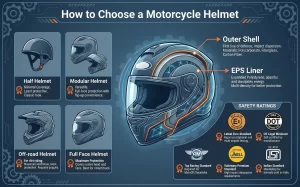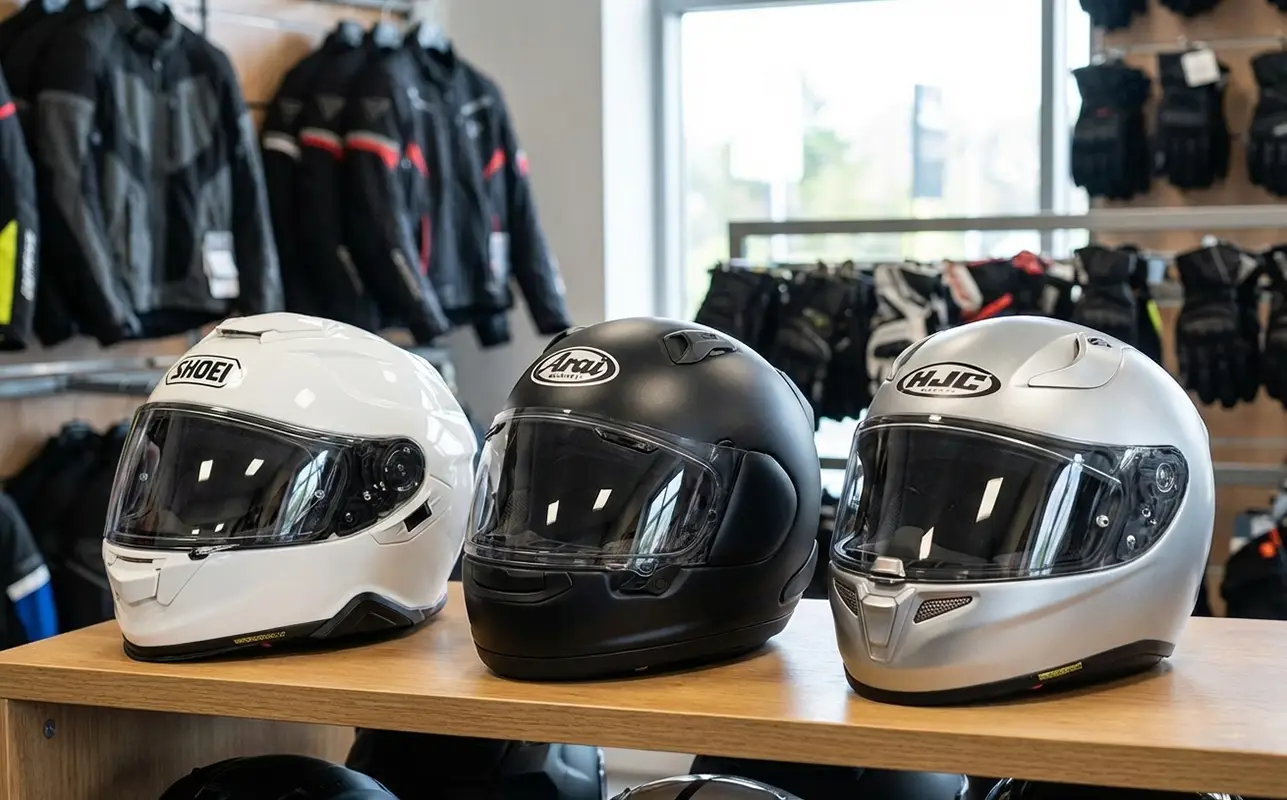
Choosing the right full face motorcycle helmet for upright riding positions is crucial for both comfort and safety. Unlike sport bikes where riders lean forward, upright riding on cruisers, touring bikes, and standard motorcycles requires helmets with specific design considerations.
The wrong helmet can cause neck strain, wind buffeting, and reduced visibility during long rides. For a comprehensive look at helmet types and safety standards, check out our Guide to Motorcycle Helmets.
This comprehensive guide examines the best full face helmets specifically suited for upright riding positions, considering factors like aerodynamics at lower speeds, field of vision, ventilation, comfort during extended rides, and noise reduction.
We’ve evaluated each helmet based on real-world performance, safety certifications, build quality, and value for money. Whether you’re cruising down highways or navigating city streets, these helmets will keep you protected without compromising comfort during those long hours in an upright position.
1. Shoei RF-1400
The Shoei RF-1400 represents the pinnacle of Japanese helmet engineering, offering exceptional comfort and performance for upright riders. This premium helmet has earned its reputation through meticulous attention to detail and rider-focused features that make it ideal for touring and cruising applications.
Overview
The RF-1400 features Shoei’s advanced AIM+ shell construction, providing superior impact protection while maintaining a lightweight profile. Its aerodynamic design works exceptionally well at the moderate speeds typical of upright riding, minimizing wind noise and buffeting. It is widely considered the best motorcycle helmet for noise reduction in the full-face category.
The helmet includes an enlarged eye port that provides an expansive field of vision, crucial for upright riders who need excellent peripheral awareness in traffic. The Emergency Quick Release System allows medical professionals to safely remove cheek pads in case of an accident.
The 3D Max-Dry interior lining wicks moisture effectively and remains comfortable during all-day rides. The helmet’s ventilation system includes four intake vents and six exhaust vents, creating excellent airflow without creating excessive wind noise.
Key Features
- AIM+ Shell: Lightweight and rigid.
- CWR-F2 Shield: Wide peripheral view.
- 3D Max-Dry System: Premium moisture management.
- Vortex Generators: Reduced wind noise.
Pros and Cons
Pros:
- Exceptionally quiet at cruising speeds, reducing rider fatigue on long journeys.
- Superior comfort with plush interior padding that doesn’t create pressure points.
- Excellent build quality with premium materials throughout.
- Wide field of vision perfect for upright riding awareness.
Cons:
- Premium pricing puts it out of reach for budget-conscious riders.
- Intermediate oval head shape may not fit all riders comfortably.
- Visor mechanism can be stiff initially.
Pricing
The Shoei RF-1400 retails between $499 and $599.
Best For
Riders who want the quietest, most refined full-face experience possible.
2. Arai Regent-X
Arai’s Regent-X is specifically designed with touring and upright riding in mind, making it an excellent choice for riders who prioritize comfort over aggressive styling. This helmet combines Arai’s legendary safety standards with features tailored to long-distance cruising.
Overview
The Regent-X utilizes Arai’s Peripheral Belt technology and Complex Laminate Construction (CLC) shell for superior impact dispersion. What sets this helmet apart for upright riders is its optimized aerodynamics at touring speeds, reducing neck strain during extended rides.
The face shield offers one of the largest eye ports in the industry, providing unobstructed vision that’s essential when sitting upright. Arai’s proprietary ventilation system includes large forehead vents and temple air channels that work efficiently even at lower speeds common in city riding.
The interior features removable, washable padding with Arai’s comfort liner system that adapts to your head shape over time. The helmet’s round outer shell shape helps deflect impacts from any angle while maintaining stability in crosswinds. It is a top choice for the best motorcycle helmet for round head shape.
Key Features
- PB-CLC Shell: Super fiber laminate strength.
- Wide Eye Port: Maximum visibility.
- FCS Cheek Pads: Facial Contour System for comfort.
- Glancing Off Design: Smooth shell to deflect energy.
Pros and Cons
Pros:
- Exceptional safety ratings with Arai’s renowned construction quality.
- Extremely comfortable for all-day wear with minimal pressure points.
- Superior ventilation system works well at cruising speeds.
- Excellent stability in crosswinds and turbulent air.
Cons:
- High price point comparable to other premium brands.
- Rounder shell shape may look bulky to some riders.
- Limited graphic options compared to sportier models.
Pricing
The Arai Regent-X retails between $600 and $800.
Best For
Touring riders who prioritize a plush interior and hand-made safety.
3. HJC RPHA 11 Pro
The HJC RPHA 11 Pro delivers premium features at a mid-range price point, making it an excellent value proposition for upright riders. This helmet has gained popularity among touring and cruiser enthusiasts for its balanced performance characteristics.
Overview
Constructed with HJC’s Premium Integrated Matrix Plus (PIM+) shell, the RPHA 11 Pro combines carbon fiber, aramid, and fiberglass for a lightweight yet strong structure. The aerodynamic shell design performs admirably at the moderate speeds typical of upright riding, with minimal wind noise and buffeting.
The helmet features HJC’s Advanced Channeling Ventilation System with large top and chin vents that provide excellent airflow. The RapidFire II shield replacement system allows for tool-free visor changes, convenient for riders who switch between clear and tinted shields.
The Multicool interior liner provides moisture-wicking and antibacterial properties, staying fresh during long rides. It is often cited as the best full-face motorcycle helmet for the money due to its premium composite shell at a mid-range price.
Key Features
- PIM+ Shell: Strong composite blend.
- ACS Ventilation: Flushes heat and humidity.
- RapidFire Shield: Quick replacement system.
- MultiCool Interior: Antibacterial and fast-drying.
Pros and Cons
Pros:
- Excellent value with premium features at mid-range pricing.
- Lightweight construction reduces neck fatigue during long rides.
- Wide variety of graphic designs and color options available.
- Easy visor replacement system for quick changes.
Cons:
- Interior padding quality not quite at premium helmet levels.
- Ventilation effectiveness decreases at very low speeds.
- Some riders report the chin strap can be difficult to adjust.
Pricing
The HJC RPHA 11 Pro retails between $349 and $449.
Best For
Riders who want a lightweight helmet with excellent ventilation without spending over $500.
4. Bell Qualifier DLX MIPS
The Bell Qualifier DLX MIPS brings advanced safety technology to an affordable price point, making it ideal for riders who want maximum protection without breaking the bank. This helmet is particularly well-suited for daily commuters and weekend cruisers.
Overview
The standout feature of the Qualifier DLX is its what is MIPS in motorcycle helmets technology, which provides additional protection against rotational forces during impacts. The polycarbonate shell construction keeps the weight reasonable while meeting DOT and ECE safety standards.
For upright riders, the helmet’s neutral aerodynamics work well at city and highway speeds without creating excessive wind noise or lift. The Velocity Flow Ventilation system includes adjustable chin and forehead vents that provide adequate cooling.
The contoured cheek pads and plush interior liner offer surprising comfort for this price range. The helmet often comes with a Transitions photochromic face shield (check specific retailer listings), eliminating the need to carry multiple shields.
Key Features
- MIPS Equipped: Slip-plane technology.
- Transitions Shield: Adapts to light (on select models).
- Velocity Flow Ventilation: Adjustable airflow.
- Integrated Speaker Pockets: Ready for comms.
Pros and Cons
Pros:
- MIPS technology provides enhanced safety at an affordable price.
- Integrated drop-down sun visor adds convenience and value.
- Comfortable fit suitable for various head shapes.
- Wide range of sizes and graphic options available.
Cons:
- Heavier than premium carbon fiber helmets.
- Wind noise more noticeable at highway speeds.
- Interior materials less premium than higher-priced options.
Pricing
The Bell Qualifier DLX MIPS retails around $280.
Best For
Budget-conscious riders who want advanced rotational impact protection.
5. Schuberth C4 Pro
The Schuberth C4 Pro is a modular helmet that offers the protection of a full face with the convenience of a flip-up design, perfect for upright riders who frequently stop and need easy communication. This German-engineered helmet represents the premium end of modular helmet technology.
Overview
The C4 Pro features a fiberglass reinforced shell with an aerodynamic design optimized through wind tunnel testing. What makes this helmet exceptional for upright riding is its industry-leading noise reduction, crucial for long-distance comfort on touring bikes and cruisers.
The modular chin bar locks securely in both up and down positions, meeting full face safety standards when closed. The helmet includes an integrated sun visor that deploys smoothly without requiring you to remove your gloves.
Schuberth’s SC2 communication system can be fully integrated into the helmet, with speakers and microphone perfectly positioned for clear audio. It is consistently rated as one of the best quietest motorcycle helmets.
Key Features
- Direct Fiber Processing: Strong and light shell.
- Integrated Sun Visor: Easy light management.
- Plug-and-Play Comms: Pre-installed speakers/mic.
- Aero-Acoustics: Optimized for silence.
Pros and Cons
Pros:
- Quietest helmet in its class, significantly reducing rider fatigue.
- Modular design offers convenience without compromising safety.
- Seamless integration with Schuberth communication systems.
- Excellent aerodynamics with minimal buffeting at cruising speeds.
Cons:
- Very expensive, among the priciest helmets on the market.
- Heavier than traditional full face helmets due to modular mechanism.
- Long oval shape may not fit round-headed riders well.
Pricing
The Schuberth C4 Pro retails between $600 and $800.
Best For
Touring riders who want silence and seamless tech integration.
6. AGV K6
The AGV K6 brings racing heritage to the street, offering sport-level protection and features in a package that works surprisingly well for upright riding positions. This helmet bridges the gap between aggressive sport helmets and touring-focused designs.
Overview
AGV’s K6 features a carbon-aramid-fiberglass shell construction in a compact design that reduces aerodynamic drag and weight. It is a strong contender for the best lightweight carbon fiber helmet in the composite category.
While originally designed with sport riding in mind, the K6’s aerodynamics translate well to upright riding, providing stability without excessive lift or buffeting. The helmet includes AGV’s Ultra-Wide 190-degree field of vision, giving upright riders exceptional peripheral awareness for safer city and highway riding.
The Integrated Ventilation System features five front vents and two rear extractors that work effectively at moderate speeds. The helmet’s interior uses AGV’s Ritmo fabric, which is soft, breathable, and fully removable for washing.
Key Features
- Carbon-Aramid Shell: Ultra-lightweight protection.
- 190° Field of View: Massive visibility.
- Collarbone Safe Profile: Reduces injury risk.
- Ritmo Interior: Premium comfort fabric.
Pros and Cons
Pros:
- Lightweight construction reduces neck strain on long rides.
- Exceptional field of vision for maximum awareness.
- Compact shell size looks proportional on all riders.
- Good balance of features and price point.
Cons:
- Sportier fit may feel snug for riders preferring roomier helmets.
- Ventilation less effective at very low speeds.
- Some riders find the chin strap buckle difficult to operate with gloves.
Pricing
The AGV K6 retails between $499 and $599.
Best For
Riders who want a lightweight helmet with a massive field of view.
7. LS2 Challenger GT
The LS2 Challenger GT is specifically designed for touring and adventure riders, making it an ideal choice for upright riding positions. This helmet offers impressive features at a budget-friendly price point, proving that quality doesn’t always require a premium investment.
Overview
The Challenger GT features a High-Performance Fiberglass Composite (HPFC) shell that provides excellent impact protection while maintaining reasonable weight. The helmet’s aerodynamic design is optimized for touring speeds, with a shape that minimizes wind noise and buffeting common on upright bikes.
LS2’s Dynamic Flow-Through Ventilation system includes multiple intake and exhaust vents positioned to work efficiently even at lower speeds. The helmet comes standard with a Pinlock-ready face shield and an integrated drop-down sun visor, solving the tinted visor vs. drop-down sun shield debate by giving you versatility.
The interior features laser-contoured, moisture-wicking padding that remains comfortable during all-day rides. The helmet includes emergency quick-release cheek pads for medical access.
Key Features
- HPFC Shell: Durable fiberglass composite.
- Twin Shield System: Built-in sun visor.
- Laser-Cut Foam: Precise fit.
- Long Oval Fit: Good for narrower heads.
Pros and Cons
Pros:
- Excellent value with features typically found on more expensive helmets.
- Integrated sun visor eliminates need for multiple shields.
- Comfortable fit with generous interior room for glasses wearers.
- Effective ventilation system for various riding conditions.
Cons:
- Build quality and materials not quite at premium levels.
- Heavier than carbon fiber alternatives.
- Limited availability in some markets and fewer graphic options.
Pricing
The LS2 Challenger GT retails between $200 and $300.
Best For
Riders looking for a high-value fiberglass helmet with a sun visor.
8. Scorpion EXO-R1 Air
The Scorpion EXO-R1 Air delivers race-proven technology in a versatile package that adapts well to upright riding scenarios. This helmet represents excellent value in the mid-premium segment, offering features and performance that punch above its price point.
Overview
Constructed with Scorpion’s TCT (Twin-Shell Technology) using a blend of fiberglass, organic fibers, and resin, the EXO-R1 Air achieves an impressive strength-to-weight ratio. The helmet’s aerodynamic shell design works effectively across a wide speed range, making it suitable for both spirited riding and relaxed cruising.
The Airfit pump system allows riders to customize the cheek pad fit, acting as a built-in motorcycle helmet fitment guide to ensure comfort during long rides without pressure points. Scorpion’s advanced ventilation system includes a large forehead vent, chin vent, and multiple exhaust ports.
The helmet features an oversized eye port for enhanced visibility, particularly beneficial for upright riders who need maximum situational awareness. The KwikWick III interior liner provides superior moisture management.
Key Features
- Airfit System: Inflatable cheek pads.
- TCT Shell: Lightweight composite.
- Ellip-Tec II: Secure shield mechanism.
- Emergency Release: Cheek pad removal system.
Pros and Cons
Pros:
- Airfit system allows personalized fit adjustment for maximum comfort.
- Excellent ventilation performance at touring speeds.
- Lightweight construction reduces fatigue on extended rides.
- Strong mid-range value with premium features.
Cons:
- Intermediate oval shape may not suit all head shapes.
- Some riders report increased wind noise at very high speeds.
- Airfit pump mechanism adds slight bulk to cheek area.
Pricing
The Scorpion EXO-R1 Air retails between $399 and $459.
Best For
Riders who struggle to find a perfect fit and want adjustability.
9. Shoei Neotec II
The Shoei Neotec II is a premium modular helmet that combines the convenience of a flip-up design with Shoei’s legendary quality and comfort. For upright riders who value versatility and refinement, this helmet represents the gold standard in modular helmet technology.
Overview
The Neotec II features Shoei’s AIM (Advanced Integrated Matrix) shell construction, combining multiple layers of fiberglass for optimal strength and light weight. The modular chin bar mechanism is engineered to meet full face helmet safety standards when closed.
What makes this helmet exceptional for upright riding is its outstanding noise reduction and aerodynamic stability at touring speeds. It is widely considered the best modular motorcycle helmet for serious touring. The internal sun shield deploys and retracts smoothly.
Shoei designed the Neotec II with seamless integration for the SRL2 communication system, with perfectly positioned speakers and microphone. The ventilation system includes four intake vents and multiple exhaust ports that work efficiently without creating excessive noise.
Key Features
- Flip-Up Versatility: Easy transition from full to open face.
- Integrated Sun Shield: QSV-1 visor.
- Noise Isolator Cheek Pads: Reduces wind noise.
- SRL2 Ready: Seamless comms integration.
Pros and Cons
Pros:
- Exceptional quietness for a modular helmet, rivaling full face designs.
- Premium build quality with attention to every detail.
- Seamless communication system integration for touring riders.
- Comfortable for all-day wear with excellent weight distribution.
Cons:
- Premium pricing makes it one of the most expensive options.
- Heavier than traditional full face helmets.
- Intermediate oval shape limits fit for some riders.
Pricing
The Shoei Neotec II retails between $700 and $850.
Best For
Touring riders who want the convenience of a modular with the quietness of a full-face.
Conclusion
Selecting the best full face motorcycle helmet for upright riding requires balancing safety, comfort, and features specific to your riding style. The helmets featured in this guide represent the best options across various price points and feature sets, from the premium refinement of the Shoei RF-1400 and Neotec II to the exceptional value of the Bell Qualifier DLX MIPS and LS2 Challenger GT.
For upright riders, prioritize helmets with excellent visibility, effective ventilation at moderate speeds, minimal wind noise, and comfortable interior padding for long-distance wear. Remember that proper fit is paramount.
Frequently Asked Questions
What makes a full face helmet better for upright riding compared to sport riding?
Helmets designed for upright riding typically feature aerodynamics optimized for moderate speeds rather than aggressive forward-leaning positions. They prioritize wider fields of vision, enhanced comfort for long-distance wear, and ventilation systems that work effectively at lower speeds.
How important is helmet weight for upright riding positions?
Helmet weight is crucial because the neck supports the full weight of the helmet in a more vertical position. A lighter helmet significantly reduces neck fatigue. Premium materials like carbon fiber can reduce weight, but fit should always come first.
Should I choose a modular or traditional full face helmet for upright riding?
Both work well. Modular helmets offer convenience for frequent stops and easier communication, ideal for touring. Traditional full face helmets are lighter, often quieter, and generally less expensive while providing equal or superior protection.
How often should I replace my motorcycle helmet?
Most manufacturers recommend replacing helmets every five years, or immediately after any crash. Materials degrade over time. For more details, see our guide on when to replace your motorcycle helmet.
Do I need special features for riding with glasses?
Yes, riders who wear glasses should look for helmets with specific accommodations like eyewear channels. For specific recommendations, check out our list of the best motorcycle helmet for glasses wearers.