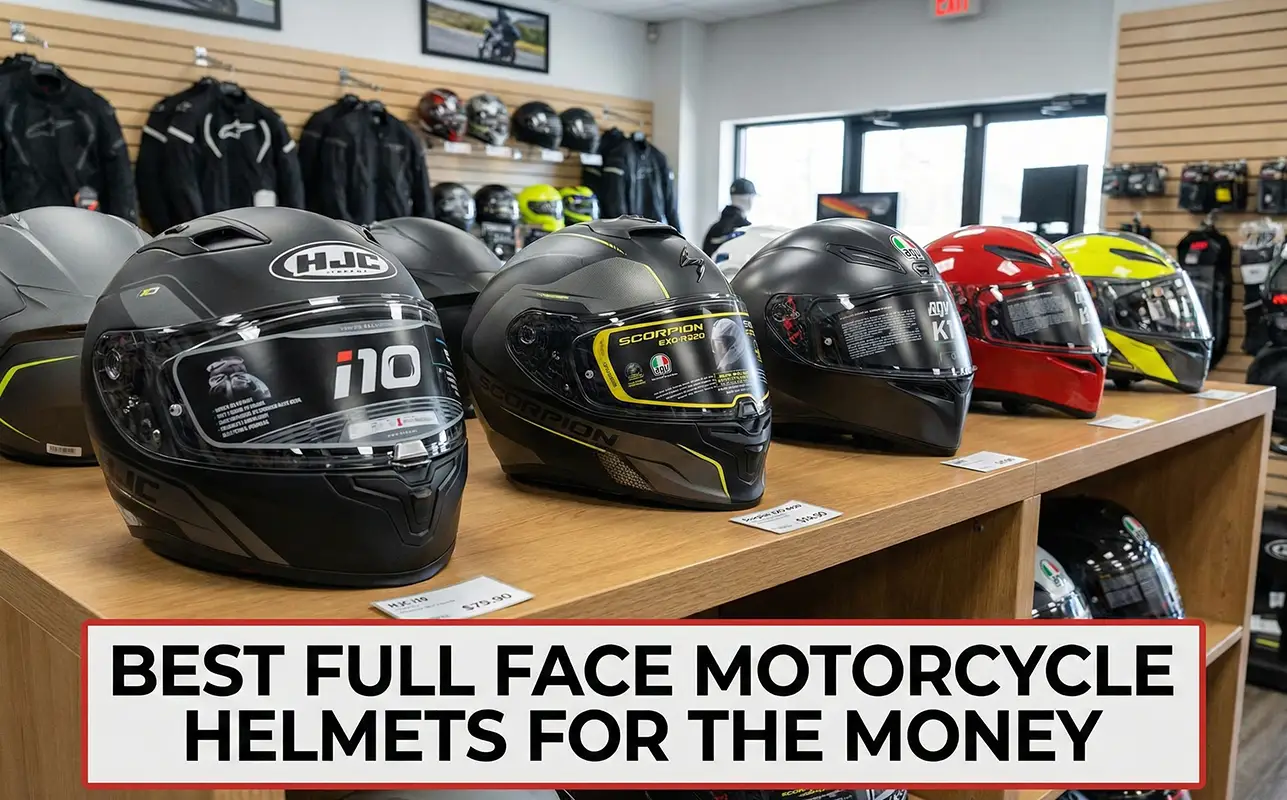
Choosing the right full face motorcycle helmet doesn’t mean you need to empty your wallet. While premium helmets offer cutting-edge features, numerous mid-range options deliver exceptional protection, comfort, and performance without the luxury price tag.
For a complete guide on safety standards and materials, check out our Ultimate Guide to Motorcycle Helmets.
In this comprehensive guide, we’ve evaluated dozens of full face helmets across various price points to bring you the best options for budget-conscious riders who refuse to compromise on safety.
Our selection criteria focused on DOT and ECE safety certifications, construction quality, ventilation systems, and overall value for money.
1. HJC CS-R3
The HJC CS-R3 stands as a testament to how far affordable motorcycle helmets have come. This entry-level full face helmet punches well above its weight class, offering features typically reserved for more expensive models.
Overview
The HJC CS-R3 features a lightweight polycarbonate shell construction that meets both DOT and ECE safety standards (check specific model regions). Its advanced CAD technology ensures optimal weight distribution. It is widely considered the best full-face motorcycle helmet for the money for beginners.
The helmet incorporates HJC’s SuperCool moisture-wicking interior. The anti-scratch face shield provides excellent optical clarity with a tool-free removal system. The ventilation system features adjustable intake and exhaust vents.
Key Features
- Polycarbonate Shell: Lightweight CAD design.
- RapidFire Shield Replacement: Quick, tool-less changes.
- ACS Ventilation: Advanced Channeling Ventilation System.
- Nylex Interior: Plush and moisture-wicking.
Pros and Cons
Pros:
- Exceptional value with premium features at a budget-friendly price.
- Lightweight construction reduces neck fatigue during extended rides.
- Moisture-wicking interior liner is removable and washable.
- Wide range of sizes ensures proper fit for most head shapes.
Cons:
- Ventilation system doesn’t match premium helmet performance in hot weather.
- Wind noise becomes noticeable at highway speeds above 70 mph.
- Interior padding may compress faster than higher-end alternatives.
Pricing The HJC CS-R3 retails between $120 and $150.
Best For New riders seeking a reliable brand name at an entry-level price.
2. Bell Qualifier DLX MIPS
Bell Motorsports brings decades of racing heritage to the street with the Qualifier DLX MIPS. This helmet incorporates advanced safety technology typically found in helmets costing twice as much.
Overview
The standout feature is the what is MIPS in motorcycle helmets (Multi-directional Impact Protection System) technology, which provides additional protection against rotational forces during impacts.
The helmet’s intermediate oval shape fits most riders comfortably. Bell includes their NutraFog II anti-fog face shield, and the helmet often ships with a photochromic transition visors (Transitions) shield that adapts to changing light conditions.
Key Features
- MIPS Technology: Rotational impact management.
- Transitions Shield: Photochromic adaptive visor.
- Velocity Flow Ventilation: Adjustable cooling.
- Integrated Speaker Pockets: Ready for comms.
Pros and Cons
Pros:
- MIPS technology provides enhanced protection against rotational impact forces.
- Excellent ventilation system keeps riders cool.
- Pre-installed speaker pockets simplify communication system installation.
- Photochromic shield option eliminates the need for separate visors.
Cons:
- Intermediate oval shape may not fit round or long oval head shapes comfortably.
- Slightly heavier than some competitors in this price range.
- Photochromic shield replacement costs increase the long-term investment.
Pricing The Bell Qualifier DLX MIPS retails around $280.
Best For Riders who prioritize rotational safety tech and adaptive vision.
3. AGV K3 SV
AGV brings Italian design and MotoGP-inspired engineering to the mid-range market with the K3 SV. This helmet proves that sport-focused performance and affordability can coexist.
Overview
The K3 SV features a thermoplastic resin shell available in two sizes. Its aerodynamic profile was developed using wind tunnel testing. The helmet’s five front vents and two rear extractors create an efficient ventilation system.
AGV includes their Ultra-Clear Class 1 optical visor with a Pinlock vs. Anti-Fog Sprays (Pinlock) ready system (insert often included). The Dry-Comfort interior fabric wicks moisture effectively.
Key Features
- HIR-TH Shell: High Resistance Thermoplastic Resin.
- Integrated Sun Visor: Easy operation.
- IVS Ventilation: 5 front vents, 2 rear extractors.
- Dry-Comfort Fabric: Removable interior.
Pros and Cons
Pros:
- Aerodynamic design minimizes lift and buffeting at highway speeds.
- Pinlock anti-fog insert included, preventing visor fogging.
- Two shell sizes ensure proper fit and weight optimization.
- Race-inspired styling offers premium aesthetics.
Cons:
- Sport-focused fit may feel snug for riders accustomed to touring helmets.
- Wind noise levels are moderate but noticeable.
- Limited color options compared to some competitors.
Pricing The AGV K3 SV retails between $220 and $280.
Best For Sportbike riders who want the Rossi look without the Pista price.
4. Scorpion EXO-R420
Scorpion’s EXO-R420 delivers an impressive feature set that challenges helmets costing significantly more. With its focus on practical functionality, this helmet has earned a loyal following.
Overview
The EXO-R420 utilizes an advanced polycarbonate shell. It is SNELL certified (on most sizes), providing a high level of safety assurance. For more on this, read our helmet safety ratings explained guide.
The AirFit inflation system allows riders to customize cheek pad pressure, acting as a built-in motorcycle helmet fitment guide tool. Scorpion includes an Everclear no-fog face shield.
Key Features
- SNELL Certified: High safety standard.
- Ellip-Tec II Ratchet System: Secure shield seal.
- EverClear Shield: No-fog technology.
- AirFit System: Custom cheek pad inflation.
Pros and Cons
Pros:
- AirFit system enables custom fit adjustment for enhanced comfort.
- Integrated sun visor (on select models) and anti-fog shield provide value.
- Superior ventilation system performs exceptionally well.
- Five-year warranty demonstrates manufacturer confidence.
Cons:
- Shell design is more touring-oriented than aggressive sport.
- Slightly bulkier profile compared to more aerodynamic sport helmets.
- AirFit pump mechanism adds minor weight.
Pricing The Scorpion EXO-R420 retails between $160 and $180.
Best For Riders who want SNELL protection and a custom fit under $200.
5. LS2 Challenger
LS2’s Challenger series represents the brand’s commitment to making advanced helmet technology accessible. This helmet combines modern safety features with classic styling.
Overview
The Challenger features LS2’s Kinetic Polymer Alloy (KPA) shell (or HPFC in some regions), which provides excellent impact resistance. The helmet’s dynamic flow-through ventilation includes multiple adjustable intake vents.
LS2 includes their scratch-resistant face shield with a Pinlock Max Vision insert for maximum fog resistance. The laser-cut foam liner uses moisture-wicking fabric.
Key Features
- KPA Shell: Kinetic Polymer Alloy.
- Twin Shield System: Built-in sun visor.
- Class A Visor: Optically correct.
- Emergency Release: Cheek pad removal.
Pros and Cons
Pros:
- Pinlock Max Vision insert provides superior anti-fog performance.
- Emergency quick-release cheek pads enhance safety.
- Versatile styling works well with cruisers and sport bikes.
- Excellent price-to-performance ratio.
Cons:
- Ventilation performance is good but not exceptional in extremely hot conditions.
- Brand recognition lower than established premium manufacturers.
- Some riders find the fit runs narrow.
Pricing The LS2 Challenger retails between $200 and $300.
Best For Touring riders who want high-end shell materials on a budget.
6. Sedici Strada II
The Sedici Strada II offers an unbeatable combination of features and affordability, making it an ideal choice for new riders or those seeking a reliable backup helmet.
Overview
Sedici’s Strada II utilizes a lightweight fiberglass/kevlar composite shell (often marketed as proprietary blend). The helmet features a drop-down internal sun visor operated by a convenient side lever.
The ventilation system includes adjustable forehead and chin vents. Speaker pockets are integrated into the cheek pads, making it one of the most accessible best motorcycle helmets with bluetooth ready options.
Key Features
- Composite Shell: Fiberglass/Kevlar blend.
- Internal Sun Visor: Easy light management.
- Quick-Release Shield: Fast swaps.
- High-Flow Ventilation: Chin, brow, and crown vents.
Pros and Cons
Pros:
- Exceptional value proposition with integrated sun visor.
- Lightweight construction minimizes neck strain.
- Straightforward operation makes it user-friendly.
- Adequate ventilation for typical riding conditions.
Cons:
- Interior padding quality doesn’t match higher-priced alternatives.
- Wind noise becomes pronounced at speeds above 65 mph.
- Limited size range may not accommodate all riders.
Pricing The Sedici Strada II retails for approximately $180 to $200.
Best For Commuters who want a composite shell and sun visor without the premium price.
7. Icon Airflite
Icon’s Airflite brings distinctive styling and innovative features to the mid-range helmet market. With its retro-futuristic design, this helmet appeals to riders who want their protective gear to make a statement.
Overview
The Airflite features a polycarbonate shell with Icon’s distinctive large face port design. The helmet’s unique Fliteshield face shield system uses a magnetic retention mechanism.
Icon includes their Fog-Free Fliteshield with exceptional optical clarity. The Hydradry moisture-wicking liner keeps riders comfortable.
Key Features
- Polycarbonate Shell: Tough and durable.
- Fliteshield: Massive peripheral vision.
- Internal DropShield: Sun protection.
- Hydradry Liner: Moisture-wicking comfort.
Pros and Cons
Pros:
- Expansive face port provides superior peripheral vision.
- Magnetic shield retention system enables effortless visor changes.
- Distinctive styling sets riders apart.
- Rear spoiler enhances aerodynamic stability.
Cons:
- Unique design aesthetic may not appeal to everyone.
- Slightly heavier than some competitors.
- Replacement shields cost more than standard visors.
Pricing The Icon Airflite retails between $250 and $350.
Best For Urban riders who want aggressive style and maximum visibility.
8. Shoei RF-SR
The Shoei RF-SR represents the entry point into the premium Japanese manufacturer’s lineup, offering legendary Shoei quality at a more accessible price point.
Overview
The RF-SR features Shoei’s advanced AIM shell construction. The helmet’s dual-layer, multi-density EPS liner provides superior impact absorption. Shoei’s fully removable 3D Max-Dry interior system II uses advanced materials.
The CW-1 face shield offers exceptional optical clarity with a Pinlock EVO lens included. The RF-SR meets both DOT and SNELL certifications.
Key Features
- AIM Shell: Multi-ply matrix.
- SNELL Certified: Top-tier safety.
- Compact Design: Aerodynamic shell.
- CWR-1 Shield: Optically correct.
Pros and Cons
Pros:
- Shoei build quality at an accessible price.
- SNELL certification provides additional safety assurance.
- Superior comfort during long-distance riding.
- Excellent noise reduction compared to similarly priced competitors.
Cons:
- Higher price point than other helmets on this list.
- No integrated sun visor requires separate tinted shield purchase.
- Conservative styling may seem plain.
Pricing The Shoei RF-SR retails around $400.
Best For Riders who want Shoei safety and silence without the RF-1400 price tag.
9. Biltwell Lane Splitter
The Biltwell Lane Splitter offers riders seeking retro styling a full face helmet that doesn’t sacrifice modern safety standards. This helmet bridges the gap between vintage aesthetics and contemporary protection.
Overview
The Lane Splitter features an injection-molded ABS shell with a distinctive retro-inspired design. The expanded polystyrene inner liner provides reliable impact absorption.
Biltwell includes their shield with excellent optical clarity. The helmet’s ventilation comes from forehead and mouth vents. It is important to know when to replace your motorcycle helmet, especially with retro styles where wear might be mistaken for character.
Key Features
- Injection-Molded ABS Shell: Rugged construction.
- Hand-Stitched Liner: Premium feel.
- BioFoam Chin Pad: Comfort feature.
- ECE Certified: Meets European standards.
Pros and Cons
Pros:
- Distinctive retro styling creates a unique aesthetic.
- Hand-stitched details provide premium appearance.
- Wide eye port offers excellent visibility.
- Strong community following ensures availability of accessories.
Cons:
- Retro design prioritizes style over aerodynamic efficiency.
- Ventilation adequate for casual riding but insufficient for sport.
- Heavier than modern sport helmets.
Pricing The Biltwell Lane Splitter retails between $175 and $250.
Best For Cruiser and custom bike riders who want style with ECE protection.
Conclusion
Finding the best full face motorcycle helmet for the money requires balancing safety, comfort, features, and price. The helmets featured in this guide represent outstanding value. From the budget-friendly HJC CS-R3 to the premium-quality entry Shoei RF-SR, each offers reliable protection.
Remember that the best helmet is the one that fits your head properly. Don’t compromise on safety to save a few dollars.
Frequently Asked Questions
How much should I expect to spend on a quality full face helmet?
Quality full face helmets that meet DOT safety standards start around $150-200. Excellent mid-range options are available between $200-400. This range typically offers the best value, incorporating advanced features without luxury pricing.
What’s the difference between DOT, ECE, and SNELL certifications?
DOT is the mandatory U.S. minimum. ECE involves independent testing and is widely considered rigorous. SNELL represents the most stringent independent testing protocol.
How often should I replace my motorcycle helmet?
Most manufacturers recommend replacing your helmet every 5 years, regardless of visible wear. Materials degrade over time. Replace immediately after any impact.
Do more expensive helmets provide better protection?
Not necessarily. All legal helmets meet minimum DOT standards. Higher prices reflect materials (carbon fiber), comfort, ventilation, and noise reduction rather than just crash protection.
What size helmet should I buy if I’m between sizes?
If you’re between sizes, choose the smaller size initially. Helmet liners compress and conform to your head shape over time. A properly fitting helmet should feel snug without creating painful pressure points.