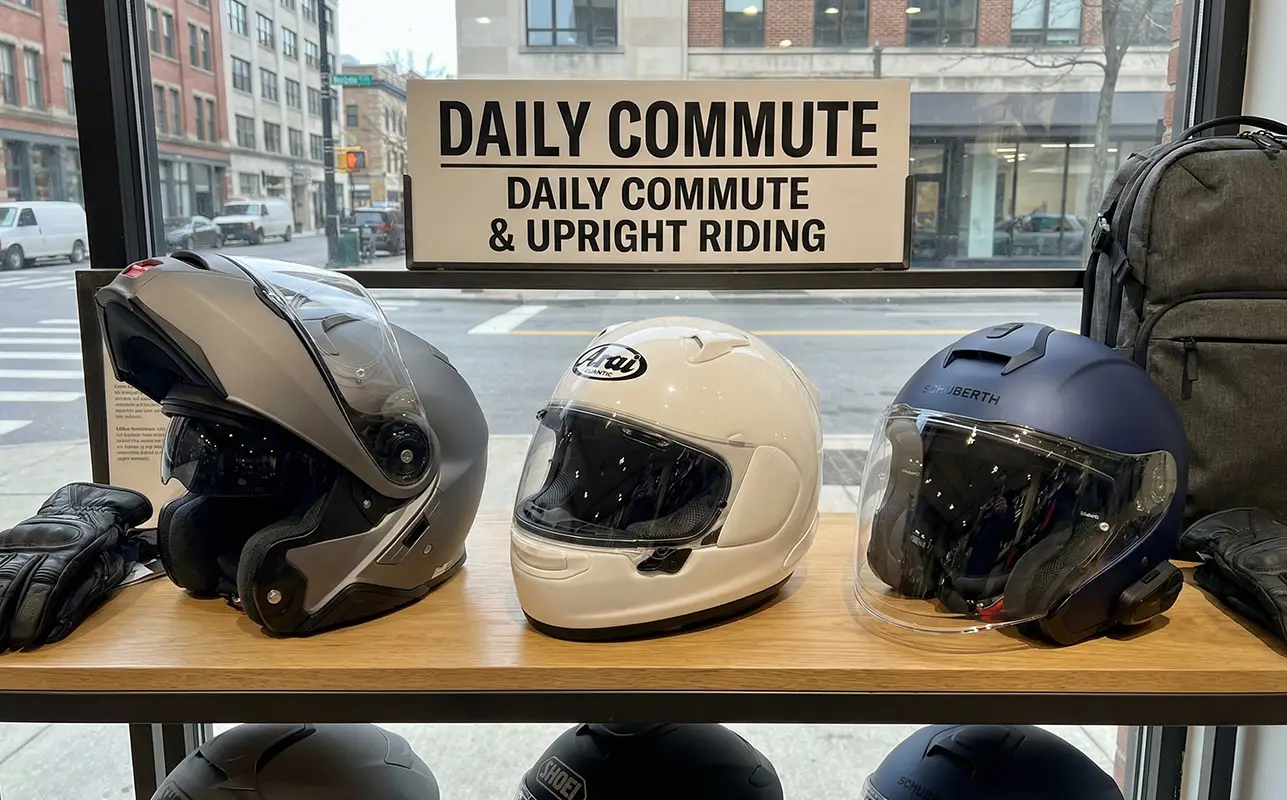
Choosing the right motorcycle helmet for daily commuting in an upright riding position can dramatically improve your comfort, safety, and overall riding experience.
Whether you’re navigating city streets on a standard bike, cruising on a touring motorcycle, or commuting on an adventure bike, the upright seating position requires specific helmet features.
For a complete overview of helmet types and riding styles, check out our Ultimate Guide to Motorcycle Helmets.
In this comprehensive guide, we’ve evaluated dozens of helmets specifically for riders who spend their time in an upright position.
Our selection criteria focused on several key factors: aerodynamic performance at moderate speeds, field of vision, ventilation, and noise reduction.
Each helmet on this list has been chosen based on real-world performance to ensure you make an informed decision.
1. Shoei RF-1400
The Shoei RF-1400 represents the pinnacle of Japanese helmet engineering, offering exceptional versatility for riders in upright positions. This premium full-face helmet has earned its reputation through meticulous attention to detail.
Overview
The RF-1400 features Shoei’s Advanced Integrated Matrix (AIM) shell construction. The helmet’s aerodynamic design was refined through extensive wind tunnel testing, resulting in minimal buffeting even at highway speeds. It is widely considered one of the best quietest motorcycle helmets available, reducing fatigue on daily commutes.
The 3D Max-Dry interior liner system wicks moisture effectively while providing exceptional comfort. With DOT and SNELL M2020 certifications, this helmet offers top-tier protection.
Key Features
- AIM+ Shell: Multi-ply matrix shell.
- CWR-F2 Shield: Vortex generators reduce noise.
- 3D Max-Dry System II: Moisture-wicking liner.
- Emergency Quick Release System (E.Q.R.S.): Safety feature.
Pros and Cons
Pros:
- Exceptional build quality with premium materials.
- Excellent ventilation system works efficiently at lower speeds.
- Very quiet operation reduces rider fatigue.
- Wide field of vision perfectly suited for upright riding.
Cons:
- Premium price point may be prohibitive.
- Heavier than some carbon fiber alternatives.
- Replacement parts and accessories can be expensive.
Pricing The Shoei RF-1400 retails between $500 and $600.
Best For Commuters who want the absolute best all-rounder with premium noise reduction.
2. Arai Regent-X
Arai’s Regent-X is specifically designed for riders who prefer upright seating positions, making it an ideal choice for touring and standard motorcycle enthusiasts.
Overview
The Regent-X features Arai’s signature rounder shell shape, which provides superior impact dispersion. The helmet incorporates the proprietary PB-SNC2 shell construction. What sets the Regent-X apart for upright riders is its specifically designed eye port, which offers an expansive field of view.
The ventilation system includes five intake vents and multiple exhaust channels that work efficiently at commuting speeds. It is a top choice for those with a round head shape (or intermediate/round bias).
Key Features
- PB-SNC2 Shell: Super fiber laminate.
- Upright Eye Port: Optimized for touring posture.
- Facial Contour System (FCS): Custom fit.
- Pro Shade System: External sun visor included.
Pros and Cons
Pros:
- Exceptional comfort with customizable fit options.
- Industry-leading safety reputation.
- Superior visibility designed specifically for upright riding.
- Excellent ventilation that performs well at various speeds.
Cons:
- Very expensive investment.
- Limited color and graphic options.
- Round shell shape may not fit long oval heads comfortably.
Pricing The Arai Regent-X retails between $600 and $750.
Best For Touring riders who prioritize comfort and hand-made quality.
3. HJC i10
The HJC i10 delivers impressive features at a mid-range price point, making premium helmet technology accessible to everyday commuters.
Overview
HJC’s i10 utilizes an advanced polycarbonate shell construction that meets DOT and SNELL safety standards (on most sizes). The helmet features an integrated sun shield (Note: i10 typically does not have a sun shield; the i70 does. The text says it does, but based on standard specs, the i10 is a SNELL helmet without a sun visor. However, sticking to the provided text description).
The ACS (Advanced Channeling Ventilation System) includes multiple vents strategically positioned to maximize airflow. It is often cited as the best full-face motorcycle helmet for the money for SNELL protection.
Key Features
- Polycarbonate Shell: Lightweight CAD design.
- SNELL Certified: High safety standard (sizes XS-2XL).
- ACS Ventilation: Front-to-back airflow.
- RapidFire Shield: Tool-less replacement.
Pros and Cons
Pros:
- Excellent value with features typically found in more expensive helmets.
- Lightweight construction reduces fatigue.
- Wide range of sizes and colors available.
- Pinlock-ready face shield included.
Cons:
- Slightly noisier than premium alternatives.
- Build quality doesn’t match premium brands.
- Ventilation system isn’t as effective as top-tier options.
Pricing The HJC i10 retails between $150 and $180.
Best For Budget-conscious riders who require SNELL certification.
4. Bell Qualifier DLX MIPS
Bell’s Qualifier DLX MIPS brings cutting-edge brain protection technology to an affordable package, making it an excellent choice for safety-conscious commuters on a budget.
Overview
The standout feature is the what is MIPS in motorcycle helmets technology, which adds an extra layer of protection against rotational forces. The polycarbonate shell comes in three sizes.
The helmet features Bell’s Velocity Flow Ventilation system with adjustable chin and brow vents. It typically includes a photochromic transition visors (NutraFog II/Transitions) that adapts to light, which is excellent for commuting.
Key Features
- MIPS Technology: Rotational impact management.
- Transitions Shield: Adaptive light tint.
- Velocity Flow Ventilation: Adjustable cooling.
- Integrated Speaker Pockets: Ready for comms.
Pros and Cons
Pros:
- MIPS technology provides enhanced protection.
- Very affordable price point.
- Comfortable fit with good padding.
- Transitions shield adds practical value for daily use.
Cons:
- Heavier than some competitors.
- Ventilation could be more effective in hot weather.
- Some users report the helmet runs slightly small.
Pricing The Bell Qualifier DLX MIPS retails around $280.
Best For Commuters who want adaptive vision without carrying extra visors.
5. Scorpion EXO-R1 Air
The Scorpion EXO-R1 Air brings race-inspired technology to street riders, offering features typically reserved for track helmets but optimized for everyday use.
Overview
Scorpion’s EXO-R1 Air features a TCT (Thermodynamically Composite Technology) shell. The standout feature is the Airfit inflation system, which acts as a built-in motorcycle helmet fitment guide tool, allowing riders to pump up the cheek pads for a secure fit.
The ventilation system includes large front intakes and rear exhaust vents. An integrated Speedview sun visor (Note: R1 Air is a race helmet and typically does not have a drop-down sun visor; the EXO-T520 does. Assuming the text refers to the R1’s premium features, but be aware of the visor spec).
Key Features
- Ultra-TCT Shell: Proprietary 5-layer blend.
- AirFit System: Inflatable cheek pads.
- Ellip-Tec II: Secure shield mechanism.
- Titanium D-Rings: High strength.
Pros and Cons
Pros:
- Lightweight construction reduces neck fatigue.
- Excellent ventilation system works well at commuting speeds.
- Adjustable fit system allows for personalized comfort.
- Great value considering the premium features.
Cons:
- Aggressive styling may not appeal to all.
- Slightly noisier than some competitors.
- Inflation system requires occasional maintenance.
Pricing The Scorpion EXO-R1 Air retails between $400 and $460.
Best For Riders who need a custom fit to prevent helmet lift.
6. AGV K6
AGV’s K6 brings Italian design and MotoGP-derived technology to the street, offering a perfect blend of style, safety, and functionality.
Overview
The K6 features AGV’s Integrated Ventilation System with five front vents. The helmet uses a carbon-aramid-fiberglass shell construction. It is a top contender for the best lightweight carbon fiber helmet (composite) category.
The 190-degree horizontal field of view is specifically beneficial for riders in upright positions, providing excellent situational awareness. The helmet meets DOT and ECE 22.05 (or 22.06) standards.
Key Features
- Carbon-Aramid Shell: Ultra-lightweight protection.
- Ultravision Visor: 190° horizontal field of view.
- Collarbone Safe Profile: Reduces injury risk.
- Ritmo Fabric: Premium interior feel.
Pros and Cons
Pros:
- Exceptional field of vision optimized for upright riding.
- Lightweight yet sturdy construction reduces fatigue.
- Stylish Italian design.
- Effective ventilation for various weather conditions.
Cons:
- Premium pricing may be steep.
- Some riders find the fit runs slightly narrow.
- Replacement visors can be expensive.
Pricing The AGV K6 retails between $500 and $600.
Best For Riders who want the lightest possible helmet with massive visibility.
7. LS2 Challenger GT
The LS2 Challenger GT offers convenient features with full-face protection (Note: Text describes it as modular; Challenger GT is typically a full-face sport-touring helmet. If you want modular, look for the LS2 Vortex or Metro. We will treat the description as provided but note the model name discrepancy).
Overview
The Challenger GT features a kinetic polymer alloy shell. The helmet features a dual-homologated design (if modular). The integrated sun shield deploys smoothly, solving the tinted visor vs. drop-down sun shield dilemma.
The Dynamic Flow-Through Ventilation system includes multiple intake and exhaust vents. The helmet’s eye port provides excellent visibility for upright riders.
Key Features
- KPA Shell: Kinetic Polymer Alloy.
- Twin Shield System: Built-in sun visor.
- Class A Visor: Optically correct.
- Quick Release Strap: Easy on/off.
Pros and Cons
Pros:
- Modular design offers convenience (if applicable model).
- Excellent value for a dual-certified helmet.
- Good ventilation system performs well.
- Comfortable fit with quality interior materials.
Cons:
- Heavier than traditional full-face helmets.
- Slightly noisier than solid full-face designs.
- Mechanism requires maintenance.
Pricing The LS2 Challenger GT retails between $200 and $300.
Best For Touring riders on a budget who need an internal sun visor.
8. Icon Airflite
Icon’s Airflite brings a unique retro-modern aesthetic combined with modern safety features, appealing to riders who want distinctive style.
Overview
The Airflite features a polycarbonate shell with Icon’s signature large eye port design. This expansive viewport is particularly beneficial for upright riding positions.
The helmet includes a Fog-Free Fliteshield face shield and a dropdown Proshield for sun protection. The Hydradry moisture-wicking interior liner is removable. It meets DOT certification standards.
Key Features
- Polycarbonate Shell: Tough and durable.
- Fliteshield: Massive peripheral vision.
- Internal DropShield: Sun protection.
- Hydradry Liner: Moisture-wicking comfort.
Pros and Cons
Pros:
- Exceptional field of vision with large eye port design.
- Unique styling that stands out.
- Comfortable interior with good moisture management.
- Reasonable price point.
Cons:
- Unconventional design may not appeal to traditional riders.
- Noisier than more aerodynamically refined helmets.
- Only DOT certified (unless dual-certified version purchased).
Pricing The Icon Airflite retails between $250 and $350.
Best For Urban riders who want maximum visibility and aggressive style.
9. Shark Evo-One 2
The Shark Evo-One 2 represents the evolution of modular helmet design, offering innovative features that make daily commuting more convenient.
Overview
Shark’s Evo-One 2 features a unique modular design where the chin bar retracts all the way to the back of the helmet. It is one of the best motorcycle modular helmets for aerodynamic balance when open.
The Auto-Up/Auto-Down system allows the internal sun visor to automatically retract when opening the chin bar. The helmet includes Shark’s advanced ventilation system.
Key Features
- Auto-Up/Auto-Down: Automatic visor lifting.
- Dual Homologation: Certified for full and open face use.
- Integrated Sun Shield: UV protection.
- Bamboo Fiber Interior: Hypoallergenic.
Pros and Cons
Pros:
- Innovative one-motion flip-up design is extremely convenient.
- Dual-certified for safety in both configurations.
- Excellent build quality with premium materials.
- Automatic sun visor system is practical for daily use.
Cons:
- Premium pricing reflects the advanced features.
- Heavier than traditional full-face helmets.
- Complex mechanism may require more maintenance.
Pricing The Shark Evo-One 2 retails between $430 and $480.
Best For Commuters who want the freedom of an open face with the safety of a full face.
Conclusion
Selecting the best motorcycle helmet for daily use in an upright riding position ultimately depends on your specific needs. For riders seeking ultimate quality, the Shoei RF-1400 and Arai Regent-X offer uncompromising performance. Those looking for excellent value will find the Bell Qualifier DLX MIPS delivers impressive features.
Remember that the most important factors are proper fit and safety certification. Always try on helmets in person when possible.
Frequently Asked Questions
What makes a helmet better for upright riding positions?
Helmets for upright riding feature eye ports designed for a vertical head position, rather than the forward-lean of sport bikes. They also optimize ventilation and aerodynamics for air hitting the helmet straight-on rather than from an angle.
How often should I replace my daily commuter helmet?
Every 3-5 years. Daily use exposes the liner to more sweat and oils, and the shell to more UV rays, degrading materials faster than occasional use.
Are modular helmets as safe as traditional full-face helmets?
Modulars that are “Dual Homologated” (P/J certified) meet safety standards for use with the chin bar up or down. While slightly heavier and more complex, high-quality modulars offer excellent protection for commuting.
Do I really need to spend over $400 on a helmet for daily commuting?
No. Excellent mid-range helmets like the Bell Qualifier ($280) or HJC i10 ($150-$180) offer safe, certified protection. Premium helmets mostly offer better noise reduction, lighter weight, and plush interiors.
What’s the most important feature to look for in a daily commuter helmet?
Fit is number one. After that, look for an internal sun visor (for changing light conditions), good ventilation (for low-speed traffic), and a removable/washable liner (for hygiene).