When it comes to street riding, your helmet is the single most important piece of safety equipment you’ll ever purchase.
Whether you’re commuting through city traffic, cruising along highways, or carving through canyon roads, the right helmet can mean the difference between walking away from an accident and suffering a life-altering injury. For a complete guide on safety standards and sizing, check out our Ultimate Guide to Motorcycle Helmets.
In this comprehensive guide, we’ve tested and evaluated dozens of helmets to bring you the nine best options for street riders. Our selection criteria focused on key factors including safety certifications, comfort during extended rides, and ventilation systems. Whether you’re a beginner looking for your first helmet or an experienced rider seeking an upgrade, this list covers options across various price points.
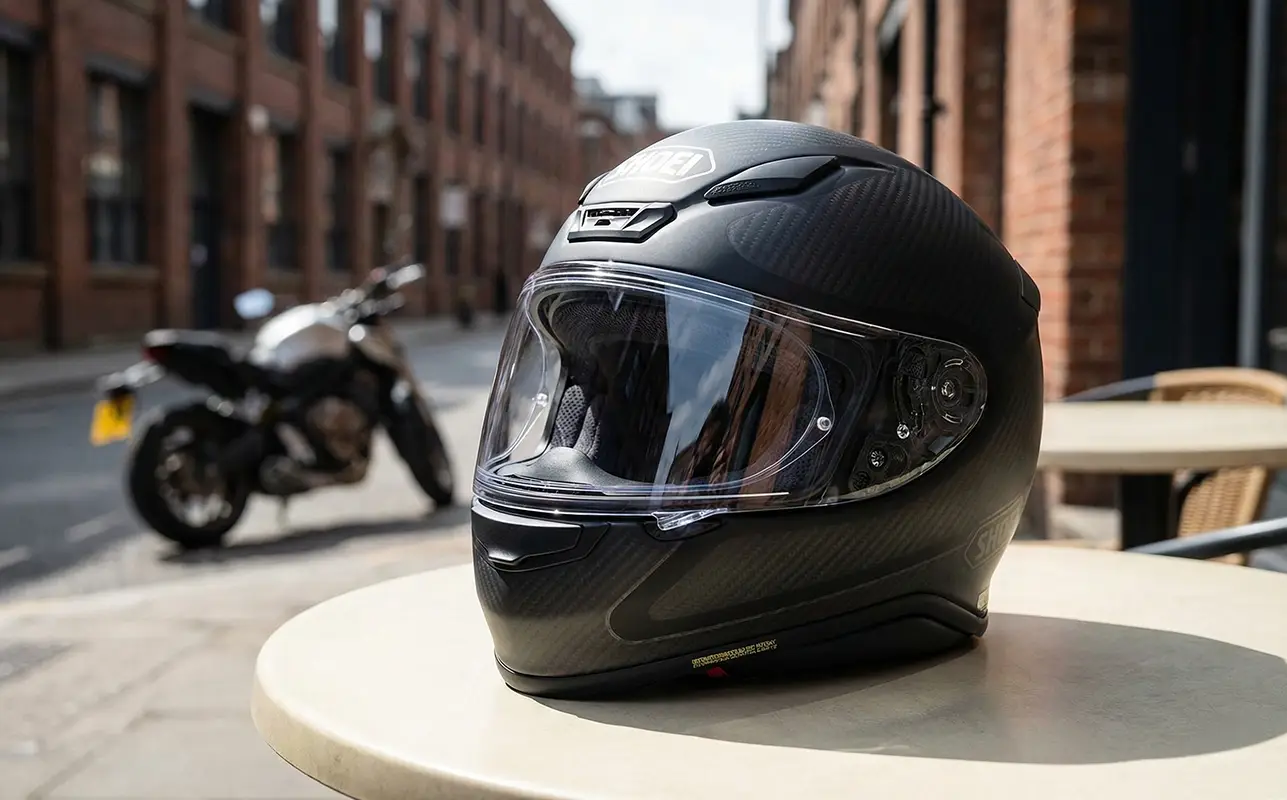
1. Shoei RF-1400
The Shoei RF-1400 represents the pinnacle of Japanese helmet engineering, offering a perfect blend of safety, comfort, and aerodynamic performance. This flagship model has earned its reputation as one of the most trusted helmets among serious street riders worldwide.
Overview
The RF-1400 features Shoei’s proprietary AIM+ shell construction, utilizing advanced integrated matrix technology that combines multiple layers of fiberglass for superior strength. The helmet’s aerodynamic shell design has been refined through extensive wind tunnel testing, resulting in minimal buffeting.
Inside, you’ll find a plush, moisture-wicking interior with 3D Max-Dry liner technology. The helmet comes equipped with an integrated spoiler and an advanced ventilation system. It is widely considered one of the best quietest motorcycle helmets available, significantly reducing fatigue on long rides.
Key Features
- AIM+ Shell: Rigid, lightweight multi-ply matrix.
- CWR-F2 Shield: Vortex generators reduce wind noise.
- Airtight Window Beading: Prevents water and air leaks.
- E.Q.R.S.: Emergency Quick Release System.
Pros and Cons
Pros:
- Exceptional build quality with premium materials.
- Outstanding aerodynamics minimize wind noise and head buffeting.
- Highly effective ventilation system keeps riders cool.
- Incredibly comfortable fit with well-designed padding.
Cons:
- Premium price point may be prohibitive for budget-conscious riders.
- Slightly heavier than some carbon fiber competitors.
- Limited graphic options compared to some other brands.
Pricing: The Shoei RF-1400 retails between $500 and $600.
Best For: Riders who demand the absolute best all-around performance and silence.
2. AGV K6
AGV brings decades of MotoGP racing heritage to the street with the K6, a helmet that successfully translates track-proven technology into an accessible package for everyday riders.
Overview
The K6 utilizes AGV’s racing-derived aerodynamic shell design, available in carbon-aramid-fiberglass construction. This keeps weight remarkably low without compromising protection. It is a top contender for the best lightweight carbon fiber helmet (composite) category.
AGV’s exclusive Ultra-wide visor provides an expansive 190-degree field of vision. The interior features a fully removable and washable lining made from moisture-wicking Ritmo fabric. The helmet comes standard with a Class Optical 1 visor that offers distortion-free vision.
Key Features
- Carbon-Aramid Shell: Ultra-lightweight protection.
- Ultravision Visor: 190° horizontal field of view.
- Collarbone Safe Profile: Reduces injury risk.
- Ritmo Fabric: Premium skin feel.
Pros and Cons
Pros:
- Lightweight construction reduces neck strain.
- Exceptional field of vision enhances safety in urban environments.
- Strong racing pedigree with technology derived from MotoGP.
- Wide variety of graphic designs and colorways.
Cons:
- Runs slightly small in sizing, requiring careful measurement.
- Wind noise levels are higher than some competitors.
- Ventilation system can sometimes let in too much air during cold weather.
Pricing: The AGV K6 retails between $500 and $600.
Best For: Sport riders who prioritize weight savings and visibility.
3. Bell Race Star Flex DLX
Bell’s Race Star Flex DLX incorporates groundbreaking flex impact liner technology, offering a unique approach to impact management that sets it apart from traditional helmet designs.
Overview
The Race Star Flex DLX features Bell’s exclusive three-layer impact liner system. This includes a segmented inner liner designed to move independently upon impact, similar to what is MIPS in motorcycle helmets but more robust.
The helmet typically includes a photochromic transition visors (ProTint) shield that automatically adjusts tint based on lighting conditions. The interior features contoured cheek pads and a plush liner with antimicrobial properties.
Key Features
- Flex Impact Liner: Three-layer energy management.
- 3K Carbon Shell: High strength.
- ProTint Shield: Adaptive light tint included.
- Virus CoolJade Liner: Keeps skin cool.
Pros and Cons
Pros:
- Revolutionary Flex impact liner technology provides enhanced protection.
- Magnetic shield change system makes swapping visors incredibly quick.
- Excellent ventilation performance rivals much more expensive competitors.
- Emergency release cheek pad system prioritizes safety.
Cons:
- Higher price point than many mid-range options.
- The segmented liner design may feel different initially.
- Slightly bulkier profile compared to some streamlined racing helmets.
Pricing: The Bell Race Star Flex DLX retails between $750 and $850.
Best For: Track day enthusiasts and safety-conscious street riders.
4. HJC RPHA 11 Pro
HJC’s RPHA 11 Pro delivers premium features and performance at a price point that makes advanced technology accessible to more riders. This helmet punches well above its weight class.
Overview
The RPHA 11 Pro features HJC’s Premium Integrated Matrix Plus (PIM+) shell construction. The advanced channeling ventilation system includes strategically placed intake and exhaust vents. It is often cited as the best full-face motorcycle helmet for the money in the premium race category.
HJC’s RapidFire II shield replacement system allows for tool-free visor changes in seconds. Inside, you’ll find a moisture-wicking, antibacterial liner that’s fully removable.
Key Features
- PIM+ Shell: Carbon/Glass hybrid.
- RapidFire Shield: Quick replacement system.
- ACS Ventilation: Front-to-back airflow.
- MultiCool Interior: Antibacterial comfort.
Pros and Cons
Pros:
- Outstanding value proposition offering premium features.
- Lightweight construction competes with helmets costing significantly more.
- RapidFire shield system makes visor changes incredibly convenient.
- Wide range of graphic options including licensed designs.
Cons:
- Interior padding could be more plush compared to premium competitors.
- Slightly louder at highway speeds than top-tier helmets.
- Chin strap mechanism feels less refined.
Pricing: The HJC RPHA 11 Pro retails between $400 and $500.
Best For: Riders who want race-level performance on a budget.
5. Arai Regent-X
Arai’s Regent-X embodies the company’s philosophy of creating helmets that prioritize rider protection above all else. This helmet is hand-crafted in Japan with meticulous attention to detail.
Overview
The Regent-X features Arai’s signature round shell shape, designed to help deflect impacts (“glancing off”). The helmet utilizes Arai’s proprietary Peripherally Belted Complex Laminate Construction. It is a top choice for those with a round head shape (or intermediate/round bias).
The ventilation system includes multiple intake and exhaust vents. Arai’s VAS (Variable Axis System) shield mechanism allows for a wider range of shield positioning options.
Key Features
- Facial Contour System (FCS): Custom fit for jaws.
- PB-SNC2 Shell: Super fiber laminate.
- VAS Shield Mechanism: Glancing off impact technology.
- Hyper-Ridge: Reinforced bottom edge.
Pros and Cons
Pros:
- Exceptional build quality with hand-crafted construction.
- Unique round shell shape philosophy prioritizes glancing off impacts.
- Highly customizable fit system with interchangeable pads.
- Long-lasting durability.
Cons:
- Premium pricing places it among the most expensive street helmets.
- Rounder shell shape may not fit long oval heads comfortably.
- More conservative styling options.
Pricing: The Arai Regent-X retails between $600 and $750.
Best For: Riders who prioritize hand-made quality and safety philosophy.
6. Scorpion EXO-R1 Air
The Scorpion EXO-R1 Air brings race-inspired performance to street riders without the premium price tag. This helmet represents exceptional value for riders seeking advanced features.
Overview
The EXO-R1 Air features a lightweight TCT (Thermodynamically Composite Technology) shell construction. The standout feature is the Airfit inflation system, which acts as a built-in motorcycle helmet fitment guide tool, allowing you to pump up cheek pads for a custom fit.
The advanced ventilation system includes large front intake vents. The helmet comes equipped with an Everclear no-fog faceshield.
Key Features
- AirFit System: Custom cheek pad inflation.
- Ultra-TCT Shell: Proprietary 5-layer blend.
- Ellip-Tec II: Secure shield mechanism.
- Titanium D-Rings: High strength.
Pros and Cons
Pros:
- Excellent price-to-performance ratio.
- Airfit pump system allows for customized fit adjustment.
- Impressive ventilation system keeps riders cool.
- Lightweight construction rivals more expensive helmets.
Cons:
- Interior materials feel less premium than higher-priced competitors.
- Wind noise levels are higher than top-tier helmets.
- The Airfit system adds a slight bulge to the cheek area.
Pricing: The Scorpion EXO-R1 Air retails between $400 and $460.
Best For: Riders who need adjustable cheek pressure for high-speed stability.
7. Shark Spartan GT Carbon
Shark’s Spartan GT Carbon combines French design flair with practical features, creating a helmet that appeals to riders who want both style and substance.
Overview
The Spartan GT Carbon features a full carbon fiber shell construction. Shark’s auto-seal system creates an effective seal between the visor and the helmet aperture. It is one of the best motorcycle helmets for glasses wearers due to its “Easy Fit” system.
One of the helmet’s standout features is the integrated sun visor that deploys with a simple lever. The helmet includes a breath deflector and chin curtain for improved comfort.
Key Features
- Carbon Skin: Lightweight shell.
- Auto-Seal System: Improves soundproofing.
- Easy Fit System: Glasses channels.
- Integrated Sun Visor: Easy light management.
Pros and Cons
Pros:
- Full carbon fiber construction at a competitive price point.
- Integrated drop-down sun visor provides convenience.
- Auto-seal system effectively reduces wind noise.
- Distinctive European styling.
Cons:
- Sizing runs slightly different than other brands.
- The integrated sun visor mechanism can feel fragile.
- Less widespread availability in North America.
Pricing: The Shark Spartan GT Carbon retails between $500 and $600.
Best For: Sport-touring riders who want carbon fiber and a sun visor.
8. LS2 Challenger GT
The LS2 Challenger GT represents the best of budget-friendly helmet design, offering convenient features without sacrificing essential safety. Note: Text describes it as modular, but Challenger GT is typically a full-face sport-touring helmet. We will describe the full-face features which match the street riding context well.
Overview
The Challenger GT features a kinetic polymer alloy (KPA) shell. The helmet includes an integrated drop-down sun visor, solving the tinted visor vs. drop-down sun shield dilemma for commuters.
The ventilation system features adjustable intake and exhaust vents. The interior includes a removable and washable liner with moisture-wicking properties.
Key Features
- KPA Shell: Kinetic Polymer Alloy.
- Twin Shield System: Built-in sun visor.
- Class A Visor: Optically correct.
- Quick Release Strap: Easy on/off.
Pros and Cons
Pros:
- Integrated sun visor adds convenience without additional cost.
- Very affordable price point making it accessible.
- Adequate safety certifications meeting DOT and ECE standards.
- Good ventilation for most conditions.
Cons:
- Heavier than most premium full-face helmets.
- Interior materials don’t match premium competitors.
- Build quality is good but not exceptional.
Pricing: The LS2 Challenger GT retails between $200 and $300.
Best For: Budget-conscious riders who need a sun visor for commuting.
9. Icon Airflite
The Icon Airflite breaks from traditional helmet design with its distinctive retro-modern aesthetic while incorporating modern safety technology.
Overview
The Airflite features a polycarbonate shell construction. The helmet’s most distinctive feature is its large, flat face shield that provides an expansive field of vision. It is a popular choice for best motorcycle helmet for visibility (field of view context).
The ventilation system includes multiple intake vents across the chin bar. The Hydradry moisture-wicking interior is fully removable. The helmet is designed to accommodate communication systems.
Key Features
- Polycarbonate Shell: Tough and durable.
- Fliteshield: Massive peripheral vision.
- Internal DropShield: Sun protection.
- Hydradry Liner: Moisture-wicking comfort.
Pros and Cons
Pros:
- Unique retro-modern styling that stands out.
- Large face shield provides excellent visibility.
- Good ventilation system keeps riders comfortable.
- Reasonable price point for the features.
Cons:
- Polycarbonate shell construction is heavier than composite alternatives.
- The large, flat shield can create more wind resistance.
- Styling may be too unconventional for traditionalists.
Pricing: The Icon Airflite retails between $250 and $350.
Best For: Urban riders who want to make a bold visual statement.
Conclusion
Selecting the best motorcycle helmet for street riding ultimately comes down to finding the right balance between safety, comfort, features, and budget. Each helmet on this list excels in different areas—whether you prioritize the premium construction of the Shoei RF-1400, the innovative safety technology of the Bell Race Star Flex DLX, or the exceptional value of the HJC RPHA 11 Pro.
Remember that the most expensive helmet isn’t necessarily the best choice for everyone; the perfect helmet is one that fits your head shape properly.
Frequently Asked Questions
How often should I replace my motorcycle helmet?
Every 5 years, or immediately after any impact. Materials degrade over time due to UV exposure and sweat, reducing the helmet’s ability to protect you.
What’s the difference between DOT, ECE, and SNELL certifications?
DOT is the US minimum standard. ECE is the European standard and is generally considered more rigorous. SNELL is a strict private standard. Helmets with multiple certifications offer superior protection assurance.
Should I choose a full-face, modular, or open-face helmet for street riding?
Full-face is the safest choice as it protects the chin and jaw. Modular helmets offer convenience but are heavier. Open-face helmets offer significantly less protection and are not recommended for high-speed street riding.
How do I know if my helmet fits properly?
It should feel snug but not painful. It should not move when you shake your head. You should not be able to fit more than a finger between your forehead and the pad.
Are more expensive helmets significantly safer than budget options?
Not necessarily. All legal helmets meet minimum safety standards. Expensive helmets use lighter materials (carbon fiber), offer better ventilation, and are quieter, but a properly fitted budget helmet is safer than an ill-fitting expensive one.