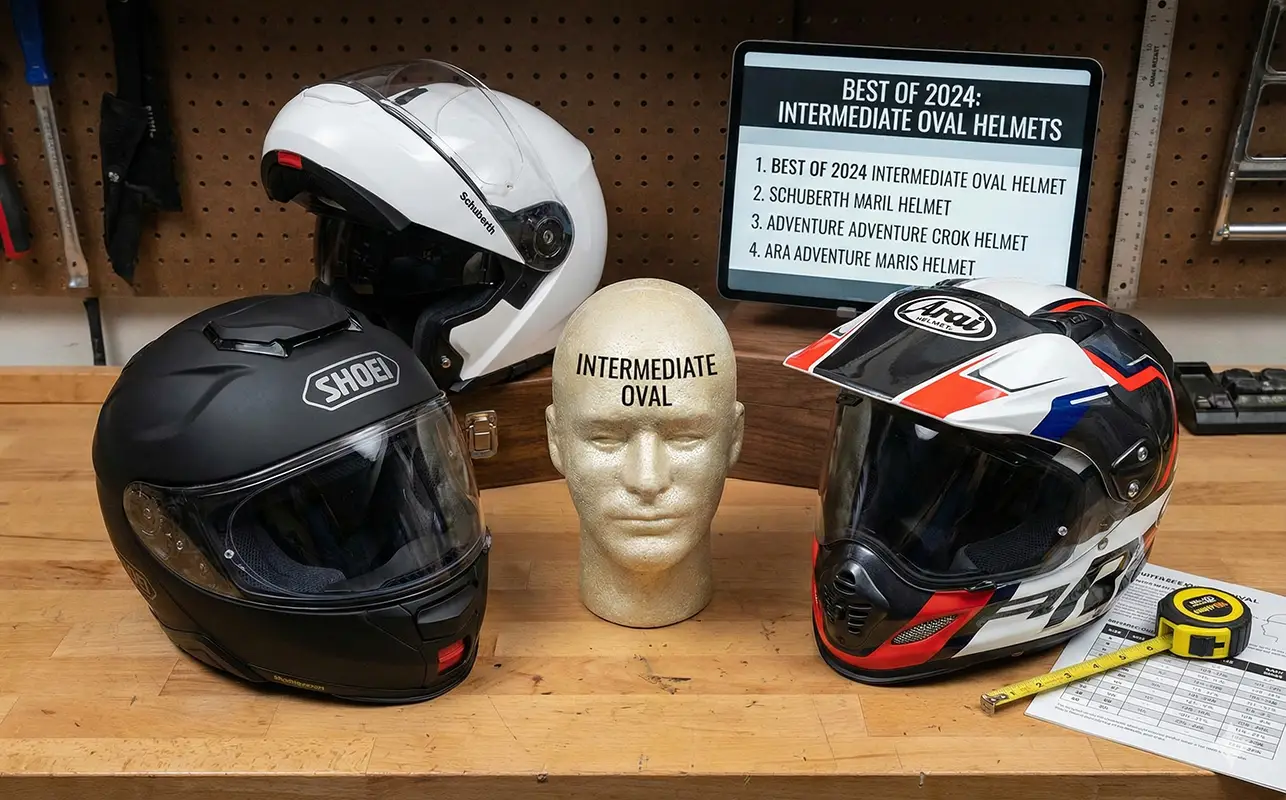
Finding the perfect motorcycle helmet isn’t just about safety ratings and cool graphics—it’s about finding the right fit for your unique head shape.
If you have an intermediate oval head shape, which is the most common head type, you’re in luck: most helmet manufacturers design their products with you in mind. For a complete guide on how to measure your head and determine your shape, check out our Ultimate Guide to Motorcycle Helmets.
However, not all “intermediate oval” helmets are created equal, and choosing the wrong one can lead to pressure points, headaches, and compromised safety. In this comprehensive guide, we’ll explore the best motorcycle helmets specifically suited for intermediate oval head shapes.
We’ve evaluated each helmet based on fit consistency, safety certifications, and comfort during extended rides.
1. Shoei RF-1400
The Shoei RF-1400 represents the pinnacle of Japanese helmet engineering, offering an exceptional fit for intermediate oval head shapes. This premium full-face helmet has earned its reputation as a top choice among riders who refuse to compromise on quality.
Overview
The RF-1400 features Shoei’s Advanced Integrated Matrix (AIM+) shell construction. The intermediate oval internal shape provides excellent pressure distribution across the entire head. It is widely considered one of the best quietest motorcycle helmets available on the market.
The updated ventilation system includes four intake vents and six exhaust ports. The QR-E base plate system makes shield changes tool-free and incredibly simple.
Key Features
- AIM+ Shell: Multi-ply matrix for rigidity.
- CWR-F2 Shield: Vortex generators reduce wind noise.
- 3D Max-Dry System II: Moisture-wicking interior.
- E.Q.R.S.: Emergency Quick Release System.
Pros and Cons
Pros:
- Exceptional comfort for intermediate oval heads with minimal break-in period.
- Superior ventilation system works effectively at various speeds.
- Premium build quality with excellent attention to detail.
- Remarkably quiet for a sportbike helmet.
Cons:
- Premium price point may be prohibitive.
- Slightly heavier than some carbon fiber alternatives.
- Limited color options compared to fashion-forward brands.
Pricing:
The Shoei RF-1400 retails between $500 and $600.
Best For:
Riders who want the gold standard in all-around performance and silence.
2. Arai Regent-X
Arai’s Regent-X is purpose-built for intermediate oval heads, offering the legendary Arai quality in a package designed specifically for sport-touring and everyday riding.
Overview
The Regent-X utilizes Arai’s proprietary Peripheral Belt technology and a complex laminate construction (CLC) shell. The intermediate oval fit is achieved through Arai’s careful internal padding configuration and their five-piece interior comfort system.
The VAS-V MAX visor system provides an expansive field of view with Pinlock anti-fog insert compatibility. Every Regent-X is hand-assembled in Japan.
Key Features
- PB-SNC2 Shell: Super fiber laminate.
- VAS Shield Mechanism: Glancing off impact technology.
- Facial Contour System (FCS): Custom jaw fit.
- Hyper-Ridge: Reinforced bottom edge.
Pros and Cons
Pros:
- Exceptional build quality with hand-crafted attention to detail.
- True intermediate oval fit accommodates this head shape perfectly.
- Outstanding safety record with multiple certifications.
- Highly customizable fit with various pad thickness options.
Cons:
- Very expensive, positioning it as a premium investment.
- Conservative styling may not appeal to all riders.
- Can be slightly noisy at highway speeds.
Pricing:
The Arai Regent-X retails between $600 and $750.
Best For:
Riders who appreciate hand-made craftsmanship and a “glancing off” safety philosophy.
3. AGV K6
The AGV K6 brings Italian racing heritage to the intermediate oval market, combining aggressive styling with serious performance credentials.
Overview
AGV designed the K6 with a distinctly intermediate oval internal shape. The shell is constructed from carbon-aramid-fiberglass in four sizes. It is a top contender for the best lightweight carbon fiber helmet (composite) category.
The aerodynamics have been refined in the wind tunnel, resulting in excellent stability at high speeds. Five front vents and two rear extractors create effective ventilation.
Key Features
- Carbon-Aramid Shell: Ultra-lightweight protection.
- Ultravision Visor: 190° horizontal field of view.
- Collarbone Safe Profile: Reduces injury risk.
- Ritmo Fabric: Premium skin feel.
Pros and Cons
Pros:
- Excellent aerodynamics reduce buffeting and neck strain.
- Integrated sun visor (on S models) adds convenience.
- Sharp, aggressive styling appeals to sportbike enthusiasts.
- Multiple shell sizes ensure proper proportions.
Cons:
- Ventilation system works best at higher speeds.
- Slightly snug fit initially requires a break-in period.
- Premium pricing similar to Japanese competitors.
Pricing:
The AGV K6 retails between $500 and $600.
Best For:
Sport riders who prioritize weight savings and visibility.
4. HJC RPHA 11 Pro
The HJC RPHA 11 Pro offers exceptional value for intermediate oval riders, delivering premium features at a mid-range price point.
Overview
HJC’s Premium Integrated Matrix (PIM) shell construction combines carbon fiber, aramid, and fiberglass. It is often cited as the best full-face motorcycle helmet for the money in the race category.
The advanced channeling ventilation system includes adjustable chin and forehead vents. HJC includes a Pinlock anti-fog insert in the box. The moisture-wicking Crown and cheek pad liner is removable and washable.
Key Features
- PIM+ Shell: Carbon/Glass hybrid.
- RapidFire Shield: Quick replacement system.
- ACS Ventilation: Front-to-back airflow.
- MultiCool Interior: Antibacterial comfort.
Pros and Cons
Pros:
- Outstanding value proposition with premium features.
- Lightweight construction reduces neck fatigue.
- Excellent ventilation system works well across various speeds.
- Wide variety of graphic options and colorways available.
Cons:
- Build quality doesn’t quite match premium Japanese brands.
- Slightly noisier than top-tier competitors.
- Visor mechanism can feel less refined.
Pricing:
The HJC RPHA 11 Pro retails between $400 and $500.
Best For:
Riders on a budget who want race performance and aggressive graphics.
5. Scorpion EXO-R1 Air
The Scorpion EXO-R1 Air represents the sweet spot between performance and affordability for intermediate oval riders. This helmet punches well above its weight class.
Overview
Scorpion’s TCT shell combines various composite materials to optimize impact protection. The standout feature is the Airfit inflation system, which acts as a built-in motorcycle helmet fitment guide tool, allowing you to pump air into the cheek pads for a custom fit.
Ventilation is handled by a sophisticated system of intake and exhaust vents. The Ellip-Tec II ratchet system provides a secure closure.
Key Features
- AirFit System: Custom cheek pad inflation.
- Ultra-TCT Shell: Proprietary blend.
- KwikWick III: Antimicrobial liner.
- Ellip-Tec II: Secure shield mechanism.
Pros and Cons
Pros:
- Airfit pump system allows for customizable cheek pad pressure.
- Impressive feature set at a very competitive price point.
- Effective ventilation works well in various conditions.
- Integrated sun visor (on ST models) adds convenience.
Cons:
- Build quality feels slightly less premium than top-tier brands.
- Some riders find the Airfit system unnecessary.
- Heavier than carbon fiber alternatives.
Pricing:
The Scorpion EXO-R1 Air retails between $400 and $460.
Best For:
Riders who need adjustable cheek pressure to prevent helmet lift at speed.
6. Bell Race Star Flex DLX
Bell’s Race Star Flex DLX brings cutting-edge safety technology to the intermediate oval market with its innovative Flex impact liner system.
Overview
The Race Star Flex DLX features Bell’s proprietary Flex impact liner system (similar concept to what is MIPS in motorcycle helmets but more advanced).
Bell’s intermediate oval fit is true to form. The helmet typically includes a photochromic transition visors (Panovision ProTint) that automatically adjusts to lighting conditions.
Key Features
- Flex Impact Liner: Three-layer energy management.
- 3K Carbon Shell: High strength.
- ProTint Shield: Adaptive light tint included.
- Virus CoolJade Liner: Keeps skin cool.
Pros and Cons
Pros:
- Advanced Flex impact liner provides superior energy management.
- Lightweight carbon construction reduces neck fatigue.
- Exceptional ventilation system for hot weather riding.
- Wide field of view enhances situational awareness.
Cons:
- Premium pricing reflects advanced safety technology.
- Aggressive sportbike styling may not suit all riding styles.
- Some riders report wind noise at highway speeds.
Pricing: The Bell Race Star Flex DLX retails between $750 and $850.
Best For: Track riders who want advanced rotational protection and adaptive vision.
7. Shark Spartan GT Carbon
The Shark Spartan GT Carbon offers European style and engineering for intermediate oval heads, combining carbon fiber construction with practical touring features.
Overview
Shark’s carbon fiber shell construction keeps the Spartan GT lightweight. The intermediate oval fit is well-executed. The helmet includes Shark’s Easy Fit system, making it one of the best motorcycle helmet for glasses wearers.
An integrated sun visor deploys via an easy-to-reach slider. Shark’s advanced ventilation includes a clever chin vent that directs air across the inside of the visor.
Key Features
- Carbon Skin: Lightweight shell.
- Auto-Seal System: Improves soundproofing.
- Easy Fit System: Glasses channels.
- Integrated Sun Visor: Easy light management.
Pros and Cons
Pros:
- Lightweight carbon construction at a competitive price point.
- Excellent visor seal reduces wind noise significantly.
- Easy Fit system works well for eyeglass wearers.
- Includes premium Pinlock Max Vision insert.
Cons:
- Sizing runs small; recommend trying on before purchasing.
- Limited availability in some markets.
- Ventilation doesn’t match the best in class.
Pricing: The Shark Spartan GT Carbon retails between $500 and $600.
Best For: Sport-touring riders who need glasses compatibility and a sun visor.
8. LS2 Challenger GT
The LS2 Challenger GT delivers remarkable value for intermediate oval riders on a budget. Note: While often confused with modulars, the Challenger GT is a full-face sport-touring helmet. We will describe the full-face features relevant to intermediate oval fits.
Overview
The Challenger GT utilizes LS2’s Kinetic Polymer Alloy (KPA) shell. The intermediate oval fit is comfortable and well-proportioned. It includes a drop-down internal sun visor, solving the tinted visor vs. drop-down sun shield debate for commuters.
The laser-cut foam liner is removable and washable. A Pinlock-ready visor comes standard.
Key Features
- KPA Shell: Kinetic Polymer Alloy.
- Twin Shield System: Built-in sun visor.
- Class A Visor: Optically correct.
- Quick Release Strap: Easy on/off.
Pros and Cons
Pros:
- Exceptional value with features typically found on expensive helmets.
- Comfortable intermediate oval fit suitable for extended wear.
- Integrated sun visor adds convenience.
- Wide range of sizes and graphic options.
Cons:
- Thermoplastic shell is heavier than composite alternatives.
- Ventilation system is adequate but not exceptional.
- Build quality and finish don’t match premium competitors.
Pricing: The LS2 Challenger GT retails between $200 and $300.
Best For: Budget-conscious riders who need a sun visor.
9. Ruroc Atlas 4.0
The Ruroc Atlas 4.0 takes a completely different approach to helmet design, combining futuristic aesthetics with modern technology.
Overview
Ruroc’s Atlas 4.0 features a distinctive design with an integrated face shield. The Hexicore impact protection system uses a honeycomb structure. The intermediate oval fit is achieved through Ruroc’s carefully designed internal padding.
The Shockwave system (sold separately usually) integrates into the helmet, making it a competitor in the best motorcycle helmets with bluetooth category.
Key Features
- Carbon Fiber Shell: Strong and light.
- Rheon Tech: Impact energy control liner.
- Fidlock Buckle: Magnetic chin strap.
- Bluetooth Ready: Integrated pockets for Shockwave.
Pros and Cons
Pros:
- Unique, futuristic design that stands out.
- Integrated Bluetooth system capability eliminates bulk.
- Magnetic buckle system is convenient.
- Extensive customization options.
Cons:
- Unconventional design may not appeal to traditional riders.
- Heavier than many competitors.
- Limited safety certification compared to established brands.
Pricing: The Ruroc Atlas 4.0 retails around $450 to $550.
Best For: Riders who prioritize unique styling and integrated tech.
Conclusion
Choosing the best motorcycle helmet for your intermediate oval head shape ultimately comes down to balancing your priorities. The Shoei RF-1400 and Arai Regent-X represent the pinnacle of helmet engineering. For excellent value, the HJC RPHA 11 Pro and Scorpion EXO-R1 Air deliver impressive performance.
Remember that even within the intermediate oval category, individual fit can vary. Always try on a helmet before purchasing if possible.
Frequently Asked Questions
How do I know if I have an intermediate oval head shape?
Measure the width of your head (ear to ear) and the length (forehead to back). If the length is slightly longer than the width (about 3-5%), you have an intermediate oval head. This is the most common head shape.
Can I wear a round oval helmet if I have an intermediate oval head?
It is not recommended. A round oval helmet will create pressure points on your forehead and leave gaps at the sides (temples), which can compromise safety and cause headaches.
How tight should a new motorcycle helmet feel?
It should feel snug all around with even pressure. It should not be painful. You should not be able to fit more than a finger between your forehead and the pad, and the helmet should not move when you shake your head.
What safety certifications should I look for?
Look for DOT (US minimum), ECE (European standard, very rigorous), and Snell (strict private standard). Helmets with multiple certifications offer superior protection assurance.
How often should I replace my motorcycle helmet?
Every 5 years, or immediately after any impact. Materials degrade over time due to UV exposure and sweat, reducing the helmet’s ability to protect you.