When you’re carving through corners on your sport bike at high speeds, your helmet becomes the most critical piece of safety equipment you own.
The right helmet doesn’t just protect your head—it enhances your riding experience with superior aerodynamics, ventilation, and visibility. For a complete deep dive into racing standards and fitment, be sure to read our Ultimate Guide to Motorcycle Helmets.
Sport bike riders demand helmets that can keep up with their aggressive riding style while providing maximum protection.
This comprehensive guide examines the best motorcycle helmets specifically designed for sport bike enthusiasts. We’ve evaluated each helmet based on crucial factors including safety certifications, aerodynamic performance at high speeds, and weight.
1. Shoei X-Fourteen
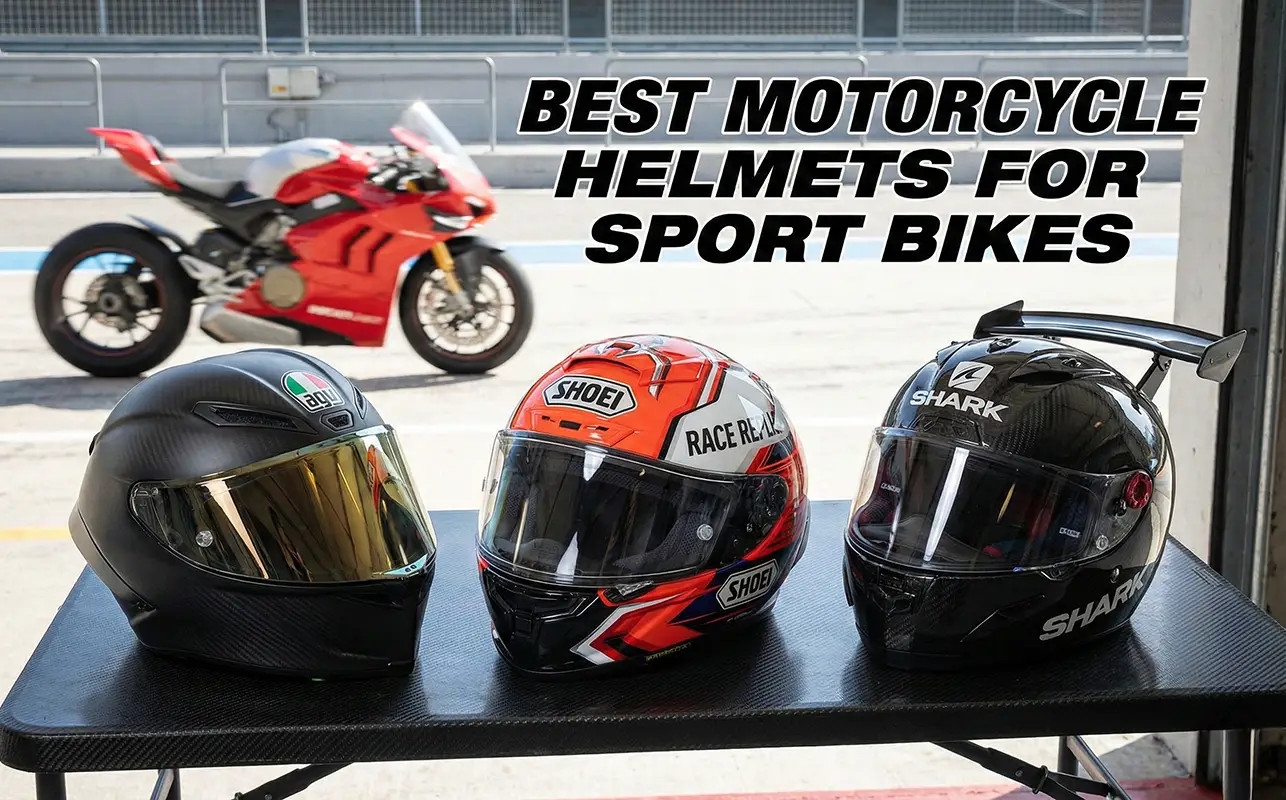
The Shoei X-Fourteen stands as the flagship racing helmet from one of the most respected manufacturers in the industry. Developed with direct input from MotoGP racers (like Marc Marquez), this helmet represents the cutting edge of sport bike helmet technology.
Overview
The X-Fourteen features Shoei’s proprietary AIM+ shell construction, combining multiple layers of fiberglass with organic fibers. The aerodynamic shell design underwent extensive wind tunnel testing to minimize lift and buffeting at speeds exceeding 180 mph. It is widely considered one of the best quietest motorcycle helmets for track use, though race helmets are generally louder than touring ones.
The helmet includes a Pinlock-ready CWR-F2 shield with a wider aperture. The ventilation system incorporates six exhaust vents, creating an efficient air circulation system.
Key Features
- AIM+ Shell: High-performance fiber matrix.
- CWR-F Race Shield: Flat shield for tear-offs.
- Adjustable Liner: Can rotate 4 degrees for tuck position.
- E.Q.R.S.: Emergency Quick Release System.
Pros and Cons
Pros:
- Exceptional aerodynamic stability at high speeds with minimal lift.
- Superior ventilation system delivers consistent airflow.
- Lightweight construction reduces neck fatigue.
- Industry-leading build quality with impeccable fit.
Cons:
- Premium price point may be prohibitive.
- Runs slightly narrow (fit).
- Limited color options compared to some competitors.
Pricing:
The Shoei X-Fourteen retails between $750 and $900.
Best For:
Track day riders and racers who need stability at 150+ mph.
2. AGV Pista GP RR
AGV’s Pista GP RR represents the Italian manufacturer’s most advanced racing helmet, worn by multiple MotoGP world champions. This helmet embodies decades of racing heritage combined with cutting-edge materials science.
Overview
The Pista GP RR utilizes a 100% carbon fiber shell construction in four different sizes. It is the definitive choice for the best lightweight carbon fiber helmet in the racing category. AGV’s Extreme Safety technology incorporates progressive deformation zones.
The ultra-wide visor offers a 190-degree horizontal field of vision. The helmet’s ventilation system includes five front vents and two rear extractors with metal alloy covers.
Key Features
- 100% Carbon Fiber: Extreme lightness.
- Hydration System: Integrated tube channels.
- Metal Air Vents: Durable high-flow intakes.
- 360° Adaptive Fit: Customizable crown pad.
Pros and Cons
Pros:
- Ultra-lightweight carbon fiber construction.
- Exceptional field of vision enhances awareness in corners.
- Race-proven aerodynamics developed through MotoGP.
- FIM Homologated for professional racing.
Cons:
- Extremely expensive investment.
- Aggressive racing fit may feel tight for casual riders.
- No adjustable vents (plugs only) for street riding versatility.
Pricing:
The AGV Pista GP RR retails between $1,400 and $1,750.
Best For:
Riders who want the exact helmet Rossi wore, regardless of cost.
3. Arai Corsair-X
Arai’s Corsair-X continues the Japanese manufacturer’s tradition of handcrafted excellence, offering a helmet that prioritizes maximum protection through its distinctive round shell shape.
Overview
The Corsair-X features Arai’s signature Peripherally Belted Structural Net Composite (PB-SNC2) shell. The rounder shell shape is designed to “glance off” surfaces during impacts rather than catching. You can learn more about this philosophy in our article on helmet safety ratings explained (Snell section).
Arai’s VAS (Variable Axis System) shield mechanism allows the visor to be opened to multiple positions. The ventilation system includes fully adjustable front vents and a diffuser system.
Key Features
- PB-SNC2 Shell: Super fiber laminate.
- VAS Shield Mechanism: Glancing off impact technology.
- Diffuser Type 12: Long intake vents for stability.
- Eco-Pure Liner: Antimicrobial pH balanced fabric.
Pros and Cons
Pros:
- Legendary Arai build quality with hand-finishing.
- Rounder shell shape provides excellent safety characteristics.
- Comfortable for all-day wear with plush interior padding.
- Extensive customization options for cheek pads.
Cons:
- Rounder shell shape creates slightly more wind noise than Pista/Shoei.
- Ventilation is adequate but not as aggressive as track-focused competitors.
- Premium pricing reflects handcrafted construction.
Pricing:
The Arai Corsair-X retails between $850 and $1,000+.
Best For: Riders who prioritize safety above all and want a hand-made helmet.
4. Bell Race Star Flex DLX
Bell’s Race Star Flex DLX incorporates innovative flex impact liner technology, representing a new approach to managing rotational forces during crashes.
Overview
The Race Star Flex DLX features Bell’s proprietary Flex impact liner system, which functions similarly to what is MIPS in motorcycle helmets but uses a three-layer progressive density foam.
The carbon composite shell comes in three sizes. The Panovision face shield provides an expansive field of view, and the helmet usually ships with a photochromic transition visors (ProTint) shield that adjusts to light conditions automatically.
Key Features
- Flex Impact Liner: Three-layer energy management.
- 3K Carbon Shell: High strength.
- ProTint Shield: Adaptive light tint included.
- Virus CoolJade Liner: Keeps skin cool.
Pros and Cons
Pros:
- Innovative Flex impact liner technology addresses rotational forces.
- Strong ventilation performance keeps riders cool.
- Transitions shield included adds massive value.
- Reasonable pricing compared to European competitors.
Cons:
- Slightly heavier than top-tier carbon fiber helmets.
- Some riders report wind noise at highway speeds.
- Fit is very race-oriented (tight cheeks).
Pricing:
The Bell Race Star Flex DLX retails between $750 and $850.
Best For:
Riders who want advanced rotational protection and adaptive vision.
5. Scorpion EXO-R1 Air
The Scorpion EXO-R1 Air delivers race-level performance at a mid-range price point, making advanced helmet technology accessible to more riders.
Overview
The EXO-R1 Air features a TCT (Ultra-TCT) shell construction that combines fiberglass and aramid fibers. The Airfit inflation system allows riders to fine-tune cheek pad fit, acting as a built-in motorcycle helmet fitment guide tool for high-speed stability.
The Ellip-Tec II ratchet system enables quick, secure closure. The ventilation system features large, adjustable front vents and rear extractors.
Key Features
- AirFit System: Custom cheek pad inflation.
- Ultra-TCT Shell: Proprietary blend.
- Ellip-Tec II: Secure shield mechanism.
- Titanium D-Rings: High strength.
Pros and Cons
Pros:
- Outstanding value proposition with premium features.
- Airfit system allows personalized fit adjustment.
- Effective ventilation keeps riders comfortable.
- Five-year warranty demonstrates confidence.
Cons:
- Heavier than premium carbon fiber options.
- Build quality doesn’t match the refinement of Shoei/Arai.
- Some users report the internal sun visor mechanism (if equipped on variants) can be finicky.
Pricing:
The Scorpion EXO-R1 Air retails between $400 and $460.
Best For:
Riders who want MotoGP styling and features on a budget.
6. HJC RPHA 11 Pro
HJC’s RPHA 11 Pro brings Korean engineering and manufacturing efficiency to the sport bike helmet market, offering impressive performance at an attractive price point.
Overview
The RPHA 11 Pro utilizes HJC’s Premium Integrated Matrix (PIM Plus) shell. It is often cited as the best full-face motorcycle helmet for the money in the dedicated sport category.
The aerodynamic shell design features an adjustable rear spoiler. The helmet includes HJC’s RapidFire II shield replacement system. The Advanced Channeling Ventilation System includes large, adjustable front vents.
Key Features
- PIM+ Shell: Carbon/Glass hybrid.
- RapidFire Shield: Quick replacement system.
- ACS Ventilation: Front-to-back airflow.
- Max Airflow Top Vents: Glove-friendly dials.
Pros and Cons
Pros:
- Excellent price-to-performance ratio.
- Lightweight construction rivals expensive premiums.
- Strong ventilation performance.
- Multiple safety certifications (DOT/ECE).
Cons:
- Interior padding quality doesn’t match premium brands.
- Increased wind noise compared to Shoei.
- Graphics quality can be inconsistent.
Pricing:
The HJC RPHA 11 Pro retails between $400 and $500.
Best For:
Riders who want a lightweight helmet with aggressive graphics (Venom, Joker, etc.).
7. Shark Race-R Pro GP
The French manufacturer Shark brings European styling and engineering to the sport bike helmet market with the Race-R Pro GP. This helmet combines distinctive aesthetics with solid performance.
Overview
The Race-R Pro GP features a carbon-aramid-fiberglass shell construction. The aerodynamic profile includes a massive integrated spoiler designed for tucking behind the windscreen.
Shark’s Auto-Seal system creates a tight seal between the shield and the aperture. The interior uses Shark’s Bamboo fabric liner, which naturally wicks moisture.
Key Features
- COVA Shell: Carbon On View & Aramid.
- High-Flow Venting: Optimized for tuck position.
- Alveotech Lining: Sanitized antimicrobial fabric.
- Aero Spoiler: High-speed stability wing.
Pros and Cons
Pros:
- Distinctive European styling with the large spoiler.
- Auto-Seal system effectively reduces wind noise.
- Eco-friendly bamboo liner offers natural moisture management.
- High-speed stability is exceptional.
Cons:
- Availability and dealer network is smaller.
- Replacement parts can be harder to source.
- Fit tends toward narrower head shapes.
Pricing:
The Shark Race-R Pro GP retails between $1,000 and $1,200.
Best For: Racers who need maximum aerodynamic efficiency on straightaways.
8. LS2 FF327 Challenger Carbon
LS2’s FF327 Challenger Carbon represents the budget-friendly end of the carbon fiber helmet spectrum. Note: While LS2 markets this as Sport-Touring, its carbon construction and ventilation make it a viable budget sport option.
Overview
The FF327 Challenger Carbon features a full carbon fiber shell that significantly reduces weight. The aerodynamic design includes an integrated rear spoiler. It solves the tinted visor vs. drop-down sun shield debate by including a drop-down visor, which is rare for a carbon sport helmet.
The Dynamic Flow-Through ventilation system includes adjustable front vents. The interior features a removable, washable liner.
Key Features
- Carbon Fiber Shell: Lightweight.
- Twin Shield System: Built-in sun visor.
- Emergency Release: Cheek pad removal.
- Laser-Cut Foam: Precise fit.
Pros and Cons
Pros:
- Carbon fiber construction at a fraction of the cost.
- Lightweight design reduces neck fatigue.
- Integrated sun visor adds street versatility.
- Excellent entry point for carbon fiber.
Cons:
- Interior padding quality doesn’t match premium helmets.
- Ventilation adequate but not sophisticated.
- Build quality details reveal cost-cutting.
Pricing: The LS2 Challenger Carbon retails between $350 and $450.
Best For: Street sport riders who want carbon fiber and a sun visor.
9. AGV K6
AGV’s K6 brings much of the Italian brand’s racing technology to a more accessible price point. This helmet demonstrates that you don’t need to spend flagship money to get quality Italian engineering.
Overview
The K6 features a carbon-aramid-fiberglass shell construction in four sizes. While not as aerodynamically advanced as the Pista GP RR, the K6 still benefits from AGV’s racing experience. It is lighter than almost anything in its class.
The helmet includes an ultra-wide visor that provides a 190-degree horizontal field of view. The ventilation system incorporates front vents and rear extractors.
Key Features
- Carbon-Aramid Shell: Ultra-lightweight protection.
- Ultravision Visor: 190° horizontal field of view.
- Collarbone Safe Profile: Reduces injury risk.
- Ritmo Fabric: Premium skin feel.
Pros and Cons
Pros:
- AGV racing heritage at a mid-range price point.
- Exceptional field of vision matches premium models.
- Four shell sizes provide better fit.
- Meets latest ECE 22.06 safety standards.
Cons:
- Heavier than pure carbon alternatives (though still very light).
- Ventilation performance adequate but not exceptional for track.
- Aggressive sport fit may be uncomfortable for casual riding.
Pricing: The AGV K6 retails between $500 and $600.
Best For: Riders who want a do-it-all sport helmet that is extremely light.
Conclusion
Selecting the best motorcycle helmet for your sport bike ultimately depends on your specific needs. If you’re a serious track day enthusiast, investing in premium options like the Shoei X-Fourteen or AGV Pista GP RR delivers uncompromising performance. For riders seeking excellent value, the Scorpion EXO-R1 Air and HJC RPHA 11 Pro represent outstanding middle-ground options.
Remember that the best helmet is one that fits properly. Always try helmets on in person when possible.
Frequently Asked Questions
What safety certifications should I look for in a sport bike helmet?
Look for DOT (minimum US legal), ECE (European standard, safer than DOT), and Snell (high-standard voluntary testing). For professional racing, look for FIM homologation.
How much should I expect to spend on a quality sport bike helmet?
Quality starts around $250 (Scorpion/LS2) for decent protection. Mid-range performance sits at $400-$600 (HJC/AGV K6). Top-tier race replicas cost $800-$1,700.
How often should I replace my sport bike helmet?
Every 5 years, or immediately after any impact. Track riding exposes helmets to more sweat and UV rays, potentially degrading liners faster.
What’s the difference between a sport bike helmet and a regular motorcycle helmet?
Sport bike helmets have higher brow lines (for visibility in a tuck), more aggressive ventilation (for high exertion), and aerodynamic spoilers (for stability at 100+ mph). They often lack sun visors to save weight and maximize shell integrity.
Do more expensive helmets actually provide better protection?
All legal helmets meet minimum safety standards. Expensive helmets use advanced materials (Carbon/Kevlar) to distribute energy better and reduce weight, reducing rotational injury risk and fatigue, which contributes to overall safety.