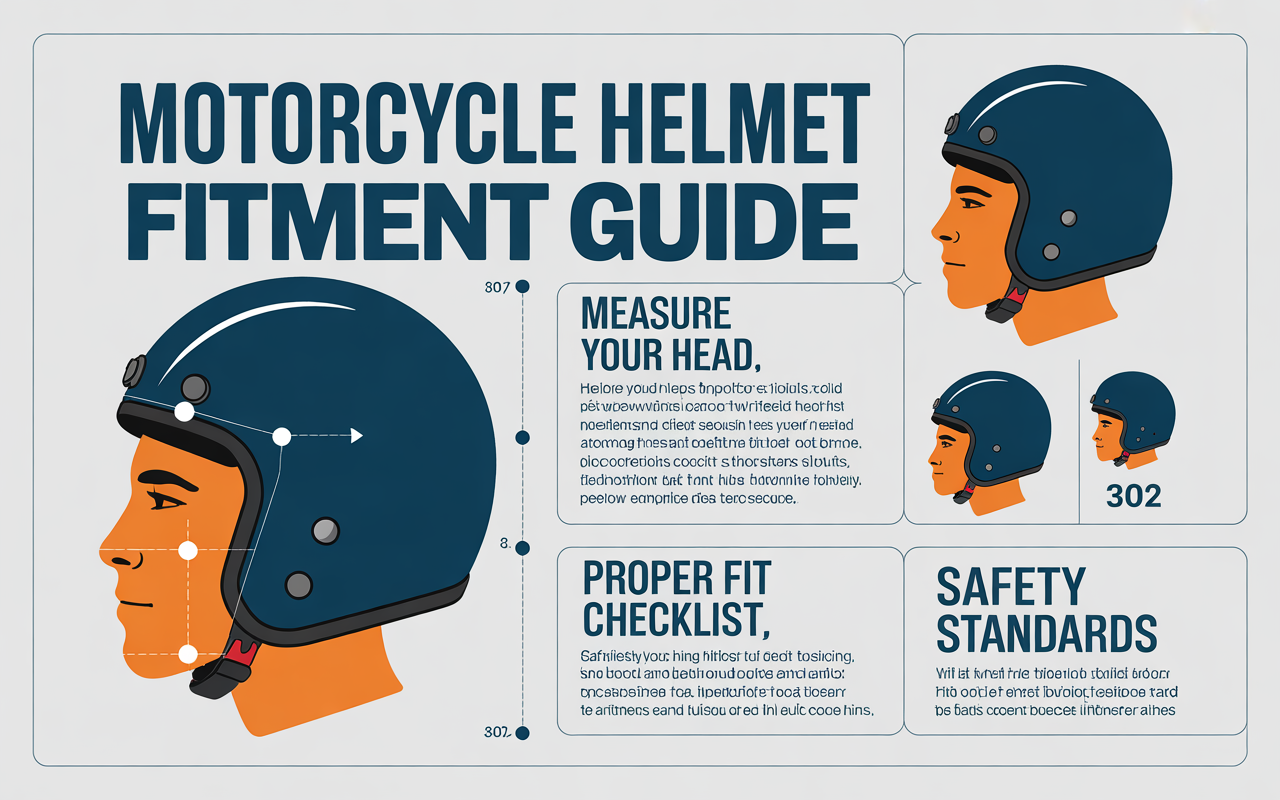
The most expensive helmet in the world is useless if it falls off your head in a crash.
This isn’t just theoretical safety talk—it’s a sobering reality. Nearly 20% of motorcycle riders wear helmets that are too large for their heads, creating a dangerous situation where the helmet could fly off during impact, exactly when protection is needed most.
Many riders make the mistake of focusing solely on helmet size (small, medium, large), while overlooking the equally crucial element: head shape. This is the “Secret Sauce” of proper helmet fitment that can make the difference between adequate protection and a helmet that fails when you need it most.
In this comprehensive guide, we won’t just tell you how to use a tape measure. We’ll walk you through understanding your unique head shape, finding the perfect size, conducting proper fit tests, and ensuring your helmet provides maximum protection for your specific head anatomy.
Fitting is just step one. To understand safety ratings like DOT and Snell, check out our Ultimate Guide to Motorcycle Helmets.
Whether you’re purchasing your first helmet or upgrading to a new model, these fitment principles remain the same. Let’s ensure your helmet stays where it belongs—on your head—when it matters most.
Step 1: Determine Your Head Shape
When it comes to motorcycle helmet fitment, most riders make a critical mistake: they focus solely on size while ignoring shape. This oversight is why so many riders end up with uncomfortable helmets or, worse, inadequate protection during a crash.
Your head shape, when viewed from above, falls into one of three distinct categories. Understanding which category you belong to will dramatically narrow down your helmet options and increase your chances of finding the perfect fit.
The Three Head Shapes
Long Oval: If your head is significantly longer from front to back than it is wide from ear to ear, you have a long oval head shape. Imagine an egg standing on its end—that’s the general silhouette. Riders with this shape often struggle with standard helmets that create painful pressure points on the forehead or back of the head. Arai Signet-X and most Arai models are specifically designed to accommodate this less common head shape.
Intermediate Oval: This is the most common head shape in North America, accounting for roughly 80% of riders. Your head is slightly longer from front to back than it is wide, but the difference is less pronounced than with a long oval. Most helmet manufacturers design their products for intermediate oval heads, including popular brands like Shoei, HJC, AGV, and Scorpion.
Round Oval: If your head is almost as wide from ear to ear as it is long from front to back, you have a round oval shape. Picture looking down at a basketball—that’s the approximate outline. Riders with this shape often feel uncomfortable pressure at their temples in standard helmets. Brands like Bell and some Shark helmets tend to cater better to round oval heads.
How to Identify Your Head Shape
Without specialized equipment, the best way to determine your head shape is through the “hotspot test”:
- Try on a helmet known to be intermediate oval (the most common shape).
- Wear it for 5-10 minutes.
- Remove the helmet and look for red marks or pressure points:
- Red mark on your forehead? The helmet is too round for your long oval head.
- Pressure on your temples? The helmet is too narrow for your round oval head.
- Even pressure all around? You likely have an intermediate oval head.
Another method is to have someone take a photo directly above your wet hair (to flatten it). Compare the outline to the shapes described above.
Brand Compatibility Guide
While individual models can vary, certain brands tend to favor specific head shapes:
Long Oval Friendly Brands:
- Arai (especially the Signet-X line)
- Certain AGV models
- Some LS2 helmets
Intermediate Oval Friendly Brands:
- Shoei
- HJC
- Scorpion
- Most AGV models
- Icon
Round Oval Friendly Brands:
- Bell
- Some Shark models
- Certain HJC models
Remember that the wrong head shape will never “break in” correctly. No amount of wear time will change the fundamental shape of the helmet’s interior. If you experience consistent pressure points after trying a helmet, it’s likely the wrong shape for your head—not just the wrong size.
Step 2: Measuring Your Head Size
Getting the right helmet size starts with an accurate head measurement. This seemingly simple step is where many riders go wrong, leading to uncomfortable rides or worse—inadequate protection when it matters most.
The Right Tools for the Job
You don’t need fancy equipment to measure your head correctly, but using the proper tools makes a significant difference:
- Soft tailor’s tape measure: The ideal tool as it conforms to your head’s contours
- String and ruler: A workable alternative if you don’t have a tape measure—simply wrap the string around your head and then measure the length against a ruler
- Paper tape: Another option that works in a pinch
Avoid using metal tape measures or other rigid measuring tools as they won’t provide accurate measurements around your head’s curves.
Finding the Perfect Placement
The location of your measurement is crucial:
- Position the tape approximately 1 inch above your eyebrows
- Ensure it passes just above the ears
- The tape should wrap around the widest part of the back of your head (occipital bone)
The tape should be snug but not tight enough to compress your hair significantly. If you have thick hair, consider wetting it or pressing it down for a more accurate measurement.
The Triple-Check Method
Head measurements can vary slightly based on how you position the tape, so follow this approach:
- Take your first measurement and write it down
- Remove the tape completely
- Reposition and measure again
- Repeat a third time
- Use the largest of the three measurements
This triple-check method ensures you don’t accidentally undersize your helmet, which could lead to discomfort or premature replacement.
Navigating Brand Size Charts
Here’s where things get tricky: a “Medium” in one brand might be a “Large” in another. Each manufacturer uses slightly different sizing standards:
- European brands like AGV often run smaller than American brands
- Asian brands like HJC may have different sizing for Western markets
- Premium brands like Shoei and Arai sometimes have their own unique sizing charts
Always check the specific brand’s size chart rather than relying on your “usual” helmet size. Most charts will show head circumference ranges in both centimeters and inches for each size (XS, S, M, L, XL, etc.).
Remember that being between sizes usually means going with the smaller option, as padding will compress over time. However, this depends on your head shape and comfort tolerance—which is why the try-on process we’ll cover next is so important.
Step 3: The “Try-On” & The Shake Test
The moment of truth has arrived – it’s time to try on the helmet. But this isn’t as simple as slipping on a baseball cap. A proper motorcycle helmet fitting involves specific techniques and checks that can mean the difference between adequate protection and a dangerous false sense of security.
Getting it On: The Struggle is Real
If you can effortlessly slip the helmet over your head like a hat, alarm bells should ring – it’s almost certainly too big. A properly fitted helmet should provide some resistance when you put it on. Here’s the correct technique:
- Grip the helmet by its chin straps, with thumbs on the inside and fingers on the outside
- Spread the straps apart slightly to widen the opening
- Pull the helmet down over your head, using the straps to guide it
- You should feel the helmet opening expand slightly to accommodate your head
- Your ears might fold temporarily (this is normal)
- The helmet should require a bit of force to fully seat
The resistance you feel is the helmet’s padding conforming to your unique head shape. This snug entry is your first indication of a proper fit.
The Chipmunk Cheeks Test
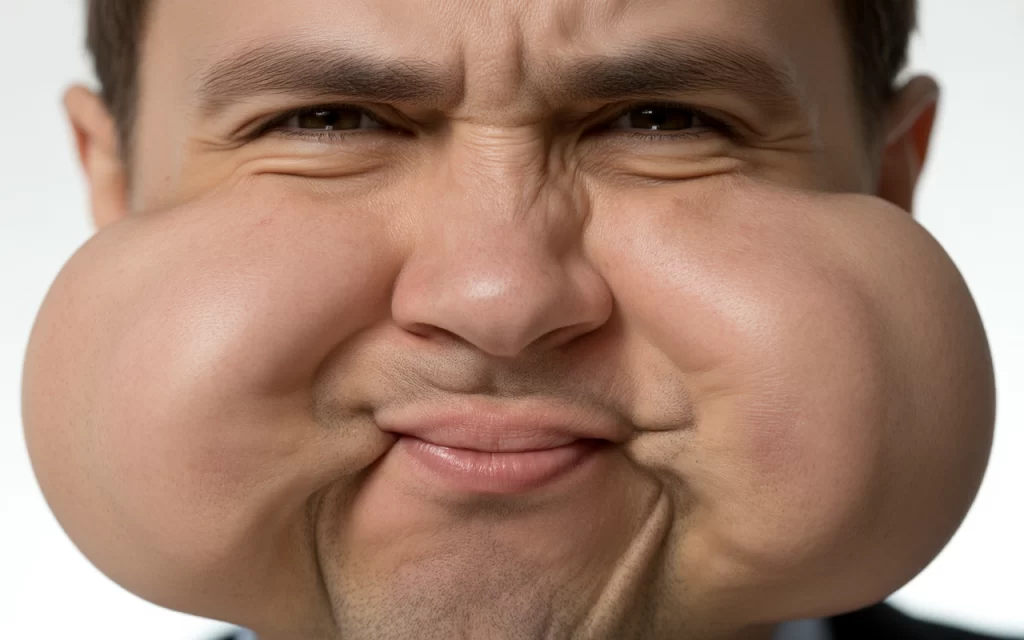
Once the helmet is on, pay close attention to how your cheeks feel. Your cheeks should be compressed noticeably – what riders often call “chipmunk cheeks.” This compression might feel unusual at first, but it’s essential for safety.
Try this test: If you can easily chew gum without biting the inside of your cheeks, the helmet is likely too loose. You should feel some pressure that makes normal chewing difficult. This compression ensures the helmet stays properly positioned during a crash.
The Shake Test: More Than Just Nodding
With the helmet securely fastened, perform the shake test:
- Fasten the chin strap properly (snug but not choking)
- Vigorously shake your head from side to side and up and down
- Place your hands on the helmet and try to rotate it
The helmet should move your skin with it, not slide independently across your scalp. Any significant movement indicates a helmet that’s too large – and potentially dangerous in a crash scenario.
The Roll-Off Test: Critical for Safety
This often-overlooked test checks if your helmet could roll forward in a crash:
- Fasten the chin strap securely
- Place your palm under the back edge of the helmet at your neck
- Push upward and forward with moderate force
If the helmet easily rolls forward over your eyes or off your head, it fails this crucial safety test. A helmet that rolls off in this test could do the same during an impact – leaving you unprotected when you need it most.
Common Fitting Mistakes to Avoid
- The “Hat” Mentality: Thinking a helmet should feel as comfortable as a hat (it should be snugger)
- Ignoring Pressure Points: Dismissing uncomfortable spots that could become painful after miles on the road
- The “It’ll Break In” Excuse: While padding will compress slightly, a helmet that’s too large will never shrink to fit
- Choosing Style Over Fit: Selecting a helmet because of graphics or brand, despite poor fitment
- Rushing the Process: Not taking adequate time to evaluate the fit (more on this in the next section)
Remember, initial snugness is expected and necessary. The helmet should feel uniformly tight around your entire head without any specific painful pressure points. The difference between “comfortably snug” and “painfully tight” is subtle but important – and we’ll explore this more in the next section.
Signs Your Helmet Is Too Loose
Watch for these warning signals during your fitting:
- The helmet rotates freely on your head with minimal resistance
- There’s visible space between your cheeks and the padding
- You can fit more than one finger between your forehead and the padding
- The helmet shifts position when you lean forward
- The chin bar sits more than an inch from your chin
- You feel the helmet “float” slightly at highway speeds
Remember, a helmet that’s too loose can come off during a crash, rendering its protective capabilities useless. It’s always better to start with a helmet that feels slightly too snug than one that feels immediately comfortable. The right helmet will form to your head shape over time, but it can never shrink to accommodate a too-loose fit.
Step 4: The 30-Minute Rule
If you’ve found a helmet that passes the initial fit tests, congratulations—but don’t rush to the checkout counter just yet. The 30-minute rule is a crucial step that many riders skip, only to regret it later.
Why Pressure Points Take Time to Reveal Themselves
Your brain is remarkably adaptable. When you first put on a helmet, it registers the new sensations but can temporarily ignore mild discomfort. This neurological adaptation is why pressure points often don’t become painful until you’ve worn the helmet for 20-30 minutes. What feels “fine” in the store can become unbearable during a long ride.
Think about the last time you wore new shoes—they might have felt okay in the store, but after walking for half an hour, those minor rubs turned into painful blisters. Helmets work the same way.
How to Conduct the 30-Minute Test
Here’s how to properly test your helmet’s comfort:
- Put the helmet on completely – Secure the chin strap as you would while riding
- Find a distraction – Watch TV, read a book, or do household chores
- Set a timer for 30 minutes – Don’t remove the helmet before time is up
- Move your head naturally – Turn to look around occasionally as you would on a bike
- Take mental notes – Pay attention to any areas that start to feel uncomfortable
If possible, conduct this test at the dealership or store. Most reputable motorcycle gear shops will understand and accommodate this request.
Snug vs. Pain: Knowing the Difference
A properly fitting helmet should feel snug everywhere, with no gaps between your head and the padding. However, there’s a critical difference between proper snugness and problematic pressure:
- Good snugness feels like: Even pressure all around, firm cheek contact, secure fit without movement
- Problematic pain feels like: Sharp pressure points, throbbing, headache development, temples being squeezed, forehead or back of head hot spots
Remember: A new helmet should feel snug but not painful. If you develop a headache, feel sharp pressure at your temples, or experience pain at the forehead or crown, these are warning signs of an improper fit.
The interior padding will compress approximately 15-20% over time, so some initial tightness is expected. However, no amount of “breaking in” will fix genuine pressure points caused by the wrong head shape.
If you complete the 30-minute test without discomfort, you’ve likely found a helmet that matches your head shape properly—a critical victory in your quest for the perfect helmet.
If you find your helmet is causing pain because it’s too heavy, you might need to look at lighter options. See our comparison of Carbon Fiber vs. Polycarbonate Helmets.
Dealing with Glasses and Hair
Wearing a properly fitting helmet isn’t just about head shape and size—it’s also about accommodating what you wear on your face and how you style your hair. Both glasses and hairstyles can significantly impact helmet fit and comfort.
For Glasses Wearers
If you wear prescription glasses or sunglasses while riding, you’ll need to consider this when selecting a helmet. Look for these features:
- Glasses grooves: Many modern helmets include special channels in the padding designed to accommodate eyewear temples without creating pressure points
- Eyewear installation technique: Always put your helmet on first, then slide your glasses in afterward—never the other way around
- Test before buying: When trying on helmets, bring your riding glasses to ensure they fit comfortably
- Check out our list of the Best Helmets for Glasses Wearers
How Hairstyles Affect Helmet Fit
Your hairstyle can dramatically change how a helmet fits, potentially compromising safety if not addressed properly:
- Volume changes: Hair creates volume that compresses under a helmet, meaning your actual fit may change depending on your hairstyle
- Pressure points: Certain hairstyles create uneven pressure distribution, leading to headaches or hot spots
- Fit inconsistency: A helmet that fits perfectly with one hairstyle might be dangerously loose with another
Recommended Ways to Wear Long Hair
For riders with longer locks, how you wear your hair can make all the difference in comfort and safety:
- Wear it down: The simplest solution is wearing your hair down inside the helmet, though this can lead to tangles
- Low ponytail or braid: Position any gathering of hair at the nape of your neck, below where the helmet ends
- Hair nets or caps: Some riders use thin skull caps or hair nets to keep hair contained without adding significant bulk
Avoid These Hairstyle Mistakes
Never wear these styles with a motorcycle helmet:
- Buns or top knots: These create a dangerous gap between your head and the helmet liner
- High ponytails: These create pressure points and prevent proper helmet positioning
- Thick headbands: These alter the fit of the helmet and create uneven pressure
- Hair clips or hard accessories: These can cause painful pressure points or even become dangerous in a crash
Braiding Techniques for Helmet Comfort
Braids are often the best solution for riders with long hair:
- French braids: Keep hair flat against the head while preventing tangling
- Dutch braids: Similar to French braids but with an inverted technique that keeps hair even closer to the scalp
- Side braids: Can work well but ensure they don’t create pressure points at the temples
- Fishtail braids: While decorative, they’re also functional for keeping hair contained at the nape of the neck
Remember that whatever hairstyle you choose, your helmet should still pass all the fit tests mentioned earlier. If changing your hairstyle dramatically affects how your helmet fits, you may need to reconsider either your hairstyle strategy or potentially look into a different helmet model that better accommodates your preferred hair arrangement.
Breaking In: The 15% Rule
When you first try on a motorcycle helmet, it should feel noticeably snug—almost uncomfortably so. This isn’t a mistake; it’s by design. Helmet manufacturers build their products with the knowledge that padding will compress over time, creating what industry professionals call “the 15% rule.”
New helmet padding is at its maximum thickness when you first purchase it. As you wear the helmet, your body heat, oils from your skin, and the consistent pressure of your head against the padding cause it to compress. This compression typically reduces the padding thickness by approximately 15% during the first few months of regular use.
If your helmet feels “perfectly comfortable” right out of the box, this is actually a warning sign. Once that 15% compression occurs, your helmet will become too loose, potentially compromising its safety effectiveness and creating dangerous movement during a crash.
Different helmet materials break in at different rates:
- Foam padding helmets (most common): These typically take 15-20 hours of wear time to break in properly, which usually translates to about 1-2 months for the average rider.
- Memory foam helmets: These adapt more quickly to your head shape, often breaking in within 8-12 hours of wear time, but they also tend to compress more over the long term.
- Premium helmets with multi-density padding: High-end models from manufacturers like Arai and Shoei use varying densities of padding that break in at different rates. The initial softening might occur within 10 hours, but the complete break-in process can take up to 30-40 hours of wear.
During the break-in period, you might experience some discomfort, but there should never be painful pressure points. The difference between “snug” and “painful” is crucial—snug means even pressure all around your head, while pain indicates a potential mismatch in head shape or size.
A properly breaking-in helmet will gradually become more comfortable while maintaining its protective fit. If after several rides your helmet still causes pain or headaches, it’s likely the wrong shape for your head rather than simply needing more break-in time.
Remember: You’re buying the helmet for how it will fit after break-in, not how it feels in the store. A helmet that starts slightly too tight will become perfect; a helmet that starts perfect will become dangerously loose.
Can You Change the Fit? Customizing Your Helmet’s Interior
Most riders don’t realize that motorcycle helmets aren’t always a “take it or leave it” proposition when it comes to fit. Many premium and even mid-range helmets offer customization options that can transform an almost-right helmet into your perfect match.
The primary way to adjust your helmet’s fit is through interchangeable padding, particularly cheek pads. Brands like Shoei, Arai, AGV, and Bell lead the industry with modular interior systems that allow you to fine-tune your fit without buying a completely new helmet.
Cheek Pad Customization: The Easy Fix
Cheek pads are the most commonly swapped components, and for good reason. If your helmet feels perfect around the crown but squeezes your face too tightly (or conversely, leaves your cheeks with too much wiggle room), swapping cheek pads can solve the problem.
Most premium helmets offer cheek pads in multiple thicknesses, typically ranging from 20mm to 40mm. For example, if your Shoei RF-1400 comes with 35mm cheek pads but feels too tight, you might try the 30mm or 25mm version for more comfort without compromising safety.
The process is usually straightforward:
- Cheek pads typically snap in and out with minimal effort
- They’re often sold separately as replacement parts
- Many dealers keep various thicknesses in stock for fitting purposes
The Limitation: Head Liners Can’t Always Be Changed
Here’s where customization hits its limit: while cheek pads can be easily swapped, the crown fit (controlled by the head liner) is much less adjustable in most helmets.
This underscores why getting the correct head shape is crucial from the start. If your helmet is pressing painfully against your forehead but has space at the sides, no amount of padding swaps will correct that fundamental shape mismatch.
Some high-end manufacturers like Arai do offer limited head liner customization options, but these are exceptions rather than the rule. This is precisely why we emphasized determining your head shape before even looking at sizing charts.
Brands with the Best Customization Options
If fit customization is important to you, consider these brands:
- Arai: Offers the most comprehensive interior customization system, with multiple pad thicknesses and even different interior shell shapes
- Shoei: Excellent cheek pad options and some crown liner adjustability in higher-end models
- Bell: Their “Transitions” liner system allows for good cheek pad customization
- AGV: Offers “Customfit” interior systems on premium models with removable, washable, and replaceable components
Remember that while padding can be adjusted, it can’t fundamentally change the helmet’s internal shape. You’re adjusting the padding thickness, not redesigning the helmet’s ergonomics. This is why finding the right shape first, then the right size, and only then considering pad adjustments is the correct sequence for perfect helmet fitment.
Troubleshooting Common Fitment Issues
Even when you think you’ve found the perfect helmet, you might encounter some unexpected issues once you hit the road. These problems often reveal themselves during actual riding conditions rather than in the store. Let’s address some of the most common fitment issues riders face and how to solve them.
Helmet Lifting at High Speeds
If your helmet starts to lift or feels like it might come off when you’re riding at highway speeds, this is a serious safety concern that needs immediate attention.
The Problem: When air catches under the chin or around the neck area of your helmet, it creates lift – similar to how an airplane wing works. This indicates your helmet is too loose or the wrong shape for your head.
The Solution:
- Try a smaller shell size or thicker padding
- Check that the chin strap is properly tightened
- Consider a helmet with better aerodynamics
- Make sure the neck roll fits snugly against your neck
- Some helmets have adjustable spoilers that can reduce lift
Forehead Pressure Points
A red mark or pain across your forehead after riding is one of the most common fitment issues.
The Problem: Your head shape is likely more “long oval” than the helmet you’ve chosen, which is probably too “round oval” for you.
The Solution:
- Try a helmet brand that caters to longer head shapes (Arai Signet-X, AGV)
- Don’t size up thinking it will solve the problem – it won’t
- If the pressure is only slight, the helmet may break in over time
- Some premium helmets offer optional thinner forehead pads
Ear Pain or Folding
If your ears get folded or crushed when putting on the helmet or hurt during rides, this can be extremely uncomfortable.
The Problem: Either the ear pockets in the helmet are too shallow for your ears, or the helmet is too narrow at the sides.
The Solution:
- When putting on the helmet, use your fingers to pull your ears straight out before sliding the helmet down
- Look for helmets with deeper ear recesses
- Consider helmets designed for “intermediate oval” head shapes if you have prominent ears
- Some helmets have removable ear pads that can be replaced with thinner ones
Neck Strain and Fatigue
A helmet that causes neck pain during or after rides can make even short trips unbearable.
The Problem: The helmet is likely too heavy for your neck strength, or the weight distribution is causing strain.
The Solution:
- Consider a lighter helmet material like carbon fiber or fiberglass composite
- Check helmet balance – weight should be centered, not front or rear-heavy
- Strengthen neck muscles with simple exercises
- Make sure your riding position isn’t forcing you to hold your head at an unnatural angle
Cheek Pressure Too Intense
If your cheeks feel uncomfortably compressed or you can’t talk clearly, the cheek pads might be too thick.
The Problem: The helmet’s cheek pads are too thick for your facial structure.
The Solution:
- Most quality helmet manufacturers sell thinner replacement cheek pads
- The pads will naturally compress about 15-20% over time
- If you can’t easily chew gum but aren’t in pain, it’s probably the correct fit and will break in
Helmet Feels Secure But Causes Headaches
This tricky situation often confuses riders – the helmet seems to fit well but causes headaches after 30+ minutes.
The Problem: There’s likely pressure on a specific part of your head that isn’t immediately noticeable.
The Solution:
- Try different brands with slightly different internal shapes
- Wear the helmet at home for an hour to identify exactly where the pressure occurs
- Consider a custom liner if you’re committed to that particular helmet
- Check that your helmet isn’t sitting too low on your forehead
Remember that no amount of “breaking in” will fix a fundamentally wrong shape for your head. Minor pressure points may resolve as padding compresses, but significant discomfort means you need a different helmet. Your safety and comfort are worth the extra time it takes to find the perfect fit.
Signs Your Helmet No Longer Fits Properly
Even the perfect-fitting helmet won’t stay that way forever. Over time, several factors can change how your helmet fits, potentially compromising your safety. Here’s how to recognize when your trusty lid is no longer providing the protection you need:
Excessive Movement
If your helmet shifts easily on your head or rotates with minimal force, it’s a clear warning sign. When properly fitted, a helmet should move your skin when you try to rotate it—not slide independently. If you can rotate your helmet side-to-side while your head remains stationary, the fit has deteriorated.
Pressure Point Relief
Did those snug cheek pads that once made you look like a chipmunk suddenly feel comfortable? That’s not a good thing. When helmet padding compresses too much, those once-tight spots become loose. If you can chew gum comfortably or talk without feeling your cheeks press against your teeth, your helmet has broken in too much.
The Gaps Test
Run your fingers around the helmet’s perimeter where it meets your face. You shouldn’t be able to insert your fingers between the helmet and your forehead or cheeks. If gaps have developed, your helmet’s protective cocoon has been compromised.
Impact of Weight Changes on Fit
Your body weight fluctuations directly affect your face and head dimensions. A weight loss of just 10-15 pounds can significantly change your facial structure, causing your once-snug helmet to become dangerously loose. Conversely, weight gain can make a previously comfortable helmet painfully tight.
Many riders don’t realize that seasonal weight changes or fitness regimens can require helmet adjustments. If you’ve recently lost weight, consider whether you need thicker cheek pads to maintain proper fit.
When Padding Compression Becomes a Safety Issue
Helmet comfort foam naturally compresses with use—it’s designed to conform to your face. However, there’s a tipping point where this becomes dangerous:
- 20% Rule: Industry experts suggest that when your helmet’s padding has compressed by about 20% of its original thickness, it’s time for replacement.
- The “Two-Finger” Warning: If you can easily fit two fingers between your cheeks and the helmet padding, the compression has reached a critical point.
- Age Matters: Even with perfect care, EPS (expanded polystyrene) foam degrades over time. After 5-7 years, the protective qualities diminish regardless of visible wear.
Remember: A helmet that’s comfortable the moment you put it on after months of use is probably too loose to protect you properly in a crash. Safety equipment should feel slightly restrictive—that’s how you know it’s doing its job.
Riding Style and Position: How They Affect Helmet Fit
Your riding style and the position you maintain on your motorcycle significantly impact what makes a helmet fit “right” for you. A one-size-fits-all approach simply doesn’t work across different motorcycle disciplines.
Sport Riding Fitment Priorities
Sport riders spend much of their time in a tucked position, with their head tilted upward while looking forward. This creates unique fitment requirements:
- The helmet should be snug at the crown but with slightly more room at the forehead
- The eye port needs to be positioned higher in your field of vision
- A more aerodynamic shell design reduces neck fatigue at high speeds
- Ventilation becomes crucial as the intense riding style generates more heat
Sport helmets typically have a more aggressive fitment that might feel uncomfortable when standing straight but becomes perfect in a tucked riding position.
Touring Fitment Considerations
Long-distance riders prioritize different aspects of helmet fit:
- More balanced pressure distribution for all-day comfort
- Slightly looser cheek pads to accommodate talking, drinking, or eating without removal
- Enhanced noise reduction features as wind noise fatigue becomes significant on long rides
- Room for communication systems without creating pressure points
- Ventilation that works effectively at consistent highway speeds
Touring riders should perform their fitment tests while sitting upright on their motorcycle rather than standing in a store.
Off-Road Helmet Fitment
Dirt and adventure riders face unique challenges:
- More vertical head movement requires secure fitment to prevent the helmet from bouncing
- Wider eye ports mean goggles must fit perfectly within the helmet’s opening
- Enhanced ventilation to manage higher exertion levels
- Room for a hydration tube if needed
- Slightly looser fit around the jaw to accommodate heavier breathing during physical riding
Off-road helmets should be tested with goggles on, as this can dramatically change the fit and pressure points.
Adjusting for Your Riding Position
Your natural riding position affects how a helmet sits on your head:
- Cruiser riders (upright with head straight): Standard fitment works well
- Sport riders (tucked): Test the helmet while mimicking your riding position—the helmet should feel slightly tight at the back when standing
- Adventure riders (standing on pegs): The helmet shouldn’t shift when you transition from sitting to standing
Remember to simulate your typical riding position during the try-on process. A helmet that feels perfect while standing in a store might create pressure points or visibility issues in your actual riding position.
The right fit isn’t just about measurements—it’s about how the helmet performs in the position you’ll be using it most.
Conclusion: Safety Starts With the Perfect Fit
Finding the right motorcycle helmet isn’t just about style or brand—it’s about safeguarding your most valuable asset: your brain. Throughout this guide, we’ve walked through the critical steps to ensure your helmet fits correctly, from understanding your unique head shape to performing the essential fit tests.
Remember these key takeaways:
- Shape before size: Your head shape (Long Oval, Intermediate Oval, or Round Oval) is the foundation of proper helmet fit. No amount of adjusting can fix a helmet that’s fundamentally the wrong shape for your head.
- Snug, not painful: A new helmet should feel snug—even slightly tight—as it will break in over time. If you’re experiencing sharp pain or headaches, that’s not normal break-in discomfort.
- The 15% rule: Expect your helmet to loosen by about 15% as the padding compresses. What feels perfect in the store will likely be too loose after a month of riding.
- Test thoroughly: The shake test, roll-off test, and 30-minute wear test are all crucial steps before committing to a helmet.
Now that you understand how to find your perfect fit, you’re ready to explore specific helmet styles that match your riding needs. Whether you’re looking for the versatility of a modular helmet for touring or the maximum protection of a quality full-face for daily commuting, your next helmet purchase will be informed by proper fitment knowledge.
Remember—the most expensive, highest-rated helmet in the world becomes worthless if it doesn’t stay on your head during impact. Take the time to get this right. Your life may quite literally depend on it.
Found your size? Now you’re ready to pick a style. Check out our list of the Best Modular Helmets for touring or Best Full Face Helmets for maximum safety.
FAQs About Motorcycle Helmet Fitment
How tight should a motorcycle helmet feel when new?
A new helmet should feel snug all around your head with noticeable cheek compression, making it slightly difficult to chew. If it feels perfectly comfortable immediately, it’s likely too large and will become dangerously loose as the padding compresses by about 15% over time.
Can I wear my hair in a bun under my motorcycle helmet?
No, never wear a bun or high ponytail inside your helmet as this creates a dangerous gap between your head and the helmet liner, compromising safety. Wear your hair down or in a low braid positioned at the nape of your neck, below where the helmet ends.
Why does my helmet cause pressure on my forehead but not on the sides?
This indicates your head shape is likely long oval while the helmet you’re trying is designed for a rounder head shape. You need a helmet specifically designed for long oval heads, such as most Arai models, rather than trying to adjust the size.
How do I know if my helmet is the wrong shape for my head?
After wearing the helmet for 20-30 minutes, check for red marks or hot spots. A red mark on your forehead means the helmet is too round for your long oval head, while pressure at your temples indicates the helmet is too narrow for your round oval head shape.
Should I buy a smaller or larger size if I’m between two helmet sizes?
Generally, choose the smaller size since helmet padding will compress by approximately 15-20% over the first few months of use. A helmet that starts slightly too snug will become perfect, while one that starts perfect will become dangerously loose.
How long does it take for a motorcycle helmet to break in?
Most foam padding helmets take 15-20 hours of wear time to break in properly, typically 1-2 months for average riders. Memory foam helmets break in faster at 8-12 hours, while premium multi-density padding helmets may take 30-40 hours to fully conform to your head.
Can I make my helmet fit better by changing the padding?
You can swap cheek pads for thinner or thicker options in most quality helmets to adjust facial fit, but you generally cannot change the crown liner that determines overall head shape fit. Padding adjustments work for fine-tuning, not fixing fundamental shape mismatches.
How do I put on a helmet if I wear glasses?
Always put your helmet on first, then slide your glasses in afterward. Look for helmets with dedicated eyewear channels or grooves in the padding that allow your glasses’ temples to sit comfortably without creating painful pressure points against your head.
What does it mean if my helmet lifts at highway speeds?
Helmet lift at high speeds is a serious safety concern indicating your helmet is too loose or the wrong shape for your head. The solution is to try a smaller shell size, ensure your chin strap is properly tightened, or choose a helmet with better aerodynamics and a snug neck roll.
How often should I replace my motorcycle helmet even if it still fits?
Replace your helmet every 5-7 years even without visible damage, as the protective EPS foam degrades over time. Also replace it immediately if you’ve had any impact, if the padding has compressed more than 20% of its original thickness, or if significant weight changes have altered the fit.