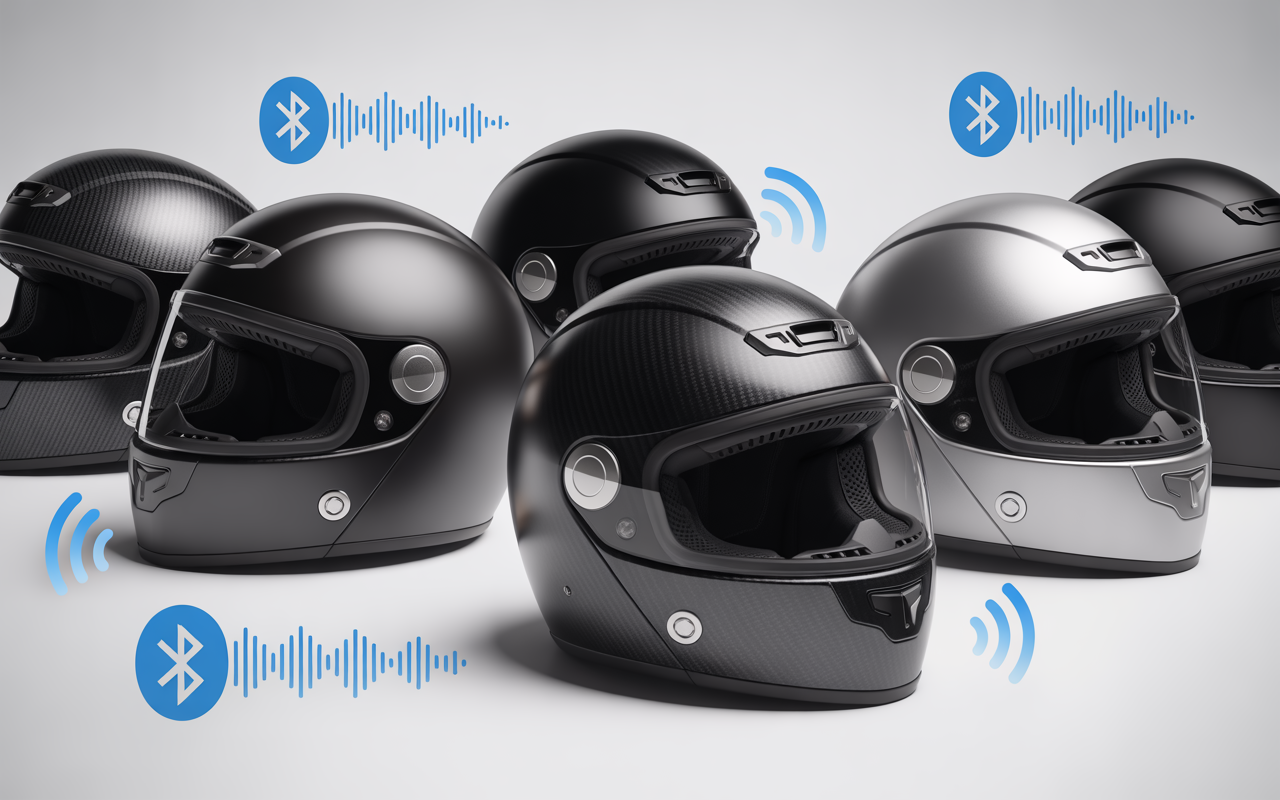
There’s nothing quite like the freedom of the open road on your motorcycle – the wind in your face, the rumble of the engine beneath you, and the uninterrupted connection with your surroundings. But let’s be honest: sometimes you need to hear that crucial GPS direction, take an important call from work, or simply enjoy your favorite playlist as you carve through those back roads.
For years, the solution has been clip-on Bluetooth communication systems – those bulky units you attach to the side of your helmet. While functional, they come with drawbacks: messy wires hanging everywhere, awkward external mounting that affects aerodynamics, and often amplified wind noise that can make communication difficult at highway speeds.
Enter the integrated Bluetooth motorcycle helmet – the elegant solution to staying connected while riding. These helmets come with communication systems built right into their design, offering sleek, aerodynamic profiles with no external components to worry about. They’re ready to rock straight out of the box, with speakers, microphones, and controls thoughtfully positioned for the optimal riding experience.
In this comprehensive guide, we’ll explore the best Bluetooth motorcycle helmets on the market in 2023, covering options for every budget and riding style. Whether you’re a daily commuter who needs clear GPS directions, a group rider wanting to chat with your pack, or a touring enthusiast who can’t miss those important calls, we’ve got you covered. For a broader overview of motorcycle helmet technology and options, check out our Ultimate Guide to Motorcycle Helmets.
From premium models with concert-quality sound to budget-friendly options that won’t break the bank, we’ll help you find the perfect helmet to keep you safely connected on every ride. Let’s dive in!
Integrated vs. Ready: Understanding Bluetooth Helmet Technology
When shopping for a Bluetooth motorcycle helmet, you’ll encounter two terms that can cause significant confusion: “Bluetooth Integrated” and “Bluetooth Ready.” Understanding the difference is crucial to avoid disappointment when you open the box.
Bluetooth Integrated helmets come with the complete communication system already built into the helmet shell. The speakers, microphone, battery, and control unit are all pre-installed and ready to use right out of the box. You simply charge the system, pair it with your phone, and you’re ready to ride. These helmets offer a cleaner look with no need for additional purchases or installation headaches.
Bluetooth Ready (sometimes called “Bluetooth Prepared”) helmets are designed with recesses or cutouts to accommodate aftermarket communication systems, but they don’t include the actual Bluetooth unit. These helmets have speaker pockets and microphone channels but require you to purchase and install a compatible communication system separately. While the helmet is designed to work seamlessly with specific systems (like Sena or Cardo), the technology itself is not included.
This distinction matters tremendously for your wallet and expectations. A “Bluetooth Ready” helmet might seem like a great deal until you realize you need to spend an additional $200-$300 on the communication system itself. Many riders have been disappointed after purchasing what they thought was a complete solution, only to discover they bought just the helmet.
A common misconception is that “Bluetooth Ready” means the helmet has some basic Bluetooth functionality. It doesn’t—it simply means the helmet is prepared for you to add Bluetooth later. Another misconception is that integrated systems are always inferior to add-on systems. While this was once true, many modern integrated helmets now feature technology from leading communications brands like Sena and offer excellent performance.
Before making your purchase, always check the product description carefully to confirm whether you’re getting a fully integrated system or just a helmet designed to accept aftermarket communications.
Quick Summary: 7 Best Motorcycle Helmets with Bluetooth
| Helmet Model | Best For | Check Price |
| 1. Sena Impulse | Best Overall Smart Modular | Check Price |
| 2. Sena Stryker | Best Smart Full-Face | Check Price |
| 3. BILT Techno 3.0 | Best Budget Option | Check Price |
| 4. Sedici Strada II Parlare | Best Integrated Street Helmet | Check Price |
| 5. Sena Outrush R | Best for Commuting | Check Price |
| 6. Shoei Neotec 3 | Premium Modular Choice | Check Price |
| 7. Shoei GT-Air 3 | Premium Sport-Touring | Check Price |
1. Sena Impulse: The Ultimate Bluetooth Ride
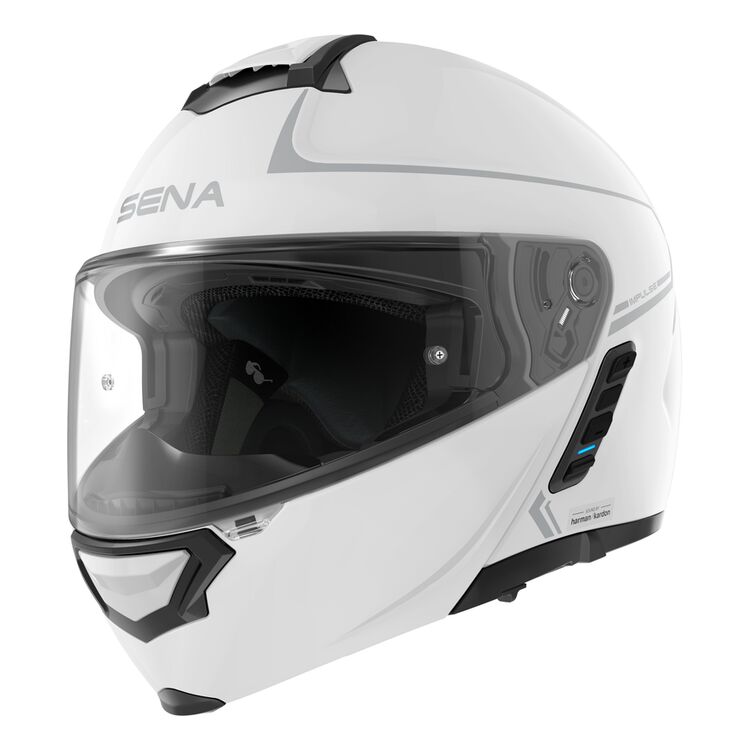
When it comes to integrated Bluetooth motorcycle helmets, the Sena Impulse stands head and shoulders above the competition. As our top pick, this helmet represents the perfect marriage of cutting-edge communication technology and premium protection.
Why It’s Our #1 Pick
The Sena Impulse earns its crown as our top recommendation because it’s created by Sena themselves—the undisputed leader in motorcycle communication systems. Rather than partnering with a helmet manufacturer, Sena has designed their own helmet from the ground up, ensuring that every aspect of the communication system works in perfect harmony with the helmet’s structure.
The result is a helmet that doesn’t just accommodate Bluetooth technology but is fundamentally built around it. This integration eliminates the common pain points riders experience with aftermarket systems: no awkward mounting, no exposed wires, and no compromises on aerodynamics.
Key Features
Mesh 2.0 Intercom Technology: The Impulse features Sena’s latest Mesh 2.0 technology, allowing you to connect with virtually unlimited riders within a 1-mile range. Unlike traditional Bluetooth that requires pairing each device individually, Mesh creates a dynamic network that riders can join and leave seamlessly.
Harman Kardon Speakers: This isn’t your average helmet audio system. Sena partnered with audio giant Harman Kardon to deliver truly exceptional sound quality. The speakers deliver rich bass and crystal-clear highs that remain impressive even at highway speeds.
Voice Command System: Keep your hands on the handlebars where they belong. The Impulse responds to voice commands like “Hey Sena, play music” or “Hey Sena, call home,” and even integrates with your phone’s voice assistant for expanded functionality.
Smart Noise Control: Advanced algorithms automatically adjust volume based on ambient noise levels, ensuring you can hear your music or calls without blasting your eardrums at stops.
LED Tail Light: A thoughtful safety feature that increases visibility to vehicles behind you, especially during night riding or in low-light conditions.
Premium Construction: The Impulse doesn’t skimp on protection, featuring a fiberglass composite shell that meets both DOT and ECE certifications.
Pros
- Industry-leading sound quality that rivals dedicated headphones
- Exceptionally easy device pairing and group connectivity
- Intuitive controls that work well even with gloved hands
- Impressive 12-hour battery life
- Aerodynamic shell designed to reduce wind noise
- Multiple ventilation channels for comfort in hot weather
- Quick-release visor system
Cons
- Premium price point that may be prohibitive for some riders
- Slightly heavier than non-Bluetooth helmets in the same class
- Limited color options compared to some competitors
Final Verdict
The Sena Impulse represents the gold standard for integrated Bluetooth motorcycle helmets. While the price tag is undeniably steep, the seamless technology integration, superior sound quality, and robust feature set deliver exceptional value for serious riders who demand the best.
For group riders, music enthusiasts, or daily commuters who rely on navigation, the Impulse’s combination of connectivity, comfort, and protection makes it the ultimate all-in-one package. If your budget allows, this helmet will transform your riding experience from the moment you put it on.
2. Sena Stryker: A Tech Marvel for Modern Riders
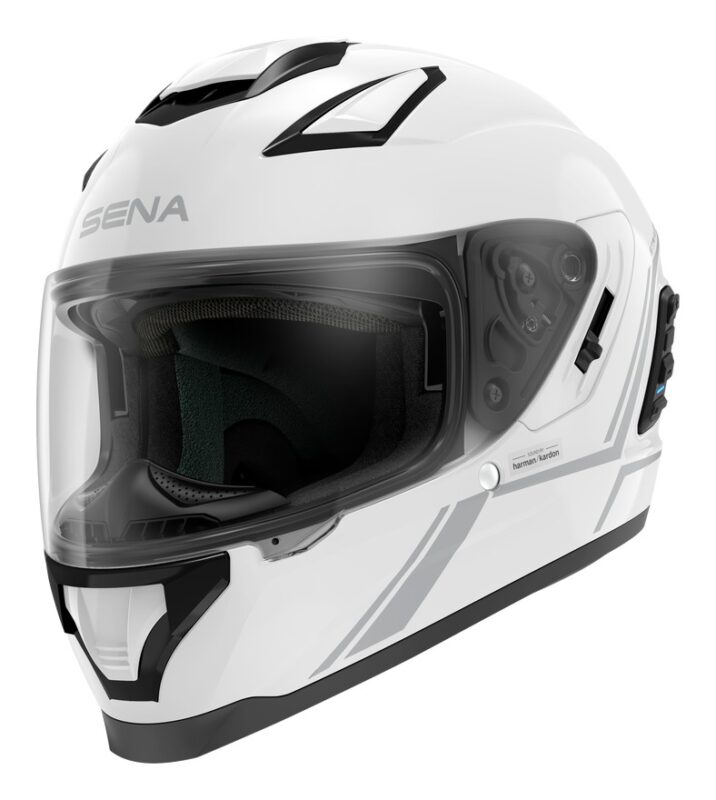
The Sena Stryker represents the pinnacle of integrated Bluetooth helmet technology, combining Sena’s audio expertise with premium helmet construction. Unlike aftermarket communication systems that create bulk and aerodynamic drag, the Stryker offers seamless integration that maintains the helmet’s sleek profile while delivering exceptional connectivity.
Distinctive Features Compared to the Impulse
While both the Stryker and Impulse come from Sena’s premium lineup, the Stryker distinguishes itself with several key advantages. The Stryker features Sena’s advanced Mesh 2.0 Intercom technology, allowing riders to connect with virtually unlimited companions within a 1.2-mile range. This “always-on” network automatically reconnects riders who drift out of range once they return to proximity.
The helmet incorporates premium Harman Kardon speakers that deliver rich, immersive sound even at highway speeds. Voice command functionality lets you control music, take calls, and access your phone’s voice assistant without removing your hands from the handlebars—a critical safety feature for focused riding.
Perhaps most innovative is the integrated LED taillight on the rear of the helmet, providing an additional safety element that increases rider visibility, especially in low-light conditions.
Pros and Cons
Pros:
- Premium sound quality with impressive bass response
- Intuitive jog dial control system that works with gloved hands
- Excellent noise cancellation for clear communication
- Seamless Mesh Intercom connectivity for group rides
- Built-in safety features like the LED taillight
- Aerodynamic shell with minimal wind noise
- 12+ hour battery life for all-day connectivity
Cons:
- Higher price point than many competitors
- Slightly heavier than non-Bluetooth helmets
- Limited colorway options compared to other premium helmets
- Requires learning curve to master all functions
When to Choose This Over the Impulse
The Stryker makes the most sense for riders who prioritize group communication and premium audio quality. If you frequently ride with companions and want hassle-free connectivity with crystal-clear sound, the Stryker’s Mesh 2.0 system justifies the investment.
Choose the Stryker over the Impulse if you’re a tech-forward rider who values having the latest communication features and appreciates the added safety of the LED taillight. The Stryker also tends to offer slightly better wind noise reduction at highway speeds, making it ideal for touring riders who spend long hours on the road.
For daily commuters who need reliable GPS directions and occasional music, the Impulse might provide better value. But for those who view their helmet as a long-term investment in both safety and riding enjoyment, the Stryker delivers the most complete package of Sena’s cutting-edge technology.
3. BILT Techno 3.0: Best Budget Bluetooth Helmet
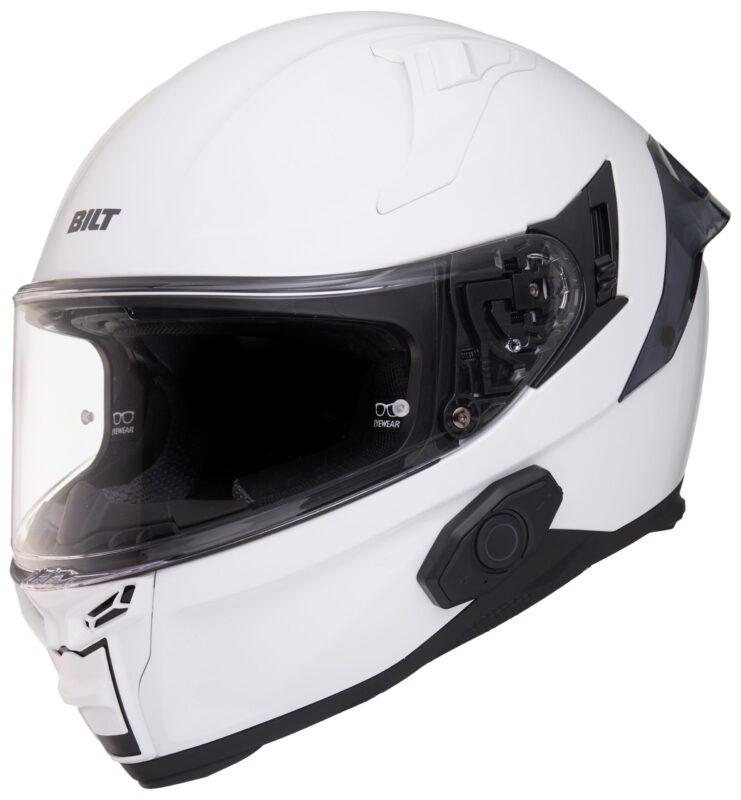
For riders who want Bluetooth connectivity without breaking the bank, the BILT Techno 3.0 delivers impressive functionality at an accessible price point. This helmet proves that you don’t need to spend a fortune to stay connected on the road.
Why It’s Our Budget Pick
The BILT Techno 3.0 stands out in the crowded budget helmet market by incorporating reliable Bluetooth technology that would typically cost significantly more. While premium helmets with integrated communication systems can easily exceed $500, the Techno 3.0 brings this technology to riders at roughly half that price.
BILT achieves this value by partnering with Sena to integrate slightly older (but still highly functional) Bluetooth technology. This smart collaboration gives riders access to essential connectivity features without the premium price tag of cutting-edge systems.
Key Features and Technology Specs
The Techno 3.0 comes equipped with Bluetooth 3.0 technology that provides a solid communication range of up to 430 yards (400 meters) between riders. The system allows for:
- Rider-to-rider intercom functionality for up to 3 riders
- Music streaming from your smartphone
- GPS voice navigation integration
- Hands-free calling with voice commands
- Up to 8 hours of talk time and 7 days of standby time
- Simple three-button control system on the helmet’s exterior
- DOT and ECE safety certifications
- Integrated speakers and microphone
The helmet itself features a lightweight polycarbonate shell, removable and washable comfort liner, and a drop-down internal sun visor for versatility in changing light conditions.
Pros and Cons
Pros:
- Exceptional value—costs less than many standalone Bluetooth communicators
- Simple, intuitive controls that work well with gloved hands
- Solid battery life for daily commuting
- Clear audio quality for GPS directions and phone calls
- Quick charging time (approximately 2.5 hours)
- Adequate ventilation system with adjustable intake vents
Cons:
- Sound quality lacks the richness and bass response of premium audio systems
- Limited intercom range compared to Mesh-equipped helmets
- Wind noise becomes noticeable at higher speeds
- Slightly heavier than non-Bluetooth helmets in the same price range
- Bluetooth 3.0 lacks the advanced features of newer protocols
Value Proposition
The BILT Techno 3.0 is ideal for the practical rider who wants the convenience of Bluetooth connectivity without unnecessary bells and whistles. It’s particularly well-suited for:
- Daily commuters who need GPS navigation and occasional calls
- Solo riders who primarily want music streaming
- Budget-conscious enthusiasts entering the world of connected riding
- Newer riders who aren’t ready to invest in premium equipment
While it may not offer the advanced features of helmets costing twice as much, the Techno 3.0 delivers where it counts: reliable connectivity, decent comfort, and certified safety—all at a price point that makes smart helmet technology accessible to virtually any rider.
4. Sedici Strada II Parlare: The Budget-Friendly Choice
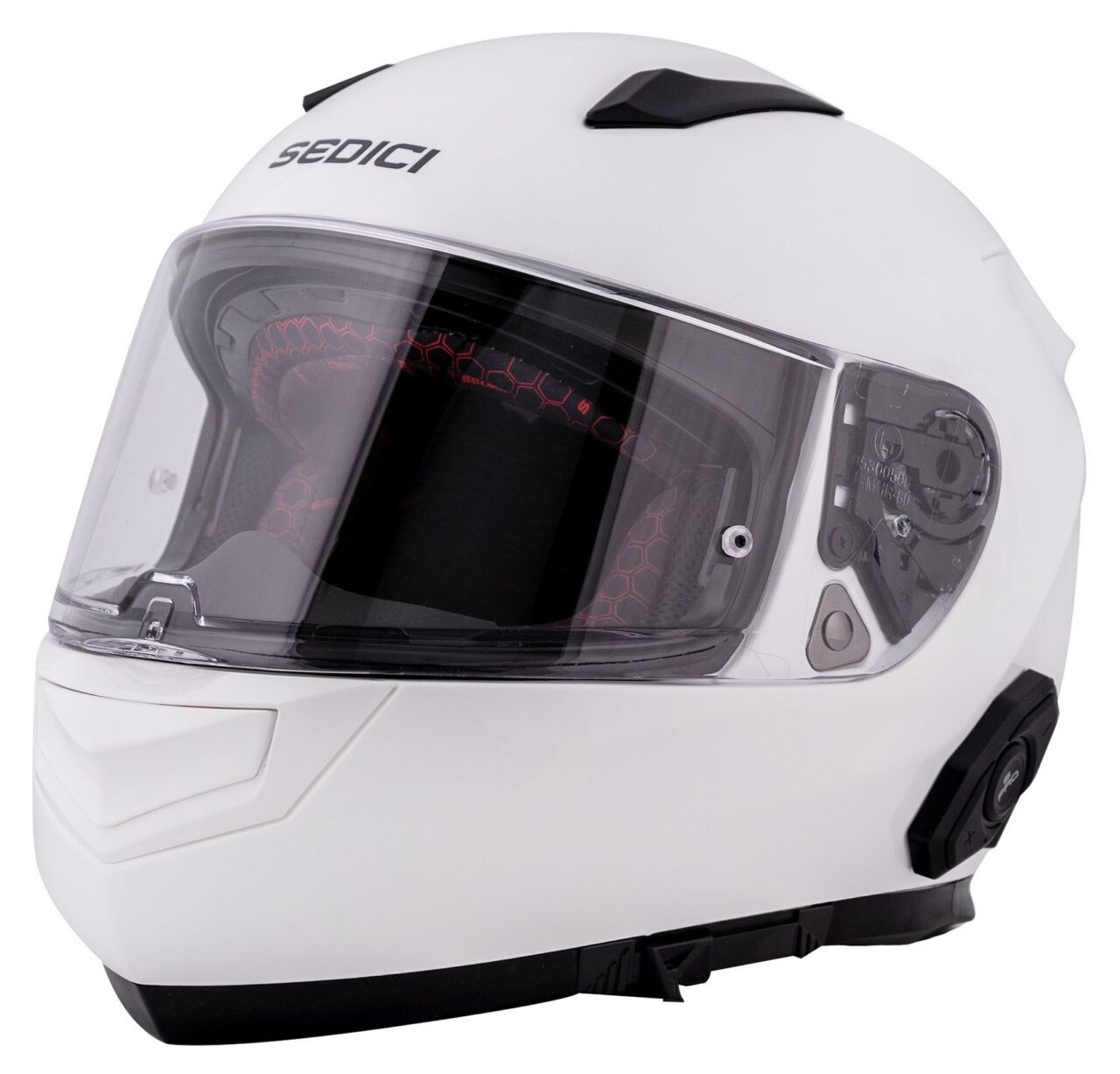
The Sedici Strada II Parlare represents an impressive value proposition in the Bluetooth helmet market. This helmet manages to pack in communication technology at a price point that won’t break the bank, making it an excellent choice for riders who want connectivity without the premium price tag.
Feature Set and Bluetooth Capabilities
The Strada II Parlare comes equipped with an integrated Bluetooth 3.0 system that provides all the essential communication features most riders need. The system offers:
- Rider-to-passenger intercom with a range of up to 400 meters
- Music streaming from your smartphone
- GPS directions
- Phone call handling with voice command capability
- Up to 8 hours of talk time and 120 hours of standby
- Simple button controls on the left side of the helmet
What’s particularly impressive about the Strada II is that it includes these features in a DOT and ECE-certified helmet that also provides solid protection. The polycarbonate shell is designed to absorb impact, while the multi-density EPS liner adds an additional layer of protection.
Pros and Cons
Pros:
- Exceptional value – costs less than many standalone Bluetooth units
- Easy-to-use interface with glove-friendly buttons
- Decent sound quality for the price point
- Good battery life for daily commuting
- Available in multiple colorways and graphics
- Includes a drop-down sun visor
Cons:
- Sound quality isn’t as rich as premium options (lacks bass depth)
- Intercom range is limited compared to Mesh-equipped helmets
- Wind noise management is adequate but not exceptional
- Bluetooth 3.0 rather than newer standards
- Slightly heavier than non-Bluetooth helmets in the same class
Who This Helmet Is Ideal For
The Sedici Strada II Parlare is perfect for the budget-conscious rider who prioritizes connectivity for solo commuting. If you primarily use Bluetooth for GPS directions, taking occasional calls, and enjoying your music playlist on your daily rides, this helmet delivers everything you need without unnecessary bells and whistles.
It’s also an excellent starter Bluetooth helmet for newer riders who aren’t ready to invest in a premium option but want to experience the convenience of integrated communications. The straightforward controls and reliable performance make it user-friendly even for those new to Bluetooth helmet technology.
For riders who frequently participate in group rides with multiple participants or who demand audiophile-quality sound, you may want to consider some of the more premium options on our list. But for everyday practicality at an accessible price point, the Strada II Parlare is difficult to beat.
5. Sena Outrush R: The Modular Commuter
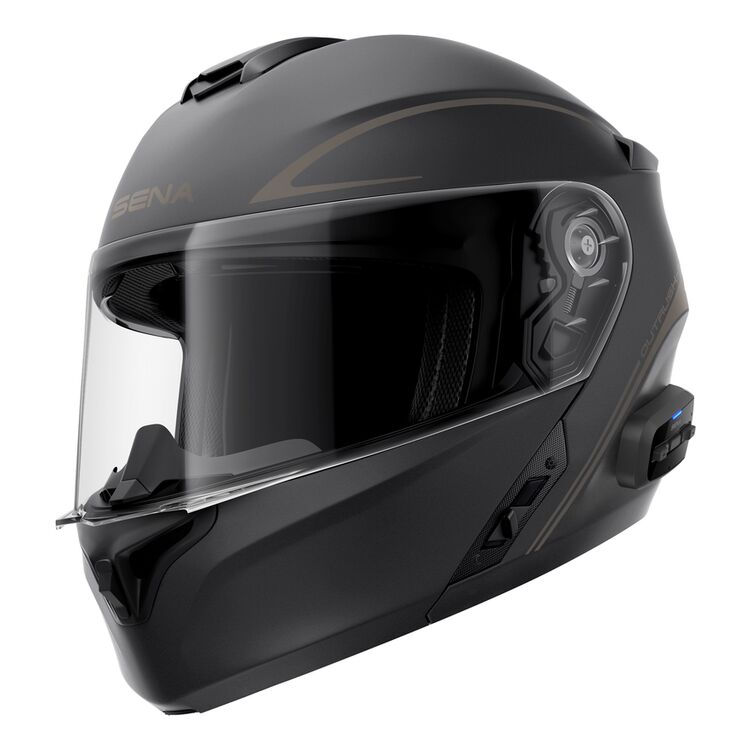
Modular helmets with integrated Bluetooth have become increasingly popular among touring riders and daily commuters for good reason. The Sena Outrush R perfectly exemplifies why this combination is so appealing.
Why Modular Helmets with Bluetooth Are Game-Changers
The flip-up design of modular helmets offers unmatched convenience for riders who need to communicate with others without removing their helmet. When paired with built-in Bluetooth technology, these helmets become essential tools for the modern rider. Touring enthusiasts particularly appreciate being able to easily talk with their passenger or grab a quick drink at rest stops without removing their protective gear.
The Sena Outrush R takes this convenience to the next level by integrating Sena’s reliable communication technology directly into a quality modular helmet. This eliminates the need for aftermarket installations that can be complicated and sometimes compromise the helmet’s safety ratings.
Key Features of the Sena Outrush R
- Flip-up chin bar: The smooth mechanism allows for easy face access at stops
- Intuitive jog-dial control: Located on the side for simple operation even with gloved hands
- Impressive 12-hour talk time: Perfect for long touring days
- Bluetooth 5.0 connectivity: Connect to your phone, GPS, and intercom with other riders
- Built-in FM radio: Enjoy music even without a phone connection
- Voice commands: Keep your hands on the handlebars where they belong
- DOT and ECE certified: Safety doesn’t take a backseat to technology
The Pros
- Exceptional battery performance: The 12-hour talk time outlasts most riding days
- Crystal-clear voice transmission: Be heard and understand others even at highway speeds
- Aerodynamic design: Less wind drag than helmets with external comm units
- Convenient modular functionality: Perfect for quick conversations, hydration, or snacks
- Simple controls: The jog dial is intuitive and easy to use with gloves
The Cons
- Not Mesh-enabled: Uses Bluetooth 5.0 only, limiting rider-to-rider range and group size
- Slightly heavier: The combination of modular design and electronics adds some weight
- Wind noise at high speeds: Common to most modular designs, though mitigated well
Verdict
The Sena Outrush R stands as the ultimate touring companion for riders who value communication and convenience. While it doesn’t offer the advanced Mesh technology found in some premium options, its practical design, reliable Bluetooth performance, and modular functionality make it perfect for couples touring or daily commuters who need to interact at stops without removing their helmet.
For riders who spend long hours in the saddle and frequently communicate with passengers or other riders, the Outrush R offers an impressive balance of features, convenience, and value that’s hard to beat in the integrated Bluetooth modular helmet category.
Love the flip-up style? See other options in our Best Modular Helmets guide.
6. Shoei GT-Air 3: The Premium Sport-Touring Benchmark
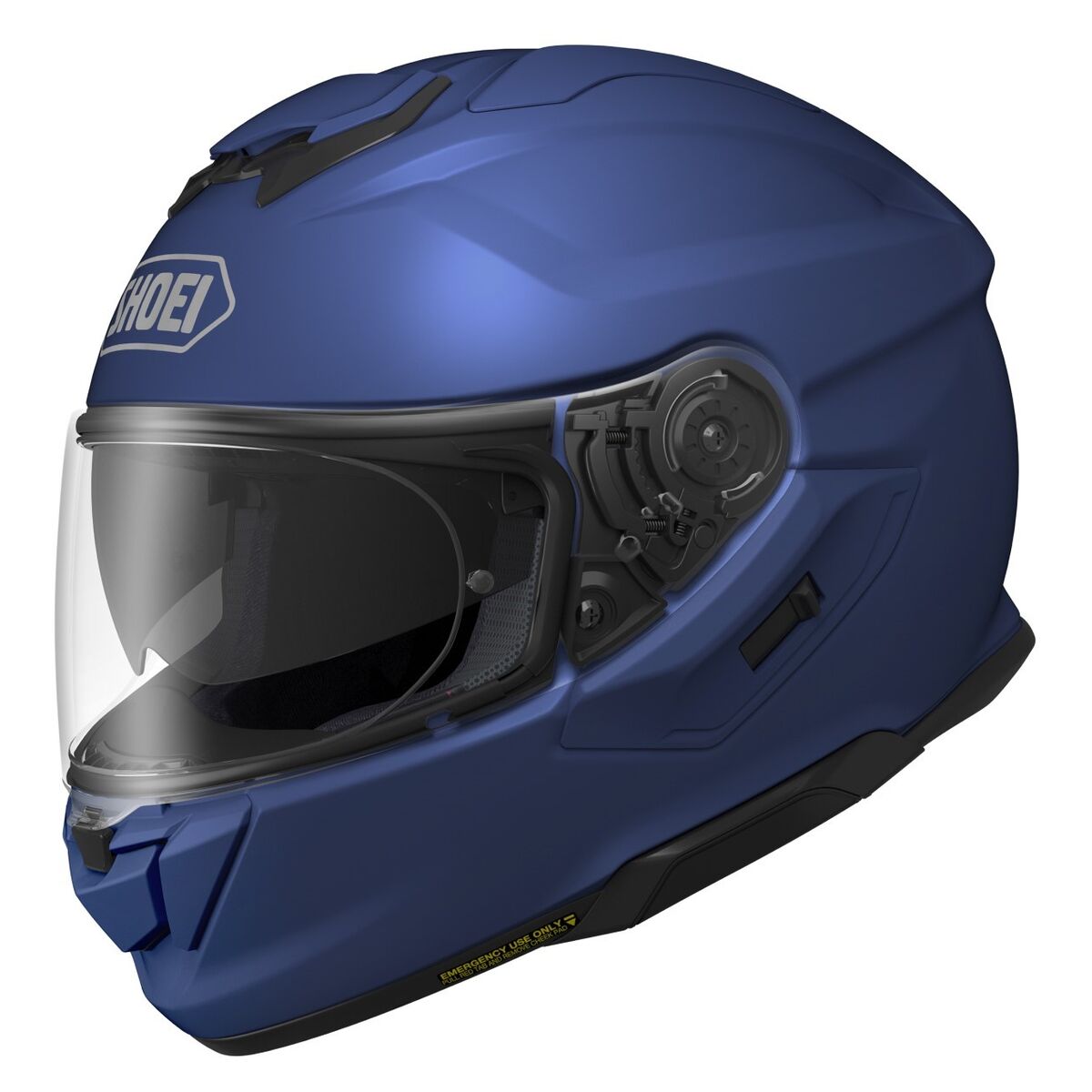
The Shoei GT-Air 3 is the highly anticipated evolution of one of the world’s most popular sport-touring helmets. While technically a “Bluetooth Ready” helmet, it deserves a spot on this list because of its bespoke integration with the Sena SRL3 system. When paired, it offers a level of seamlessness that rivals fully integrated helmets, maintaining the shell’s aerodynamic purity while delivering audiophile-grade sound.
Key Features and Technology Specs
The GT-Air 3 features the new Shoei Comlink interface, designed exclusively for the Sena SRL3 communication system (sold separately). Once installed, the unit is virtually invisible, with batteries and components tucking seamlessly into the helmet shell and a low-profile control pad on the side.
With the SRL3 installed, you get:
- Sound by Harman Kardon: Premium speakers and microphone utilizing Harman Kardon’s acoustic technology for rich bass and crystal-clear audio.
- Mesh Intercom™ Technology: Robust, self-healing connections with virtually limitless range in Open Mesh mode or up to 2 km (1.2 miles) in private Group Mesh.
- Bluetooth 5.0: Faster, more stable connections to your phone and GPS.
- Voice Commands: Hands-free control (“Hey Google” / “Hey Siri”) so you never have to take your hands off the bars.
Beyond the tech, the GT-Air 3 itself is a marvel of engineering. It meets the rigorous ECE 22.06 safety standard, features wind-tunnel-optimized aerodynamics to reduce lift and drag, and includes the enlarged QSV-2 internal sun visor for better coverage in bright conditions.
Pros and Cons
Pros:
- Studio-Quality Audio: The Harman Kardon speakers are widely considered the best in the industry.
- Stealth Integration: No bulky units hanging off the side; it looks and feels like a factory-integrated system.
- Mesh Reliability: Superior intercom stability compared to standard Bluetooth connections.
- Top-Tier Safety: Meets the latest ECE 22.06 impact standards.
- Quiet Ride: Improved aerodynamics and sealing make it one of the quietest touring helmets available.
Cons:
- Premium Price Tag: You have to buy the helmet and the SRL3 unit separately, making the total package expensive (often $900+).
- Proprietary System: The Comlink interface restricts you to using the Sena SRL3 if you want that seamless fit; other units will require awkward clamping.
- Weight: Slightly heavier than carbon-fiber competitors, though well-balanced.
Value Proposition
The Shoei GT-Air 3 is the ultimate choice for the uncompromising sport-touring rider. It is designed for those who want the very best in safety, silence, and sound quality and are willing to pay for it.
If you ride long distances and want a helmet that disappears on your head while keeping you connected with concert-hall audio clarity, the combination of the GT-Air 3 and SRL3 is the gold standard. It bridges the gap between “Bluetooth Ready” and “Integrated” by offering the flexibility of a removable unit with the sleek finish of a built-in system.
Not sure if a modular helmet is right for your riding style? Learn more about different helmet types in our comprehensive guide to Full Face vs. Modular vs. Open Face Helmets.
7. Shoei Neotec 3: The Ultimate Premium Modular Bluetooth Experience
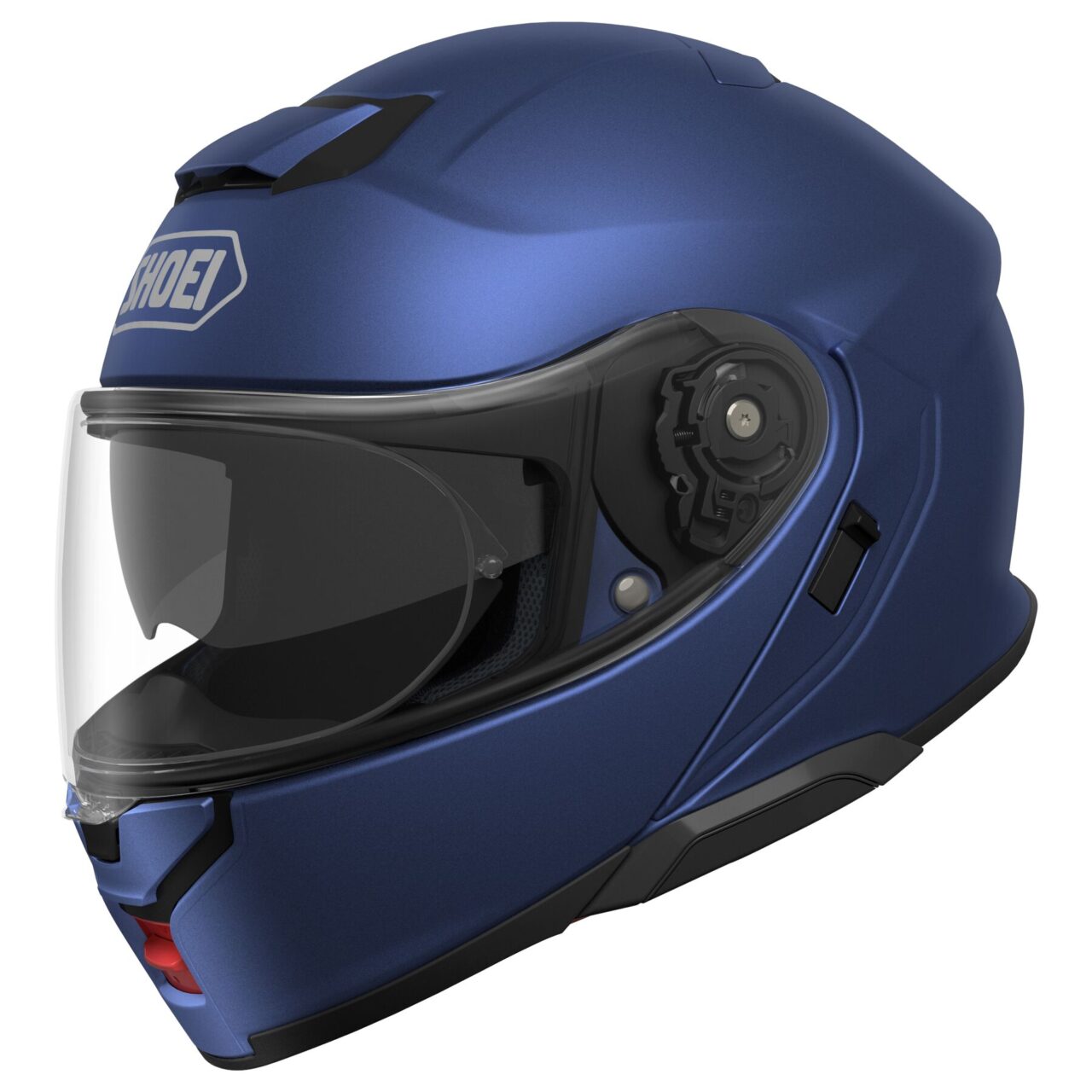
The Shoei Neotec 3 represents the pinnacle of modular helmet design with seamless Bluetooth integration capabilities. Unlike many helmets that come with built-in systems, the Neotec 3 is designed to work with the Sena SRL-2 communication system that integrates perfectly into the helmet’s shell, creating a clean, aerodynamic profile without any external bulk.
Unique Features of This Bluetooth Helmet
The Neotec 3 stands out with its perfectly engineered recesses and channels specifically designed for the Sena SRL-2 system. When installed, the communication unit becomes virtually invisible, maintaining the helmet’s sleek appearance. The helmet features specially designed speaker pockets that position audio drivers at the optimal distance from your ears for superior sound quality.
The integration goes beyond just aesthetics—Shoei engineered the helmet with communication in mind from the ground up. The noise reduction capabilities are exceptional, with a redesigned neck roll and face shield system that creates an acoustic environment optimized for clear communication. The microphone placement is perfectly positioned for voice clarity even at highway speeds.
Carbon Fiber Construction Benefits
While the Neotec 3’s shell is primarily composed of Shoei’s proprietary Multi-Ply Matrix AIM+ (Advanced Integrated Matrix Plus), which combines fiberglass with organic fibers, some premium versions incorporate carbon fiber elements for added strength and reduced weight. This construction provides exceptional impact protection while keeping the helmet relatively lightweight despite its modular design and Bluetooth integration capabilities.
- Check out our picks on Best Lightweight Carbon Fiber Helmets
Carbon fiber reinforcement in strategic areas gives the helmet superior rigidity and impact dispersion properties compared to standard composite or polycarbonate helmets. This advanced construction helps offset the additional weight of the Bluetooth components, maintaining excellent balance and reducing neck fatigue during long rides.
Pros and Cons
Pros:
- Seamless integration with Sena SRL-2 system with no external bulk
- Superior noise isolation creates excellent audio clarity
- Premium build quality with advanced shell construction
- Exceptional ventilation system that works well even with installed electronics
- Pinlock-ready visor with wide field of vision
- Micro-ratchet chin strap for secure, comfortable fit
Cons:
- Very high price point (helmet plus separate Bluetooth system)
- Heavier than non-modular options
- Bluetooth system sold separately adds to the overall cost
- Learning curve for the Sena system’s controls
- Limited battery access when system is installed
The Shoei Neotec 3 represents the gold standard for riders who want premium protection with communication capabilities. While the investment is significant, the exceptional build quality, comfort, and seamless technology integration make this the choice for serious touring riders who refuse to compromise on safety or convenience.
The “Hidden” Premium: System Helmets with Bluetooth Integration
When discussing Bluetooth motorcycle helmets, we need to address the elegant solution offered by premium “system helmets” like the Shoei GT-Air 3 and Neotec 3. Unlike fully integrated helmets where the Bluetooth comes pre-installed, these premium options take a different approach.
System helmets are designed with dedicated spaces and channels specifically engineered to house companion communication systems. Rather than having Bluetooth components permanently built in, these helmets feature specially designed compartments where brand-specific communication systems (like the Sena SRL) can be installed.
How Sena SRL Integration Works
The beauty of system helmets lies in their seamless integration process:
- The helmet comes with pre-cut recesses and channels for speakers, microphones, and control units
- The compatible communication system (like the Sena SRL) is purchased separately
- Installation involves simply sliding the components into their designated spaces – no adhesives or modifications needed
- Once installed, the unit becomes virtually invisible from the outside, maintaining the helmet’s sleek aerodynamics
This design philosophy creates a clean, integrated look without the bulky external modules typically seen with aftermarket Bluetooth systems.
Pros and Cons of System Helmets
Pros:
- Cleanest, most aerodynamic look possible with Bluetooth functionality
- Superior noise isolation (communication system was designed specifically for that helmet)
- Higher overall quality (premium helmets paired with premium communication systems)
- No compromise on safety ratings or shell integrity
- Easy removal for charging or when communication isn’t needed
Cons:
- Highest overall cost (premium helmet + separate communication system)
- Limited to specific communication systems (typically only one compatible option)
- Cannot easily transfer the communication system to another helmet brand
- Initial setup slightly more involved than fully integrated options
Finding the right fit is crucial with any helmet, but especially with these premium options given their investment level. A properly fitted helmet ensures both safety and comfort during those long rides while enjoying your music and communications.
For riders who value refinement, aerodynamics, and premium features, system helmets represent the most sophisticated Bluetooth helmet solution available today, albeit at a higher price point.
Noise Reduction & Communication Quality: What Makes a Great Bluetooth Helmet?
When you’re cruising down the highway at 70 mph, wind noise can reach up to 100 decibels—loud enough to cause hearing damage over time. This is where quality Bluetooth helmets shine, offering both protection and communication capabilities.
The best Bluetooth motorcycle helmets combine advanced aerodynamics with specialized padding to minimize wind noise. Models like the Shoei GT-Air 3 feature wind tunnel-tested shells that slice through air with minimal turbulence. Many premium options also incorporate noise-canceling technology in their microphones, ensuring your voice comes through clearly even at highway speeds.
- Check out our guide on Best Quietest Motorcycle Helmets
Sound quality varies significantly between models. Budget options typically feature basic speakers that deliver adequate but not impressive audio. Premium helmets often partner with audio specialists like Harman Kardon or JBL to provide richer bass and clearer highs. The difference becomes particularly noticeable when listening to music or podcasts during longer rides.
Battery life is another crucial factor. Entry-level Bluetooth helmets typically offer 8-10 hours of talk time, while premium models can extend to 15+ hours. Some newer models even feature quick-charge capabilities, providing several hours of use from just 20 minutes of charging—perfect for those mid-journey rest stops.
Remember that even the best Bluetooth helmet will eventually need replacement. Exposure to UV rays, sweat, and regular use will degrade both the helmet’s protective capabilities and electronic components over time. For guidance on when it’s time for a new lid, check out our comprehensive guide on when to replace your motorcycle helmet.
Mesh vs. Bluetooth Intercoms: What’s the Difference?
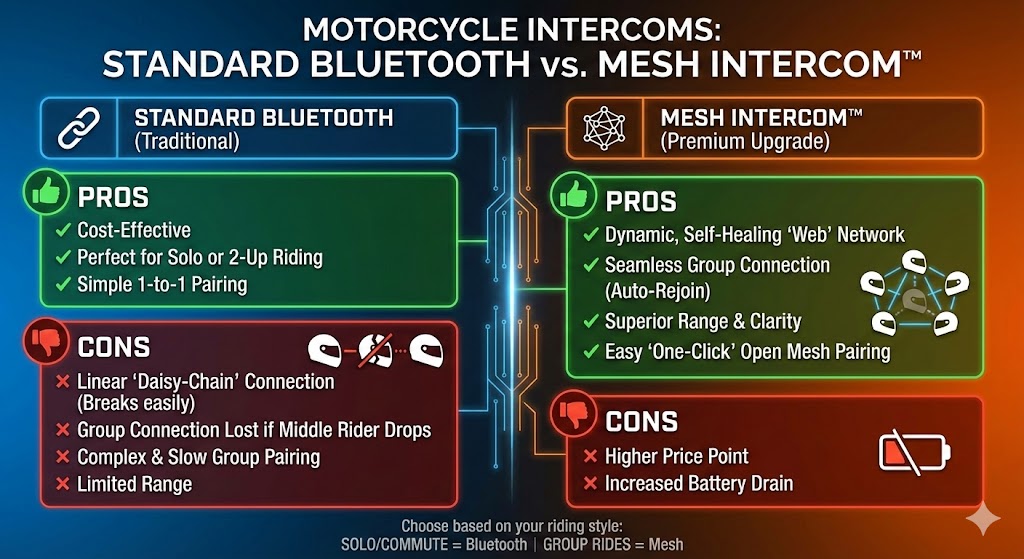
As you browse the helmets on this list, you’ll notice a significant price gap between options like the BILT Techno 3.0 and the Sena Impulse. A major reason for this difference is the communication technology inside: Standard Bluetooth vs. Mesh Intercom™.
Understanding the difference is critical to ensuring you buy the right helmet for your riding group.
1. Standard Bluetooth Intercom (The Traditional Choice)
Found in: BILT Techno 3.0, Sedici Strada II, Sena Outrush R
Standard Bluetooth works like a “daisy chain.” Rider A connects to Rider B, who connects to Rider C.
- The Pro: It is cost-effective and perfect for solo riders (music/GPS) or 2-up riding (rider and passenger).
- The Con: The connection is linear. If the rider in the middle of the pack drops out or gets too far ahead, the chain breaks, and everyone loses connection. Pairing large groups can also be complicated and time-consuming.
2. Mesh Intercom™ (The Premium Upgrade)
Found in: Sena Impulse, Sena Stryker, Shoei Neotec 3/GT-Air 3 (with SRL3)
Mesh technology creates a dynamic, web-like network. Instead of a chain, every helmet connects to every other helmet nearby.
- The Pro: It is “self-healing.” If one rider drops out of range, the group stays connected seamlessly. When that rider comes back into range, they automatically rejoin.
- The Range: It offers superior range and clarity. In “Open Mesh” mode, you can often communicate with virtually anyone nearby with the click of a single button—no complex pairing required.
- The Con: It uses more battery power and commands a higher price tag.
Which One Do You Need?
- Choose Standard Bluetooth if: You primarily ride alone, commute to work, or only ride with a passenger on the back. Helmets like the Sedici Strada II are perfect for this.
- Choose Mesh Intercom if: You ride in groups of 3 or more. The ease of connection and stability makes it worth the extra investment. If your riding buddies already use Sena Mesh headsets, you’ll want a helmet like the Sena Stryker or Shoei GT-Air 3 to join them effortlessly.
What Matters When Buying a Bluetooth Motorcycle Helmet?
Choosing the right Bluetooth motorcycle helmet involves more than just picking a brand you like. Several key factors will determine whether your smart helmet enhances your riding experience or becomes a source of frustration. Here’s what to consider before making your purchase:
Sound Quality Considerations
Sound quality can make or break your Bluetooth helmet experience. When evaluating options, look for:
- Premium Audio Partnerships: Helmets featuring Harman Kardon or JBL speakers deliver superior sound quality with better bass response
- Speaker Size and Placement: Larger speakers positioned correctly in the ear pockets provide fuller sound
- Background Noise Cancellation: Advanced models use noise-canceling technology to improve audio clarity at highway speeds
- Audio Multitasking: Better systems allow you to hear intercom, music, and GPS instructions simultaneously without one cutting out the other
Remember that even the best helmet speakers won’t match dedicated headphones, but premium options come surprisingly close while maintaining safety.
Communication Range and Technology
Not all Bluetooth helmets offer the same connectivity options:
- Standard Bluetooth: Basic models use conventional Bluetooth with typical ranges of 0.5-1 mile between riders
- Mesh Intercom Technology: Premium helmets feature Mesh networking, allowing:
- Connection to virtually unlimited riders (rather than just 4-8 with standard Bluetooth)
- Self-healing networks that maintain connections even when one rider goes out of range
- Ranges up to 5 miles in open terrain
- Smartphone Integration: Look for helmets that easily pair with your phone for calls, music, and GPS
For solo commuters, standard Bluetooth is sufficient. For group riding, invest in Mesh technology for a dramatically better experience.
Controls and User Interface
You’ll be operating your helmet while wearing thick gloves, often at highway speeds:
- Jog Dials vs. Buttons: Jog dials (rotating wheels) are typically easier to use with gloves than small buttons
- Voice Commands: Premium helmets offer hands-free operation through voice activation
- Button Placement: Controls should be easy to locate by feel alone
- Learning Curve: Some systems require memorizing complex button combinations; simpler is often better
Test the controls while wearing your riding gloves before purchasing if possible.
Battery Life Expectations
Nothing’s worse than losing your communication or music mid-ride:
- Minimum Standards: Look for at least 8-10 hours of talk time or 15+ hours of music playback
- Charging Options: USB-C charging is becoming standard and charges faster than older micro-USB
- Quick-Charge Features: Some helmets offer 2-3 hours of use from just 20 minutes of charging
- Battery Indicators: Clear battery level indicators help prevent unexpected shutdowns
Keep in mind that using multiple features simultaneously (intercom + music + GPS) will drain the battery faster than manufacturer estimates.
Remember that even the most advanced Bluetooth helmet will need regular maintenance. After extended use, helmet liners can develop odor and bacteria from sweat and oils. Check out our guide on how to wash your motorcycle helmet liner to keep your helmet fresh and extend its lifespan.
Bluetooth Helmet Setup, Maintenance, and Updates: Everything You Need to Know
Setting up and maintaining your Bluetooth motorcycle helmet properly ensures optimal performance and longevity. Here’s everything you need to know about setup, charging, cleaning, and firmware updates.
How to Set Up Your Bluetooth Helmet
Most integrated Bluetooth helmets come pre-installed with all components, making setup relatively straightforward:
- Initial Charge: Before first use, charge your helmet’s Bluetooth system completely (usually 2-3 hours).
- Power On: Press and hold the main power button until you see LED indicators flash or hear audio confirmation.
- Pairing with Your Phone:
- Enable Bluetooth on your smartphone
- Put your helmet in pairing mode (usually holding the main button for 5-7 seconds until rapid flashing)
- Select your helmet from available devices on your phone
- Confirm any pairing codes if prompted
- Pairing with Other Riders:
- For Mesh systems: Press the Mesh button on both helmets to connect automatically
- For traditional Bluetooth: Both helmets need to be in pairing mode and manually connected
- Test Functionality: Make a test call or play music to ensure everything works properly
- Adjust Settings: Download the manufacturer’s app (Sena, Cardo, etc.) to customize audio profiles, intercom preferences, and voice commands
Remember that proper helmet fit is crucial for optimal audio quality and comfort, as poorly positioned speakers can affect your listening experience.
Charging Best Practices
To maximize battery life and performance:
- Complete Charging Cycles: For the first few charges, fully deplete and then fully charge the battery to calibrate it properly.
- Charging Time: Most Bluetooth helmets require 2-3 hours for a full charge. Avoid overcharging.
- USB Cable Quality: Use the manufacturer-provided cable or a high-quality replacement. Cheap cables can deliver inconsistent power.
- Temperature Considerations: Never charge in extreme temperatures. Ideal charging temperature is between 50°F-85°F (10°C-30°C).
- Storage Charging: If storing your helmet for more than a month, charge it to about 50% capacity first. This preserves battery health.
- Power Banks: For long trips, invest in a quality power bank that delivers stable voltage.
- Battery Indicators: Learn your helmet’s battery indication system (flashing lights or voice prompts) to avoid unexpected power loss during rides.
Cleaning and Maintenance
Proper cleaning extends the life of both your helmet and its Bluetooth components:
- Speaker Maintenance: Gently wipe speakers with a slightly damp microfiber cloth. Never use alcohol or harsh cleaners on speaker components.
- Microphone Care: For boom mics, use a soft brush to remove dust. For internal mics, ensure they remain unobstructed.
- Control Buttons: Clean with a barely damp cloth to prevent dirt buildup that can affect button responsiveness.
- Port Protection: Keep charging ports covered when not in use to prevent moisture and dirt infiltration.
- Liner Cleaning: Most helmets with integrated Bluetooth have removable liners. When washing your helmet liner, carefully remove the speakers first if they’re not permanently attached.
- Water Resistance: While many Bluetooth systems are water-resistant, avoid direct exposure to heavy rain. If wet, allow to dry completely before charging.
- Avoid Compressed Air: Never use compressed air to clean components as this can damage sensitive microphones and speakers.
When to Update Firmware
Firmware updates can improve performance, add features, and fix bugs:
- Regular Checks: Check for updates every 3-4 months through the manufacturer’s app or website.
- Pre-Trip Updates: Always update before long trips to ensure optimal performance.
- Update Indicators: Some symptoms that may indicate you need an update include:
- Unexpected disconnections
- Reduced battery life
- Audio quality issues
- Intercom range problems
- Update Process:
- Ensure your helmet is fully charged before updating
- Connect to the manufacturer’s app or desktop software
- Follow prompts to download and install updates
- Don’t disconnect during the update process
- Restart the system after updating
- Backup Settings: Some updates may reset your custom settings, so note your preferences before updating.
- Compatibility: If you ride with friends, try to keep firmware versions relatively synchronized for the best intercom experience.
Remember that helmet safety should always be your priority. If you notice any physical damage to your helmet that might compromise its protective capabilities, it’s time to replace your motorcycle helmet regardless of how well the Bluetooth system is functioning.
Conclusion: Ride Connected with the Best Bluetooth Helmets
After testing and reviewing the best Bluetooth motorcycle helmets on the market, it’s clear that integrated communication systems have revolutionized the riding experience. No more fumbling with external devices or dealing with complicated installations—these helmets deliver seamless connectivity right out of the box.
Summary of Top Picks
Our testing revealed clear winners across different categories:
- Best Overall: The Sena Impulse stands out with its exceptional Mesh 2.0 technology and premium Harman Kardon speakers, making it the ultimate choice for riders who demand the best in communication and audio quality.
- Best Budget: BILT Techno 3.0 proves that quality Bluetooth integration doesn’t have to break the bank, offering solid performance at an accessible price point.
- Best Modular: Sena Outrush R combines the convenience of a flip-up design with reliable Bluetooth functionality, perfect for touring riders and everyday commuters.
- Best Premium Integration: The Shoei GT-Air 3 with Sena SRL2 represents the pinnacle of refined integration, where premium helmet design meets sophisticated communication technology.
Final Recommendations Based on Rider Needs
- For Daily Commuters: The Sedici Strada II Parlare offers the perfect balance of functionality and value, with enough battery life to handle daily rides and clear audio for navigation and calls.
- For Group Riders: Choose the Sena Stryker with its Mesh Intercom technology that allows seamless communication with multiple riders over impressive distances.
- For Long-Distance Tourers: The Shoei Neotec 3 with its premium comfort, noise reduction, and seamless Bluetooth integration makes those long highway miles more enjoyable and connected.
- For Tech Enthusiasts: The HJC RPHA 1 with Smart HJC offers cutting-edge features like voice commands and smartphone integration for riders who appreciate the latest technology.
- For Budget-Conscious Riders: The ILM Bluetooth Helmet delivers essential connectivity features at an entry-level price point without compromising safety.
Ready to enhance your riding experience with seamless connectivity? Choose the Bluetooth helmet that matches your riding style and budget from our carefully selected options. Remember that the right helmet combines safety, comfort, and technology in a package that works for your specific needs.
Whether you’re communicating with fellow riders, following GPS directions, or simply enjoying your favorite playlist on the open road, a quality Bluetooth helmet transforms every journey into a more connected, enjoyable experience.
Ride safe, stay connected, and enjoy the freedom of the road with crystal-clear audio and hassle-free communication!
Ready to ride connected? Pick up the Sena Stryker and never miss a turn again.
FAQs About Bluetooth Motorcycle Helmets
What’s the difference between Bluetooth Integrated and Bluetooth Ready helmets?
Bluetooth Integrated helmets come with the complete communication system already built into the helmet shell, including speakers, microphone, battery, and controls—ready to use right out of the box. Bluetooth Ready helmets only have cutouts and recesses designed to accommodate aftermarket communication systems, but you must purchase and install the Bluetooth unit separately, which typically costs an additional $200-$300.
Can I use my Bluetooth helmet with any smartphone?
Yes, most Bluetooth motorcycle helmets work with any Bluetooth-enabled smartphone regardless of whether you use iOS or Android. Basic functions like calls, music streaming, and GPS navigation work universally across all phones. However, some advanced features and app integrations may perform differently depending on your phone’s operating system, so it’s worth checking the manufacturer’s specifications for any platform-specific limitations.
How long does the battery last on a Bluetooth helmet?
Battery life varies significantly by model and price point. Budget helmets typically offer 6-8 hours of talk time, mid-range options provide 8-12 hours of mixed use, and premium systems can deliver 12-15+ hours of talk time. Most systems will last for a full day of riding, though battery life decreases over time with regular use. Using multiple features simultaneously like intercom, music, and GPS will drain the battery faster than the manufacturer’s estimates.
Are Bluetooth motorcycle helmets legal to use while riding?
In most states and jurisdictions, using Bluetooth helmets for communication and navigation is legal. However, some states like California have restrictions on headphones or earbuds, allowing them in only one ear. A few jurisdictions have limitations on “entertainment” uses while operating a vehicle. Always check your local laws before riding, and keep volume at a level where you can still hear ambient traffic sounds for safety.
Can I listen to music and use GPS navigation at the same time?
Yes, most modern Bluetooth helmet systems feature Audio Multitasking technology that allows you to listen to music while receiving GPS directions, maintain intercom conversations while hearing navigation prompts, and take phone calls without completely cutting out your music (the system automatically lowers the volume). Higher-end models offer more sophisticated audio layering with clearer separation between audio sources.
How much heavier are Bluetooth helmets compared to regular helmets?
Integrated Bluetooth helmets typically weigh 100-250 grams (3.5-8.8 ounces) more than their non-Bluetooth counterparts. This additional weight comes from the battery components, speakers, microphones, and control modules. While noticeable, most riders adapt quickly to the slight weight difference, and premium lightweight materials like carbon fiber can help offset the added weight of Bluetooth components.
What’s the difference between Mesh Intercom and regular Bluetooth?
Regular Bluetooth intercom systems typically connect 4-8 riders within a range of 0.5-1 mile and require manual pairing between devices. Mesh Intercom technology allows connection to virtually unlimited riders within ranges up to 5 miles in open terrain, creates self-healing networks that maintain connections even when riders temporarily go out of range, and allows riders to join or leave the group seamlessly without disrupting other connections.
Do I need to update the firmware on my Bluetooth helmet?
Yes, regular firmware updates can improve performance, add new features, and fix bugs. You should check for updates every 3-4 months through the manufacturer’s app or website, and always update before long trips. Signs that you may need an update include unexpected disconnections, reduced battery life, audio quality issues, or intercom range problems. Always ensure your helmet is fully charged before updating and don’t disconnect during the process.
Can I use my Bluetooth helmet in the rain?
Most modern Bluetooth helmet systems are water-resistant and can handle light to moderate rain without issues. However, you should avoid direct exposure to heavy downpours when possible. If your helmet gets wet, allow it to dry completely before charging to prevent damage to the electronic components. Never submerge your Bluetooth helmet in water, and always keep the charging port covered when not in use to prevent moisture infiltration.
How do I clean my Bluetooth helmet without damaging the electronics?
Clean speakers gently with a slightly damp microfiber cloth, avoiding alcohol or harsh cleaners. Use a soft brush to remove dust from microphones, and wipe control buttons with a barely damp cloth to prevent dirt buildup. Most helmets with integrated Bluetooth have removable liners—carefully remove the speakers first if they’re not permanently attached before washing. Keep charging ports covered when not in use, and never use compressed air to clean components as this can damage sensitive microphones and speakers.