I’ll never forget the day a fellow journalist walked into the press room at Laguna Seca with a fresh scrape down the side of his helmet. He’d lowsided coming out of the Corkscrew—nothing catastrophic, but enough to put him on the ground at about 40 mph. “Glad I had MIPS,” he said, tapping the yellow dot on his helmet shell.
“My head hit and rotated, but I walked away without even a headache.” That conversation stuck with me, because here was a guy who’d been testing helmets for two decades, and he was convinced that a technology most riders had never heard of had just saved him from serious injury.
The motorcycle helmet industry has undergone a quiet revolution in the past decade. While most riders focus on DOT stickers, Snell ratings, and ECE certifications, a Swedish company has introduced a technology that addresses something traditional helmet testing largely ignores: rotational brain injuries.
MIPS—Multi-directional Impact Protection System—has become increasingly common in premium helmets, but it typically adds $50 to $150 to the price tag.
For riders trying to make informed decisions about their safety gear, understanding what is MIPS in motorcycle helmets and whether it justifies the additional investment requires looking beyond marketing claims and examining the actual science.
If you’re researching helmet technologies as part of your broader gear selection process, our Ultimate Guide to Motorcycle Helmets provides comprehensive context for how MIPS fits into the larger picture of helmet safety technology.
The Science Behind MIPS Technology: Understanding Rotational Forces
To understand what is MIPS in motorcycle helmets, we need to first examine what happens to your brain during an impact. When your helmet hits the pavement, two types of forces act on your brain: linear forces (straight-line impact) and rotational forces (twisting motion). Traditional helmet safety standards—DOT, Snell, ECE—primarily test for linear impact protection. They drop helmets straight down onto anvils and measure how much force transfers to the head form inside.
The problem is that real-world crashes rarely involve purely linear impacts. When you go down, your helmet typically strikes the ground at an angle, creating rotational acceleration that causes your brain to twist inside your skull. This twisting motion stretches and tears the delicate neural structures, leading to concussions, diffuse axonal injury, and other traumatic brain injuries that can have lasting consequences.
Research from the Royal Institute of Technology in Stockholm found that rotational forces may be responsible for most severe brain injuries in motorcycle accidents. Dr. Hans von Holst, a neurosurgeon who co-founded MIPS, observed that many patients with devastating brain injuries had helmets that appeared relatively undamaged externally. The helmets had done their job absorbing linear impact, but they couldn’t address the rotational forces that caused the brain trauma.
How the MIPS Low-Friction Layer Works
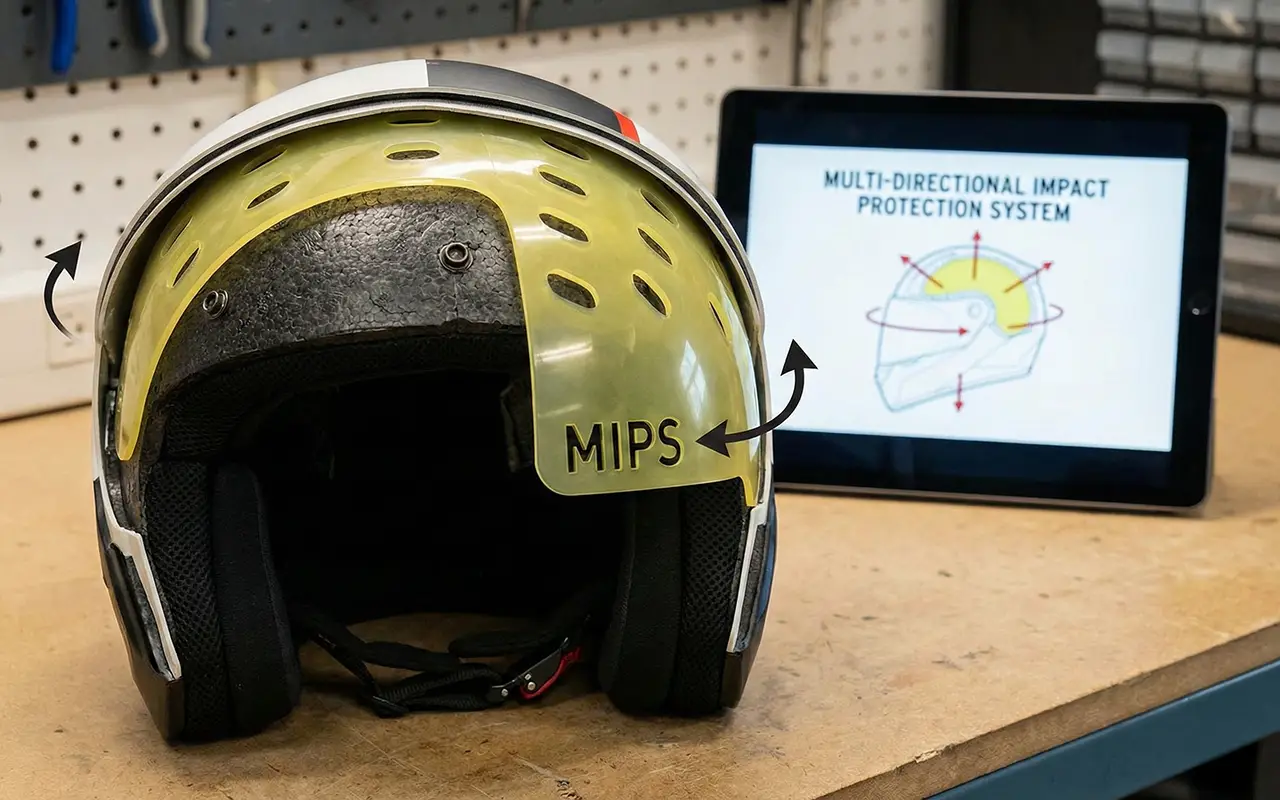
MIPS technology introduces a low-friction layer between the helmet’s comfort liner and the energy-absorbing foam (EPS). This layer, typically a thin yellow plastic slip plane, allows 10-15mm of relative motion between your head and the helmet shell during an angled impact. When your helmet strikes the ground and wants to rotate, the MIPS layer rotates instead of transferring that rotational energy directly to your head.
Think of it like this: without MIPS, your head and helmet are locked together, so when the helmet rotates on impact, your head must rotate with it. With MIPS, the helmet can rotate slightly relative to your head, reducing the rotational acceleration transmitted to your brain. It’s an elegantly simple solution to a complex biomechanical problem.
The MIPS liner is anchored at specific points but allows multidirectional movement during impact. The system is designed to activate only during crashes—you won’t notice it during normal riding. The low-friction material typically consists of a thin polymer sheet with elastomeric attachments that allow controlled sliding while maintaining the helmet’s structural integrity.
Different MIPS Systems: Not All Yellow Dots Are Created Equal
When examining what is MIPS in motorcycle helmets, it’s important to understand that MIPS AB licenses several different systems to helmet manufacturers, and they don’t all function identically. The technology has evolved significantly since its introduction, and understanding these variations helps explain price differences among MIPS-equipped helmets.
MIPS Classic
The original MIPS system uses a complete low-friction liner that sits between the comfort padding and the EPS foam. This yellow liner covers most of the helmet’s interior and attaches via elastic anchors. MIPS Classic remains the most common implementation in motorcycle helmets and provides consistent protection across the entire impact zone. You’ll find this system in mid-range helmets from manufacturers like Bell, Shoei, and AGV.
MIPS Integra
MIPS Integra represents a more refined approach where the low-friction layer is integrated directly into the helmet’s padding system rather than being a separate visible component. This integration allows for better comfort and ventilation while maintaining the rotational impact protection. Premium manufacturers like Schuberth and Arai have developed proprietary versions of this integrated approach, though they may not always use the MIPS branding.
MIPS Spherical
Developed in partnership with Bell, MIPS Spherical eliminates the slip plane entirely. Instead, it uses two separate EPS liners—one inside the other—that can move independently during an impact. Ball-and-socket attachments allow the inner liner to rotate relative to the outer shell, providing rotational impact protection without any plastic slip plane touching your head. This system offers improved ventilation and comfort, but it’s typically found only in premium helmets due to manufacturing complexity.
The Research: Does MIPS Actually Work?
Understanding what is MIPS in motorcycle helmets means examining whether the technology delivers measurable safety benefits or merely represents clever marketing. The research presents a compelling but nuanced picture.
Independent testing by Virginia Tech’s Helmet Lab, which rates helmets based on their ability to reduce both linear and rotational acceleration, consistently shows MIPS-equipped helmets scoring higher than their non-MIPS counterparts. In their motorcycle helmet ratings, MIPS versions of the same helmet model typically score 10-20% better overall, with the most significant improvements in oblique impact scenarios.
A 2019 study published in the Journal of Biomechanics tested MIPS helmets against standard helmets using crash test dummies subjected to angled impacts. The research found that MIPS reduced rotational acceleration by an average of 40% compared to the same helmet without MIPS. Peak rotational velocity—another key indicator of brain injury risk—decreased by approximately 30%.
However, it’s crucial to understand what these numbers mean in practical terms. A 40% reduction in rotational acceleration doesn’t translate to a 40% reduction in brain injury risk. The relationship between rotational forces and injury is complex and not fully understood. Additionally, most studies use impact speeds and angles that may not perfectly replicate real-world motorcycle crashes, which often involve higher speeds and more complex impact dynamics than bicycle or ski accidents where MIPS was originally developed.
The Limitations of Current Testing
Critics point out that MIPS testing typically involves relatively low-speed impacts (around 20-25 mph) at specific angles. Motorcycle crashes often occur at higher speeds where the energy involved may overwhelm any rotational protection system. Some researchers argue that at truly high-speed impacts, the difference between MIPS and non-MIPS helmets becomes negligible because the forces exceed what any helmet technology can meaningfully mitigate.
Furthermore, standard Helmet Safety Ratings Explained don’t specifically test for rotational impact protection, which means a helmet can pass DOT, ECE, and even Snell certification without addressing rotational forces at all. This gap in testing standards makes it difficult to compare MIPS helmets against non-MIPS alternatives using official safety ratings alone.
MIPS vs. Other Rotational Impact Technologies
MIPS isn’t the only technology addressing rotational brain injuries. Several helmet manufacturers have developed proprietary systems, and understanding these alternatives provides important context when evaluating what is MIPS in motorcycle helmets and whether it’s worth the premium.
6D ATR (Angular Rotational Technology)
6D’s system uses two separate EPS liners connected by elastomeric isolation dampers. During an impact, these dampers compress and shear, allowing the inner and outer liners to move independently. This approach addresses both linear and rotational forces simultaneously. The 6D ATR system has shown impressive results in independent testing, often matching or exceeding MIPS performance in rotational impact protection.
The drawback? 6D helmets typically cost $600-$800, making them significantly more expensive than MIPS-equipped alternatives. They’re also heavier due to the dual-liner construction, which may concern riders focused on best lightweight carbon fiber helmet options.
Koroyd
Koroyd uses welded tubular structures that crumple uniformly during impact, absorbing energy in all directions. While primarily designed for linear impact protection, Koroyd’s omni-directional crush characteristics also help manage rotational forces. The technology adds minimal weight and doesn’t require the slip-plane approach of MIPS.
Koroyd appears in helmets from manufacturers like Endura and Smith, though it’s less common in motorcycle-specific helmets. The technology shows promise but lacks the extensive research backing that MIPS has accumulated.
WaveCel
Developed by orthopedic surgeon Dr. Steve Madey and biomechanical engineer Dr. Michael Bottlang, WaveCel uses a collapsible cellular structure that flexes, crumples, and glides during angled impacts. The accordion-like material replaces some of the traditional EPS foam and claims to be more effective than MIPS in laboratory testing.
However, WaveCel remains rare in motorcycle helmets, appearing primarily in bicycle helmets from Bontrager and other cycling-focused brands. The technology’s effectiveness in high-speed motorcycle impacts hasn’t been extensively studied.
Fluid Inside Technology
Some manufacturers, particularly POC, have experimented with fluid-filled bladders inside helmets that move during impact, theoretically reducing rotational forces. While intriguing, this approach hasn’t gained significant traction in the motorcycle market due to weight, durability, and temperature sensitivity concerns.
The Cost-Benefit Analysis: Is MIPS Worth the Extra Money?
This is where understanding what is MIPS in motorcycle helmets becomes intensely practical. MIPS typically adds $50-$150 to a helmet’s price. For a $300 helmet, that’s a 15-50% premium. Is the investment justified?
Let’s start with the cold financial calculus. The average cost of treating a traumatic brain injury exceeds $85,000 in the first year alone, according to the CDC. Severe TBI can result in lifetime medical costs exceeding $3 million. Even a mild concussion can cost $10,000-$15,000 in medical bills and lost wages. From this perspective, spending an extra $100 for technology that might reduce your brain injury risk seems like cheap insurance.
But this analysis assumes MIPS provides meaningful protection in real-world motorcycle crashes, which involves some uncertainty. The research suggests MIPS helps, but we don’t have definitive data showing that MIPS-equipped helmets reduce actual injury rates in motorcycle accidents. Most studies involve laboratory testing rather than epidemiological analysis of crash outcomes.
When MIPS Makes the Most Sense
MIPS provides the greatest value in specific scenarios:
Sport and track riders: If you’re pushing limits on best motorcycle helmets for sport bikes or doing track days, you face higher crash risk and typically impact at angles where rotational protection matters most. The premium for MIPS becomes easier to justify.
Daily commuters: Higher exposure means higher cumulative risk. If you ride year-round in traffic, the statistical likelihood of eventually going down increases, making rotational impact protection a sensible investment.
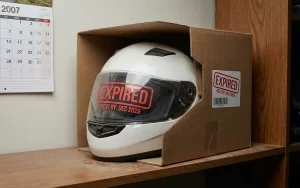
Riders replacing helmets anyway: If you’re already shopping for a new helmet because your current one has When to Replace Your Motorcycle Helmet reached its expiration date or been in a crash, choosing a MIPS version adds minimal cost to an already necessary purchase.
Budget-conscious riders seeking maximum safety: A $350 MIPS helmet from a reputable manufacturer often provides better overall protection than a $500 non-MIPS helmet from a premium brand. You’re paying for safety technology rather than graphics and brand prestige.
When MIPS Might Not Be Worth It
Conversely, MIPS may not justify the premium if:
You’re on a tight budget: A well-fitting, properly certified non-MIPS helmet from a quality manufacturer provides excellent protection. If the MIPS premium means choosing a cheaper, lower-quality helmet or delaying a necessary helmet replacement, skip MIPS and prioritize fit and certification standards.
You ride infrequently: Weekend recreational riders with low annual mileage face lower statistical risk. The incremental safety benefit of MIPS may not justify the cost for someone who rides 500 miles per year versus 15,000 miles.
Fit is compromised: MIPS adds a layer inside the helmet that can affect fit. If the MIPS version of a helmet doesn’t fit as well as the non-MIPS version, proper fit trumps rotational impact protection every time. A poorly fitting helmet won’t protect you properly regardless of the technology inside, which is why consulting our Motorcycle Helmet Fitment Guide is essential before making any helmet purchase.
MIPS Across Different Helmet Styles
Understanding what is MIPS in motorcycle helmets also requires considering how the technology integrates into different helmet designs. MIPS availability and effectiveness vary depending on helmet style.
Full-Face Helmets
MIPS is most common in full-face helmets, where the complete enclosure provides space for the low-friction liner without compromising ventilation or comfort significantly. Manufacturers like Bell, Shoei, AGV, and Schuberth offer MIPS versions of their flagship full-face models. The technology integrates seamlessly, and riders typically can’t feel the MIPS layer during normal use.
For riders comparing Carbon Fiber vs. Polycarbonate Helmets, MIPS is available in both shell materials, though it’s more common in premium carbon fiber models where manufacturers can command the price premium more easily.
Modular Helmets
MIPS appears less frequently in Best Motorcycle Modular Helmets due to the complexity of integrating the technology with the flip-up mechanism. The chin bar hinge and locking system create engineering challenges that make MIPS integration more difficult and expensive.
However, some manufacturers like Schuberth (C4 Pro) and Shoei (Neotec series) have successfully incorporated MIPS-like rotational protection systems into modular designs. These helmets typically carry premium prices reflecting the engineering required to combine flip-up functionality with rotational impact protection.
Open-Face and Half Helmets
MIPS is extremely rare in open-face and half helmets. The reduced coverage area makes rotational protection less relevant since these helmet styles don’t protect the face and jaw where many angled impacts occur. Additionally, the smaller interior space makes MIPS integration more challenging without affecting comfort.
Riders choosing Full Face vs. Modular vs. Open Face Helmets should understand that MIPS availability strongly favors full-face options, which already provide superior overall protection.
Real-World Considerations: Comfort, Maintenance, and Durability
Beyond the safety data, understanding what is MIPS in motorcycle helmets requires examining how the technology affects the day-to-day ownership experience.
Comfort and Fit
The MIPS liner adds approximately 3-5mm of material inside the helmet, which can affect fit. Some riders find that they need to size up when switching to a MIPS version of a helmet they previously owned. The low-friction layer also changes how the helmet feels during the break-in period—it may feel slightly looser initially because the liner can move slightly relative to the padding.
Ventilation can be marginally affected since the MIPS liner covers some of the EPS foam where air channels run. However, well-designed MIPS helmets incorporate venting into the slip plane itself, minimizing any airflow reduction. In practice, most riders don’t notice significant comfort or ventilation differences between MIPS and non-MIPS versions of the same helmet model.
Maintenance and Cleaning
The MIPS liner itself requires no maintenance—it’s a sealed system that shouldn’t be removed or tampered with. However, it can complicate liner removal and cleaning. Some MIPS helmets have comfort liners that snap out more easily than others, while some require careful maneuvering around the MIPS anchors.
When following guides on How to Wash Your Motorcycle Helmet Liner, MIPS owners need to be more careful not to damage the elastomeric attachments that secure the low-friction layer. The MIPS liner should never be removed or washed—only the comfort padding that sits against your head should be cleaned.
Durability and Longevity
MIPS systems are designed to last the life of the helmet without degradation. The low-friction material doesn’t break down over time like EPS foam can, and the elastic attachments maintain their properties throughout the helmet’s usable lifespan. In practice, the MIPS system isn’t a durability concern—the helmet’s shell and EPS liner will age out before the MIPS layer fails.
One consideration: after an impact, the MIPS layer should be inspected along with the rest of the helmet. If the elastomeric attachments are torn or the slip plane is damaged, the helmet must be replaced even if other damage isn’t visible. This is consistent with standard advice to replace any helmet after an impact, but MIPS adds another component to check.
MIPS and Bluetooth Integration
Many modern riders want communication systems integrated into their helmets. Understanding what is MIPS in motorcycle helmets includes considering how the technology affects Bluetooth and intercom installation.
The MIPS liner can complicate aftermarket Bluetooth installation because it occupies space where speaker pockets typically go. The low-friction layer sits between the comfort liner and the EPS foam—exactly where Bluetooth speakers need to mount for optimal audio quality and comfort.
Some solutions exist: helmet-specific Bluetooth systems designed for MIPS helmets include thinner speakers that fit between the MIPS liner and comfort padding. Brands like Cardo and Sena offer MIPS-compatible speaker sets, though they may provide slightly reduced audio quality compared to standard speakers due to the thinner profile.
Alternatively, many riders opt for helmets with factory-integrated Bluetooth that’s designed around the MIPS system. Our guide to Best Motorcycle Helmets with Bluetooth includes several MIPS-equipped options where communication systems are engineered to work with the rotational protection layer.
The Future of Rotational Impact Protection
MIPS represents current best-practice technology, but the field of rotational impact protection continues evolving. Understanding where the technology is heading helps contextualize whether investing in MIPS now makes sense or whether waiting for next-generation systems might be wiser.
Improved Testing Standards
The biggest change on the horizon involves testing protocols. The FIM (Fédération Internationale de Motocyclisme) has developed new testing standards that include rotational impact assessment. As these standards become adopted more widely—potentially incorporated into ECE and other certification programs—helmet manufacturers will be required to address rotational forces regardless of whether they use MIPS or alternative technologies.
This standardization will likely drive innovation and competition, potentially reducing the price premium for rotational protection technologies while improving their effectiveness.
Smart Helmet Integration
Emerging smart helmet technologies may incorporate sensors that measure impact forces and automatically alert emergency services. Some prototypes include accelerometers positioned within MIPS layers that can differentiate between linear and rotational impacts, providing crash data that could inform better helmet design.
These systems remain expensive and largely experimental, but they represent a future where rotational protection is just one component of comprehensive crash safety and response systems.
Material Science Advances
New materials may eventually replace both traditional EPS foam and separate rotational protection systems. Researchers are developing materials that can absorb both linear and rotational energy simultaneously without requiring separate slip planes or dual-liner systems. These materials would simplify helmet construction while potentially improving protection.
However, these technologies remain years away from commercial availability, meaning MIPS and similar current-generation systems will remain the standard for the foreseeable future.
Making Your Decision: A Framework for Evaluating MIPS
After examining the science, cost, and practical considerations of what is MIPS in motorcycle helmets, how should you decide whether to pay extra for the technology? Here’s a practical framework:
Step 1: Establish your baseline. Start by identifying helmets that fit properly, meet your riding needs, and fall within your budget. Fit is paramount—a perfectly fitting non-MIPS helmet provides better protection than a poorly fitting MIPS helmet. Use resources like our Best Motorcycle Helmets for Beginners if you’re new to helmet shopping.
Step 2: Compare MIPS vs. non-MIPS versions. If your shortlisted helmets offer both MIPS and non-MIPS versions, try both. Verify that the MIPS version fits equally well and doesn’t compromise comfort. If fit or comfort suffers, skip MIPS.
Step 3: Assess the price premium. Calculate the actual dollar difference and evaluate it against your budget and risk profile. If the premium is less than 20% of the helmet’s base price, MIPS is generally worth it. If it’s more than 30%, consider whether that money might be better spent on other safety gear like a quality riding jacket or back protector.
Step 4: Consider your riding profile. High-mileage riders, sport/track riders, and those riding in high-risk environments (urban traffic, twisty mountain roads) benefit most from rotational impact protection. Casual recreational riders with low annual mileage may reasonably prioritize other features.
Step 5: Look at the complete package. Don’t choose a helmet solely because it has MIPS. Evaluate the overall quality, ventilation, noise levels, visor quality, and build standards. A well-engineered helmet without MIPS may provide better overall value than a mediocre helmet with MIPS added as a marketing feature.
Common Misconceptions About MIPS
Several myths about what is MIPS in motorcycle helmets persist among riders. Clearing these up helps make better-informed decisions:
Misconception 1: MIPS makes helmets safer in all crashes. Reality: MIPS specifically addresses rotational forces in angled impacts. It doesn’t improve protection in straight-line impacts and provides minimal benefit in very low-speed or very high-speed crashes where other factors dominate.
Misconception 2: All MIPS helmets provide equal protection. Reality: MIPS is one component of helmet safety. The shell material, EPS density, fit, and overall design quality matter more than whether MIPS is present. A premium helmet without MIPS may outperform a budget helmet with MIPS.
Misconception 3: MIPS prevents concussions. Reality: MIPS reduces rotational acceleration that contributes to concussions, but it doesn’t eliminate concussion risk. No helmet can prevent all concussions—the brain floats in fluid inside your skull and will move during impacts regardless of helmet technology.
Misconception 4: The yellow liner is the protective part. Reality: The yellow slip plane is just the low-friction surface. The actual protection comes from allowing relative motion between your head and the helmet shell during impact. The color is simply MIPS branding—some manufacturers use different colored liners or integrate the system invisibly.
Misconception 5: MIPS makes helmets heavier. Reality: MIPS adds only 25-45 grams (less than 2 ounces) to helmet weight—an amount most riders can’t perceive. If a MIPS helmet feels significantly heavier, it’s due to other design factors, not the MIPS system itself.
Conclusion
After two decades of testing helmets and analyzing crash data, I’ve reached a clear conclusion about what is MIPS in motorcycle helmets and whether it’s worth the investment: if you can afford the premium without compromising fit or forcing you into a lower-quality helmet, MIPS is worth it. The science is sound, the technology is proven in laboratory testing, and the incremental cost is modest compared to the potential consequences of traumatic brain injury.
However—and this is crucial—MIPS should never be your primary helmet selection criterion. Proper fit, quality construction, and appropriate certification standards matter more than any single technology. A perfectly fitting, well-made helmet without MIPS provides excellent protection. A poorly fitting helmet with MIPS does not.
The ideal approach: shop for helmets based on fit, comfort, and quality first. If your top choices include MIPS versions that fit equally well and cost 15-20% more, choose MIPS. If MIPS doubles the price or compromises fit, skip it without guilt. Your brain will thank you for wearing a quality helmet consistently, regardless of whether it has a yellow liner inside.
For most riders replacing helmets on a normal cycle, MIPS represents a worthwhile incremental safety improvement at a reasonable cost. It’s not revolutionary, but it’s a meaningful evolution in helmet technology that addresses a real gap in traditional impact protection. That’s worth paying for.
Frequently Asked Questions
Can I add MIPS to my existing helmet?
No, MIPS cannot be retrofitted to existing helmets. The system must be integrated during manufacturing because it requires specific anchor points in the EPS foam and precise positioning relative to the helmet shell. The comfort liner, shell shape, and internal geometry are all designed around the MIPS layer. Attempting to add MIPS aftermarket would compromise both the helmet’s structural integrity and the MIPS system’s effectiveness. If you want MIPS protection, you need to purchase a helmet designed with the technology from the start.
Does MIPS affect helmet certifications like DOT or ECE?
MIPS-equipped helmets must still pass all standard certification tests (DOT, ECE, Snell, etc.) just like non-MIPS helmets. The MIPS layer doesn’t interfere with linear impact protection that these standards test for. In fact, some MIPS helmets score better in certification testing because manufacturers often use the technology in their premium models that already feature superior materials and construction. However, MIPS itself isn’t required by any current certification standard, so a helmet can be fully certified without addressing rotational forces at all.
How do I know if my MIPS system is still working after several years?
MIPS systems don’t degrade under normal use and require no maintenance. The low-friction liner and elastomeric attachments maintain their properties throughout the helmet’s lifespan. You can’t really “test” whether MIPS is working short of crash-testing the helmet (which would destroy it). If the helmet hasn’t been impacted and you’ve followed normal care procedures, the MIPS system is functioning as designed. The bigger concern is the EPS foam and shell aging out—follow standard replacement guidelines of replacing your helmet every 5-7 years regardless of whether it has MIPS.
Are there any downsides to MIPS besides cost?
MIPS has minimal downsides for most riders. The slip plane adds negligible weight (less than 2 ounces) and doesn’t significantly affect ventilation in well-designed helmets. Some riders report that MIPS helmets feel slightly different during the break-in period because the liner can move minutely relative to the padding, but this sensation typically disappears as the helmet conforms to your head. The main practical disadvantage is slightly more complicated liner removal for cleaning and potential compatibility issues with aftermarket Bluetooth systems. However, these are minor inconveniences rather than significant drawbacks. The cost premium remains the primary consideration for most riders deciding whether MIPS is worth it.