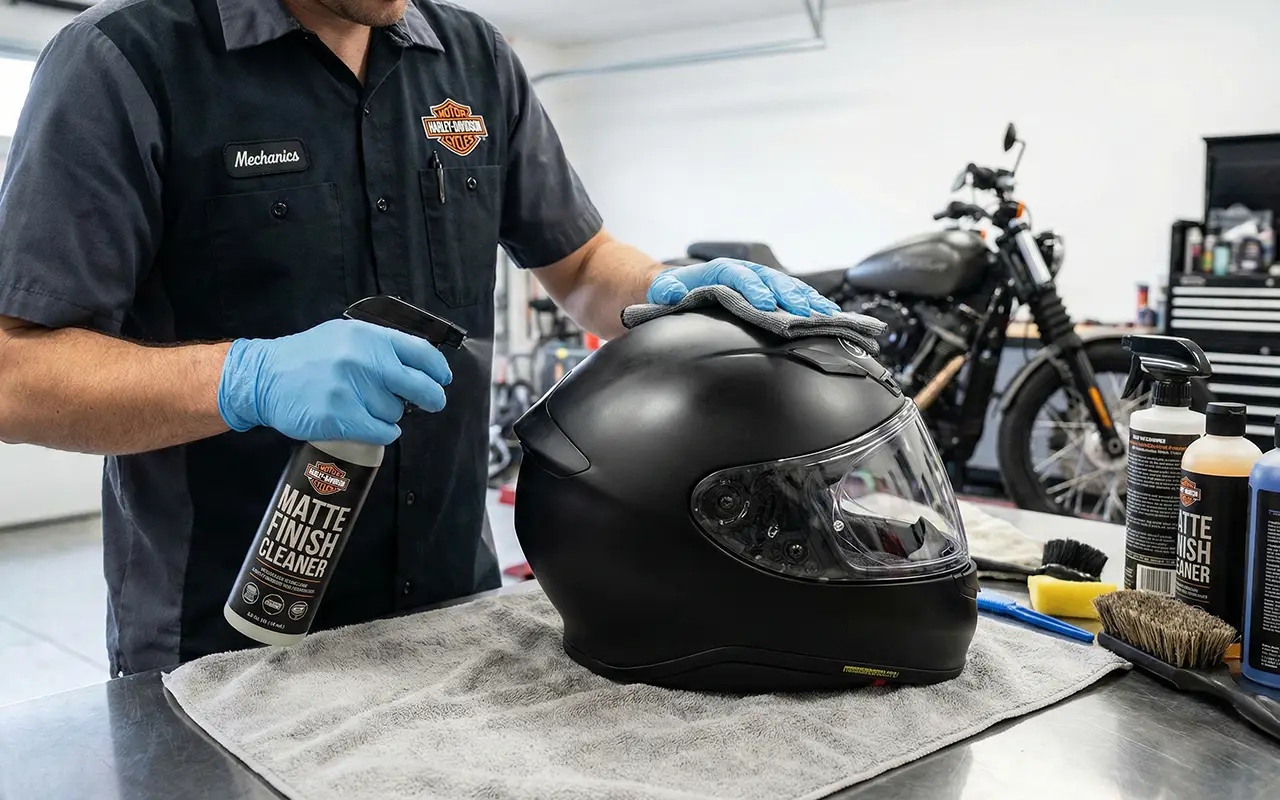
I learned the hard way about matte finishes. Three years ago, I grabbed my girlfriend’s glossy helmet cleaner and went to work on my brand-new Bell Moto-9 MIPS in matte black.
Within thirty seconds, I’d created a shiny handprint across the crown that looked like someone had smeared Vaseline across a chalkboard. That $600 helmet now had a permanent glossy scar that screamed “amateur hour” every time I threw my leg over the bike.
The matte black helmet has become the signature look of modern motorcycling—from café racers to adventure tourers, from weekend warriors to MotoGP professionals. What started as a niche aesthetic in the early 2010s has exploded into the dominant finish across every helmet category.
Manufacturers like AGV, Shoei, Arai, and Bell now offer matte options across their entire lineups, and aftermarket custom painters charge premium rates for proper matte work.
But here’s the problem nobody talks about when you’re dropping serious money on that murdered-out lid: matte finishes are finicky, unforgiving, and remarkably easy to ruin with conventional cleaning methods.
Understanding how to properly clean a matte black helmet isn’t just about aesthetics—it’s about preserving the significant investment you’ve made in your protective gear.
As covered in our comprehensive Ultimate Guide to Motorcycle Helmets, proper maintenance extends the functional life of your helmet while maintaining its visual appeal.
The chemical composition of matte finishes differs fundamentally from gloss, requiring specialized knowledge and specific products to avoid permanent damage.
Understanding Matte Finishes: The Science Behind the Surface
Before we dive into cleaning techniques, you need to understand what makes matte finishes different at a molecular level. This isn’t just paint nerd trivia—this knowledge will prevent you from making catastrophic mistakes.
The Microscopic Landscape of Matte Paint
Matte finishes achieve their non-reflective appearance through microscopic surface irregularities. Unlike gloss finishes, which cure to a smooth, flat surface that reflects light uniformly, matte clear coats contain flatting agents—typically silica particles or other compounds that create a deliberately rough surface texture at the microscopic level.
These tiny peaks and valleys scatter light in multiple directions rather than reflecting it back at consistent angles, creating that coveted flat, non-reflective appearance.
Here’s where it gets critical: when you apply traditional glossy cleaners, polishes, or waxes to a matte surface, you’re essentially filling in those microscopic valleys. The result? Shiny spots that are virtually impossible to remove without sanding down and refinishing the entire helmet.
Whether you’re working with Carbon Fiber vs. Polycarbonate Helmets, the matte finish chemistry remains the same—it’s the clear coat that matters, not the substrate beneath.
Types of Matte Finishes on Helmets
Not all matte black helmets are created equal. Understanding your specific finish type matters when selecting cleaning products:
Factory Matte Clear Coat: Most modern helmets from major manufacturers use a specialized matte clear coat over standard base paint. This is the most durable option and the easiest to maintain properly. Brands like Shoei, Arai, and AGV have refined their matte formulations to resist common contaminants while maintaining that flat finish.
Powder Coat Matte: Some helmets, particularly in the adventure and dual-sport categories, use powder-coated matte finishes. These tend to be more resistant to chemicals but can be more susceptible to abrasion. The texture is often slightly rougher than liquid matte clear coats.
Vinyl Wrap Matte: Aftermarket matte finishes sometimes use vinyl wraps. These require gentler cleaning approaches and are more susceptible to edge lifting if aggressive cleaning methods are used around vents, trim, and seams.
Custom Painted Matte: Custom paint jobs vary wildly in quality and durability. If you’ve invested in a custom matte finish, consult your painter about specific maintenance requirements—they may have used specialized clear coats with unique properties.
What Not to Do: Common Mistakes That Ruin Matte Finishes
Let’s start with the don’ts, because prevention is cheaper than replacement. I’ve seen riders destroy expensive helmets with well-intentioned but catastrophically wrong cleaning approaches.
Never Use These Products on Matte Black Helmets
Wax or Polish: This is the big one. Any product containing wax, carnauba, or polishing compounds will create permanent shiny spots. This includes “all-purpose” helmet cleaners that work fine on gloss finishes. Read the label carefully—if it promises “shine” or “gloss,” keep it away from your matte helmet.
Petroleum-Based Cleaners: Products containing petroleum distillates, mineral spirits, or harsh solvents can break down the chemical bonds in matte clear coats, causing clouding, discoloration, or complete finish failure. This includes many degreasers and industrial cleaners.
Abrasive Cleaners: Anything with abrasive particles—including some bug removers, tar removers, and “heavy-duty” cleaners—will alter the surface texture of matte finishes. While matte surfaces are textured by design, they’re precisely textured. Random abrasion creates inconsistent light scatter, resulting in blotchy, uneven appearance.
Automatic Car Washes: The brushes, high-pressure soap, and wax treatments in automatic car washes are helmet finish destroyers. I’ve seen riders come out of gas station car washes with helmets that looked like someone had tie-dyed them with gloss spots.
Glass Cleaner (Usually): Most glass cleaners contain ammonia and other chemicals that can damage matte finishes over time. While a single application might not cause immediate visible damage, repeated use will degrade the finish. There are exceptions—some matte-safe glass cleaners exist, but verify compatibility before use.
Technique Mistakes to Avoid
Even with the right products, wrong technique can cause problems. Circular scrubbing motions can create visible patterns in matte finishes that catch light differently than surrounding areas. Excessive pressure when wiping can burnish the surface, creating unwanted shine. Using dirty towels or contaminated cleaning cloths can grind particles into the finish, creating scratches that show up as shiny streaks on matte surfaces.
The Right Way: Step-by-Step Guide to Properly Clean a Matte Black Helmet
Now for the good stuff—the actual process that keeps your matte black helmet looking factory-fresh without destroying that carefully engineered finish.
Essential Supplies for Matte Helmet Cleaning
Gather these items before you start. Having everything at hand prevents the temptation to grab whatever’s nearby when you encounter stubborn contamination.
Microfiber Towels (Multiple): You need at least three—one for washing, one for rinsing, and one for drying. Use high-quality, lint-free microfiber towels with soft, plush texture. Cheap microfiber can be surprisingly abrasive. Wash your microfiber towels separately without fabric softener, which leaves residue that can affect matte finishes.
Matte-Specific Cleaner: Invest in a proper matte finish cleaner. S100 Matte Finish Cleaner, Motorex Helmet Care, and Chemical Guys Matte Finish Wash are proven options. These formulations clean without filling in the microscopic texture that creates the matte appearance. Expect to pay $12-20 for a bottle that will last you a season or more.
Distilled Water: For the final rinse, distilled water prevents mineral deposits that can show up as white spots on matte black finishes. A gallon costs about two bucks and lasts for months of helmet cleaning.
Soft Bristle Brush: A baby’s toothbrush or dedicated detailing brush helps with vents, seams, and textured areas without scratching. Avoid stiff bristles that can damage the finish.
Compressed Air (Optional): A can of compressed air or a small air compressor helps dry out vents and hard-to-reach areas where water can pool and cause problems.
The Complete Cleaning Process
Step 1: Remove Loose Contamination
Start by removing your visor and any removable components. As detailed in our guide on How to Wash Your Motorcycle Helmet Liner, separating components allows thorough cleaning of each element. Use compressed air to blow out vents, removing dust, dead bugs, and debris that could scratch the finish during wet cleaning. If you don’t have compressed air, gently tap the helmet to dislodge loose particles.
Step 2: Pre-Soak Stubborn Contamination
For bug splatter, road tar, or other stuck-on contamination, pre-soak with your matte-safe cleaner. Spray the affected area generously and let it sit for 2-3 minutes. This gives the cleaning agents time to break down the contamination without requiring aggressive scrubbing. Don’t let the cleaner dry on the helmet—if you’re working in hot conditions, keep the surface damp by applying additional cleaner as needed.
Step 3: Gentle Washing
Dampen a clean microfiber towel with your matte-specific cleaner. Using light pressure and straight-line motions (not circles), wipe down the entire helmet surface. Work in sections, starting from the top and working down. This prevents dirty runoff from contaminating already-cleaned areas. For textured areas, vents, and seams, use your soft bristle brush with cleaner to gently agitate contamination. The key word here is gentle—let the cleaner do the work, not your elbow grease.
Step 4: Rinse Thoroughly
Using a second clean microfiber towel dampened with distilled water, wipe down the entire helmet to remove all cleaner residue. Any remaining cleaner can attract dust or leave streaks. Change your rinse water and towel if they become contaminated during the process. For helmets with complex graphics or multiple color sections, pay extra attention to edges and transitions where cleaner can accumulate.
Step 5: Proper Drying
Use a third clean, dry microfiber towel to gently pat (not wipe) the helmet dry. Patting prevents the micro-abrasion that can occur from dragging a towel across the surface. Allow the helmet to air dry completely in a cool, shaded area before reassembling components. Direct sunlight or heat can cause water spots or affect the finish. Use compressed air to blow out water from vents and crevices where moisture can linger.
Frequency and Timing
How often should you properly clean your matte black helmet? It depends on riding conditions and frequency, but here’s my recommendation based on two decades of riding in various environments:
After Every Ride in Wet or Muddy Conditions: Road spray, mud, and rain carry contaminants that can stain or etch matte finishes if left to dry and cure on the surface.
Weekly for Regular Riders: If you’re commuting daily or riding several times per week, a quick weekly cleaning prevents buildup that becomes harder to remove over time.
Monthly Minimum for Occasional Riders: Even if your helmet sits in your garage most of the time, dust and environmental contaminants accumulate. A monthly cleaning keeps the finish fresh.
Immediately After Bug-Heavy Rides: Bug splatter is acidic and can etch into matte finishes if left for extended periods. Clean as soon as possible after riding through swarms—those late-summer evening rides through farmland are helmet finish killers.
Dealing with Specific Contaminants on Matte Black Helmets
Different types of contamination require specific approaches when learning how to properly clean a matte black helmet. Here’s how to handle the most common challenges without damaging the finish.
Bug Splatter
Bug guts are acidic and can permanently stain matte finishes if not addressed promptly. The proteins in insect remains can also bond with clear coat at a molecular level, making removal increasingly difficult over time. For fresh bug splatter, pre-soak with matte-safe cleaner for 5 minutes, then gently wipe with a damp microfiber towel. For dried bug remains, create a “bug removal poultice” by soaking a microfiber towel in matte cleaner, laying it over the affected area, and letting it sit for 10-15 minutes. This extended contact time softens the contamination without requiring aggressive scrubbing.
Road Tar and Asphalt
Fresh road construction is a helmet finish nightmare. Tar is petroleum-based and requires careful removal to avoid damaging matte clear coats. Never use standard tar removers, which contain harsh solvents. Instead, use isopropyl alcohol (70% concentration) applied sparingly to a microfiber towel. Gently dab (don’t rub) the tar spot until it begins to dissolve, then immediately clean the area with your matte-safe cleaner to remove alcohol residue. Work quickly—prolonged alcohol contact can affect matte finishes.
Oil and Grease
Chain lube overspray, fork oil from suspension work, or general garage contamination requires degreasing without harsh solvents. Matte-safe cleaners handle light oil contamination, but for heavier deposits, use a dedicated matte-safe degreaser like S100 Total Cleaner (which is safe for matte finishes despite being a powerful degreaser). Apply, let sit for 2-3 minutes, then wipe clean with a damp microfiber towel.
Water Spots and Mineral Deposits
Hard water can leave mineral deposits that show up as white or cloudy spots on matte black finishes. Prevention is easier than cure—always do your final rinse with distilled water and dry the helmet promptly. For existing water spots, use a 50/50 mixture of distilled white vinegar and distilled water. Apply with a microfiber towel, let sit for 1-2 minutes, then rinse thoroughly with distilled water. The mild acidity dissolves mineral deposits without harming the matte finish.
Scuff Marks and Paint Transfer
Contact with other helmets, garage walls, or bike components can leave marks on matte finishes. For light scuffs, matte-safe cleaner and gentle wiping often removes the contamination. For stubborn marks, try isopropyl alcohol on a cotton swab, working carefully on just the affected area. For paint transfer (like when your helmet kisses your buddy’s gloss helmet during a parking lot conversation), you may need to carefully use a plastic razor blade to lift the transferred paint, followed by cleaning with matte-safe products.
Long-Term Maintenance and Protection
Proper cleaning is just part of the equation when learning how to properly clean a matte black helmet. Long-term maintenance strategies keep your helmet looking new for years.
Storage Considerations
Where and how you store your helmet between rides significantly impacts finish longevity. Store helmets in a cool, dry location away from direct sunlight. UV exposure degrades all helmet finishes over time, but matte clear coats can show UV damage as uneven fading or color shift more readily than gloss finishes. Use a helmet bag or cover to protect from dust accumulation—less dust means less frequent cleaning and less opportunity for finish damage.
Avoid storing helmets in extreme temperatures. Heat accelerates chemical degradation of clear coats, while extreme cold can make finishes brittle and more susceptible to damage. Your garage might seem convenient, but if it reaches 110°F in summer or drops below freezing in winter, find a climate-controlled storage location. As discussed in our article on When to Replace Your Motorcycle Helmet, environmental factors affect both safety performance and finish integrity.
Matte Finish Protection Products
Unlike gloss finishes that benefit from wax and sealant protection, matte finishes require specialized protection products. Several companies now offer matte finish sealants that provide a protective barrier without adding gloss. These products fill microscopic imperfections without creating shine, making the surface easier to clean and more resistant to staining.
Dr. Beasley’s Matte Paint Sealant and Gtechniq G4 Matte Finish are two proven options. Application is straightforward: clean the helmet thoroughly, apply the sealant according to manufacturer directions (usually with an applicator pad), let it cure for the specified time, then buff with a clean microfiber towel. These sealants typically last 3-6 months depending on riding frequency and conditions.
The benefits are significant: easier bug removal, better water beading (which prevents water spots), and increased resistance to UV fading. The cost runs $20-40 for a bottle that will last multiple applications across several helmets. For riders serious about maintaining their matte finish investment, these products are worth every penny.
Touch-Up and Repair
Despite your best efforts, matte black helmets will eventually show wear. Small chips, scratches, or scuffs are inevitable if you actually ride. Minor imperfections can be addressed with matte touch-up paint matched to your helmet’s specific color. Most major manufacturers offer touch-up kits, or you can source matte black automotive touch-up paint.
For application, clean the area thoroughly, apply paint sparingly with a fine brush or toothpick (less is more), and allow to cure completely. Resist the urge to apply clear coat over touch-ups—standard clear coat will create a shiny spot. If you must seal the touch-up, use a matte clear coat spray, applying very light coats from a distance to maintain the flat finish.
For more extensive damage—deep scratches, finish failure, or significant scuffing—professional refinishing may be necessary. Custom helmet painters can strip and refinish helmets with proper matte clear coats. Costs typically run $200-500 depending on complexity, but this is often worthwhile for high-end helmets where the shell remains structurally sound but the finish is compromised.
Special Considerations for Different Helmet Types
The basic principles of how to properly clean a matte black helmet remain consistent, but different helmet styles present unique challenges and considerations.
Full-Face Helmets
Full-face helmets in matte black are the most common configuration. The large, smooth surface area makes them relatively straightforward to clean, but the chin bar requires attention—this area accumulates road spray, chain lube, and contamination that riders often miss during quick wipe-downs. Pay special attention to the transition between the chin bar and visor opening, where contaminants accumulate in the recessed areas.
When cleaning around the visor mechanism, avoid getting excessive moisture into the pivot points. While modern helmets are designed to handle weather exposure, pooled cleaning solution can attract dust and cause mechanism stiffness. If you’re experiencing visor issues, check out our guide on Why Is My Helmet Visor Stiff? for solutions.
Modular Helmets
Modular helmets add complexity with their flip-up chin bars and additional pivot points. These mechanisms accumulate grime that can affect operation if not cleaned regularly. Use your soft bristle brush with matte-safe cleaner to gently clean around pivot points, hinges, and locking mechanisms. After cleaning, apply a small amount of silicone spray to pivot points to maintain smooth operation—just keep the silicone away from the matte finish itself.
The increased number of seams and panel gaps in modular designs means more places for water to hide during drying. Take extra time to ensure complete drying, using compressed air if available. Water trapped in mechanisms can cause corrosion that affects both function and finish. For more on these versatile helmets, see our roundup of the Best Motorcycle Modular Helmets.
Open-Face and Three-Quarter Helmets
Open-face helmets in matte black present unique cleaning challenges due to increased interior exposure to the elements. The inside edge of the shell opening requires attention—this area gets contaminated from face oils, sweat, and environmental exposure. Clean this transition area carefully, as it’s visible when the helmet is off and shows dirt readily against matte black.
The lack of a chin bar means less surface area to clean, but also means the helmet interior is more exposed to road spray and contamination during rides. More frequent cleaning may be necessary compared to full-face helmets. The exposed nature also means these helmets benefit significantly from protective sealants that make cleaning easier.
Adventure and Dual-Sport Helmets
Adventure and dual-sport helmets see some of the harshest conditions—mud, dust, water crossings, and general off-road abuse. Matte black adventure helmets accumulate contamination quickly but are also designed with more durable finishes to withstand these conditions. The visors and peaks on these helmets create additional areas where mud and dust accumulate.
For heavily soiled adventure helmets, consider a pre-rinse with a gentle stream of water to remove bulk contamination before applying cleaner. This prevents grinding mud and dust into the finish during the cleaning process. The increased ventilation on adventure helmets means more vents to clean—use your brush and compressed air to ensure these critical areas don’t become clogged with dried mud.
Troubleshooting Common Matte Finish Problems
Even with proper care, you may encounter issues with your matte black helmet finish. Here’s how to address common problems.
Accidental Glossy Spots
If you’ve accidentally used the wrong cleaner and created shiny spots, you have limited options. For very minor glossing, sometimes repeated cleaning with proper matte-safe cleaner can gradually restore some of the flat appearance, but don’t expect miracles. More significant glossing typically requires professional intervention—a custom painter can wet-sand the affected area and reapply matte clear coat. Prevention is far easier than correction.
Uneven Fading
Matte black finishes can show uneven fading from UV exposure, appearing lighter or slightly brown in areas that receive more sun exposure. This is particularly common on the helmet crown and areas facing forward during storage. Once fading occurs, it’s permanent—the pigment has been degraded by UV radiation. Prevention through proper storage and UV protection is the only real solution. Significantly faded helmets require refinishing.
Clouding or Hazing
A cloudy or hazy appearance in matte finishes usually indicates clear coat degradation from chemical exposure or UV damage. Unlike gloss finishes where polishing can sometimes restore clarity, matte finishes can’t be polished without destroying the flat appearance. If the clouding is superficial, thorough cleaning with matte-safe products sometimes improves appearance, but significant hazing typically indicates finish failure requiring professional refinishing.
Persistent Staining
Some contaminants—particularly certain bug proteins, tree sap, and industrial fallout—can permanently stain matte finishes if not removed promptly. For stubborn stains that resist normal cleaning, try a clay bar designed for matte finishes. These specialized clay bars are less aggressive than standard automotive clay and can lift embedded contamination without affecting the matte texture. Use with a matte-safe lubricant, work gently, and test in an inconspicuous area first.
The Economics of Proper Matte Helmet Care
Let’s talk money, because proper maintenance is an investment that pays dividends. A quality matte black helmet from a reputable manufacturer costs $300-800, with premium models pushing past $1,000. Improper cleaning can destroy that finish in minutes, leaving you with an expensive helmet that looks like a clearance bin reject.
Compare that to the cost of proper maintenance: a bottle of matte-specific cleaner ($15), quality microfiber towels ($20 for a pack), and a protective sealant ($30) totals about $65. These supplies last for a year or more of regular use. That’s roughly 8-10% of the cost of a mid-range helmet, providing protection for the entire usable life of the helmet (typically 5-7 years).
Factor in that a professional refinish costs $200-500, and the economics become crystal clear: spending a few dollars on proper cleaning products and dedicating 15 minutes every few weeks to proper maintenance saves hundreds of dollars and keeps your helmet looking showroom-fresh for years.
For riders who own multiple helmets—perhaps a lightweight carbon fiber helmet for sport riding and a quiet touring helmet for long distances—proper maintenance across your collection multiplies these savings.
Professional Insights and Industry Perspectives
I’ve spoken with custom helmet painters, product chemists, and helmet manufacturers about matte finish maintenance. The consensus is clear: most helmet finish damage is user-inflicted through improper cleaning. According to one custom painter I interviewed who refinishes 50-60 helmets annually, approximately 70% of his matte black refinish jobs are due to cleaning damage rather than impact damage or normal wear.
Helmet manufacturers have improved matte finish durability significantly over the past decade. Early matte helmets from the 2010-2012 era were notoriously fragile, with finishes that could be damaged by aggressive wiping even with proper products. Modern matte clear coats are far more robust, using advanced polymer chemistry that maintains the flat appearance while providing better chemical and abrasion resistance.
However, manufacturers also acknowledge that matte finishes will never be as forgiving as gloss finishes. The physics of how matte surfaces work—those microscopic irregularities that scatter light—means they’re inherently more susceptible to contamination and more difficult to clean without affecting appearance. This is the trade-off for the aesthetic appeal.
Product chemists developing matte-safe cleaners face a challenging balance: creating formulations strong enough to remove road contamination while being gentle enough not to affect the delicate surface texture. The best products use surfactant chemistry that lifts contamination without requiring mechanical abrasion, combined with pH-neutral formulations that won’t react with clear coat polymers.
The Future of Matte Helmet Finishes
Helmet finish technology continues to evolve. Several manufacturers are experimenting with ceramic-infused matte clear coats that promise better durability and easier cleaning. These advanced finishes use nanotechnology to create self-cleaning properties—contaminants have difficulty bonding to the surface, making removal easier.
Graphene-enhanced clear coats are also emerging in the high-end helmet market. Graphene’s molecular structure provides exceptional hardness and chemical resistance while maintaining the matte appearance. Early reports suggest these finishes can withstand more aggressive cleaning while resisting staining and fading better than conventional matte clear coats. Expect to see these technologies filter down from premium helmets to mainstream models over the next few years.
Some manufacturers are also exploring hydrophobic matte finishes that shed water more effectively, reducing water spot formation and making drying easier. These finishes could significantly simplify maintenance for riders in wet climates.
Conclusion: Protecting Your Investment
Learning how to properly clean a matte black helmet isn’t complicated, but it requires specific knowledge, appropriate products, and consistent technique. The non-negotiable rules are simple: never use products containing wax, polish, or harsh solvents; always use matte-specific cleaners; employ gentle pressure and proper technique; and clean regularly before contamination becomes embedded.
The matte black helmet has evolved from a niche aesthetic choice to the dominant finish in modern motorcycling. This popularity means manufacturers have improved durability and maintenance requirements, but the fundamental chemistry of matte finishes demands respect and proper care. Your helmet is both critical safety equipment and a significant financial investment—treating it accordingly through proper maintenance ensures it performs its protective function while looking sharp for years.
After two decades of riding and countless helmets through my hands, I’m convinced that proper cleaning technique is one of the most overlooked aspects of motorcycle gear maintenance. Riders will spend hours detailing their bikes but grab whatever spray bottle is handy when their helmet needs cleaning. This cavalier approach destroys finishes and wastes money. Invest in proper products, learn correct technique, and make helmet maintenance part of your regular riding routine. Your matte black helmet will thank you by maintaining that factory-fresh appearance long after your riding buddies’ helmets have degraded into blotchy, faded shadows of their former glory.
Frequently Asked Questions
Can I use regular car wash soap on my matte black helmet?
No, standard car wash soaps typically contain wax or gloss enhancers that will create shiny spots on matte finishes. Even “wax-free” car soaps may contain surfactants and additives optimized for gloss finishes that can affect matte surfaces. Always use cleaners specifically formulated for matte finishes. The small investment in proper products prevents expensive refinishing costs down the road.
How do I remove scratches from a matte black helmet?
Minor scratches in matte finishes cannot be polished out like gloss finishes—polishing destroys the matte texture. For very light scratches, sometimes careful application of matte black touch-up paint can minimize their appearance. Deeper scratches require professional refinishing with proper matte clear coat. Prevention through careful handling and proper storage is the best approach, as matte finish repair options are limited compared to gloss finishes.
Will rain damage my matte black helmet finish?
Rain itself won’t damage matte finishes—modern helmet clear coats are designed to withstand weather exposure. However, rain can leave water spots if the water contains minerals and is allowed to dry on the surface. The bigger concern is the contamination rain picks up—road spray carries oils, salts, and other contaminants that can stain or etch matte finishes if not cleaned promptly after wet rides. Always clean your helmet after riding in rain, paying special attention to the lower portions that receive the most road spray.
Can I apply a ceramic coating to my matte black helmet?
Yes, but only ceramic coatings specifically formulated for matte finishes. Standard ceramic coatings designed for automotive gloss finishes will create unwanted shine on matte surfaces. Matte-specific ceramic coatings provide excellent protection against contamination, UV damage, and water spotting while maintaining the flat appearance. Professional application is recommended, as improper application can create uneven appearance or high spots. These coatings typically last 1-2 years and significantly ease maintenance, making them worthwhile for riders serious about preserving their helmet’s appearance.