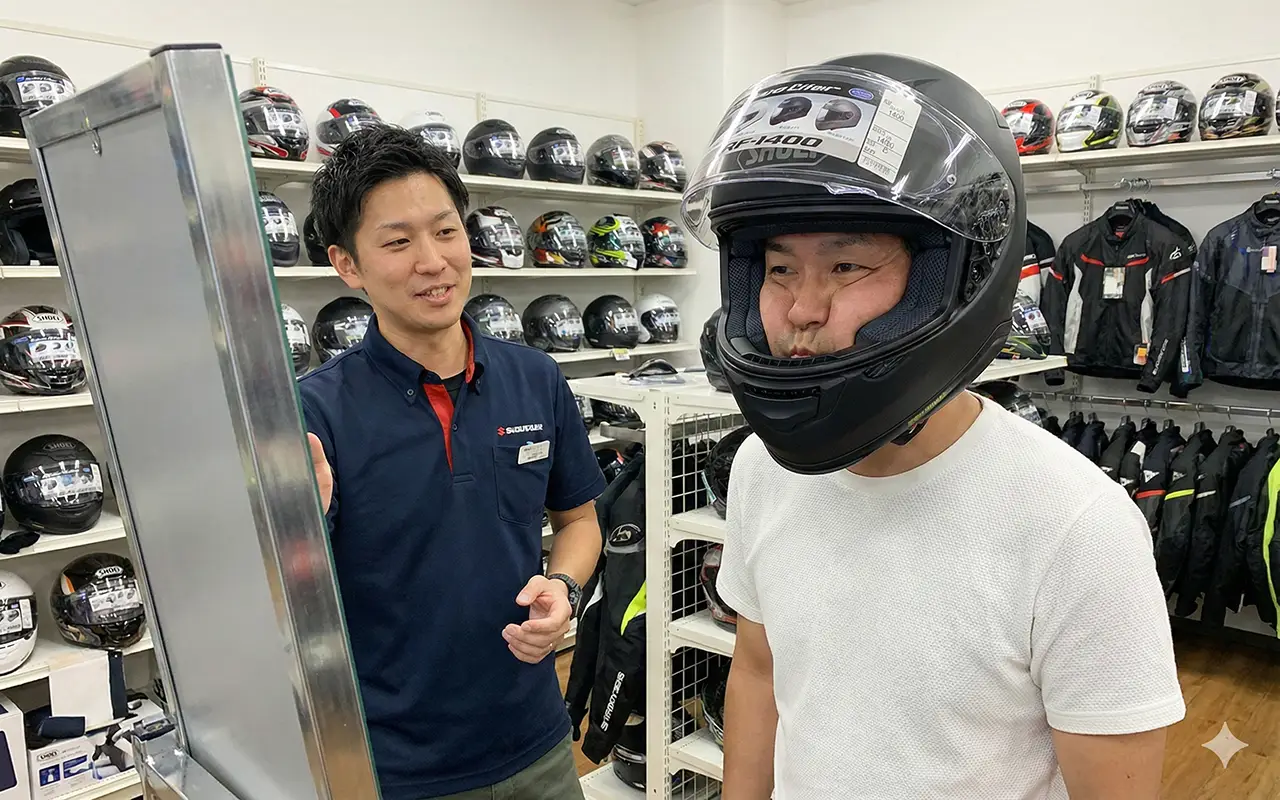
I’ll never forget watching a rider at a gas station struggling to remove his helmet, his face emerging red and compressed, with deep pressure marks running from his temples to his jawline. “Tight means safe, right?” he asked, half-joking but clearly uncomfortable.
This scene plays out thousands of times daily across the motorcycle community, fueling what I call the “Chipmunk Cheeks Debate”—the ongoing discussion about proper helmet fit and the fine line between secure and suffocating.
The Chipmunk Cheeks Debate represents one of the most misunderstood aspects of motorcycle safety equipment. For decades, riders have been told that a properly fitting helmet should be “snug,” but what does that actually mean?
The confusion stems from conflicting advice: manufacturers say one thing, experienced riders another, and safety organizations often speak in technical terms that don’t translate to real-world comfort. According to recent studies, approximately 60% of riders wear improperly fitted helmets—many too loose, but a surprising number dangerously tight.
Understanding proper helmet fit isn’t just about comfort; it’s fundamental to the protective equipment’s ability to function as designed. For comprehensive guidance on selecting and fitting your helmet correctly, refer to our Ultimate Guide to Motorcycle Helmets, which covers everything from shell construction to retention systems.
The Science Behind Helmet Compression
Before we dive into the Chipmunk Cheeks Debate specifics, we need to understand what’s actually happening when you put on a helmet. Modern motorcycle helmets use multi-density expanded polystyrene (EPS) foam liners designed to compress during impact, absorbing energy that would otherwise be transferred to your skull. However, the comfort liner—the soft padding touching your face—serves an entirely different purpose.
The comfort liner creates the interface between your head and the protective shell. It’s typically made from moisture-wicking fabrics surrounding foam of varying densities. This liner must hold your head firmly in place to prevent the helmet from rotating during an impact, which could expose your face or neck to injury. But here’s the critical point: the comfort liner is designed to compress approximately 15-20% during the break-in period, usually over the first 15-20 hours of wear.
This break-in characteristic is where the Chipmunk Cheeks Debate intensifies. A helmet that feels appropriately snug in the store will feel looser after several rides. Conversely, a helmet that feels slightly tight initially might achieve perfect fit after break-in. The challenge lies in distinguishing between “tight enough to be safe” and “so tight it compromises safety and comfort.”
Understanding Pressure Points vs. Uniform Compression
Dr. James McIntosh, a biomechanical engineer who’s spent two decades studying helmet performance, explained to me that there’s a crucial difference between uniform compression and pressure points.
“Uniform compression means the entire liner is making contact with your head, distributing force evenly,” he said during our interview at a helmet testing facility. “Pressure points indicate mismatched geometry between your head shape and the helmet’s internal shape.”
Pressure points are never acceptable. They cause discomfort, can lead to headaches, and may even compromise safety by creating areas where the helmet doesn’t fit properly. Common pressure point locations include the temples, forehead, and the base of the skull.
If you experience sharp, localized pain in any of these areas, the helmet is wrong for your head shape—no amount of break-in will fix this fundamental mismatch. Understanding your head shape is crucial, which is why our Motorcycle Helmet Fitment Guide provides detailed instructions for measuring and identifying whether you have a round, intermediate oval, or long oval head shape.
The “Chipmunk Cheeks” Phenomenon Explained
The term “chipmunk cheeks” refers to the appearance of your cheeks being pushed forward and upward by the helmet’s cheek pads, creating a puffy, compressed look. This visual cue has become shorthand in the motorcycle community for discussing helmet tightness, but it’s actually a poor indicator of proper fit.
Here’s why: cheek pad compression varies dramatically based on facial structure. Someone with prominent cheekbones and lean facial features might show significant cheek compression in a properly fitted helmet, while someone with a fuller face might show minimal compression in the same size helmet, even though both fits could be correct for their respective head shapes.
The real question isn’t “Do I have chipmunk cheeks?” but rather “Can I wear this helmet comfortably for extended periods while maintaining proper safety positioning?” During my 15 years of testing helmets across every major manufacturer, I’ve learned that appearance means nothing—function and comfort over time are everything.
The Shake Test: Myth vs. Reality
Most riders are familiar with the shake test: you put on the helmet, fasten the chin strap, and shake your head vigorously. If the helmet moves independently of your head, it’s too loose. This test has merit but is often misapplied in the Chipmunk Cheeks Debate.
The shake test should result in your skin moving with the helmet—you should feel your cheeks, forehead, and scalp shifting as the helmet moves. However, the helmet shouldn’t cause pain during this test. If shaking your head creates sharp pain at the temples or jaw, the helmet is too tight or geometrically incompatible with your head shape.
I’ve witnessed countless riders performing the shake test incorrectly, either being too gentle (which doesn’t actually test anything) or being so aggressive that they mistake the discomfort from rapid head movement for helmet-induced pain. The proper technique involves smooth but firm head rotation in all directions—left, right, up, and down—while paying attention to whether the helmet stays put without causing acute discomfort.
The Break-In Period: Managing Expectations
The break-in period is central to the Chipmunk Cheeks Debate because it’s when initial tightness either resolves into perfect fit or reveals itself as a fundamental sizing problem. Most quality helmets require 15-20 hours of wear for the comfort liner to fully conform to your head shape.
During this period, you should experience gradual relief from initial snugness, not increasing discomfort. If a helmet that felt tight on day one feels painfully tight on day three, something is wrong. Similarly, if a helmet that felt appropriately snug becomes loose enough to move around after just a few rides, you started with the wrong size.
I recommend this break-in protocol: wear the new helmet for progressively longer periods during the first week. Start with 30-minute sessions around the house, then extend to hour-long rides. Pay attention to where you feel pressure and whether it’s diminishing. Take notes—literally write down what you’re feeling after each wearing session. This documentation helps you track whether the fit is improving or whether you need to exchange the helmet for a different size or model.
When Tight Becomes Too Tight
There are clear warning signs that a helmet has crossed from appropriately snug to dangerously tight. First, any helmet that causes headaches within 30 minutes is too tight. I’m not talking about the mild adjustment discomfort of a new helmet—I mean throbbing, pressure-induced headaches that persist after removal.
Second, watch for jaw fatigue. Your jaw should move naturally inside the helmet. If you find yourself unable to yawn comfortably or if your jaw aches after short rides, the cheek pads are too tight. This isn’t just a comfort issue—jaw tension can cause TMJ problems and can even affect your ability to communicate clearly, which is a safety concern if you’re riding with others.
Third, check for circulation issues. If you notice tingling, numbness, or unusual cold sensations in your scalp or face, the helmet is restricting blood flow. This is unacceptable and dangerous, as it can lead to distraction while riding and potential long-term nerve damage with repeated use.
Fourth, monitor your neck. An overly tight helmet can cause you to unconsciously tense your neck muscles to counteract the pressure, leading to neck pain and fatigue.
This is particularly problematic for newer riders who are already dealing with neck strain from the unfamiliar weight of a helmet. For those experiencing persistent neck issues, understanding Neck Pain and Helmet Weight can provide valuable insights into choosing appropriately weighted helmets and strengthening exercises.
Too Loose: The Greater Danger
While the Chipmunk Cheeks Debate focuses on helmets being too tight, the statistically more dangerous problem is helmets being too loose. A 2019 study by the Motorcycle Safety Foundation found that in accidents where helmets came off or shifted significantly, 87% involved helmets that were too large or improperly secured.
A loose helmet can rotate during impact, exposing your face to injury or preventing the EPS liner from properly aligning with the impact zone. In severe cases, loose helmets have been ejected completely during crashes, leaving riders with no protection whatsoever. This is why erring on the side of tightness—within reason—is generally the safer choice.
The signs of a too-loose helmet are often subtle. You might not notice significant movement during normal riding, but the helmet shifts when you look over your shoulder to check blind spots. Or perhaps the helmet settles lower on your head during long rides, requiring constant adjustment. These are red flags that the helmet is too large.
The Chin Strap Factor
An often-overlooked element in the Chipmunk Cheeks Debate is the chin strap’s role in helmet security. Even a properly sized helmet becomes dangerous if the retention system isn’t correctly adjusted and fastened. The chin strap should be tight enough that you can fit no more than two fingers between the strap and your chin when buckled.
I’ve seen riders compensate for loose helmets by over-tightening chin straps, which creates its own problems: difficulty breathing, jaw discomfort, and in some cases, dangerous pressure on the throat. The chin strap is a secondary retention system—the primary retention comes from the helmet’s fit around your head.
If you’re relying heavily on the chin strap to keep the helmet in place, the helmet is too large. Understanding different retention systems is crucial, which is why I recommend reading our comparison of Double D-Ring vs. Micrometric Buckle systems to ensure you’re using your helmet’s retention system correctly.
Head Shape: The Missing Variable
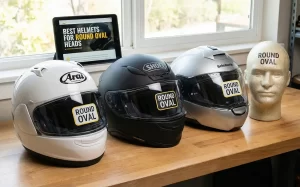
The Chipmunk Cheeks Debate often overlooks the most critical factor in helmet fit: head shape compatibility. Motorcycle helmets are generally designed for three basic head shapes: round, intermediate oval, and long oval. Wearing a helmet designed for a different head shape than yours will create fit problems no amount of sizing adjustment can fix.
Round heads are nearly as wide as they are long, with measurements showing less than a 3cm difference between width and length. Intermediate oval heads (the most common shape, representing about 60% of the population) are slightly longer than they are wide, with a 3-5cm difference. Long oval heads show more than 5cm difference, creating a distinctly elongated shape when viewed from above.
Here’s where it gets interesting: a size large helmet designed for an intermediate oval head might fit perfectly for one rider but create severe pressure points for another rider who also wears size large but has a round head shape.
The second rider might try a size extra-large to relieve the pressure, only to find the helmet is now too loose in some areas while still tight in others. This mismatch of head shape and helmet design is responsible for countless cases of riders believing all helmets are uncomfortable.
Manufacturer-Specific Fit Characteristics
Adding another layer of complexity, different manufacturers design their helmets with different internal shapes, even when nominally targeting the same head shape category. Arai helmets, for example, are generally known for fitting intermediate to long oval heads, with a reputation for being narrower than average.
Shoei tends toward intermediate oval with slightly more generous cheek pad accommodation. AGV historically fits rounder head shapes, while HJC offers some of the most accommodating fits for round heads in the budget category.
These aren’t absolute rules—every manufacturer offers multiple models with varying internal geometries—but understanding these tendencies can save you time when helmet shopping.
If you have a round head and you’re experiencing the chipmunk cheeks problem with an Arai, the issue isn’t necessarily sizing; it’s that Arai’s typical internal shape doesn’t match your head geometry. Switching to an AGV or Shark helmet in the same size might provide perfect fit.
This is why I always recommend trying on multiple brands when shopping for a helmet, even if you have a favorite manufacturer. Your head shape doesn’t care about brand loyalty, and the perfect helmet is the one that fits your specific geometry.
For riders just starting out who might not be familiar with different manufacturers’ fit characteristics, our guide to the Best Motorcycle Helmets for Beginners includes fit information to help narrow down which brands to try first.
The Role of Helmet Type in Perceived Tightness
The style of helmet you choose significantly impacts how tightness feels and functions. Full-face helmets naturally create more facial contact than modular or open-face designs, which can intensify the chipmunk cheeks appearance and sensation. Understanding these differences is essential to the Chipmunk Cheeks Debate.
Full-face helmets provide the most comprehensive protection but also the most extensive contact with your face. The cheek pads in a quality full-face helmet are substantial, designed to keep your head centered within the protective shell.
This means more compression on your cheeks compared to other helmet styles. For riders new to full-face helmets, this can feel claustrophobic initially, even when the fit is correct.
Modular helmets offer similar protection when the chin bar is closed but typically feature slightly less aggressive cheek pad design to accommodate the flip-up mechanism. This can make them feel less tight around the face, though this comes with trade-offs in weight and sometimes in protection level.
For riders who find full-face helmets too confining, modulars offer a middle ground. Our comprehensive comparison of Full Face vs. Modular vs. Open Face Helmets explores these differences in detail.
Sport Helmets vs. Touring Helmets
Even within the full-face category, sport-oriented helmets typically fit more snugly than touring helmets. Sport helmets are designed for riders in aggressive, forward-leaning positions and often feature more compact internal shapes to reduce aerodynamic drag. This results in tighter facial contact, particularly around the cheeks and chin.
Touring helmets, by contrast, are designed for long-distance comfort and often feature more generous internal dimensions, particularly around the face. The cheek pads might be slightly less dense, and the overall fit is optimized for all-day wear rather than maximum aerodynamic efficiency. A rider who finds a sport helmet uncomfortably tight might discover that a touring helmet from the same manufacturer in the same size fits perfectly.
This distinction is crucial for riders who primarily commute or tour rather than attacking canyon roads or track days. There’s no shame in choosing a touring helmet for its comfort characteristics—you’re not sacrificing safety, just optimizing for different priorities.
The Temperature Variable
Here’s an aspect of the Chipmunk Cheeks Debate that rarely gets discussed: temperature significantly affects how tight a helmet feels. The foam in helmet liners responds to heat, becoming more pliable as it warms up. A helmet that feels uncomfortably tight during a cold morning commute might feel perfectly fitted by afternoon.
This temperature sensitivity works both ways. In hot weather, the combination of foam expansion from heat and facial swelling from increased blood flow can make a normally comfortable helmet feel tight. I’ve tested this extensively during summer rides through the Southwest, where ambient temperatures exceed 100°F. Helmets that felt perfect in 70-degree weather became noticeably tighter in extreme heat.
The solution isn’t to size up—that would compromise fit in normal conditions—but rather to understand that some variation in perceived tightness is normal and expected. If a helmet feels slightly tight in cold weather but perfect in moderate temperatures, that’s actually ideal.
The helmet is providing proper retention across a range of conditions. For riders dealing with extreme heat regularly, choosing helmets with superior ventilation can mitigate some of these comfort issues. Check out our recommendations for the best motorcycle helmet for hot weather to see models specifically designed for thermal comfort.
Special Considerations: Glasses, Beards, and Hair
The Chipmunk Cheeks Debate becomes more complex when you add accessories and personal grooming choices into the equation. Riders who wear glasses face unique fitting challenges, as the temple arms must pass between the cheek pads and the head without creating pressure points.
This often requires slightly larger cheek pad cutouts, which some riders interpret as needing a larger helmet overall—a mistake that can compromise safety.
If you wear glasses, look for helmets specifically designed with eyewear channels or grooves in the cheek pads. These accommodate the temple arms without requiring you to size up. Many modern helmets feature this design, though it’s not always prominently advertised.
When trying on helmets, always wear your glasses to ensure the fit works with your actual riding configuration. Our guide to the best motorcycle helmet for glasses wearers highlights models with superior eyewear accommodation.
The Beard Factor
Bearded riders often struggle with helmet fit, as facial hair adds volume that must be accommodated within the cheek pads. A full beard can effectively add half a size or more to your face, meaning a helmet that fits perfectly when clean-shaven might feel uncomfortably tight with a beard.
The solution depends on your commitment to your beard. If you maintain consistent facial hair, fit the helmet with your beard in place. If your beard length varies seasonally, fit the helmet with your typical maximum beard length.
Some riders use adjustable cheek pads (available as aftermarket accessories for many helmets) to accommodate changing facial hair. For more specific guidance, our article on the best motorcycle helmets for guys with beards provides detailed recommendations.
Hair Considerations
Long hair, particularly thick or curly hair, presents its own fitting challenges. The key is consistency—always fit a helmet with your hair in the same configuration you’ll wear while riding. If you typically wear your hair in a ponytail or bun, do so when trying on helmets. If you wear it down, try the helmet that way.
Some riders with very long or thick hair find they need to size up slightly to accommodate their hair comfortably. This is one of the few situations where going slightly larger might be appropriate, but be cautious—the helmet must still fit snugly around your actual head, not just accommodate your hair.
The hair itself provides no protective value, so the helmet’s fit around your skull remains the priority. For detailed strategies on managing hair with helmets, see our guide on How to Keep Your Hair Looking Good After a Ride.
The Professional Fitting Experience
While online shopping dominates helmet sales, nothing replaces a professional fitting for resolving the Chipmunk Cheeks Debate for your specific situation. A knowledgeable helmet specialist can assess your head shape, identify pressure points, and recommend brands and models that match your geometry—information that’s nearly impossible to determine from online descriptions and reviews.
During a professional fitting, the specialist should spend at least 15-20 minutes with you, trying multiple sizes and brands. They should ask about your riding style, typical ride duration, and any specific comfort concerns. They should observe how the helmet sits on your head from multiple angles and perform the shake test with you. Most importantly, they should never rush you or pressure you into a purchase.
I’ve visited helmet shops across three continents, and the quality of fitting services varies dramatically. The best shops treat helmet fitting as a technical service, not just a sales transaction.
They keep detailed notes on customer head shapes and preferences, building a knowledge base that helps them serve customers better over time. They’re honest when a helmet doesn’t fit properly, even if it means losing a sale, because they understand that a poorly fitted helmet damages their reputation more than a lost sale.
What to Expect from a Quality Fitting
A professional fitting should include several key steps. First, the specialist should measure your head circumference at the widest point (typically about an inch above your eyebrows). This provides a starting point for sizing but isn’t the complete picture.
Second, they should assess your head shape, either through visual inspection or by using specialized measuring tools. Some shops use 3D scanning technology, though this is still relatively rare. At minimum, they should be able to identify whether you have a round, intermediate oval, or long oval head shape.
Third, they should have you try on multiple helmets in your size range, including different brands known for different internal shapes. They should observe how each helmet sits on your head, checking for gaps at the temples or forehead and assessing cheek pad compression.
Fourth, they should ask you to wear the best-fitting helmet for at least 10-15 minutes while browsing the shop or sitting comfortably. This allows you to assess comfort beyond the initial impression. Any helmet can feel okay for 30 seconds; proper fit assessment requires extended wear.
Finally, they should explain the break-in process and set realistic expectations about how the fit will evolve over the first 20 hours of use.
They should also clarify the shop’s exchange policy in case the helmet doesn’t work out after a few rides. For guidance on finding quality fitting services in your area, our article on the best place to get fitted for a motorcycle helmet provides helpful tips.
The Impact of Helmet Construction on Fit
The materials and construction methods used in helmet manufacturing significantly influence how tight a helmet feels and how it breaks in. Understanding these factors adds important context to the Chipmunk Cheeks Debate.
Budget helmets typically use polycarbonate shells with relatively thick walls to achieve necessary strength. This construction method often results in larger overall helmet dimensions and less refined internal shaping. The comfort liners in budget helmets may use simpler foam compositions that don’t conform to head shape as effectively as premium materials.
Mid-range and premium helmets often use fiberglass composite or carbon fiber shells, which can be made thinner while maintaining strength. This allows for more compact external dimensions and more sophisticated internal shaping.
The comfort liners typically use multi-density foams that conform more precisely to head shape and break in more predictably. For a detailed comparison of shell materials and their impact on fit and safety, see our analysis of Polycarbonate vs. Fiberglass vs. Carbon Fiber helmet shells.
Shell Sizes and Internal Sizing
Premium helmet manufacturers often produce multiple shell sizes, with each shell covering a narrower range of head sizes. For example, a manufacturer might produce a small shell for sizes XS and S, a medium shell for sizes M and L, and a large shell for sizes XL and XXL. This allows for better proportions across the size range—smaller riders get appropriately sized helmets rather than scaled-down versions of large helmets.
Budget manufacturers, constrained by cost considerations, often use fewer shell sizes, sometimes just two shells covering the entire size range.
This means a size small might be the same shell as a medium, just with thicker comfort liner padding. While this can work, it often results in less optimal fit, particularly at the extremes of each shell’s size range.
When evaluating the Chipmunk Cheeks Debate for a specific helmet, it’s worth researching how many shell sizes that model uses. Generally, more shell sizes indicate better fit across the range, though this isn’t an absolute rule.
Customization Options: When Standard Fit Isn’t Enough
For riders who can’t find an off-the-shelf helmet that fits properly, customization options exist. Many manufacturers offer different cheek pad thicknesses as accessories, allowing you to fine-tune the fit.
If a helmet fits perfectly except for slightly loose cheeks, you can often purchase thicker cheek pads. Conversely, if the cheeks are too tight but everything else is right, thinner pads might solve the problem.
Some manufacturers offer different density foam options for various parts of the liner. Arai, for example, provides a wide range of internal padding configurations, allowing experienced fitters to essentially custom-build the internal fit for challenging head shapes.
This level of customization isn’t cheap, but for riders who struggle with standard fits, it can be the difference between a usable helmet and an uncomfortable one.
At the extreme end, fully custom helmets exist, though they’re expensive and typically used only by professional racers or riders with head shapes that simply don’t fit any production helmet. Companies like Veldt and Biltwell offer semi-custom services where they modify production helmets to fit specific requirements.
DIY Modifications: Proceed with Caution
Some riders attempt to modify helmet fit themselves, either by removing padding, adding aftermarket foam, or even cutting and reshaping internal components. I must strongly caution against most of these modifications.
The internal padding isn’t just for comfort—it’s part of the helmet’s safety system, helping to position the EPS liner correctly relative to your head.
Removing or significantly altering padding can compromise the helmet’s protective capability. If you’re tempted to modify a helmet’s internal fit, that’s a clear sign the helmet doesn’t fit properly and you should try different models or brands instead.
The only modification I consider safe is replacing OEM padding with different thickness OEM padding from the same manufacturer, as these components are designed to work together.
Long-Term Comfort and the Reality of Helmet Lifespan
An often-overlooked aspect of the Chipmunk Cheeks Debate is how helmet fit changes over the helmet’s lifespan. Most manufacturers recommend replacing helmets every five years, even without impact. This recommendation exists partly because the materials degrade over time, but also because the comfort liner compresses and loses its ability to hold your head securely.
A helmet that fits perfectly when new might become too loose after three or four years of regular use. The foam in the comfort liner gradually compresses from repeated wearing, moisture exposure, and simple aging. This is why a helmet that initially felt slightly tight (but not painfully so) often provides the best long-term fit—it remains secure even as the liner ages.
I’ve tested this phenomenon extensively with helmets I’ve worn for multiple years. A helmet that felt appropriately snug when new typically feels comfortably broken-in after the first 20 hours, perfect for the next two to three years, and then gradually becomes looser until it no longer provides adequate retention.
This progression is normal and expected. For more information on helmet replacement timing and signs that your helmet needs replacing, see our guide on When to Replace Your Motorcycle Helmet.
Maintaining Optimal Fit Over Time
You can extend the period of optimal fit through proper helmet maintenance. Regular cleaning of the liner prevents the buildup of oils and sweat that can degrade foam. Many modern helmets feature removable, washable liners—use this feature regularly. Proper cleaning not only maintains hygiene but also helps preserve the liner’s compression characteristics.
Store your helmet properly when not in use. Avoid leaving it in direct sunlight or in hot vehicles, as heat accelerates foam degradation. Use a helmet bag or store it in a cool, dry place. Don’t hang the helmet by the chin strap, as this can distort the liner over time—use a proper helmet stand or store it upside down on a flat surface.
Despite best maintenance practices, all helmets eventually lose their optimal fit. When you notice your helmet moving more freely on your head or requiring tighter chin strap adjustment to stay in place, it’s time to start shopping for a replacement, even if the helmet hasn’t reached the five-year mark.
Safety trumps economy—a loose helmet provides inadequate protection regardless of its age. For detailed cleaning instructions that can help extend your helmet’s lifespan, consult our guide on How to Wash Your Motorcycle Helmet Liner.
The Bottom Line: Finding Your Goldilocks Fit
After years of testing hundreds of helmets and interviewing countless riders, safety experts, and manufacturers, I’ve developed a clear position on the Chipmunk Cheeks Debate: a properly fitted helmet should feel snug but not painful, should allow natural jaw movement, and should not create pressure points. The “chipmunk cheeks” appearance itself means nothing—it’s the sensation and function that matter.
Your helmet should feel like it’s hugging your entire head uniformly, with slightly more pressure on the cheeks than the temples or forehead. You should be able to wear it comfortably for at least an hour without developing headaches or jaw fatigue. It should not move independently of your head during the shake test, but it also shouldn’t cause pain during that test.
When in doubt between two sizes, choose the smaller size if it doesn’t create pressure points and if you can wear it for 15 minutes without acute discomfort. The break-in period will likely resolve any initial tightness. However, if you experience sharp pain, restriction of jaw movement, or circulation issues, the helmet is too small regardless of what the shake test shows.
Remember that proper fit is non-negotiable for safety. A helmet that’s too loose will not protect you adequately in a crash, and a helmet that’s too tight might distract you while riding, indirectly compromising safety. Take the time to find the right fit—your life literally depends on it.
The Chipmunk Cheeks Debate ultimately comes down to understanding that there’s no universal answer. Your perfect fit depends on your head shape, facial structure, riding style, and personal comfort tolerance.
Don’t let anyone tell you that your helmet should look or feel a certain way based on their experience—what matters is how it fits your unique head and how it performs its protective function for you. Trust the objective tests (shake test, pressure point assessment, extended wear comfort) rather than subjective appearance or others’ opinions.
Frequently Asked Questions
Should my cheeks be compressed in my motorcycle helmet?
Yes, some cheek compression is normal and desirable in a properly fitted helmet. Your cheeks should feel firmly held, and the cheek pads should make solid contact with your face. However, this compression should not cause pain, restrict jaw movement, or create difficulty breathing. The compression should feel uniform across your cheeks rather than concentrated in specific spots. If you can move your jaw naturally, yawn without discomfort, and wear the helmet for an hour without pain, the cheek compression is appropriate. Remember that cheek pads will compress 15-20% during the break-in period, so what feels snug initially will become more comfortable with use.
How do I know if my helmet is too tight?
A helmet is too tight if it causes headaches within 30 minutes of wear, creates numbness or tingling in your scalp or face, restricts your jaw movement to the point where you can’t yawn comfortably, or causes sharp pain at specific pressure points like your temples or forehead. Additionally, if you feel the need to remove the helmet frequently during rides due to discomfort, or if the helmet leaves deep, painful marks on your face after removal, it’s too tight. A properly fitted helmet may feel snug initially but should not cause acute pain or physical symptoms. If tightness doesn’t improve after 15-20 hours of break-in wear, the helmet is either too small or geometrically incompatible with your head shape.
What if the helmet fits my cheeks perfectly but hurts my forehead?
If you feel comfortable pressure on your cheeks but a sharp, specific pain on your forehead (often leaving a red mark), you are likely wearing the wrong head shape, not necessarily the wrong size. This usually indicates you have a “Long Oval” head shape but are wearing a “Round Oval” or “Intermediate Oval” helmet. Do not wait for this to “break in.” The hard EPS foam liner at the forehead will not compress significantly. You need to switch to a helmet model designed for a longer head profile.
How do I perform the “Shake Test” correctly?
To perform a proper shake test, fasten the chin strap and shake your head vigorously from side to side and up and down. The skin on your forehead and cheeks should move with the helmet. If the helmet rotates independently while your head stays still, or if it slides down over your eyes, it is too loose. However, ensuring the helmet doesn’t cause sharp pain or slam against your jaw during this movement is equally important.
How long does the break-in period actually last?
Most quality helmets require approximately 15 to 20 hours of active wear time to fully break in. During this window, the soft comfort liner will compress by about 15-20%, molding to your specific facial features. A helmet that feels slightly too snug in the store will often achieve a perfect custom fit after this period. We recommend wearing the helmet for 30-60 minute sessions around the house before taking it on a long ride to ensure no severe pressure points develop.
Is it safe to size up if I wear glasses?
No, you should never buy a helmet that is too large just to accommodate eyeglasses. A helmet that is too big will not provide adequate protection in a crash. Instead, look for helmets that feature “eyewear channels” or cutouts in the cheek pads specifically designed to allow temple arms to slide in without pressure. If you cannot find a helmet with channels, check if the manufacturer offers thinner cheek pads as an aftermarket accessory to create the necessary room while maintaining a secure fit around the crown of your head.
How tight should the chin strap be?
The chin strap is a secondary retention system and should not be used to compensate for a loose-fitting helmet. When buckled, you should be able to fit no more than two fingers between the strap and your chin. If you have to crank the strap down to the point of choking to keep the helmet from wobbling, the helmet itself is too large for your head.
Can a helmet be too tight for my jaw?
Yes. While cheek compression is normal, your jaw should not be immobilized. You should be able to open your mouth and yawn without extreme discomfort. If you bite the inside of your cheeks just by closing your mouth, or if you experience jaw ache or TMJ symptoms after a short ride, the cheek pads are too thick. In this case, check if the manufacturer offers thinner replacement pads to customize the fit.