I’ll never forget the first time I watched back footage from my inaugural helmet-mounted GoPro ride through the Tail of the Dragon. I’d carefully positioned the camera on top of my helmet, thinking I’d captured the aggressive lean angles and dramatic scenery.
What I got instead was ten minutes of sky, treetops, and the occasional glimpse of asphalt—a masterclass in how not to mount an action camera.
That expensive lesson taught me what thousands of riders learn the hard way: where you mount your GoPro fundamentally changes not just your footage quality, but your riding experience, helmet safety, and even your neck fatigue on long rides.
The question of where to mount a GoPro on a helmet has evolved from a simple accessory decision into a technical debate involving aerodynamics, safety engineering, and cinematography. When GoPro released the original HD HERO in 2009, riders simply slapped the included adhesive mount wherever it seemed convenient.
Today, with Ultimate Guide to Motorcycle Helmets emphasizing the importance of maintaining helmet integrity, and with action cameras capable of 5.3K resolution at 60fps, the mounting location has become a critical decision that affects everything from your footage’s immersive quality to whether your helmet will still protect you in a crash.
This comprehensive analysis draws on fifteen years of motorcycle journalism, conversations with helmet safety engineers, professional motorcycle cinematographers, and extensive real-world testing across sport bikes, adventure touring, and track riding.
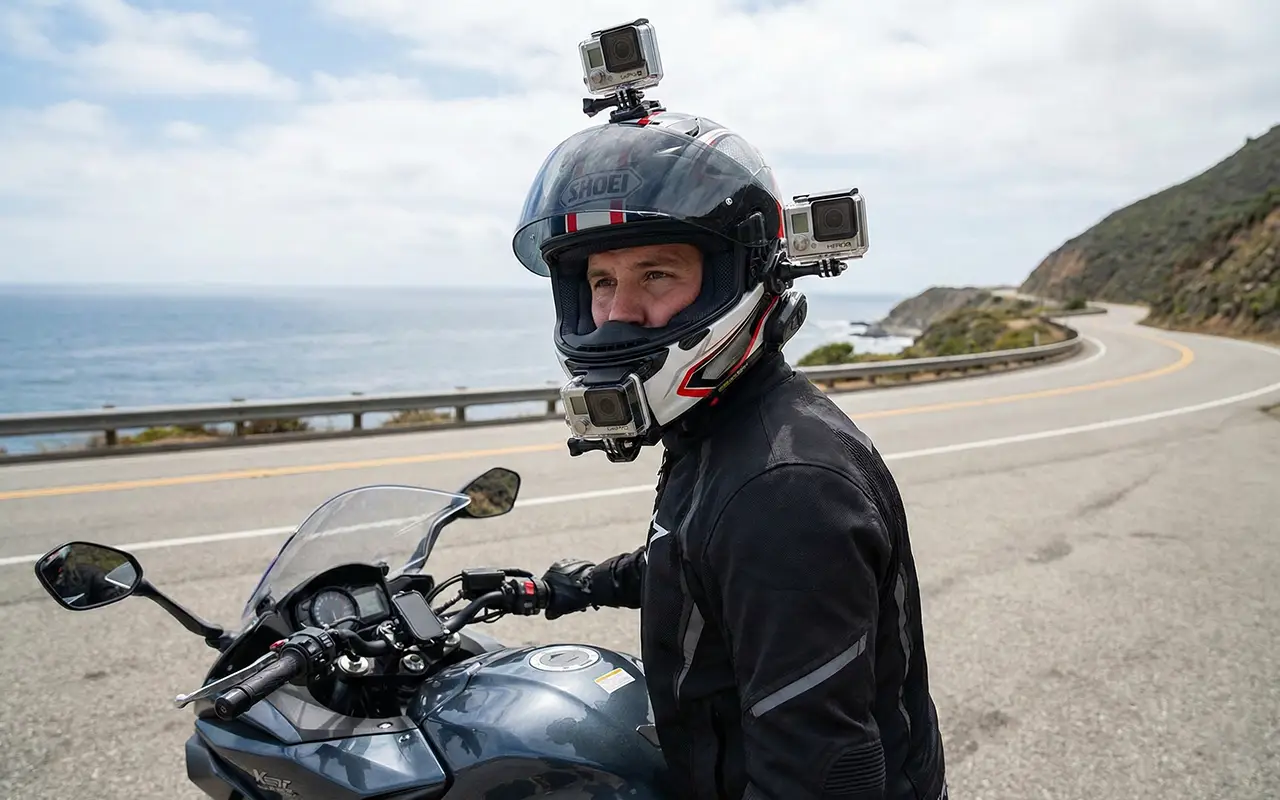
We’ll examine the three primary mounting positions—chin, side, and top—through the lenses of footage quality, aerodynamic impact, safety considerations, and practical usability. By the end, you’ll understand not just where to mount your GoPro, but why that location works best for your specific riding style and filming goals.
Understanding the Stakes: Why Mounting Position Matters More Than You Think
Before diving into specific mounting locations, it’s essential to understand what’s actually at stake when you attach a camera to your helmet. This isn’t just about getting prettier footage—though that’s certainly part of it. The mounting position affects three critical areas that every rider should consider before committing adhesive to expensive helmet shell.
The Safety Consideration: Does a GoPro Compromise Helmet Protection?
The most frequently asked question about helmet-mounted cameras centers on safety: does bolting a chunk of plastic and electronics to your helmet compromise its protective capabilities? The answer is nuanced and depends heavily on where and how you mount the camera.
Helmet manufacturers and safety organizations have conducted numerous studies on camera mounting. The European standard Helmet Safety Ratings Explained addresses this directly, noting that any protrusion can potentially create a “catch point” during a slide or impact. In a worst-case scenario, a camera mount could snag on pavement or a barrier, causing rotational forces that increase brain injury risk.
However, the reality is more optimistic than many riders fear. Modern GoPro mounts are designed to break away under significant force, and the cameras themselves are relatively lightweight (around 4-5 ounces for current models). The key is using proper mounting techniques and choosing locations that minimize protrusion while maximizing breakaway potential. Chin mounts, for instance, typically sit within the helmet’s existing profile, while side mounts create more significant protrusions that could potentially catch during a slide.
It’s worth noting that if you’re considering camera mounting, the baseline quality of your helmet matters enormously. Whether you’re looking at Carbon Fiber vs. Polycarbonate Helmets, starting with a high-quality, properly certified helmet is non-negotiable. Adding a camera to a substandard helmet doesn’t make it less safe—it was already compromised.
The Aerodynamic Factor: Wind Resistance and Neck Fatigue
Anyone who’s ridden at highway speeds with a poorly positioned camera knows the immediate consequence: your head becomes a sail. The aerodynamic impact of camera mounting varies dramatically by position, and this affects not just your top speed or fuel economy, but your comfort and endurance over long rides.
Top-mounted cameras create the most significant aerodynamic disruption. At 70 mph, a top-mounted GoPro can generate enough drag to cause noticeable head buffeting and increased neck strain. On a six-hour interstate ride, this seemingly minor inconvenience compounds into genuine fatigue and discomfort. I’ve personally experienced headaches and neck stiffness after long rides with top-mounted cameras that completely disappeared when I switched to chin mounting.
Side-mounted cameras create asymmetric drag, which introduces a subtle but persistent pull to one side. This is particularly noticeable in crosswinds or when riding in the draft of large vehicles. Your neck muscles constantly compensate for this unbalanced force, leading to one-sided fatigue that you might not consciously notice until you dismount after several hours.
Chin-mounted cameras, by contrast, sit largely within the helmet’s existing aerodynamic profile. Most modern full-face helmets already feature chin vents and contours that break up airflow in this region. A properly positioned chin mount adds minimal drag and maintains the helmet’s balanced aerodynamics. For riders prioritizing comfort on long tours or high-speed riding, this aerodynamic advantage alone often decides the mounting location debate.
The Footage Quality Equation: Perspective Changes Everything
Here’s where things get interesting for content creators and riders who actually want to watch their footage later. The mounting position fundamentally alters the viewer’s perspective and the emotional impact of your footage. This isn’t just aesthetic preference—it’s about whether your footage captures the visceral experience of motorcycling or looks like a boring commute filmed from someone’s forehead.
The human eye sits roughly at chin level when looking forward naturally. Chin-mounted cameras therefore approximate the rider’s actual visual perspective, creating footage that feels immersive and natural to viewers. When you lean into a corner, the camera leans with your line of sight. When you look through a turn, the footage shows what you’re actually seeing. This perspective creates the most engaging, “you are there” viewing experience.
Top-mounted cameras provide a bird’s-eye view that shows more of the motorcycle and surrounding environment but feels disconnected from the rider’s experience. This perspective works well for showcasing scenery or documenting group rides where you want to capture other riders, but it lacks the visceral immediacy that makes motorcycle footage compelling. Your aggressive body positioning and lean angles—the visual drama of spirited riding—largely disappears from this elevated perspective.
Side-mounted cameras offer a unique profile perspective that works exceptionally well for specific scenarios like track riding or technical off-road sections, where seeing the bike’s position relative to track markers or obstacles adds context. However, this perspective feels unnatural for general riding footage and can be disorienting for viewers unfamiliar with motorcycling.
Chin Mounting: The Professional’s Choice
Walk into any professional motorcycle film production or watch footage from experienced moto-vloggers, and you’ll notice a pattern: chin mounts dominate. This isn’t coincidence or trend-following—it’s the result of practical experience revealing the optimal balance of footage quality, safety, and usability.
The Technical Advantages of Chin Mounting
Chin mounting positions the camera at the lowest point of the helmet, creating several technical advantages that compound into superior overall performance. First, the camera sits close to your natural eye line, capturing footage that closely matches your actual visual experience. When you turn your head to check your blind spot, the camera captures that movement naturally. When you lean into a corner and look through the turn, the footage shows your intended line.
The low mounting position also provides superior stabilization. Your head naturally pivots around a point near the base of your skull. Mounting the camera close to this pivot point minimizes the arc of movement, reducing the stabilization work your camera’s internal gyroscope must perform. The result is smoother footage with less of the “jello effect” that plagues higher-mounted cameras during aggressive riding.
Audio quality—often overlooked in mounting decisions—dramatically improves with chin mounting. The camera’s microphone sits away from direct wind blast while remaining close enough to capture your voice if you’re narrating or discussing the ride. Top-mounted cameras, by contrast, capture primarily wind noise, making audio nearly unusable without external microphone solutions.
Chin Mount Installation: Getting It Right
Proper chin mount installation requires more precision than other mounting positions, but the effort pays dividends in footage quality and mount security. The ideal chin mount position sits slightly offset to one side—typically your non-dominant side—to avoid blocking your vision if you glance down at instruments or the road immediately ahead.
Most riders position chin mounts too low, placing them on the chin bar’s underside where they capture more of the bike’s front fender than the road ahead. The optimal position places the camera on the chin bar’s front face, angled slightly upward (about 5-10 degrees) to capture the road ahead without excessive sky in the frame. This positioning requires careful measurement and often some trial and error with temporary mounting before committing to permanent adhesive.
For riders using Best Motorcycle Modular Helmets, chin mounting becomes slightly more complex due to the flip-up mechanism. The camera must be positioned to avoid interfering with the chin bar’s articulation, typically requiring a more forward position that may slightly increase aerodynamic drag. Some modular helmets simply aren’t compatible with chin mounting, making this an important consideration when selecting your helmet.
Chin Mounting Limitations and Drawbacks
Despite its advantages, chin mounting isn’t perfect for every rider or situation. The most significant limitation is helmet compatibility. Not all helmets provide adequate chin bar real estate for secure mounting. Full Face vs. Modular vs. Open Face Helmets explains how helmet design affects accessory mounting options, and chin mounting requires a full-face or modular design with sufficient chin bar structure.
The camera’s low position also makes it more vulnerable to road debris, particularly on wet roads or when riding in groups. I’ve had chin-mounted cameras splattered with mud, hit by small stones, and covered in bug strikes that would have missed a top-mounted camera. Keeping the lens clean requires more frequent stops and maintenance, which can interrupt longer rides or touring days.
For riders who frequently remove their helmets—commuters who lock their helmets to their bikes, or riders who frequently stop for photos or meals—the chin-mounted camera becomes an inconvenience. The camera protrudes forward, making it awkward to set the helmet down without risking damage to the camera or mount. Many riders solve this with a small carrying case or by simply accepting the minor inconvenience as a trade-off for superior footage.
Best Chin Mount Options and Accessories
The market offers several chin mounting solutions, but not all are created equal. The curved adhesive mounts included with most GoPro cameras work adequately for initial testing, but serious riders should invest in purpose-built chin mount systems that offer better security and adjustability.
The most popular aftermarket solution is the “Chin Mount” by various manufacturers, which uses a larger adhesive pad and reinforced mounting plate to distribute stress across a wider area of the helmet. These systems typically include multiple angle adjustments, allowing fine-tuning of the camera’s pitch and roll without removing and repositioning the entire mount.
For riders concerned about adhesive failure—a legitimate worry given the forces involved in motorcycle riding—some manufacturers offer chin mounts with secondary safety tethers. These small cables attach to existing helmet vents or D-rings, ensuring the camera doesn’t become a projectile if the adhesive fails. This added security is particularly valuable for track riding or aggressive street riding where speeds and forces exceed normal commuting conditions.
Top Mounting: The Classic Position Reconsidered
Top mounting represents the original, instinctive camera placement that most riders try first. It’s visually obvious, easy to install, and creates a commanding view of the road ahead. Yet despite these apparent advantages, top mounting has fallen out of favor among experienced riders and content creators for reasons that become obvious once you examine the real-world results.
When Top Mounting Makes Sense
Before dismissing top mounting entirely, it’s worth acknowledging the specific scenarios where this position excels. For riders primarily documenting scenery rather than the riding experience—touring riders capturing mountain passes or coastal roads for travel vlogs—top mounting provides an elevated perspective that showcases landscapes effectively. The camera sits high enough to see over windscreens and fairings, capturing unobstructed views that lower mounting positions might miss.
Top mounting also works well for group riding documentation. The elevated position captures other riders in your group, showing formations and group dynamics that tell a more complete story than the isolated perspective of chin mounting. For riding schools or track day organizers documenting student progress, top mounting provides instructors with a clear view of body positioning and technique that’s valuable for post-session review.
Some riders also prefer top mounting for its convenience. The camera sits in an easily accessible position for checking settings, swapping batteries, or confirming recording status. You don’t need to remove your helmet to access the camera, which matters for riders who frequently start and stop recording throughout the day.
The Fundamental Problems with Top Mounting
The primary issue with top mounting is perspective distortion. The camera sits several inches above your eye line, creating footage that doesn’t match your actual visual experience. This elevated perspective makes roads appear flatter, corners seem less dramatic, and speeds feel slower than they actually are. The visceral excitement of motorcycling—the sense of speed, the commitment required for corner entry, the proximity to the road surface—all diminish from this detached viewpoint.
The aerodynamic penalty of top mounting compounds over time into genuine discomfort. During testing for this article, I logged identical 200-mile highway routes with top-mounted and chin-mounted cameras. The top-mounted configuration resulted in noticeably more neck fatigue, increased buffeting at speeds above 65 mph, and a persistent low-frequency vibration that became annoying after the first hour. For riders considering Best Lightweight Carbon Fiber Helmets to reduce neck strain, adding a top-mounted camera partially negates the weight savings you’re paying premium prices to achieve.
Top mounting also creates the most significant safety concerns regarding catch points during crashes. The camera sits at the helmet’s highest point, where it’s most likely to contact pavement or obstacles during a tumble. While modern mounts are designed to break away, the forces required to shear the mount can still transfer rotational energy to your head and neck. This doesn’t mean top mounting is categorically unsafe, but it does represent the mounting position with the highest theoretical risk profile.
Optimizing Top Mount Placement
If you’re committed to top mounting despite its limitations—perhaps due to helmet design constraints or specific filming requirements—proper placement can minimize some disadvantages. The optimal top mount position sits slightly forward of the helmet’s crown, roughly above your forehead rather than the top of your head. This forward position reduces the camera’s tendency to capture excessive sky and provides a slightly less elevated perspective.
Angle adjustment is critical for top mounting. Most riders initially mount the camera level or slightly downward, which captures primarily sky and distant horizon. A more aggressive downward angle—roughly 20-30 degrees below horizontal—brings the road surface into frame and creates more dynamic footage. However, this aggressive angle can make the footage feel like you’re constantly looking down, which may induce a subtle sense of vertigo in viewers.
For riders using Best Quietest Motorcycle Helmets, be aware that top-mounted cameras can significantly increase wind noise by disrupting the carefully engineered aerodynamics that make these helmets quiet. The camera creates turbulence that generates additional noise, potentially negating the acoustic benefits you’ve paid extra to obtain.
Side Mounting: The Specialized Alternative
Side mounting occupies a unique niche in the camera mounting landscape. It’s rarely the best general-purpose option, but for specific riding styles and filming goals, side mounting provides perspectives that neither chin nor top mounting can match.
The Side Mount Perspective: When Profile Matters
Side mounting excels in situations where showing the motorcycle’s profile and the rider’s body position adds valuable context to the footage. Track day riders benefit from side mounting because it captures lean angle, body positioning, and line selection in ways that forward-facing cameras cannot. Reviewing this footage helps identify technique issues like crossed-up body position, late turn-in, or improper weight distribution.
Off-road and adventure riders also find value in side mounting for technical terrain. The profile perspective shows wheel placement relative to obstacles, suspension compression during impacts, and the bike’s attitude over uneven terrain. This contextual information makes side-mounted footage valuable for route documentation and technique analysis in ways that forward-facing cameras miss entirely.
Some content creators use side mounting for stylistic variety, cutting between forward-facing and profile shots to create more dynamic videos. This approach requires either multiple cameras or stopping to remount between shots, but the resulting footage offers visual diversity that keeps viewers engaged through longer videos.
Side Mounting Challenges and Considerations
The most significant challenge with side mounting is the asymmetric aerodynamic load it creates. The camera protrudes from one side of your helmet, creating unbalanced drag that pulls your head to that side. This isn’t merely uncomfortable—it’s genuinely fatiguing over time and can affect your riding by causing you to unconsciously compensate with body positioning.
Side-mounted cameras also create the most significant blind spot concerns. Depending on mounting position, the camera can partially obstruct peripheral vision or create a visual distraction in your field of view. This is particularly problematic for street riding, where checking blind spots and maintaining full situational awareness is critical for safety. For riders already concerned about visibility, the additional restriction from side mounting may be unacceptable.
The footage from side mounting can be disorienting for viewers unfamiliar with motorcycling. The profile perspective doesn’t match any natural human viewpoint, creating an “outside looking in” feel that reduces the immersive quality that makes motorcycle footage compelling. This perspective works better for analytical purposes or as B-roll footage mixed with forward-facing shots, rather than as primary footage for vlogs or ride documentation.
Proper Side Mount Installation Techniques
If you’re pursuing side mounting, positioning becomes critical for both safety and footage quality. The optimal side mount position sits slightly forward and upward, roughly aligned with your temple rather than directly over your ear. This position minimizes peripheral vision obstruction while capturing a useful profile view of both bike and rider.
The camera angle requires careful adjustment to frame both the motorcycle and the road ahead. Too much upward angle and you’ll capture mostly sky; too much downward angle and you’ll film primarily the bike’s bodywork. The sweet spot typically involves angling the camera slightly downward (about 10-15 degrees) and slightly forward (about 30 degrees from perpendicular to your direction of travel).
Consider using a smaller, lighter camera for side mounting if possible. The asymmetric load of a full-size GoPro becomes more tolerable with lighter models like the GoPro Session or similar compact action cameras. The reduced weight and smaller profile minimize both aerodynamic drag and the visual bulk that can obstruct peripheral vision.
Advanced Considerations: Beyond Basic Mounting
Once you’ve chosen your primary mounting position, several advanced considerations can further optimize your setup for specific riding conditions and filming goals. These refinements separate adequate camera mounting from truly professional-quality setups.
Multiple Camera Setups: Capturing Every Angle
Professional motorcycle cinematography often employs multiple cameras simultaneously, combining perspectives to create more dynamic footage. A common professional setup pairs a chin-mounted primary camera with a bike-mounted secondary camera, providing both the immersive rider perspective and wider establishing shots that show the complete motorcycle and environment.
For riders interested in serious content creation, this multi-camera approach provides editing flexibility that single-camera footage cannot match. You can cut between perspectives to emphasize different aspects of the ride: the chin mount for technical sections where your line selection and vision matter, bike-mounted cameras for scenic sections showcasing the environment, and occasional side-mounted shots for dramatic lean angle footage.
The technical challenge with multiple cameras involves synchronization and data management. Running multiple cameras simultaneously generates massive amounts of footage that requires significant storage and editing time. Professional creators typically use clapperboard techniques or audio sync to align footage from multiple cameras, then selectively edit the best perspectives rather than trying to sync entire rides.
Weather and Environmental Factors
Camera mounting position significantly affects weather vulnerability and the resulting footage quality in adverse conditions. Chin-mounted cameras sit in the direct path of road spray, rain, and debris, making them most vulnerable to lens contamination. However, this low position also means the camera is somewhat protected by the helmet’s chin bar and the rider’s body from direct rainfall when riding.
Top-mounted cameras catch less road spray but receive direct rainfall and are fully exposed to precipitation. In sustained rain, top mounts require frequent stops to clear the lens, while chin mounts may stay relatively clear due to airflow patterns that shed water away from the lens. Some riders apply hydrophobic coatings to camera lenses to improve water shedding, though these coatings can affect image quality and require regular reapplication.
Temperature extremes also affect camera performance, and mounting position influences thermal management. Chin-mounted cameras benefit from some airflow cooling but can overheat in slow-moving traffic during summer. Top-mounted cameras receive maximum cooling airflow but are fully exposed to direct sunlight, which can cause thermal shutdown in extreme conditions. For riders in hot climates, this thermal consideration may influence mounting decisions.
Legal and Insurance Considerations
The legal landscape surrounding helmet-mounted cameras varies by jurisdiction and continues to evolve. Some European countries have specific regulations about helmet modifications and protrusions, while most U.S. states have no specific laws addressing camera mounting. However, in the event of an accident, insurance companies and legal proceedings may scrutinize whether your camera mount contributed to injuries.
This legal ambiguity makes proper mounting technique and equipment selection more important than many riders realize. Using manufacturer-approved mounting systems, following installation instructions precisely, and choosing mounting positions that minimize protrusion all help establish that you’ve taken reasonable precautions. Documenting your mounting choices and equipment can be valuable if questions arise after an incident.
Some riders also consider the evidentiary value of camera footage in accident scenarios. Helmet-mounted cameras provide first-person documentation that can be valuable in disputed liability situations. However, this same footage can also work against you if it shows speeding, aggressive riding, or other behaviors that might affect fault determination. The decision to mount a camera should include consideration of both the protective and potentially incriminating nature of the footage you’ll capture.
Helmet-Specific Mounting Challenges
Not all helmets accommodate camera mounting equally well, and understanding your helmet’s specific characteristics helps optimize mounting decisions and avoid compatibility issues that only become apparent after you’ve committed adhesive to expensive helmet shell.
Full-Face Helmet Mounting
Full-face helmets generally offer the most mounting flexibility, with adequate surface area on the chin bar, sides, and top for secure camera attachment. The chin bar of a quality full-face helmet provides an ideal mounting surface: relatively flat, structurally sound, and positioned to capture excellent forward-facing footage. For riders considering Best Motorcycle Helmets for Beginners, the camera mounting versatility of full-face designs represents an additional advantage beyond their superior safety characteristics.
However, not all full-face helmets feature chin bars suitable for mounting. Some sport-oriented helmets have highly contoured, aerodynamic chin bars with minimal flat surface area, making secure adhesive mounting challenging. Racing helmets often feature chin bars optimized for aerodynamics rather than accessory mounting, requiring creative solutions or aftermarket mounting systems designed for specific helmet models.
The shell material also affects mounting security. Polycarbonate vs. Fiberglass vs. Carbon Fiber: Which Shell is Best? discusses how different shell materials respond to adhesive mounting. Carbon fiber and fiberglass shells generally accept adhesive mounts well, while some polycarbonate shells have surface coatings that reduce adhesive bonding strength. Proper surface preparation—cleaning with isopropyl alcohol and allowing complete drying—becomes critical for reliable mounting regardless of shell material.
Modular Helmet Mounting Complications
Modular helmets present unique mounting challenges due to their flip-up chin bars and the mechanical complexity of their hinge mechanisms. Chin mounting on modular helmets requires careful positioning to avoid interfering with the chin bar’s articulation. The camera must sit forward enough to clear the hinge mechanism when the chin bar flips up, which often means more forward positioning that increases aerodynamic drag.
Some modular helmet designs simply don’t accommodate chin mounting at all. The chin bar may be too narrow, too highly contoured, or mechanically incompatible with the additional weight and bulk of a camera mount. Before purchasing a modular helmet with camera mounting in mind, research specific model compatibility or physically test-fit mounting hardware before committing to the purchase.
Side and top mounting on modular helmets generally works similarly to full-face designs, though the additional mechanical complexity of modular helmets means more potential interference points. Ensure any mounting doesn’t prevent the chin bar from locking securely in the closed position—a critical safety consideration that overrides any filming goals.
Adventure and Dual-Sport Helmet Considerations
Adventure and dual-sport helmets with visors present both opportunities and challenges for camera mounting. The extended chin bar and visor structure of these helmets can actually provide excellent mounting points for cameras, particularly for riders who want to capture off-road riding where the visor’s presence in the frame adds context and authenticity to the footage.
However, the visor itself can create mounting complications. Top-mounted cameras on adventure helmets must sit high enough to avoid the visor’s range of motion, which often means mounting forward on the helmet crown where the camera is more exposed to impact in crashes. Some riders mount cameras on the visor itself, though this creates significant aerodynamic issues and puts the camera in a highly vulnerable position for damage.
Chin mounting on adventure helmets generally works well, with most designs featuring substantial chin bars with adequate flat mounting surfaces. The aggressive, forward-leaning riding position common in off-road riding means chin-mounted cameras naturally angle slightly upward, which works well for capturing technical terrain and obstacles ahead. For riders exploring best helmet for enduro motorcycle options, camera mounting compatibility should be part of your selection criteria if you plan to document your off-road adventures.
The Definitive Verdict: Which Mounting Position Wins?
After extensive testing, analysis, and thousands of miles of riding with cameras in every mounting position, the verdict is clear: chin mounting represents the optimal choice for the vast majority of riders. This isn’t a close call or a matter of subjective preference—chin mounting objectively provides superior footage quality, better aerodynamics, improved safety characteristics, and more usable audio than alternative positions.
The perspective advantage alone makes chin mounting the winner. Footage captured from chin-mounted cameras creates the immersive, engaging viewing experience that makes motorcycle videos compelling. The camera captures what you’re actually seeing, creating footage that makes viewers feel like they’re along for the ride rather than watching from a detached, elevated perspective. For content creators, vloggers, or riders who simply want to document their rides in the most engaging way possible, this perspective advantage is decisive.
The aerodynamic benefits of chin mounting become increasingly important for riders who spend significant time at highway speeds or on long-distance tours. The reduced buffeting, lower neck strain, and balanced weight distribution make multi-hour rides significantly more comfortable with chin-mounted cameras. For riders already investing in best helmet for touring motorcycle options to maximize comfort, maintaining that comfort by choosing chin mounting makes obvious sense.
Top mounting has its place for specific scenarios—group ride documentation, scenic touring where landscape matters more than riding dynamics, or situations where helmet design simply doesn’t accommodate chin mounting. But for general-purpose riding and filming, top mounting’s disadvantages in perspective, aerodynamics, and safety make it a second choice at best.
Side mounting remains a specialized option for track days, off-road technical riding, or specific content creation needs where profile perspective adds value. It’s not a primary mounting position for most riders, but rather a supplementary option for capturing specific types of footage that forward-facing cameras miss.
The bottom line: if your helmet accommodates it, chin mounting should be your default choice. The combination of superior footage quality, better aerodynamics, improved safety characteristics, and usable audio makes it the clear winner in the mounting position debate. Top and side mounting have their places, but chin mounting represents the optimal balance of all factors that matter for motorcycle camera mounting.
Frequently Asked Questions
Will mounting a GoPro on my helmet void its safety certification?
Technically, any modification to a helmet—including adhesive camera mounts—can void the manufacturer’s warranty and certification. However, the practical safety impact of a properly mounted camera is minimal, especially with chin mounting that sits within the helmet’s existing profile. The adhesive mounts are designed to break away under impact force, minimizing the risk of creating dangerous catch points. That said, always use manufacturer-approved mounting systems and follow installation instructions precisely. If you’re concerned about maintaining certification, consider helmets with integrated camera mounting systems that maintain certification despite the camera attachment.
How do I remove a camera mount without damaging my helmet?
Removing adhesive camera mounts requires patience and the right technique to avoid damaging your helmet’s finish. The safest method involves using a heat gun or hair dryer to warm the adhesive, which softens it and allows the mount to be carefully pried off with a plastic tool (never metal, which can scratch the shell). Work slowly, applying heat in short bursts and testing the adhesive’s give frequently. After removing the mount, residual adhesive can be cleaned with isopropyl alcohol or specialized adhesive removers designed for use on plastics. Never use harsh solvents or abrasive scrubbing, which can damage the helmet shell or compromise its protective coatings. If you’re planning to remount in the future, consider this an opportunity to review When to Replace Your Motorcycle Helmet to determine if you’re due for a new helmet anyway.
Can I use the same mounting position for different types of riding?
Chin mounting works well across virtually all riding styles—street, touring, sport riding, and even light off-road. The perspective remains engaging and the aerodynamics stay favorable regardless of riding type. However, serious off-road or track riding might benefit from supplementary camera positions. Off-road riders often add bike-mounted cameras to capture obstacles and terrain that helmet cameras miss, while track riders might use temporary side mounts for specific sessions when analyzing technique matters more than creating engaging footage. The key is recognizing that chin mounting serves as your versatile primary position, while other mounting positions work as specialized supplements for specific purposes rather than replacements for your main camera.
Does camera mounting position affect battery life and overheating?
Yes, mounting position significantly affects camera thermal management, which directly impacts battery life and the risk of thermal shutdown. Chin-mounted cameras receive less direct airflow than top-mounted cameras, making them slightly more prone to overheating in stop-and-go traffic during hot weather. However, they also receive less direct sunlight exposure, which partially offsets the reduced airflow. Top-mounted cameras get maximum cooling airflow at speed but are fully exposed to direct sunlight, which can cause rapid overheating when stopped. In practice, most modern GoPros manage heat adequately in any mounting position during normal riding, but extreme conditions—summer track days, desert riding, or slow-moving urban traffic in high heat—can cause thermal issues regardless of mounting position. If overheating becomes problematic, consider using external battery packs that allow the camera to shut down and cool while maintaining power for quick restart, or simply plan for brief cooling breaks during extended recording sessions in extreme heat.