
8 Beginner Motorcycles That Give Taller Riders More Room to Ride
 Jake Miller
14 min read
Jake Miller
14 min read
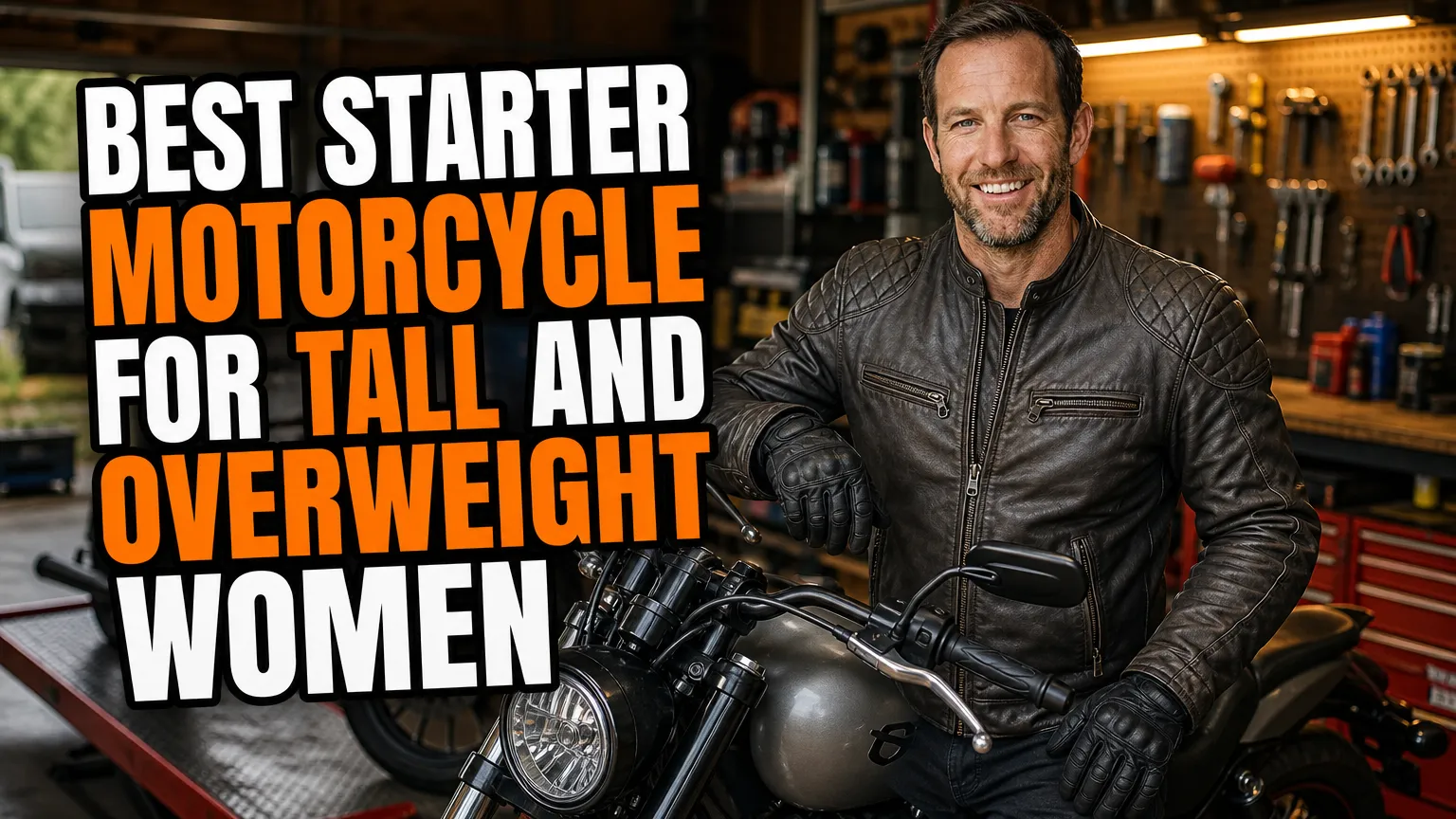
Finding a first motorcycle that feels comfortable in a taller body can take more thought than comparing engine sizes. I look for a relaxed riding position, steady low-speed manners, enough room to move, and controls I can reach without feeling folded up. If I’m searching for the best starter motorcycle for tall and overweight women, I also treat load capacity as a safety check, not an assumption based on a bike’s appearance.
My shortlist below mixes approachable standards, cruisers, and adventure-style bikes. Fit is personal, so I’d sit on each candidate, check its owner’s manual for its specific weight limit, and take a properly supervised test ride before deciding.
- I’d start by comparing reach, seat shape, and low-speed handling, not just seat height.
- The Honda SCL500, Kawasaki Versys-X 300, and Triumph Scrambler 400 X offer roomier, upright alternatives to compact cruisers.
- I’d verify the motorcycle’s GVWR and payload in its own manual before carrying a rider, passenger, or luggage.
- A local fit check, beginner course, and professional suspension setup can make a bigger difference than a spec-sheet number.
1. Honda SCL500 — My Pick for an Upright, All-Around First Bike
The Honda SCL500 is the first bike I’d try if I wanted a natural upright position without jumping straight to a large adventure motorcycle. Its parallel-twin engine is 471cc, and the 31.1-inch seat gives my legs more room to work with than many low cruisers. The wide handlebar and neutral posture also make it easier for me to shift position during a ride.
Honda lists a curb weight of about 423 pounds, depending on model year and market. That is not featherweight, but I find the standard-style layout makes the bike feel less awkward to maneuver than some heavier touring machines. Its power is manageable with smooth throttle control, though I’d still practice tight turns and stops in an empty lot before riding in traffic.
What I’d check before buying
The SCL500’s scrambler-inspired styling includes a high-mounted exhaust and relatively upright ergonomics. I’d sit on it wearing my riding boots and check whether my knees feel comfortable against the tank, whether I can reach the controls naturally, and whether I can move the bars from lock to lock without feeling cramped.
Pricing varies by year and dealer, so I’d compare current local listings rather than rely on a single advertised price. I’d also confirm the SCL500’s GVWR and permitted payload in the manual for the exact model year. For a broader comparison of roomier beginner-friendly options, I’d also read this guide to the best beginner motorcycle for big and tall.
2. Kawasaki Versys-X 300 — My Lightweight Adventure-Style Choice
The Kawasaki Versys-X 300 appeals to me when a taller beginner wants an upright position and a lighter-feeling motorcycle. Its 296cc parallel-twin is paired with a tall, adventure-style stance, and Kawasaki lists a seat height of about 32.1 inches. The slim profile and wide handlebars can make it feel less cramped than a small sportbike, especially when I’m standing briefly on the pegs over rough pavement.
At roughly 386 pounds curb weight, depending on version and market, it is comparatively light for an adventure-styled bike. I’d value that at parking-lot speeds, where a new rider is still building balance and clutch control. The engine is modest rather than effortless at highway pace, so I’d consider how often I expect to ride fast roads or carry luggage.
Where I think it fits best
I’d put the Versys-X 300 on my list for commuting, back roads, and light gravel rather than heavy touring. Its taller seat can suit longer legs, but a high seat is not automatically comfortable: I’d check the seat width and make sure I can control the bike when stopped. If I’m mostly riding on pavement, I’d test it on my regular route before assuming an adventure look means long-distance comfort.
As with any model, I would not infer carrying capacity from the bike’s size or curb weight. I’d look up the exact year’s GVWR and account for my riding gear, any passenger, luggage, and accessories. I’d also compare the current price and equipment with similarly sized used motorcycles at local dealers.
3. Honda NX500 — My Choice for Commuting and Weekend Roads
The Honda NX500 is a practical middleweight for a beginner who wants a windscreen, upright posture, and a bit more road presence than a small-displacement commuter. It uses Honda’s 471cc parallel-twin platform, and the seat is around 32.8 inches high. That height can give longer legs more space, while the fairing and wind protection are useful for regular highway stretches.
Its curb weight is approximately 432 pounds, varying by specification and market. I’d describe it as approachable rather than tiny: it has enough mass that I’d want to practice pushing it around and turning it at walking speed before committing. Its twin-cylinder engine is flexible, but I’d still treat throttle discipline and smooth braking as essential beginner skills.
My fit and budget notes
I’d compare the NX500’s seat shape with the SCL500’s before choosing between them. The NX500 adds touring-oriented bodywork, while the SCL500 has a more open, standard-style feel. If I’m tall, I’d check whether the bars, footpegs, and seat create a comfortable triangle rather than judging the fit from seat height alone.
Because the NX500 is a current model with pricing that changes by year and location, I’d check Honda’s local listing and dealer fees. Before adding a top box or luggage, I’d verify the payload limit in the owner’s manual and include the weight of every accessory. I’d rather have a little less luggage than exceed the motorcycle’s rated capacity.
4. Triumph Scrambler 400 X — My Compact, Upright Single-Cylinder Pick
The Triumph Scrambler 400 X gives me a relatively accessible way to try an upright scrambler layout. Its 398cc single-cylinder engine is designed for everyday riding, and its seat height is about 32.9 inches. I like the taller stance for longer legs, and the wide bars can provide leverage when making slow turns or negotiating a driveway.
Triumph lists the Scrambler 400 X at roughly 395 pounds wet, with figures varying by market and equipment. I’d expect the single-cylinder character to feel different from a twin: it has a distinct pulse and may need a little more attention to smooth clutch and throttle coordination at low speed. I’d spend time learning its response before taking it into busy traffic.
What I’d consider on a test ride
I’d check the seat comfort carefully, since the relatively tall stance does not tell me whether the seat suits my shape. I’d also test the reach to the levers and whether the footpegs feel cramped when I’m seated. The Scrambler 400 X is made for road use with scrambler styling, so I’d think of it as a street-focused motorcycle that can handle rougher surfaces, not a substitute for a dedicated off-road bike.
New-bike prices depend on location, year, and dealer charges. I’d confirm the model’s exact specifications and rated load in the manual before carrying luggage. Riders drawn to the taller, versatile riding position may also want to compare options in this guide to the best scrambler motorcycle for tall beginner.
5. Royal Enfield Himalayan 450 — My Choice for a Tall, Adventure-Ready Stance
The Royal Enfield Himalayan 450 is a strong candidate if I want a tall seat, upright ergonomics, and a motorcycle built around adventure-style travel. Its 452cc liquid-cooled single-cylinder engine provides more capacity than a small dual-sport, while the seat is roughly 32 inches high in its standard position, with a lower option available in some markets. I’d check the current market’s configuration because seat choices and specifications can differ.
The Himalayan is a substantial machine, with a wet weight in the neighborhood of 430 pounds depending on trim and market. That weight can feel reassuring on the road, but it can also be a handful for any new rider when backing up or correcting a lean at a standstill. I’d practice handling it on level ground and be honest about whether I can comfortably manage it alone.
Who I’d recommend it to
I’d consider this model if my plans include rural roads, touring, and occasional unpaved routes. Its upright layout gives me room to move, but I’d still check knee angle, handlebar reach, and seat comfort in person. If I’m new to riding, I’d build skills on pavement before attempting technical trails, regardless of how adventure-ready the motorcycle looks.
I’d verify the rated payload in the owner’s manual for the exact year and version, then subtract the weight of accessories and luggage from the available capacity. I’d also account for suspension setup: a qualified shop can help set sag within the motorcycle’s specifications. I would not assume that fitting stiffer springs changes the manufacturer’s legal or structural load rating.
6. Kawasaki Eliminator 450 — My Cruiser Pick With More Legroom Potential
The Kawasaki Eliminator 450 is a low-seat cruiser that feels less traditionally cramped to me than some small, feet-forward motorcycles. Its 451cc parallel-twin engine is paired with a seat height of about 28.9 inches, and the bike has a relatively slim, approachable shape. That lower seat can help me put a foot down, while the overall layout may still suit riders who want a relaxed street bike.
Kawasaki lists the Eliminator at roughly 388 pounds curb weight, depending on version and market. I’d find that easier to maneuver than many larger cruisers, although the low seat is not proof that it will fit every tall rider. My legs may feel more bent than they would on an upright standard, so I’d sit on it for several minutes and check whether my knees and hips remain comfortable.
How I’d judge the fit
I’d pay particular attention to where the footpegs land. If my knees feel sharply bent, I’d ask a dealer whether approved alternate foot controls or ergonomic accessories are available for that exact model. I’d avoid improvised modifications that could interfere with braking, shifting, or ground clearance.
The 451cc engine is approachable with controlled inputs, but it is not a reason to skip training. I’d compare current local pricing and check the exact model’s manual for weight limits. If I’m specifically drawn to cruiser styling, I’d also compare the ergonomic trade-offs in this guide to the best bobber motorcycle for tall riders.
7. Honda Rebel 500 — My Low, Manageable Option for Confident Stops
The Honda Rebel 500 remains a popular first-bike candidate because it combines a 471cc twin with a very low 27.2-inch seat. At around 414 pounds curb weight, depending on year and specification, it is not the lightest bike here, but its low center of gravity can make it feel manageable once I’m seated. I’d consider it if being able to plant a foot at stops is a major confidence boost.
For a taller rider, I would not assume that low automatically means comfortable. The Rebel’s compact cruiser proportions may bend my knees more than an upright motorcycle would, and the stock seat might not work for every body. I’d spend time on it in a dealer’s showroom and ask about a test ride before deciding that its seat height solves my fit concerns.
My honest take for taller riders
I’d choose the Rebel 500 for its approachable balance and straightforward road manners, not because it offers the most legroom. If I felt folded up, I’d move on rather than counting on aftermarket parts to fix the basic riding triangle. A motorcycle that feels comfortable at a standstill but awkward after twenty minutes is not the right fit for me.
Honda’s specifications and prices can change between model years, so I’d check the exact version I’m considering. I’d also check its GVWR and payload rather than assume a sturdy-looking cruiser can carry any load. My preference would be to compare the Rebel directly with the taller SCL500 and NX500 before making a purchase.
8. Suzuki V-Strom 650 — My Roomier Step-Up for a Cautious Beginner
The Suzuki V-Strom 650 offers an upright, roomy riding position and a 645cc V-twin, so I’d treat it as a step-up option rather than my automatic recommendation for a brand-new rider. Its seat is around 32.9 inches high, and the standard adventure-touring layout gives me more space to adjust my posture than a compact cruiser. It can make sense for a tall rider who is comfortable with a heavier motorcycle and committed to gradual practice.
Depending on model year and trim, the V-Strom 650 weighs roughly 470 to 480 pounds curb weight. I’d find that weight more challenging during low-speed maneuvers than the lighter picks above, even though it can feel stable once moving. Its larger engine also rewards smooth throttle control, so I’d take a training course and practice in a controlled area before riding in traffic.
When I’d put it on my shortlist
I’d consider the V-Strom 650 if I planned to commute, tour, or cover longer distances and had the strength and confidence to handle its size at a stop. For some first-time riders, a lighter 300cc-to-500cc machine is a better place to build core skills. I’d compare the V-Strom with smaller adventure bikes and decide whether I truly need the extra touring capacity.
Since specifications and availability vary by year and market, I’d confirm the exact bike’s weight, seat configuration, and rated payload. If a taller, road-focused touring layout interests me, I’d also explore the best sport touring motorcycle for tall riders. For a more upright, sporty street-bike direction, I’d compare ideas in this guide to the best streetfighter motorcycle for tall riders.
How I Check Fit and Load Capacity Before I Buy
I start by sitting on a motorcycle in the gear I expect to wear. I check whether I can reach the bars and levers without stretching, whether my knees have room, and whether I can support the bike confidently at a stop. I also think about seat width: a narrower seat can make it easier to reach the ground, even when the listed seat height is relatively tall.
I verify the payload instead of guessing
For load capacity, I look for the motorcycle’s Gross Vehicle Weight Rating, or GVWR, in the owner’s manual or manufacturer documentation. I subtract the motorcycle’s curb weight from its GVWR to estimate the remaining payload, then account for my weight in riding gear, a passenger, luggage, and accessories. I confirm the method and figures for the exact model year because published specifications can vary.
If the manual does not make the limit clear, I ask a dealer or manufacturer for the correct information rather than relying on a forum post. I never assume a suspension upgrade increases the motorcycle’s rated capacity. A suspension specialist can help with setup and comfort, but the bike must still be used within its manufacturer limits.
I make room in my budget for safety
I include a certified helmet, protective jacket and pants, gloves, and over-the-ankle boots in my budget. I’d also take a recognized beginner rider course and consider additional practice before carrying a passenger or adding luggage. The right gear and training matter more than buying a more powerful motorcycle to keep up with traffic.
My Bottom Line
If I wanted an upright, versatile first bike, I’d begin with the Honda SCL500, Kawasaki Versys-X 300, or Honda NX500 and compare their real-world fit. I’d consider the Triumph Scrambler 400 X or Himalayan 450 for a taller adventure-style position, while the Eliminator 450 and Rebel 500 make more sense if a low seat is important. The V-Strom 650 is roomier and capable, but I’d choose it only if I felt ready for its extra size and weight.
There is no single motorcycle that fits every tall or plus-size rider. I’d choose the bike that feels controllable, leaves me comfortable after a short ride, and stays within its documented load limits. A careful fit check and a patient start will serve me better than any single spec-sheet number.
Frequently Asked Questions
What should a taller beginner look for in a motorcycle?
I’d prioritize a comfortable riding triangle, manageable power, predictable low-speed handling, and a seat height that lets me stop confidently.
Can I tell whether a motorcycle supports my weight from its curb weight?
No. I check the specific motorcycle’s GVWR and subtract its curb weight; the remaining payload must cover the rider, passenger, luggage, and accessories.
Is a low-seat motorcycle always a better choice for a beginner?
Not necessarily. I consider seat width, suspension sag, reach to the handlebars, and how confidently I can manage the bike at a stop, not seat height alone.
Should I buy a used motorcycle as my first bike?
A well-maintained used motorcycle can be a sensible first purchase. I’d get an inspection, verify the load limit in the manual, and budget for protective gear and training.

Related Articles

8 Roomy Motorcycles That Make a Great Fit for Tall Women
Compare eight roomy motorcycles for tall women, with seat heights, ergonomics, strengths, trade-offs, and fit tips to help you choose…
Jake Miller
11 min read

7 Beginner-Friendly Motorcycles Women Riders Can Enjoy in the Philippines
Find a beginner-friendly motorcycle in the Philippines with my picks for easy handling, manageable seat heights, practical features, and everyday…
Jake Miller
12 min read

9 Triumph Motorcycles I’d Recommend for Different Riders and Riding Styles
Explore nine Triumph motorcycles for varied heights, confidence levels, commutes, and touring plans, with key specs and fit tips to…
Jake Miller
13 min read