
Riding Without a Motorcycle Plate: What’s Legal, What’s Risky, and What to Do
 Jake Miller
9 min read
Jake Miller
9 min read
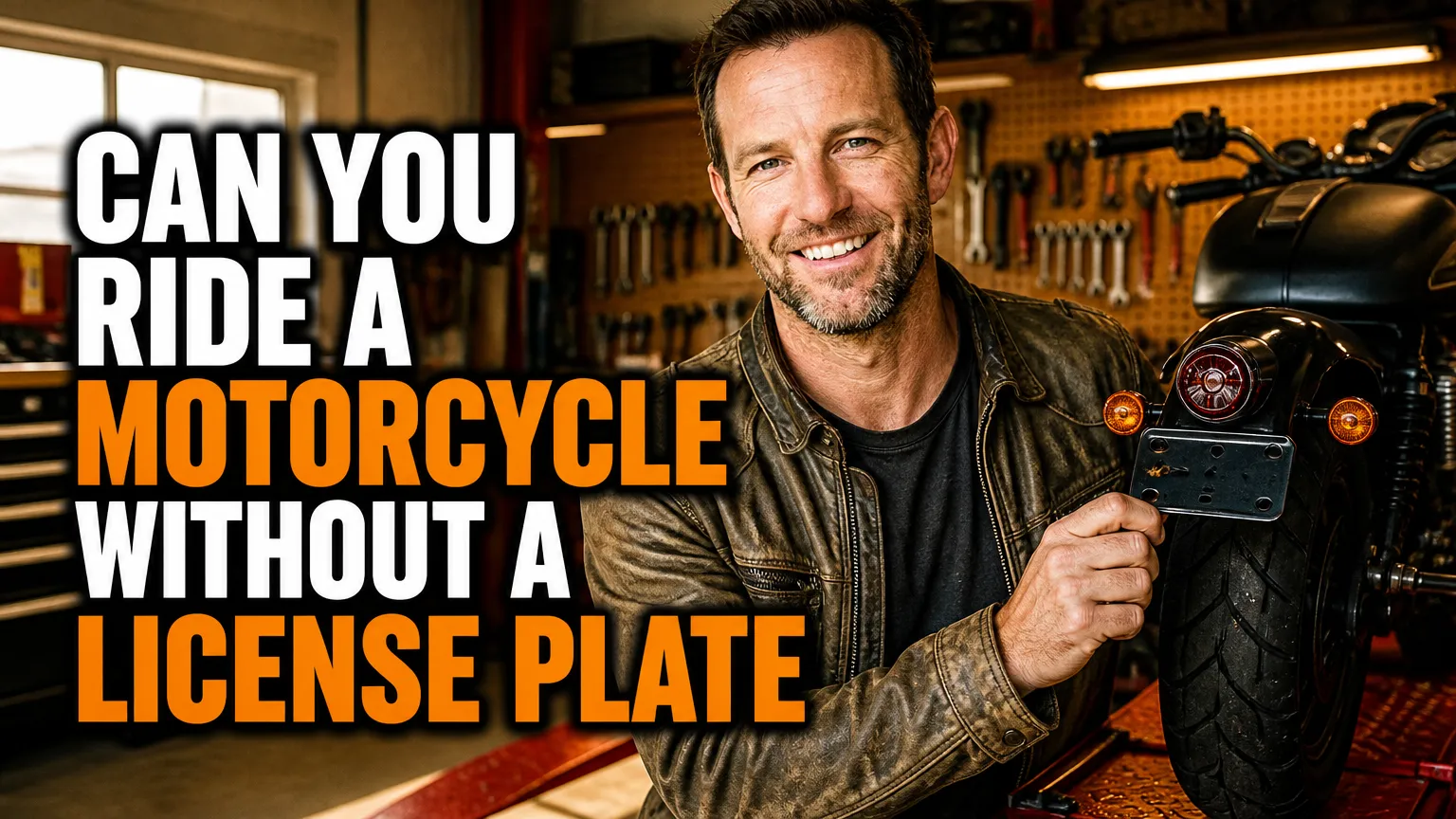
I know the temptation: the motorcycle is ready, the weather is perfect, and the license plate is missing, delayed, or still sitting at the motor vehicle office. It’s easy to wonder, can you ride a motorcycle without a license plate if you’re only going a short distance? In my experience, that’s exactly the moment to pause and check the rules before turning the key.
The answer depends on where I’m riding, why there’s no plate, and whether I have a valid temporary permit. I wouldn’t assume that a bill of sale, a dealer’s promise, or a quick ride home automatically makes an unplated motorcycle legal on a public road.
- I check local rules because plate and temporary-permit laws vary by location.
- A recent purchase or short trip home does not automatically excuse a missing plate.
- I display any valid temporary permit exactly as instructed and carry supporting documents.
- If my plate is lost or stolen, I arrange a replacement and confirm whether I can ride meanwhile.
What I check before riding without a plate
In many places, a motorcycle used on public roads must be registered and display a valid plate. Some jurisdictions allow a temporary operating permit while registration is being processed, but the details can differ: how long it lasts, where it must be displayed, and whether it covers travel across state or national borders.
So, when someone asks me whether they can ride a motorcycle without a license plate, I don’t give a blanket yes or no. I start by checking the official motor vehicle agency or transportation authority for the place where the motorcycle will be ridden. Local police or a licensing office may also clarify what documentation is accepted.
I also separate two ideas that riders sometimes mix up: a motorcycle being registered and a rider being licensed. A registered motorcycle may still need to be operated by someone with the proper motorcycle endorsement or license. Having the right license does not make an unregistered motorcycle legal, and having a plate does not give an unlicensed rider permission to operate it.
Public roads are different from private property
When I’m talking about plate rules, I mean riding on public roads and other areas covered by local vehicle laws. A truly private track or private property may be treated differently, but I never assume that “private” means rules disappear. Access rights, insurance requirements, safety rules, and local regulations can still matter.
If I’m riding off-road, I check the rules for that specific trail or riding area. Some places require registration, an off-highway vehicle permit, or another form of identification even when a standard street plate isn’t required.
When I might be allowed to ride temporarily
The most common exception I look for is an official temporary permit. Depending on the jurisdiction, it might be issued after a purchase, while registration is pending, or when a replacement plate is being processed. It may be a paper tag, a temporary registration document, or another approved form of authorization.
I read the permit closely instead of treating it as a universal pass. It may be valid only for a specific number of days, only for a certain vehicle, or only within a particular region. If I’m not sure whether a planned route is covered, I contact the issuing authority before I ride.
After buying a motorcycle
When I buy a motorcycle, I ask the seller or dealer what paperwork I need before taking it onto a public road. A dealer may be able to issue a temporary permit, while a private sale may require me to arrange registration myself. The process varies, so I confirm the requirements rather than relying on what worked for someone else.
I keep the bill of sale and registration or permit documents with me, but I don’t assume the bill of sale replaces a plate or temporary authorization. If I can’t confirm that riding is legal, I arrange delivery by trailer or transport service instead. That may feel less convenient, but it can be a lot simpler than dealing with a stop or a collision while paperwork is incomplete.
While I’m waiting for a replacement plate
If my plate is lost, damaged, or stolen, I report the problem when required and request a replacement as soon as I can. Then I ask the motor vehicle agency whether it issues a temporary permit or allows any limited riding while the replacement is on the way. I wouldn’t make up a paper plate or display a photocopy unless the authority specifically says that is acceptable.
When a plate is stolen, I take the possibility of misuse seriously. Reporting it may help create a record that the plate is no longer in my possession, and I keep the report details with my records. The exact steps depend on local rules, so I follow the instructions from the relevant agency.
What can happen if I ride without the required plate
Riding without a required plate can lead to a traffic stop, a citation, a fine, or other consequences under local law. In some situations, authorities may restrict further travel or arrange for the motorcycle to be towed. I don’t rely on the idea that an officer will understand my explanation or let me continue because I’m close to home.
A missing plate can also create practical problems beyond a ticket. If there’s a crash, a disputed ownership question, or a concern that the motorcycle was stolen, having registration documents ready may help me explain the situation. It doesn’t guarantee a particular outcome, but clear paperwork is better than trying to reconstruct the details roadside.
Insurance and accident complications
I never treat insurance as a substitute for registration. A policy may have its own rules about the motorcycle, its permitted use, and the information I must provide, while road registration requirements are a separate matter. If I’m uncertain whether my coverage applies to a motorcycle with a temporary permit or pending registration, I contact my insurer and ask directly.
If I ride without a required plate and then have an accident, I could face several issues at once: an investigation, questions about the motorcycle’s registration status, and an insurance claim. The effect depends on the facts and the policy, so I avoid guessing about coverage. My preference is to resolve the registration question before riding, not after something goes wrong.
Common assumptions I don’t rely on
“I’m only riding a few blocks”
In my experience, distance doesn’t automatically create an exception. A short ride on a public road may still be subject to the same plate rules as a long trip. I check for a valid permit before setting off, even if I’m just traveling from a seller’s driveway to my garage.
“The dealer said I’m fine”
A dealer’s guidance can be useful, but I make sure I understand what document authorizes the ride and when it expires. If I’m handed a temporary tag, I confirm that it’s correctly completed and displayed. If I’m told to ride with no plate and no permit, I check with the local authority myself.
“The plate is in the mail”
A plate being on the way doesn’t necessarily authorize me to ride in the meantime. I ask whether the agency or dealer has issued a temporary permit and follow its display instructions. If there’s no temporary authorization, I plan another way to move the motorcycle.
“I can put a handwritten tag on it”
I don’t create a homemade replacement unless local authorities explicitly permit it. A hand-written note or a copy of an old plate may not count as legal identification, and it could make a roadside conversation more confusing. I use only the temporary documentation that the relevant agency accepts.
How I handle a missing-plate situation
When I notice a plate is missing, I first avoid riding the motorcycle on public roads until I know what local rules allow. Then I check whether the plate may have fallen off, been damaged, or been stolen. If it’s stolen, I report it according to local instructions before applying for a replacement.
Next, I contact the motor vehicle agency or licensing office and ask a few specific questions: Is a temporary permit available? How long is it valid? Where should I display it? Does it allow travel on the route I have planned? Getting clear answers helps me avoid relying on vague advice.
If I receive a permit, I read every condition and keep the required documents accessible. If I don’t receive one, I use a trailer, a pickup, or a transport service to move the motorcycle. I’d rather spend time arranging transport than risk a citation or a more serious complication over a ride I could have postponed.
A quick checklist before I set off
- I confirm the local rule: I check the official requirements for the road and jurisdiction where I plan to ride.
- I verify the paperwork: I make sure the registration or temporary permit is current and applies to this motorcycle.
- I display documents correctly: I follow the exact instructions for a temporary tag or permit rather than improvising.
- I check my insurance: I confirm that my policy covers the motorcycle and the kind of riding I plan to do.
- I’m properly licensed: I make sure my motorcycle license or endorsement is valid for the bike I’m operating.
- I have a backup plan: If I can’t verify that riding is allowed, I arrange to transport the motorcycle instead.
My bottom line on riding without a plate
So, can you ride a motorcycle without a license plate? I’d say only when local law specifically allows it, such as when I have a valid temporary permit that covers the ride. Without a plate or approved temporary authorization, I don’t assume that a new purchase, a short trip, or a plate in the mail is enough.
Rules vary, and I treat official guidance as more reliable than a friend’s story or an online guess. Before I ride, I verify the requirements with the local motor vehicle authority, keep the right documents with me, and make sure my insurance and motorcycle license are in order. If I can’t confirm that the trip is legal, I wait or transport the bike instead.
Frequently Asked Questions
Can I ride a motorcycle without a license plate after buying it?
I would ride only if my local rules allow it and I have the required temporary permit or registration paperwork properly displayed. A bill of sale alone may not be enough.
Can I ride a motorcycle home without a plate?
I would first check with my motor vehicle agency. Some places issue temporary permits for a short trip, while others require a plate or permit before the motorcycle goes on public roads.
What should I do if my motorcycle plate is lost or stolen?
I would report a stolen plate when appropriate, request a replacement, and ask the local authority whether a temporary permit is available. I would avoid riding on public roads until I know what is allowed.
Can I ride a motorcycle without a plate on private property?
Rules can vary, but public-road registration requirements may not apply on genuinely private property. I would get the property owner’s permission and check local rules before riding.

Related Articles

NYC Motorcycle Parking: Where I Can Park Legally and What to Avoid
Thinking of leaving your bike by the curb? I explain NYC sidewalk rules, legal motorcycle parking options, ticket risks, and…
Jake Miller
9 min read

Three-Wheeler Licence Rules: What I’d Check Before Riding
Can you ride a three-wheeler on a motorcycle licence? I explain UK licence rules, age limits, vehicle categories and what…
Jake Miller
9 min read

Striped Parking Lines and Motorcycles: Where I Park—and Where I Don’t
Before I pull into a striped parking area, I check what the markings protect, nearby signs, and local rules. Here’s…
Jake Miller
10 min read