
Electric Motorcycle Licensing: What I’d Check Before Riding
 Jake Miller
10 min read
Jake Miller
10 min read
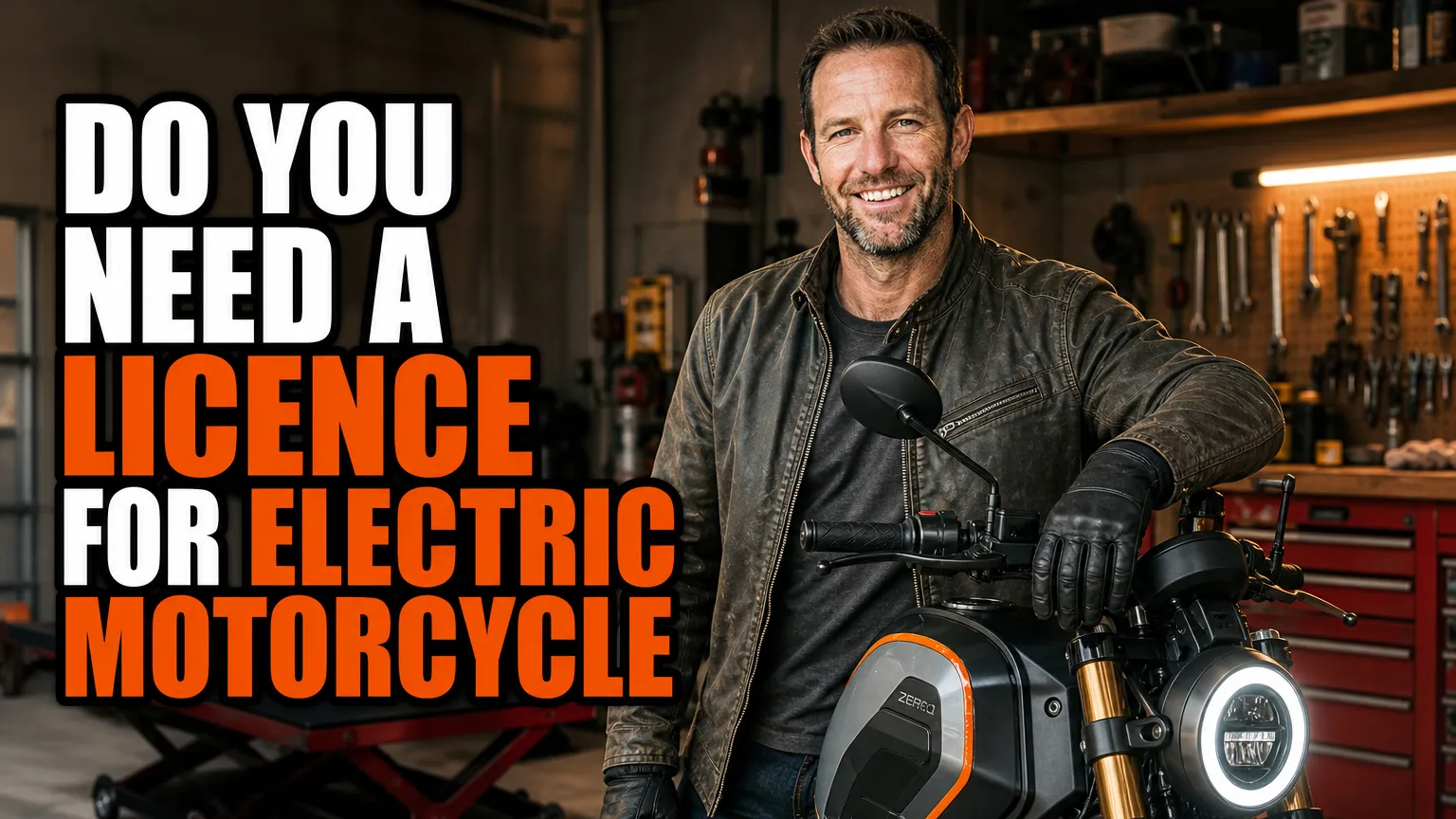
When I first looked into riding an electric motorcycle, I expected the answer to be simple: electric meant different rules, right? I quickly learned that the motor’s power source doesn’t usually decide whether I need a licence. What matters most is how my local authority classifies the vehicle and where I plan to ride it.
That distinction can be easy to miss when a bike looks like a motorcycle but is advertised as an “e-bike,” “electric moped” or “off-road model.” I now check the legal category, speed and power before I buy or ride, because getting those details wrong can affect my licence, insurance and safety.
- I usually need the correct motorcycle or moped licence for a road-legal electric motorcycle.
- Local law and vehicle classification matter more than whether the motor uses electricity or petrol.
- I check power, top speed, registration, insurance, minimum-age rules and helmet requirements before riding.
- A low-speed electric bicycle may have different rules, but I never assume a motorcycle-shaped vehicle qualifies.
Why the vehicle’s legal class matters most
When I ask, “Do I need a licence for an electric motorcycle?”, I first ask a more useful question: “What does my local law call this particular vehicle?” A road authority may classify it as a motorcycle, moped, motor-driven cycle, electric bicycle or off-road vehicle, and each category can come with different requirements.
The word electric describes how the motor is powered; it doesn’t automatically tell me what licence I need. A powerful electric bike capable of motorcycle speeds may be regulated just like a petrol motorcycle, while a low-speed pedal-assist bicycle may fall under bicycle rules. I always verify the formal classification rather than relying on a product name or a shop description.
Why power and speed can change the answer
Depending on where I live, the factors used to classify a vehicle may include its maximum speed, motor power, weight, whether it has pedals, and how the motor operates. Some systems also distinguish between continuous rated power and peak power, so I look for the figure used by the regulator rather than guessing from a marketing headline.
That’s important because two electric models that look nearly identical can sit in different legal categories. A small change in speed or power could mean I need a motorcycle licence instead of a moped entitlement, or that the bike can’t be ridden on public roads at all.
When I should expect to need a motorcycle licence
If a vehicle is registered or designated as a road-going electric motorcycle, I plan on needing the appropriate motorcycle licence for its class. In some places, that means passing a knowledge test and a practical riding test; in others, I may need a learner permit, training course or licence endorsement first.
I also check whether my existing licence covers the specific type of bike. A car licence doesn’t automatically give me permission to ride a motorcycle, and any moped privileges attached to an older or local licence may have restrictions. I confirm the details with my licensing authority instead of relying on assumptions or advice from a friend.
Age limits, learner rules and endorsements
When I’m comparing licence categories, I check the minimum age as well as the test requirements. A moped or lower-powered category may have a lower age threshold than a full motorcycle class, but that varies by jurisdiction and can come with limits on speed, engine-equivalent power, passengers or road access.
If I’m riding on a learner permit, I look for conditions such as supervision, passenger bans, route restrictions or a required safety course. I’d rather spend a few minutes checking those conditions than discover at the roadside that my licence doesn’t cover the bike or the way I’m using it.
How the rules can differ by location
I never assume that a rule I read for one country applies where I ride. Even within the same country, state, provincial or regional rules can differ, and vehicle categories may use different names. The examples below are a starting point for my research, not a substitute for checking current local requirements.
In the United States
In the U.S., I check my state’s motor vehicle agency rules because motorcycle licensing and registration are generally handled at the state level. If the vehicle is classified as a motorcycle, I may need a motorcycle endorsement or separate motorcycle licence, along with registration, a plate and the required insurance.
I’m especially careful not to confuse an electric motorcycle with an electric bicycle. Federal and state definitions for e-bikes can involve factors such as pedals, motor output and assisted speed, and state rules may add their own requirements. A bike that exceeds the local e-bike limits may be treated as a motor vehicle even if a seller calls it an e-bike.
In the United Kingdom
In the UK, I check the vehicle’s official category and the driving entitlements on my licence. A road-legal electric motorcycle or moped will generally require the relevant motorcycle or moped entitlement, and the exact category can depend on the vehicle’s design speed and power.
I also check whether the machine is properly approved for road use and whether it must be registered, taxed and insured. A model sold for private land or off-road use doesn’t become road-legal just because I can physically ride it on a street. I verify the details with the current GOV.UK guidance and the vehicle documents before setting off.
In the European Union and elsewhere
Across the EU, I look at the vehicle’s homologation and the licence category stated in the relevant national rules. Categories such as AM, A1, A2 and A can apply to different kinds of powered two-wheelers, but the requirements and national implementation can vary. I check the rules in the country where I’ll ride, especially if I’m travelling across borders.
For Canada, Australia and other countries, I take the same approach: I start with the local transport or licensing authority, then check the exact model documents. I don’t rely on a forum post from a different region, because a familiar-looking electric bike can be treated differently from one jurisdiction to another.
What I check before buying or riding
I use a short checklist before paying for an electric motorcycle or taking one onto public roads. It helps me avoid buying a machine I can’t legally ride, and it gives me a clear list of questions to ask the seller, insurer and licensing authority.
- Vehicle category: I confirm whether it is legally a motorcycle, moped, electric bicycle or off-road-only vehicle.
- Rated power and maximum speed: I check the specifications the regulator uses, not just a peak-power claim in an advert.
- Licence class: I make sure my current licence covers that exact category and check for age or learner restrictions.
- Road approval: I confirm that the bike is approved or certified for public-road use where required.
- Registration and plates: I find out whether I need to register the vehicle, display a plate or pay a road-use charge.
- Insurance: I ask an insurer to confirm cover for that model and use before I ride.
- Protective equipment: I check helmet and other safety-equipment rules, then choose gear I’m comfortable wearing.
I read the documents, not just the advert
I ask the seller for the manufacturer’s specifications, certificate of conformity or other road-approval documents, and any registration paperwork already available. If the bike has been modified, I check whether the changes affect its classification or road approval. I’m wary of vague assurances such as “no licence needed” unless the seller can point me to the local rule that supports the claim.
I also make sure the vehicle identification details match across the bike and its documents. If the seller can’t explain the bike’s legal category, or the specifications don’t line up, I pause the purchase and contact the relevant authority. A bargain isn’t much of a bargain if I can’t register, insure or legally ride it.
Registration, insurance and road equipment
When my electric motorcycle is treated as a motor vehicle, I expect registration and compulsory insurance rules to apply, though the precise requirements depend on where I live. I contact an insurer with the make, model, power, top speed and intended use, because a standard motorcycle policy may not automatically cover every electric model or modification.
I also check the required road equipment. Depending on the rules, that may include lights, mirrors, indicators, a horn, approved tyres and a visible registration plate. I don’t assume that a bike designed for trails or private property meets the standards for public roads.
For me, insurance is more than a box to tick. If I ride without the legally required cover, I could face penalties and be personally responsible for costs after a crash. I confirm the policy is active and accurately describes the bike before my first trip.
What if my electric bike looks like a motorcycle?
This is one of the most confusing situations I’ve come across: a compact electric bike may have a motorcycle-style frame and throttle, but its seller may describe it as an e-bike. The appearance doesn’t settle the legal question, and neither does the name on the product page. I check the local definition and compare it with the bike’s actual features.
If it has pedals, I find out whether they must be functional and whether the motor’s assistance must stop at a certain speed. If it has a throttle, unusually high power or a high top speed, I check whether that pushes it outside the local electric-bicycle category. When I can’t confirm the classification, I treat it cautiously and get written guidance before riding on public roads.
Can I ride an electric motorcycle off-road without a licence?
Sometimes a vehicle intended only for private land has different requirements from a road-registered motorcycle, but I don’t treat “off-road” as a universal exemption. Rules can still apply to where I ride, my age, landowner permission and the type of vehicle, and some public trails require a permit or registration.
I also remember that riding from my driveway to a nearby trail may involve public roads. If the bike isn’t road-legal or I don’t hold the right licence, that short connection can still be a problem. I transport an off-road machine to a legal riding area rather than assuming I can use the street for convenience.
Common mistakes I try to avoid
- Assuming electric means licence-free: I check the category, because power source alone doesn’t decide my licensing requirements.
- Trusting the advertised top speed: I look for official specifications and confirm which measurement local rules use.
- Relying on a car licence: I verify whether it includes any motorcycle or moped entitlement where I live.
- Skipping insurance until after buying: I check availability and cost before committing to a model.
- Assuming private-land rules apply on the street: I confirm road approval and registration before using public roads.
- Using advice from another jurisdiction: I go directly to the authority responsible for my location.
My practical answer before I ride
So, do I need a licence for an electric motorcycle? If it’s legally classified as a road-going motorcycle or moped, I expect to need the matching licence or entitlement. If it falls into a low-speed electric-bicycle category, different rules may apply, but I verify that the specific bike qualifies before I ride.
My final pre-ride routine is simple: I confirm the vehicle class, licence category, road approval, registration, insurance and local safety rules. Because regulations can change and details matter, I check the current guidance from my licensing or transport authority rather than treating this article as legal advice. That small bit of research lets me enjoy the quiet, instant pull of an electric ride with much more confidence.
Frequently Asked Questions
Do I need a licence to ride an electric motorcycle?
I check the vehicle’s legal classification and my local rules. A road-legal electric motorcycle usually requires an appropriate motorcycle licence, while some low-speed electric bicycles may not.
Can I ride an electric motorcycle with a car licence?
I never assume a car licence is enough. Some places grant limited moped rights or require an endorsement, while others require a separate motorcycle licence.
Do electric motorcycles need registration and insurance?
I check local requirements before riding. If the vehicle is classed as a motorcycle, registration, number plates and liability insurance are commonly required.
Does a more powerful electric motorcycle need a different licence?
It can. I verify the bike’s rated power, speed, weight and class because these details may determine the licence category and minimum age.

Related Articles

Starting on Two Wheels: UK Motorcycle Licence, CBT and Learner Rules
Learn whether you need a provisional motorcycle licence in the UK, what CBT allows, learner restrictions, costs to plan for…
Jake Miller
11 min read

Scooter License Rules Explained: What I Check Before I Ride
Find out when a scooter needs a motorcycle license, how engine size and local rules matter, and what I check…
Jake Miller
9 min read

Scooter Licence Rules Explained: What I Check Before I Ride
Find out whether your scooter needs a motorcycle licence, how engine size and local rules affect you, and what to…
Jake Miller
10 min read