
Can-Am Spyder in California: The License You Need Before You Ride
 Jake Miller
9 min read
Jake Miller
9 min read
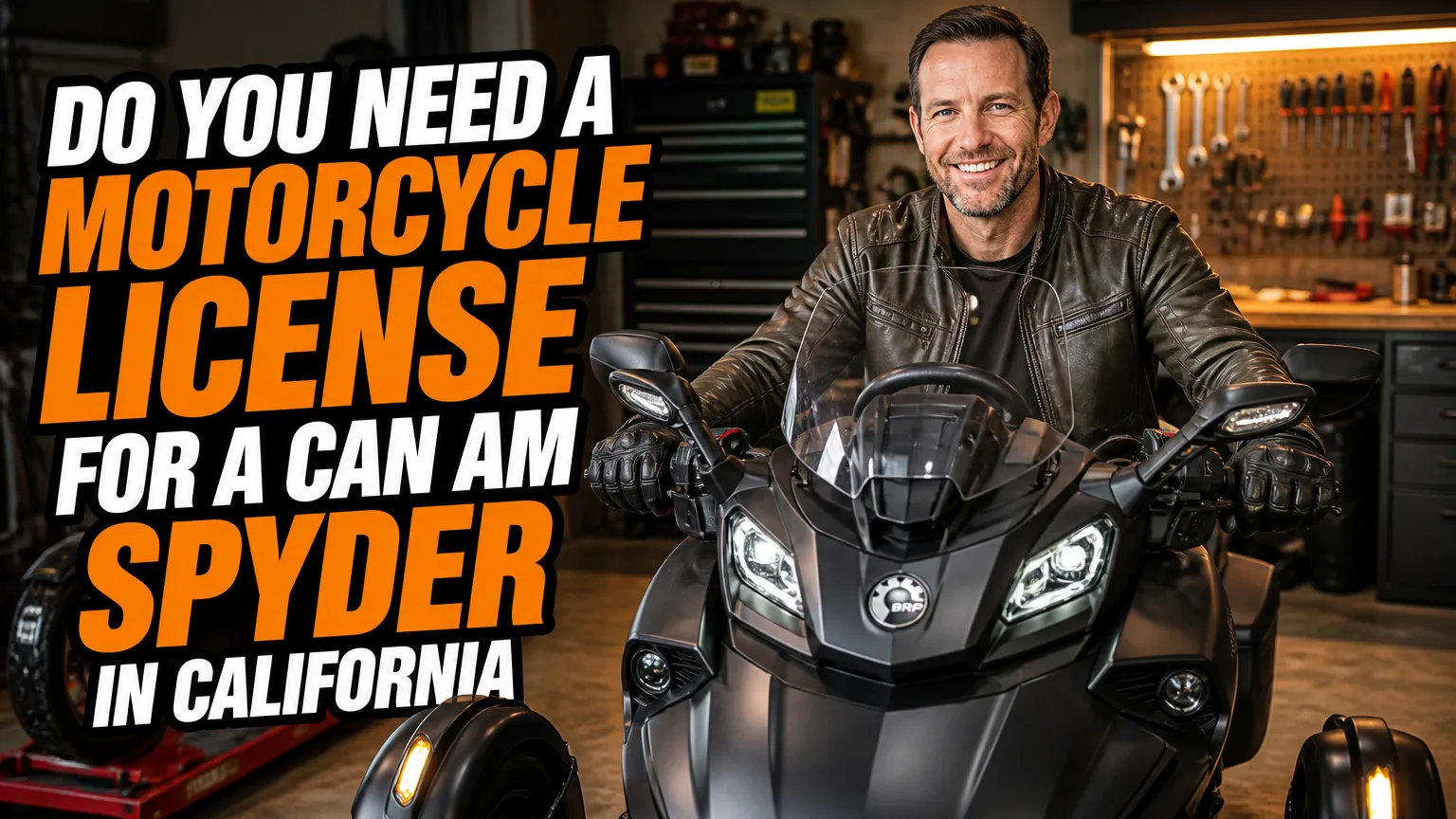
When I started looking into the Can-Am Spyder, one of the first practical questions I wanted answered was whether riding one in California means getting a motorcycle license. The short answer is reassuring: a valid California Class C driver’s license generally allows you to operate a three-wheel motorcycle such as a Can-Am Spyder, so you usually don’t need an M1 motorcycle endorsement just to ride one.
I still wouldn’t rely on a quick answer alone. The vehicle’s classification, the type of license you hold, and current DMV rules all matter, so I like to verify the details before buying, borrowing, or taking any three-wheeler on the road.
- A valid California Class C license generally covers a three-wheel motorcycle like a Can-Am Spyder.
- An M1 endorsement is generally for two-wheel motorcycles, not a three-wheeler.
- I’d confirm the exact vehicle classification with the DMV, especially for an out-of-state license or unusual registration.
- California helmet laws and other riding rules still apply, and training is a smart idea even when it isn’t required.
The short answer about Spyder licensing in California
In California, I understand the licensing distinction this way: a Class C license generally lets me operate a three-wheel motorcycle, while a motorcycle endorsement is needed for riding a two-wheel motorcycle. Because a Can-Am Spyder has three wheels, a rider with a valid California Class C license generally does not need an M1 endorsement just to operate it.
That answer is about the license class, not a blanket promise that every vehicle or rider automatically qualifies. I’d check the registration and vehicle classification for the specific Spyder, and I’d contact the California Department of Motor Vehicles if anything on the paperwork is unclear.
I’d also be careful not to confuse the Spyder with a conventional motorcycle simply because it has motorcycle-style handlebars, a saddle, and an engine. The three-wheel configuration is the key licensing distinction in this situation.
Why the number of wheels matters
When I compare the licensing rules, I focus first on how the vehicle is classified and how many wheels it has. A conventional two-wheel motorcycle generally calls for a California motorcycle license or endorsement. A three-wheel motorcycle can fall under the rules that allow a Class C license to cover operation.
The Spyder’s two wheels are at the front and one is at the rear. That layout can feel different from both a car and a two-wheel motorcycle, but for the license question, the important point is that it is a three-wheeled vehicle. I would still verify that the particular model is recorded as a three-wheel motorcycle in its official documents.
Class C and M1 are not interchangeable
I think of a Class C license as the standard noncommercial driver’s license for ordinary passenger vehicles, with California rules that generally allow its holder to operate a three-wheel motorcycle. An M1 endorsement, by contrast, is the motorcycle class I’d expect to need for a two-wheel motorcycle.
That difference matters if I ride more than one kind of vehicle. A Class C license that lets me ride a Spyder does not automatically mean I can ride a two-wheel motorcycle. If I plan to switch between a three-wheeler and a conventional motorcycle, I’d check the M1 requirements before riding the two-wheeler.
What I’d check before taking a Spyder on California roads
Before riding, I’d make sure the basics line up: my license is valid, the Spyder is properly registered, and the vehicle’s documentation matches its three-wheel configuration. A quick call or visit to the DMV is a sensible move if the paperwork uses a description I don’t recognize or the vehicle was modified.
I’d also check that the insurance policy covers the actual vehicle and its intended use. Licensing and insurance are separate questions: having the right license doesn’t confirm that a policy is active, that a particular rider is covered, or that the vehicle is registered correctly.
If my license is from another state
I’d be especially cautious if I were visiting California or moving there with an out-of-state license. A license that permits a three-wheeler in one state may not answer every California question, and the terms used for endorsements can vary from state to state.
For a visitor, I’d check with the licensing agency in the state that issued my license and confirm that it is valid for the vehicle I plan to ride. If I’m becoming a California resident, I’d contact the California DMV about getting the appropriate California license and how it applies to my Spyder.
If the vehicle or paperwork is unusual
I wouldn’t assume every three-wheeled vehicle is treated identically just because it has three wheels. A custom build, major modification, unusual registration category, or imported vehicle can raise questions that a general rule doesn’t settle.
In that situation, I’d use the VIN and registration documents when asking the DMV for guidance. I’d rather confirm the classification before the first ride than discover that the paperwork doesn’t match the vehicle after a traffic stop or insurance claim.
Where I’d verify the rule
For an answer I can rely on, I’d start with the California DMV motorcycle information and check its current guidance on motorcycle license classes. I’d also consult the California Motorcycle Handbook for licensing and safety information.
If the DMV material doesn’t answer my exact question, I’d contact the DMV directly and describe the vehicle as a Can-Am Spyder with three wheels. I’d have the registration or VIN available so I can ask about the specific model rather than depending on a general description.
License rules are only one part of riding legally
Even when I have the right license, I still need to follow California’s motorcycle-related requirements and general road rules. A Can-Am Spyder’s three wheels don’t make it exempt from laws that apply to motorcycle riders, including California’s helmet requirement.
I’d wear a compliant helmet every time I ride, and I’d check current state rules for passengers and required equipment. I’d also make sure my registration and insurance are current, carry any required documents, and follow posted speed limits and traffic controls.
I’d treat training as a worthwhile investment
A course may not be required simply because I’m riding a three-wheel motorcycle with a Class C license, but I still recommend training. A Spyder handles differently from a car and a two-wheel motorcycle, so the habits I bring from one vehicle may not transfer perfectly to the other.
I’d look for instruction that specifically covers three-wheel motorcycles or the Spyder’s controls and handling. I’d want to practise starting, stopping, turning, braking, and responding to uneven pavement in a controlled setting before riding in busy traffic.
For me, training is about building a useful margin of confidence, not just checking a box. Even a rider with years of experience can benefit from learning the feel of a different machine before heading out on a long ride.
Common licensing misunderstandings I’d avoid
“It looks like a motorcycle, so I must need an M1”
I wouldn’t decide based on appearance alone. The Spyder has a motorcycle-like riding position, but California’s licensing distinction generally considers its three-wheel configuration. I’d check the vehicle classification and the DMV’s current rules rather than assuming an M1 is required because the machine looks like a motorcycle.
“My Class C lets me ride any motorcycle”
This is the misunderstanding I’d be most careful to avoid. A Class C license may generally cover a three-wheel motorcycle, but that doesn’t mean it authorizes me to ride a two-wheel motorcycle. If I want to operate a two-wheeler, I’d confirm the M1 requirements and obtain the proper motorcycle privilege first.
“If I can ride it, I don’t need to check anything else”
I see licensing as just one item on my pre-ride checklist. I’d still confirm that the vehicle is registered and insured, that I’m following helmet and equipment rules, and that I’m comfortable controlling the Spyder in the conditions I’ll face.
I’d also be thoughtful about road positioning and traffic. A three-wheeler is wider than a typical two-wheel motorcycle, and I wouldn’t assume that every maneuver that works for a narrow motorcycle is suitable for a Spyder. I’d ride within my skill level and follow current California law.
My practical checklist before a first ride
- I confirm my license: I check that my California Class C license is valid and that I’m not relying on it to ride a two-wheel motorcycle.
- I check the vehicle documents: I review the registration and confirm how the specific Spyder is classified.
- I verify anything uncertain: I contact the DMV if the vehicle, license, or registration details don’t fit the general guidance.
- I sort out insurance: I make sure the policy covers the Spyder and the rider.
- I gear up and practise: I wear a compliant helmet and, if I’m new to three-wheelers, practise in a safe setting before riding in traffic.
Bottom line for California Spyder riders
My takeaway is straightforward: a valid California Class C driver’s license generally allows me to ride a three-wheel motorcycle like a Can-Am Spyder, without an M1 endorsement. The M1 distinction generally matters when I’m riding a two-wheel motorcycle, not simply because a vehicle has motorcycle-style controls.
I’d still verify the classification of the exact Spyder I plan to ride, especially if I have an out-of-state license or the paperwork is unusual. Once I’ve confirmed the license, registration, and insurance, I’d focus on the part that makes every ride better: wearing the right gear, getting comfortable with the machine, and riding within my abilities.
Frequently Asked Questions
Do I need an M1 motorcycle endorsement to ride a Can-Am Spyder in California?
Generally, no. A valid California Class C driver’s license allows you to operate a three-wheel motorcycle, while an M1 is for two-wheel motorcycles. Confirm your Spyder’s classification with the DMV.
Can I ride a Can-Am Spyder with a regular California driver’s license?
Generally, yes, if your valid license is a California Class C and the vehicle is registered as a three-wheel motorcycle. Check with the DMV if your license or vehicle was issued outside California.
Does a Can-Am Spyder rider have to wear a helmet in California?
Yes. California requires motorcycle riders and passengers to wear compliant safety helmets.
Is a motorcycle safety course required to ride a Spyder in California?
A motorcycle course is generally not required just to operate a three-wheel motorcycle with a Class C license, but I recommend training to build confidence and control.

Related Articles

Electric Motorcycle Licensing: What I’d Check Before Riding
Learn when an electric motorcycle needs a licence, how laws differ by location and bike class, and what I check…
Jake Miller
10 min read

Starting on Two Wheels: UK Motorcycle Licence, CBT and Learner Rules
Learn whether you need a provisional motorcycle licence in the UK, what CBT allows, learner restrictions, costs to plan for…
Jake Miller
11 min read

Scooter License Rules Explained: What I Check Before I Ride
Find out when a scooter needs a motorcycle license, how engine size and local rules matter, and what I check…
Jake Miller
9 min read