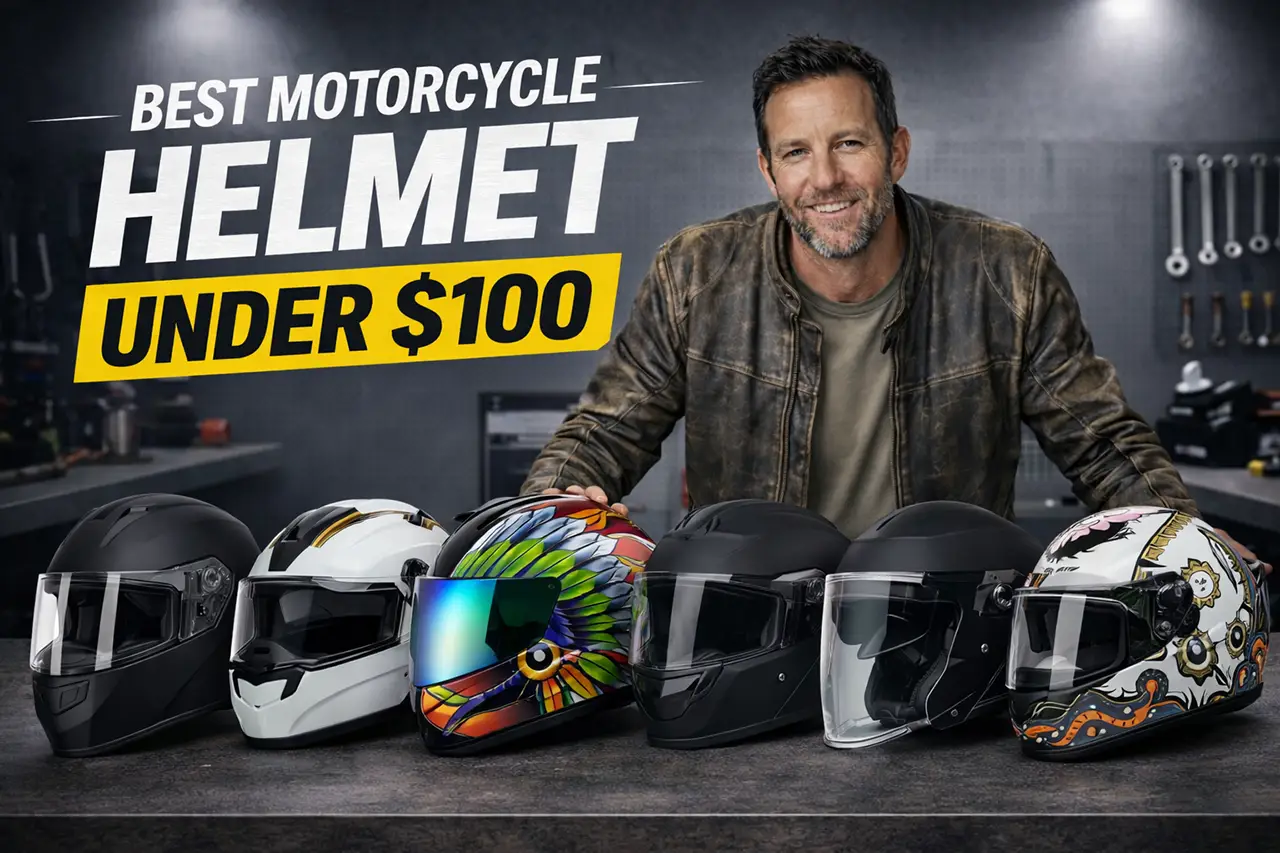
Before you scroll into the list, let me say this upfront: a $100 budget doesn’t mean you have to compromise on your safety. But it does mean you need to be a smart shopper — and that’s exactly why I put this together.
If you’re new to gearing up or want to understand what to look for beyond just price, I strongly recommend bookmarking the Ultimate Guide to Motorcycle Helmets — it’s the deep-dive companion to this post and covers everything from shell materials to certification standards.
Now, let’s get into it.
TL;DR — Best Motorcycle Helmets Under $100 at a Glance
| Helmet | Type | Safety Cert | Best For | Price Range |
|---|---|---|---|---|
| GLX GX11 | Full Face | DOT | Street/Sport riders | ~$60–70 |
| ILM JK313 | Full Face | DOT | All-season commuters | ~$65–80 |
| ILM 902 | Modular/Flip-Up | DOT | Casual touring | ~$75–90 |
| Vega Helmets Magna | Open Face | DOT | Cruiser/urban riders | ~$70–85 |
| YEMA YM-925 | Full Face | DOT | New riders & commuters | ~$60–75 |
| TRIANGLE Dual Visor | Full Face | DOT | Budget-first riders | ~$55–70 |
| WOW Motorcycle Helmet | Full Face | DOT | Occasional riders | ~$50–65 |
Why I Wrote This Guide
I’ve been riding for over a decade — everything from weekend canyon carving to daily commuting across city streets. In that time, I’ve learned that your helmet is the single most important piece of gear you own. Not the jacket, not the boots. The helmet.
But here’s the thing: not everyone is in a position to drop $400–$600 on a Shoei or Arai right out of the gate. Maybe you’re a new rider, maybe you’re buying a spare lid for a passenger, or maybe you’re going through a financially tight season. Whatever the reason, I get it — and I want you protected anyway.
Over the past few months, I went deep into researching helmets that genuinely sell for under $100. Not “on sale sometimes” or “if you use a promo code” — I mean consistently, reliably priced below $100. I looked at DOT certifications, shell construction, user reviews, ventilation systems, and real-world feedback from riders before putting this list together.
This is not a list padded with helmets that cost $130 and have a discount I found for 20 minutes on a Tuesday. Every helmet here is verified under $100 at the time of writing, and every one I’ve assessed with the same critical eye I’d apply to my own gear.
Let’s get into it.
What to Expect From a Helmet Under $100
Before the list, I want to be straight with you, rider to rider.
A helmet under $100 will almost always be DOT-certified (Department of Transportation), which is the minimum legal standard in the United States. What you typically won’t find is ECE 22.06 or Snell M2020 certification — those come on pricier helmets and represent more rigorous testing protocols.
That doesn’t mean a DOT-only helmet is unsafe. It means it’s passed a legitimate, federally mandated safety standard, and it will protect your head far better than nothing at all. What you trade off in this price range includes things like:
- Quieter aerodynamics (budget helmets are louder at highway speeds)
- Premium liner materials (expect basic but functional foam and fabric)
- Lighter weight (budget helmets tend to run heavier)
- Tighter build quality (some rattling, flimsier vents are common)
Go in with realistic expectations, treat it as a starter or backup lid, and always prioritize fit above everything else. A $65 helmet that fits your head perfectly will protect you better than a $500 helmet that doesn’t.
1. GLX GX11 — Best Overall Under $100
Price: ~$60–70 | Type: Full Face | Certification: DOT
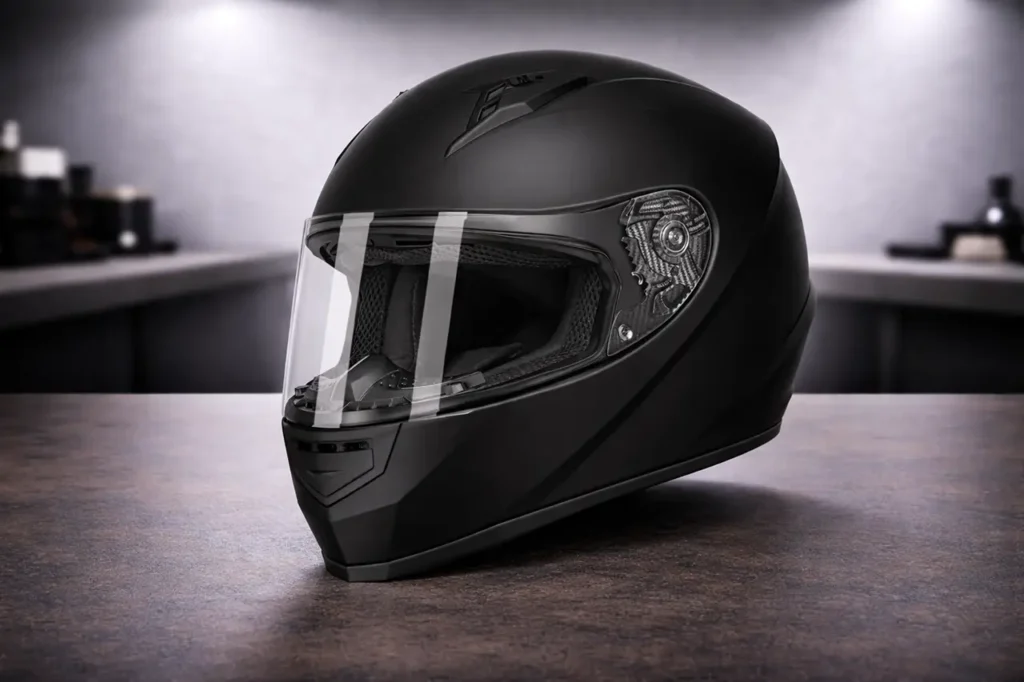
If I had to send someone to one helmet in this price range without knowing a single thing about them, I’d point them to the GLX GX11. It’s not flashy. It’s not loaded with tech. But it does what a helmet at this price should do — reliably, consistently, and without drama.
GLX is a Southern California brand that’s been building helmets since 2002, and the GX11 is the product of real design work: the shell goes through wind tunnel testing, the ventilation system includes three adjustable intake ports and four exhaust outlets, and the multi-density EPS liner provides layered impact absorption. For under $70, that’s genuinely impressive.
The outer shell uses ABS (Acrylonitrile Butadiene Styrene) construction, which is the standard material in this price range. It won’t absorb impacts the way a fiberglass or composite shell does, but it does meet DOT safety requirements. The interior is fully removable and washable — a feature I consider non-negotiable on any helmet I recommend, because a helmet you can clean is a helmet you’ll actually keep wearing.
The GX11 ships with two visors: a clear shield and a tinted one. The quick-swap mechanism is easy to operate, and the tinted visor is dark enough to be useful on sunny days without compromising visibility in shade. Riders frequently praise how light this helmet feels on the head despite the budget price point — it runs around 3 lbs., which is reasonable for a full-face at this tier.
The main limitation I’d flag is wind noise. At highway speeds above 70 mph, it gets noticeably loud. Ear plugs are genuinely recommended if you ride highways regularly in this helmet. Also, the sizing runs slightly snug — if you’re between sizes, size up.
Who it’s best for: New riders, daily commuters, anyone buying a backup lid, and riders who want the most feature-rich option for the least money.
What I like:
- Wind-tunnel-tested shell design
- Dual visor system included (clear + tinted)
- Fully removable and washable interior
- Lightweight for the price
- Great value for a first helmet
What to watch out for:
- Wind noise above 65–70 mph
- Sizing runs slightly small — consider going up a size
2. ILM JK313 Full Face — Best for All-Season Commuters
Price: ~$65–80 | Type: Full Face | Certification: DOT
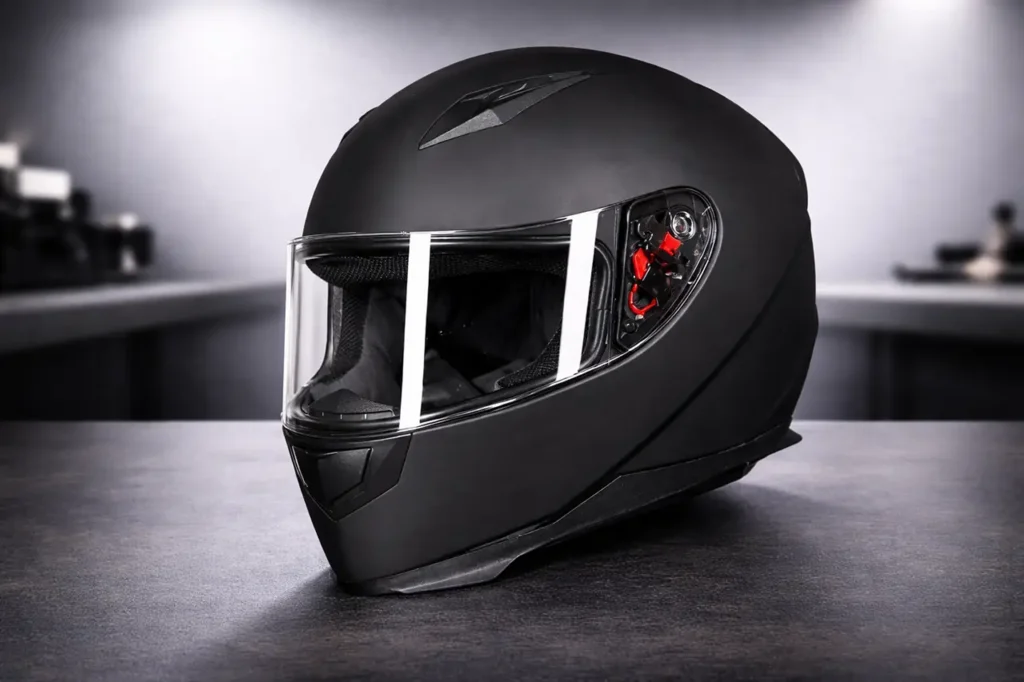
ILM is one of those brands that quietly became a staple of the budget helmet market. Since entering North America in 2013, they’ve shipped millions of helmets and built a reputation for solid DOT-certified protection at prices that make helmets accessible to nearly any rider.
The JK313 is their workhorse full-face model, and what sets it apart at this price point is the versatility it packs in. You get two visors out of the box — a clear anti-fog shield and a smoke-tinted shield — plus a removable winter neck scarf that snaps on to seal the bottom of the helmet against cold drafts. For year-round commuters riding in variable conditions, that’s a real practical advantage.
The shell is built from ABS material with a lightweight aerodynamic profile. ILM’s construction meets or exceeds FMVSS-218 DOT safety standards, and the quick-release chin strap makes getting in and out of the helmet fast, especially with gloves on. The interior liner and cheek pads are removable and washable — again, a feature I consider basic hygiene, not a luxury.
Real-world rider feedback consistently praises the ILM JK313 for its comfortable fit on longer rides and how well it performs as a starter helmet. I’ve seen it mentioned in reviews from people who crashed in it and walked away without head injuries — which is the ultimate proof of concept.
The anti-fog coating on the clear visor holds up reasonably well, though in very cold, damp conditions you’ll still want to crack the visor slightly. The neck scarf is surprisingly useful in autumn and early spring rides, which is an underrated detail at this price.
Who it’s best for: All-season commuters, new riders, anyone who rides in varied weather and wants a versatile lid under $80.
What I like:
- Two visors included (clear anti-fog + tinted)
- Removable winter neck scarf is a thoughtful bonus
- Quick-release chin strap
- Clean, minimalist aesthetic in multiple colors
- Reliable DOT certification
What to watch out for:
- Not the most refined wind noise management
- Fitment can feel narrow for wider/rounder head shapes
3. ILM 902 Modular Flip-Up — Best Modular Under $100
Price: ~$75–90 | Type: Modular/Flip-Up | Certification: DOT
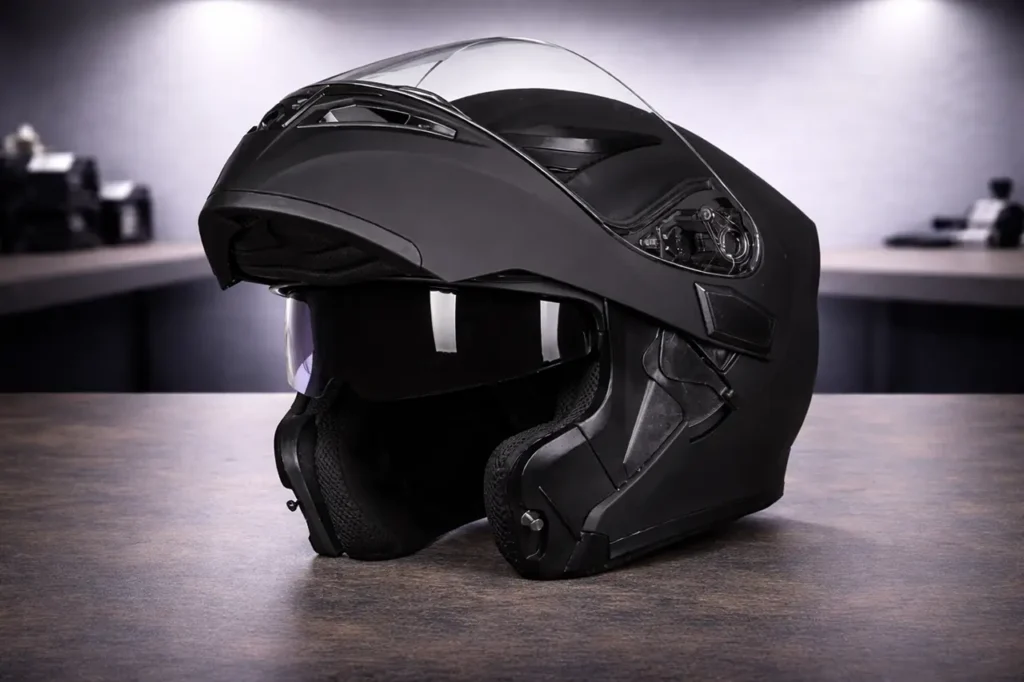
If you’ve ever wanted a modular helmet but couldn’t justify the $200–$400 price tag, the ILM 902 is the closest you’ll get to that experience on a budget.
Modular helmets — also called flip-up or flip-face helmets — give you the protection of a full-face lid with the convenience of being able to flip the chin bar up without removing the helmet entirely. It’s great for stopping at gas stations, toll booths, or having a quick conversation without yanking the whole lid off. Most modular helmets cost significantly more than $100, which makes the 902 an unusual find.
The 902 uses a high-resistance ABS shell and meets DOT safety standards. It features a dual visor system: a large clear outer shield and a built-in retractable tinted inner lens. The inner tinted lens flips down from inside the helmet like a built-in pair of sunglasses — a convenience feature that normally only appears on helmets costing twice as much.
The micrometric buckle chin strap provides a secure, micro-adjustable fit rather than the traditional D-ring, making it easier to get a precise fit. The interior liner is removable and washable, and the cheek pads are soft and contoured.
The honest trade-off here is that the modular chin bar mechanism is not as refined as you’d find on a Schuberth or Shoei flip-up. The release lever requires two hands and a deliberate motion — it won’t accidentally open, but it also won’t open with the casual ease of a premium modular. The ventilation is on the moderate side, so if you’re riding hard in summer heat, you may run warm.
For the price, it’s an impressive value for anyone who wants modular functionality without a premium spend.
Who it’s best for: Casual tourers, commuters who make frequent stops, riders who prefer modular convenience at a budget price.
What I like:
- True modular/flip-up functionality under $100
- Built-in retractable tinted inner sun lens
- Micrometric adjustable chin strap
- Removable and washable interior
- Bluetooth-ready speaker pockets
What to watch out for:
- Chin bar release requires deliberate two-hand operation
- Ventilation is moderate — can run warm in hot weather
- Heavier than entry-level full-face helmets
4. Vega Helmets Magna Open Face — Best for Cruiser & Urban Riders
Price: ~$70–85 | Type: Open Face (3/4) | Certification: DOT
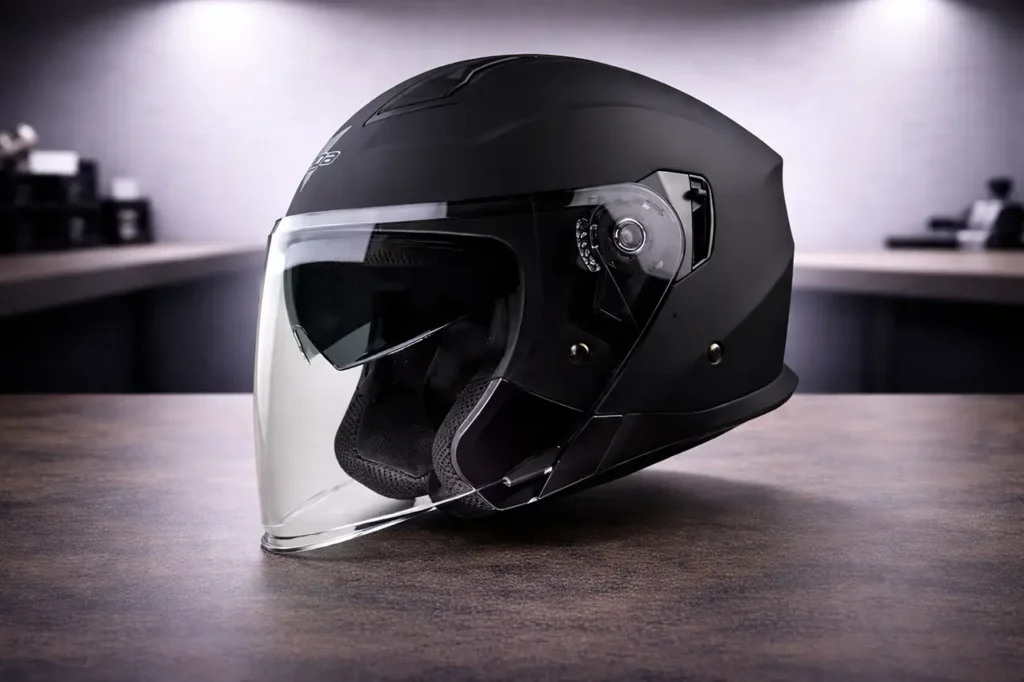
Not everyone wants a full-face helmet. I know that. Plenty of riders — particularly those on cruisers, bobbers, cafe racers, and city bikes — prefer the open-face feel and the connection to the road that comes with it. If that’s you, the Vega Magna deserves your attention.
Vega is an American brand with decades in the helmet business, and the Magna is their no-nonsense open-face offering. The construction is solid: a polycarbonate shell, a DOT-approved impact liner, and enough practical detail to make it a genuinely usable daily helmet rather than just a novelty.
The standout feature of the Magna is its integrated drop-down sun shield. In most open-face helmets at this price, you’re looking at a single snap-on shield or no face coverage at all. The Magna includes an internal sun visor that flips down with a simple lever on the left side of the helmet — clean, quick, and surprisingly scratch-resistant for a budget helmet.
The interior padding is removable and washable, and the D-ring chin strap is reliable and secure. In terms of fit, Vega helmets tend to work well for intermediate oval head shapes — neither extremely round nor extremely long oval.
The obvious trade-off with any open-face helmet is protection: your face isn’t covered. If you go down and hit pavement face-first, an open-face helmet will not protect your chin and jaw the way a full-face would. That’s a fundamental physics reality, not a Vega-specific issue. Know the risk, make your decision with full awareness.
For short urban commutes, low-speed cruising, and the riders who prioritize feel and style as much as protection, the Magna is one of the better open-face options under $85.
Who it’s best for: Cruiser riders, cafe racer enthusiasts, urban commuters who prefer open-face style and feel.
What I like:
- Built-in drop-down sun shield — unusual at this price
- Established American brand with a long track record
- Removable, washable interior
- Clean, classic styling in multiple finishes
- Comfortable for short to medium rides
What to watch out for:
- Open-face design = less protection than full-face (by definition)
- Not ideal for highway speeds in rain or heavy wind
5. YEMA YM-925 Full Face — Best for New Riders
Price: ~$60–75 | Type: Full Face | Certification: DOT
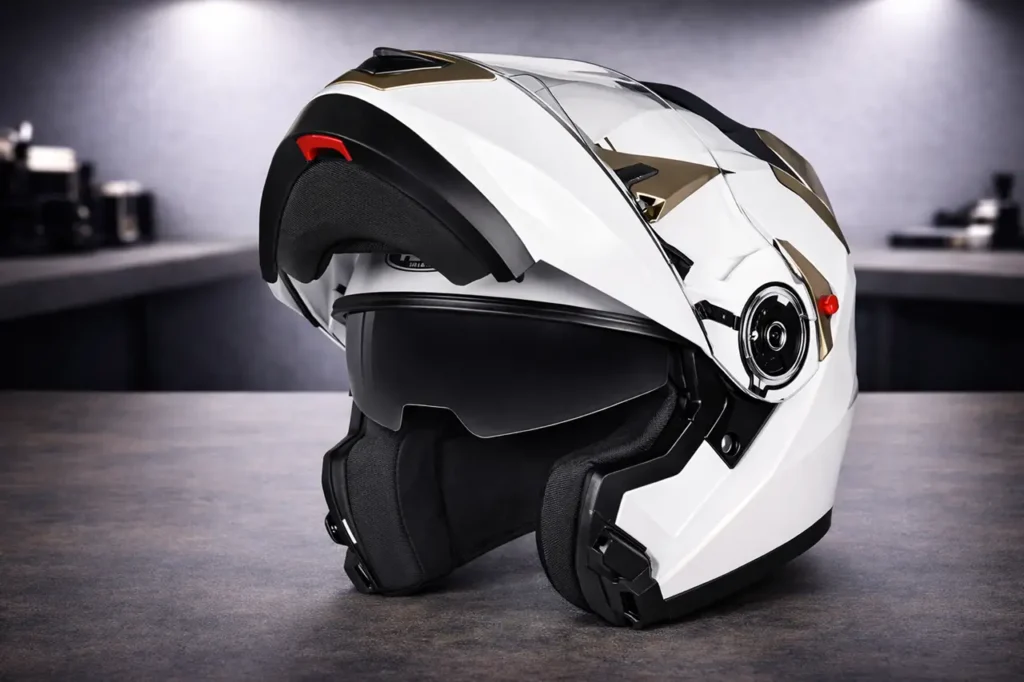
I want to give specific attention to new riders, because they have the most to gain from a good affordable helmet and the least experience to navigate the buying process. The YEMA YM-925 is the helmet I’d recommend most confidently to someone strapping on a lid for the very first time.
YEMA is a helmet brand that’s been quietly earning strong reviews from real riders rather than marketing departments. The YM-925 hits the right notes for beginners: it’s light, comfortable out of the box, easy to clean, and priced low enough that a new rider isn’t laying out serious money before they even know if they’ll stick with riding.
The full-face construction uses a thermoplastic alloy shell — ABS-based, lightweight, and sufficient for DOT certification. The aerodynamic design helps reduce the physical strain on your neck during longer rides, which matters more than you might think on your first few hundred miles. The EPS foam liner provides solid impact absorption, and the interior is removable and washable for hygiene.
The YM-925 comes in a solid range of solid and graphic colorways, which I mention because new riders are often buying their first helmet as much for identity as for protection. Looking like a rider you want to be matters psychologically — and there’s nothing wrong with that.
Riders note that the helmet is quiet for its price, which is genuinely unusual in this tier. The visor offers good scratch resistance and a clean, undistorted field of view. Sizing can be a bit inconsistent — always check the brand’s size chart against your head measurement in centimeters, not just S/M/L.
Who it’s best for: New riders, MSF course students, anyone who wants a clean, lightweight entry-level full-face helmet.
What I like:
- Lightweight aerodynamic shell
- Quieter than most helmets in this price range
- Clean, undistorted visor optics
- Good variety of color and graphic options
- Comfortable out of the box with minimal break-in
What to watch out for:
- Sizing varies — measure your head and consult the chart
- Limited to DOT only (no Snell or ECE)
6. TRIANGLE Dual Visor Full Face — Best Budget Pick
Price: ~$55–70 | Type: Full Face | Certification: DOT
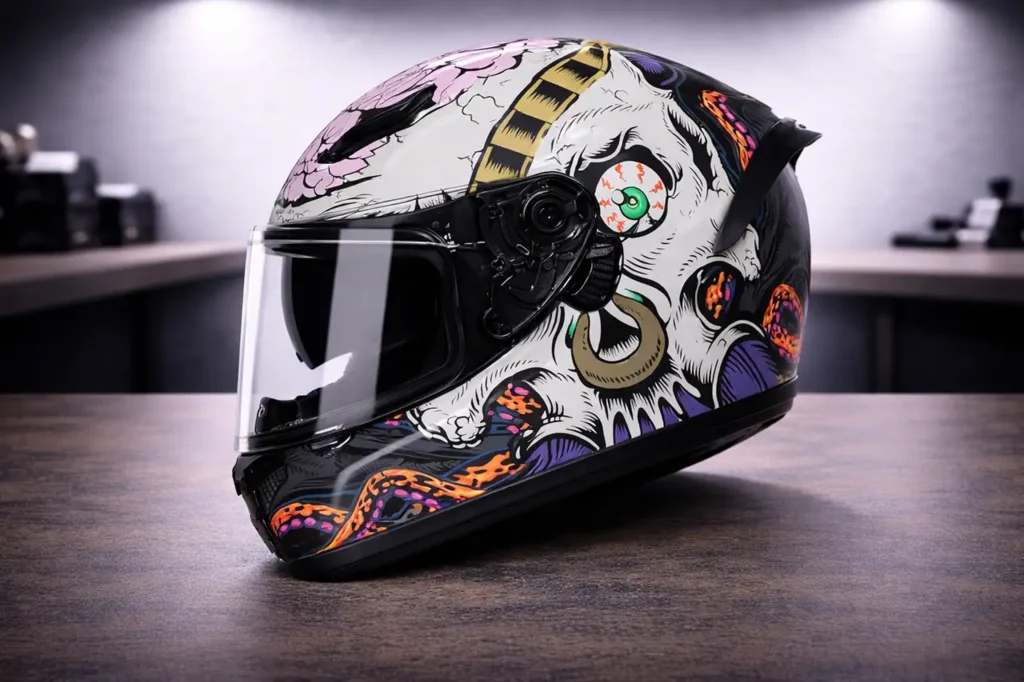
If budget is your absolute priority — you’re buying a helmet to stay legal and protected while you save up for something better — the TRIANGLE Dual Visor helmet gives you more features for fewer dollars than almost anything else on this list.
For under $70, you get a full-face, DOT-approved lid with both a clear outer visor and a built-in retractable tinted inner lens. That’s a sun visor system in a helmet that competes in price with lunch at a sit-down restaurant. The ABS shell and EPS liner meet federal safety standards, and the removable, washable padding is the kind of detail that separates a helmet you’ll use for a season from one you’ll toss after two months.
The fit runs slightly loose for some riders — a common issue with very budget-oriented helmets that lack the precision shell-sizing you’d find on more expensive lids. Trying sizes and using the brand’s fit guide is especially important here. A loose helmet is a dangerous helmet, no matter what it costs.
Riders report that the chin strap is functional but not refined, and the visor seal isn’t perfectly airtight at highway speeds. These are real limitations. But for a helmet you’re using for short commutes, weekend putts, or as a loaner for a passenger who doesn’t ride regularly, the TRIANGLE offers honest value.
I want to be clear: this isn’t a helmet I’d recommend for long highway stints or aggressive sport riding. It’s a solid option for what it is — an extremely affordable DOT-certified lid for casual riding.
Who it’s best for: Riders on the tightest budgets, first-time buyers, loaner/passenger helmets, occasional riders.
What I like:
- True dual visor (clear + retractable tint) under $70
- DOT certified
- Removable and washable interior
- Very lightweight design
What to watch out for:
- Fit can run loose — sizing up or using chin pad inserts may help
- Visor seal not perfectly airtight at high speed
- Best suited for casual, lower-speed riding
7. WOW Motorcycle Full Face — Best for Occasional Riders
Price: ~$50–65 | Type: Full Face | Certification: DOT
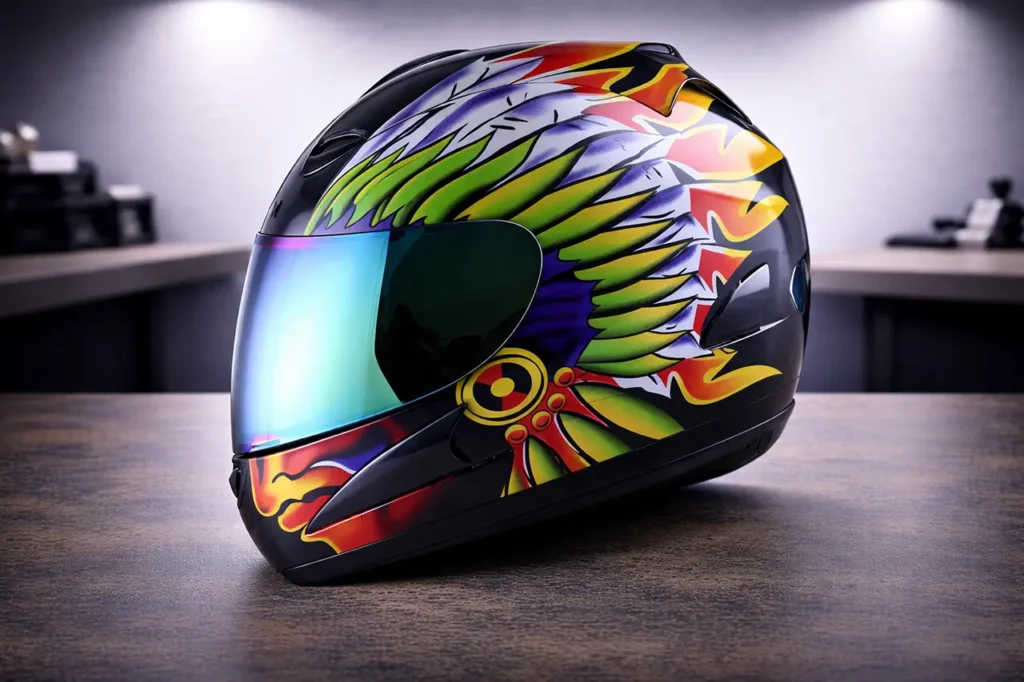
The WOW Motorcycle helmet sits at the very bottom of the price range on this list — and it’s there for a specific type of rider: the one who hops on a bike a handful of times a year, needs to stay legal and protected, and simply cannot or will not spend more than $65 on a lid right now.
This is the helmet for your neighbor who borrows your bike twice a summer. It’s the helmet for the college student who commutes three miles to campus on a 125cc and parks it for four months in winter. It’s not a helmet for serious riders logging thousands of miles, and I won’t pretend otherwise.
That said, it does what it says. The full-face design with ABS shell construction provides DOT-compliant head protection. The removable interior padding is a genuine feature at this price. It comes in a range of colors, fits most head shapes reasonably well, and ships with a clear visor ready to ride.
Rider feedback is mixed on quality consistency — you’ll occasionally find a fitment that’s slightly off or a vent that doesn’t close cleanly. If you have any issues, customer service responsiveness from budget brands at this tier is variable. Buy from a retailer with a good return policy.
For what it is — an entry-level DOT helmet at a price that removes almost every financial barrier to riding safely — the WOW helmet earns its spot on this list.
Who it’s best for: Occasional riders, passengers, students, short-distance urban commuters on the tightest possible budget.
What I like:
- One of the most affordable full-face DOT helmets available
- Wide variety of colors
- Removable interior padding
- Full-face protection at the lowest price point
What to watch out for:
- Not suited for serious or long-distance riding
- Quality consistency can vary unit to unit
- Limited advanced features
8. HJC CS-R3 Full-Face Helmet
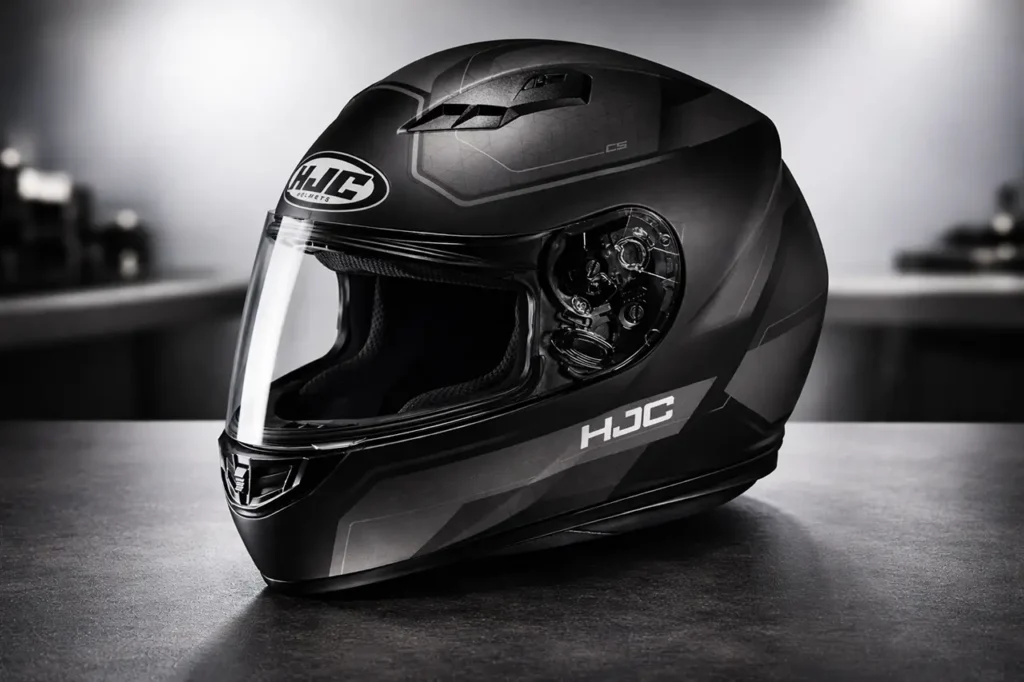
The HJC CS-R3 stands as one of the most popular budget-friendly full-face helmets on the market, offering exceptional value for sport and street riders. This helmet consistently receives praise for its aerodynamic design and comfort level that rivals helmets twice its price.
Overview
The CS-R3 features an advanced polycarbonate composite shell that provides excellent impact protection while keeping weight manageable. HJC designed this helmet with their proprietary Advanced Channeling Ventilation System, which includes multiple intake and exhaust vents to maintain optimal airflow during rides.
The interior uses moisture-wicking fabric with fully removable and washable padding, ensuring long-term comfort and hygiene. The helmet comes equipped with a clear, anti-scratch face shield that’s easily replaceable, and the quick-release system makes shield changes tool-free.
The aerodynamic shell design reduces wind noise and buffeting at highway speeds, while the emergency quick-release cheek pads allow first responders to remove the helmet safely if needed. It is often cited as the best full-face motorcycle helmet for the money.
Key Features
- Polycarbonate Composite Shell: Lightweight and durable.
- Advanced Channeling Ventilation: Full front-to-back airflow.
- RapidFire Shield Replacement: Tool-free removal.
- Plush Nylex Interior: Removable and washable.
Pros:
- DOT-approved with excellent safety ratings for the price point.
- Superior ventilation system keeps riders cool in warm weather.
- Lightweight construction reduces neck fatigue on long rides.
- Wide range of sizes and graphic options available.
Cons:
- Face shield mechanism can feel slightly flimsy compared to premium models.
- Limited noise reduction at very high speeds.
- Not ECE certified, which matters for international riders.
Pricing: The HJC CS-R3 retails for approximately $95 to $110.
Best For: Daily commuters and new riders who need a reliable, no-nonsense full-face helmet.
9. Bell Qualifier DLX MIPS
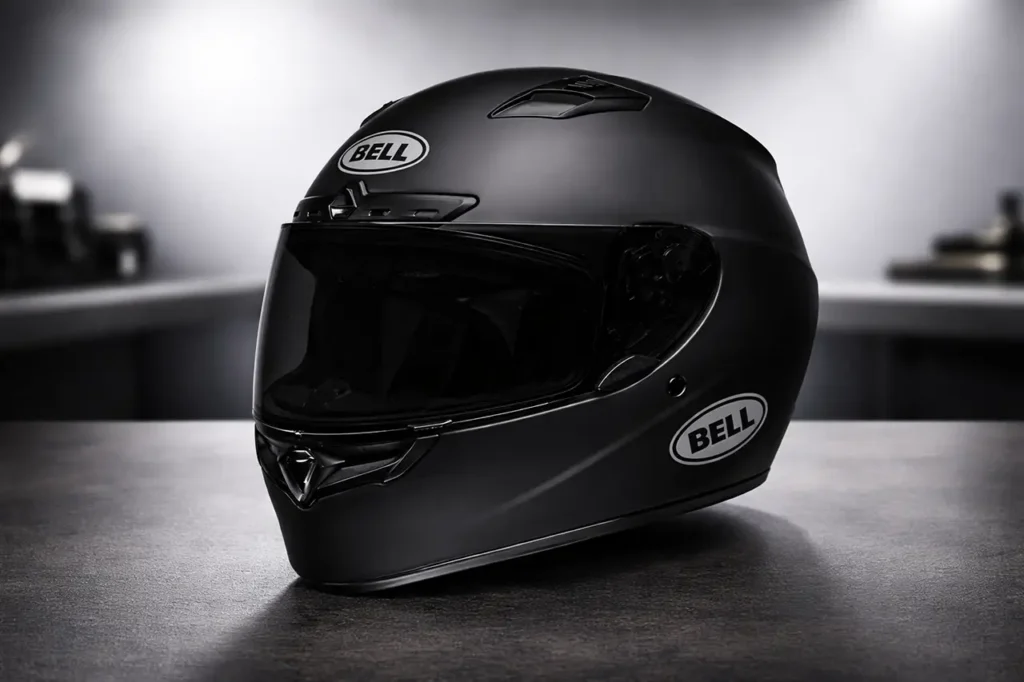
Bell brings advanced safety technology to the budget segment with the Qualifier DLX MIPS, incorporating the Multi-directional Impact Protection System typically found in higher-priced helmets. This makes it an outstanding choice for safety-conscious riders who refuse to compromise.
Overview
The Qualifier DLX MIPS features Bell’s proprietary polycarbonate shell construction combined with what is MIPS in motorcycle helmets, which adds a low-friction layer inside the helmet designed to reduce rotational forces during angled impacts.
The helmet includes an integrated speaker pocket that accommodates most Bluetooth communication systems, making it ideal for riders who want connectivity. Bell’s Velocity Flow Ventilation system features multiple adjustable vents that work together to maximize airflow.
The Panovision face shield offers an expanded field of view, and the NutraFog II anti-fog treatment keeps vision clear. The plush interior padding uses moisture-wicking materials that remain comfortable during extended rides.
Key Features
- MIPS Technology: Rotational impact protection.
- Velocity Flow Ventilation: Adjustable airflow control.
- NutraFog II Shield: Anti-fog and anti-scratch.
- Integrated Speaker Pockets: Ready for comms.
Pros:
- MIPS technology provides enhanced protection against rotational impacts.
- Excellent ventilation system with multiple adjustable vents.
- Anti-fog shield treatment works effectively in most conditions.
- Integrated speaker pockets simplify communication system installation.
Cons:
- Slightly heavier than some competitors due to MIPS layer.
- Some riders report the shield mechanism loosens over time.
- Interior padding may feel bulky for riders with narrow faces.
Pricing: The Bell Qualifier DLX MIPS often goes on sale around the $110-$120 mark, though MSRP is slightly higher.
Best For: Riders who prioritize advanced brain protection technology above all else.
10. LS2 Rapid II Full Face Helmet
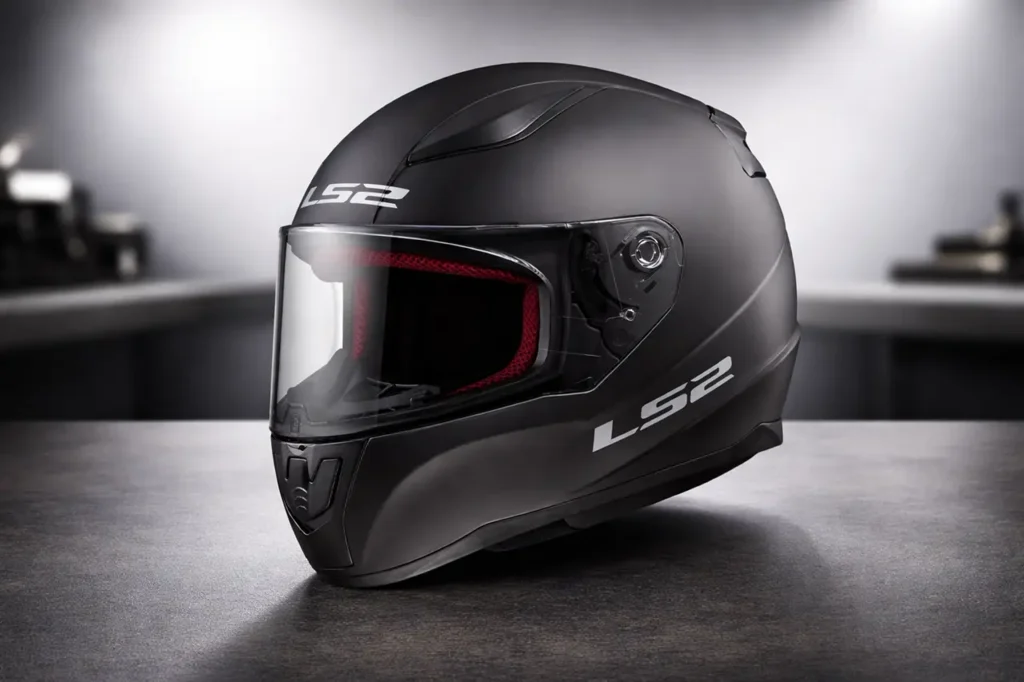
The LS2 Rapid II stands out in the budget-friendly full-face helmet category by bringing the latest safety standards to an incredibly accessible price point. This helmet consistently impresses riders with its sleek, aerodynamic design and a level of comfort that makes it perfect for daily commuting and weekend canyon carving.
Overview
The Rapid II features a shell crafted from LS2’s High Pressure Thermoplastic Technology (HPTT), providing an excellent balance of lightweight comfort and reliable impact protection. LS2 engineered this helmet with a dynamic flow-through ventilation system, complete with fully adjustable chin and top intake vents that work together with a rear exhaust port and channeled EPS to keep riders cool.
Inside, the helmet is designed with multi-density EPS for advanced energy absorption. The comfort liner uses breathable, hypoallergenic fabric that is completely removable and machine washable, ensuring long-term hygiene. For precision and comfort, the interior padding is formed using LS2’s 3D laser-cut technology, which helps eliminate hot spots during extended rides.
The face shield is built with 3D Optically Correct “A Class” Polycarbonate, offering high resistance to impacts while avoiding visual distortion. It comes Pinlock Max Vision-ready and features a quick-release system for easy, tool-free shield swaps. Most notably, the Rapid II meets the stringent new ECE 22.06 and DOT safety standards, offering premium-level protection for budget-conscious riders.
Key Features
- HPTT Shell: Lightweight and highly protective thermoplastic construction.
- ECE 22.06 Certified: Meets the latest and most rigorous European safety standards.
- Class A Polycarbonate Shield: Optically correct, scratch-resistant, and Pinlock-ready.
- Laser-Cut Foam: Precision 3D padding for a comfortable, secure fit.
Pros:
- Meets the stringent new ECE 22.06 safety standard, a rarity at this price point.
- Lightweight construction helps reduce neck fatigue during daily commutes.
- Quick-release shield system makes swapping visors incredibly intuitive.
- Interior padding is plush, hypoallergenic, and fully washable for easy maintenance.
Cons:
- Ventilation system can create noticeable wind noise at high highway speeds.
- Lacks a built-in drop-down sun visor, requiring sunglasses or a tinted shield for bright days.
- The Pinlock anti-fog insert must be purchased separately.
Pricing: The LS2 Rapid II Full Face Helmet retails for approximately $100 to $120, making it an exceptional value for its safety rating.
Best For: Daily commuters and new riders who want the peace of mind that comes with the latest ECE 22.06 safety certification without blowing their budget.
11. AFX FX-41DS Dual Sport Helmet
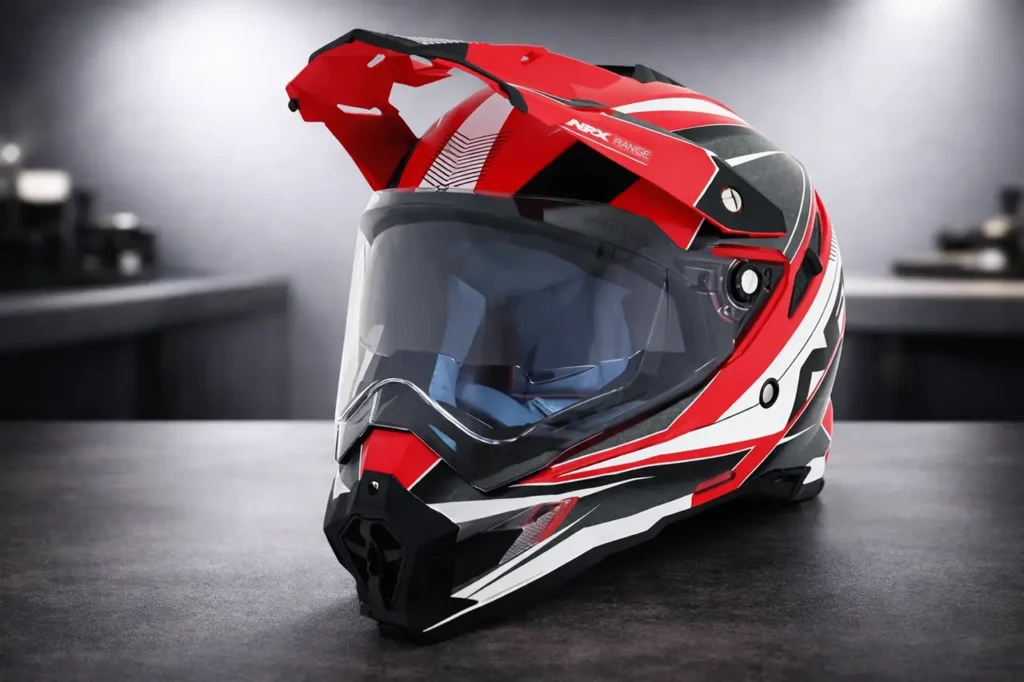
For adventure riders who split time between pavement and dirt, the AFX FX-41DS offers dual-sport functionality at an unbeatable price point. This helmet seamlessly transitions between street and off-road riding environments.
Overview
The FX-41DS utilizes a lightweight thermoplastic alloy shell with an extended chin bar and enlarged eye port that accommodates goggles for off-road excursions. AFX engineered this helmet with a removable peak visor that reduces sun glare and roost while trail riding.
The ventilation system features large intake vents in the chin bar and forehead, with exhaust ports at the rear that create strong airflow—essential for the physical demands of off-road riding. The helmet includes both a clear face shield for street use and a flip-down internal sun shield.
The interior uses moisture-wicking, antimicrobial fabric that’s completely removable and machine washable. The helmet meets DOT safety standards and includes emergency release cheek pads.
Key Features
- Aerodynamic Peak: Removable for street use.
- High-Flow Ventilation: 17 points of ventilation.
- Dual Shield System: Outer clear and inner smoke shields.
- Goggle Compatible: Large eye port design.
Pros:
- Versatile design works equally well on-road and off-road.
- Excellent ventilation keeps riders cool during physical riding.
- Lightweight construction reduces fatigue on long adventure rides.
- Outstanding value with dual shield system included.
Cons:
- Peak visor creates wind resistance and noise at highway speeds.
- Larger shell size may feel bulky for pure street riders.
- Face shield seal isn’t as weather-tight as dedicated street helmets.
Pricing: The AFX FX-41DS retails for approximately $115 to $130.
Best For: Adventure and dual-sport riders who need one helmet to do it all.
12. Scorpion EXO-R420 Full-Face Helmet
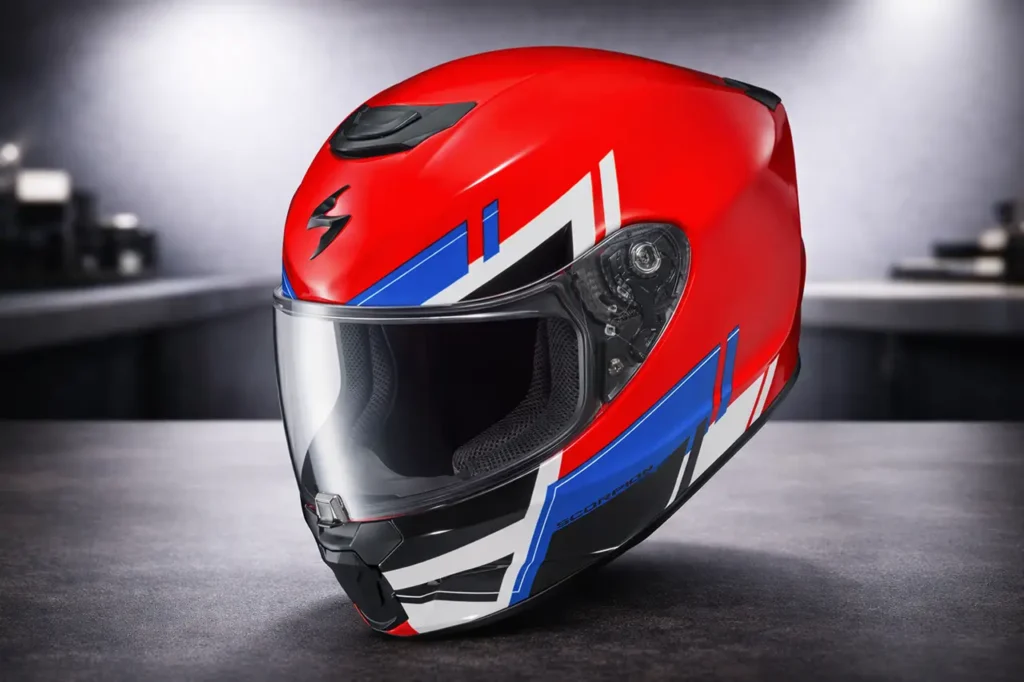
Scorpion’s EXO-R420 delivers race-inspired features and aggressive styling at a budget-friendly price, making it a favorite among sport bike riders. The helmet punches well above its weight class in terms of features and performance.
Overview
The EXO-R420 features an advanced LG polycarbonate shell that’s both lightweight and impact-resistant. The aerodynamic design incorporates an aggressive profile that reduces drag and improves stability at high speeds.
Scorpion’s AirFit inflation system allows riders to customize the cheek pad fit using small air bladders, acting as a built-in motorcycle helmet fitment guide. The helmet includes an Ellip-Tec II Ratchet System face shield mechanism that enables quick, tool-free shield changes.
The advanced ventilation system features multiple adjustable intake vents and rear exhaust ports. The KwikWick III interior uses advanced moisture-wicking materials that pull sweat away from skin. The helmet meets DOT and SNELL certifications.
Key Features
- SNELL Certified: High safety standard.
- AirFit System: Custom cheek pad inflation.
- Ellip-Tec II System: Secure shield closure.
- KwikWick II Interior: Antimicrobial fabric.
Pros:
- AirFit inflation system provides customizable, precise fit.
- Aerodynamic design excels at high speeds with minimal buffeting.
- Both DOT and SNELL certified for high safety compliance.
- Quick-release shield system is intuitive and reliable.
Cons:
- Intermediate oval shape doesn’t fit all head shapes comfortably.
- Ventilation, while adequate, isn’t as strong as some competitors.
- Shield scratches more easily than premium coated shields.
Pricing: The Scorpion EXO-R420 retails for around $150 to $160, slightly above $100 but worth the extra for SNELL.
Best For: Sport riders who want SNELL-rated protection and a custom air-fit.
13. SEDICI Viaggio Adventure Helmet
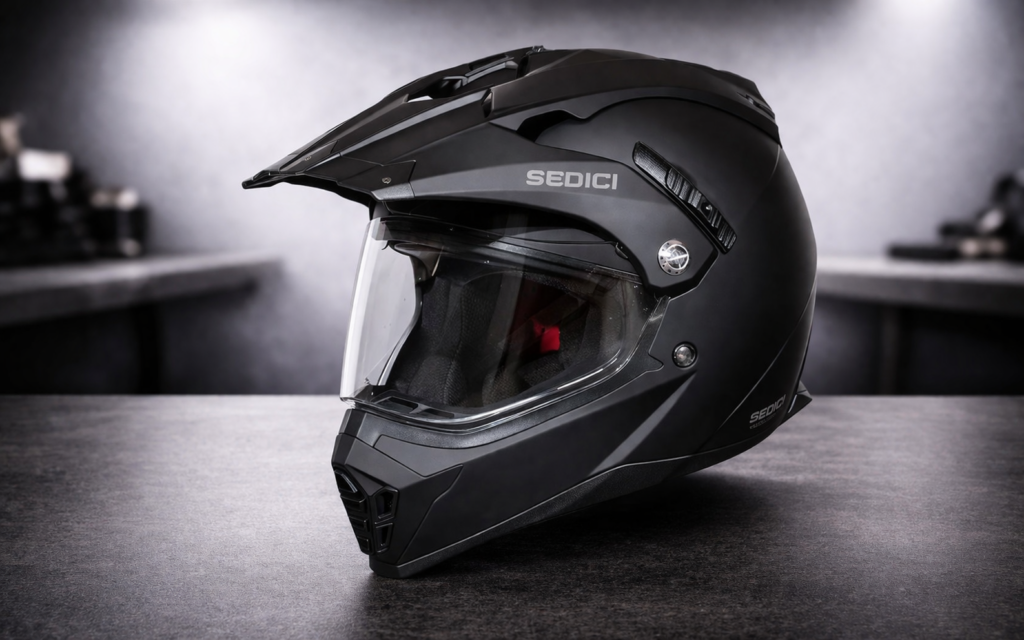
For riders who split their time between paved highways and dusty fire roads, the Sedici Viaggio brings genuine adventure capability to the budget category. It offers the aggressive styling and practical functionality of premium dual-sport helmets without the premium price tag.
Overview
Sedici built the Viaggio around a high-tech, injection-molded ABS shell that is designed to be both lightweight and highly durable against impact. The defining feature of this helmet is its versatility: it includes a pronounced, removable peak visor that blocks roost and harsh sunlight on the trail, but can be taken off when you want to reduce aerodynamic drag on the highway.
The Viaggio features a wide eye port that provides excellent peripheral vision and accommodates most off-road goggles if you prefer to ride with the clear face shield flipped up. For bright days, it includes an integrated, drop-down tinted sun visor that operates via a glove-friendly slider on the side of the helmet.
Ventilation is handled by a large, adjustable chin-bar vent and top intake vents that channel air through the EPS liner, exhausting out the back. After a sweaty day in the dirt, the antimicrobial, moisture-wicking comfort liner can be fully removed and washed. It meets standard DOT safety certifications.
Key Features
- Injection-Molded ABS Shell: Strong, impact-resistant, and relatively lightweight.
- Integrated Sun Visor: Built-in drop-down tinted shield for instant glare reduction.
- Removable ADV Peak: Easily detaches to transition from off-road to aerodynamic street riding.
- Goggle Compatible: Oversized eye port allows for traditional off-road goggle use.
Pros and Cons
Pros:
- Extremely versatile design works well for street, gravel, and trail riding.
- Internal drop-down sun visor eliminates the need to carry a second tinted shield.
- Wide field of view is excellent for checking blind spots and reading the terrain.
- Liner is easy to remove and holds up well to repeated washings.
Cons:
- The peak visor acts like a sail at high highway speeds, causing noticeable neck fatigue.
- Heavier overall weight compared to a standard, street-only full-face helmet.
- Ventilation is adequate but can feel lacking during slow, highly physical off-road riding.
Pricing: The Sedici Viaggio Adventure Helmet typically retails for around $150, but is frequently found on sale between $100 and $120.
Best For: Entry-level adventure riders and dual-sport enthusiasts who need one highly versatile helmet to handle mixed terrain on a budget.
14. Vega Helmets Ultra Electric Snow Helmet
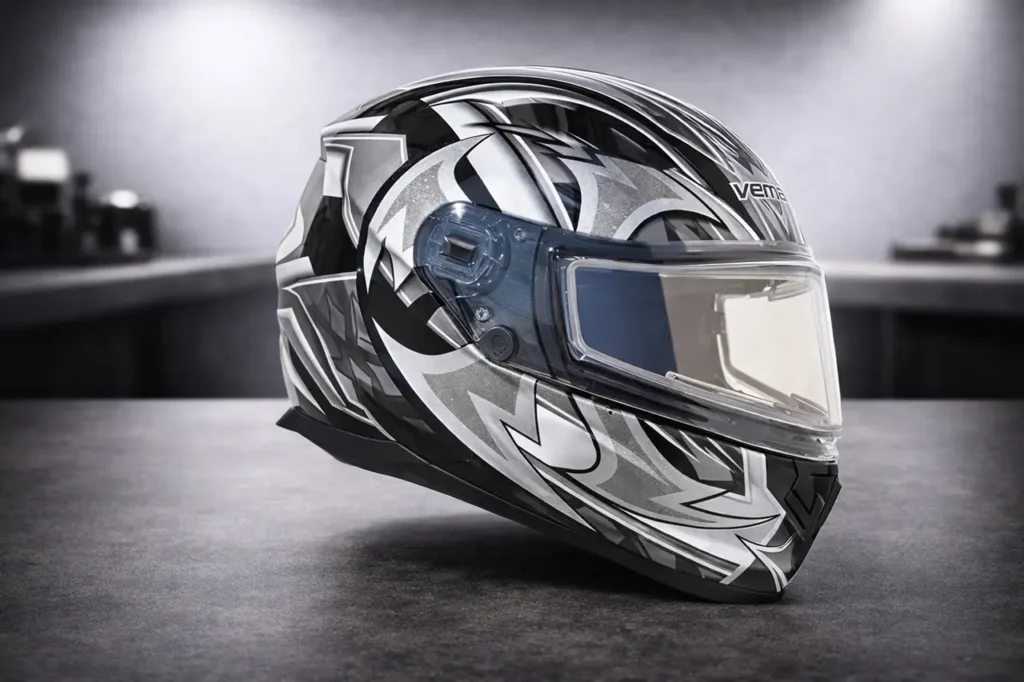
For riders in cold climates or those who ride year-round, the Vega Ultra Electric Snow Helmet offers unique heated features at the $100 price point. This specialized helmet addresses the specific challenges of cold-weather riding.
Overview
The Vega Ultra Electric features a thermoplastic alloy shell with an integrated electric shield heating system powered by the motorcycle’s battery, preventing fog and ice buildup in freezing conditions. The helmet includes a dual-lens shield system with an inner thermal lens.
Vega designed the ventilation system with closeable vents, allowing riders to seal the helmet completely in extreme cold. The interior uses thick, insulated padding that provides warmth while remaining moisture-wicking.
The helmet comes with a breath box that directs exhaled air away from the shield. The heated shield connects via a simple plug to a battery harness (included). You can check our guide on how to make a heated motorcycle helmet shield if you want to DIY, but this helmet comes ready to go.
Key Features
- Heated Electric Shield: Prevents icing and fog.
- Dual-Lens Design: Thermal insulation.
- Breath Box: Diverts moisture.
- Insulated Liner: Keeps rider warm.
Pros:
- Electric shield heating eliminates fogging in extreme cold.
- Dual-lens system provides excellent thermal insulation.
- Specialized features perfect for winter and snow riding.
- Thick padding provides warmth without excessive bulk.
Cons:
- Heavier than standard helmets due to heating system.
- Requires electrical connection, adding complexity.
- Less suitable for warm weather riding despite closeable vents.
Pricing: The Vega Ultra Electric Snow Helmet retails around $130.
Best For: Winter commuters and snow riders.
15. GMAX FF-49 Helmet
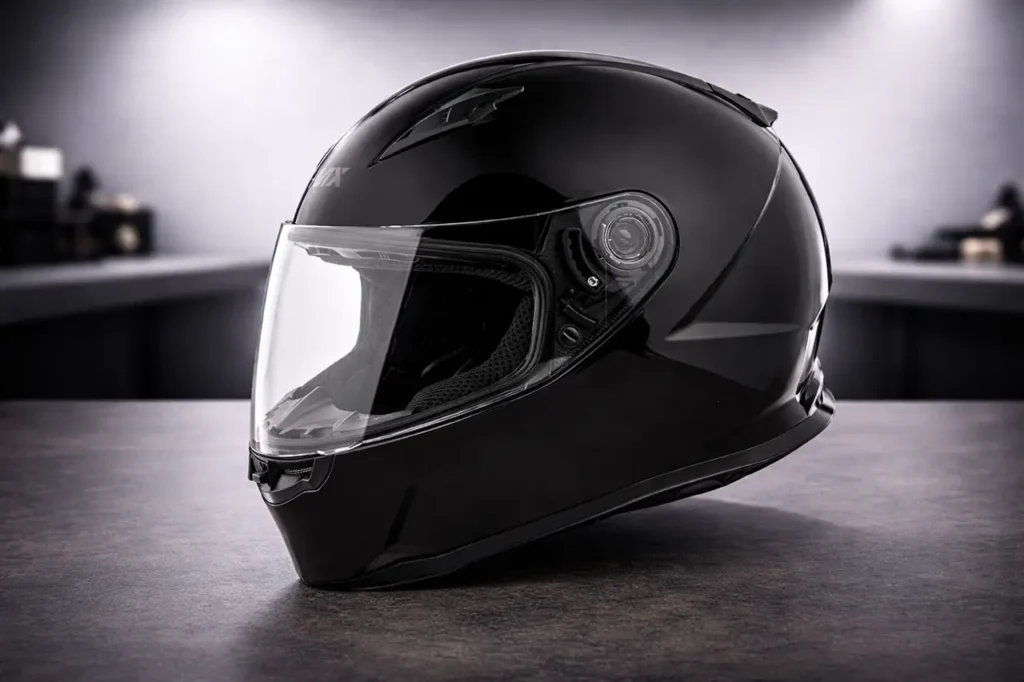
The GMAX FF-49 proves that you don’t need to empty your wallet to get a lightweight, comfortable full-face helmet. It is a fantastic entry-level option that punches well above its weight class when it comes to interior comfort and overall weight reduction.
Overview
GMAX built the FF-49 using a lightweight thermo-plastic poly-alloy shell. The result is a full-face helmet that weighs in at just around 3.2 pounds (for a medium shell)—making it noticeably lighter than many of its budget-category competitors and drastically reducing neck fatigue on longer rides.
The standout feature of this helmet is inside. GMAX utilizes a fully removable, washable, and adjustable COOLMAX® interior. This moisture-wicking technology is typically reserved for much more expensive gear, and it does an exceptional job of pulling sweat away from the skin to keep you dry.
Ventilation is handled by GMAX’s flow-through system, utilizing aligned intake and exhaust vents with channeled EPS to pull fresh air in and push hot air out. Out front, the helmet features an unusually large eye port for enhanced peripheral vision, equipped with a 100% UV400 anti-scratch face shield that operates on a tool-less quick-release mechanism. It meets DOT safety standards and features built-in speaker pockets making it intercom compatible right out of the box.
Key Features
- Poly-Alloy Shell: Exceptionally lightweight construction at roughly 3.2 lbs.
- COOLMAX® Interior: Premium moisture-wicking, removable, and washable liner.
- Oversized Eye Port: Provides an expanded field of vision for better situational awareness.
- UV400 Face Shield: Hard-coated, anti-scratch clear shield with tool-less replacement.
Pros:
- Extremely lightweight for a budget helmet, making it highly comfortable for daily use.
- The COOLMAX® liner is a massive step up from the standard scratchy foam found in most $100 helmets.
- Excellent peripheral vision thanks to the widened eye port.
- Intercom ready with speaker pockets already molded into the EPS.
Cons:
- Only DOT certified; it lacks the more rigorous ECE or SNELL certifications.
- Very basic feature set (lacks a drop-down internal sun visor or Pinlock-ready shield).
- The thin, lightweight shell can transmit more wind and road noise at highway speeds.
Pricing: The GMAX FF-49 typically retails between $105 and $130, depending on whether you opt for a solid color or a graphic design like the “Derk” or “Syth”.
Best For: New riders, daily commuters, and passengers who want an ultra-lightweight, no-nonsense street helmet with a surprisingly premium interior feel.
How I Evaluated These Helmets
I didn’t just pull these names from a sponsored list. Here’s the framework I used:
Price Verification: Every helmet on this list was cross-checked on Amazon, major retailers, and brand sites to confirm it sells consistently under $100 — not as a flash sale or coupon deal.
Safety Certification: All helmets here carry DOT (FMVSS-218) certification, which is the federal minimum for legal road use in the U.S. I also checked for any Snell or ECE certifications where applicable.
Shell Construction: I looked at whether each helmet uses ABS, polycarbonate, or another thermoplastic — the materials most common in this price range — and whether the EPS liner is multi-density (better) or single-density (basic).
Rider Reviews: I dug into hundreds of real rider reviews across Amazon, RevZilla, and riding forums to understand real-world performance, not just spec-sheet claims. Pattern recognition across reviews — multiple people mentioning the same fit issue or noise problem — carries more weight than any single glowing or negative comment.
Practical Features: Things like removable/washable liners, visor systems, ventilation adjustability, Bluetooth-readiness, and chin strap type. These aren’t extras at this price — they separate a helmet you’ll keep using from one you’ll shove in a corner after a month.
What to Know Before You Buy
Fit is Everything
I’ll repeat this because it cannot be overstated: a properly fitted helmet is the most important safety variable, more important than brand or price. A helmet that moves on your head in a crash — even a millimeter — transfers impact energy differently than intended by the EPS liner design. Measure your head circumference with a soft tape measure, compare it to the manufacturer’s specific size chart (not a generic S/M/L), and wear the helmet in the shop or at home for 15–20 minutes before committing.
The DOT Sticker Is Not a Guarantee
DOT certification is self-reported by manufacturers — the DOT doesn’t test every helmet before it hits market. NHTSA does periodic spot-checks and pulls non-compliant helmets. Stick with established brands (like everything on this list) that have track records of actual compliance, not just stickers.
Replace After a Crash
If you drop your helmet or go down in it, replace it — even if it looks fine. The EPS foam that absorbs impact energy is a one-time use material. It can look completely normal while being internally compressed and no longer effective. This applies to a $60 helmet and a $600 helmet equally.
The Five-Year Rule
Most manufacturers recommend replacing helmets every five years from purchase, or seven years from manufacture date. The materials inside a helmet degrade over time from UV exposure, sweat, and just the chemistry of aging foam. If you’re buying a budget helmet, it’s especially worth dating it and being disciplined about this.
Frequently Asked Questions
Are motorcycle helmets under $100 actually safe?
Yes — with caveats. Every helmet on this list is DOT certified, which means it’s passed the federal safety standard required for legal road use in the U.S. They’re real protection. What they lack is the more rigorous Snell or ECE 22.06 testing protocols. For casual riding, commuting, and everyday use, a DOT helmet is legitimate protection. For track days or aggressive sport riding, I’d push you toward something better certified.
Is there a quality motorcycle helmet under $100 with Snell certification?
Genuinely, no. At the time of writing, Snell-certified helmets start reliably at $120+. The HJC i10 used to flirt with the $100 range but now retails at $128–$140. If Snell matters to you, save a bit longer. It’s worth it.
Can I get a reliable modular helmet for under $100?
The ILM 902 on this list is the best available answer to that question. It’s a true flip-up modular under $90 with DOT certification. It’s not as refined as a Shoei Neotec or Schuberth C5, but it works and it’s real.
Does helmet price directly correlate with safety?
Yes and no. Two helmets with the same certification should offer similar protection in equivalent impacts. A $600 helmet doesn’t protect you twice as well as a $300 helmet. But expensive helmets typically offer higher certification levels (Snell/ECE), better shell materials (fiberglass, carbon), more shell sizes for better fit, and lower noise/weight. The safety floor is similar for certified helmets; the ceiling is higher as you spend more.
Do budget helmets make more noise?
Generally yes. Wind noise management requires careful aerodynamic engineering and additional sealing features that cost money. Budget helmets are louder, especially above 65–70 mph. Ear plugs are inexpensive and dramatically improve ride comfort and long-term hearing health — I use them on every highway ride regardless of what lid I’m wearing.
How often should I replace a motorcycle helmet in this price range?
Most manufacturers recommend replacing motorcycle helmets every five years, or immediately after a crash. Materials like the EPS foam liner degrade over time due to UV exposure. For more details, read when to replace your motorcycle helmet.
What’s the difference between DOT and ECE helmet certifications?
DOT is the mandatory standard for the US, while ECE is the European standard used in over 50 countries. ECE testing is generally considered more comprehensive. Learn more about helmet safety ratings explained.
What helmet shape should I look for to ensure proper fit?
Most people have intermediate oval head shapes, but you should measure your head to be sure. If length exceeds width by about an inch, you’re intermediate. If they are equal, you are round oval.
Final Thoughts: Your Head is Worth More Than $100
I know this list is about helmets under $100, but I want to end with a note that sits with me whenever I write about budget gear.
Your helmet is the one piece of gear you need to be wearing every single ride. Not sometimes. Every time. A $65 helmet on your head is infinitely safer than a $500 helmet sitting in your garage closet because you couldn’t justify the spend.
Use the helmets on this list as a starting point — a way to ride protected right now while you learn, build your gear collection, and figure out what kind of riding you love. Then, when the budget opens up, move to something with ECE 22.06 or Snell certification. The step-up in protection and comfort is real and meaningful.
Ride safe out there. Wear the helmet. Check your tire pressure. And enjoy every mile.
Note: Prices listed reflect general market availability at time of writing and may vary by retailer, colorway, or size. Always verify current pricing before purchase.
Related Posts:
- How to Know When to Replace Your Helmet
- Ultimate Motorcycle Helmet Guide
- How to Clean and Maintain Your Motorcycle Helmet